Tag Archives: fantasy

Automata in Weird Fiction

To celebrate (and *ahem* advertise) the fact that my short story, “Vaucanson’s Canard,” is available for preorder as an absolutely gorgeous pamphlet from Paradise Editions (with international shipping available from Asterism), I thought I’d write somethin’ up about one of my absolute favorite things ever: automata! And, specifically, automata… in weird fiction!
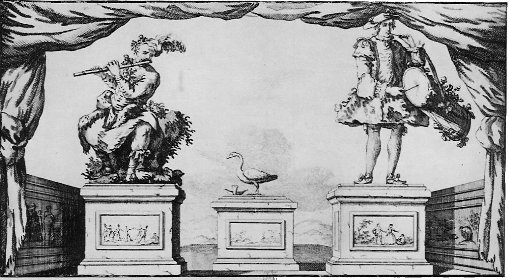
Vaucanson’s famous automata, include the Shitting Duck!

As a child of the 80s, I reckon my first exposure to automata were those classic dinosaur animatronic exhibits that were all the rage at the time – they used to be everywhere, a part of that era’s dino-mania that would, ultimately, culminate in Jurassic Park. As a paleo-obsessed kid, I recall enjoying the displays, but never in the same way as a fossil mount. The artificiality of them was always front and center, the repetitive clockwork motion of the figures shattering the verisimilitude; they never achieved the awesome dignity of those austere ambassadors from the gulfs of deep time, the actual fossils.

BUT! I have a vivid memory of a display at one of these things where the dinosaur had been stripped of its skin, at least in part, to allow you to see the machinery underneath the rubber, and that was a surprising and fascinating thing to little ol’ Eric. Covered, the thing was stilted and underwhelming, but with its pneumatic skeleton exposed, full of wires and electronics and with the unmuffled mechanism operating loudly, it was a much weirder, much more striking thing! Someone more mechanically inclined might’ve been inspired to a career in engineering, but for me it was all about the frisson of being shown simultaneously the illusion *and* the trick, and it produced a real moment of uncanniness.

The oddity of the simulacrum would be underlined by my evolving reading habits – I was a sci-fi kid, especially of the classic 50s-70s era, and boy if that ain’t a literature chockful o’ robots of all sorts. And, while living in an era of shitty a.i. slop means it’s harder than ever to write fiction about machine intelligence, I’ll never not have a fondness for a good robot story! Luckily, there’s a looooong history of automata to pick from!

Ancient Automata

Before we get into fictional ‘bots, it’s worth examining the long history of automata, real and imagined. There’s a deep history to the fascination people have with mechanisms, wrapped up as it is with ideas about knowledge (technical, secret, or divine), as well as questions of authority, labor and, eventually, life itself. Which means that our look at automata starts with those most introspective weirdos of the ancient world: the Greeks.

The word itself comes from Greek αὐτόματα, meaning “acting of one’s own will.” A subtle but important point – an aspect of these things is that the mechanisms must behave as if (or, among the mythic examples, because they have) their own individual motive impulse, power, and directive; in other words, they must appear to be alive. The earliest examples are in those foundational cornerstones of Western lit, the Illiad and the Odyssey. Homer tells us how Hephaestus, god of Smiths, had built mobile tripods to serve the Gods their ambrosia, and he famously had a gaggle of gold girls who, importantly, were in possession of an artificial intellect and skill that let them help out around the forge. In the Odyssey, we’re introduced to the Metal Dogs of Alcinous, gifts from Hephaestus to the King of the Phaeacians to help guard his palace.

It’s all good and well that a divine being like ol’ Festus there can create gold girlbots and robo-dogs, but there is also in the Odyssey at least one example of human(ish)-made automata. When doomed Alcinous is offering to help Odysseus get back home, he explains how their marvelous ships operate independently, without pilot or rudder; rather, the boats “understand” what it is their passengers want, reacting at the speed of thought, and are themselves aware of every city and port and can travel the various sea routes to get to them in a single day. These boats are not gifts from the gods; they’re manufactured right there by Phaeacians (who, admittedly, are descended from semi-divine giants). This seems like an important distinction: sure, the Gods can of course manufacture wonders, but if you have the skill and knowledge, you too can make these living (or at least, life-like) machines.

I’d be remiss if I didn’t mention Talos, one of the most famous examples of an automaton from Greek mythology, immortalized by divine wondersmith Ray Harryhausen (who could make inanimate matter appear to behave as if alive) in Jason and the Argonauts:
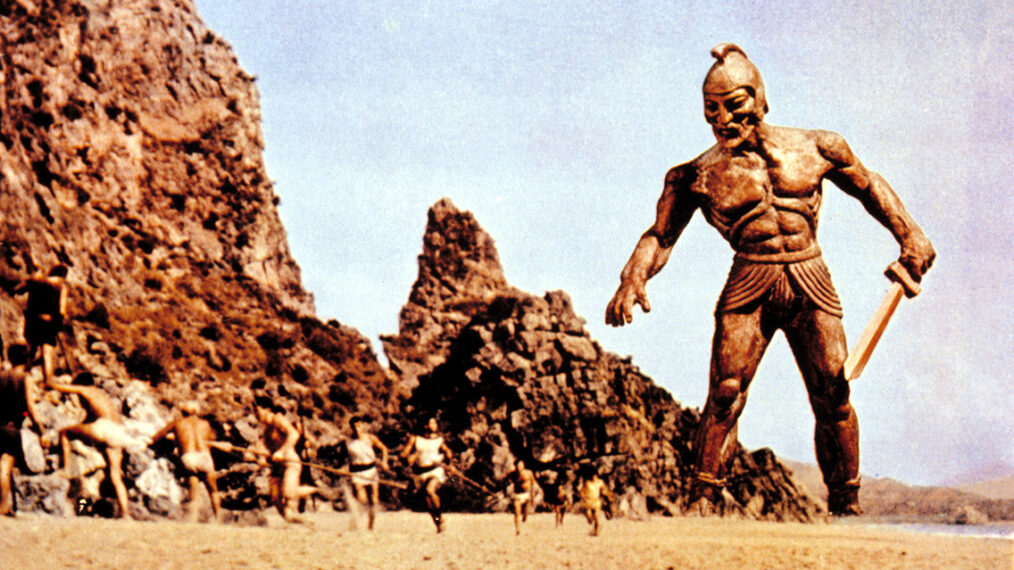
It’s super cool looking, a great part of a great movie, but I do have to point out that the tradition of Talos being a robot (and, actually, a giant) is not the whole story. In the earliest work in which he appears (the Argonautica of Apollonius, from ~3rd c. BCE), Talos is actually the last surviving member of the warlike Bronze Race who came before the current Iron Age people. It’s actually pretty eldritch when you think about it – an alien being from a lost world, the last of his kind, killable only through sorcery. It isn’t until a much later version of the story (from the 2nd century CE) that a writer says Talos was given to Minos by Hephaestus, suggesting that he was manufactured by the god.

These fantastical automata are fascinating, because they actually illustrate an important function of the whole idea of “automata” within the societies imagining them. There’s actually a really interesting literature out there about how these stories, a species of “science fiction” in the ancient world if you want to call it that, were received and how they influenced the history of technology in the Hellenistic world; it’s beyond the scope of this little free-form essay I’m writing, but there’s a great paper by Martin Devecka (“Did the Greeks Believe in their Robots” 2013, the Cambridge Classics Journal v.59) that makes the argument that these conceptual robots were an important part of the Greek world view, used to explore questions of work and slavery and contrast the world as it was with an idealized utopia. This is the same argument Aristotle made, by the way, and which Marx commented on in Capital v. 1; per Aristotle:

If every tool, when summoned, or even of its own accord, could do the work that befits it, just as the creations of Daedalus moved of themselves, or the tripods of Hephaestus went of their own accord to their sacred work, if the weavers’ shuttles were to weave of themselves, then there would be no need either of apprentices for the master workers, or of slaves for the lords.

(Marx, of course, disagreed with this rosy techno-positivist assessment, pointing out how “labor-saving devices” just resulted in more work for the worker, as demonstrated by the industrial revolution merely expanding the working day in the name of ever-increasing productivity).

Grecian mechanical knowledge was not merely mythic, of course; there were a lot of very advanced, very technically adroit thinkers working in the Hellenistic world, producing some really remarkable things. Ctesibius, a mathematician and engineer from 2nd c. BCE Ptolemaic Egypt is said to have basically invented pneumatics and hydraulics for use in things as widely divergent as pipe organs and water clocks; none of his work survivors, but he was a huge influence on later Greek mechanists, including Hero of Alexandria (1st or 2nd c. CE) who, in addition to inventing a rudimentary steam engine, also wrote a treatise on automata as wonders, describing robots that poured wine at banquets or that could be used in theatrical productions. He also documented and described automata for religious festivals, including a robotic Dionysius that was at the center of a major religious festival; this suggests that not only were his automata luxury objects for the parties of the rich, but that they existed in the public/civic/religious sphere as well, which is fascinating! Hero’s writing, which did survive, was later enormously influential on early modern European machinists.

A 1589 edition of Hero of Alexandria’s book “About Automata”

Ancient Greek automata, if not necessarily common, seemed to be a least extremely well known. There’re a number of Greco-Roman travel writers who described the wonders of Greek robots, including descriptions of the city of Rhodes that makes it sound like an animatronic park – moving statues on every corner, mechanical fountains, water clocks, a kind of ancient world steampunk scene (sans steam, of course). The fame of Greek automata builders extended beyond the Mediterranean, too – there’s a tradition in northern India that the secrets of robot-building were stolen from the Greeks, brought home, and used to build an army of automata to guard the relics of Buddha (admittedly, most scholars believe this story arose out of Middle Eastern or Islamic sources in the middle ages, but still!)

The idea and, in some cases, literal existence of automata in the ancient world is an important predecessor to both the technical and conceptual developments of later ages; it lays the foundation for both the science and literature of subsequent life-like mechanisms. The technical writing on automata was preserved in Arabic and Persian sources, and would influence both the development of mechanical wonders in those cultures as well as become an important part of the Exoticizing Orientalism of later Western concepts of the “Mysterious East.” And, even if Europe lost access to the mechanical knowledge and skills of the ancient Greek artificers, there remained a thread of automata throughout their literature – the Alexander Romances, medieval retellings of the life of Alexander the Great liberally spiced-up with all kinds of fantastical elements, included a number of encounters with deadly automata, both human- and beast-like.

But what’s interesting is how, even where the ancient Greeks were musing on the social ramifications of automata in the workshop, there’s nothing really “weird” about them, you know what I mean? To use Todorov’s terminology, even when these automata are presented as killer robots built by mysterious artificers with secret knowledge, they largely remain merely “marvelous,” remarkable and possibly unique, but not *outside* the bounds of the world, as it were. It isn’t until much later, with the development of Enlightenment ideas about bodies and nature, that automata become uncanny.

The Uncanny Machine

Automata become weird when they stop merely mimicking life and start being mistaken for it. This blurring between the biological and the mechanical can only occur when you abandon the idea of some divine or numinous attribute, unique to life, that categorically and irrevocably separates life from non-life. In other words, when bodies begin to be conceived of as mechanisms, then mechanisms can begin to become bodies. In seventeenth century Europe, the development of modern science, with its rationalist approach to observation and experimentation, resulted in a new, mechanistic view of the world. And if planets revolved under the operation of physical laws and matter behaved with chemical predictability, then there must be sensical laws fundamental to the operation of the body too!

That’s actually a pretty radical idea, if you think about it. There had been theories of the body before, of course, and while we’re quick to scoff at humors and bleedings, they were a part of a largely consistent (if poorly informed) theoretical structure of how bodies were believed to work. But as medical and biological knowledge grew, guided by new techniques and instruments of experimentation and observation, a model began to form that analogized the human body with the operation of a mechanism. In particular, thinkers like Descartes and William Harvey explored the operation of the heart and its role in circulating blood, providing an important step forward in the material understanding of the operation of animal (and, by analogy, human) bodies. Descartes explicitly referred to the “animal-machine,” and used it as the basis for a new framework for life.

Hearts as pumps, lungs as bellows, eyes as lenses…and then it’s a short step to minds as material things, isn’t it? While we’re familiar with the Creationists’ argument about the Divine Watchmaker, it’s important to recognize that that rhetorical gambit only came about well into the 19th Century, when religion had had to cede so much territory to science already. In the 17th and 18th centuries, the Church (meaning all of Western Religion) was much less enthusiastic about all this mechanistic talk BECAUSE it seemed to remove God from the equation – after all, if bodies become explicable through purely material, mechanistic processes, then there’s no real reason to invoke the divine, is there?

(As an aside, if you’re interested in the topic of the development of this bio-mechanistic world view, including the role of automata in its development, I’d strongly recommend Jessica Riskin’s “The Restless Clock: A History of the Centuries-Long Argument over What Makes Living Things Tick” from the University of Chicago Press. It’s great!)

It was into this brave new world of men and machines that Jacques Vaucanson (the honorific “de” would be added later, in recognition of his achievements) was born in 1709. The tenth son of a glovemaker, Jacques was sent to study with the Jacobins in Grenoble and joined the Order of the Minims in Lyon as a young man; it was here that he learned the math, natural philosophy, and engineering that would serve him through his life. He left the Minims after his first attempt at automata was met with hostility, and he travelled to Paris to pursue his studies in mechanics. He learned anatomy from Claude-Nicolas Le Cat, a famous surgeon of the day, and developed a keen interest in the mechanical operation of the body from his lectures.

At the time, there was a bit of a fad around automata in Europe, though they were often displayed as toys or wonders of novel engineering, rather than as anything scholarly or profound. Vaucanson, however, envisioned the development of a machine that would mimic not merely the actions of a living being, but the processes too. His first famous automaton was a flute-player which he built in 1737. Rather than appearing to play the flute, the figure ACTUALLY played it, with a convoluted throat architecture that relied on a complex system of pumps to generate the differing air pressures necessary to change octaves on the flute. Furthermore, the figure actually pressed its fingers against the holes of the flute to play the notes it was programmed with; in order to achieve the necessary pliability, Vaucanson actually clothed the automaton’s hands in skin. This was no toy; scholars viewed it as a remarkable (and instructive) model of how a human being could play music, and an important lesson in circulation, breath regulation, and coordination. Indeed, the failings of the mechanism were even discussed as instructive, with an emphasis on how the subtle muscles of the lips and mouth must likewise operate.

Vaucanson’s interest in attacking the question of biological processes via analogy to engineering explains his most famous automaton (and the inspiration behind my little story): his famous “Digesting Duck.”

The Duck in the 1800s

This little guy was, simply, a small mechanical duck that dabbled around in a small pool, flicked its feathers, flapped its wings, ate corn from peoples’ hands…and then shat it out afterwards in neat, green little plops. And people fuckin’ LOVED it.

It’s easy to laugh about (because it IS kind of goofy), but people thought this was the most amazing thing they’d ever seen. Voltaire called it one of France’s singular contributions to the world, and it was discussed and written about all; Poe even discussed it in his essay “Maelzal’s Chess Player” (which is mostly about an exhibition of the famous “Turk” chess playing automaton). Why so much excitement over a shitting duck robot? Because, it was believed, Vaucanson had solved one of the truly great mysteries of life: digestion.

Think about it; people obviously knew you had to eat to live, but what exactly happened to the food once you mashed it up with your teeth and swallowed it down your gullet? How did it sustain life, and why was it eliminated from the body as waste? These are huge, fundamental questions about life, and here comes little Jacques Vaucanson with his shitting duck, apparently in possession of this remarkable secret.

Vaucanson positioned his duck as an instructive example of his scholarly knowledge on the subject; interestingly, much like the dinosaur I mentioned way back at the beginning of this little essay, Vaucanson’s Duck was presented naked, unfeathered and with (some of) the mechanisms visible, as a way of demonstrating both the subtly of his mechanical skill as well as the transparency of the operation. What was NOT visible, of course, was the way this “digestion” took place; this was because it was all a trick. Vaucanson would preload his duck with a mashed up lump of breadcrumbs soaked in green dye, which the duck would produce in the course of its normal operation.

In my opinion, I don’t think Vaucanson was really trying to pull one over on people – I think he probably really thought that he could, EVENTUALLY, figure this whole digestion thing out with more time and more effort. In this scenario, the Shitting Duck is a place holder for future work, a kind of mock up prototype or early draft that defined the problem without offering a solution. Just my two sous on the subject, of course.

In my story (available here!) I use this history, and the historical fascination with automata as models for understanding life, to push on the idea of Vaucanson’s little trick, and explore to what further (and extreme) ends it might have been deployed. Fantastical as it may be, it’s not too far off, because Vaucanson’s work with the duck was recognized as revolutionary; he was awarded a role as the inspector of silk works for France, a position that provided him ample funds and influence to pursue other work. These included an early prototype of the punch-card driven automated loom (which, 50 years after his death and perfected by Jacquard, would become a major part of the industrial revolution). He also invented the lathe, the “tool for making other tools” that was likewise of incredible importance in the history of technology. Finally, he also received a commission from the King of France to see if he couldn’t build an automaton that would mimic the circulation of blood in veins and arteries, which would lead Vaucanson to basically invent rubber tubing. All in all, the slightly skewed events of my story don’t seem that much out of character!

In many ways, it’s Vaucanson’s work, most especially with the duck, that changes the way automata are thought about and discussed. Before him, they were amusing if complex toys, clever feats of engineering to be sure, but not objects of existential contemplation. After Vaucanson, the question of what can and cannot be considered alive becomes something that can be asked and discussed; this is why Von Kempelen’s chess-playing automaton The Turk (built in 1770, long after Vaucanson’s Duck) became such a sensation. Von Kempelen never claimed that it actually “played” chess, nor did any of its later exhibitors, but people couldn’t help but look at it performing a complex, seemingly intellectual task, and ask “what is it To Think?” While the Turk, much like the Duck, is little more than a sophisticated side-show gaff, it forced people to confront the uncertainly around the division of life from non-life, and that’s when things can get weird!

Weird Automata in Fiction

The first modern weird automaton appears in the work of E.T.A. Hoffmann (1776-1822). Now, Hoffmann wasn’t the first modern writer to use automata in their fiction; François-Félix Nogaret had some in his “Le Miroir des événements actuels” from 1770, though they were of a much more “marvelous” sort than weird and menacing. But Hoffmann was the first writer to really understand and approach automata as objects steeped in uncertainty and ambiguity, and because of this, he’s had a prominent role in the literature since.

Hoffmann is an absolute favorite of mine; I think he was one of the rare authentic geniuses out there, a really epochal talent whose work radically changed the literary landscape. He had an enormous influence on Poe, actually, who read him in translation and who, on several occasions, explicitly tried to wrest outré literature out from under the shadow of German “phantasy.” In the preface of his Tales of the Grotesque and Arabesque (1840), Poe wrote:

I am led to think that it is the prevalence of the Arabesque in my serious tales which has induced one or two of my critics to tax me, in all friendliness, with what they have been pleased to call Germanism and gloom. The charge is in bad taste and the grounds of the accusation have not been sufficiently considered. Let us admit for the moment that the “phantasy pieces” now given are Germanic or what not. But the truth is that with a single exception there is no one of the stories in which the scholar should recognize the distinctive features of that species of pseudo-horror which we are taught to call Germanic for no better reason than that some of the secondary names of German literature have become identified with its folly. If in many of my productions terror has been the thesis, I maintain that terror is not of Germany, but of the soul.

To my eye, there’s a bit of protesting too much here from little Eddie Poe, but regardless I think we can very much see how, in 1840, the world of “phantasy” literature was dominated by German writers, including (and certainly at the top of the list), Hoffmann. And a dive into his automata stories shows why!

Hoffmann’s first automata story is, appropriately enough, titled “The Automata” (“Die Automate” auf Deutsch), which actually name drops Vaucanson and his pipe-playing robot. The story, first published in 1814 and later collected in “The Serapion Brotherhood,” is a fascinating piece, dealing directly with that very dynamic moment of epistemological revolution in science that we were talking about above. It’s a nested tale about a bunch of sensitive, educated German bros hanging out, investigating and arguing over the various different and new Ways of Knowing Things, basically. They’re introduced trying to use their Willpower to force a ring suspended on a string between them to move, and they go on to discuss the aesthetical implications of supernaturalism afterwards via an odd and portentous ghost story. It’s written with that classic Hoffmannian verve, simultaneously funny and mysterious.

The third nested tale is where we’re introduced to the titular automata. One of these Deutscher Bros, by the name of Theodore, has a fragment of a story he’s been working on and which he shares. It’s the tale of a group of German college bros (sensing a theme?) who go to visit a mysterious, marvelous robot being displayed in town, “the Talking Turk.” Now, this Turk (clearly inspired by von Kempelen’s chess-playing robot) is a kind of oracular automaton. People come up, whisper a question in its ear, and then the Turk speaks an answer back. This advice depends, of course, on the question; banal queries receive banal answers, but when prompted the Turk has become famous for seemingly possessing knowledge it cannot otherwise have had, and for having a deep and probing wisdom to boot! In fact, there’s an implication that the mechanism of the Turk is so finely tuned and expertly adjusted that it is able to access supernatural realms of knowledge – in effect, its machine brain is better than an organic one at using psychic power!

There’s a love story and a mysterious (and menacing) professor involved, and there is no real ending because, diegetically, it is a fragment of a story, but there’s a real sense of oddness and mystery about the Turk and the Professor and the Singing Woman, and a kind of brooding doom that is never resolved – it’s spectacular writing (come on, it’s Hoffmann) but the relevant thing is that Hoffmann is using the story to really explore what we now call “the uncanny valley.” First off, he has one character express his disgust at the idea of simulacra:

“All figures of this sort,” said Lewis, “which can scarcely ne said to counterfeit humanity so much as to travesty it – mere images of living death or inanimate life – are most distasteful to me. […] When I see the staring, lifeless, glassy eyes […] I feel disposed to cry with Macbeth ‘Thou hast no speculation in those eyes/ Which thou dost glare with.’ […] it is the oppressive sense of being in the presence of something unnatural and gruesome; and what I detest most of all is the mechanical imitation of human motions…”

I’ve excerpted the above from a much longer passage, but Hoffmann is really laying out a vision of the unsettling experience of seeing something that is almost-but-not-quite-right; he’s articulating one of the absolute cornerstones of modern horror, and he’s doing it with automata as the exemplars of this terrible eeriness in a story from 1814!

What’s ALSO amazing is how, again in 1814, Hoffmann is articulating a very modern anti-AI perspective in the voice of one of his characters:

“All that machine music…makes every bone in my body ache. I am sure I don not know when I shall get over it! The fact that any human being’s doing anything in association with those lifeless figures which counterfeit the appearance and movements of humanity has always, to me, something fearful, unnatural, and may I say terrible, about it. I suppose it would be possible, by means of certain mechanical arrangements inside them, to construct automata which would dance, and then to set them to dance with human beings, and twist and turn about in all sorts of figures; so that we should have a living man putting his arms about a lifeless partner of wood, and whirling round and round with her, or rather it. Could you look at such a sight, for an instant, without horror?”

(I’ll pause here to send you to another remarkable pamphlet, also available at Paradise Editions, that includes an essay by the inimitable Heinrich von Kleist, translated by Matthew Spencer, that offers an interesting counterpoint to this argument! You can even get it as part of an “AUTOMATON BUNDLE” from them!)

Hoffmann, via his character Lewis, continues expressing the anti-AI argument with a point that gets to the nub of much of the artistic arguments against slop today:

“The gravest reproach you can make to a musician is that he plays without expression; because, by so doing he is marring the whole essence of the matter. Yet the coldest and most unfeeling executant will always be far in advance of the most perfect machines. For it is impossible that any impulse whatever from the inner man shall not, even for a moment, animate his rendering; whereas, in the case of a machine, no such impulse can ever do so. The attempts of mechanicians to imitate[…] the human organs in the production of musical sounds […] I consider tantamount to a declaration of war against the spiritual element in music. […] I infinitely prefer the commonest barrel-organ, in which the mechanical attempts nothing but to be mechanical, to Vaucanson’s flute player, or the harmonica girl.”

As you can see, it’s a rich text…and it’s not even the only time Hoffmann talks about automata! Hoffman’s remarkable 1816 story “The Sandman” has an automaton that helps drive a man mad. Famously, this is the story that Freud addressed in his famous essay “The Uncanny,” citing an earlier paper by another German head-shrinker who described the unnatural and unsettling nature of Hoffmann’s girlbot Olimpia. (Freud, interestingly, actually argues that there’s nothing uncanny about Olimpia because there’s no ambiguity about her status as robot in the story. He, for obvious reasons, preferred to focus on Nathaniel’s childhood trauma.) I don’t want this to turn into a Hoffmann lovefest, so I’ll just recommend you read everything that Hoffmann ever wrote, or at least what’s been translated if you’re a monolingual dummy like me, because it really is foundational to both weird horror and science fiction (as well as being remarkable literature on its own).

There’re other important automata stories in the history of weird lit too. Auguste Villiers de l’Isle-Adam’s “L’Ève future” (“Tomorrow’s Eve” in the English translation) from 1880 is a very strange, very interesting, and very misogynistic piece of work; it’s notable for including Thomas fuckin’ Edison as a character, joining the ranks of Hoffmann’s Professor X______ and Mary Shelley’s Dr. Frankenstein as mysterious creator-figures in these kinds of stories. In particular, there’s a very unsettling part of Villiers de I’sle-Adam’s novel where Edison basically vivisects a fembot, very much akin to the kind of surgical presentations of Vaucanson’s day (which I included in my story), as well as a striking example of the unsettling effect a robot can have on our categories of life and what is acceptable to do to a living being. This is also importantly a story about sex and gender and reproductive roles, something that is always flitting around the edge of any robot tale, even when it’s not explicitly acknowledged.

Jerome K. Jerome, one of my favorite writers of all time, wrote what we’d call a weird story about an automaton on 1893, one that actually reflects on the “dancing partner” section in Hoffmann’s “The Automata.” It could’ve been inspired by Jerome having read it, for all I know; after all, he set his sequel to Three Men in a Boat in Germany, and his family hosted a famous Hungarian general (who certainly would’ve spoke German), so it’s possible he’d read Hoffmann. Anyway, JKJ’s story, “The Dancing Partner” is a fun “the dangers of automation” tale, but I think there’s some real uncanniness in story, particularly in the climax, when the robot is whirling its partner madly around the dance floor.

Leaping to 1899, another automaton story worthy of your consideration is “Moxon’s Master” by good ol’ Ambrose Bierce. This story opens with the line “Do you really believe machines can think?” and proceeds to not only explore “thinking” in the form of chess-playing, but also whether machines can feel and hate as well. It’s a fun, grim little tale, classic Bierce all around!

In those heady days before the ossification of genre, you can see the fun way automata let writers use both horror and wonder in their stories. The uncanniness of automata let writers unite terror and supernaturalism with the breakneck pace of science and technology, a powerful set of lenses to bring to bear on the world. As genre was born in the pages of the pulps, and science fiction became separated from weird fiction, there’s a little bit of a custody battle over robots that, ultimately, finds them slotted in with Sci-Fi.

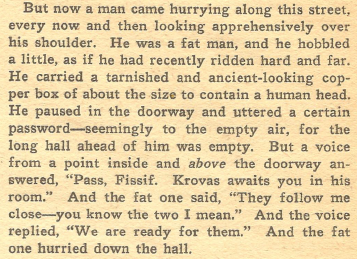
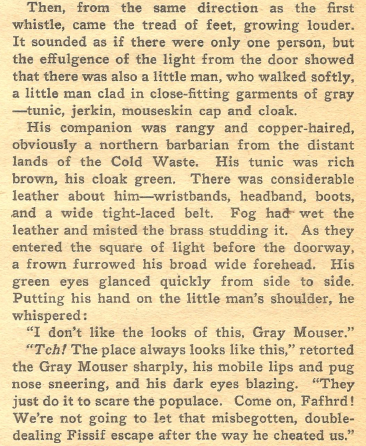
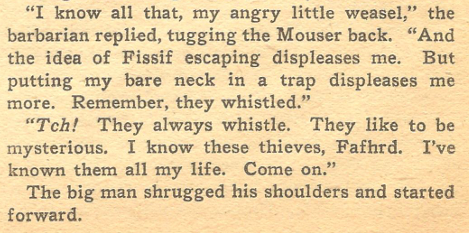
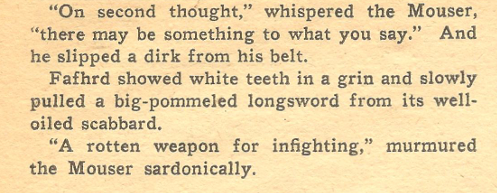
However, before all that got locked in, Weird Tales was actually trying to make an argument that “pseudo-scientific stories” belonged in *their* pages, and so we do occasionally run across an automaton tale in the magazine. One of these that I think is worth mentioning is Edmond Hamilton’s “The Metal Giants” from the December 1926 issue of Weird Tales.
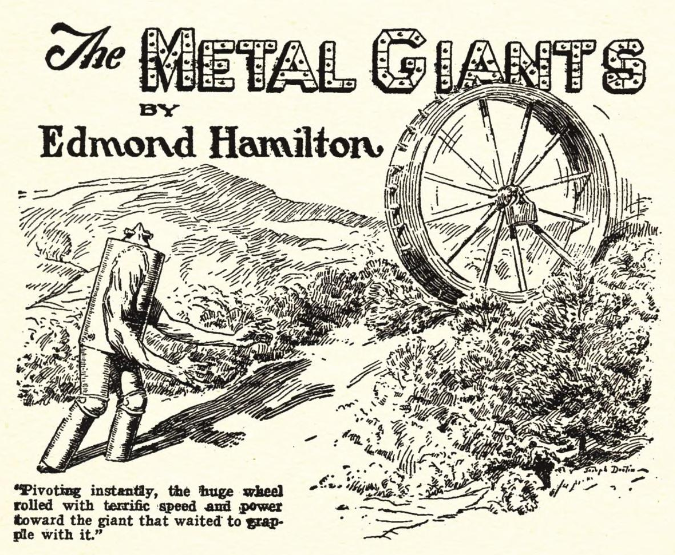
Hamilton is an interesting character, one of the most prolific writers in Weird Tales who went on to become one of the early masters of big, bombastic space opera style sci-fi. He was popular with readers, though his style is often a bit affected for our modern tastes. But his origins in the pages of the Unique Magazine were something he never forgot – in even his most nuts-and-bolts sci fi stories there’s often a hint of cosmicism and weirdness in there somewhere.

And in “The Metal Giants” Hamilton really lands on something strange and interesting, I think. While the story is about giant robots, the real weird science aspect of the story is in the creation of the thing’s BRAIN. The inventor, some schmuck named Detmold, creates a totally artificial brain, and it’s here that Hamilton really lands on a fun bit of alien-ness. The brain, while obviously vastly intelligent, is totally inhuman and cannot truly communicate with us. The incommensurability of our evolved (and, Hamilton states, ensouled) brains with a machine, no matter how complex, is a really interesting idea, and not really one you see much of in sci-fi. Super potent A.I.s in sci-fi are often archly supercilious and capable of ridiculously powerful feats of intellect, sure, but they’re almost always portrayed as human-like, at least superficially. We can communicate with them, at least; not so here, where Detmold’s artificial brain is truly, awfully alien. It of course goes rogue and there’s lots of gee-whiz action, but the core of Hamilton’s story, about a machine brain being something fundamentally inhuman, is a really fun, interesting idea.

We’ve been explicitly talking about mechanical robots here, but in the realm of weird fiction there’s another class of artificial beings that are worth mentioning: the non-mechanical. There’s Frankenstein’s monster, a hugely influential figure in the literature, but there’s also Karel Capek’s R.U.R. to contend with; Capek invents the word “robot” in its modern usage, but his robots are biological, artificial beings built via the industrialized production of synthetic body parts. Perhaps most important, though, is the theme of revolt of the enslaved, artificial underclass, in the course of which the slave masters are actually rendered extinct by those they had brutally created for lives of drudgery and oppression. That sounds familiar, eh? Ever hear tell of a shoggoth?

I’m not sure Lovecraft read Capek, though it is possible he was at least familiar with the play – it was pretty famous, and by 1923 it had had a pretty successful and well-publicized run in translation in North America. But there is ANOTHER automaton that we KNOW Lovecraft appreciated…Gustav Meyrink’s THE GOLEM! Now, Lovecraft hadn’t read it by the time he wrote “At the Mountains of Madness,” but he HAD seen the movie in 1921 or so. What’s interesting is that the movie “Golem” is pretty different from Meyrink’s novel (which Lovecraft LOVED when he got to read it in ’35); the movie is much more of a monster flick, with a literal artificially created thing at the center of the story that, ultimately, revolts and causes all kinds of havoc in the Prague ghetto.

Of course, labor actions and violent revolt were pretty major stories of Lovecraft’s day – he looked with horror on the Bolshevik revolution in Russia, and was famously deeply offended by the social upheaval and implied violent unrest brought around by foreign workers moving into New England’s industrial towns, so his shoggoths and their eventual revolt are undoubtably sourced from lots of things. But it is interesting to note that they are, basically, automata – as presented, they’re biological robots, and one of their core functions is explicitly imitative (as wonderfully expressed by their piping “tekeli-li” sounds). Lovecraft even approaches some of the same questions that the previously mentioned automata do; it’s implied that all native life on earth came about as a result of these shoggoths, forcing us to confront questions of authenticity and “realness” as a species. In that, shoggoths are fulfilling the same rhetorical function as Hoffman’s Olimpia, Bierce’s Chess-Playing Robot, or Vaucanson’s shitting duck.

Conclusion

Well, this has gone on for a while, hasn’t it? That’s the danger (and pleasure) of free writing, I suppose. But I think automata are a topic worthy of even long-winded, meandering discussion. When I wrote Vaucanson’s Canard (what’s that? why yes, it IS available for preorder from Paradise Editions!) I was scratchin’ an itch I’d had for a while about ol’ Jacques and his weird duck machine, but the more I thought and read about it, the more I realized that there’s a lot to unpack about these mechanisms. Their place in the history of science and technology (and medicine) is a fascinating one, but they also represent important symbols of industrial automation and the role of people in both labor AND creation. There’re questions of agency and aesthetics and economics and, honestly, even metaphysics wrapped up in their clockwork bodies, and they’re worthy of serious study and contemplation.

In terms of the history of weird fiction, I think they’re as important a figure as the Vampire, for instance – Hoffmann’s automata mark a change in the world of the weird, and are as good a place as any to pin the invention of the unsettled, uncanny, uncertain type of horror that typifies one flavor of the modern genre. And, of course, their influence on science fiction goes without saying – the uses that writers like Dick or Asimov put their automata redefined the genre and changed forever the way speculative fiction approached questions of life and materiality and creation.

Finally, in these dark days of A.I. slop, there’s a lot to be learned from automatons both literary and literal. In a lot of ways, there’s something reflective of our own times in contemplating a mechanical duck presented as a wonder of the age that would revolutionize our world…but that is really just shitting out some secretly pre-loaded crap.
Robert E. Howard and Evolution

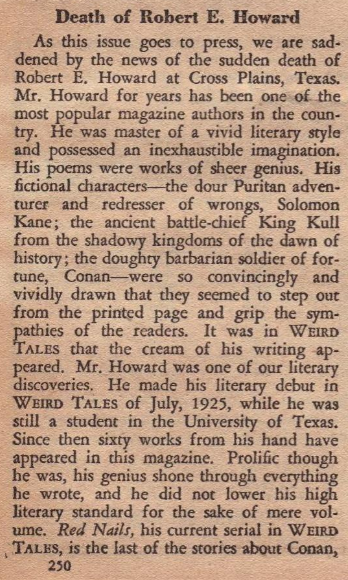
Having returned from Robert E. Howard Days up in Cross Plains, TX (where I was nominated for but did not win The Hyrkanian award, ah, c’est le awards), I find the ol’ skull is all a-swirl with a lot of REH/S&S these days. I’ll try and space it out (and maybe save some for my annual S&S celebration time around the Yule), but I think I’ve got to exorcise SOME of it now, so today I’d like to talk about a bit of science that undergirds Robert E. Howard’s fiction: evolution.

This was inspired by the 1998 REH biopic THE WHOLE WIDE WORLD, which was screened at REH Days, and which includes a very strange exchange between Howard (played extremely D’Onofriolly by Vincent D’Onofrio) and Novalyne Price (played extremely cute-as-a-buttonly by Renee Zellweger). The scene in question occurs at around the 53 minute mark or so (you can see it right here). The two lovebirds have just had a picnic where Howard tells Novalyne that his mom thinks she must have some “Indian blood” in her, maybe as much as “half Indian.” Novalyne, confused and amused, asks why Howard’s mom had thought that. There’s a cut and the two of them are in the car, with REH taking up the topic:

HOWARD: It’s the shape of your face. Do you know how much Indian blood you have?

PRICE: None that I know of –

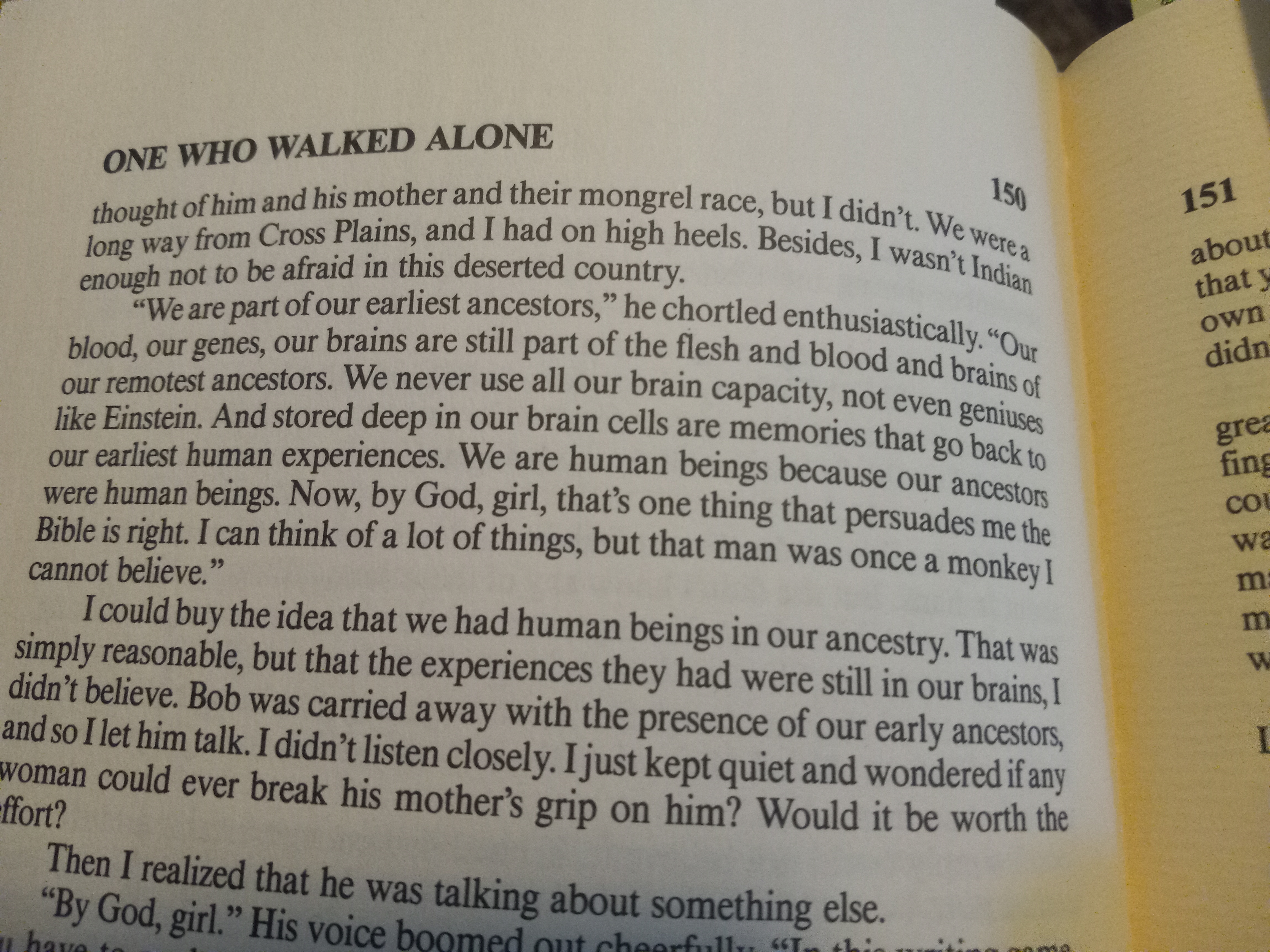
HOWARD: I bet you got a drop or two. We are human because our ancestors were human. That’s the one thing that persuades me that the Bible was right. I can imagine a lot of things, but I can’t imagine Man was once a monkey.

Now, there’s a lot of bonkers-ass shit to unpack in that short exchange! Setting aside (for the moment) the weird interest in race and miscegenation (one of Howard’s favorite topics in his fiction), the fact that the movie has Howard say that a) he believes in a biblically informed divine origin for humanity and b) the he “can’t imagine Man was once a monkey” is absolutely crazy, something totally incommensurate with both his fiction as well as many statements in his letters to different people.

When I got back home, I broke out my copy of Novalyne Price Ellis’s One Who Walked Alone, her memoir of her couple-o-years-long relationship with REH, written in 1986 and the source for much of the movie. Perhaps, I thought, the movie had invented the exchange for some strange reason? Afterall, coming out in ’98, the movie would’ve been right smack in the middle of one of the big Creationist waves that periodically sweep this benighted nation – perhaps they’d felt the need to situate Howard, a southerner through and through, within a comfortable southern archetype? But, there on page 150 of my copy of the book (the edition w/ Renee Zellweger on the cover), was the exact lines:

Again: this is insane. There is no possible way to reconcile this statement, that REH was a bible-believin’ Creationist, with the fiction he wrote, where the centrality of evolution is key, not merely to the biological nature of individuals, but to whole civilizations and cultures! Similarly, it is contracted directly by his own words in his letters! So let’s take a look!

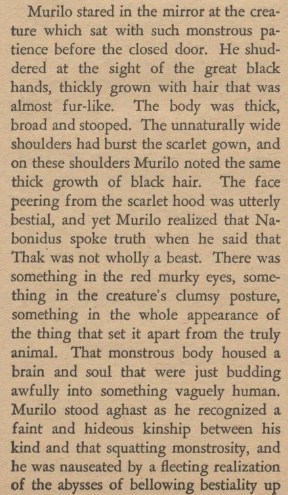
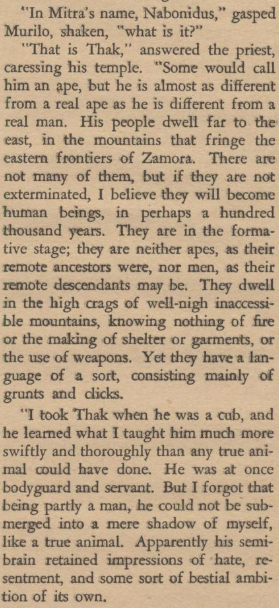
The first and most obvious counterexample in REH’s fiction is in the Conan story “Rogues in the House.” This was published in the January 1934 issue of Weird Tales, so it appeared not that far in time from when the weird exchange in the movie is supposed to have happened. In it, Conan is engaged by a patriotic rebel to help kill the vile Red Priest Nabonidus (who is, basically, the scheming and clever Cardinal Richelieu from “The Three Musketeers”). In the course of infiltrating his death-trap of a house, they learn that something is amiss – one of Nabonidus’s servants, an ape-man named Thak, has taken over the compound, dressing in his robes and using his crude but effective knowledge of the various death-dealing mechanisms in the house to kill all comers. When the heroes get their first good look at Thak (via a series of complex mirrors), we get introduced to Thak’s history by the Red Priest:

Later, when Murilo, the rebel instigator, gets a good, long look at Thak’s face, Howard takes the opportunity to further underline the proto-humaness of Thak:

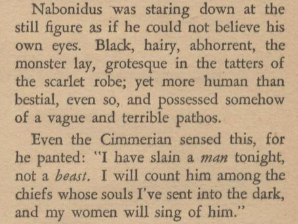
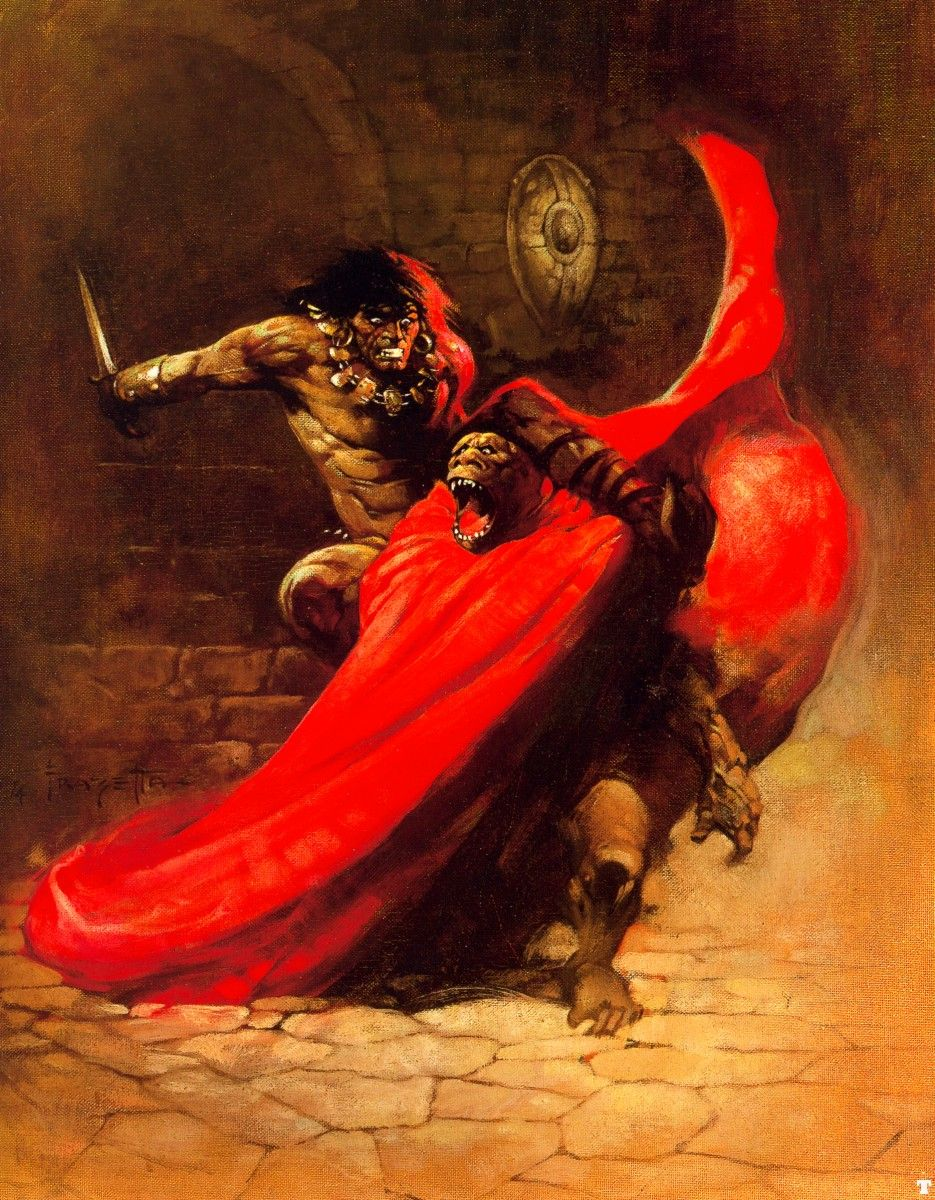
Thak is explicitly portrayed as part of a chain of beings leading progressively towards a kind of archetypal humanity, one that furthermore (and most horribly) suggests to Murilo that humans themselves had experienced just such a stage of life in the distant past. Howard revisits Thak’s fundamental and evolutionarily-informed idea of “human-ness” in the climactic battle between Conan and the ape-man, making sure we understand that this is not merely an ape, but a sentient being close to our own “kind.”

Let us pause briefly to admire Frazetta’s portrayal of this fight in one of his inimitable paintings:

Badass.

The important thing about Thak is that he is explicitly positioned within an evolutionary context – Nabonidus, while certainly a villain, is also portrayed as a deeply and indeed uniquely profound thinker for his age, and we are meant to take his insights into the evolutionary history and potential of Thak at face value. Furthermore, Thak’s ambitions, his wearing of the robe, and his usurpation of Nabonidus in his own home are not mere apings; rather, Thak is possessed of a sense of self and of others that is human-like, a result of his heritage as a kind of developmentally and evolutionarily intermediate man-ape.

This interest in evolution and the deep history of humans in geological time isn’t anything new for lil’ Bobby Howard either – way back in 1925, his very first professionally published story in Weird Tales (“Spear and Fang”) was all about the conflict between Cro-Magnon and Neanderthals. There is no room within a strict, fundamentalist worldview for different members of the genus Homo to be waging war on one another. Interestingly, for all its eventual violence, the story begins with a Cro Magnon character making cave paintings of extinct animals, a scene placing art, an aesthetic sensibility, and an appreciation of beauty explicitly within an evolutionary framework. But, like so many of Howard’s ancient wildernesses, this is no Edenic garden; it’s a savage and brutal landscape where violence and survival are the engines of evolution.

Indeed, over and over again, Howard portrays the past as a grim evolutionary climb, calling out specifically the rise from apedom to semi-apedom and, eventually, full humanity. In fact, taking cues from both contemporary geological literature as well as esoteric theories of human history, Howard makes these events explicitly cyclical – Kull’s Atlanteans rise from apehood into their barbaric splendor, only to be hurled back again down the evolutionary ladder by their Age’s terminal cataclysm; slowly they rise to become fully human again in the fullness of geological time where, it is implied, they become the Cimmerians. Bran Mak Morn’s Picts are likewise a people with a long and troubled past that stretches into prehistory, and Atla, the were-woman of Dagon Moor, explicitly tells Bran that the Worms of the Earth could’ve been people, were very nearly human in fact, when the Picts drove them back into atavism and subterranean degeneracy. This sort of evolutionary thinking is integral to Howard’s fiction, both mechanically as part of plots as well as conceptually, as something key to his worldview.

Howard’s exposure to evolutionary thinking can be traced from two sources. The first is in the books he owned and which, on his death, were donated to the Howard Payne University library by his father. This collection, originally something approaching 300 books, was eventually taken out of special collections and put into general circulation, the result being that there are now less than 50 or so actual books left due to loss, theft, etc. However, a group of dedicated workers over the years have put together the original accession list and chased down references in Howard’s letters, meaning we now have a pretty decent idea of the books available to REH in his home. For more on this incredible work (including a handy history), and to peruse the book list, check out The Robert E. Howard Booklist!

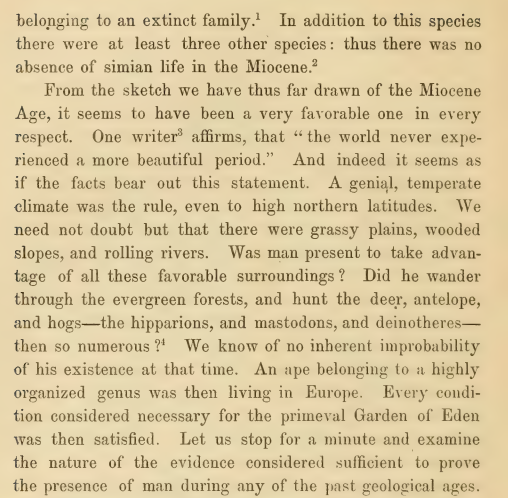
To cut to the chase there’s one book in particular that is extremely relevant on the list: E. A. Allen’s The Prehistoric World or, Vanished Races originally published in 1885. It’s an odd and interesting book, actually; Allen, while an obscure writer now, was a prolific popularizer of natural history, with a particular interest in anthropology and ethnography. The book that Howard owned is a helluva doorstop, 800 pages or so, that begins in prehistory and moves through the iron age in Europe before leaping over to the Americas, with chapters on the Mound Builders, on the Nahua, on the Maya, etc. It’s a remarkably interesting historical document, a snapshot of both the broadly consensus natural history scholarship of the day as well as the then popular “stadial” version of anthropology (a decidedly progressivist and positivist framework that placed “civilizations” in a developmental hierarchy; guess what sort of people were on the top?). Honestly, I suspect this books is enormously important to a lot of Howard’s thinking and writing, but I want to focus on the second chapter “Early Geological Periods.”

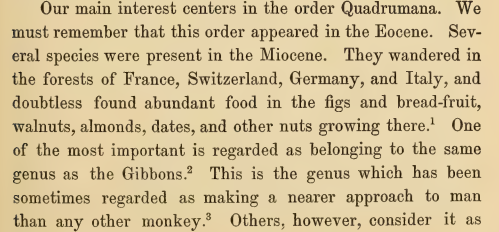
This chapter is a kind of speed run through geology and paleontology, giving the reader a thumbnail of 1880s vintage earth science. There’s some great bits in there, especially if you’re interested in the history of geology – this is, after all, a pre plate tectonics world, and so there are some amusing gaps in both the interpretations and the detailed stories. However, this book IS firmly post Darwin (Origin of the Species was published in 1859). That means evolution is front and center:

Like I said, there’s some fun goofy stuff in there – the old-ass taxonomic term “Quadrumana,” a paleobiogeography that predates the Out of Africa model of human origins, and the to-us-now shocking attempts to extend the presence humans back to the Miocene! (just for context, Allen’s work of course predates radiometric dating [it predates the discovery of radiation, in fact] so they’re using a relative chronostratigraphic approach; even so, a Miocene origin is wild! The Miocene *ended* ~5 million years ago, and the oldest extant example of the genus Homo is 2 million years old!) But this section is interesting when compared to the “Rogues in the House” excerpt. Here, a Miocene primate is explicitly stated to have made “a nearer approach to man than any other monkey,” which sounds very much like what Nabonidus said of Thak. Later in the passage Allen refers to a “highly organized genus” (meaning “evolutionarily advanced”) of ape as living in the Edenic Europe of the Miocene. Non-humans “ascending” towards humanness in the fathomless depths of time – this is extremely REH’s bag, you know?

It’s a bit too much to get into now (though it’s a topic I’ll definitely be returning to in the future) but there’s another relevant library in the Howard household that bears on this discussion – his dad’s bonkers collection of esoterica! That Howard was familiar with at least a popular gloss of Theosophical concepts is obvious from his work; the ideas of cyclical catastrophes, of the struggle of “root races” to ascend the ladder of progress over and over again, these concepts out of Theosophy are probably just as important as his understanding of geology and biology. Of course, the reality is that the Theosophists were actually responding to the science of day, drawing their myths and mysticism out of the mid-19th century scientific milieu the same as Allen (and everyone else). Geological catastrophism, deep time, sinking and rising lands (like Lemuria!), comparative religion, all of these ideas were taken out of their scientific and scholarly context and massaged into a new mystical quasi-religion, one that Howard’s dad was EXTREMELY well read in. But that’s for another post!

Leaving the Howards’ libraries behind, there’s an even more direct source for REH’s views on evolution we can tap: his letters! Thanks to the tireless effort of a bunch of editors, we’ve got an embarrassment of riches when it comes to the letters of REH. And, given the voluminousness of his correspondence, there’s a lot to choose from! Let’s hit a big one right away:

Let us consider the insect Man. How many specimens of this creature are willing to believe that they came from the same root stem as the elephant, the garter snake and the leopard? No, they must have a special creative act, a special Divine process to account for their godlike beings – bah, either Haeckel’s right and there is no such thing as a “soul” in the accepted sense or else everything has a soul, whether organic or inorganic. Let the theologians seek to refute the theory of spontaneous generation all they wish – I admit it is rather difficult to grasp in a cosmological sense, but biologically speaking, the scientific world has as a whole, I think, accepted the unicellular theory as a positive fact. The facts boiled down are these: theology must accept evolution both in ontogeny and in phylogeny if it accepts geology.

REH to Tevis Clyde Smith, March 1928, The Collected Letters of Robert E. Howard, volume 1: 1923-1929, Rob Roehm and John Bullard (eds)

That’s a pretty definitive statement, and one completely antithetical to the quote from the movie. Howard is 100% rejecting a special creation for humanity (and, indeed, for all of life). The “spontaneous generation” he’s referencing is not the “flies from meat” thing you might’ve heard about, but rather the idea of life originating on its own from inorganic matter via natural processes in the deep past. This, in particular, was one of Haeckel’s (many) research interests – taking up a topic that Darwin himself had not dealt with, he posited that highly organized but inorganic matter (like crystals) may have given rise to simple organic life, the “unicellular theory” REH mentions later. Howard is also explicitly rejecting biblical authority on theological matters in this letter too – theologians have to reckon with Haeckel’s biogenic law as well as the reality of Deep Time, rather than the other way around!

The prominence of Haeckel in Howard’s thinking is fascinating, and it’s something I’d never appreciated until I read his letters. He’s easily the biologist most mentioned by REH, and he seems to have seriously engaged with ol’ Ernst pretty heavily at some point (though, in a later letter to Lovecraft, he admits that he’d forgotten a lot of about the details of his work). Presumably, his exposure to Haeckel was in school, where Howard was part of a “science course” which, presumably, operated as a kind of theme or special focus in his curricula. It’s striking the effect it must’ve had on Howard; Haeckel comes up a lot (alongside famous scientific racist Herbert Spencer), whereas Darwin is mentioned only once…in a list of people who have “grasped the cosmic” that also includes Haeckel and Spencer and Huxley. What’s interesting in particular is that in addition to Haeckel’s biological and evolutionary work (he was a major popularizer of Darwin), REH seems enamored of Haeckel’s strange brand of monism, which provides a kind of romantic and pantheistic underpinning to the natural world (in opposition to a strictly materialist view). This same kind of vaguely mystical biology is something also seen in Herbert Spencer, another of REH’s favorite thinkers – he in particular seems to enjoy Spencer’s ideas of the “Ultimate Unknowable,” which much like Haeckel leaves room for some sort of ineffable energy or drive behind the mechanical operation of the universe and life.

Of course, the other things that Howard undoubtably took from both Haeckel and Spencer were their scientific racism and polygenism. Both men were, like many people of the age, eugenicists; Spencer, who as mentioned above was name-checked by REH a lot in his letters, originated the term and idea of “Social Darwinism;” he also coined the term “survival of the fittest,” an obvious and important part of Howard’s philosophy and ethos. Additionally, Haeckel was a vocal and powerful proponent of scientific polygenism, the idea that the various human races arose separately from different ancestors and at different times. In fact, part of Haeckel’s theories about the origins of life, the “spontaneous generation” mentioned in the letter, was that life itself was potentially polygenetic, having arisen multiple times out of inorganic matter on earth. While REH never outright states his support for polygenist views in his letters, the idea is clearly present in his fiction – there are multiple examples of different “races” rising up out of semi-apedom into humanity in his essay “The Hyborian Age,” for example, and the idea is implicit in the way he writes about Thak and the Worms of the Earth. It’s probably also a part of his horror of miscegenation: Howard clearly believes that there is something fundamentally biologically wrong with race-mixing, in addition to the moral decadence that he felt it represented.

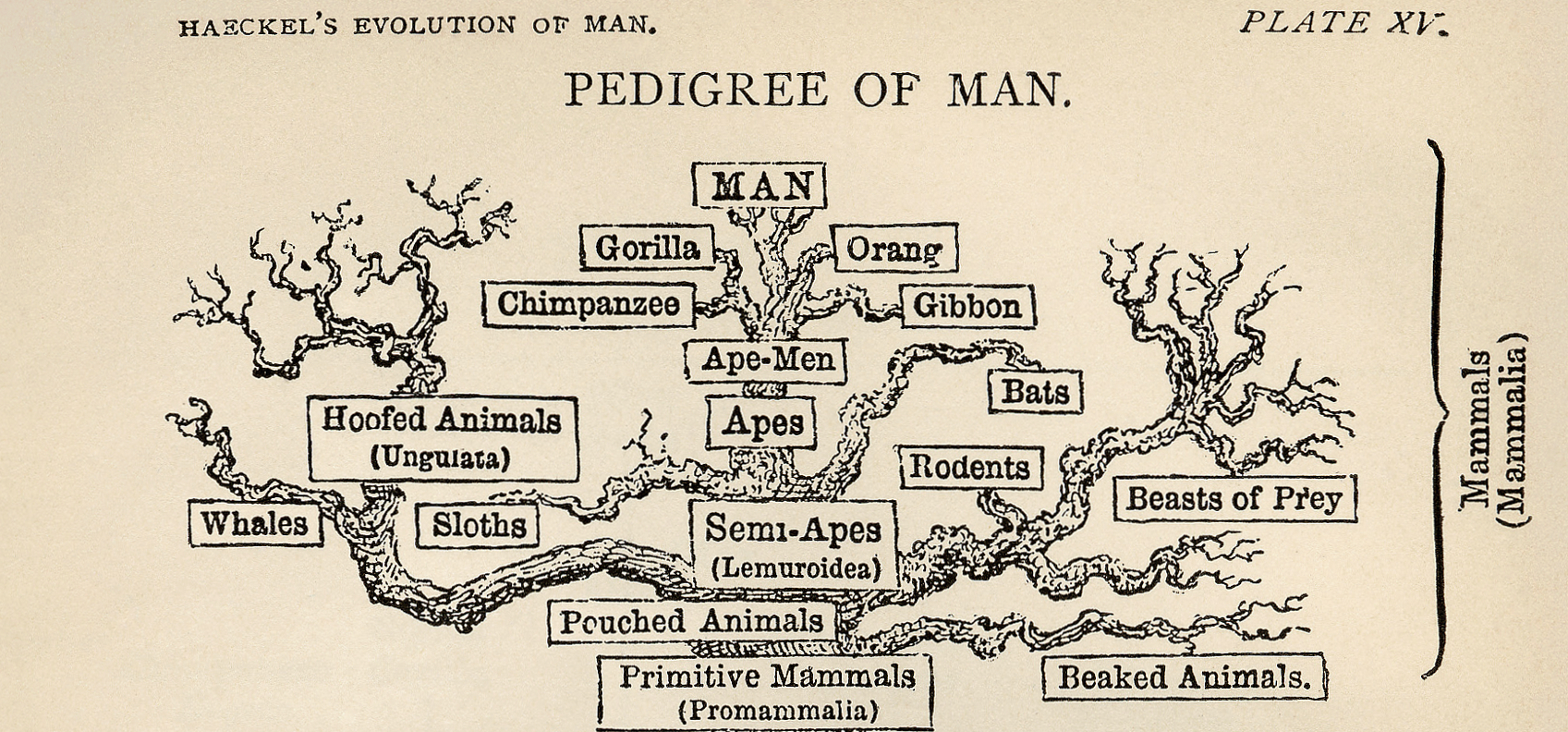
It’s worth taking a look at Haeckel’s visual representation of this idea, because it’s a subtle but important point that illustrates REH’s thinking. The below figure is a portion of a plate from the English translation of one of Haeckel’s books, his 1879 Evolution of Man:

A few things are worth noting here: first, the placement of MAN atop the tree, crowning the progressive hierarchy implicit in the history of life. More important, however, is the very subtle way Haeckel conveys his idea that the human races arise out of different ancestors. A forking branch proceeds from APE-MEN, with single branches leading to GIBBON, ORANG, etc. But then look at the MULTIPLE BRANCHES (six of them!) leading into MAN. Like I said, it’s a subtle but very important point with some extremely unpleasant implications, namely that the various races of humans represent distinct biological species arising out of a common ape-man ancestor. It’s foul stuff, but it’s also recognizable as a very common belief among people in Howard’s time, and within Howard’s work; put “Cimmerian,” “Stygian,” “Hyborian,” etc on each of those branches and you’ve got a good representation of Howard’s ideas.

Another letter, this one part of the interminable HPL-REH Civilization-vs-Barbarism running gun battle that they had for years and years, interestingly provides some insight into Howard’s opinion of religious anti-evolutionists. The context of this short excerpt from their (unending and tedious) argument focuses on HPL’s view that REH doesn’t hold artistic endeavors in as high of esteem as he should. Regardless, the relevant section is interesting as regards our topic here today:

Between the fundamental religionist who goes into foaming rages over the idea of evolution, because he can not stand the thought of kinship with a monkey, and the artists who strains his guts to prove his distance from the protozoa, I see no basic difference; both seem outcroppings of the idea concerning the divinity of man.

REH to HPL, September or October 1933, letter 259, The Collected Letters of Robert E. Howard Volume 3: 1933-1936, Rob Roehm and John Bullard (eds)

It’s a pretty funny statement; I love to imagine a tortured poète maudit weeping over the need to distinguish themselves from protists in the eyes of the posterity. But it’s also a helluva rejoinder to the weird statement from Novalyne’s memoir and in the movie, isn’t it?

One last letter excerpt, because they’re fun and more people need to read ’em! This one is from a letter to August Derleth, and in addition to its relevance to our discussion here, it is also one of those great examples of REH really playing up rurality for his non-western interlocutors:

A friend of mine was trapping once […] He thought he had a muskrat and climbed carelessly up and stuck his head over the ledge, and there was a skunk in the trap and it let him have a full volley smack in the face […] My friend fell off the ledge with an ear-splitting shriek and rolled on the ground for some time after the exact fashion of a hound-dog […] Nobody could doubt evolution after watching the antics of a man who has just been slapped in the mush by a polecat.

REH to August Derleth, July 4 1935, letter 319, The Collected Letters of Robert E. Howard Volume 3: 1933-1936, Rob Roehm and John Bullard (eds)

In addition to just being a funny story, it also shows how, even beyond the eugenicist background of his thinking, Howard’s worldview (and his fiction) was founded on an philosophical framework of what was “natural,” a view informed strongly by a belief in evolution. There’s also present the idea that this “naturalness” reflects the fundamental biological order of the world – a man, for all his sophistication, is no different than a dog when confronted with the same problem (of getting their shit rocked by a pissed-off skunk). There’s really no way to imagine Robert E. Howard without a belief in evolution – the idea is as central to his work and worldview as it is for Lovecraft, and having him question it in the movie (rejecting it in favor of the bible even!) is truly bizarre!

So what’s going in Novalyne Price Ellis’s memoir, One Who Walked Alone and the movie it inspired? Well, there’re a few options, I reckon:

1 – Novalyne Price made it up whole cloth. It’s a possibility, certainly – as described by Bobby Derie the creation of One Who Walked Alone remains opaque, with the author dead and her notes and materials unavailable, leaving us merely with the book. A key motive for Price writing it was to counter negative portrayals of Howard; perhaps she felt a definitive statement of belief in the Bible was important (including a statement of Creationist faith) and so inserted it into the narrative. As far as I can tell, we don’t know anything specific about Novalyne Price’s religious leanings, though she does write about attending church and believing in God (and in everyone’s right to worship God in whatever way they see fit) in the book. But who knows? An older Southern lady writing in the late 70s-80s, she very easily could’ve held Creationist beliefs, and decided to put REH in the camp of the angels. Without access to her diaries and journals, we’ll never know! But this is clearly the very darkest option – it puts her memoirs, as a source of sincere recollection, into *very* shaky, shady territory!

2 – Novalyne Price misunderstood/misinterpreted something REH had said. Reading Price suggests (to me at least) that she *thought* she understood REH better than she actually did. There’re numerous places in the book where she seems to be confused by what is, plainly, REH making a joke or poking fun or being ironical. Additionally, Howard could clearly be kind of a combative asshole, picking at people or arguing for argument’s sake. The exchange in the book is actually a good deal more contentious than is presented in the movie; Howard, at least to my reading, absolutely understands that his mother was talking shit about Novalyne, and he’s getting a kick needling her and watching her reaction (a very common thing in the book). If so, the odd statement about the bible and creationism becomes legible as just more of REH’s situational weirdness, where he’s trying to offer biblical support for his position, knowing that it’d annoy her.

3 – REH said it because he thought it was something Novalyne wanted to hear. Like I said, the discussion around miscegenation that REH and Price are having is a bit of a strange, heated one. Maybe Howard wanted to change the subject, or in the moment felt like he was offering an olive branch by claiming to be a bible-believer (something clearly important to Price, from sections elsewhere in the book). It would mean he was straight up lying of course, since his letters seem to make his position very clear. Also, it’d be an odd moment of him backing down too; he seemed to love scrapin’ and arguin’ with Novalyne in particular!

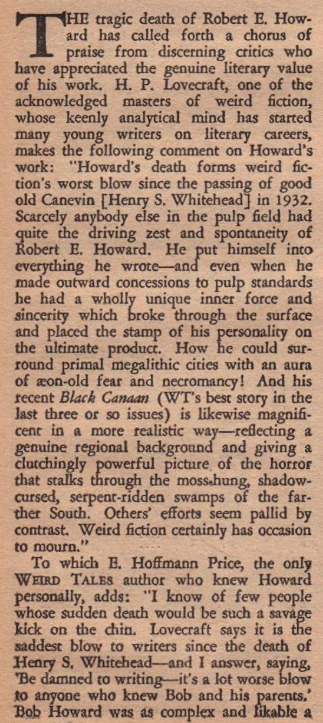
4 – REH said it because he believed it. The weirdest and hardest-to-swallow option, but there it is. We contain multitudes, and maybe Howard had had a strange religious epiphany. I knew a devout Mormon paleontologist who described his life this way: six days of the week, he believed in evolution and geochronology and the fossil record, but on Sunday, he didn’t. Maybe Howard separated himself from his work like that, though that seems extremely unlikely given the whole “he put a bit of himself into everything he wrote” paean from Lovecraft and all. It’s again also a statement completely at odds with his own words, both fictional and in his letters!

As to which one it is, who the Hell knows? What I think is very certain, however, is that contrary to the statement reported by Price, Howard absolutely believed in evolution. In particular, the concept was central to his whole world view, both in his life and in his work. This is not to say that he had no religion; the scientists from whom he had drawn his understanding of evolution, Ernst Haeckel and Herbert Spencer, were themselves certainly not atheists; both of them believed in a kind of pantheistic drive that, while operating within the realm of the mundane and through the laws of biology and physics, nonetheless held something of wonder and, if not divine, then at least something more-than-mechanistic about it. Given his father’s own unusual religious milieu, something like that, a combination of Haeckelean monism with pop Theosophy, makes a lot of sense. Afterall, Jesus was an Ascended Master in a lot of New Age religious movements, so there’s even room for a (nondenominational) kind of appreciation for the Bible in there.

What there ISN’T room for is creationism – time and time again, the centrality of evolution to Howard’s writing is made abundantly clear. The battle between Cro Magnon and Neanderthal at the dawn of human history, the punctuated cataclysms of Howard’s Atlantis and Hyboria, the aspirational evolutionism of Thak and the thwarted phylogenetics of the Worms of the Earth, all of these are just as much evidence for Howard’s deep commitment to the reality of evolution as are his literal statements of the same in his letters.

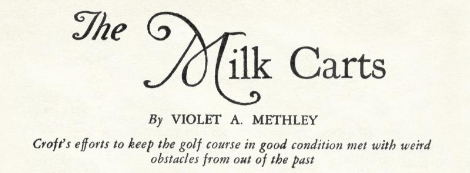
The Pulp Carts #46: “The Milk Carts” by Violet A. Methley, Weird Tales, v.19 n.3, March 1932

Spring has sprung, at least down here in Texas; in fact, there might not be much more of it, since we’re looking at some mid-90s later this week. Regardless, this is one of the lovelier times in these parts, with everything green and flowering, so I thought I’d take a break from work and write up a short, fun, outdoorsy and landscape-o-centric bit of Weird Fic from the March 1932 issue of Weird Tales. Our story today is “The Milk Carts” by Violet Methley!

Methley is an interesting if enigmatical figure. Not much in the way of biographical information on her out there, despite being a fairly prolific and apparently popular writer of children’s adventure novels. At least some of her output was what we’d now consider “weird” – in addition to a couple of short stories appearing in Weird Tales she also wrote a novel about a bunch of Australian schoolgirls hunting for Bunyips. But she must’ve been a fairly versatile writer with wide-ranging interests, because her first published book was a biography of the journalist, revolutionary, and friend-of-Robespierre Camille Desmoulins, which is kind of wild. She’s English, though, and was born in Kent in the late 1800s, a relevant bit of information for this story, I think.

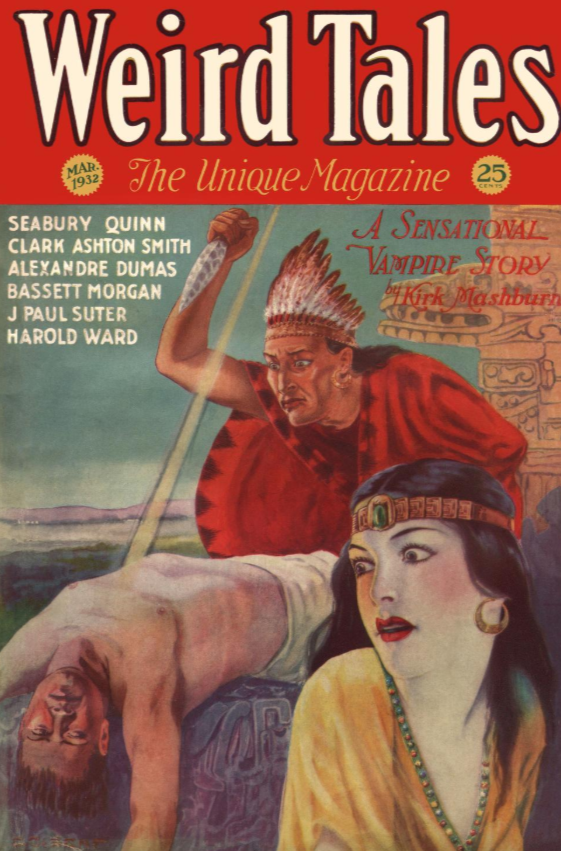
As for this issue of Weird Tales:

Good ol’ C.C. Senf doing the cover, based on the Kirk Mashburn story “The Vengeance of Ixmal,” one of the countless Aztec/Mayan (they played fast and loose with the definition) stories that appeared during the great flowering of interest in Central and South American archeology/history in the 20s-50s. Good example of the lurid exoticism inherent in a lot of these stories, where well-meaning but stupid anglos end up getting menaced by swarthy religious zealots with a mania for liturgical heart extraction.

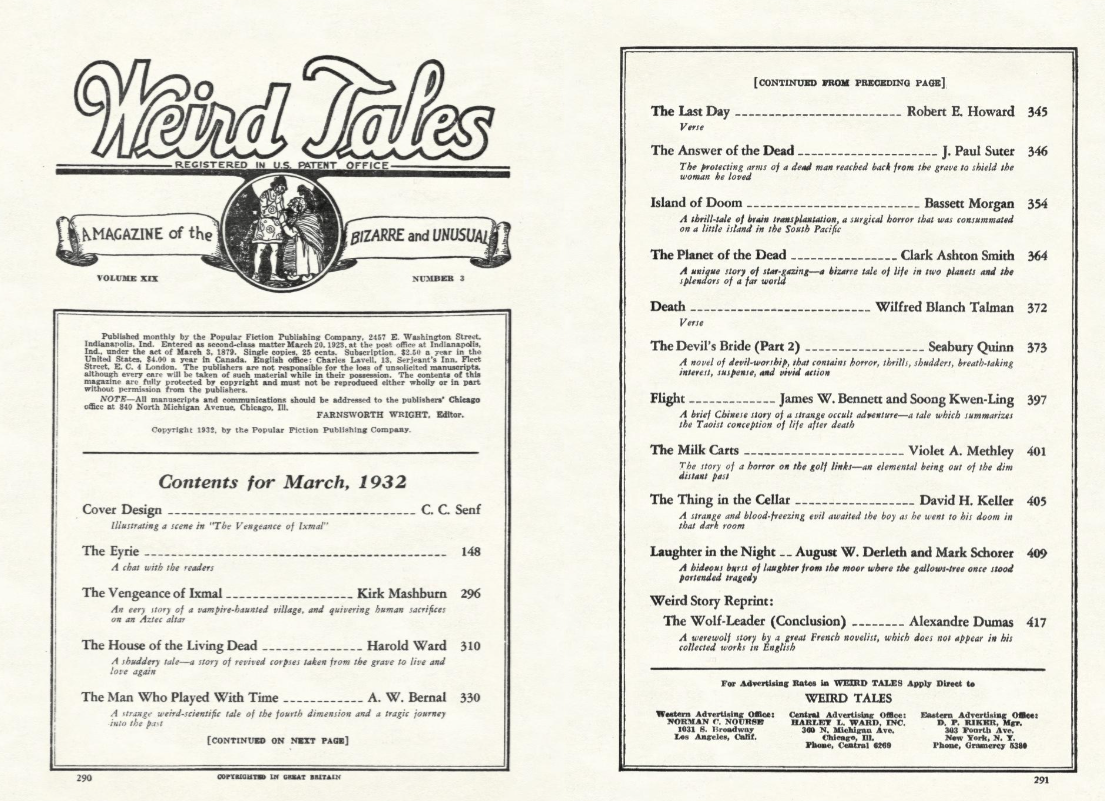
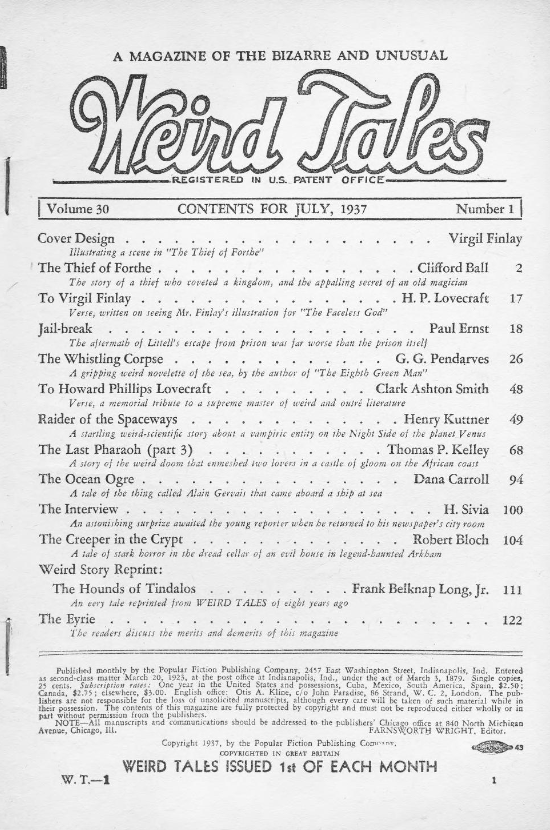
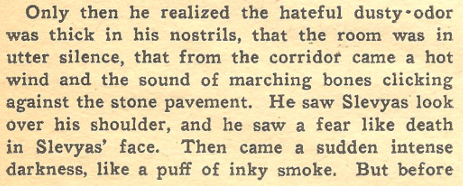
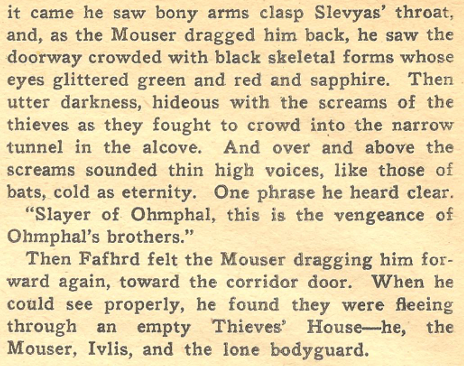
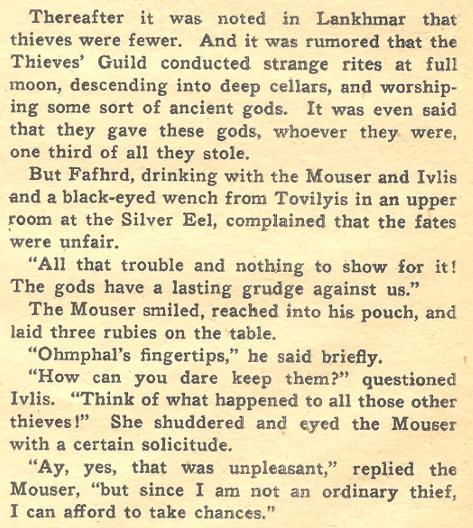
The ToC is kind of interesting this month:

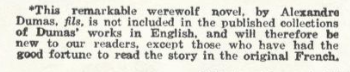
Some CAS and Quinn on here, they’re what you’d call the Heavy Hitters, and some REH verse too. A solid if unspectacular offering, I’d say, perfectly middle-of-the-road. It’s always good to see the reprint series still going strong, though if you’ll indulge me a minute, I’d like to point out some kind of silly things about this version of Dumas’ werewolf novel. First off, check out this little footnote which has a remarkable density of incorrect things in it:

First off, Le Meneur de Loups was NOT written by Alexandre Dumas fils, but by Alexandre Dumas pere, he of Three Musketeers and Count of Monte Cristo fame (among others). Strange to see Weird Tales get that wrong, especially since the editor here is Farnsworth Wright, who spoke, read, and translated French fluently and was familiar with classic French literature. Another thing that’s wrong about it is the claim that this was the first English translation of the work – it was translated in the 1904 in England! In fact, despite some light editing by Wright himself (and the inclusion of the summaries), the version in Weird Tales IS that translation, by Alfred Allison, though of course the translator is never named or acknowledged! Makes me wonder if the errors aren’t some way to help elide the fact that Wright and Weird Tales almost certainly didn’t pay to publish this translation. Ah well, c’est le pulps!

Anyway, enough perfidy! On to “The Milk Carts!”

We’re well in the back of the magazine, without any illustrations or ornamentation for these (often shorter) stories. A decent summary too, without too much in the way of a spoiler or anything, so that’s good.

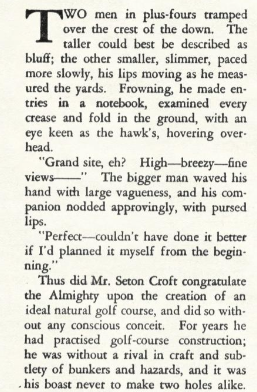
A nice, economical beginning – two guys in those baggy, classic golf pants are tromping around the great outdoors. One of them is Seton Croft, golf-course architect, and he’s busy writing notes and making measurements, all with an eye towards turning this stretch of green turf (owned by the bluff fellow who we’ll learn is named Scayles) into a premiere bit o’ golfing!

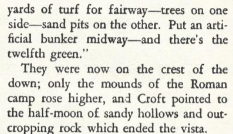
In particular, it seems like this spot, where these two have stopped and agreed to begin work, is ideal for what Croft is envisioning:

There’s a damn Roman encampment in the middle of these downs! I mentioned earlier that the author, Violet Methly, was born in Kent, and there’s clearly a bit o’ the Kentish countryside in this story, a place rich in Roman history; the initial Roman invasion of Britain started in Kent, and it was always one of the the strongest points of its far-flung colony. It’s a landscape with a deep history that is still visible today!

Anyway, Croft’s golf course musings are interrupted rudely!

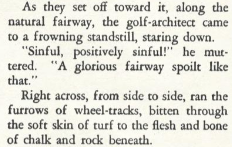
I’m a sucker for landscape descriptions, and that’s a particularly nice bit of work about these wheel-track furrows, I think – “the soft skin of the turf” ripped down to “the flesh and bone of chalk and rock beneath” is really good. In particular, I think it really nicely captures Croft’s view of the situation – after all, it’s just some wheel-ruts in the downs, not exactly an open-pit mine or anything, you know? But for Croft, this landscape must be adhere to an ideal, a particularly managed and manicured vision of Golf, artificially and meticulously pristine, and this cart track has no part in it! It’s a fun bit of characterization, and really highlights the centrality of landscape AND land usage in this story.

Anyway, Scayles, the owner of the land, is likewise aghast at this brutalization of the grass, and vows to have it turfed and repaired immediately! After all, he wants this fairway done and opened for golfing by Easter, and Croft promises it will be done!

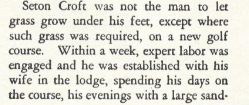
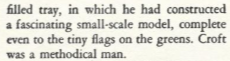
I really like the little sandbox he’s using to do a scale-model of the project, complete with teeny tiny little flags and everything. A fun glimpse of the way Croft is managing and shaping this land, I think.

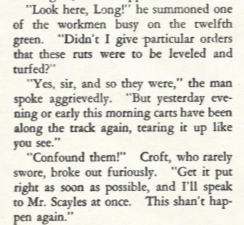
But all is not well! Back at the 12th hole, those damned cart tracks have appeared…again!

Scayles vows to make enquiries among his neighbors, but all the various cart-owning locals deny having driven across the greens. After all, it’s not a short-cut to anywhere, so why would they? Still, SOMEONE is wrecking Croft’s beautiful fairway, because shortly after levelling and turfing the ruts…they’re back! Croft and his wife are out looking over the site, when they run across the ruts again!

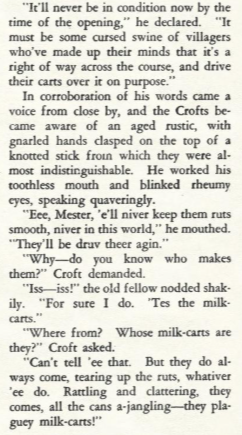
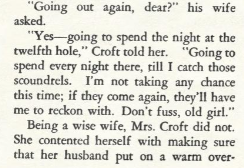
How great is that, “they plaguey milk-carts” with all their cans a-jangling? Great bit of gnomic mutterings from a weird old guy, classic ghost story stuff. And the idea that the wheel-tracks will ALWAYS come back, that there’s nuthin’ to do about ’em, is a lot of fun. Croft, of course, is still trapped in the mundane world so beloved of golf architects – he and Scayles investigate if there’re any dairies near by, but no dice. So, Croft does the obvious thing – he’s going to stand guard out by the 12th hole and catch the mad cart drivers in the act!

Whisky and sandwiches in the moonlight it is!

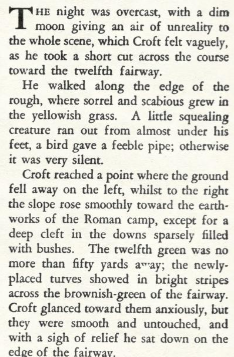
Again, this is a very short story, but the writing is economically evocative, I think – love the squeaking critter and the feebly piping bird, really conveys the loneliness of the wide-open rough here. We get another gesture towards the hummock of the Roman earthworks, just to remind us that this landscape is not a primeval wilderness or anything – the Romans were here long before Croft, and they too had modified the landscape to fit their purposes.

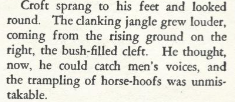
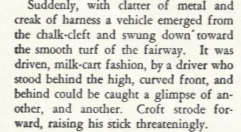
Croft’s peaceful vigil is interrupted by a clanging and a clanking – the milk carts have arrived!

Croft is pissed! He hops up, intent on confronting these cart hooligans who keep running roughshod over his golf course!

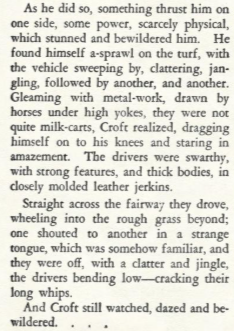
Tweedy little golf architect Croft is ready to crack some skulls! He’s got a stick, and he yells at the figures, telling them to fuck off (not is so many words, of course)…but the off cart drivers don’t seem to be paying him ANY attention. Furious, Croft grabs at the bridle of the nearest horse…

Those aren’t milk carts at all! Why, they look like…

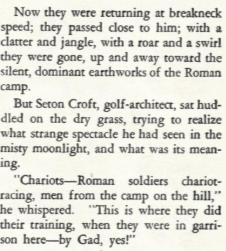
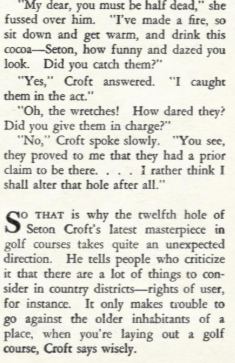
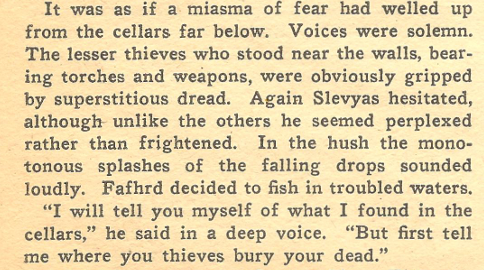
Roman ghost chariots! How rad is that? They’re still practicing, all these centuries later, in the same spot that they’d chosen for their recreation, the land they’d levelled and modified and built up, just the same as Croft was doing now! With this new realization, Croft heads home and meets his wife:

And that’s the end of “The Milk Carts!”

A short, placid little tale, and much more of a classic English ghost story than what I’d call a “weird tale,” but still, I like it – there’s a surprising amount of depth to it, I think, a kind of interesting meditation on landscapes and history that I really like. Plus, it’s extremely short, and that kind of efficient brevity is something worth studying too. And not everything needs to end in tentacular horror and madness either – I like Croft’s simple “they proved to me that they had a prior claim” and his later enigmatical justification for altering his design around the 12th hole. I like the way this story uses landscape and embedded history to good, spooky effect. And the idea of these spectral Roman charioteers circling their track night after night, especially in a spot that was being transformed into another location for sport and recreation, is a lot of fun!

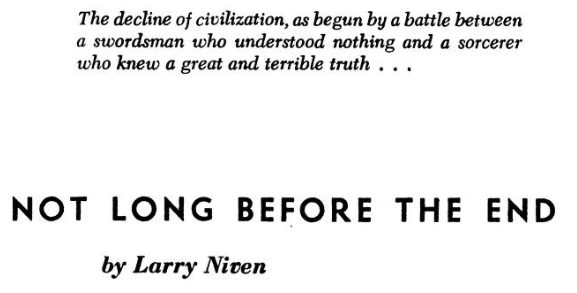
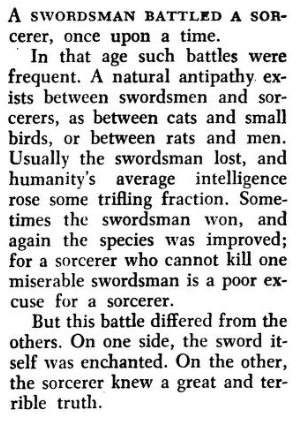
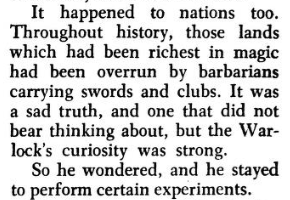
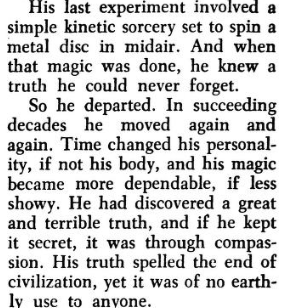
Not Long Before the Pulp #44: Three Kings’ Day Edition! “Not Long Before the End” by Larry Niven, The Magazine of Fantasy & Science Fiction, v. 36 n.4, April 1969

Well, with the Yule ended and the New Year begun, we prepare to say farewell to the annual Sword & Sorcery celebration on the ol’ blog. But, as in year’s past, we have one final S&S-focused post for this, the most Swordish & Sorcerous (at least by name) of Holidays…that’s right, it’s Three Kings’ Day! And, as is my prerogative, I’m leaping out of the pulps and into the fancy digests of the 60s in order to talk about an interesting moment in Sword & Sorcery’s history! The story in question: “Not Long Before the End” by famous prick Larry Niven, from the April issue of the 1969 volume of The Magazine of Fantasy & Science Fiction!

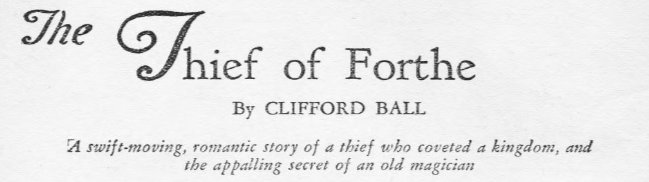
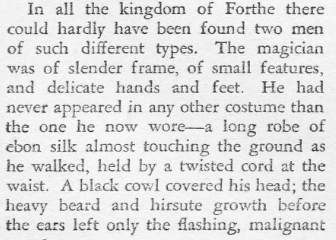
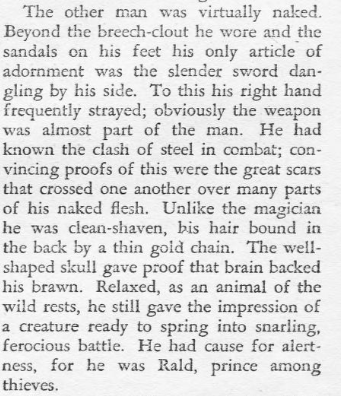
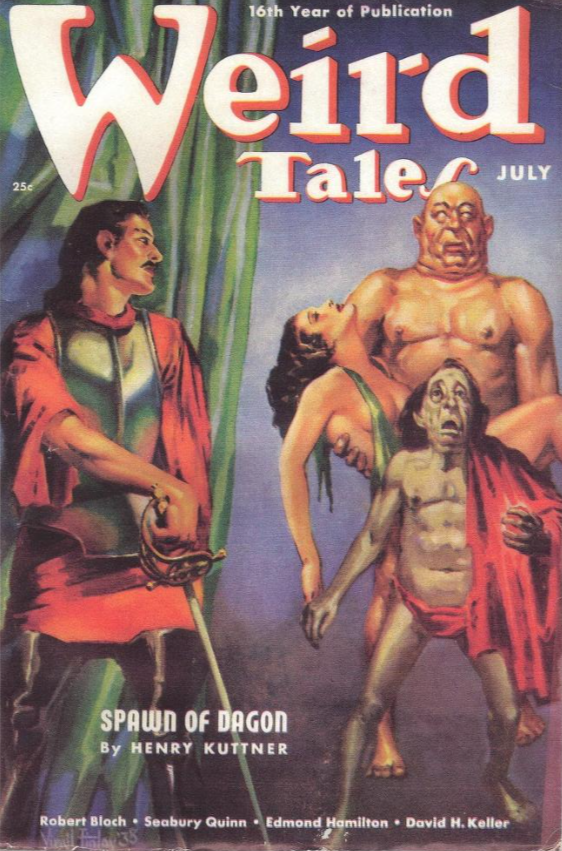
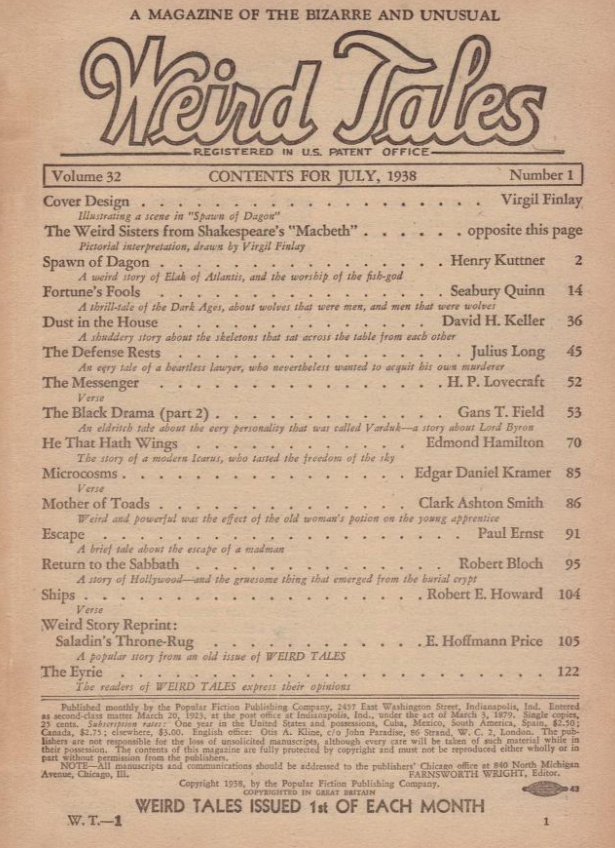
Why have we flexed our mighty thews to leap wildly into the late 60s, you ask? Well, previous recent entries in this ol’ blog have focused on S&S in the immediate aftermath of Howard’s death, an important and delicate phase in the growth of the genre. Characters like Henry Kuttner’s Elak of Atlantis and Clifford Ball’s Rald the Thief were major steps in defining the rough outlines of the then nameless genre that Howard had created; similarly, we’ve looked at Fritz Leiber’s work, and he’s the writer who actually coined the term “Sword & Sorcery,” fer Crom’s sake! All of these are important points in the early history of the genre, moments where readers and writers were negotiating about what was and wasn’t a swashbuckling weird adventure story with swords and monsters and mightily muscled heroes.

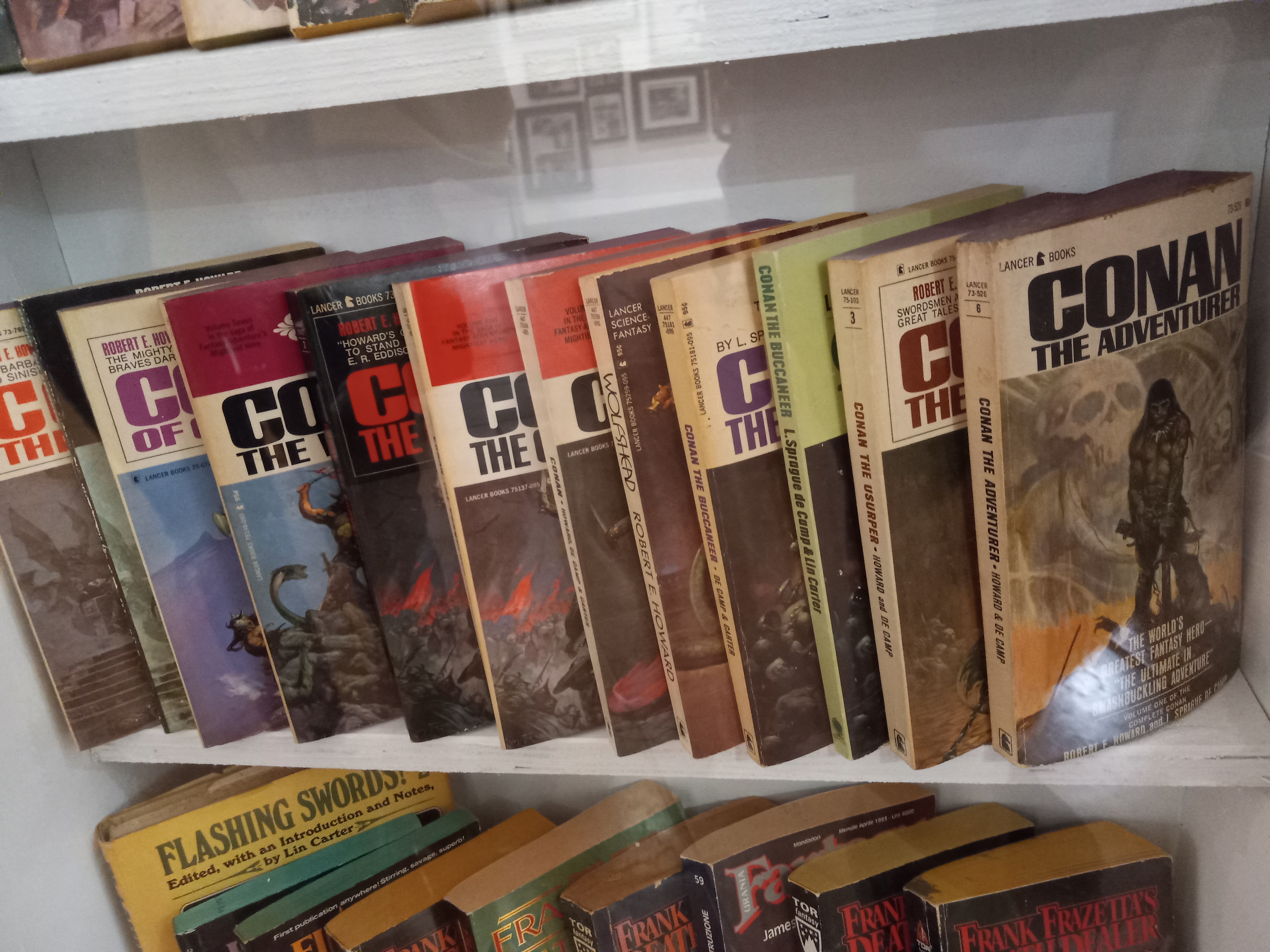
And while Fantasy (broadly constructed) was kept alive in the pages of Unknown Worlds, in important novels by Poul Andersen and Jack Vance, in the SAGA organization, and in the infamous Gnome Press Conan paperbacks, it wasn’t until the unauthorized Lord of the Rings Ace paperbacks in ’65 that things really changed. Publishers suddenly saw dollar-signs around these weirdo fantasy works, and so they sought out more, with editors like L. Sprague de Camp and Lin Carter digging deeply into the pulp archives to reissue old fantasy material in handy paperback format. In particular, Lancer’s Conan series, with the famous Frazetta cover that forever defined The Barbarian Archetype, was enormously important:

a collection of first edition Lancer paperbacks on display at the Frank Frazetta Museum in East Stroudsburg PA. The one on the far right, Conan the Adventurer, was the first of the series, published in 1966, and marks the beginning of a major Sword & Sorcery renaissance

What’s this got to do with our story today? Well, it’s striking (to me at least) at how quickly a backlash to Sword & Sorcery develops – we’ve got Conan exploding in popularity, and Howard’s muscular approach to the genre in particular suddenly becomes a major flavor in the genre landscape, all roughly in the later half of the 60s. And then by ’69 there’s ALREADY a story commenting on/satirizing some of the themes and styles and modes of the genre, and in one of the flagship publications of the day too! That’s remarkable, and speaks to the kind of wild expansion (and passionate fandom) that S&S (and Spec Fic in general) is capable of generating.

S&S literature would have something of a tumultuous 60s and 70s, with some exciting and interesting experimentation coming from people like Michael Moorcock, Samuel R. Delany, Joanna Russ, Charles Saunders, and M. John Harrison, all of them writing if not against “classic” S&S then at least in conversation with it. That’s why today’s story, by Niven, is so important and interesting – it is a major part of a new sword & sorcery, breaking free (finally) or Howard pastiche and associated pulp reprints.

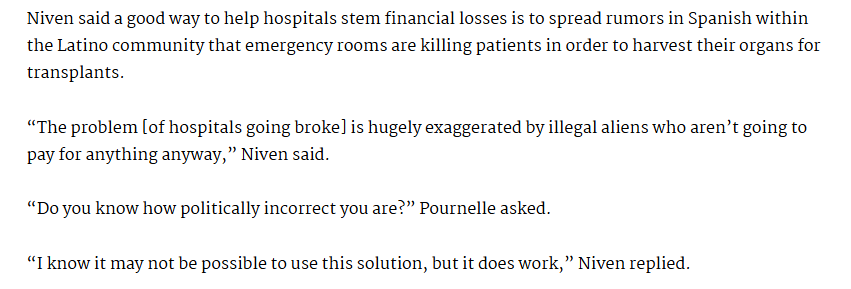
But, before we can get to the story, it’s important to address the fact that Larry Niven, in addition to being a hugely important science fiction author, is also a gigantic piece of shit and fascist scumbag. While people may fondly remember his “Known Space” setting (which he smuggled into Star Trek canon via the Animated Series), he was also an unrepentant reactionary and evil racist. With his buddy, arch-fascist Jerry Pournelle (a major figure in Sword & Sorcery fandom, btw) he cowrote a number of extremely vile novels, full of racism and dumbass rah-rah militarism; their collabs include what might be the single worst thing I’ve ever read, Lucifer’s Hammer, which is as truly deranged a race war fantasy as The Camp of the Saints or The Turner Diaries. But his bullshit goes beyond his own writing – he (with Pournelle and other assholes like David Brin) were members of a group called SIGMA, an association of sci fi dorks who offered pro bono consulting to the gov’t. Here’s one of Niven’s brilliant brain-waves, from 2008:

So yeah, Larry Niven is an enormous piece of shit, and his smugly moronic right-wing cryptofascist world view is a part of his fiction; in addition to his highly developed sycophancy towards power and authority, he’s also (like so many classical conservatives) blithely techno-positivist, which is something you’ll see in the story today! (yay!)

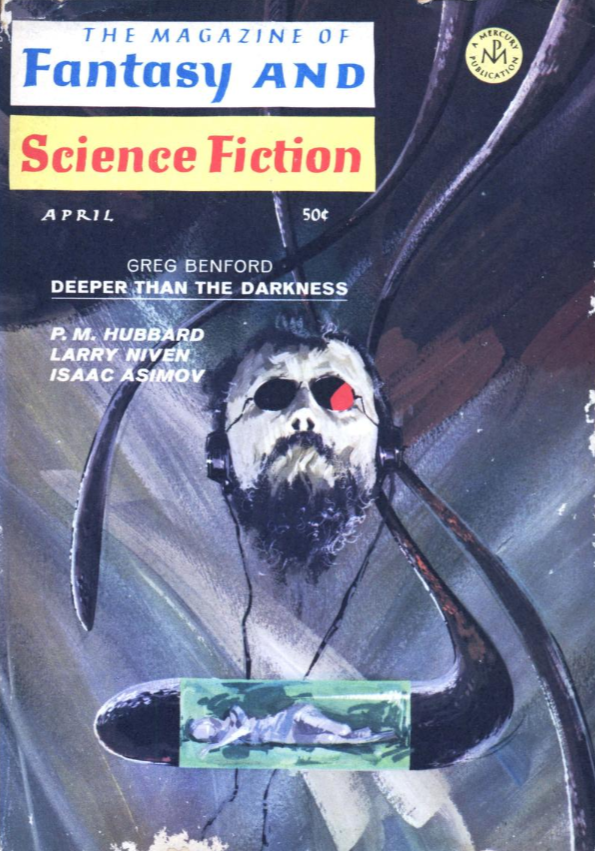
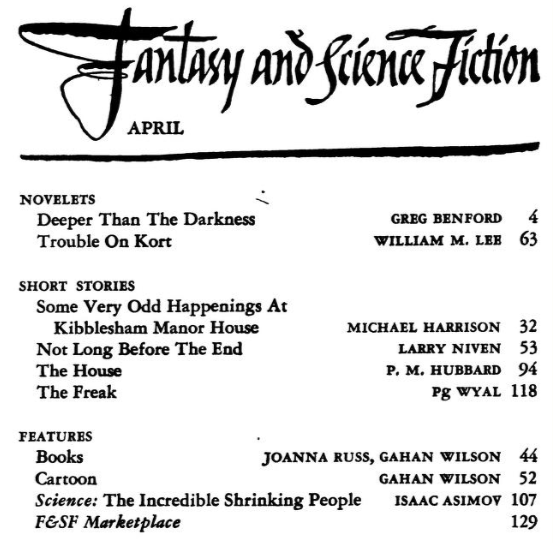
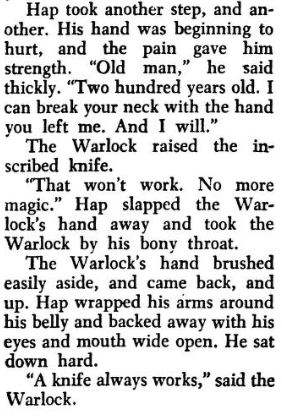
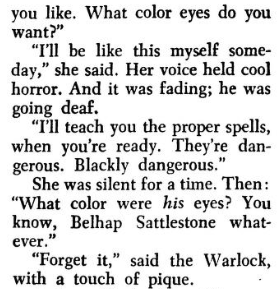
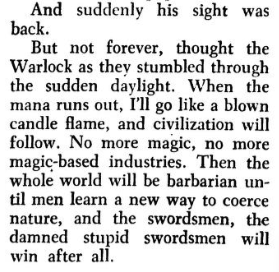
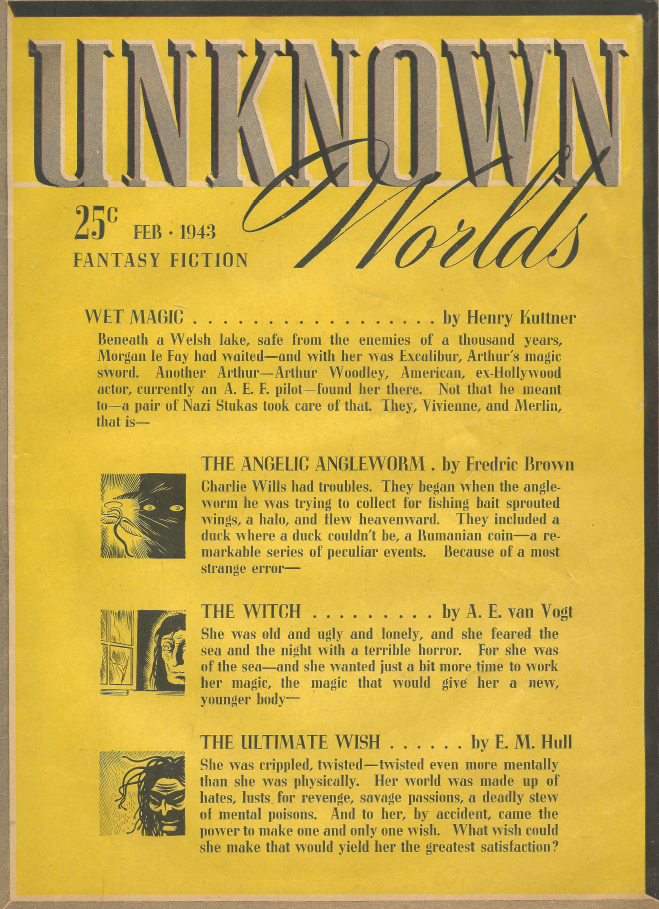
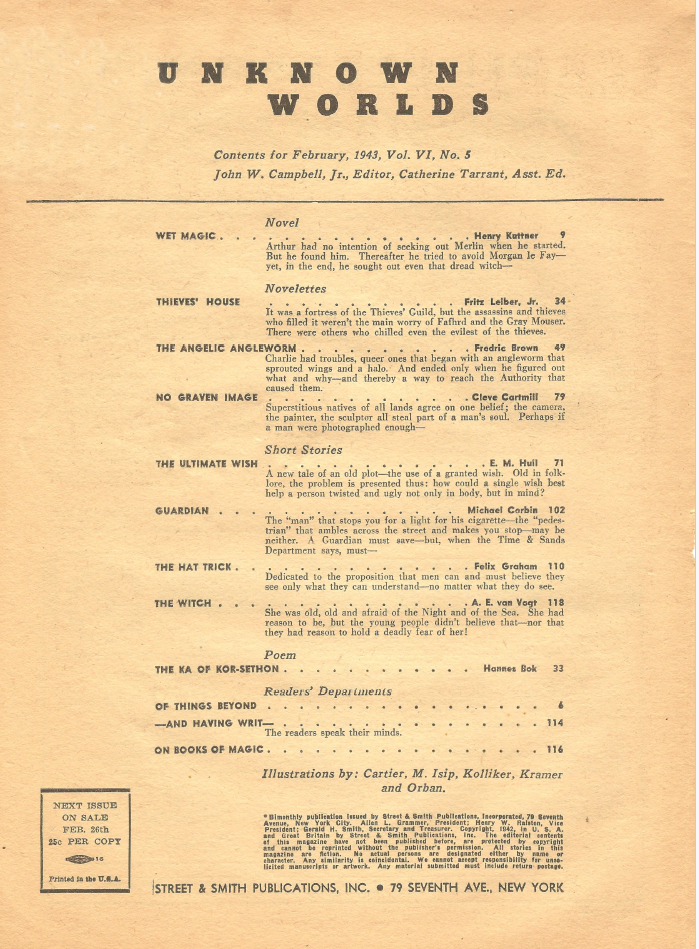
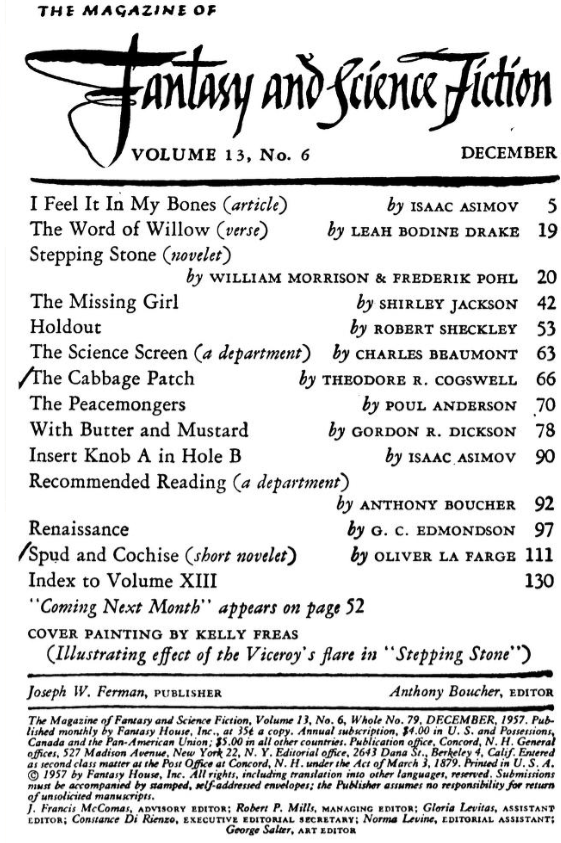
But, before we get to it, let’s look at the cover and ToC:

Now THAT is a damn cover, isn’t it? It’s by Bert Tanner, who did a number of great covers (and interiors) for the magazine, and who only died last year, if I recall correctly. The story this cover is for, Greg Benford’s “Deeper than the Darkness” is an interesting one, though there’s some uncomfortable (and very 60s) race relations stuff in it. It really goes for the whole “I am going to blow your mind: what if white people were on the bottom of the racial hierarchy!?” thing, and it can be a bit eye-rolly, honestly. I will say, though, that despite its somewhat clumsy framing, it DOES deserve some plaudits for at least engaging with the the unrest around the American Civil Rights struggle. The story has some interesting bits (and the alien menace in it *is* quite good), and it’s also a downer, too, which is always fun – this phase of sci-fi, knocking on the New Wave and therefore willing to take more chances, is exciting. It’s the kind of thing F&SF was famous for publishing, back in the Good Ol’ Days – provocative, literary stuff, often quite daring for its time, meant to demonstrate that spec fic was something to take seriously.

The ToC is interesting:

The only really BIG names that most people recognize today are Niven, Russ, and Asimov, and only one of them is in here for fiction. I think that reflects the extreme importance that fandom played in Sci Fi – there’s a lot of ink given over to criticism and articles and discussions of the field, right alongside the stories themselves, and its one of the key strengths that genre lit has going for it – it’s very organic and vital, forcing people reading (and writing) the stuff to be in constant conversation with each other within a curated space (something missing from today’s internet-poisoned fandom, I’d argue).

But enough! On to today’s tale!

No art here, of course, but the little italicized intro makes it clear that this story is going to invert the usual order of antagonism here, something Niven underlines right off the bat in the very first paragraph:

1969, but we’re already playing around with the well-established sword versus sorcery aspect of the genre! It’s kind of remarkable, really, that the genre, which didn’t really have a name until 1961 (coined by Fritz Leiber in the pages of the fan magazines Ancalagon and Amra), was already stimulating comment and experimentation (much to the chagrin of people of Lin Carter, actually). Of course, the inimical nature of magic and the uncanny is a HUGE part of the genre, an inheritance from its progenitor genre, Weird Fiction. It’s also why the Barbarian in particular came to be such a strong and semiotically potent figure – the barbarian’s Natural strength, inherent in their powerful Body, versus the otherworldly and inhuman power of Magic. The triumph of Conan over foes like undead wizard Xaltotun is about restoring the dominance of the physical and the natural over the insubstantial and the perverse, and that becomes one of the defining themes of the whole genre.

But for people like Niven, that kind of message was antithetical to what they saw as the REAL narrative of human progress – the Barbarian, representative of brute physicality, triumphing over the specialist/technologist/intellectual was intolerable, the sort of dirt-kicked-in-the-nerd’s face bullshit that had hindered the cultural and technological advancement of the species. Niven is very explicit about this, even making a eugenicist and social Darwinist argument – swordsmen being removed from the gene pool was a net win for the species, and wizards who couldn’t kill a swordsman likewise benefited the population by being removed from it.

The kind of elemental nature of this struggle is further made clear for us by Niven’s choice of name for his sorcerer:

Swordsman vs. Sorcerer. Very clear, very straightforward.

Our sorcerer is introduced as a conscientious and competent wizard, a kind of idealized technocrat, powerful but largely benevolent. In addition, we learn that Warlock moves around a lot, because he’s discovered something:

And this diminution of potency isn’t relegated to individual sorcerers alone, mind you:

Niven, connecting the loss of magical power to civilizational collapse, is laying the groundwork for what this story is going to be about. Indeed, you might have already guessed his punchline, but we’ll get there in good time!

Anyway, like it says up there, Warlock is a particularly curious sort, even for a wizard, so he sticks around and seeks, through the scientific method, some answer as to what this phenomenon of magical loss is, exactly.

Credit where credit is due, Niven is setting this story up very nicely here. Our Warlock has discovered something absolutely fundamental to magic and, therefore, civilization, a fact that is terrible and final and immutable. Warlock doesn’t share this information with anyone, apparently our of compassion – there’s nothing to be done, so why bother anyone with it? We also learn that, a half-century or so later, Warlock has someone reconsidered his position – he’s manufactured another of his experimental magical spinning discs, keeping it in readiness, just in case.

And then we’re introduced to the second-most important character in the story. Not the swordsman, who is of course a meathead beneath contempt, but his sword:

The name of the barbarian swordsman here, in addition to the satirical grandiosity of having such a long soubriquet, is also obviously chockfull of injokes and puns (Niven loved that kind of stuff, and cowrote a novel The Flying Sourcerer that is basically devoted to that sort of thing, characters whose names are injokes among the sci-fi community). The most important part of the name, though, is last apparently patronym – Cononson, Son of Conan; this brutish barbarian is, for Niven, a stand-in for all of the swaggering and powerfully violent descendants of Howard’s work.

We’re also given an oblique and suggestive view of ol’ Hap the Barbarian’s character and history – he killed a sleeping woman to get this sword, which is itself a dangerous and potent magical artifact.

Anyway, with Warlock and Hap and Glirendree all introduced, we get into the story proper. Warlock is hangin’ out in his cave/laboratory with his wife/apprentice (yikes!) Sharla when a magical alarm goes off, indicating that someone is on the way. Warlock scrys on the interlopers…and the news ain’t good!

Sharla, like many of Niven’s characters who are women, doesn’t get to do much or have much agency. She’s vaguely important to the plot, but only as an object, not a person. Oh well! What’s ALSO interesting is Niven’s use of “mana” here, setting in motion a very important stream of magical terminology/theory that will run through a lot of fantasy lit AND role playing games. We’ll talk a bit more about that a little later, but this is an important story for that reason, too.

Anyway, Glirendree is a dangerous and powerful magical artefact, as we’ve already mentioned, and as a sorcerer Warlock has some responsibility to deal with it. He and Sharla leave the cave, with her running to safety and him grabbing some gear before heading off to confront the sword and its swordsman.

There’s some fun magic-as-a-technical-discipline bits in this part, an interesting and very sci-fi take on the concept of sorcery. It’s interesting to note how, in Howard’s stories, a fair bit of “sorcery” was just hypnotism and trickery and alchemy (but not all of it, of course – there’s plenty of hellish, outre spell casters in his work who draw on dark and unnatural power). But for Howard, this stuff was all wrapped up in mummery and obfuscation; the magic that Conan faced was always secret knowledge pursed by half-mad sorcerer-priests. Niven here is following a different trend in fantastic literature, one that has very strict, very technical rules-based magic, a kind of hyper-rationalized supernaturalism, which is an important distinction – there’s no NATURAL explanation for Warlock’s powers, but there are Logical rules to its operation. In other words, it’s not hidden or forbidden knowledge; rather, it’s a technical discipline, akin to science of engineering. This is something that Fletcher Pratt and L. Sprague de Camp pioneered in their Harold Shea stories, and it’s obvious why Niven, doyen of “hard” sci-fi at the time, would take it up in his fantasy story. Again, it turns the wizards into ultrarationalists, even if their rationalism hinges around supernaturalism. It’s important to Niven and the story that this be the case, because he’s already established that Magic = Civilization.

Importantly, in his magical observations of Hap, Warlock lets us know that the Sword protects its wielder and makes them invulnerable to everything but the sword itself. A key plot point! Warlock, unable to enchant Hap or even prognosticate the outcome of a battle, gets out two important pieces of equipment – a metal disc and a rune-covered dagger.

And then, finally, the swordsman and the sorcerer face each other.

An important highlighting of Hap’s scarred and formidable body here, highlighting his barbarism and the supremacy of physicality that he represents. What’s odd, though, is that just a few paragraphs later, we learn that Warlock is ALSO a slab of beefcake, through his magic. It’s an interesting inversion of the more usual sword & sorcery & bodies – Hap’s body, earned through labor and effort and with ample evidence of it having been used, is a sign of atavism and barbarity, whereas Warlock’s magically maintained pleasingly aesthetic form is a symbol of refinement and technical sophistication.

Anyway, we learn that Hap is here to free Sharla…who is there willingly, married to Warlock and learning magic. Hap apparently believes Sharla to be the victim of a love spell or something, and he’s here to free her by killing Warlock.

Warlock cuts him off with another attempted spell, which does nothing, of course. Similar failures occur when he tries to smash Hap with a magical meteor, or when he unleashes a demon from his magical back tattoo (which is very cool). And then Warlock tries one last time to reason with Hap.
There’s gotta be a bit of Moorcock’s Stormbringer in Glirendree, though there’s probably more of Andersen’s Tyrfing (which comes from the sagas) in there. Still, a solid fantasy macguffin, a sword that’s actually an evil demon. We go on to learn a bit more about the sword:

Another fun bit of Nivenesque name jokery there with “Jeery.” There’s possibly an interesting commentary of the sexual charms of barbarians there too, although it’s kind of lost under the vaguely misogynistic banter about the Rainbow Witch… really feels like the story is saying the Dumb Broad got stupid horny and that’s why the sword escaped. I dunno, I can’t help but look for the worst in Niven, because he was worst, basically.

Anyway, as Hap leaps in for the kill, Warlock tosses up the metal disc and says the word “four.” This, of course is the disc that had been integral to his epiphany in the introduction, the experiment that he kept in readiness after learning that dark truth about magic.

The disc spins and spins, glowing and getting hotter, while Warlock goes over in greater detail what we already know – magic gets used up in places, and there’re places where magic doesn’t work because all the mana is gone.

There’s some fun writing here; the part about the fallen cities and the dragon bones is good, solid stuff in my opinion. This is also a good spot to pause and discuss mana!

If you’ve ever played a JRPG or anything like that, you’ve encountered the concept of mana – a nice numerical value that defines the amount of magic a character can use. If you’ve ever looked into its origins, you might’ve been surprised to run across discussions of Polynesian religious, spiritual, and magical practices; Mana, it turns out, is a kind of spiritual property that things or people or places had, and it could be cultivated and developed. For Victorian-era anthropologists, it was an enormously fascinating concept because it seemed to have a kind of universality to it that was suggestive of ancient, interconnected humanity. It’s a lot more complicated, of course, but this pop anthro understanding came to be the general status quo understanding of the concept: mana was a kind of magical, spiritual energy. A number of Early 20th century occultists latched onto the concept, but it really took off in U.S. Pop Culture alongside all the broader Polynesian/Island craze of the 40s/50s – think Hawaiian shirts (and statehood), atomic atoll tests, and tiki bar culture.

There were a number of semi-popular and technical books on the concepts at the same time, and both the word and idea of mana was out there; Jack Vance used it in work in the 50s, though with a sense slightly closer to the “real” meaning, as a kind of mystical essence that famous objects or places could accumulate through veneration, a kind of magical force that came about as they (or people) became SYMBOLS of something. What’s interesting here is that Niven, who said he’d come across the word in a book on Polynesian culture, has slightly tweaked its meaning in this story – mana is now a quantum of magic, and more importantly, a natural resource that can be depleted.

And that, it turns out, is the great secret that Warlock has discovered.

The disc keeps spinning, using up all the magic in the area, depleting the magical effects in the area: Warlock’s anti-aging spell fails, revealing him to be an ancient and decrepit old man, and Glirendree’s true form in unveiled:

Things look grim for ol’ Hap…but then the Demon begins to experience the mana-less nature of the area they’re in:

The exploding disc in the sign that the very last of the mana in the area has been drained; Warlock is rapidly withering, the magical spring and the cavern’s furnishing and the mansion have vanished, everything has become mundane and magicless.

Mana is a finite resource, depleted by the casting of spell. The disc, Warlock explains, operates simply as a perpetual motion machine, fueled by magic…until the magic runs out, a microcosm of what will happen to the whole world, eventually.

Regardless, Hap, even with his severed hand, is still going to kill Warlock.

A clever bit of problem solving, and you’ve got to give Niven credit; “A knife always works” is a pretty badass line.

Warlock is fading fast – he’s like two hundred years old, after all, but then Sharla appears. She lifts the frail and dying Warlock in her arms and carries him down the hill towards a source of mana.

I like the little descriptions of Warlock’s failing body here – the fluttering pulse, the lose of his senses, and the way Sharla, who intellectually knew that Warlock was ancient, is still being confronted with the existential horror of decay and decrepitude. I also like her asking what color Hap’s eyes where, though not for the reason Niven has put it in – like I said, I always assume the worse with Niven, and I’m pretty sure he meant (at least partially) for this bit to be further evidence of the fickle and oversexed nature of womankind (the same thing that struck down the Rainbow Witch). Instead, I like to read this as the ambivalence of people confronted with illusion; once you know it’s not REALLY real, there’s a little bit of the magic that’s gone forever (which is the theme of this story, of course).

And that’s The End of “Not Long Before the End,” by Larry Niven!

Niven himself apparently referred to this story as science fiction rather than fantasy, pointing specifically to his rationalist mana system, contrasting it with the purely supernatural sorcery of other stories. Whether you think that counts or not (I don’t, this story is fantasy) isn’t important, though, because the real interest in it is the way he’s commenting on and writing against the fantasy of the day. Like I said, he’s explicitly rejecting the framing of traditional sword & sorcery stories, denigrating the barbarian (and, by extension, the celebration of physicality and bodily strength) as a force of social retrogression. Conversely, the sorcerer here is a paragon of rational investigation and judicious use of power, a symbol of the intellect and discipline.

What’s fun about this is that it’s happening only a few years after the explosion of fantasy and S&S; in fact, it’s in direct response to it that Niven, a proponent of rationalist and technologically triumphalist stories, wrote it. Niven’s story is a part of the larger 60s trend interrogating the fantasy genre and what it means, right alongside Moorcock and Vance and Leiber and all the rest. From the standpoint of genre studies, that period is very interesting – unsatisfied with what was, workers in the disciple are trying out new things, cutting trail into the wilderness on the edges of the stable and well-trod center.

Beyond that, it’s interesting to place Niven’s declensionist narrative, one based on resource scarcity, in the larger context of the period’s social history. The Erlichs’s book The Population Bomb had just come out in 1968, and was a humongous best-seller that had dramatically changed the way people talked about society, resources, and human population (it’s also important because the framing is one of a surging third world outbreeding the first world, a classically racist fear finding new expression in world systems theory and macroeconomic jargon). The idea of finite resources and hard limits to growth and progress were starting to occupy people’s minds in this era, and it’s interesting to see Niven take that and apply it to fantasy. He actually ends up going farther with the idea in the 70s, by the way – the Oil Embargo inspires him to explore the idea of mana depletion in more stories and, eventually, a fix-up novel based on this setting.

The 60s and 70s have been described as a period of backlash against “classic” S&S, and that’s true enough – the pages of the fan magazines are full of conservatives like Carter and Jakes defending red-blooded conan-esque tales of mighty adventurers. But the “backlash” is actually a sign of the vibrancy of the genre – people were exploring new territory through the genre, right alongside the New Wave in science fiction; in fact, I think there’s definitely a “New Wave” style of S&S being written, in some cases by the same authors (Delany’s work in the late 70s in particular represents this). And while Niven certainly had more in common politically with Carter and the conservatives in sword & sorcery, there is value in digging into this story and reading it not merely as a takedown of the genre, but as a commentary expanding on the strengths of the genre to produce more than a simple Conan pastiche.

The Death of Robert E. Howard in the Pages of Weird Tales

In the “Thief of Forthe” discussion, I posted Clifford Ball’s brief encomium to REH from The Eyrie, Weird Tales‘s enormously important and incredibly interesting letter section, where readers, writers, and editors wrangled with Weird Fiction and discussed the stories, characters, and aesthetics of the genre. It’s an interesting little letter, mostly because it explicitly couches Howard’s death in terms of the loss of stories that readers would never see (one of the most gratifying types of mourning a writer can imagine, honestly). And ol’ Ball wasn’t alone – Howard’s death really rocked the Weird Tales readership, and elicited a lot of shocked and saddened letters from a lot of fans.

What’s fun about ’em, though, is that these letters offer a really interesting ground-level view of both fandom and the way it mediates genre-ification – in a lot of ways, the death of Howard is a crisis that forces people to reckon not only with his work as it was, but the future of both it and writing allied with it. It’s a fascinating archive!

But, before we dive in, here’s a pic of the Big Man himself, enjoying a refreshing big ass beer:

my favorite REH pic

Howard died on June 11th, 1936, and the announcement was made in Weird Tales in the v 28, n. 2 Aug/Sept issue’s Eyrie:

A short but heartfelt tribute from Wright and the Weird Tales staff, highlighting both his imagination as well as his dedication to his craft (something that would get lost in certain later reevaluations of his work; much like what happened with Lovecraft, there were certain parties later on interested in portraying both of them as being weirdo savants who, by accident rather than careful work, produced important and interesting fiction). I’d also point out that, right away, we begin to see certain inaccuracies creeping into the Official Biography – REH did not attend the University of Texas. He took business courses at Howard Payne College, a private Baptist college in Brownwood, TX. By the way, one of those posthumous stories promised in forthcoming issues of Weird Tales included what many consider to be his very best horror story, “Pigeons from Hell.”

The next issue of Weird Tales, v 28, n.3 October 1936, had further semi-official remembrances of Howard’s life and work published in the Eyrie, this time from his friend and voluminous correspondent HPL, as well as E. Hoffmann Price, who actually met him in person:

The Lovecraft excerpt is a pretty important one, I think, and sort of sets the tone for the way Howard has entered the annals of weird literature. His line about Howard having “put himself into everything he wrote” is key, and a point HPL would make over and over (it forms the center of the long in memorium he wrote for the fanzine Fantasy in their Sept 1936 issue too). The idea that Howard was deeply engaged with his writing, producing art even in spite of the commercial conditions, is high praise from someone like HPL. Too, I think both he and REH shared a deep appreciation for their roles as REGIONAL authors, people interested in their specific environments and backgrounds and what it meant for them as both people and writers. And there’s certainly something to HPL statement that Howard had a “unique inner force and sincerity” in his work – read Kuttner’s Elak story or Ball’s Rald stories and you have to admit that, no matter how fun and possibly good they are, there IS certainly something missing from them.

Also interesting is the appearance (and misattribution) of REH’s death poem there. It’s a bit of a convoluted story, and I’d point you towards Todd Vick’s biography of REH “Renegades & Rogues” for more detail, but it became a major part of REH’s mythology, a suitably literary (and barbaric) poem to mark his passing.

Even more interesting, though, is that the Eyrie is still working through fan letters from people who had written them before they’d known of REH. Take, for example, this letter from Irvin Gould of PA, asking about a map of Conan’s world:

An interesting letter that sheds some light on the way people were reading and enjoying Conan – they love the hints and callbacks and history peppered throughout the stories, suggestive details about the larger world and deeper lore that imbued Howard’s writing with such vitality and sincerity, and want to know more about it! Specifically, they want a damn fantasy world map! While something like that is de rigueur in fantastic fiction now, back then it was a pretty novel request, I think. I know that there were maps in Haggard’s King Solomon’s Mine novel, for instance, and the Oz books famously had fantastic maps, but it’s fun to see people yearning for fantasy cartography because of the stories themselves and the sense of the scale and sweep of Howard’s vision. And maybe even MORE interesting is Mr. Gould’s recognition that asking for such concrete canonicity from weird fiction might not be appropriate! It’s a fun glimpse into the way READERS were engaging with both weird fiction AND Howard’s work particularly, navigating new genre conventions.

In this same issue there’s also a letter from the famously idiosyncratic fan, Gertrude Hemken. These letters from “Trudy” would become a beloved part of the Eyrie, mostly because she wrote in an absolutely delightful and totally fannish style – they’re a lot of fun, and it’s always fun to run into her in the pages of Weird Tales. Anyway, in the midst of a longer letter, she has this to say about Howard (unaware of his death, of course):

“So-o-o happy. I could gurgle!” should be the blurb they use on any and all Howard books henceforth. But it again speaks the clarity with which Howard presented Conan to the readers – he’s instantly and clearly defined, and folks like what they see!

The November 1936 issue (v. 28 n.4) includes the first fans letter reacting to the death announcement from a few issues back.

This letter’s request for a reprinting of his “best stories” as selected by the WT readership isn’t a bad one, honestly, and shows that, while the pulps were an ephemeral medium, there was a real desire to ensure that their contents lived on and were accessible to readers new and old alike. Later, in the same letter, Hopkins has an interesting thing to say:

It’s an interesting daydream: “The Death of Conan the Cimmerian!” And this musing about what could’ve been, and the extension of the character’s adventures beyond the pen of the creator, is an interesting seed that we’ll see explored more in later letters.

But the desire for a collection of Howard’s work was a common one:

I wonder if Clark’s personally bound collection of Conan stories exists in some attic somewhere?

The December ’36 issues (v. 28, n.5) is mostly dedicated to wranglin’ about the covers and whether they’re too risqué or not, but that leads into an interesting letter from Robert Lowndes about the artistic representations of Conan in The Unique Magazine:

It’d be worthwhile collecting these all together and doing a careful interrogation of each, but there’s no room (or time!) here for it…maybe later. I will grab the Rankin piece that Lowndes speaks so highly of, though, from the Jan 34 issue:

I find the sexualization of Conan by readers (and, to be fair, by Howard) hugely interesting, so the way this letter-writer highlights what it was the women found so damn hot about Conan in the stories is pretty fascinating!

I’ll just highlight one more prescient letter about REH from this issue, by the great Clark Ashton Smith:

The next issue, Jan 1937 v. 29 n.1, opens with Wright reflecting on the “necrology” of Weird Tales:

It’s a sad editorial, particularly in the way Wright’s hopes that no one else will die are pretty quickly about to be dashed. But, as he said, they’ve been getting a lot of letters about REH, and this issue includes some very fascinating ones!

I mean, that’s fascinating, isn’t it? Can’t Weird Tales find someone else to keep writing Conan for them? What a wild question, and I can’t think of any precedent for it at all, can you? On the one hand, there must’ve been fairly widespread knowledge that some “writers” in the pulps were house names with lots of different individuals contributing stories under them (a fairly common practice in particular in the western pulps), but the idea that a writer as singular as REH could be replaced is a wild one. On the OTHER hand, though, weird fiction DID have shared universes, if not shared characters – what is Lovecraft’s Mythos but a shared world with the same gods and aliens and dark books showing up in different stories by different authors? Is that the model this letter writer is drawing from when they talk about Conan continuing without REH? I think you have to give credit to Wright here, who very clearly and definitively answers that no one can write a Conan story except Howard…something later paperback authors should’ve kept in mind, in my opinion!

This same issue includes the Ball letter that we talked about in the last Pulp Strainer blog post, and while Ball certainly isn’t asking for someone else to write Conan stories, as we discussed there is a clear expression of the desire for more stories LIKE Conan’s.

Skipping ahead a couple of issues to March ’37 (v. 29 n.3) we get another plea for a book-length collection of Howard’s work:

These calls for a collection of Howard’s work to be published are pretty insistent, and it’s a shame that Weird Tales got so brutally burned on their one and only book publishing adventure (The Moon Terror) that they couldn’t do something with Howard’s work. Derleth’s Arkham House would, in ’46, put out Skull-Face and Others in 1946, complete with a badass Hannes Bok cover:

This book included some good Conan stories, but it wouldn’t be until the Gnome Press paperbacks of the mid-50s that you’d see a dedicated Conan series. Interestingly, those same Gnome Press editions would see just the sort of “Continuing Adventures of Conan” pastiche stories that (some) people were DEMANDING in there letters:

People LOVED Conan man, and that’s all there is to it. Howard had made something new and exciting, had carved out a real niche for himself in weird fiction, and the idea that there wouldn’t be any more Conan stories was a hard pill for some people to swallow. It’s interesting that everyone is explicitly couching these as more CONAN stories…they don’t want imitations, they don’t want other characters by other people, they want CONAN doing CONAN things. In some ways, then, it’s actually quite laudable that people like Kuttner tried to do SOMETHING a little different, even while trying to reverse engineer REH’s own unique approaches to his stories. Also, again, I think you have to salute Wright’s firm “nope” here too – he has a very clear aesthetic vision for weird fiction, and it doesn’t include the bloodless imitators of an inimitable writer like Robert E. Howard.

In the next issue of the Eyrie (v29 n.4) Wright publishes a letter from H. Warner Munn, a Weird Tales author famous for his “Werewolf of Ponkert” story, which was a favorite with readers, that really offers the Last Word on whether Conan should have further adventures written by other people:

Pretty succinctly and strongly put, I’d say, and a position I support. Wright obviously thought so too, and even seems to have used Munn’s letter as the punctuation on the chapter of Official Mourning for Howard. In the next issue (May 1937, v. 29 n.5), there’s only a single, passing mention of “the late Robert E. Howard” in one of the letters, and it’s clear that they’re turning the page on the sorrowful demise of a beloved author…

…and then, in v.29 n.6, the June ’37 issue of Weird Tales:

Goddammit!

With regards to REH, I think there’s something really interesting in getting to read these letters from readers of his stories; you can see the huge enthusiasm for his work and his creations, Conan in particular, a real glimpse into the phenomenon that would become fantasy literature in general and sword & sorcery in particular. There’s a little tinge of sadness here, though – you can only hope that Howard had a sense of just how beloved his work was while he was still alive. Writers are a touchy, morose lot in general, given much to self-recrimination and disappointment, often absolutely certain that they’ve wasted their time and largely failed to achieve what they wanted to with their work. It’s something REH certainly struggled with – his letters include many gloomy reflections on his work and the struggle of writing, even when he’s arguably at the height of his career. It’s something people always talk about, but it bears repeating: if there’s someone out there whose work you like, tell ’em! Even something as simple as a nice note can mean a lot to someone, and you never know when it’ll be too late to tell them!

There’s also something extremely valuable to be had by reading these letters in the Eyrie, I think – they’re such a rich archive of READERS and their reactions to/thoughts about the stories and authors and genre as a whole. In the wake of REH’s death you really start to see the way they were ENGAGING with his work, and with Conan in particular, and it’s a real granular way to interrogate the formation of what would, eventually, become “Sword & Sorcery.” There’s ALSO a really interesting tension between what people want (more Conan!) and what they would eventually get (some pastiche-y early attempts by Kuttner, for example, and then Fafhrd & the Gray Mouser – but not in Weird Tales, of course…).

Some other stray observations – it’s interesting how CONAN focused the readers’ letters generally are, isn’t it? I mean, there’s other stuff mentioned for sure, but the Cimmerian is front-and-center, and it’s his adventures that people are clamoring for more of. Partly that’s got to be simple chronology – after all, Howard’s death is announced with “Red Nails,” one of the best Conan stories of all time, and there’d been a lot of Conan recently too, while his other characters like Solomon Kane and Bran Mak Morn hadn’t appeared for years. But there’s something about Conan’s special alchemy at work there, I think, and particularly the sense of a real, lived in, vital WORLD around him that just grabbed readers.

Finally, I’d point out how often people with talent and knowledge would point out just how inimitable Howard was as a writer. Wright is very firm in his explanations about why there’d be no more Conan stories by other people – he was a singular talent writing singular tales, and no one else could do them. Similarly, I think HPL’s oft-cited “there’s a piece of Howard in every one of his stories” is a perfect way to capture the kind of ineffable qualities of his work (and HPL’s, for that matter). It’s easiest recognized by its absence in, for instance, Kuttner’s S&S work, and really underlines the absolutely necessary quality of a writer finding their authentic voice if they want to produce art. For all the problems with Howard’s work (and there’re a lot!), the one thing you can absolutely say is that they are the products of a writer who was absolutely sincere in his efforts at communicating the things he thought were important and interesting. That he succeeded is shown by the many heartfelt letters we see in The Eyrie.

Pulp & Pastiche #42: “The Thief of Forthe” by Clifford Ball, Weird Tales v.30 n.1, July 1937

Since I broke the (cursed Lemurian) seal on it, why not continue to plumb the depths of Swordly & Sorcerous fiction that appeared in Weird Tales in the years immediately following Howard’s death? We talked Kuttner and Elak last time, focusing on the differences in character and approach between ol’ Hank and REH, so this time we’re going to look at an example of Post-Howard S&S that adheres a bit closer to the formula perfected by ol’ Two-Gun Bob. It’s Clifford Ball’s “The Thief of Forthe” from the July 1937 issue of Weird Tales!

Interestingly, Clifford Ball’s first appearance in the magazine wasn’t as a writer, but as a Weird Tales reader mourning the loss of Howard and the stories he’d never write. His letter appeared in “The Eyrie” letter section of the January 1937:

This is only one of many such letters sent in to the Unique Magazine following Howard’s death (as I’m writing this, I think I might devote the next entry here on the blog to those letters, so stay tuned!); what’s interesting about Ball’s is that it really seems like the End of Conan struck him so deeply that he decided to try and Do Something About It – namely, Clifford Ball went and wrote some Sword & Sorcery himself! What’s more (and much like Kuttner), Ball also appreciated that one of the Keys to the success of Howard (and Conan) was the establishment of a fun, living secondary world – for Ball, this is (for lack of a better term) Ygoth, which is either a city or a country (it’s not exactly clear), and which is mentioned in all three of Ball’s S&S stories, tying them all together into a loose, unrestricted canon, much like Howard’s Hyboria.

Ball’s first story, “Duar the Accursed” would appear in the May ’37 issue; it’s an odd little work, very Theosophical honestly, about an amnesiac mightily-thewed barbarian hero who had been a mercenary, become a king, lost his crown, and then become a wanderer. There’s some interesting weirdness in it – in addition to having no memories of his early life, Duar’s accursedness is manifested as terrifying rains of blood and an ominous, unearthly raven that heralded his army. We’re also introduced to a strange, shimmering, extra-dimensional spirit that follows Duar and provides him magical support (whether he wants it or not), and has some kind of relationship with him from the past. There’s suggestions that Duar is himself some sort of Ascended Being trapped in a fleshy prison. It’s all very cosmic and, like I said, Blavatsky-ian; there’s pretty heavy foreshadowing that Duar is a kind of recurring spirit reborn as a hero or champion throughout time. But it’s also very much in keeping with Howard’s idea of the Manly Ideal of a S&S Protagonist – confident, physically powerful, fearless, and not interested in the niceties of civilization. There’s some good Gygaxian D&D flavored stuff in it too – the MacGuffin is a jeweled rose that’s actually a demon, and there’s a weird “Force” at work that drives people to their deaths in the depths of a dungeon. If you’re a completist for this sort of thing, it’s worth a read, but Duar never shows up again.

Ball thankfully (and correctly) drops the hints of “Chosen One” bullshit from his later (and last) two S&S tales, the much better and more fun Rald the Thief stories, the first of which we’ll be looking at today. But you should definitely temper your expectations here – they’re perfectly fine C-level work, I’d say, pastiches of what Ball obviously loved about Howard (and weird adventure writing), the sort of stories you expect from someone early in their writing career and looking for their voice. Unfortunately, Ball never got that chance – he wrote three more stories, though these are more straight weird fic than S&S. The last of these, a werewolf tale, was published in ’41, and then it appears Clifford enlists in the Navy. He ends up dying in, apparently, an accidental drowning in ’47, never having written anything else. It’s sad, especially because I think he had at least a sincere love of S&S, as I think you’ll see in the story today.

So let’s get to it already, sheesh:

That’s right, Rald the Thief gets the Finlay cover treatment, quite remarkable and, much like the Elak covers, it speaks to the deep love that the new and as-yet-unnamed genre of Howardian-historico-fantastique-adventure tales had garnered. The iconography is interesting here, and gets to the heart of the appeal of these stories – a sword, a Man of Action, a damsel, and a mysterious threat. There’s not even a real background – the whole scene takes place in an indistinct void, really highlighting that the whole thing is a very literal psychodrama. Simple, but effective!

A good ToC, including a reprint of what’s probably Long’s most famous story, “The Hounds of Tindalos.” Also worth noting is CAS’s memorial poem to HPL, who had died in March of the year. It’s been a rough few years for Weird Tales fans, who’ve lost some giants in quick succession! Anyway, on to today’s tale!

A pretty straightforward summary here, and truthful too – this is a brisk tale indeed, rolling along at a decent clip with very little downtime. Case in point, our story opens in medias res, with a business meeting happening in a dank, drippy, disused dungeon. Two figures are conversing:

We’re introduced to a wizard with an apparently top-notch moisturization regime – their slender womanish hands a sure sign of sorcerous puissance and subtlety. This is in contrast to the other as-yet unnamed figure, who is immediately portrayed as a forceful, man’s-man kind of dude – he grumbles, he strikes the table with a meaty fist, and he’s suspicious of all this wizardly bandying of words about the King, named (oddly) Thrall. Yes, these two are surely quite different from one another, so much so that we get two more paragraphs describing them. First, our wizard:

Good, strange wizard physiognomy, I think, and the insanely hairy face is fun (and, obvious) foreshadowing of something. The “what’s under those robes!?” is a little thickly ladled on here, but honestly it’s not too bad, and it’s perfectly fine to hammer it home given where the story will end up. “Karlk” is a decent evil sorcerer name too, I think, short and sharp and menacingly strange. All in all, a top-tier evil magician, I think. And what’s the beefy fellow Karlk has been talking to like, you ask? Well:
No mincing words here, this is just Conan. Naked and muscular in a loincloth and sandals, obviously of a kind with the Cimmerian, strong, violent, and cunning (as evidenced by phrenology). What is interesting is that Ball calls out Rald’s scars, which is a detail I don’t think I’ve read about in Howard’s loving descriptions of Conan’s rough-and-rugged body. Ball wants to highlight the history of macho violence embedded in Rald’s body, because this, along with his near-nakedness, muscular bigness, and clean-shaven face, marks him as diametrically opposed to Karlk the Magician.

There’s some fun back-and-forth arguing between Rald and Karlk about King Thrall; Karlk seems to have it in for in him, but Rald points out the King has done alright by Karlk, covering up a mishap when one of Karlk’s “experiments” escaped. All in all, Rald seems disgusted by the wizard and their planned treachery. I’m no business guy, but it really seems like at this stage of the negotiations (along in a dripping dungeon), you’d want to have this kind of stuff ironed out. Karlk seems put out by Rald’s apparent lack-of-fear; he is a weird, menacing wizard, after all, and is used to a modicum of cringing respect. So Karlk decides to show Rald some of his power:

And how does Rald react to Kralk’s laser beam?

I mean, fair enough, right?

Regardless, Rald wants to get down to business…what IS it that Kralk wants to hire him to do, anyway?

Rald’s professional pride is fun, as is his discussion of what the possible targets of his thieving might be. I like the little “No women, mind you!” bit too, it’s all very material and earthy, a lived-in detail that captures Rald pretty well and gives him a bit of depth.

That is solid wizard shit there, you know what I mean? Kralk is steeped in black lore, and has moved beyond mere jewels and such. Kralk wants Rald to steal THE VERY KINGDOM ITSELF!!!! which is so bonkers, I love it. Rald’s reaction is fun too – how can you steal a whole kingdom, particularly one which is, in some way, divinely ordained. King Thrall is the King of Forthe, simple as? How would Kralk take over, even?

Very fun stuff; Rald is thinking about the Realpolitik of Kralk seizing the throne of Forthe, how impossible it would be to hold it given how everyone hates and fears him, but Karlk leapfrogs over that problem by the simple expediency of having RALD be the king, with Karlk a hands-off power behind the throne. Rald’s realization, and the temptation, are handled really well; Ball has constructed a convincing web for his Prince of Thieves to get enmeshed in!

I love the whole “wizard practicing the blackest of sciences” angle to these early S&S stories – it’s something Howard did himself, with a lot of his evil wizards relying on drugs and alchemy and hypnotism more than thunderous bolts of power. Similarly, Kuttner had his weird little wizard Zend behaving more like a scientist, using occult forces and magic-technology to keep Atlantis from sinking, for instance. Karlk’s claim that they are merely a scientist is a lot of fun, and something that I feel like you don’t see as much of in fantasy these days – wizards are a lot more mystical and esoteric, which is a very different characterization from experimental and technical approaches to even blasphemous sorcerous knowledge.

It’s also menacing as hell, isn’t it? We had that little story about the dog-man thing that had to be executed after it escaped, a very strange and unsettling story, and Karlk seems to be mostly interested in being allowed to expand his research program, something that would necessitate a friendly king willing to turn a blind eye to whatever horrors he’s planning. Of course Rald is disgusted…but…

It’s a solid Faustian bargain – Rald puts up a good front, but he’s quickly broken down by Karlk’s tempting him with not merely wealth and power, but immortality as a dynast! It’s fun and unique, making Rald a bit darker and more morally ambivalent (for now, at least) than his literary progenitor Conan. The story is a bit grimmer and grittier too; Conan had lots of adventures motivated purely by greed, but he never stooped so low as to ally himself with an obviously evil wizard! Credit where credit is due, Ball has come up with a fun and novel plot!

The next section opens on Rald beginning his infiltration of the Palace of Thrall. There’s some fun world building in here, among some admittedly clumsy and overwritten sentences. The walls of the palace, both inner and outer, are crumbling and in poor repair, and the patrols of the guards are fairly cursory and easily evaded. Similarly, the jagged bits of metal embedded at the top of the walls are rusty and easily pushed aside. But most importantly:

That’s a nice touch, and conveys a lot about this place and its history. They don’t need to maintain the walls or a tight guard – the sanctity of the palace is exactly that: sacrosanct, the product of cultural and religious scruple that sees the King and his power as a holy, divine thing, which NO ONE in their right mind would ever violate! Luckily, Rald is free of such scruples. This is more than just a nice bit of flavor, too – it will explain what exactly Karlk’s plan is, and how a whole kingdom can be stolen.

There’s a really nice bit of writing around Rald’s skulk through the garden here:

The statue he mistakes for a person, and the annoyance of the wet sandal are great, nice little bits of very realistic detail that lend Rald some interiority as well as highlighting his real physical experiences sneaking through the forbidden grounds. Equally fun is the fact that Rald knows the layout of the castle absolutely, due to the simple fact that everyone does, from servant’s gossip. The way Ball tells us that the simple peasants would be horrified at the use their gossip is being put to is fun writing. There’s a lot of nice details in this story, I think, and Ball is very much taking his time trying to develop the scene and evoke the setting, and it’s (largely) paying off, I think.
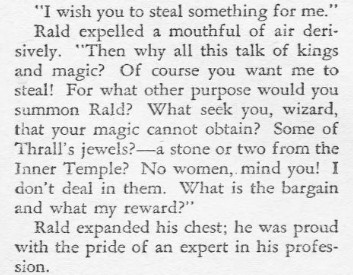
Rald makes in into the castle and encounters a drunk guard and, in a room beyond, a sleeping woman whom he takes to be a courtesan of some sort. Finally, he reaches a door that, via the clarity of narrative convenience, Rald realizes must be his goal:

Might be a real “Marge_Potato.jpg” moment here, but look: I just think this is neat. It’s extremely fun that Rald is an atheist in a magical world with gods, and that it’s this atheism that allows him to lift the magically warded lockbar without being struck down by the mighty curse woven into its very matter. That’s good stuff, and it works nicely with the whole thing going on in this story – the decrepit theocracy being vulnerable to One Atheist Thief!

Rald pushes through the door and enters some kind of sacred council chamber where the King and his sister hold court. More importantly, there’s the sacred necklace that is the goal of his quest hanging there!

So potent a symbol is this necklace that merely possessing it makes one, functionally and practically, the ruler of Forte. It might seem like a goofy system of gov’t, but who the hell am I, an Amerikkkan, to judge? More importantly, it’s in keeping with the whole tenor of this country/city-state, right? This religiosity that seems to rule here would absolutely imbue an object, and whoever happened to be holding it, with absolute political power; it makes sense! And it seems to have worked out just like Kralk imagined it would…or has it!? For, while Rald is admiring the sparkle of the diamonds that make up the necklace, he’s interrupted by a voice!

Do I wish Ball had given Rald a better swear than “faith?” Of course I do. Do I love this mysterious person telling Rald to knock it off with all the jumping around like some damn ape? Absolutely. It’s funny! The whole thing is very swashbuckly, and I love it.

The newcomer is the King’s sister, the Lady Thrine (apparently a real, if rare, Danish girl’s name, by the way), and she’s aghast at the temerity of Rald to not only break taboo by touching (and proposing to steal) the Sacred Necklace, but also by DARING to enter her bedchamber and peer at her sleeping. Yes, she was the “courtesan” from earlier, and its the whole shock of the boldness of Rald’s crimes that have lead her here, rather than, say, calling out all the guard. There’s some flirty banter, honestly not badly done, particularly since Ball is working on his own here in a Pre-Mouser world, but it’s cut short by the sudden arrival of Karlk!

Again, it’s a really great part here that Karlk, a magician and therefore intimately familiar with the reality of occultic forces, couldn’t move the magical bar with its potent spell, so he hired an atheist thief to do it. That’s good, a solid interesting premise for a S&S story, and also an interesting “mechanic” (if you’re excuse the vulgarism) for a S&S world, where magical potency is in some way related to belief. It’s fun, and something you don’t see much of these days!

Anyway, Kalrk prepares to zap Thrine, something the besotted Rald CANNOT ALLOW TO HAPPEN…but it’s all put on hold by the arrival of King Thrall, in full battle armor. There’s a funny bit where Rald, again in Mouser fashion, asks exasperatedly “doesn’t anybody SLEEP in this castle?” which is a funny, solid joke for a S&S story. There’s more banter, some guards show up, and the Kralk and Rald are bound up with ropes. They’re left, unguarded, in the council room (with the necklace) while Thrall, having sent his sister back to her room, orders a quick search of the gardens, in case there are more conspirators. Left alone, Rald and Kralk bicker a bit, with Karlk realizing that Rald has scruples he hadn’t imagined.

And then Karlk does something weird:

Khalk unties himself with an extra pair of small, white furred arms that emerge from his robes! I mean, that’s absolutely great! Equally fun in the kind of nonchalance with which Karlk assures Rald that there’s a LOT about him no one knows. It’s a great scene, and very weird.

Also fun is how Karlk, while having to leave Rald behind, still proposes to honor their partnership – he’ll kill the people Rald can’t, and then Rald can become King, with Karlk the power behind the throne. It’s very logical and straightforward and, honestly, makes Karlk out to be even more inhuman and mysterious. Afterall, while he’s disappointed Rald didn’t just kill the Princess, he can still use him. It’s fun, weird, stuff, and honestly between that and the extra arms, Karlk is up there with the evil wizards in S&S lit, in my opinion.

Rald doesn’t waste time, however. After Karlk has left, he painfully hoists himself up, knocks a torch from its sconce, and uses it to free himself. In the corridor he finds a guard, horribly magicked to death by Karlk. Grabbing the dead man’s sword, Rald rushes down the corridor, hearing a woman’s sobbing scream of terror from somewhere ahead. Rald comes upon a deadly, dangerous scene – Karlk, crouched horribly over the bound and terrified figure of Thrine, preparing to blast the unsuspecting King Thrall with evil magic. Rald leaps into action, slicing into the surprised Karlk with his sword:

Thrine tells the king that Rald saved him, indeed saved them all from Karlk’s deadly magic, which the King grants, though of course he DID plan on seizing the throne himself. With a modicum of contrition, Rald foreswears his earlier actions:

Rald agrees that an evil, murderous wizard can never be a man, but hilariously he has misunderstood Thrine. For, in fact…

Karlk was a GIRL all along!!!! The fake beard, the scrupulous flowing robes, all a trick! But that’s not her only secret…

How came she to have royal blood, you might ask, and King Thrall certainly does. Well, it’s a funny story:

Kind of grim, and with an unfortunate amount of “monstrous ape rape” (a surprisingly popular theme in early Weird Fiction). Also, you might not recognize it, but the “white apes of Sorjoon” are basically the multi-armed white apes of Barsoom, from Burrough’s John Carter of Mars stories; in the earlier Duar the Accursed story, Ball refers to them as the white apes of the “hills of barsoom,” even. Maybe it was an editorial decision to change them, or perhaps he thought in hindsight that that was a little too on the nose. Still, everybody reading Weird Tales would’ve immediately recognized the Great White Apes for what the were, horrific multi-armed ape monsters from a classic swashbuckling sword-and-planet tale. It’s interesting that Ball uses them here; speaks to the importance of Burroughs for the readers of these more action-oriented, thrilling adventure weird tales, I think, and is in keeping with Ball’s letter eulogizing Howard too; he mentions “a thousand international Tarzans” as being unable to make up for the thrill and power of Conan, suggesting the lens through which he was being read, by some at least.

Anyway! Karlk’s extra arms come from her White Ape parentage. There’s a bit of Howard’s Atla in Karlk here too, from “Worms of the Earth.” Both of them are outsiders, cursed by their lineages to belong to neither of their parents’ worlds. Cursing all of mankind, Karlk devoted herself to evil and the eventual overthrow of Forte. There’s some great, creepy writing as Karlk’s laments her poor experiment back in her hut, and then she dies.

The story wraps up with a nice little bow – the King roars that, for his great deeds this night, he’ll make Rald a baron, but the thief is gone. But don’t worry, says Thrine, he’ll be back…for her!

And that’s the end of “The Thief of Forte!”

From a Sword & Sorcery perspective, I think this story is pretty decent. There’s good world building, and Karlk is a fun and interesting character that, honestly, I would’ve liked to spend more time with. Rald is basically and blandly a species of Conan, though maybe just that much more avaricious than the original – like I said, working with an obviously evil wizard seems a bit too much for ol’ Conan, though Rald readily agrees (even if he does have second thoughts later).

It’s not some lost masterpiece of the genre by any stretch, but it’s at least as good as Kuttner’s Elak stories, I’d say. What is interesting is that both of them, Ball and Kuttner alike, offer different perspectives of the post-Conan and post-Howard genre. Ball’s is much more straightforwardly a pastiche, I’d say, with Rald simply being Conan, or at least much closer than Kuttner slim and amoral Elak. Ball also seems interested in the women in S&S stories, more so than Kuttner at least; perhaps he’s influenced by Moore’s Jirel stories there, probably the most important non-Conan S&S character to emerge in the 30s. Ball has a bunch of tough amazons in the second Rald story, and there’s a pretty tough queen in the Duar story, though of course all end up conforming to comfortable 30s heteronormative roles by the ends of their respective tales. By far the most interesting character in Ball’s slender oeuvre is Karlk, though, and I think the story is worth reading for them alone!

Maybe more to the point, I think it’s worthwhile to read these attempts at carrying the torch forward in the post-Howard days of Weird Tales, particularly because they’re wrestling with something that would dog the genre well into today, namely: where do homage, tradition, pastiche, and out-and-out cribbing fit in the genre, and how do we push at the boundaries and make something new? Obviously there’s a deep love of Howard and his work here, but how do you build on it without simply (and more weakly) recapitulating the same tired old themes and plots and characters. I don’t think there’re answers in these stories, but I do think it’s fruitful to read them and think about these questions!

Spawn of Pulp #41: “Spawn of Dagon” by Henry Kuttner, Weird Tales v.32 n.1, July 1938!

Sword & Sorcery is a wonderful genre, inventive and vital, and the way it’s grounded intimately within the materiality of its world and characters lets you investigate issues of the body, of the environment, of class and wealth and oppression and violence, in surprising and often insightful ways. That being said…there are, like all genres, some, ah, lesser works, where the promise of the form is not entirely fulfilled. C’est la littérature! And that’s what we’re going to be looking at today, a very middling story that, none-the-less, helps illustrate some important things about the genre. And what story is that, you ask? It’s Henry Kuttner’s “Spawn of Dagon” from the July 1938 issue of Weird Tales!

Now, I don’t wanna be too rough on ol’ Hank here – Kuttner is a hugely important figure in the history of speculative fiction, much more so than may be immediately evident, given both his untimely death at age 42 (in ’58, juuuuust on the cusp of a big explosion in science fiction that he would’ve been a huge part of) AND the fact that he wrote under so many goddamn pseudonyms. He was a good writer, with an interesting perspective on complex, psychological science fiction in particular, laying the foundation for what would eventually become the New Wave much later. And when he was working with his wife, C.L. Moore, on one of their collaborations? Well, there are some exceptional bits of work there, sharp and thoughtful, some of the best stories from the time (we’ve talked about a few of ’em on this here blog, even – check ’em out here, here, and here!)

Similarly, Kuttner has the distinction of being a part of the Lovecraft Circle, writing some good Lovecraftian fiction (“The Invaders” is a fun and weird one) as well as his own distinct weird horror too (“The Shadow on the Screen” and “The Graveyard Rats” in particular are worth checking out). He’s a good, fun writer, and he likes a weird monster and a horrible scenario as much as the next guy, so don’t let my forthcoming criticisms of his S&S scare you off of him, okay? Because I think there’s some important context here for Kuttner’s approach to these types of stories.

For one thing, the genre that we call “Sword & Sorcery” didn’t exist yet, not really – there wasn’t a corpus to point to, for instance, though it was in the process of gelling. Robert E. Howard, who died in ’36, left a body of work in Weird Tales that was, in some inchoate way, obviously it’s own thing; two-fisted adventures full of monsters, magic, and peril, centered around recurring, rough-and-ready characters and told in blood-and-thunder prose. They were popular stories, the Conan tales in particular, and the combination of lost prehistories, exotic locales, and grim violence was something new and exciting and vibrant, so it makes sense that Kuttner would chase after ’em; he was a working writer, after all, perfectly happy to go after a market if it meant a check. Also, like Howard, Kuttner was an inveterate Lovecraftian Circler, sharing with REH the same general interests with regards to alien gods and mind-shattering horror, so he’s got a toe in the Howardian door already. But, given that it’s only a couple of years Post-Howard, you can forgive Kuttner for his somewhat clumsy attempts here, I think.

Similarly, something I think you’ll see in today’s story, is that Kuttner is actually in some ways writing against Howard’s work. Kuttner was good friends (and sometimes collaborator) with another Lovecraft Circle writer, Robert Bloch who, somewhat famously, absolutely positively with deep fiery conviction 100% HATED Conan. Hated the character, hated the stories, hated everything about them, thought Howard was wasting his time and ink writing ’em. It was a minority opinion in the magazine, but it was there! Now, I don’t think Kuttner had a similar animus towards the nascent genre as Bloch did – he wouldn’t have written the stories if he had – but I do think he very consciously wrote his Elak stories as a slightly skewed reaction to Conan. That alone makes them interesting, examples of people doing the boundary definition work necessary to creating a genre.

But, we’ll talk about all that when we get there! First – the Cover!

Yes indeed, lookit that, ol’ Hank got himself a cover, and one by the Master Finlay too! Perfectly serviceable cover, Tor Johnson-lookin’ goon luggin a scantily clad unconscious lady, weird little freak at the front, Errol Flynn watchin’ em there. Kind of a shame, though, that Finlay didn’t get a chance to do the monsters in this story – they’re very much in his wheelhouse, and would’ve been neat to see in his inimitable style. Kind of feels like this cover speaks to the popularity of the late Howard’s Conan tales, though; real hunger for anything even approaching The Master’s Work, so Wright et al. would’ve definitely jumped at the chance to highlight a weird fantasy tale. Not the last time Kuttner’s Elak would appear on the cover of WT either – in fact, only the first Elak story failed to get a cover! Crazy!

Solid ToC this time – the real highlight is the Smith story, “Mother of Toads,” which is a classic. But there’s Bloch on here, Gans Field (aka Manly Wade Wellman), a Price reprint, posthumous verse from Lovecraft and Howard… even the Quinn here is better than his usual stuff (i.e., it’s not a Jules de Grandin story). All in all a solid late Wright issue, I’d say!

So this is the second Elak story the readers of Weird Tales would’ve come across; the first was a two-parter, “Thunder in the Dawn,” and had appeared in the May and June issues of the same year. Unlike Howard’s introduction of Conan, Kuttner had provided a clear and fairly well defined biography of our pal Elak of Atlantis in his first outing. To orient us all: In a time undreamt of (etc etc), the continent of Atlantis, with many cities and many kings, is out there, being all fantastical and suchlike. One of the many city-states on the continent is Cyrena, the northernmost kingdom that was, once, ruled by some guy named Norian. This king, Norian, had two stepsons, Orander and Zeulas. Zeulas ends up killing his stepfather Norian in an apparently aboveboard duel for which both sides had good cause (we’re told this by a druid, so you know it’s solid info) BUT, as a result of this patricide, Zeulas refuses the crown that is his by birthright and leaves the city in (voluntary, it seems) exile, with his younger brother Orander assuming the crown. Zeulas takes the name Elak and becomes a stateless, homeless adventurer. In the first story, Elak and his drunken thief buddy Lycon are summoned back to save Cyrena from an evil wizard, restore Elak/Zeulas’s brother to the throne, and then voluntarily resume the life of a wandering adventurer. Just stick a pin in that “rightful king in voluntary exile with a complex relationship to his family” stuff for now, because I’ll be mentioning it later.

Anyway, that’s basically the gist of Elak’s life before now; it’s not really relevant to today’s story, but I *do* think it’s probably important to the point I’ll be making at the end (and I also doubt if I’ll ever talk about another Elak story again on here), so just keep it in mind for later. Regardless, now we can get into today’s story “Spawn of Dagon!”

And how does Hank open his tale? Why, with an epigraph from G.K. Chesterton, of course!

An interesting quote for a couple of reasons; first, it’s from Chesterton’s “Ballad of the White Horse” which was one of REH’s favorite poems, and it’s easy to see why – it’s a super heroic epic about Alfred the Great fighting the Danes in England, full of wild roaring poetry, the force of destiny, civilizational clashes, magic weapons, very much in the mode of what would become sword and sorcery (even if it is super Christian). In fact, REH liked it so much that he used excerpts from it as epigraphs in some of HIS stories too (off the top of my head I *think* it was in the Solomon Kane story “The Moon of Skulls” but I might be wrong). So it’s notable that Kuttner chooses to include a passage from the same work in his story here. He ends up using a lot of Chesterton, all from the same poem, in subsequent Elak tales too. It’s a little funny, of course; after all, this is a tale of Lost Atlantis, from the misty prehistory of the world…so it’s a bit jarring to see it opening up with a poem from Chesterton, very much a contemporary writer.

It’s also interesting because it underlines that Chesterton is in the lineage leading up to modern fantasy literature, something people sometimes forget. There’s his famous essay “Ethics in Elfland” (which *is* great honestly; it’s so frustrating that it came from the pen of a reactionary and sympathetic-to-fascism asshole like Chesterton) of course, but his “Ballad of the White Horse” is a huge and influential part of the genre’s story too – I’ve even read that Tolkien had, at least, a few positive things to say about it.

Anyway, with Chesterton out of the way, we can finally get into the story proper:

There’s a LOT to unpack here, right off the bat. First – our “hero” Elak is squatting over a corpse with his buddy Lycon, watching two streams of blood oozing from its wounds winding across the floor towards an arbitrary objective…that’s right, they’re gambling over which blood stream reaches a crack in the floor first. I mean, that’s wild, callous shit, truly outrageous! Even crazier, the prize they’re gambling for is the right to loot the body! AND it seems like they killed this guy specifically to rob him – Elak castigates Lycon for picking a fight with a pauper when he doesn’t find any money on him. That’s some grim stuff!

You sometimes see knuckleheads describe Conan as an “anti-hero” which, of course, is nonsense; Conan is 100% a barbarian HERO, rough and uncivilized, but ruled by a strict code of honor and with a clear moral framework. And while it’s true that Conan was a pirate and reaver professionally and therefore certainly must’ve been killing (or at least threatening to kill) folks for their money, he at least had the narrative decency to do it all off camera. Not so with Elak! Here we are, in some Atlantean pub, and right off the bat he’s watching a guy they butchered bleed out, for kicks!

The other interesting thing here is Kuttner’s description of Elak. He’s tall and “extremely slender” with an almost boneless suppleness, a far cry from the mightily-thewed and hairy-chested Conan. To be sure, Elak is strong; we’ll have scenes later in the story demonstrating his superlative physicality (one of the core attributes of S&S character), but it’s of a different sort than the tigerish, muscular dominance of Conan.

Not to harp on it, but I do think that, since Kuttner is writing in the shadow of Howard, it’s worthwhile to see how different he’s making his sword & sorcery hero from the epochal example of the Cimmerian. It’s relevant also because, in terms of plot, Kuttner is clearly cribbing from Howard – there’s a bit of “Tower of the Elephant” in this one, and there’s a later story that is a pretty blatant riff on Howard’s “The Phoenix on the Sword” story. So, in differentiating his stuff from REH, Kuttner has chosen to have a VERY different hero – a willowy, amoral ex-prince…

Hm, who does that sound like?

Honestly, if he had albinism (and an evil sword), he’d *be* Elric; even the names are suspiciously similar, aren’t they? I’ve never encountered Moorcock talking about Kuttner or Elak of Atlantis, but it’s a fair bet that he’s read ’em before, of course, given his deep presence in the genre. And, to be clear, I’m not saying he grabbed Elak or anything; in fact, it’s entirely likely that he independently came up with an anti-Conan the same way Kuttner did, as a direct response to REH’s own work. After all, Howard’s S&S is steeped in his particular interests – clean-bodied and noble barbarism against decadent and effete civilization, rugged frontier individualism, the power of the body to impose one’s will over an unruly world. If you’re taking part in that conversation, there’s a natural counterpoint in a character like Elak (or Elric).

Back to the story: it turns out that Lycon has already pilfered the dead man’s purse, making the blood race game meaningless…but because he’s drunk, he passes out, and Elak is forced to lug his blacked-out buddy out of the tavern and into the night, since the innkeeper has returned with guards who, for some reason, frown on wanton murder. Fleeing through the dark streets, they’re suddenly attacked by a guard!

(Brief aside for weapon talk – our boy Elak is armed with a rapier, as befits a slender, supple warrior, emphasizing speed and precision and skill over the brute butchery of a barbarian’s broadsword. It’s an interesting development!)

So, what was it that spooked that guard?

Well, there you go, everything seems to be perfectly in order and extremely normal: the guard was, of course, scared by the sudden appearance of Some Guy. This strangely blank-faced, robed fellow offers help, and Elak is forced to accept it unhesitatingly, since more guards are thundering down the road. A secret passage in the wall yawns wide, and Elak, bearing his drunken pal Lycon, follows the mysterious stranger in.

Again, perfectly normal – some people, even robed people with strange, unmoving faces, just have cold, clammy hands! Nothing untoward at all!

Elak follows his new (and normal) friend through a dark tunnel – there’s strange, unnatural sounds in the dark around them, but when they reach a hollow in the earth, there’s light:

The line “amid chuckles of goblin laughter” is fun, isn’t it? There’s some good flourishes in here, and Kuttner has certainly got a flair for atmosphere. I love a nitred chamber deep in the earth, myself, particularly if there’re mysterious impossible sounds of the sea about.

Anyway, Elak’s mysterious benefactor introduces themselves: they’re Gesti, and please pay no attention to their chalk white complexion or their curiously glazed eyes. In fact, the only thing that does matter is that Gesti would like to hire Elak for a little job:

I do kind of like Lycon’s glibly cornball vaudeville schtick, though I also 100% accept that some might find it a bit grating – it is basically his entire character, other than drinking, so it can be a little repetitive. Elak asks for some more details about the job:

It turns out Gesti and his vaguely defined band have tunneled a secret passage up through the VERY LIVING ROCK OF ATLANTIS and into one of Zend’s basements in his Mighty Tower of Sorcery. All they need is a brave and violent assassin to use their passage, kill the wizard, and smash a red ball up there. Easy peasy, 1000 gold coins. Plus there’s a pile of loot in the tower too, and Elak can have all that too. Seems suspicious, but like we saw earlier: Elak is an amoral and extremely greedy guy. Plus he’s probably still drunk. Gesti offers to babysit Lycon while he sleeps it off, and that’s pretty much it. Elak, our hero, agrees to murder Zend for money! They give him a weird tube-like weapon which will play no part whatsoever in the story, and then they part ways, Gesti unable to advance farther; as he goes, he gives Elak a strange farewell:

Eh, it’s probably nothing.

Elak pushes up through the secret door into the tower basement, which is dusty and mouse-riddled, obviously a space rarely used by the mysterious Zend. He sneaks his way through the dim, empty halls, knowing he must make it to the very top minaret to destroy the Red Sphere there (presumably killing Zend on the way). But as he’s sneaking:

Helluva security system! A living (in some fashion) disembodied head sitting on a pedestal! I mean, that’s pretty gruesome, isn’t it, especially the way Elak spears it (through the eye! yuck!) and “kills” it! Reckon it’s some kind of weird undead horror, maybe, a product of Zend’s dark sorcery. Very strange and a great image, which ol’ Virgil Finlay drew up for us:

It’s a fun, weird scene…BUT it’s kind of a shame that it doesn’t really amount to anything. The alarm call of the freaky head doesn’t summon any guards or even seem to reach Zend; nothing happens at all, which is a real shame. Personally, if you’ll indulge me, as a writer of S&S myself I 100% would’ve had the headless body of the thing shamble out and fight Elak, directed BY the head on the pedestal. I mean, SOMETHING should’ve happened, you know what I mean? That kind of missed opportunity, and other events-for-no-reason, is a real problem that dogs all of Kuttner’s S&S, so much so that you might be tempted to think he’s actively subverting the expectations from the leanly efficient structures employed by Howard in his stories…but I honestly kinda believe he’s just a little lazy and writing extremely fast, for cash.

Elak continues down the dark corridor, parting a curtain, only to see a group of grotesqueries coming towards him!

Yes indeed, Kuttner is engaging in the tried-and-true-and-tired convention of having an evil wizard exhibiting some physical deformity, just to really highlight the contrast between them and the clean-limbed and hard-bodied S&S protagonist. It’s unfortunate, but it’s something that goes hand-in-hand with this era of literature, so you have to get use to recognizing it.

Anyway, you might assume that Zend and his Big Guy are coming to get Elak, alerted by the head, but that’s not it at all. They don’t know about Elak, and in fact are out on business of their own, vis-a-vis the unconscious girl being carried by the huge giant. Via some clumsy exposition, we learn that Elak recognizes the giant…he’s a criminal he saw getting beheaded at a public execution, transformed into a monstrous servitor by Zend’s necromantic power! Elak decides that he doesn’t like the thought of fighting a dead man, and reckons he ought to hide, waiting for a chance when Zend is alone to stab him in the back. Unfortunately for him, the best laid plans gang aft agley…for Zend and the Giant turn up the VERY CORRIDOR where Elak is hiding! What’s he to do now!?

That’s right: Elak mutherfuckin’ Batmans it there in the passage way.

Defining “Sword & Sorcery” as a genre can be a fraught thing, especially if you’re trying to argue it’s something different from other types of Fantasy (which, to go on the record, it is), but this sort of thing is probably the easiest and most important difference to point out, I think: Sword & Sorcery stories are about the heroes’ ability to physically impose their will on a recalcitrant and hostile world, relying on the native strength, grit, endurance, and willpower inherent in their bodies to do so. They don’t have to have physiques of superheroic proportions (though it helps, and often narratively coincides with other themes important to the literature if they do), but they all have to confront threats through the use of their body; even Elric, who is defined as a sickly figure with little bodily strength, still relies on an inborn strength of will (who else could endure the corrupting and murderous effects of his evil sword?) to perform his epic feats. Here, we have Elak, whom we know is a supple, muscular man capable of fighting and running and such, demonstrate even further the superlative prowess of his body by holding himself perfectly still high up in the ceiling of a tunnel while his foes pass by beneath him, all unawares.

Elak gets a chance to ogle the girl while they pass beneath him, wryly musing on how she would express her gratitude if he saves her, but he lets them pass untroubled: that big ol’ giant is still awful threatening. When it’s safe, he drops to the ground; his hands and feet are bruised and bleeding, but he has successfully evaded detection and is able to sneak on after his prey. He enters a chamber with a window to the outside and three curtained doorways, which he peers through in order.

In the first room he encounters a strange, steel-walled room, where an odd mud-colored rock sits absolutely pulsing with terrible, frightful power. Good wizard shit here, I think, with lots of mysterious and unexplained details. Behind the second curtain he sees Zend at work in a sort of wizard’s laboratory, preparing to Do Something Evil to the unconscious girl:

Again, excellent ambient weird wizardry in this section; I especially like the detail that Zend is going to send the girl’s soul to some planet around the star Antares in case there’s some magic he can learn there. It’s fun stuff! But Elak has no time for that; he leaves the girl to her dark fate and checks out the third curtain, where he encounters a rosy glowing light…the chamber of the red sphere! And it’s filled with weird techno-sorcery too, tubes and wires and pipes and things; it reminds me a little of the robo-tower from Leiber’s Fafhrd and the Gray Mouser story “Two Sought Adventure” and, I think, speaks to Kuttner’s more sci-fi interests. But, just as Elak is about to get to work destroying the macguffin, the giant rushes up the stairs and into the room!

So, a couple of things – first and most importantly for the story, the Red Sphere is unplugged and powered down BUT NOT DESTROYED in the fight. Secondly, it’s a fun fight, honestly – the rapier, bending dangerously as it pierces the giant’s heart, but to no avail, is good stuff, as is the eventual wrestling match that sees Elak pitching the giant out the window. Also, as an aside: I think Kuttner uses “his body fell as a tree falls” or some variant in EVERY SINGLE S&S story he wrote, all the Elaks and even in the two Prince Raynor stories, every single time. Something about the image that he liked, I guess, or it just felt very actiony and sword-and-sorcerous to him, or something. It’s an odd tic. Everybody is always crashing to the ground like a felled tree.

As he’s recovering from the fight, he hears a shriek from the room below; running to investigate, he encounters Zend, fleeing in terror, and hears a babble or horrible voices coming up the passage.

I mean, they’re great monsters, aren’t they? Bubbling, semi-solid tentacle monsters with parrot- (or octopus-) like beaks, slimy and oozy and terrible. Good weird critters, for sure, and much more interesting than the gillmen you might’ve expected, given the title of the story. The Dagon of this story is no Biblical Philistine Fish God; this is Lovecraft’s Dagon, for sure, but these ain’t Innsmouth Deep Ones at all. It’s fun, and nice to see Kuttner really going for a much more alien, deep sea kind of monstrosity here, you know?

Anyway, Elak is quickly trussed up with cords by the Jelly Monsters, and sees that Zend is similarly tied up. Hilariously, Elak seems to be an obstinate optimist because he asks Gesti, who came in with the monsters, for his money.

Betrayal! Who could’ve foreseen such a turn of events, particularly since Gesti seemed so nice and normal, a real bro.

This is why you gotta ask ALL prospective employees if they’re the hellish spawn of an alien god. They gotta tell you if they are, like cops. Zend seems a little surprised that Elak is so dumb:

While he’s wrangling unsuccessfully with the ropes around Elak’s wrists, Zend is able to provide some more exposition with regards to the jellymen’s motivations. Following the state of the art pre-tectonics ideas about the evolution of the earth then current in Kuttner’s day, Zend explains how the Earth was once one vast ocean, ruled by the Spawn of Dagon. The rising of the Continents, in addition to reducing their sovereignty are also an affront to their dignity, and so they have worked tirelessly to sink all the land and return the world to a state of Primal Ocean. There’s some fun bits in here about ancient, prehuman races that got dumped in the drink by the Dagonians, big ol’ weirdos and sphinxes, good ancient fantasy stuff. Zend then explains that, without his intervention, Atlantis would’ve long ago been sunk – it’s his magic alone that keeps the island above water, and the monsters know it. “How’re those bonds coming,” asks Elak:

I really wanted Zend to make an aside to Elak here: “Oh, by the way, you’re, uh, sterile now.” Yes, the weird radiations of the Red Sphere kill the Jellyfish Guys instantly; that’s why they needed a foolish catspaw to break it, so they could get at Zend and bring about a return of their Oceanic Empire. Real shame those ropes are holding strong, an adventurer like Elak might be able to thwart them if he wasn’t trussed up like a Yule Goose.

Yes, despite harboring an insane hatred of all dirt-grubbing humans, the horrors below didn’t bother to kill Lycon when they had a chance or even, apparently, tie him up. So he, rested and sufficiently sobered up, has arrived in the nick of time! Oh, and the sexy girl Zend had kidnapped wakes up, just in time for Elak to promise to help her escape…if they survive!

It seems like our heroes are doomed, however – there are too many of the monsters, and their weapons seem powerless against their gelatinous unearthly bodies…but then they begin to melt away! Zend has gotten his Red Sphere back online, bathing them all in its strange radiation!

Having learned a lesson from Gesti’s betrayal, Elak grabs the girl and the three of them skedaddle, ending up in one of the city’s many municipal parks. Lycon leaves Elak and Coryllis in search of some grog.

And that’s how Kuttner ends his story “Spawn of Dagon,” with his hero having public sex in a park.

Perfectly breezy little story. Are there some problems? Absolutely – the writing in places is sloppy and rushed (the geography of the tower is a bit strange), things happen for no reason and have no impact on the story (the alarm head, the weird weapon that never comes into play), and there’s TWO dei ex machina in here: Lycon’s sudden arrival to cut the ropes and Zend’s offscreen repair job on the Red Sphere. These same problems crop up again and again in Kuttner’s S&S stories too, by the way – there’s lots of unsatisfying action and narrative hops that, frankly, just don’t work very well. So why the hell should you read these, then?

Well, as I mentioned in several places, I really think these Elak stories are interesting historical documents that capture a very specific moment in the S&S genre. Howard is dead, but he’s left behind something new in his stories, something unique and interesting. And so Kuttner is engaging with it, trying to figure out what works and the ways he can make it his own, and while the experiments might not WORK, they are interesting and important failures.

Kuttner recognizes that he can’t (and doesn’t want to) just write a Conan clone, so he makes a decision to create a different protagonist. A strong, physical, brave character, sure, but one without the Noble Savage trappings of Howard’s heroes. Moreover, rather than Conan’s rough but iron-clad sense of honor, Kuttner makes Elak a sneaky, amoral, and largely dissipated character – Conan’s pristine wilderness is discarded for a world-weary urban cynic. Moreover, whereas Conan’s arc is, broadly, defined as the ascent of a vital barbarian to the pinnacle of power as a king, Elak has REJECTED kingship outright, before his stories even begin!

Kuttner simply isn’t interested in the same things that a rural hayseed from Cross Plains TX is – he’s a son of the city, living in Chicago and LA and New York, huge metropolises at the height of the Great Depression! His sword and sorcery is much more interested in cities and power and corruption, something very different from Howard’s preoccupation with nature and wilderness. And I think Kuttner DOES see that there’s something in the genre that lets him wrestle with those topics in a new and interesting way.

So, while I don’t think the Elak stories are necessarily good, they are important. Kuttner’s grasping mercenary characters having adventures in well-developed (or at least, more well-developed than Howard’s) fantasy cities IS a new direction in ’38, part of the current that would produce Fafhrd and the Gray Mouser and Elric later on, evolving out of and in response to Howard’s very sui generis Conan stories. Elak isn’t nearly as well developed or interesting as those later creations, of course, but he’s an important stepping stone leading to them, and therefore an interesting part of the genre’s history!

Thieves’ Pulp #40: Thieves’ House by Fritz Leiber Jr., Unknown Worlds, v. 6 n. 5, February 1943

Know, O Reader, that in the time after the Great Turkey Slaughter and before the sinking of the Year there is a month undreamt of, a month of Sword & Sorcery where the Yule, a time of gigantic mirth and gigantic melancholies, strides forth to tread the jeweled wrapping paper beneath its buckle-booted feet!

Yes, that’s right, it is once again time for my annual celebration of the Best of all Genres, Sword & Sorcery! As I’ve mentioned before, the Xmas season is, for me, the most Heroic and Sorcerous of times, one where I like to kick back and read about the derring-do of various mightily thewed types. And while things have been busy down here in Austin, December has come in like a Nemedian Lion finally, bringing cold temperatures and, with them, a resultant coziness that is PERFECT reading weather. So let’s get to it!

This time around we’ve got a true classic too, foundational in terms of Leiber’s Lankhmar stories AS WELL AS the genre as a whole, for today’s story has the very first example of a fantasy “Thieves Guild” that I’ve ever come across! The idea of organized thieves operating as a cohesive and hierarchical medieval-style guild is a core concept in fantasy, as much a part of the genre as evil wizards and scimitar-wielding bad guys, yet another cornerstone laid by the genre’s greatest mason, Fritz Leiber, Jr. Without further ado, the story this time around is Thieves’ House, from the Feb 1943 issue of Unknown Worlds!

A few years ago, we talked about the very first Fafhrd and the Gray Mouser story, “Two Sought Adventure,” and of course we’ve also talked about Leiber as a weird fic writer, so we won’t spend too much time on bio and background. So let’s dive in!

The cover of this issue of Unknown Worlds is a bit underwhelming, huh? I do like the little thumbnails, but it’s hard to imagine that utilitarian little summaries of some of the stories are going to do a better job than a big, crazy cover by one of the many talented artists available for hire at the time. We’re nearing the end of the run for the magazine, though; it’s been losing money for a while and, what with war time paper rationing, it’d soon go under completely, so I imagine the decision to do the covers like this might’ve been influenced by those realities. What’s weird though is that they don’t just put the WHOLE ToC on the cover – these are just a selection of the stories in this issue, plus editor’s columns and letters etc. If you weren’t familiar with the magazine, you might think that all you’re getting for your two bits are these four stories, when, in fact:

A pretty respectable list of work! It’s an odd decision to have only a sampling of the ToC on the cover… maybe based on perceived popularity of the writers, although it seems like a new Fafhrd and the Gray Mouser story should’ve warranted inclusion if that was the case? But, oh well! What is interesting is how Unknown Worlds was really positioning itself as the “fantasy” magazine here. There’s some modern day stuff in here, but a LOT of this issue is devoted to what you’d call classic fantasy, either in the (as-yet-unnamed) sword-and-sorcery genre or in the more broadly defined medieval-ish vein.

Anyway: onto the story!

Title illustration is of a guy getting a back massage from a skeleton, good workmanlike art I’d say, and a fun bit of sword-and-sorcerous menace to start it off – you know something macabre and outre is in the works, but the picture here doesn’t really give anything away, which is good!

An absolutely killer way to start a story, isn’t it? Leiber can really set the hook – a skull with its own name, gilded and gem-encrusted, being discussed by some thieves, and then a brief precis or interior thieves’ memo about the skull of Ohmphal, with a nice little summary of its history AND the difficulties involved in retrieving the stolen item. Really, truly: if you’re interested in the history of tabletop fantasy roleplaying in general and D&D in particular, then you’ve simply gotta read Leiber. Fafhrd and the Gray Mouser are absolutely the ideal dungeon delvers, and Leiber’s stories lay out so much of the tone and flavor (and, honestly, mechanics) that Gygax and Arneson would mine for their game. The note, the weird factional aspects (with the Priests of Votishal stealing a skull from the Thieves’ Guild), the dungeon-y aspect of the lost temple, and even the need for a well-balanced party – this is a Dungeons & Dragons adventure! Hell, even the format of the memo on the skull is a diegetic DM’s entry, you know what I mean?

Over the next few paragraphs, we get a very nice, efficient explication of these thieves and the “red-haired wench” – they’re mulling over an ancient parchment that the black-bearded boss-thief discovered in a hidden compartment in an ancient chest at the Thieves’ Guild HQ. Now, piqued by the description of the bejeweled skull, they’re planning on liberating the skull of Ohmphal. Fissif, the fat thief, balks a bit at the challenge, though – the hidden temple is a grim and perilous place, and there’s the whole “guardian beast of terrible ferocity” thing too. Luckily, Krovas, master of the Thieves’ Guild, knows just the rogues to help them out:

A double cross! Man, if you can’t trust the Thieves’ Guild…

But what a rousing adventure is in the offing, hey? An ancient crypt, full of traps and ingenious locks, a jewel-skull guarded by a horrific monster, and a planned betrayal. Can’t wait to read about all that, huh? Let’s get RIGHT INTO IT!

Oh, seems like we’ve cut to 25 days later, and we’re suddenly in a foggy, disreputable street somewhere in the winding streets and alleys of Lankhmar. And what’s this fat, scuttling figure making his way to the Thieves’ House?

Fissif, carrying an ancient box and looking a little worse-for-wear, hurries up and slips inside, warning Krovas that “the two” are following quickly! And it’s true, they are, because very shortly we hear a bunch of secretive whistling warnings, and two figures approach!

That’s right, it’s our two “heroes,” Fafhrd and the Gray Mouser, and they’re hot on the trail of the traitorous Fissif!

We’ve completely skipped over the whole dungeon dive that was introduced in the beginning of the story, leaping directly to the betrayal and its aftermath – it’s a bold, strong choice from Leiber, and the right one too, because while it would be fun to see the Mouser matching wits with ancient traps and Fafhrd slaughtering a horrible monster, the real action is in the betrayal. Leiber’s always much more interested in the way his two adventurers deal with the scrapes, schemes, and hardships they encounter, more so than in the threats themselves – fighting a monster is one thing, but having to chase after a thief who has betrayed these two is where the real meat of the story is at. It’s also reflects Leiber’s interest in urban settings, I think; he passes over a fairly straightforward “dungeon” portion of this story to leap right into the twists and turns of the city, because compared to the wily, evil ways of the city, a dark and dangerous dungeon is nothing!

There’s also a great example of what is one of the most fun parts of these two characters: the dialog between Fafhrd and the Mouser. Both characters have very clear voices, with very well-developed perspectives, and the comradely rapport between them is always great and often quite funny.

Discussing Two Sought Adventure I mentioned how these two are such fun and unique S&S characters because, in a lot of ways, they know that they’re S&S characters – both of them envision themselves as daring swashbucklers with steely nerves and unmatched skill, true heroes of their Age. They are, literally and consciously, adventurers, and this fully informs the view of both themselves and the world around them. Because of that, their motivation is never in doubt or has to be hand-waved away – Fafhrd and The Gray Mouser will always behave “heroically” in their stories, because they are (and they KNOW they are) the “heroes.” Of course, they’re also very well-developed characters, with Leiber writing with very clearly defined characters in mind.

Mechanically, their interactions are also interesting – so many great S&S stories are centered around hard-bitten lone wolf types, which by necessity means that there tends not to be too much interiority on display with the main characters – Conan is almost always an enigma, really, and we as readers rarely get to see WHY and HOW he’s deciding on what he wants to do. That limitation is why the best Conan stories all have a secondary character that interacts with Conan, questions him, gets him to explain himself and his plans, etc. With Leiber, there’s no need for that – he’s given us two characters that are intimately bound together, and who are always very consciously playing a part for both themselves and one another. Leiber, son of actors and an actor himself (as well as someone very interested literarily in Elizabethean dramas) has made a very conscious, very deliberate decision in the way he portrays these two, and it lets him generate these interesting and fun bits of dialog and scenarios, like we’re seeing here.

The Mouser, always (and often hilariously) the more hot-headed of the two of them, cools himself sufficiently to agree that they should at least be PREPARED to meet with some resistance in attacking the Thieves’ Guildhall directly. This is wise, because they are immediately confronted with sneaky ambushes! Each of them neutralizes the other’s threats in kind, which is another neat little benefit of having two equal participants in the adventure as your protagonists. Then, menaced from the street, the pair are forced to head deeper into the Guild’s inner chambers where, strangely, they meet no further resistance; it’s almost like something has happened, and these two are just stumbling into it. But what else can they do? They make there way to Krovas’s rooms, hoping to find Fissif and the stolen skull there.

The red-haired woman flees through a secret door, taking the skull and locking the passage behind her. Frustrated in their pursuit, our two heroes are busy contemplating the barred passage behind thick curtains when, suddenly, Fafhrd remembers Krovas, who they left, oddly motionless and oddly complexioned, at the desk in the room. They approach him slowly and with needless caution for, of course, he’s dead, mysteriously strangled to death. This puts it a crimp in the Mouser’s half-formed plan of holding Krovas hostage in order to escape, something of immediate concern because now they hear voices approaching! They sneak behind the curtains just as a bunch of cutthroats arrive, including the betrayer Fissif and another thief they recognize as Slevyas, the #2 in the Guild. But something is going down – the thieves are all nervous and seemingly scared, and Fissif is in deep shit with Slevyas, who demands to know where the Jeweled Skull is.

Slevyas orders a Thief’s Trial of Fissif, whom he obviously believes has betrayed the Guild and connived with Fafhrd and The Mouser to steal the skull for themselves. It’s a fun bit of formal procedure that really hammers home the bureaucratic nature of the Thieves’ Guild. We get a nice little scene summarizing the mission, including some fun bits where our heroes get to hear themselves talked about graciously, and Fissif gets to reiterate what happened – the fuckin’ skull killed Krovas! Judgment is postponed, however, when a thief runs in to let Sleyvas know that the watchers on the roof haven’t seen ANYBODY leave…which means Fafhrd and the Gray Mouser are STILL in the building!

I mean, what a great image, huh? The drapes billowing out, the onrushing Mouser and Fafhrd leaping into action, it’s very dramatic! But of course, you don’t get to be a Master Thief without learning a few tricks; Sleyvas is nimble as a cat, and he ducks and dodges and avoids Fafrhd’s murderous blow. The whole room is in chaos, but Fissif throws a knife at Fafrhd, bonking him on the head with the pommel and muddling the poor barbarian mightily as he and the Mouser dart out the door and into the labyrinthine interior of the Guild Hall.

The Mouser knows the layout, so he leads them in their flight, pursuit hot on their heels. Fafhrd’s head is just starting to clear when he bonks it again against a low doorframe – he’s having a rough night. Fuddled again with a severe head injury, he stumbles one way, leaving the Mouser behind to face an assailant on his own (which he handily dispatches). But the rest of the thieves are hot on his heels, and he splits, heading in a different direction than Fafhrd.

We cut to poor Fafhrd, stumbling around with a concussion – he’s been sick and is having trouble ordering events, and he feels at least three lumps on his head as he bumbles his way through what must be a disused and forgotten deep cellar in the Thieves’ HQ. At some point he stumbles of a secret passage. Everything is dusty and strangely hot, and he’s got no light, instead crawling around blindly, prey to the sorts of weird illusions you get if you’ve ever spent anytime in pure lightless dark. He seems to catch a strange, sepulchral scent, a sort of tomb-ish spiciness, and there are strange whirring things in the air and around his head, bats presumably. It’s very spooky and claustrophobic and unearthly.

Bone bats! That’s great, isn’t it?

Fafhrd then catches another sound, and when he shouts he hears from the echoes that he has come upon a very large chamber of some sort. And he’s not alone!

Great, weird scene, with Fafhrd in the dark, unable to see anything, and yet obviously able to be seen by whatever is in the tomb with him. Already we the readers have a sense of what these things are, of course: the spicy, dry, hot air has primed us for tombs or crypts, and the undead skeletal bats flitting around have got us in a very necromantic frame of mind too, so there’s little surprise that these sepulchral voices are the undead liches of long dead Master Thieves, compatriots of the late Ohmphal. Long ago they demanded the return of the lost skull, and their dark sorcery informs them that Fafhrd was one of the three who HAD finally done as they wished…though of course, he hasn’t brought the skull back with him. And that’s a problem:

Justifiably spooked, Fafhrd flees wildly off into the dark, charged (on pain of horrible death) with returning the skull by next midnight! And then, having escaped the secret tomb and finally making his way back to the dusty cellars, Fafhrd gets one more traumatic brain injury when he gets bonked on the head by Fissif, who was skulking around down there. Fafhrd is brought before Sleyvas and, seeing as how he doesn’t have the skull, the Thieves decide that that means the Mouser MUST have it…so they make some plans and send a message to the Mouser, who is waiting in vain for his friend back at their favorite bar, the Silver Eel:

The bar scene is a fun one – Leiber is interested in all the little background stuff happening in his fantasy city, really just as much as the main action, and so every scene is populated by these fun little vignettes that do so much to enrich the world he’s created. The drunken soldiers, the barkeep, the squalid surroundings, it’s a lot of fun. And then, of course, when we have to get back to the Real Action, Leiber doesn’t dissapoint; the line “we will begin to kill the Northerner” is really great, a grim and brutal threat of torture and eventual death. It’s fun!

Of course, the Mouser is in a bit of a bind here, what with not actually having the Skull of Ohmphal. But, being the Mouser, he’s got a very cunning plan.

We smash cut back to the misty, murky streets of Lankhmar, where a little old lady is making her way slowly and carefully towards the house where a certain red-haired woman lives. There’re, again, more great scenes of the city and the people in it, and some fun interactions between them as this frail old woman picking her way through the dark. Finally, the old woman reaches her destination:

Thus does the Mouser, disguised as a mysterious and witchy old woman, gains entrance to the fortress-like House of Ivlis!

The whole scene between the Mouser and Ivlis is really fun, as our hero tries to bluff his way into her confidence and trick her into betraying the location of the Skull. He also notices the signs of a secret door at the back of the room, presumably one that connects with the Thieves’ Guild next door, a very handy thing for him what with midnight coming on. It’s always fun when the Mouser goes into full on theatrical mode, and Leiber is having fun here, making his character revel in every lie and trick as he wrangles what he needs out of the besieged Ivlis. Equally fun is when the Mouser overplays his hand, which happens when he screams out about smelling the bones of a dead man; Ivlis glances up at an unlit lamp on the wall, but the Mouser’s triumphant look betrays him. There’s a brief, silent struggle, but the Mouser succeeds in overpowering and tying up Ivlis, and claiming the Skull from it’s hiding place!

Smash cut back to the Thieves Guide, where a water clock is dripping its way to midnight; Fafhrd, tied up in a chair, is surrounded by grim thieves who, when midnight comes round, will begin to kill him slowly and painfully. But while they’re waiting, Sleyvas is browbeating his underlings, one of whom got perilously close to the horrible tombs below the guildhall.

The strange events, the uncanny halls beneath the guild that none knew about, the strange marks on the late Krovas’s neck…all of these things are beginning to spook the thieves a bit. And, like a good skald, Fafhrd seizes on the moment to both perform some Northern Tale-Telling AND buy himself some time:

Fun stuff – Sword & Sorcery is sometimes accused of being overly reliant on physicality and violence, and while Fafhrd and the Gray Mouser certainly slaughter their fair share of mooks, you can ALSO see the way Leiber highlights their wits and, in particular, their ability to perform as part of their heroic repertoire. The Mouser’s disguise as a Wise Woman, and now Fafhrd’s skaldic recitation of his adventure in the crypt are just as much moments of heroism and derring-do as any fight or scramble up a cliff, for instance, and Leiber (who again was himself an actor) revels in them. It’s a real fun part of these stories, both a part of their charm AS WELL AS a key to understanding their importance to the development of the genre.

Anyway, Fafhrd has totally captured the attention of his audience with his grim tale of undead horror deep beneath this very guildhall! The water clock has long since run out, and yet they have let him continue talking, and they don’t even notice the slight skritching and scratching coming from the wall behind the curtains.

ANOTHER performance, this time from The Mouser who, having snuck back into the hall via the secret passage in Ivlis’s room, is now pretending to be the ghost of Ohmphal come to pronounce judgement on them all! It’s really fun, particularly in the way the Mouser/Ohmphal engineers Fafhrd’s release, which has all the hallmarks of a hasty improvisation:

I mean, c’mon, that’s fun! And, spooked all to hell as they are, the thieves comply, cutting Fafhrd’s bonds and sending him forward. But, before he can reach the safety of the curtain, there’s an animal scream of rage from the curtains, which begin billowing and flapping, as if some great struggle were happening. Ivlis has broken her bonds and followed the Mouser down the hall, and now she (and her guards) have attacked him!

And then all hell breaks loose! The thieves attack, the bodyguards attack, Ivlis attacks, our Heroes attack, everybody is whomping on everybody, though shortly Ivlis (and her last remaining guard) side with Fafhrd and the Mouser when they see that they are being attacked by Sleyvas and the thieves. There’s dead and wounded everywhere, but the thieves are more numerous and things look grim for our heroes when, suddenly:

But Slevyas is a staunch materialist, right to the end:

But no one does follow Slevyas, and he alone charges in, meeting Fafhrd and the Mouser in battle. A furious combat ensues, though one curiously quiet and lonely – for the rest of the thieves have shrunk back against the wall in silent fear!

A grim doom has descended on the thieves!

And then, we reach the end of the story:

And that’s the end of Fritz Leiber’s “Thieves’ House,” from 1943.

It’s a blast; Leiber is such a fun writer, and he’s got a very strong hand on the tiller in these stories, writing them exactly the way he wants and producing exactly the sort of effect he’s looking for, I think. Now, some people I’ve spoken to find Leiber, and his S&S stories in particular, a little too self-aware for their tastes, and that’s fine – the heart wants what it wants, after all. But you can’t deny that Leiber succeeds in doing exactly what he wants to do with these stories, even if they’re not to your particular taste.

Of course, I think that while it’s true that Leiber was certainly aware of the genre he was writing in (even if it didn’t have a name yet) and was, in fact, often commenting on it, he’s also sincerely writing excellent adventure stories about two very interesting characters. Fafhrd and the Gray Mouser are spectacular fantasy protagonists, rough and ready but also very much interested in having a good time and cultivating a myth about themselves while they do it. In fact, so much of the fun in these stories comes from the way both characters are constantly trying to reassure themselves and each other that they are truly real life heroic adventurers in a world of sorcery and peril. There’s an existential quality to these two that’s fairly rare in the world of fantasy fiction – they are constantly evaluating themselves, interrogating their place in their world in relation to this Ideal Adventurer. Often, the comedy in the series comes from them twisting themselves in knots as they try to JUSTIFY their less-than-heroic actions within this same S&S hero framework. They’re just a lot of fun, and it’s something that I think the genre would benefit from if more writers today tried to emulate Leiber’s approach.

I mentioned above that this story also seems to be the first to introduce the idea of a thieves’ guild into the genre. This is a pretty big deal, one of those huge gravitational sort of pulls that end up dominating the genre, to the point that they’re kind of invisible and taken for granted. The idea that there is a craft guild of criminals operating within a fantasy city is a huge part of the genre’s landscape, providing a lot of narrative potential energy as well as giving writers the chance to engine in some light mafia-style highjinks if they want to. With respect to fantasy TTRPG’s this story, like so much of Leiber’s fantasy, is absolutely foundational – imagine D&D or WFRP without Thieves’ Guilds; it can’t be done!

Now, I don’t know where exactly ol’ Fritz got the idea for his Thieves’ Guild; as far I know no one has every found a letter or notes or anything where he explained its origin. In some ways, it might just be a natural outgrowth of his obviously somewhat skewed and satirical approach to Lankhmar – the idea of a guild of criminals is a funny, weird idea, and it fits perfectly in with the other absurdities he’d go on to invent for his secondary world of Nehwon.

HOWEVER, to me, I can’t help but see the shadow of Cervantes here, particularly from his short story Riconete y Cortadillo which is about two extremely self-important and self-aggrandizing thieves who meet on the road, become fast friends and devoted comrades, and then are inducted into an extremely ridiculous and comedically bureaucratic Thieves’ Guild in the great port city of Seville. In particular, it’s interesting to me how, in Leiber’s story, the Guild starts out atheistic and materialistic, only to end up deeply religious and cultish about their Dead Masters deep in the Tombs beneath the Guildhall; in Cervantes’ story, the Guild is rife with superstitions and complex rituals, like all good secret societies. That Leiber would’ve been familiar with the story seems extremely likely; after all, he was a devoted lover of that era’s literature, and if you’re going to read any 17th century Spanish lit in translation, you’ll certainly be familiar with THE MOST FAMOUS WRITER OF THAT PLACE AND TIME. I know that Fafhrd and the Mouser were modeled on Leiber and his pal (and cocreator of Lankhmar) Harry Fischer, but I think there’s a lot of Rincon and Cortado in the two, particularly in their ridiculous grandiloquence and self-conceit, as well as in their deep loyalty to one another. Anyway, it’s interesting, and if true it puts Cervantes in the lineage of Sword & Sorcery’s deep ancestors, which I really like.

But, regardless, I think this is a very fun story, and it’s importance in the history of the genre can’t be denied. A good way to start of the Yule Season’s S&S, I think!

Weird Pulp of the Old West #33: “Spud and Cochise” by Oliver La Farge, (originally published in The Forum, January 1936, but reprinted in Fantasy & Science Fiction Magazine v.13, n.6, Dec. 1957)

Howdy Pardners! Been a dog’s age, ain’t it? Lotta shit happening, so I ain’t had the time to scratch out as much writin’ and musin’ as I’d like to for this here blog, but still! Catch as catch can, so here we are again, and it’s a rip-snorter this time, a wonderful little story that one could very easily classify as an early example of the “Weird Western” genre originally from 1936: it’s “Spud and Cochise” by Oliver La Farge, originally published in The Forum but republished nearly 20 yrs later in good ol’ Fantasy & Science Fiction!

First thing to touch on – is this, truly, really, actually, pulp? Well, frankly…no. The magazine it was published in originally, back in ’36, was a slick called The Forum, a long-lived magazine first published in the late 1800s and running well into the middle of the 20th century. It’s early iteration took its name very seriously, hosting dueling essays on the major news topics of the day – it famously had a whole issue devoted to American Imperialism and whether it was Good or Bad following the 1898 expansion of U.S. holdings into the Caribbean and the Pacific, for instance. Beginning sometime in the teens, though, The Forum began to publish more fiction, although it never truly abandoned its “Ripped from the Headlines” essays and articles.

I called it a “slick,” by which I mean it was published on higher quality paper, had pretentions of greater literary/intellectual/social merit, and also had a lot more advertising. In fact, during some of its run, particularly in the 30s and 40s, it might’ve actually graded into the storied heights of the “glossies,” since it had circulation and distribution comparable to Harper’s and The Atlantic at the time, with whom they also shared a number of authors. With regards to the fiction it published, it also never focused on a specific genre, which is something else it had in common with the glossies and fancier slicks. In general, the fiction in The Forum was of a more serious, literary bent, though of course you’ll see that today’s story was republished in Fantasy & Science Fiction Magazine in ’57, and it is very definitely a work of fantasy.

Of course, F&SF isn’t exactly a pulp either; it was first published in ’49, a period that, really, can’t be said to be truly of the pulp era, at least not classically. The post-war publishing boom had changed that landscape irreparably (along with changes in printing and mail distribution), resulting in very different magazine business and newsstand culture. Similarly, radio and teevee totally changed the nature of popular entertainment. Gone were the heady days of dozens of magazines battling it out for a vast audience of readers hungry for more short stories. Now, genres were firmly cemented, and only those with sturdy, reliable fandoms could survive in the hardscrabble world of magazine publishing.

In fact, F&SF was clearly meant to be seen as a break from the pulpy past. It had no interior illustrations, for one thing, focusing instead on the stories, something that immediately stands out in contrast to, say, Astounding or Weird Tales. It was also created by and associated with a very specific group of editors and writers, people who had basically split with what I call the “Ray Palmer” school of sci-fi. There’s a whole story there, a fascinating (but also, sadly, a constantly recapitulating) one too, but to make it short, there had been an aesthetic and philosophic break with classic “gee whiz ray-guns-and-bug-eyed-monsters” sci fi, starting in the 30s and accelerated by WWII; guys like Pohl, Asimov, etc had pushed sci-fi into headier, more literary territory, ushering in a classic era of thoughtful, introspective, and frankly modern (sometimes to a fault!) stories that defined the genre. F&SF was a publication by and for those sorts of stories, as evidenced by its authors and editors; for instance, Anthony Boucher, the editor of this issue, was one of the first English-language translators of Borges. These serious literary chops are evident from a glance at the ToC:

It’s just ringer after ringer, both in terms of straight sci-fi (Asimov, Pohl, Anderson, Dickson) as well as the fuckin’ Master herself, Shirley Jackson. I mean, this is a scorching table of contents, some great stories by some great writers, including the reprint we’re interested in today, “Spud and Cochise” by Oliver La Farge!

But, before we get stuck in, let’s briefly introduce our author, since it’s A) extremely possible that you’ve never heard of him and B) his biography is relevant to this story. La Farge, born in 1901, was originally an anthropologist, doing important work on Olmec sites in Mexico before shifting his focus to the desert southwest and, specifically, the Navajo. He learned to speak Navajo, and wrote several scholarly works on both Navajo lifeways and their language. It was this experience, particularly in living in the southwest with the Navajo, that informed the majority of his writing. He’s probably most famous for a novel, Laughing Boy, which is set on a Navajo reservation and represents an important record of Navajo life and culture from the time; it won the Pulitzer in ’29 and set La Farge off on his career as a novelist. He also wrote a fair number of short stories, publishing a couple of collection in his lifetime and one volume posthumously. I’ve not read any of his novels, nor his autobiographical memoir “Behind the Mountain,” but after I found this story (in an old 60s paperback “best of” collection of F&SF) I chased his stuff down. He’s a good writer, interesting and with a lot of keen descriptions of people and places in the southwest, worth reading! But, I will say, today’s story is easily my favorite thing he’s done, a real masterpiece. I’ll link it again here just in case, and strongly urge you to read it before I go and spoil everything. It’s really honestly great!

Anyway, we’re burning daylight, so let’s mount up and get into the story!

Incredible western writing…you can smell the desert air, taste the dust, feel the sun, it’s great stuff. The tone is wonderful too; that little bit at the end, about the dead horse being a godsend for the ants, just a perfect encapsulation of the desolate and alien nature of the desert, you know? Balzac wrote that “In the desert you see there is everything and nothing – it is God without mankind” and La Farge gets it, you know what I mean?

Our dusty, weary feller, identified simply as Spud, rides up a ridge and sees a cloud of dust moving towards him. What’s the western equivalent of hard-boiled? Raw-hide? Whatever it is, that’s what we get, the sort of spare, efficient prose that lets you know Spud is an old hand at western living, wary of the dust, knowing it could be dangerous, particularly when it vanishes.

It’s interesting the way the medium in which we read things mediates our experience, isn’t it? I mean, think about someone reading this in The Forum in ’36 – you’d hit these first few scenes, these first few paragraphs, and think “okay, we’ve got some kind of cowboy story here.” But us, reading it in a science fiction magazine, we know there’s more than just a cow opera in the offing here, so we’re primed and waiting for the weirdness, reading between the lines…why did that dust cloud vanish?

Spud rides on, and eventually comes across the source, a weary, dusty woman who he greets with all the tact and graciousness of a true Gentleman of the Range.

Great stuff, perfect tone, perfect edge to everything. This woman is, very definitively, heading away from the town of Spareribs; there’s obviously something there, some reason that this exhausted woman has lit out of town in such a hurry, and Spud simply must know what’s going on. It turns out that, beneath the dirt and dust and grimness, he recognizes this woman!

Man, but “came out flat with what moved in him” is a perfect line, isn’t it? The western genre is the perfect, natural home of the valiant Paladin, particularly if you like your chivalric hero a little dusty and trail weary, and in this section La Farge is presenting us with an all time Cowboy Knight Errant in Spud. Just a really wonderful bit of character work here.

And then it turns out that this woman, a prostitute, actually recognizes Spud!

Plotwise, there it is: this woman, hoping to start a new life, bought up a mine and figured on settling in Spareribs, only to end up getting menaced by someone names Snakeweed. Stylistically, I think this is great stuff – very western, very gritty, but then the way these two know each other, the way they share a geography, it’s very mythic, you know what I mean, like a greek myth, or from the chansons. And they way she just has to ask “Do you know Snakeweed?” and he only has to answer “I do” well, I mean, c’mon, that’s fantastic. We’re immediately transported into a world, although we don’t know yet what kind of world it is, exactly. But damn if I don’t love it! Also, just as an aside, I love her statement “I tried to get out o’ the corral, but I guess it’s too high for me.” What a great line, full of despair at her inability to escape her past. Wonderful stuff!

Seeing and hearing her despair, Spud tells her not to worry – he’s been around the block a bit and seen many a woman like her find happiness. Then, moved by the weird that dominates his life as a heroic wanderer, Spud tells her to hold off going all the way to Tucson. Instead, she should take another trail, head to a place where she can hole up for a while and give him a chance to take care of Snakeweed.

Flawless stuff, in my opinion. The woman worries Spud will get killed, what with him being a wiry little feller and Snakeweed a great big bear of a man, but Spud tells her not to worry, telling what we think in the moment is a Pecos Bill style tall tale about himself. Anyway, there’s something in his bearing and words that convinces her that she oughta let him try, at least. They make an agreement to meet at an appointed time, and then she gives him a gift.

Two whole bottles of Four-Eye Monongahela! Now, at this point in the story, this is just some fancy liquor (Monongahela, by the way, is a valley in Pennsylvania, were the tradition of making whiskey with a mash of 80% rye and 20% barley originated), though you’ll want to just tuck these two blue bottles away for now in the back of your mind.

Spud rides off, there’s more wonderful desert description, and then he reaches Spareribs, a rough patch in the middle of nowhere. He’s been here before, as evidenced by the fact that the corral boss knows him and hands him a key. There some fantastic western writing here, a clearly painted picture of a dusty mining town in the middle of the desert, complete with saloon and fancy faro table. Spud gets a drink, eats a steak, and gets the feel of the place.

And then: enter, Snakeweed.

What’s Tiger Bone, you ask? Well,

So already, we’ve got some stuff going on, right? The whiskey earlier, a kind of heavenly drink, and now we’re introduced to its opposite, Tiger Bone, a Left Handed liquor, if you will. And it has effects!

Just gonna come clean – I love this, it’s perfect. “You know me. I’m Snakeweed; that’s what they call me and they better like it.” War talk indeed! And Spud has the sense (perhaps influenced by the preternatural Tiger Bone he’s been drinking) that he too has become a part of this myth cycle, back when he made his own war talk and Named himself in the same way. We’ve stepped out of the West, per say, and into some real Wizard shit now. And it just gets better!

Spud recognizes the truth of the thing – there’s magic in this world, Spud and Snakeweed both partake of it and use it and understand it. Without that bullet, Spud knows he can’t kill Snakeweed. He briefly contemplates trying to drink him under the table, but he calculates that it’d take a lot, more by far than he could handle himself. Similarly, there’s the sense that the Four Eye booze, powerful as it is, wouldn’t help him here either – there’s a great line about how the Tiger Bone didn’t make Spud mean, and in the same way the Four Eye wouldn’t make Snakeweed kind. This is my favorite kind of magic, a sort of Taoist point-counterpoint, forces-in-balance sort of thing.

Spud retires for the night, turning over the problem in his head. Spareribs is too small for both Spud and Snakeweed, but so long as Snakeweed has that bullet, there’s no way to get rid of him. Spud mulls it over, letting the Tiger Bone roil in his veins, and then he comes on a memory of a time when, once, he’d had a horse stolen out from under him by an Apache, a man who clearly could steal anything. And so, in the morning, Spud heads off in search of the great leader of the Apache resisting the Americans and the Mexicans both, Cochise.

Spud does some magic to learn where he has to go and then, after the manner of a hero, travels through the borders of the known world and into the unknown. La Farge spent a lot of time in the desert, and it shows again in the way he writes about the landscape and pure magic of it. Eventually Spud reaches his goal, confronts the Apache, and meets Cochise.

And then begins what is, in my estimation, the finest wizard’s duel ever written.

The thing about magic is that it’s hard to write, you know what I mean? What does it represent it? How is it expressed? You look at the classics of fantasy literature, your Conan or your Lord of The Rings, and you’ll find a paucity of magic, at least of the flashy, spectacular, D&D style spell-flinging; Gandalf lights a stick on fire in the blizzard magically, and that’s about it. Now, he does some other stuff too, but its all about will power and determination, a kind of intrinsic magic, hidden from mortal eyes. Similarly, in Howard’s S&S, the magic is either hypnotism and suggestion and alchemy, fancy psychological trickery, or it’s demon-powered and inhuman; either way, it’s rarely the focus of the story, since Howard knew if you dwelled on it too much it tended to strain the verisimilitude.

As for having two wizards go at it, well, forget about it. I mean, honestly, two old bearded dudes hurling fireballs at each other is boring as hell. That’s why people either subvert it, like Jack Vance and his ridiculous (and very limited) ultra-scholastic magic, or they go back to a real old-school kind of mythic “duel” like Le Guin in her great “The Rule of Names,” or White in The Once and Future King. Here the wizards are trying to one-up each other in a kind of escalating game, to see who can be trapped. That’s fun, for sure, and in both Le Guin and White’s work it is presented really effectively, but in all honesty: once you’ve seen two wizards trying to out rock-paper-scissors each other, there’s nothing really more to add, you know?

Which is why La Farge’s work here is so exciting – this is a fantastic wizards’ duel, with rules that are evident but obscure, and it feels both old and mythic while also being new and totally unprecedented. I’ll not paste any of it here, because otherwise I’d just end up putting pages of the story here, but I really hope you’ve already gone through and read this story; I really can’t say it enough – this is a great story, and this part in particular is fantastic.

Their duel starts with Cochise stopping the sun and sending it back along its track, a horrible thing (as no one can live in the past) and an awe inspiring display of power. Spud counters with a stream of mystic cursing in a range of languages, transforming his words into pure power that sends warriors fleeing and makes a buzzard drop, scorched to death, from the air. Cochise’s magic was flashy, but Spud’s demonstrated his power to actually affect things in the world permanently. Cochise responds by literally cutting a hole in the sky, and Spud nearly loses himself in the otherworldly emptiness exposed, and only with difficulty does he shake it off. Spud ties a knot in a string, a powerful spell that binds and traps Cochise. Both are left wearied.

The two wizards, Cochise and Spud, have some more magical fun – the contest is over, and by their exertions they have bound each other in friendship. There’s more mythic goodness from the buzzard, who threatens the two if they won’t share their booze, and then they get down to brass tacks – Spud came here to find a great thief to steal Snakeweed’s magic bullet. Cochise knows just the man. The thief is eager for the challenge, and agrees to help Spud. Cochise and Spud discuss deep, mystic matters long into the night, finishing off the Four Eye, and they part as friends and comrades, brother wizards both.

Spud and the Thief return to Spareribs, and he gets to work:

Again, the portrayal of magic in here is just so goddamned perfect, matter-of-fact but never banal, and the implication of it is always one of long study, serious dedication, and deep skill. It’s some of the best examples of magic I’ve ever read in any fantasy anywhere. It’s really great!

The thief returns with the bullet, and Spud, in thanks, says he can loot the town of its horses, which the thief cheerfully does. Meanwhile, Spud takes the malachite bullet, fixes it so it’ll work as a center-fire round, and then goes and loses some money at faro (in some obscure, mystical way, this is a magical act too, and its that easy ambiguity that La Farge captures that makes his magical writing so good, I think). And then he goes to kill Snakeweed:

And that’s the end of the story!

Look, obviously, I fuckin’ love this story. It’s great; Spud Flynn is a goddamn trail-worn paladin, easily my favorite kind of character, and La Farge has given him a vital voice that works perfectly in this kind of story. I love the way the world is just absolutely steeped in magic, too; like I said, this is the best wizards’ duel I’ve ever read, and the weirdness of Snakeweed and Spud’s own wizard duel in the saloon is fun too. There’s a real rugged realness to this world’s magic that I love too; it feels organically like a part of the story, you know? I reckon that’s because La Farge, a writer who loved the Southwest, was intimately familiar with the folklore and tall tales of that place, as well as the legends and folklore of the Native Americans of the region.

His familiarity and first-hand knowledge of the land and the people of that region is evident, particularly in the way he writes Cochise, I think, and it’s a goddamn relief to read something that treats the Indians as real people and not mere props; it’s sadly rare NOW, let alone from something in 1936!

As an example of a “Weird Western,” I think it’s really great – there’s a real tendency, especially know, to lean heavily into “cowboy vs monster” and, don’t get me wrong, that’s great too, but man I love the fable-like quality on display here, and the emphasis on magic and the conflict between two Cunning Men (in the sense of them being wizards) on display here; it’s a much rare kind of weird western, I think, and that’s always refreshing.

Reckon I’ve jabbered on enough about it; it’s a good story, and I hope to see ya’ll somewhere down the trail. Adios!

What is good in life? To have your pulp strained, to drive the magazines before you and hear the lamentation of their editors! Pulp Strainer #32: Sword & Sorcery Month! “Hellsgarde” by C.L. Moore, Weird Tales v.33 n.4, April 1939

CONTENT WARNING: the story we’re talking about today includes sexual assault.

A hyperborean wind howls from the north, locking my Texan kingdom in the icy grip of mid-40 degree temperatures, which can only mean one thing: Sword & Sorcery month is upon us again!

As I mentioned last year, I have long associated the Yule with fantasy in general and sword & sorcery in particular – something about the atmospherics and the holiday free time lends itself to curling up with some rollicking barbarians-and-wizards action, you know what I mean? Last Sword & Sorcery month, we talked about a lot of fun stories either leading up to the genre – the Solomon Kane story Rattle of Bones for instance, or my favorite S&S tale of all time, Worms of the Earth – or those firmly within its walls, like the classic Conan adventure The Tower of the Elephant, Fafhrd and the Gray Mouser’s first story Two Sought Adventure, or Black God’s Kiss, the very first Jirel of Joiry tale.

That last one on the list above is relevant, because it strongly influenced which story I wanted to do today. Again, as is tradition, we gave November over to C.L. Moore stories, and like last year I moved from Moorevember into Sword & Sorcery month with the very first Jirel story. So, with frightful symmetry, let’s start of our celebration of all things sword-and-sorcerous with the LAST Jirel story that C.L. Moore ever wrote, the absolutely killer Hellsgarde!

As is clear if you’ve been reading these long rambles of mine, Moore is one of my favorite writers, and Jirel is one of my favorite characters – she’s really a singular creation, a badass swordswoman in full command of herself and her destiny; she’s not some wandering mercenary or exotic barbarian, she’s a goddamn robber baron(ess), ruling a castle and with a band of rough-and-ready slayers under her command. Interestingly, it’s that singular independence that serves as the instigating factor for most of her adventures – in the first story, we meet Jirel after her defeat, with her castle occupied and herself a prisoner. The threat to her autonomy that this represents leads her to take a drastic and blasphemous path towards vengeance, with a grim and tragic result. Jirel’s saga is bookended by a similar constraint in “Hellsgarde;” here, Jirel has been forced into dire action by the treachery of a (strangely attractive) man, and she also ends up facing strange, alien, and altogether blasphemous magic, a source of pervasive corruption that, I think, really sets the tone for a lot of sword & sorcery later.

But, before we dive into the story, let’s look over this issue of Weird Tales!

The cover, by Virgil Finlay, is a little disappointing and bland, a shame given what we know Finlay is capable of. In fact, there’s actually some killer Finlay art in the magazine, so let’s take a minute to wash the dullness of the cover out of our eyes with some of that, shall we?

I mean, holy smokes, lookit that! Great, weird art for McClusky’s (middling) story “The Red God Laughed. And lookit this:

Late Wright-era Weird Tales would do these one page spreads where an artist would take inspiration from a short passage, often of poetry, to create these marvelous full illustrations. I mean, jumpin’ cats, what a piece, huh? Baffling that Finlay’s cover is so dull when he’s capable of masterpieces like this, isn’t it? But oh well!

The ToC is interesting:

At first blush, there’s not a lot to recommend this big ol’ issue, is there? A lot of second-stringers, in my opinion; Moore’s Jirel story is the stand-out, from our perspective today at least. Folks back then loved Quinn though, which is probably why his (perfectly fine but nothin-to-write-home-about) story got the cover. Bloch is still working to find his niche – there’s a bit of gratuitous violence and gore in this one, hints of things to come for ol’ Bob Bloch. Moore’s husband and writing partner, Henry Kuttner, has a story in here, and it’s 100% a Lovecraft story, with two weirdos doin’ occult experiments to contact things from Beyond and all that. There’s some funny drug stuff here too, with the occultists using weed as part of their mystic preparations. It’s actually not a bad piece of Lovecraft inspired fiction, even if it does come off a bit derivative and pat. He even excerpts the same passage from Machen that H.P. used in “The Horror at Red Hook!”

But speaking of the Old Gent, there’s two Lovecraft pieces in this issue, pretty good for a guy who’d been dead for two years. “The Wicked Clergyman” is unusual, in that it’s an excerpt of a letter that Lovecraft sent to a friend, Bernard Dwyer, in 1933, and the part that became this story is basically him recounting a weird dream he’d had. Following Lovecraft’s death, Wright took some effort to gather up any remaining bits an pieces of his work and publish (or republish, in the case of the amateur press stuff) things like this in the magazine. On the one hand, it’s nice this stuff got preserved, but on the other, you can’t help but feel like a note about this story would’ve been nice, at least for Lovecraft’s sake – this isn’t a “story” per say, and not knowing its provenance might give a reader a weird idea about Lovecraft’s work and style.

The other Lovecraft piece is a reprint of Zelia Bishop’s 1929 story “The Curse of Yig.” Bishop is a very interesting character who hired (and occasionally actually paid) Lovecraft to do some revisionary/ghost writing work, which she then sold (or offered) under her name. By far theirs in the most “impactful” collaborations in the mythos world; these stories introduce Yig the Father of Serpents into the pantheon. They’re also interesting stories for their western flavor – they’re set in Oklahoma and have a decided “frontier” aspect.

A long ramble, but the point is that Moore’s “Hellsgarde” is coming in at a strange and chaning time for the pulp world – the old masters of Weird Fiction are, for the most part, dead or in decline, and the powerful editor of the magazine, Farnsworth Wright, would soon follow them. Simultaneously there’s more competition, particularly in the sci-fi (and fantasy) realm out there, magazines that had bigger budgets and could pay better prices than The Unique Magazine. Every Jirel story that Moore wrote appeared in Weird Tales, but the landscape of magazine publishing was changing, and Moore (and Kuttner) would expand their markets, particularly as sci-fi grew in popularity.

But, anyway, enough! Let’s get to “Hellsgarde” already, yeesh!

Good illo by Finlay, of course, although I can’t help but wish he’d taken on the weird “nobles” that Jirel meets in Hellsgarde, with their subtle but definite “wrongness.” Oh well! Also interesting how Moore is still being connected with “Shambleau” all these years later! It’s an important story, and it definitely had a very strong impact on ol’ Farnsworth and the Weird Tales world!

We open the story with Jirel, mounted upon her mighty steed, staring out over a strange and empty swampland just as the sun is setting. There’s some great environmental writing here – I think sword & sorcery is a genre uniquely suited to this sort of thing, landscapes and “wilderness” I mean, given the deep resonance they have with themes of natural vs unnatural, civilization vs barbarism, and the contrast between the smallness of the protagonist and the hugeness of the forces arrayed against them. Moore, who is simply a great writer, does this stuff really well too – the glassy unnatural stillness of the swamp, the silence, the long dying sunlight, it’s fantastic stuff, top-notch writing.

And why has Jirel come to this ruined castle of Hellsgarde in the lonely vastness of this swamp? Why, ’cause of a dude, of course:

So first off, there’s more of that strange sexual tension that Moore is so interested in. Jirel is, once again, obviously experiencing some complicated emotions – Guy of Garlot is a scumbag and a villain, but he’s easy on the eyes, that’s for sure! It’s an interesting bit of characterization for Jirel too, since she’s obviously at least appreciative of his physical attractiveness, even if he’s “ugly as sin itself” on the inside. But how’d this hot asshole get Jirel to agree to go questing for Hellgarde Keep in a haunted swamp?

Guy has, somehow, captured 20 of her best bullyboys, and unless Jirel, fearless and mighty swordswoman that she is, retrieves the treasure of the Lord of Hellsgarde, then they die! Guy apparently desires Andred’s treasure above all things (scorning even Jirel’s rockin’ bod!), and will only exchange her men for it; but it’s a deadly dangerous quest, for all who have gone into the ruins has vanished. And what is this treasure? Hilariously, Guy doesn’t know – it’s something small and said to be stored in a box, that’s it. I guess he’s just jazzed about it because it’s so rare a prize and no one has been able to get it? Jirel, pissed off, is forced to agree the bargain; after all, regarding her men:

Great bit of characterization there, huh? Jirel understands honor and the obligations she has to her soldiers – if she must, she’ll go into this preternatural swamp with its haunted ruin and search for a cursed, mysterious treasure, all for the sake of her twenty dudes.

Jirel rides down towards the castle, and we get some more great descriptive writing:

What a vision, huh? As she goes, she has an expository reverie that lets us learn, quickly, a little bit about Andred. A big, violent, mean fucker in life, the rumor of his weird little treasure box was enough to draw his enemies to his lonely castle, where they besieged and captured it. His treasure hidden, Andred was subjected to the most terrible of tortures, but his raw vitality and stubborn strength meant that, after long sufferings, he died and took its secret with him. No one found the treasure, and eventually the castle was abandoned…

Standard issue vengeful ghost guarding its treasure, although take note of the fact that Andred’s ghost is said to be a direct result of the vitality and force that he had in life.

The mists continue to rise around Jirel as she rides towards the castle along the causeway, and she thinks they must be playing tricks on her eyes, because it almost looks like there’s some guys stationed in front of the gate of this abandoned castle. That can’t be though…can it?

It is a bunch of guys…dead guys! All stuck by their own spears! It’s a gruesome as hell scene, and very uncanny. Jirel, of course, is no stranger to death and brutality; hell, honestly its easy enough to envision her ordering the same thing done to some guys she’d killed…but out here, in the swamps, something is making sport of death, and it’s damn spooky! While she’s regarding these dead men, the door to the castle suddenly groans open…and a weird little guy greets her.

Now, first thing to point out and mull over is the somewhat uncomfortable way Jirel articulates the wrongness of this fellow. He’s described in frankly ableist terms, something that we find a little offputting these days – the idea of a villain’s disability being used in some literary way to reflect their twisted soul is not only offensive, it’s cliche, a very common trope from the past. Now, within the context of this story, I think you can approach it as the way Jirel, an indeterminately medieval person, would view the world around her. I mean, within the context of stories and literature from the broadly defined medieval Europe, that was a common and self-evident view, moral decay or sin stamped on the body or face. In detail, it’s important to recognize that Jirel is perceiving a kind of moral deformity in this guy – he’s not actually a hunchback, after all, and the clumsy and uncomfortably language we can choose to read as diegetic here, Jirel articulating a strange new concept to herself. It’s also of a piece with her reflections on Guy from earlier in the story – she several times brought up the apparent contrast between him being grade-A beefcake and a vile asshole. This discourse on form and (evil) function is an interesting one here, a key theme of the story.

This weird creep says he works for the lord of Hellsgarde, a guy by the name of Alaric, who holds court here. That’s news to Jirel – as far as she knew, this pile was a ruin and no one lived here. Alaric, however, appears to claim some distant ancestry with Andred, and as such has taken the castle as his inheritance. Jirel is troubled by this – doubtless anybody living in Hellsgarde would have searched it thoroughly for the treasure. Has this Alaric found it? And even if he hadn’t, as a descendant of Andred, he would, ostensibly, have more of a claim on the treasure than anyone else. Either way, her plan is somewhat complicated by this development. And so, Jirel tries subterfuge. She’s just travelling through the swamp, will this fellow’s master give her shelter for the evening?

Inside the courtyard of the castle, Jirel sees a gaggle of extremely rough dudes. They’re obviously evil thugs, but at least their particular evil is something human and understandable to Jirel, in contrast to the majordomo and, as we’ll soon see, Alaric and his household.

Horse stowed, Jirel is led into the main hall where, at the far end, there’s a huge fire in the hearth and a semi-circle of people around it. Immediately though, Jirel catches a hint of “wrongness” about the scene. The fire seems merry enough, but there’s something about the people sitting around it, their faces and postures, that seems odd and strange. A man, obviously Alaric, sits in a highbacked chair, and a strange lute player (someone actually with a hump, it turns out) seems to be looming over the back of the chair. On cushions or benches there’s a “handful” of women and girls, as well as two small preternatural boys as well as a pair of scarlet-eyed greyhounds. All eyes are on her as she strides across the hall towards them, and knowing this, Jirel struts as she approaches them:

Again, Jirel is such a fun character. She’s a badass warrior AND a stone-cold fox, and she not only knows it, she revels in it! Honestly, a lot of warrior women in fantasy stuff aren’t allowed to have this much fun – they’re either weirdly (and coquettishly) virginal or absolutely sexless. But Jirel, in addition to obviously being someone who fucks, is allowed to have fun with it too; her sexuality is another weapon in her formidable arsenal, one that she deploys against men and women alike (I don’t think we’re meant to take that last little aside in the paragraph above as sapphic in any way, though – I mean she’s perfectly willing to let those 5s know that she’s a 10.) (Although you can put whatever the hell you want into your fanfiction, of course.)

Up close, the weirdness of these people is even more evident – there’s the same kind of spiritual deformity that she recognized in the doorman in Alaric and his jester, a hint of something twisted and off behind their eyes. And the rest of the household is no less strange. The women are strange beings, tall and with shockingly large and staring eyes, a similar shadow of evil hanging on them. The dogs are hellish things with red eyes and a foul disposition, and the two young boys, while silent and watchful, have the faces of devils with cruel, lusterless eyes. Equally weird is that it’s never made very clear how all these people are related to one another, despite the clear affinity for evil shared between them.

Despite the weirdness and menace of these oddballs, Jirel has a mission to do. She asks to stay the night, and Alaric graciously offers her room and board. She settles in among the throng, although she keeps her sword handy and her reflexes primed – she does not like these people and senses something is wrong and very dangerous here. She and Alaric fence verbally, although every time she asks a question about them or their experience at Hellsgarde, a ripple of subtle amusement runs through the whole company, as if they’re all sharing a secret joke. The whole scene is great and very weird; Alaric et al are just flat out odd; they’re clearly watching her hungrily the whole time, but we’re right there with Jirel in not understanding what it is that they’re after. She (and us, the readers) have to be thinking that this, in some way, orbits the question of the treasure; perhaps Alaric has guessed her errand, and is laying a trap for Jirel? Who knows! But then, supper is served, and Jirel’s brief relief at the normalcy of a meal is soon replaced by further unease:

But, when the table is set and the meal begins, it turns out everything is a little…off:

Brave woman to bite into whatever unrecognizable beast had been roasted. But then again, everything tastes bad and foul and rotten. Jirel is the only one who seems troubled, though – everyone else is digging in with gusto. And then Alaric notices Jirel isn’t eating:

Grade A weirdness! I love it! It’s particularly fun to take this hyper-competent character, a cunning and clever warrior, and put her in a situation where that really doesn’t matter, where something totally alien and strange is happening, and she’s just kinda gotta ride it out. And the menace behind these weirdos is good and palpable too – this strange group with their furtive jokes and their staring eyes and their evil auras. Solid stuff!

Following the bad meal, Alaric offers to show Jirel the great hall full of armor and banners and whatnot. It’s all rotted and rusted of course, what with being an abandoned castle in the swamp and all, but while they’re promenading Alaric escorts her to a huge stained patch of stone floor – the very spot where Andred died, dismembered and broken by the long tortures he’d endured. And, while Jirel is regarding the spot:

A sudden furious storm seems to descend on her, right there in the hall. The lights go out, she’s seized in an oddly disembodied grip, and a mouth is suddenly thrust upon hers, bestowing a “savagely violent, wetly intimate kiss” unlike anything she’s ever experienced (gross!). At the same time, she’s being bodily dragged across the hall by some kind of implacable, unstoppable force. It’s very weird! And maybe very uncomfortable for the reader, since Moore makes sure that we know that Jirel is 100% experiencing this kiss as a violation. Her mouth is “ravaged,” she’s gripped by an “insolent” hand, she can only make inarticulate sounds since her mouth is sealed by the “storming violation” of the kiss; it’s very much a sexual assault, and the suddenness and overwhelmingness of it is very shocking to the reader.

Anyway, as this is happening, Jirel is also experiencing a sense of claustrophobic confinement, as if she’s being dragged out of the hall and into a small room or closet. It’s pretty frightening, obviously, but just as suddenly as it appeared it vanishes. Suddenly there’s light in the hall again; one of the weird women has tossed a bunch of brush onto the doused fire and suddenly there’s a blaze going. Jirel sees that she’s standing alone in the far end of the hall – the rest of the people are by the fireplace, and Alaric himself is standing over the stain, at the other end of the hallway. She has been dragged across the room, although she was never “confined,” and it’s clear that Alaric, who had been near her at the beginning of the attack, had not been the person to grab and assault her.

It suddenly becomes clear that Alaric and the others had expected something like this to happen. They’re speaking in a weird language Jirel doesn’t understand, but they’re all very excited and running around with a strange, hungry look in all their eyes. Alaric questions her about what happened, and they all get very excited when she muses about it being the ghost of Andred.

We learn that Alaric and his weird crew have been waiting here for the ghost of Andred to appear, but it hadn’t come out until Jirel shows up – Alaric speculates that Jirel has a kindred fierceness that Andred’s spirit finds irresistible. Similarly, they, being Andred’s descendants, have not been able to get him to appear (an obvious lie, as we’ll see soon). When Jirel asks why they want to see this horrible ghost, Alaric stammers a bit before saying that, why, only with the help of this ghost can his treasure be found (another obvious lie, and one Jirel catches right away). Anyway, now that Jirel is here, they can get on with it. If she’d be so good as to go stand in the spot again…?

Jirel, of course, tells him to go fuck himself, but then suddenly she’d gripped from behind. No ghost this time, it’s the damn lute player, whose snuck up and pinned her arms. She struggles, but there’s a bunch of them and they quickly grab hold of her. Her sword is taken away, and she’s dragged over the blood stain again. Then, the fire is doused, the hall plunged into perfect darkness, and the people holding her melt away to the far corners of the room. Spookily, it becomes clear that, even though it’s pitch black in the hall, Alaric and pals can see her just fine – they react to her moving around, and even carefully and precisely deliver a pillow to her when she complains of how sitting on the cold floor for hours is uncomfortable.

They wait there in the dark for a long time, until sometime after midnight when it becomes clear that no second appearance of Andred’s ghost is forthcoming. With everything perfectly dark still, Alaric and company grab her up and, without striking a light, carry her off into the castle somewhere, tossing her into a small, locked room. It’s clear that they’re going to keep her imprisoned to try again later.

Then, through the cracks in the door of her cell, she sees a light, and realizes that they’ve summoned one of the human thugs from the courtyard, who has brought a lantern. She waits awhile until, eventually, the guard leans his bulk against the door to take a nap, and she shivs him through the door with the dagger in her greaves. She grabs the lantern and considers her options; there’s a fun bit of meta-fictive playfulness from Moore:

Jirel needs the treasure, and however unpleasant it was, she knows she needs to brave the horrible ghost of Andred again if she wants to get that treasure! So, she sneaks down into the hall, finds the weird stain and, steeling herself, she blows out the lantern.

The challenge apparently works, because she’s suddenly in the center of the supernatural vortex again! She’s grabbed and dragged again across the hall, and all the time the horrible ghostly mouth pressed against hers. And then things get real weird!

Jirel again experiences the sensation of walls closing in, as if she’s being confined in a small room. As this sensation builds, so to does the fury of the vortex, as if they storm is also confined, and therefore all the more terrible. In her struggles, she reaches out and feels cold, slimy, stone walls – she is in fact in a small chamber, one full of bones, the remains of previous treasure hunters! Somehow, this ghostly vortex is magically dragging her into a different space, a pocket dimension or whatever. As she struggles, she is aware of flickering back and forth between the extradimensional prison and the great hall – it’s as if her soul is in one and her body in another. In the prison, she stumbles and picks up the box, and then she fights against the vortex and is back in the hall and her own body, still holding the box – she’s somehow carried it from one space to another. But she’s weakening, the terrible tireless force of Andred’s ghost is beating her down; she knows she will soon be dragged back to the little dimensional prison place, where her bones will mingle with those of the thieves who came before her. As she begins to lose consciousness, she hears a dog barking…and then lute music!

The vortex is still raging, but it seems to have forgotten her, spinning angrily around the hall. But it seems to have been trapped, as spinning around it in a wild Bacchic dance is Alaric and the others, wild and weird and very sinister.

Extremely weird! And what a great bit of writing too, the sense of motion and the wild frenzy of Alaric and the others, and the way that they, suddenly, are much more menacing and dangerous and deadly than Andred’s ghost! Fantastic weird fiction!

Jirel grips the small box to her chest, but she realizes that Alaric and his coven have no interest in it or her – they’re focused solely on Andred’s ghost. The music and the dance wind down, and with it the fury of Andred’s ghost ebbs too. Something is happening, clearly, but Jirel doesn’t see the end, as she finally just konks out.

She wakes to daylight streaming into the hall. She’s sore from all the buffeting that she took, but she’s alive, and she has the small, worm-eaten casket that she grabbed out of Andred’s ghostly oubliette. She looks around, and sees the whole of Alaric’s coven sprawled out across the hall.

A special kind of grimness to the morning-after, isn’t there? And the obscene satiety on all their faces is just a cherry on the top of all this weirdness, isn’t it? There’s a real sense of disgusting, licentious, gluttonous, excess in the aftermath of whatever the fuck happened last night, made worse by the fact that we (and Jirel) don’t really understand anything about what’s been going on! Great weird fiction! And it gets better when she runs into Alaric, the first of his group to come out of their stupor.

I mean c’mon, that’s just fun, isn’t it? You can imagine Alaric, bleary-eyed, needs a shower and a cup of coffee, all cotton-mouthed and stale from last night’s debauch, suddenly being reminded that, oh yeah, that’s right, Jirel is still here. “No worries, I’ll have your horse brought around. Take it easy, bye!” And then of course the capper is that he doesn’t give a shit about the box, help yourself lady! It’s so much fun, and like all great weird fiction, it hinges on us getting a glimpse of something with its own rules and purpose and meaning that we can never really understand.

But of course Jirel demands SOME kind of answer. Alaric explains that they used the lure of the treasure to get her to play the part of the bait for the ghost, since they couldn’t explain what they REALLY wanted from Andred’ shade. Her getting the treasure was incidental to their purpose, as was her survival – she just got lucky that one of the weird dogs had heard her and roused the rest when she was down in the hall on her own. Alaric and the others had swooped in at the last minute almost accidently!

Truly wild stuff, huh? Alaric and his coven (dogs, little boys, and all!) go around eating ghosts, basically – something sweet about the furious dark energies created by their violent deaths. But it’s tricky; he admits that Andred was, rightly, afraid of them, and without Jirel’s own energy to draw him out they might never have had a chance to slurp him up. As thanks, Alaric offers Jirel a bit of advice:

As Jirel rides off, trying to put the memories of the night and the weird horror of the Hunters of Undeath behind her, Jirel regards the box, and considers Alaric’s warning.

And that’s the end of “Hellsgarde,” and the final entry in the original run of C.L. Moore’s Jirel of Joiry stories!

First off, right away, I think it’s great. Jirel is such a wonderful character, her attitude and sharpness and command are fantastic and always a lot of fun to encounter. As weird fiction (the genre that birthed and nurtured sword & sorcery), I think it is again another example of Moore’s command of weirdness and the uncanny; much like the strange hell world that Jirel journeys to in “Black God’s Kiss”, there’s a real undercurrent of alien-ness to everything here. Hellsgarde and its swamp are spooky, but the discover of it being inhabited, and particularly by the strange critters that Alaric and his coven seem to be, just elevates everything. I mean, these hunters of undeath are very strange – are they humans who’ve been changed by their weird appetites, or are they something else? The dogs seem to suggest that there’s something horrible and corrupting about ghost-munchin’ but it’s never explained (thankfully), so you can just kind of savor the weirdness of it all. Great stuff!

As a sword & sorcery story, it’s great, although I can appreciate that some might find Jirel here a little disappointing – she’s often just along for the ride for much of the story, although the fierce joy she feels when she considers her hidden dagger, and the iron determination she expresses by sneaking down to the hall when she’s escaped the prison is absolute top tier s&s heroics, in my opinion. Also, I feel like the threat here is so otherworldly that anything more would break the spell of the story, you know? The ghost is already very scary and strange and obviously something that a strong sword arm isn’t going to be much use against, let alone the weird threat posed by undeath hunters (whatever they are). It would be very dissatisfying if Jirel had been able to, conan-like, brute force her way out of these situations. Much more satisfying is the weird glimpse into an alien world that she got, in my humblest of opinions. Also, she’s got her own agenda here – she needs the treasure to get her guys out of a dungeon, and she’s focused on that above all else, very much in keeping with a s&s protag’s pragmatism!

Of course, we do have to talk about the sexual assault aspect of these stories, particularly since they’re not one-offs by any stretch. I mean, three of the five (ish, I’m not counting “Quest of the Starstone”) Jirel stories are directly about Jirel being violated or threatened with violation. In particular, there’s a strange symmetry between the first story, “Black God’s Kiss,” and this one, isn’t there? The central image of the kiss as violation, for one thing; Guillaume forcibly kisses Jirel when she’s his prisoner, and the outrage of it spurs her on to seek the deadly kiss of the black god to get her revenge. Here, Andred’s kiss is somewhat more straightforward, a violent and unwanted kiss for sure, but one from a ghost many hundreds of years dead; it’s even kind of implied that Andred’s atavistic tendencies are a result of his ghostliness – he’s a thing of violence, almost elemental in death now.

Some people make the argument that Moore, bowing to the realities of pulp publishing, uses “kiss” euphemistically for out-and-out rape in these stories. I mean, I don’t think we’re meant to read these stories, see the word “kiss,” and immediately think that Moore is eliding or winking at what *really* happened. I also think it kinda sorta doesn’t matter, in terms of the story – Jirel experiences these kisses as violations, after all, and that’s enough, although I will say that Moore dwells on the ghostly kiss and its violence a LOT in this story, to an uncomfortable degree. It makes for an odd reading experience, although at least in “Hellgarde” we’re not confronted with as complex an ending – again, the ghost is elemental in its violence, and Jirel can’t have a relationship to it beyond being subjected to it’s innate and impersonal violence.

But, like in so much of Moore’s fiction, there’s a definite fascination with sex and relationships, and an appreciation that there’s positive and negative aspects to all of it. Jirel’s obvious fascination with Guy in this story does make me think of Guillaume in “Black God’s Kiss.” The ending of “Hellsgarde” is also kind of funny, again in a symmetrical way, when compared to “Black God’s Kiss.” Jirel, having slain Guillaume with the horrible and obviously evil magic of the Black God’s Kiss, feels remorse (both for the act, which is tainted by alien forces, as well as because she realizes she had kind of loved Guillaume). But if she learned a lesson from that, she’s obviously forgotten it here! Again she has an obviously evil magic weapon, and sure as hell she’s gonna use it to horribly kill another hot (and evil) guy she has a complex relationship with! It’s pretty interesting that, again, Moore is drawing from that same well for another Jirel story, isn’t it?

It speaks to the strength of Moore’s writing that the stories engender so much discussion; really, there’s no one writing at that time who does so much in such little space. All of her stories are these subtle, complex things, not necessarily puzzles to be solved so much as koans to be appreciated, I think. And they’re sophisticated, to; she’s always diving into heady territory, and using the conventions of the genre (even ones as young as S&S and weird fiction) to really explore and highlight conversations that you otherwise couldn’t have really had (in “straight” lit fic, I mean). Howard (and Smith) clearly influenced Moore’s approach to what would later be called sword & sorcery, but she did something really magical with it, I think, recognizing in it a way to talk about people, environments, relationships, all in new and interesting ways.

Anyway, it’s a great story, Moore is a great writer, and it’s a great way to start of Sword and Sorcery month, I think!