Generally, when I pick a story to muse about here, I go for one that I really love, a story that I feel like has really got something going on or does something interesting or provocative. Alternatively, I sometimes pick stories that I think are historically interesting, or that represent a facet of the genre, beyond just the fiction in itself. But sometimes I just like to indulge in a little bit of gawking, pointing out something odd or strange or interesting (at least to me), and that’s what today’s (hopefully short – I free write these things stream of consciousness style, so who the hell knows!?) lil’ essay thing is. The story in question is “Soul-Catcher” by Robert S. Carr, from the March 1927 issue of Weird Tales!
Now, I actually DO like this story; it’s got some fun weirdness, and I’m a sucker for a first person narrative with a good voice, and it’s also very short and to-the-point. It’s an example of perfectly fine weird fiction from the 20s, not anything VITAL to your understanding of the genre or anything, and I’d never argue it should be anthologized or anything; it’s a decent little bit of weird writing. But what struck me when I found it, during a recent re-perusal of The Unique Magazine’s ToCs, was the author, Robert S. Carr.
It’s a deep cut, but if you’re interested in creaky old UFO lore, particularly the history of it as a social phenomenon, you might recognize that name. You see, in the 70s, long after his Weird Tales days, lil’ Bobby Carr got into the Saucer Scene in a big way, as evidenced by this little newspaper story in the Tampa Tribune, Wed Jan 16, 1974:
I think this is the first mention of Hangar 18, a place that, along with Area 51 and Roswell, would have to be one of those geographical locales that basically underpins all of modern UFO mythology. And Weird Fiction author Robert S. Carr created it! He’s the one who turned a secret hangar at Wright Patterson Air Force Base into one of the shadowy foundations of modern saucer conspiracism!!! And that’s not all! Here’s Carr again, this time from the Nov 1, 1974 issue of the Ann Arbor Sun:
That’s right, not only did Carr create Hangar 18, but he also appears to have created the modern Alien Autopsy plot that would, in the 90s, explode among UFOlogy! It’s also interesting to see that Carr, saucerizing in the 70s before Roswell had become a thing, leans into the Aztec New Mexico crash as the origin of the Saucer and its crewsicles. It’s a unique moment in paranoid outre american history.
Carr isn’t unique in that regard, of course. You might notice, in the first news clipping above there, the name of Donald Keyhoe. Even a dilletante of Saucerology would recognize that name – he, and his book “The Flying Saucers are Real” are one of the biggest reasons for the explosion in Saucer interest in 1947, tying together a new Nuts-n-Bolts approach (which treated the saucers as machines from alien worlds, in contrast to the more spiritualist Contactee movement that had dominated saucer fandom to that point) with grim suggestions of a conspiracy of silence from the u.s. gov’t about them. But what’s interesting is that, like Carr, Keyhoe was ALSO a Weird Tales writer! He’d had four stories published in the magazine in the 20s, before moving on to specialize in air adventure stories. Eventually he’d transition into a fairly lucrative article writing and “journalism” career, focusing especially on pilots and aeronautics, which is how he ended up connecting with Kenneth Arnold and the early Saucer community. Funny to see two major legs of the many-legged hydra(?) that is modern UFOlogy coming out of Weird Tales, isn’t it?
Just to wrap up the Saucer portion of the show, here’s a link to a Skeptical Inquirer article written about Carr by his son, giving some very important context to his dad, who sounds like a complex, conflicted individual. It’s kind of sad reading, but it sounds like Carr pere was, basically, one of those weird pathological liars who had a hard time distinguishing reality from his lies. Perhaps unsurprisingly, he found a home in UFO circles. Anyway, a fascinating guy, and a very weird connection!
But what about his fiction, you ask? Ah, let us dive in!
A nice little title illustration from an artist I don’t immediately recognize, “G.O.Olimick” maybe? Anyway, it’s good, competently done…but doesn’t that profile look familiar? I swear it’s copied from a Renaissance portrait of some some venetian doge or evil cardinal, a Medici or Borgia or someone like that. Doesn’t it look familiar? If you have any ideas, let me know, I can see the portrait in profile in my mind very clearly, but I can’t find it! (EDIT: I reached out to Adam McPhee, all around Renaissance Man and a Writer of Note, and asked him if, in his extensive studies of Renaissance Italy, he’d seen this visage before, and he thinks it IS Cosimo de Medici! As thanks, I now insist everybody subscribe to Adam’s substack, Adam’s Notes!)
A quick, efficient intro – it’s a hospital story, and right away we’re introduced to ol’ Doc Dorsey, a quiet fellow who seems to specialize in emergency work. We learn that he’s a diligent enough doctor, trying hard to help these case even though, of course, it’s not always possible. Yet there are a couple of oddities about his practice. First off, he works alone, ALWAYS.
So there you go, Doc Dorsey would leap into action with every new case, but he never had an assistant and did all his doctorin’ behind closed doors. The narrator lets us know that that’s not too strange, when you think about it – I mean, these emergency cases are either straight forward or the person dies, not a lot of room for consultation or consideration or discussion. So of course the doctor likes to work alone, it’s just the efficient choice. But it kind of strange; for instance, sometimes they bring in a case that’s obviously hopeless, the person is 100% dead or dying with no hope for any other outcome, and still Dorsey has ’em brought in, shoos everybody out, and then spends time behind closed doors with them. And what’s even odder is that, while the interns and orderlies standing outside his room will hear him bustling around and working, they’ll sometimes see that, when he comes out, its obvious that he wasn’t doing any sort of examination or whatever – no gloves, no mess. So, what the hell was he doin’ in there?
Ah, who cares, says our narrator:
Dorsey does his best, after all, so a bit of eccentricity is to be excused!
Anyway, one day, our narrator, who is an orderly, is asked by Doc Dorsey to head down to supply and get him some surgical gloves, which he does. But while he’s doing this, a car wreck victim is brought in and Dorsey goes to work. Our narrator doesn’t know this, however, and without thinking, enters into Dorsey’s operating room, apparently the first person ever to do so while he’s with a patient. And what does he see?
I mean, that’s pretty good, isn’t it? For one thing, Dorsey has, apparently, decided that this guy is a goner – he ain’t doin’ shit for him at all. Instead, he’s got some kind of weird device, a web-filled frame with what sounds like a grounding wire running into a big glass jar. That’s an evocative scene, isn’t it? And then it gets better!
Good weird shit, in my opinion, and I love the little self-satisfied “got ’em!” from Dorsey there. But it’s all too much for our narrator, who must’ve moaned or made some sort of noise.
It’s good tension here, I think – the narrator (and we) don’t know what the hell is happening here, but it’s obviously something weird and occult. I mean, he’s got a weird net that funnels smokey essence from corpses into jars…that’s a helluva thing to just walk in on. And the look in Dorsey’s eyes when he realizes he’s been caught is concerning, to say the least! But then it all settles down, and Dorsey explains:
Dude’s been jarring souls for a while, apparently – he’s got a big ol’ cabinet full of smoky jars. And he explains that, if he can’t help ’em survive whatever accident or trouble their body is in, he at least tries to save their souls. Literally. In jars.
There’s some good writing on Carr’s part here, where our narrator explains that, upon seeing the jars, he gets a very strange, very distinct sensation of being observed, like what he used to experience when he worked backstage at a theater and would, sometimes, have to step out in front of an audience to do something. It conveys the creepiness of the situation well, I think, and also really captures the weird way our brains work when they’re confronted with something odd – we grope around in our memories for some kind of analogous situation to make sense of what we’re experiencing, and the results are often equal parts illuminating and confounding. Anyway, it’s good.
Dorsey doesn’t seem troubled by his soul collection, however. He accepts that he’s been found out, and even seems to come around to the idea that it’s a good thing; it was bound to happen eventually, and Dorsey is glad that it wasn’t a prissy, smug internist, at least. In fact, Dorsey seems to come to the decision that he might need some help after all, and he asks our narrator if he’s interested in the job.
No time for discussion or thought – an ambulance is bringing in a new victim right away! Talk about on the job training!
Another hint that something not all together copacetic is going on here – that glimmer in Dorsey’s eyes is, to put it simply, menacing. But our narrator can’t do anything about it, barely has time to reflect, as Dorsey calls him over to help with the weird net thing. They catch another soul, and the narrator notices that, briefly, the body weight of the corpse decrees by a few ounces when they snag the smoke. Dorsey explains that there is a physical aspect to the smoke; it weighs about four ounces or so, and the weight discrepancy is compensated for by air filling in the soul vacuum left behind in the corpse. It’s weird and I love it.
The next day, the narrator comes across Dorsey seemingly in a kind of weird trance in his rooms. Eventually he wakes up and explains to the narrator that he was “astralizing,” basically projecting his own consciousness out of his body? Where to, and to what ends, we’re never told…just more weirdness from Doc Dorsey!
And then, sometimes later…Dorsey is found dead:
A mechanical fault in the elevators had made the hospital shake, and as a result all those jars had fallen and shattered and, presumably, all those souls had…gotten out. Our narrator goes over to the body and pulls the cloth off the face, and gets a bit of fright…
I mean, damn…that’s gruesome! His head, and especially his face, had ruptured, as if it had sudden been full of some very argumentative critters.
Well, our orderly puts it together, same way as we did:
And that’s the end of “Soul-Catcher” by Robert S. Carr!
Freaky shit, huh? Dorsey had left his body behind, and when those souls got out, they poured into his vacant corpus, filled it up, maybe fought for control, and it was too much, physically, for the body to withstand. After all, there is some kind of weight and substance to the souls…four ounces of soul stuff, and how many souls had Dorsey been jarring up over the years. Just straight up Scanners-ed his head! And what happened to Dorsey’s astralized soul, anyway?
The key to weird fiction is the unanswered question, you know what I mean? The way a story creates a framework where the characters can, plausibly, come to conclusions based on hints within their own story, a kind of semi-certainty about the events that they’ve experienced; meanwhile, we, the reader, have to have just a little bit MORE certainty, shared with us by the author, that yeah, for sure, 100% some weird stuff had been going down. But what makes it all work is the unanswered parts of the story. What was Dorsey doing here? He’d been collecting a bunch of souls, but why? Was he doing it out of some twisted altruism, the idea that he was preserving something of these people that would’ve vanished otherwise? Or did he have sinister motives afterall? His “astralizing” seems to suggest an occult knowledge and interest that could imply that there’s more to Dorsey’s work, that those flashes of mad, manic glee at the chance to get a soul were about more than we realize. Was he doing something with these souls? And was his death an accident, a sudden influx of souls looking for a new body, or was it a deliberate thing, an act of revenge on their jailor?
Who knows? That’s the sort of stuff that makes great weird fiction! I also really love that last line…the OTHER key to weird fiction is the imposition of these weird events and unanswered question on the otherwise banal, everyday life of a normal person. This poor orderly has had a brief glimpse behind the curtain, and they don’t know what the hell it all means beyond the very real fact that it is unsettling and upsetting. So they’ll just have to start looking at the want ads again. Great stuff!
Anyway, fairly quick little story, and even my long-winded thoughts got put down fairly quick. A fun little tale, I think, with a bonus interest factor brought about by the weird connections the author would have much later in life to the big, unanswered questions about UFOs.
Howdy Pardners! Been a dog’s age, ain’t it? Lotta shit happening, so I ain’t had the time to scratch out as much writin’ and musin’ as I’d like to for this here blog, but still! Catch as catch can, so here we are again, and it’s a rip-snorter this time, a wonderful little story that one could very easily classify as an early example of the “Weird Western” genre originally from 1936: it’s “Spud and Cochise” by Oliver La Farge, originally published in The Forum but republished nearly 20 yrs later in good ol’ Fantasy & Science Fiction!
First thing to touch on – is this, truly, really, actually, pulp? Well, frankly…no. The magazine it was published in originally, back in ’36, was a slick called The Forum, a long-lived magazine first published in the late 1800s and running well into the middle of the 20th century. It’s early iteration took its name very seriously, hosting dueling essays on the major news topics of the day – it famously had a whole issue devoted to American Imperialism and whether it was Good or Bad following the 1898 expansion of U.S. holdings into the Caribbean and the Pacific, for instance. Beginning sometime in the teens, though, The Forum began to publish more fiction, although it never truly abandoned its “Ripped from the Headlines” essays and articles.
I called it a “slick,” by which I mean it was published on higher quality paper, had pretentions of greater literary/intellectual/social merit, and also had a lot more advertising. In fact, during some of its run, particularly in the 30s and 40s, it might’ve actually graded into the storied heights of the “glossies,” since it had circulation and distribution comparable to Harper’s and The Atlantic at the time, with whom they also shared a number of authors. With regards to the fiction it published, it also never focused on a specific genre, which is something else it had in common with the glossies and fancier slicks. In general, the fiction in The Forum was of a more serious, literary bent, though of course you’ll see that today’s story was republished in Fantasy & Science Fiction Magazine in ’57, and it is very definitely a work of fantasy.
Of course, F&SF isn’t exactly a pulp either; it was first published in ’49, a period that, really, can’t be said to be truly of the pulp era, at least not classically. The post-war publishing boom had changed that landscape irreparably (along with changes in printing and mail distribution), resulting in very different magazine business and newsstand culture. Similarly, radio and teevee totally changed the nature of popular entertainment. Gone were the heady days of dozens of magazines battling it out for a vast audience of readers hungry for more short stories. Now, genres were firmly cemented, and only those with sturdy, reliable fandoms could survive in the hardscrabble world of magazine publishing.
In fact, F&SF was clearly meant to be seen as a break from the pulpy past. It had no interior illustrations, for one thing, focusing instead on the stories, something that immediately stands out in contrast to, say, Astounding or Weird Tales. It was also created by and associated with a very specific group of editors and writers, people who had basically split with what I call the “Ray Palmer” school of sci-fi. There’s a whole story there, a fascinating (but also, sadly, a constantly recapitulating) one too, but to make it short, there had been an aesthetic and philosophic break with classic “gee whiz ray-guns-and-bug-eyed-monsters” sci fi, starting in the 30s and accelerated by WWII; guys like Pohl, Asimov, etc had pushed sci-fi into headier, more literary territory, ushering in a classic era of thoughtful, introspective, and frankly modern (sometimes to a fault!) stories that defined the genre. F&SF was a publication by and for those sorts of stories, as evidenced by its authors and editors; for instance, Anthony Boucher, the editor of this issue, was one of the first English-language translators of Borges. These serious literary chops are evident from a glance at the ToC:
It’s just ringer after ringer, both in terms of straight sci-fi (Asimov, Pohl, Anderson, Dickson) as well as the fuckin’ Master herself, Shirley Jackson. I mean, this is a scorching table of contents, some great stories by some great writers, including the reprint we’re interested in today, “Spud and Cochise” by Oliver La Farge!
But, before we get stuck in, let’s briefly introduce our author, since it’s A) extremely possible that you’ve never heard of him and B) his biography is relevant to this story. La Farge, born in 1901, was originally an anthropologist, doing important work on Olmec sites in Mexico before shifting his focus to the desert southwest and, specifically, the Navajo. He learned to speak Navajo, and wrote several scholarly works on both Navajo lifeways and their language. It was this experience, particularly in living in the southwest with the Navajo, that informed the majority of his writing. He’s probably most famous for a novel, Laughing Boy, which is set on a Navajo reservation and represents an important record of Navajo life and culture from the time; it won the Pulitzer in ’29 and set La Farge off on his career as a novelist. He also wrote a fair number of short stories, publishing a couple of collection in his lifetime and one volume posthumously. I’ve not read any of his novels, nor his autobiographical memoir “Behind the Mountain,” but after I found this story (in an old 60s paperback “best of” collection of F&SF) I chased his stuff down. He’s a good writer, interesting and with a lot of keen descriptions of people and places in the southwest, worth reading! But, I will say, today’s story is easily my favorite thing he’s done, a real masterpiece. I’ll link it again here just in case, and strongly urge you to read it before I go and spoil everything. It’s really honestly great!
Anyway, we’re burning daylight, so let’s mount up and get into the story!
Incredible western writing…you can smell the desert air, taste the dust, feel the sun, it’s great stuff. The tone is wonderful too; that little bit at the end, about the dead horse being a godsend for the ants, just a perfect encapsulation of the desolate and alien nature of the desert, you know? Balzac wrote that “In the desert you see there is everything and nothing – it is God without mankind” and La Farge gets it, you know what I mean?
Our dusty, weary feller, identified simply as Spud, rides up a ridge and sees a cloud of dust moving towards him. What’s the western equivalent of hard-boiled? Raw-hide? Whatever it is, that’s what we get, the sort of spare, efficient prose that lets you know Spud is an old hand at western living, wary of the dust, knowing it could be dangerous, particularly when it vanishes.
It’s interesting the way the medium in which we read things mediates our experience, isn’t it? I mean, think about someone reading this in The Forum in ’36 – you’d hit these first few scenes, these first few paragraphs, and think “okay, we’ve got some kind of cowboy story here.” But us, reading it in a science fiction magazine, we know there’s more than just a cow opera in the offing here, so we’re primed and waiting for the weirdness, reading between the lines…why did that dust cloud vanish?
Spud rides on, and eventually comes across the source, a weary, dusty woman who he greets with all the tact and graciousness of a true Gentleman of the Range.
Great stuff, perfect tone, perfect edge to everything. This woman is, very definitively, heading away from the town of Spareribs; there’s obviously something there, some reason that this exhausted woman has lit out of town in such a hurry, and Spud simply must know what’s going on. It turns out that, beneath the dirt and dust and grimness, he recognizes this woman!
Man, but “came out flat with what moved in him” is a perfect line, isn’t it? The western genre is the perfect, natural home of the valiant Paladin, particularly if you like your chivalric hero a little dusty and trail weary, and in this section La Farge is presenting us with an all time Cowboy Knight Errant in Spud. Just a really wonderful bit of character work here.
And then it turns out that this woman, a prostitute, actually recognizes Spud!
Plotwise, there it is: this woman, hoping to start a new life, bought up a mine and figured on settling in Spareribs, only to end up getting menaced by someone names Snakeweed. Stylistically, I think this is great stuff – very western, very gritty, but then the way these two know each other, the way they share a geography, it’s very mythic, you know what I mean, like a greek myth, or from the chansons. And they way she just has to ask “Do you know Snakeweed?” and he only has to answer “I do” well, I mean, c’mon, that’s fantastic. We’re immediately transported into a world, although we don’t know yet what kind of world it is, exactly. But damn if I don’t love it! Also, just as an aside, I love her statement “I tried to get out o’ the corral, but I guess it’s too high for me.” What a great line, full of despair at her inability to escape her past. Wonderful stuff!
Seeing and hearing her despair, Spud tells her not to worry – he’s been around the block a bit and seen many a woman like her find happiness. Then, moved by the weird that dominates his life as a heroic wanderer, Spud tells her to hold off going all the way to Tucson. Instead, she should take another trail, head to a place where she can hole up for a while and give him a chance to take care of Snakeweed.
Flawless stuff, in my opinion. The woman worries Spud will get killed, what with him being a wiry little feller and Snakeweed a great big bear of a man, but Spud tells her not to worry, telling what we think in the moment is a Pecos Bill style tall tale about himself. Anyway, there’s something in his bearing and words that convinces her that she oughta let him try, at least. They make an agreement to meet at an appointed time, and then she gives him a gift.
Two whole bottles of Four-Eye Monongahela! Now, at this point in the story, this is just some fancy liquor (Monongahela, by the way, is a valley in Pennsylvania, were the tradition of making whiskey with a mash of 80% rye and 20% barley originated), though you’ll want to just tuck these two blue bottles away for now in the back of your mind.
Spud rides off, there’s more wonderful desert description, and then he reaches Spareribs, a rough patch in the middle of nowhere. He’s been here before, as evidenced by the fact that the corral boss knows him and hands him a key. There some fantastic western writing here, a clearly painted picture of a dusty mining town in the middle of the desert, complete with saloon and fancy faro table. Spud gets a drink, eats a steak, and gets the feel of the place.
And then: enter, Snakeweed.
What’s Tiger Bone, you ask? Well,
So already, we’ve got some stuff going on, right? The whiskey earlier, a kind of heavenly drink, and now we’re introduced to its opposite, Tiger Bone, a Left Handed liquor, if you will. And it has effects!
Just gonna come clean – I love this, it’s perfect. “You know me. I’m Snakeweed; that’s what they call me and they better like it.” War talk indeed! And Spud has the sense (perhaps influenced by the preternatural Tiger Bone he’s been drinking) that he too has become a part of this myth cycle, back when he made his own war talk and Named himself in the same way. We’ve stepped out of the West, per say, and into some real Wizard shit now. And it just gets better!
Spud recognizes the truth of the thing – there’s magic in this world, Spud and Snakeweed both partake of it and use it and understand it. Without that bullet, Spud knows he can’t kill Snakeweed. He briefly contemplates trying to drink him under the table, but he calculates that it’d take a lot, more by far than he could handle himself. Similarly, there’s the sense that the Four Eye booze, powerful as it is, wouldn’t help him here either – there’s a great line about how the Tiger Bone didn’t make Spud mean, and in the same way the Four Eye wouldn’t make Snakeweed kind. This is my favorite kind of magic, a sort of Taoist point-counterpoint, forces-in-balance sort of thing.
Spud retires for the night, turning over the problem in his head. Spareribs is too small for both Spud and Snakeweed, but so long as Snakeweed has that bullet, there’s no way to get rid of him. Spud mulls it over, letting the Tiger Bone roil in his veins, and then he comes on a memory of a time when, once, he’d had a horse stolen out from under him by an Apache, a man who clearly could steal anything. And so, in the morning, Spud heads off in search of the great leader of the Apache resisting the Americans and the Mexicans both, Cochise.
Spud does some magic to learn where he has to go and then, after the manner of a hero, travels through the borders of the known world and into the unknown. La Farge spent a lot of time in the desert, and it shows again in the way he writes about the landscape and pure magic of it. Eventually Spud reaches his goal, confronts the Apache, and meets Cochise.
And then begins what is, in my estimation, the finest wizard’s duel ever written.
The thing about magic is that it’s hard to write, you know what I mean? What does it represent it? How is it expressed? You look at the classics of fantasy literature, your Conan or your Lord of The Rings, and you’ll find a paucity of magic, at least of the flashy, spectacular, D&D style spell-flinging; Gandalf lights a stick on fire in the blizzard magically, and that’s about it. Now, he does some other stuff too, but its all about will power and determination, a kind of intrinsic magic, hidden from mortal eyes. Similarly, in Howard’s S&S, the magic is either hypnotism and suggestion and alchemy, fancy psychological trickery, or it’s demon-powered and inhuman; either way, it’s rarely the focus of the story, since Howard knew if you dwelled on it too much it tended to strain the verisimilitude.
As for having two wizards go at it, well, forget about it. I mean, honestly, two old bearded dudes hurling fireballs at each other is boring as hell. That’s why people either subvert it, like Jack Vance and his ridiculous (and very limited) ultra-scholastic magic, or they go back to a real old-school kind of mythic “duel” like Le Guin in her great “The Rule of Names,” or White in The Once and Future King. Here the wizards are trying to one-up each other in a kind of escalating game, to see who can be trapped. That’s fun, for sure, and in both Le Guin and White’s work it is presented really effectively, but in all honesty: once you’ve seen two wizards trying to out rock-paper-scissors each other, there’s nothing really more to add, you know?
Which is why La Farge’s work here is so exciting – this is a fantastic wizards’ duel, with rules that are evident but obscure, and it feels both old and mythic while also being new and totally unprecedented. I’ll not paste any of it here, because otherwise I’d just end up putting pages of the story here, but I really hope you’ve already gone through and read this story; I really can’t say it enough – this is a great story, and this part in particular is fantastic.
Their duel starts with Cochise stopping the sun and sending it back along its track, a horrible thing (as no one can live in the past) and an awe inspiring display of power. Spud counters with a stream of mystic cursing in a range of languages, transforming his words into pure power that sends warriors fleeing and makes a buzzard drop, scorched to death, from the air. Cochise’s magic was flashy, but Spud’s demonstrated his power to actually affect things in the world permanently. Cochise responds by literally cutting a hole in the sky, and Spud nearly loses himself in the otherworldly emptiness exposed, and only with difficulty does he shake it off. Spud ties a knot in a string, a powerful spell that binds and traps Cochise. Both are left wearied.
The two wizards, Cochise and Spud, have some more magical fun – the contest is over, and by their exertions they have bound each other in friendship. There’s more mythic goodness from the buzzard, who threatens the two if they won’t share their booze, and then they get down to brass tacks – Spud came here to find a great thief to steal Snakeweed’s magic bullet. Cochise knows just the man. The thief is eager for the challenge, and agrees to help Spud. Cochise and Spud discuss deep, mystic matters long into the night, finishing off the Four Eye, and they part as friends and comrades, brother wizards both.
Spud and the Thief return to Spareribs, and he gets to work:
Again, the portrayal of magic in here is just so goddamned perfect, matter-of-fact but never banal, and the implication of it is always one of long study, serious dedication, and deep skill. It’s some of the best examples of magic I’ve ever read in any fantasy anywhere. It’s really great!
The thief returns with the bullet, and Spud, in thanks, says he can loot the town of its horses, which the thief cheerfully does. Meanwhile, Spud takes the malachite bullet, fixes it so it’ll work as a center-fire round, and then goes and loses some money at faro (in some obscure, mystical way, this is a magical act too, and its that easy ambiguity that La Farge captures that makes his magical writing so good, I think). And then he goes to kill Snakeweed:
And that’s the end of the story!
Look, obviously, I fuckin’ love this story. It’s great; Spud Flynn is a goddamn trail-worn paladin, easily my favorite kind of character, and La Farge has given him a vital voice that works perfectly in this kind of story. I love the way the world is just absolutely steeped in magic, too; like I said, this is the best wizards’ duel I’ve ever read, and the weirdness of Snakeweed and Spud’s own wizard duel in the saloon is fun too. There’s a real rugged realness to this world’s magic that I love too; it feels organically like a part of the story, you know? I reckon that’s because La Farge, a writer who loved the Southwest, was intimately familiar with the folklore and tall tales of that place, as well as the legends and folklore of the Native Americans of the region.
His familiarity and first-hand knowledge of the land and the people of that region is evident, particularly in the way he writes Cochise, I think, and it’s a goddamn relief to read something that treats the Indians as real people and not mere props; it’s sadly rare NOW, let alone from something in 1936!
As an example of a “Weird Western,” I think it’s really great – there’s a real tendency, especially know, to lean heavily into “cowboy vs monster” and, don’t get me wrong, that’s great too, but man I love the fable-like quality on display here, and the emphasis on magic and the conflict between two Cunning Men (in the sense of them being wizards) on display here; it’s a much rare kind of weird western, I think, and that’s always refreshing.
Reckon I’ve jabbered on enough about it; it’s a good story, and I hope to see ya’ll somewhere down the trail. Adios!
CONTENT WARNING: the story we’re talking about today includes sexual assault.
A hyperborean wind howls from the north, locking my Texan kingdom in the icy grip of mid-40 degree temperatures, which can only mean one thing: Sword & Sorcery month is upon us again!
As I mentioned last year, I have long associated the Yule with fantasy in general and sword & sorcery in particular – something about the atmospherics and the holiday free time lends itself to curling up with some rollicking barbarians-and-wizards action, you know what I mean? Last Sword & Sorcery month, we talked about a lot of fun stories either leading up to the genre – the Solomon Kane story Rattle of Bones for instance, or my favorite S&S tale of all time, Worms of the Earth – or those firmly within its walls, like the classic Conan adventure The Tower of the Elephant, Fafhrd and the Gray Mouser’s first story Two Sought Adventure, or Black God’s Kiss, the very first Jirel of Joiry tale.
That last one on the list above is relevant, because it strongly influenced which story I wanted to do today. Again, as is tradition, we gave November over to C.L. Moore stories, and like last year I moved from Moorevember into Sword & Sorcery month with the very first Jirel story. So, with frightful symmetry, let’s start of our celebration of all things sword-and-sorcerous with the LAST Jirel story that C.L. Moore ever wrote, the absolutely killer Hellsgarde!
As is clear if you’ve been reading these long rambles of mine, Moore is one of my favorite writers, and Jirel is one of my favorite characters – she’s really a singular creation, a badass swordswoman in full command of herself and her destiny; she’s not some wandering mercenary or exotic barbarian, she’s a goddamn robber baron(ess), ruling a castle and with a band of rough-and-ready slayers under her command. Interestingly, it’s that singular independence that serves as the instigating factor for most of her adventures – in the first story, we meet Jirel after her defeat, with her castle occupied and herself a prisoner. The threat to her autonomy that this represents leads her to take a drastic and blasphemous path towards vengeance, with a grim and tragic result. Jirel’s saga is bookended by a similar constraint in “Hellsgarde;” here, Jirel has been forced into dire action by the treachery of a (strangely attractive) man, and she also ends up facing strange, alien, and altogether blasphemous magic, a source of pervasive corruption that, I think, really sets the tone for a lot of sword & sorcery later.
But, before we dive into the story, let’s look over this issue of Weird Tales!
The cover, by Virgil Finlay, is a little disappointing and bland, a shame given what we know Finlay is capable of. In fact, there’s actually some killer Finlay art in the magazine, so let’s take a minute to wash the dullness of the cover out of our eyes with some of that, shall we?
I mean, holy smokes, lookit that! Great, weird art for McClusky’s (middling) story “The Red God Laughed. And lookit this:
Late Wright-era Weird Tales would do these one page spreads where an artist would take inspiration from a short passage, often of poetry, to create these marvelous full illustrations. I mean, jumpin’ cats, what a piece, huh? Baffling that Finlay’s cover is so dull when he’s capable of masterpieces like this, isn’t it? But oh well!
The ToC is interesting:
At first blush, there’s not a lot to recommend this big ol’ issue, is there? A lot of second-stringers, in my opinion; Moore’s Jirel story is the stand-out, from our perspective today at least. Folks back then loved Quinn though, which is probably why his (perfectly fine but nothin-to-write-home-about) story got the cover. Bloch is still working to find his niche – there’s a bit of gratuitous violence and gore in this one, hints of things to come for ol’ Bob Bloch. Moore’s husband and writing partner, Henry Kuttner, has a story in here, and it’s 100% a Lovecraft story, with two weirdos doin’ occult experiments to contact things from Beyond and all that. There’s some funny drug stuff here too, with the occultists using weed as part of their mystic preparations. It’s actually not a bad piece of Lovecraft inspired fiction, even if it does come off a bit derivative and pat. He even excerpts the same passage from Machen that H.P. used in “The Horror at Red Hook!”
But speaking of the Old Gent, there’s two Lovecraft pieces in this issue, pretty good for a guy who’d been dead for two years. “The Wicked Clergyman” is unusual, in that it’s an excerpt of a letter that Lovecraft sent to a friend, Bernard Dwyer, in 1933, and the part that became this story is basically him recounting a weird dream he’d had. Following Lovecraft’s death, Wright took some effort to gather up any remaining bits an pieces of his work and publish (or republish, in the case of the amateur press stuff) things like this in the magazine. On the one hand, it’s nice this stuff got preserved, but on the other, you can’t help but feel like a note about this story would’ve been nice, at least for Lovecraft’s sake – this isn’t a “story” per say, and not knowing its provenance might give a reader a weird idea about Lovecraft’s work and style.
The other Lovecraft piece is a reprint of Zelia Bishop’s 1929 story “The Curse of Yig.” Bishop is a very interesting character who hired (and occasionally actually paid) Lovecraft to do some revisionary/ghost writing work, which she then sold (or offered) under her name. By far theirs in the most “impactful” collaborations in the mythos world; these stories introduce Yig the Father of Serpents into the pantheon. They’re also interesting stories for their western flavor – they’re set in Oklahoma and have a decided “frontier” aspect.
A long ramble, but the point is that Moore’s “Hellsgarde” is coming in at a strange and chaning time for the pulp world – the old masters of Weird Fiction are, for the most part, dead or in decline, and the powerful editor of the magazine, Farnsworth Wright, would soon follow them. Simultaneously there’s more competition, particularly in the sci-fi (and fantasy) realm out there, magazines that had bigger budgets and could pay better prices than The Unique Magazine. Every Jirel story that Moore wrote appeared in Weird Tales, but the landscape of magazine publishing was changing, and Moore (and Kuttner) would expand their markets, particularly as sci-fi grew in popularity.
But, anyway, enough! Let’s get to “Hellsgarde” already, yeesh!
Good illo by Finlay, of course, although I can’t help but wish he’d taken on the weird “nobles” that Jirel meets in Hellsgarde, with their subtle but definite “wrongness.” Oh well! Also interesting how Moore is still being connected with “Shambleau” all these years later! It’s an important story, and it definitely had a very strong impact on ol’ Farnsworth and the Weird Tales world!
We open the story with Jirel, mounted upon her mighty steed, staring out over a strange and empty swampland just as the sun is setting. There’s some great environmental writing here – I think sword & sorcery is a genre uniquely suited to this sort of thing, landscapes and “wilderness” I mean, given the deep resonance they have with themes of natural vs unnatural, civilization vs barbarism, and the contrast between the smallness of the protagonist and the hugeness of the forces arrayed against them. Moore, who is simply a great writer, does this stuff really well too – the glassy unnatural stillness of the swamp, the silence, the long dying sunlight, it’s fantastic stuff, top-notch writing.
And why has Jirel come to this ruined castle of Hellsgarde in the lonely vastness of this swamp? Why, ’cause of a dude, of course:
So first off, there’s more of that strange sexual tension that Moore is so interested in. Jirel is, once again, obviously experiencing some complicated emotions – Guy of Garlot is a scumbag and a villain, but he’s easy on the eyes, that’s for sure! It’s an interesting bit of characterization for Jirel too, since she’s obviously at least appreciative of his physical attractiveness, even if he’s “ugly as sin itself” on the inside. But how’d this hot asshole get Jirel to agree to go questing for Hellgarde Keep in a haunted swamp?
Guy has, somehow, captured 20 of her best bullyboys, and unless Jirel, fearless and mighty swordswoman that she is, retrieves the treasure of the Lord of Hellsgarde, then they die! Guy apparently desires Andred’s treasure above all things (scorning even Jirel’s rockin’ bod!), and will only exchange her men for it; but it’s a deadly dangerous quest, for all who have gone into the ruins has vanished. And what is this treasure? Hilariously, Guy doesn’t know – it’s something small and said to be stored in a box, that’s it. I guess he’s just jazzed about it because it’s so rare a prize and no one has been able to get it? Jirel, pissed off, is forced to agree the bargain; after all, regarding her men:
Great bit of characterization there, huh? Jirel understands honor and the obligations she has to her soldiers – if she must, she’ll go into this preternatural swamp with its haunted ruin and search for a cursed, mysterious treasure, all for the sake of her twenty dudes.
Jirel rides down towards the castle, and we get some more great descriptive writing:
What a vision, huh? As she goes, she has an expository reverie that lets us learn, quickly, a little bit about Andred. A big, violent, mean fucker in life, the rumor of his weird little treasure box was enough to draw his enemies to his lonely castle, where they besieged and captured it. His treasure hidden, Andred was subjected to the most terrible of tortures, but his raw vitality and stubborn strength meant that, after long sufferings, he died and took its secret with him. No one found the treasure, and eventually the castle was abandoned…
Standard issue vengeful ghost guarding its treasure, although take note of the fact that Andred’s ghost is said to be a direct result of the vitality and force that he had in life.
The mists continue to rise around Jirel as she rides towards the castle along the causeway, and she thinks they must be playing tricks on her eyes, because it almost looks like there’s some guys stationed in front of the gate of this abandoned castle. That can’t be though…can it?
It is a bunch of guys…dead guys! All stuck by their own spears! It’s a gruesome as hell scene, and very uncanny. Jirel, of course, is no stranger to death and brutality; hell, honestly its easy enough to envision her ordering the same thing done to some guys she’d killed…but out here, in the swamps, something is making sport of death, and it’s damn spooky! While she’s regarding these dead men, the door to the castle suddenly groans open…and a weird little guy greets her.
Now, first thing to point out and mull over is the somewhat uncomfortable way Jirel articulates the wrongness of this fellow. He’s described in frankly ableist terms, something that we find a little offputting these days – the idea of a villain’s disability being used in some literary way to reflect their twisted soul is not only offensive, it’s cliche, a very common trope from the past. Now, within the context of this story, I think you can approach it as the way Jirel, an indeterminately medieval person, would view the world around her. I mean, within the context of stories and literature from the broadly defined medieval Europe, that was a common and self-evident view, moral decay or sin stamped on the body or face. In detail, it’s important to recognize that Jirel is perceiving a kind of moral deformity in this guy – he’s not actually a hunchback, after all, and the clumsy and uncomfortably language we can choose to read as diegetic here, Jirel articulating a strange new concept to herself. It’s also of a piece with her reflections on Guy from earlier in the story – she several times brought up the apparent contrast between him being grade-A beefcake and a vile asshole. This discourse on form and (evil) function is an interesting one here, a key theme of the story.
This weird creep says he works for the lord of Hellsgarde, a guy by the name of Alaric, who holds court here. That’s news to Jirel – as far as she knew, this pile was a ruin and no one lived here. Alaric, however, appears to claim some distant ancestry with Andred, and as such has taken the castle as his inheritance. Jirel is troubled by this – doubtless anybody living in Hellsgarde would have searched it thoroughly for the treasure. Has this Alaric found it? And even if he hadn’t, as a descendant of Andred, he would, ostensibly, have more of a claim on the treasure than anyone else. Either way, her plan is somewhat complicated by this development. And so, Jirel tries subterfuge. She’s just travelling through the swamp, will this fellow’s master give her shelter for the evening?
Inside the courtyard of the castle, Jirel sees a gaggle of extremely rough dudes. They’re obviously evil thugs, but at least their particular evil is something human and understandable to Jirel, in contrast to the majordomo and, as we’ll soon see, Alaric and his household.
Horse stowed, Jirel is led into the main hall where, at the far end, there’s a huge fire in the hearth and a semi-circle of people around it. Immediately though, Jirel catches a hint of “wrongness” about the scene. The fire seems merry enough, but there’s something about the people sitting around it, their faces and postures, that seems odd and strange. A man, obviously Alaric, sits in a highbacked chair, and a strange lute player (someone actually with a hump, it turns out) seems to be looming over the back of the chair. On cushions or benches there’s a “handful” of women and girls, as well as two small preternatural boys as well as a pair of scarlet-eyed greyhounds. All eyes are on her as she strides across the hall towards them, and knowing this, Jirel struts as she approaches them:
Again, Jirel is such a fun character. She’s a badass warrior AND a stone-cold fox, and she not only knows it, she revels in it! Honestly, a lot of warrior women in fantasy stuff aren’t allowed to have this much fun – they’re either weirdly (and coquettishly) virginal or absolutely sexless. But Jirel, in addition to obviously being someone who fucks, is allowed to have fun with it too; her sexuality is another weapon in her formidable arsenal, one that she deploys against men and women alike (I don’t think we’re meant to take that last little aside in the paragraph above as sapphic in any way, though – I mean she’s perfectly willing to let those 5s know that she’s a 10.) (Although you can put whatever the hell you want into your fanfiction, of course.)
Up close, the weirdness of these people is even more evident – there’s the same kind of spiritual deformity that she recognized in the doorman in Alaric and his jester, a hint of something twisted and off behind their eyes. And the rest of the household is no less strange. The women are strange beings, tall and with shockingly large and staring eyes, a similar shadow of evil hanging on them. The dogs are hellish things with red eyes and a foul disposition, and the two young boys, while silent and watchful, have the faces of devils with cruel, lusterless eyes. Equally weird is that it’s never made very clear how all these people are related to one another, despite the clear affinity for evil shared between them.
Despite the weirdness and menace of these oddballs, Jirel has a mission to do. She asks to stay the night, and Alaric graciously offers her room and board. She settles in among the throng, although she keeps her sword handy and her reflexes primed – she does not like these people and senses something is wrong and very dangerous here. She and Alaric fence verbally, although every time she asks a question about them or their experience at Hellsgarde, a ripple of subtle amusement runs through the whole company, as if they’re all sharing a secret joke. The whole scene is great and very weird; Alaric et al are just flat out odd; they’re clearly watching her hungrily the whole time, but we’re right there with Jirel in not understanding what it is that they’re after. She (and us, the readers) have to be thinking that this, in some way, orbits the question of the treasure; perhaps Alaric has guessed her errand, and is laying a trap for Jirel? Who knows! But then, supper is served, and Jirel’s brief relief at the normalcy of a meal is soon replaced by further unease:
But, when the table is set and the meal begins, it turns out everything is a little…off:
Brave woman to bite into whatever unrecognizable beast had been roasted. But then again, everything tastes bad and foul and rotten. Jirel is the only one who seems troubled, though – everyone else is digging in with gusto. And then Alaric notices Jirel isn’t eating:
Grade A weirdness! I love it! It’s particularly fun to take this hyper-competent character, a cunning and clever warrior, and put her in a situation where that really doesn’t matter, where something totally alien and strange is happening, and she’s just kinda gotta ride it out. And the menace behind these weirdos is good and palpable too – this strange group with their furtive jokes and their staring eyes and their evil auras. Solid stuff!
Following the bad meal, Alaric offers to show Jirel the great hall full of armor and banners and whatnot. It’s all rotted and rusted of course, what with being an abandoned castle in the swamp and all, but while they’re promenading Alaric escorts her to a huge stained patch of stone floor – the very spot where Andred died, dismembered and broken by the long tortures he’d endured. And, while Jirel is regarding the spot:
A sudden furious storm seems to descend on her, right there in the hall. The lights go out, she’s seized in an oddly disembodied grip, and a mouth is suddenly thrust upon hers, bestowing a “savagely violent, wetly intimate kiss” unlike anything she’s ever experienced (gross!). At the same time, she’s being bodily dragged across the hall by some kind of implacable, unstoppable force. It’s very weird! And maybe very uncomfortable for the reader, since Moore makes sure that we know that Jirel is 100% experiencing this kiss as a violation. Her mouth is “ravaged,” she’s gripped by an “insolent” hand, she can only make inarticulate sounds since her mouth is sealed by the “storming violation” of the kiss; it’s very much a sexual assault, and the suddenness and overwhelmingness of it is very shocking to the reader.
Anyway, as this is happening, Jirel is also experiencing a sense of claustrophobic confinement, as if she’s being dragged out of the hall and into a small room or closet. It’s pretty frightening, obviously, but just as suddenly as it appeared it vanishes. Suddenly there’s light in the hall again; one of the weird women has tossed a bunch of brush onto the doused fire and suddenly there’s a blaze going. Jirel sees that she’s standing alone in the far end of the hall – the rest of the people are by the fireplace, and Alaric himself is standing over the stain, at the other end of the hallway. She has been dragged across the room, although she was never “confined,” and it’s clear that Alaric, who had been near her at the beginning of the attack, had not been the person to grab and assault her.
It suddenly becomes clear that Alaric and the others had expected something like this to happen. They’re speaking in a weird language Jirel doesn’t understand, but they’re all very excited and running around with a strange, hungry look in all their eyes. Alaric questions her about what happened, and they all get very excited when she muses about it being the ghost of Andred.
We learn that Alaric and his weird crew have been waiting here for the ghost of Andred to appear, but it hadn’t come out until Jirel shows up – Alaric speculates that Jirel has a kindred fierceness that Andred’s spirit finds irresistible. Similarly, they, being Andred’s descendants, have not been able to get him to appear (an obvious lie, as we’ll see soon). When Jirel asks why they want to see this horrible ghost, Alaric stammers a bit before saying that, why, only with the help of this ghost can his treasure be found (another obvious lie, and one Jirel catches right away). Anyway, now that Jirel is here, they can get on with it. If she’d be so good as to go stand in the spot again…?
Jirel, of course, tells him to go fuck himself, but then suddenly she’d gripped from behind. No ghost this time, it’s the damn lute player, whose snuck up and pinned her arms. She struggles, but there’s a bunch of them and they quickly grab hold of her. Her sword is taken away, and she’s dragged over the blood stain again. Then, the fire is doused, the hall plunged into perfect darkness, and the people holding her melt away to the far corners of the room. Spookily, it becomes clear that, even though it’s pitch black in the hall, Alaric and pals can see her just fine – they react to her moving around, and even carefully and precisely deliver a pillow to her when she complains of how sitting on the cold floor for hours is uncomfortable.
They wait there in the dark for a long time, until sometime after midnight when it becomes clear that no second appearance of Andred’s ghost is forthcoming. With everything perfectly dark still, Alaric and company grab her up and, without striking a light, carry her off into the castle somewhere, tossing her into a small, locked room. It’s clear that they’re going to keep her imprisoned to try again later.
Then, through the cracks in the door of her cell, she sees a light, and realizes that they’ve summoned one of the human thugs from the courtyard, who has brought a lantern. She waits awhile until, eventually, the guard leans his bulk against the door to take a nap, and she shivs him through the door with the dagger in her greaves. She grabs the lantern and considers her options; there’s a fun bit of meta-fictive playfulness from Moore:
Jirel needs the treasure, and however unpleasant it was, she knows she needs to brave the horrible ghost of Andred again if she wants to get that treasure! So, she sneaks down into the hall, finds the weird stain and, steeling herself, she blows out the lantern.
The challenge apparently works, because she’s suddenly in the center of the supernatural vortex again! She’s grabbed and dragged again across the hall, and all the time the horrible ghostly mouth pressed against hers. And then things get real weird!
Jirel again experiences the sensation of walls closing in, as if she’s being confined in a small room. As this sensation builds, so to does the fury of the vortex, as if they storm is also confined, and therefore all the more terrible. In her struggles, she reaches out and feels cold, slimy, stone walls – she is in fact in a small chamber, one full of bones, the remains of previous treasure hunters! Somehow, this ghostly vortex is magically dragging her into a different space, a pocket dimension or whatever. As she struggles, she is aware of flickering back and forth between the extradimensional prison and the great hall – it’s as if her soul is in one and her body in another. In the prison, she stumbles and picks up the box, and then she fights against the vortex and is back in the hall and her own body, still holding the box – she’s somehow carried it from one space to another. But she’s weakening, the terrible tireless force of Andred’s ghost is beating her down; she knows she will soon be dragged back to the little dimensional prison place, where her bones will mingle with those of the thieves who came before her. As she begins to lose consciousness, she hears a dog barking…and then lute music!
The vortex is still raging, but it seems to have forgotten her, spinning angrily around the hall. But it seems to have been trapped, as spinning around it in a wild Bacchic dance is Alaric and the others, wild and weird and very sinister.
Extremely weird! And what a great bit of writing too, the sense of motion and the wild frenzy of Alaric and the others, and the way that they, suddenly, are much more menacing and dangerous and deadly than Andred’s ghost! Fantastic weird fiction!
Jirel grips the small box to her chest, but she realizes that Alaric and his coven have no interest in it or her – they’re focused solely on Andred’s ghost. The music and the dance wind down, and with it the fury of Andred’s ghost ebbs too. Something is happening, clearly, but Jirel doesn’t see the end, as she finally just konks out.
She wakes to daylight streaming into the hall. She’s sore from all the buffeting that she took, but she’s alive, and she has the small, worm-eaten casket that she grabbed out of Andred’s ghostly oubliette. She looks around, and sees the whole of Alaric’s coven sprawled out across the hall.
A special kind of grimness to the morning-after, isn’t there? And the obscene satiety on all their faces is just a cherry on the top of all this weirdness, isn’t it? There’s a real sense of disgusting, licentious, gluttonous, excess in the aftermath of whatever the fuck happened last night, made worse by the fact that we (and Jirel) don’t really understand anything about what’s been going on! Great weird fiction! And it gets better when she runs into Alaric, the first of his group to come out of their stupor.
I mean c’mon, that’s just fun, isn’t it? You can imagine Alaric, bleary-eyed, needs a shower and a cup of coffee, all cotton-mouthed and stale from last night’s debauch, suddenly being reminded that, oh yeah, that’s right, Jirel is still here. “No worries, I’ll have your horse brought around. Take it easy, bye!” And then of course the capper is that he doesn’t give a shit about the box, help yourself lady! It’s so much fun, and like all great weird fiction, it hinges on us getting a glimpse of something with its own rules and purpose and meaning that we can never really understand.
But of course Jirel demands SOME kind of answer. Alaric explains that they used the lure of the treasure to get her to play the part of the bait for the ghost, since they couldn’t explain what they REALLY wanted from Andred’ shade. Her getting the treasure was incidental to their purpose, as was her survival – she just got lucky that one of the weird dogs had heard her and roused the rest when she was down in the hall on her own. Alaric and the others had swooped in at the last minute almost accidently!
Truly wild stuff, huh? Alaric and his coven (dogs, little boys, and all!) go around eating ghosts, basically – something sweet about the furious dark energies created by their violent deaths. But it’s tricky; he admits that Andred was, rightly, afraid of them, and without Jirel’s own energy to draw him out they might never have had a chance to slurp him up. As thanks, Alaric offers Jirel a bit of advice:
As Jirel rides off, trying to put the memories of the night and the weird horror of the Hunters of Undeath behind her, Jirel regards the box, and considers Alaric’s warning.
And that’s the end of “Hellsgarde,” and the final entry in the original run of C.L. Moore’s Jirel of Joiry stories!
First off, right away, I think it’s great. Jirel is such a wonderful character, her attitude and sharpness and command are fantastic and always a lot of fun to encounter. As weird fiction (the genre that birthed and nurtured sword & sorcery), I think it is again another example of Moore’s command of weirdness and the uncanny; much like the strange hell world that Jirel journeys to in “Black God’s Kiss”, there’s a real undercurrent of alien-ness to everything here. Hellsgarde and its swamp are spooky, but the discover of it being inhabited, and particularly by the strange critters that Alaric and his coven seem to be, just elevates everything. I mean, these hunters of undeath are very strange – are they humans who’ve been changed by their weird appetites, or are they something else? The dogs seem to suggest that there’s something horrible and corrupting about ghost-munchin’ but it’s never explained (thankfully), so you can just kind of savor the weirdness of it all. Great stuff!
As a sword & sorcery story, it’s great, although I can appreciate that some might find Jirel here a little disappointing – she’s often just along for the ride for much of the story, although the fierce joy she feels when she considers her hidden dagger, and the iron determination she expresses by sneaking down to the hall when she’s escaped the prison is absolute top tier s&s heroics, in my opinion. Also, I feel like the threat here is so otherworldly that anything more would break the spell of the story, you know? The ghost is already very scary and strange and obviously something that a strong sword arm isn’t going to be much use against, let alone the weird threat posed by undeath hunters (whatever they are). It would be very dissatisfying if Jirel had been able to, conan-like, brute force her way out of these situations. Much more satisfying is the weird glimpse into an alien world that she got, in my humblest of opinions. Also, she’s got her own agenda here – she needs the treasure to get her guys out of a dungeon, and she’s focused on that above all else, very much in keeping with a s&s protag’s pragmatism!
Of course, we do have to talk about the sexual assault aspect of these stories, particularly since they’re not one-offs by any stretch. I mean, three of the five (ish, I’m not counting “Quest of the Starstone”) Jirel stories are directly about Jirel being violated or threatened with violation. In particular, there’s a strange symmetry between the first story, “Black God’s Kiss,” and this one, isn’t there? The central image of the kiss as violation, for one thing; Guillaume forcibly kisses Jirel when she’s his prisoner, and the outrage of it spurs her on to seek the deadly kiss of the black god to get her revenge. Here, Andred’s kiss is somewhat more straightforward, a violent and unwanted kiss for sure, but one from a ghost many hundreds of years dead; it’s even kind of implied that Andred’s atavistic tendencies are a result of his ghostliness – he’s a thing of violence, almost elemental in death now.
Some people make the argument that Moore, bowing to the realities of pulp publishing, uses “kiss” euphemistically for out-and-out rape in these stories. I mean, I don’t think we’re meant to read these stories, see the word “kiss,” and immediately think that Moore is eliding or winking at what *really* happened. I also think it kinda sorta doesn’t matter, in terms of the story – Jirel experiences these kisses as violations, after all, and that’s enough, although I will say that Moore dwells on the ghostly kiss and its violence a LOT in this story, to an uncomfortable degree. It makes for an odd reading experience, although at least in “Hellgarde” we’re not confronted with as complex an ending – again, the ghost is elemental in its violence, and Jirel can’t have a relationship to it beyond being subjected to it’s innate and impersonal violence.
But, like in so much of Moore’s fiction, there’s a definite fascination with sex and relationships, and an appreciation that there’s positive and negative aspects to all of it. Jirel’s obvious fascination with Guy in this story does make me think of Guillaume in “Black God’s Kiss.” The ending of “Hellsgarde” is also kind of funny, again in a symmetrical way, when compared to “Black God’s Kiss.” Jirel, having slain Guillaume with the horrible and obviously evil magic of the Black God’s Kiss, feels remorse (both for the act, which is tainted by alien forces, as well as because she realizes she had kind of loved Guillaume). But if she learned a lesson from that, she’s obviously forgotten it here! Again she has an obviously evil magic weapon, and sure as hell she’s gonna use it to horribly kill another hot (and evil) guy she has a complex relationship with! It’s pretty interesting that, again, Moore is drawing from that same well for another Jirel story, isn’t it?
It speaks to the strength of Moore’s writing that the stories engender so much discussion; really, there’s no one writing at that time who does so much in such little space. All of her stories are these subtle, complex things, not necessarily puzzles to be solved so much as koans to be appreciated, I think. And they’re sophisticated, to; she’s always diving into heady territory, and using the conventions of the genre (even ones as young as S&S and weird fiction) to really explore and highlight conversations that you otherwise couldn’t have really had (in “straight” lit fic, I mean). Howard (and Smith) clearly influenced Moore’s approach to what would later be called sword & sorcery, but she did something really magical with it, I think, recognizing in it a way to talk about people, environments, relationships, all in new and interesting ways.
Anyway, it’s a great story, Moore is a great writer, and it’s a great way to start of Sword and Sorcery month, I think!
The Big Day is here: All Hallow’s Eve; Samhain; Satan’s Birthday(?); Pumpkinmas. Yes, it’s Halloween, and as is good and right, we’re celebrating the day with a particularly excellent story dissection/discussion/ramble – Fritz Leiber’s “Smoke Ghost” from the October 1941 issue of Unknown Worlds!
We’ve hit Leiber before, of course, discussing his very first story in Weird Tales (“The Automatic Pistol“) as well as the first Fafhrd & the Grey Mouser story in Unknown Worlds (“Two Sought Adventure“) so, obviously, we’re all huge Leiberheads around these parts, just absolutely Fritzpilled. He’s a great writer who had a huge impact across multiple genres – weird fiction, sci-fi, and especially in the genre he named, sword & sorcery. Immensely important figure, and a helluva writer too boot! And man, lemme tell ya – this story today is a killer!
Pretty rad ToC in this issue – the de Camp and Pratt Novel up front is great, one of their “Mathematics of Magic” series that is, I think, criminally underappreciated among fantasy folks. There’s a good Kuttner story in here, a lesser (but still fun) Bloch effort too, as well as some of Hubbard’s usual hackwork. Anyway, a solid issue of the magazine, made more interesting by the editorial (“Of Things Beyond,” on page 6) where Campbell and Tarrant are trying to couch their style of fantasy as something more urbane and, frankly, science fictional than the traditional (i.e., Weird Tales) stuff. It’s always interesting to see the genre discussions going on in the pulps – we tend to take the labels for granted these days, but there was a real tension about what exactly was, say, sci-fi or horror, and the only place to hash them out was in the magazines!
But, anyway, enough! Let’s get down to business with one of my favorite weird stories of all time, “Smoke Ghost” by Fritz Leiber, Jr!
Good, almost “EC Comics” ghastly ghoul there, huh? Cartier is among the top of the heap, especially in the sci-fi magazines, and had a long and storied career as an illustrator, with a fun and playful style that I like. Also really appreciate that this bit o’ art doesn’t give anything away at all, a rarity in the pulps sometimes!
A fantastic opening, isn’t it? A secretary is wondering what the hell is up with her boss, and who can blame her when he’s spouting off truly wild, apocalyptic ideas about the kind of ghosts born into a world of steam and smoke and capitalism. “The kind that would haunt coal yards and slip around at night through deserted office buildings…” I mean, holy smokes, great stuff! And there’s more! Miss Millick is taking dictation from him when he has another odd interlude:
Absolutely killer stuff here, and a good overview of not only the theme of this story but of a lot of Leiber’s fiction, where myths and beliefs and monsters are a dark reflection of the material conditions of life, a kind of instantiation of collective fear and pain whose form and expression comes from the specific types of sordid miseries visited on people. And here, in this story, written at the tale end of the Depression (though who was to know that) and while Europe was engulfed in World War II (with America watching from the sidelines, as yet), Leiber is evoking a particular flavor of modern, industrialized hauntings.
I hope Miss Millick is stealing office supplies, because goddamn that is one grim diatribe to be enduring for thirty-five cents an hour or whatever the going rate for secretarial work was in 1941. She objects that, of course, there’re no such things as ghosts, but this seems to only send Mr. Wran further ’round the bend. With a huge, tight, unnatural smile, he spouts some boilerplate about how of course there’s no such things as ghosts, modern science assures us of this very fact yadda yadda. It’s all very strange for Miss Millick, who nervously runs her hands across the edge of Wran’s desk…and discovered that it’s covered in some kind of weird black smudge or gunk.
Strange how the sight of that dark grime seems to affect him so, huh? When Millick is gone, Wran runs over and examines the black gunk – he’s obviously troubled, because not only does he furiously scrub the stuff off the desk, we also learn that the trash basket is full of similarly inky rags…this weird grimy shit seems to be part of some kind of regularly occurring phenomenon, tied in with other things that Wran, attempted to convince himself, calls “hallucinations.”
And what are the things he’s been “hallucinating?”
I gotta watch out, Leiber is such a good writer I’m in real danger of just copy-pasting the whole damn story onto here. But I mean, c’mon, how evocative and moody and moving is that passage? This bleak, almost nihilistic scenery is as terrifying and as existentially threatening as any of Lovecraft’s Cyclopean ruins, and the psychogeographical connection between it and the troubled times (specifically the “Fascist wars”) is really phenomenal. Also, neat writerly trick of Leiber’s, tying Wran’s observation of this scenery to dusk and twilight only, doubling down on the sense of fading light and ending cycles.
It’s during these Blakean reveries that Wran captures sight of something – it’s nothing at first, just some windswept garbage…and yet…
That’s a real lived-in moment, isn’t it? One summer, when I was doing field work out in Wyoming, I watched the same same pile of antelope bones slowly disarticulate and scatter down hill. It was on the path I would hike to get to some outcrops, and for like two weeks I saw the steady movement of vertebrae and ribs and long bones, starting up near the ridgeline and, as a result of time and curious coyotes and intermittent rain storms, ending up at the foot of the hill in a little dry creek bed. It’s an interesting thing, getting to “know” a bit of ephemeral stuff in the landscape, and Leiber beautifully describes Wran’s fascination with this weird, oddly behaving bag of trash. And of course, the fun part is that Wran doesn’t know he’s in a weird tale (yet), but we do, so we know that the strange peripatetic movement day by day of this horrible bag thing is much more portentous and threatening than poor ol’ Wran does.
Wran finds himself obsessing over the weird bag thing – when it’s not visible one day, he’s oddly relieved, and then becomes annoyed with himself for, apparently, having been worried about seeing the thing. The next evening, he tries to ignore it, but the desire to look out the train window at the thing’s usual spot proves too strong, and he does indeed see something: it looks like there was a head of some sort, peering over the parapet of the roof.
At this point Wran really is justified in his assumption that he’s developing some kind of psychosis – the things is dominating his thoughts, and he develops a weird compulsion about grime and dust and inky grit that he suddenly is noticing everywhere in the office. Similarly, he decides that this is something he has to confront, and so, one evening on the train, he strains his eyes looking out over the grim cityscape.
And so Wran decides to visit a psychotherapist.
Leiber was, like a lot of people, intensely interested in psychiatry/psychology – we now tend to not really appreciate how HUGE and REVOLUTIONARY the idea that the brain was “fixable” had on people in the early 20th century. In our modern world of commodified and wide-spread therapy, it’s kind of taken for granted, but back then there’s a real sense that not only is it possible to interrogate and adjust the human mind, but it could be done scientifically. There’s a reason why people like Sturgeon, Campbell (the editor of the Unknown Worlds), and Philip K. Dick were such devoted believers in PSI/psychic stuff, and why it shows up so often in the science fiction of the day – it was bleeding edge science, doing for the mind what medicine was doing for the body and what physics and chemistry promised to do for the external world. Leiber, who received undergrad degrees in both psychology and biology, was uniquely equipped to integrate these concerns into his fiction.
Wran’s visit to the head-shrinker allows him to relive and explore the “unfortunate incident” that Miss Millick had alluded to earlier in the story. It turns out that ol’ Wran was, apparently, a psychic kid, although that’s really the least important part of the story – what TRULY matters here is the Wran, while apparently clairvoyant, continuously disappointed his mother because he could NOT communicate with the dead. The fact that this “sensory prodigy” could only see real, physical objects and NOT spiritual ones is interesting, in the context of this story.
Childhood Wran’s life as a psychic oddity is interesting – it seems like he mostly hated it, but he desperately wanted to please his mother and other adults, all of whom paid attention to him because of his gifts. This need to please is so great that it maybe ends up sabotaging him; his first public test at a university elicits such anxiety that he ends up psyching himself out and, apparently, loosing the ability totally.
At this point, we have been told a few things about Wran that’re important to the story – he’s a needy little guy, he had a brush with the occult world as a child that has resulted in him turning away from the unknown and towards placid rationality (see, in particular, all his talk about science and his desire for an expert to tell him everything is okay) and, most interestingly, his psychic power ONLY worked on real, physical objects…he never spoke to the ghost a dead person, no matter how hard his mother pushed him.
All this is very interesting, and Wran is even apparently feeling a little better from having taken the talking cure when, suddenly…
Don’t be bothered by the uncomfortable usage of the age here – it’s unfortunate phraseology, but the needs of the story justify it I think and, besides, trust me; in hands other than Leiber’s it could be waaaaay worse. Anyway, the bag thing has obviously followed Wran to the doctor’s office, which is freaky as fuck. Also interesting is that the doctor sees it too – this isn’t something only the “sensitive” can see, it’s a real physical presence in the world!
Obviously, Wran decides it’s time to wrap it up, and he heads out – he’d been hoping modern psychiatry would be enough to solve his delusion, but now he knows that’s all done with. There was no delusion; the bag thing was real. He wanders around the city, taking comfort in crowds and lights, only to find himself wandering back to his office. He realizes that, subconsciously, he’s recognized that he can’t lead the bag thing back to his home, where his wife and child are. Dejected and without a plan, he heads up to the office, mulling over his newfound enlightenment:
His thoughts are interrupted by a sudden phone call! It’s his wife, with some troubling news!
The bag thing is at his house anyway! He hurries out the office and calls the elevator, looking through the grate and down the shaft…
…where he sees the bag thing…
Wran is looking down the elevator shaft, and the thing is three stories below, looking up the shaft, directly at him. I mean, that is some killer, chilling stuff, isn’t it? Just spectacular, and it’s only going to get better – we’re entering the home stretch of the story, and Leiber is just about ready to let us have it.
Wran flees back into the office, locking the door and retreating to his desk, terrified out of his mind. He hears the elevator come up to his floor, and then a silhouette appears in the glass of the office door. Why, no worries! It’s just Miss Millick!
Yeah…poor ol’ Miss Millick has been possessed. This begins one of the scariest sections in basically all of literature. Leiber has made Millick into this terrifying avatar of something inhuman and alien, and it’s just some spectacular stuff:
The tittering, the weird playfulness, the way it starts every sentence with “Why, Mr. Wran…” and then the horrific alteration of Miss Millick’s body, followed by the implacableness of the thing…it’s absolutely spectacular, and the last line of the section (“I’m coming after you”), I mean, it doesn’t get any better than this. Absolute top notch weird horror.
Wran flees to the roof, but of course the thing follows him.
Chilling fucking stuff. There’s even a fun, spooky illustration of Wran’s abjectification:
The thing titters, demanding total abasement from Wran:
The thing, pleased with Wran’s submission, releases its hold on Miss Millick, and Wran is left alone, having pledged himself totally to his new god, The Smoke Ghost. He helps Miss Millick, who for the life of her can’t understand how she ended up on the roof, and then the story closes:
I mean, goddamn, am I right? A hell of a story, and such a rich text, with so much going on. The big picture, at least for me, is Leiber very much recognizing the dark truth of his (and, now, our) times: the age of “rationality” is an illusion. Rather, we live in a haunted world, one stalked by the phantoms of fascism, of capitalism, of industrial gigantism, of smoke and soot and abjection. Wran, confronted by the implicit threat of this world, breaks immediately, begging for his life at the feet of the oppressor and promising to serve and worship it utterly. It’s dark stuff! And kind of a bummer! Sorry!
Setting aside the crushing existentialist horror of the story, though, I think we can all agree that it’s also a homerun in terms of being a technically perfect piece of weird fiction. Not a sour note there, the pacing is great, the build-up is spectacular, the weirdness is solid, and when the horror starts up it gets really good, really fast. It’s also such a great, original take – the Smoke Ghost is a specter of modernity, a being called into existence by a world of rampant, soulless capitalism and wracked by fascist war. There’s even a bit of early environmental critique here – the ghost is a thing of garbage and soot; it’s physical presence is one fundamentally of pollution and corruption.
Obviously, I love this story; it’s definitely one of my favorites, a great example of Leiber’s mastery of weird fiction. A perfect way to celebrate Halloween!
Hallowe’en Eve, how the hell did that happen already! Yeesh, time flies like an arrow (but fruit flies like a banana). Anyway, I’ve got one last tranche of halloween audio for you today, and they’re some good uns! Years and years ago, the H.P. Lovecraft Literary Podcast (now renamed the Strange Studies of Strange Stories podcast) did some truly excellent readings of some classic Lovecraft stories. Professional sound, with great effects and music, and with some really phenomenal readers, I think these are some of the best audio versions of lil’ Howie Lovecraft’s spook-em-ups. Plus they’re all FREE! You’ll have to follow the links for each to the website, but you can download ’em there. I highly recommend them all, but their “From Beyond,” “Cool Air,” and “The Picture in the House” are particular treats, in my opinion! Enjoy!
Despite a general lack of Halloweenishness in Austin right now (summer is lingering here, dry and hot and miserable) I refuse to let it deter me. I SHALL fulfil my sacred vow of rambling interminably about pulp stories I like! And today is a fun one, a Lovecraftian story from Carl Jacobi: “The Tomb from Beyond” in Wonder Stories, Nov 1933! Archive.org remains down, so that link takes you to a google drive address where you’ll probably have to download the whole issue.
I’ve been on a Jacobi kick lately – you can read some of my previous musings on his stories “Mive” and, more recently, his vampire story “Revelations in Black.” Obviously I like his paleontologically- and geologically-informed approaches to horror and weird fiction, but I also think he has an interesting take on Lovecraftian-style cosmic horror. Unlike, say, Frank Belknap Long or Robert Bloch, he’s not just aping ol’ HPL’s stuff – he’s inspired by a lot of it, of course, and appreciates both Lovecraft’s fascination with science and Deep Time, but Jacobi does so in his own way, and without the kind of “pastiche-y” quality that a lot of the HPL Imitators seems to fall into. In some ways he’s more of a fellow traveler with regards to Lovecraft’s cosmicism, rather than just another acolyte, someone whose approaches and style are his own, even when the subject matter is inspired by Lovecraft’s work. Also, I frankly think he’s a good writer – his scenes and impressions and descriptions are fun to read and interesting to think about, and that’s worth a lot, in my book.
Today’s story is interesting because it really reads like a Weird Tales rejection that ol’ Hugo Gernsback caught on the rebound for his sci-fi magazine, Wonder Stories. There’s very little “science” in Jacobi’s story, and I even wonder if Gernsbeck didn’t insert some of the rambling bits about “the Fourth Dimension” that are in there.
Gernsback, of course, is the Grand Old Man of Sci-Fi (or “Scientifiction” as he preferred), an enormously influential figure in the field who, basically, shepherded the genre into being in the pages of his magazines. His first endeavor, Amazing Stories, was one of the first real competitors of Weird Tales, siphoning off both its more science-flavored stories as well as the “planet stories” that had been so contentious among Weird Tales‘ readers. Gernsback also had the great luck/foresight to publish what is probably Lovecraft’s single best story, “The Colour out of Space” in Amazing Stories in 1927, during one of Lovecraft’s many attempts to get our from under Wright and Weird Tales. Of course, it kind of backfired, in that Gernsback only paid him only $25 (~$500 in 2024 money, which I’d kill for btw) for a truly remarkable story, and extremely late at that – Lovecraft soured pretty quickly on the dude he dubbed “Hugo the Rat” in his letters, and never published with him again.
What’s fun is that, even in 1933, you can see that the sci-fi and weird tales fandoms are in the process of peeling off, but haven’t quite separated yet; check out this kind of funny message Gernsback sticks up at the front of the story, using his usual pseudo-technical jargon (“story interest is highly developed”) and also his somewhat backbreaking attempts to reassure the readers that this IS a sci-fi story.
Yes, “plausible science” indeed! It’s a funny bit of genre boundary work, an important but understudied aspect of the pulp magazine era.
We’ll forgo the ToC this week because there’s very little of interest there (although Hamilton’s “The Man With X-Ray Eyes” is in this issue, which would later be turned into a pretty great movie with Ray Milland that you all should go watch). So we’ll get into our story right away with a quick look at the climax-spoiling illustration that accompanied the first page!
Feels like this one is a particularly egregious example of the spoiler genre of illustrations these mags like to do, since it commits the cardinal sin of Showing the Monster before the story is ready for you to see it – as you read, you’ll quickly be annoyed that this fucking picture just goes and gives away the weird monster right off the bat. Very stupid and very frustrating, especially when there are much more atmospheric and strange images in the story that would’ve been way more effective. Infuriating stuff! But, we march onward.
Our story starts with some poor real estate agent type fellow, who we’ll learn later is named John Arnold, out in the middle of fuckin’ nowhere, heading towards some place called Opal Lake. I really like the sense of abandonment and decay that Jacobi evokes in these opening paragraphs – the difficulty in actually getting to this town, Flume, makes it clear that it’s out in the sticks, and the omnipresence of the collapsed timber business makes for a fun, spooky atmosphere…I mean, even the name of the town, Flume, harkens back to a formerly prosperous and industrious time. It’s very much in keeping with that “decayed new england” so popular in weird fiction. And not only is Flume decaying…it’s actually a ghost town!
That’s some good, atmospheric writing here, evoking long, dreary, tiring miles and general abandonment and collapse, the infrastructure rotting in place, the road bad and the trip exhausting. Arnold has hired a car for this last leg, and he’s being driven by a taciturn old Finn, a further bit of alienation – even with another person, Arnold is alone in this landscape, long gone from human company or civilization. As he’s staring out the window, he tries for a bit of conversation:
Gotta pause here to call out Jacobi, who’d studied geology and paleontology at the University of Minnesota, calling out the terminal morraine! Always a treat with him, these little glimmers of earth science!
Anyway, the driver grunts the affirmative – this is indeed Opal Lake, and they’re getting close to Flume. But, as Arnold continues to look out over the rain-spattered countryside, he spots something odd – there’s a second, smaller lake, a kind of half-crescent, not far off of Opal Lake proper. What, pray tell, is the name of that lake, he asks, but the question seems to trouble the driver, who only answers gruffly “that isn’t a lake.” Arnold finds it odd, and is a little annoyed that this guy is being so grim and gnomic, but there’s a bad patch of road and in all the jostling he decides to let it go.
Night falls and they turn a curve and, voila, they’re in the abandoned lumber town of Flume. The car creeps slowly through the silent streets – at first it seems like the man has come to meet isn’t there, but then:
Arnold is a bit taken aback that Trenard neither greets nor thanks him for coming all the way out to the middle of nowhere, but what are you gonna do? The driver is dismissed, and he gets the hell out of Dodge with a quickness, leaving just Arnold and Trenard alone in the ghost town. Trenard offers two paths to his house, one through the woods and one by…the lake!
Well, I mean, how are you supposed to respond to that? Arnold choses not to, and they walk out of town and start heading down a logging road to the house. Trenard lapses immediately back into moody, meditative silence, which gives Arnold a chance to give us some exposition.
Oh hell yes – sunken city? scientific expedition? lost civilizations? undecipherable hieroglyphs? QUEER ARTIFACTS BROUGHT BACK TO NEW YORK?
That is some solid, classic weird fiction stuff right there. The only thing it’s missing is if something strange and mysterious and tragic had happened during the expedition, something…horrific…
Rumors of fuckin’ sea monster attack? Check, check, and check, baby!
Now, me personally, as a writer of weird fic, I’d have left out “sea monster,” just stuck to rumors of a weird death, but nonetheless, it’s fun. Trenard and his partner ran afoul of something off the coast of Borneo it seems, and whatever it was has left Trenard…changed.
Now that’s some Rockefeller/Cloisters shit right there, disassembling, raising, shipping, and then reassembling an ancient tomb from Sunken Dras right there in the backwoods of old timbercountry upstate New York! Weird, huh? People speculate that he’d had a touch of the ol’ fever when he’d been inspired to do it, and then again maybe he’d been driven off the deep end by the sudden death of his sister while he was out adventurin’ there in Borneo too. Either way, he gets good use of this tomb – when he installs it in Flume, he puts his sister’s body in there, among the grand architecture of a lost civilization. You’d think something like that might be a boon for Flume going on, but, nope:
Good solid scene-setting. Jacobi is bringing in his own ancient civilization stuff, with all the attendant weirdness of deep archeological time and hidden branches of human history. I love it!
Anyway, they get up to the house, finally, and its big and weird and full of odd stuff. Trenard goes to get some refreshments for his guest, leaving Arnold to look around and do a bit more scene setting. There’s a fun passage where Jacobi does the classic Lovecraftian move of inserting real stuff (Wallace’s famous book The Malay Peninsula), but the real highlight is when he gets a chance to really look as a framed picture on the wall:
Jacobi knockin’ it out of the park here, in my opinion. You can see this weird, blotchy picture, the view distorted by the water, strange ruins getting picked out by the beam of the submarine’s light. It’s very evocative, very strange, and would’ve made for a much better and more interesting title illustration too!
Arnold’s strange revery is broken by Trenard’s return with “a tray of china.” Arnold eats, Trenard smokes a ridiculous meerschaum, and then Arnold tries to get down to brass tacks – he’s here because the company is willing to sell Trenard’s property for him, but he’s got to be realistic about the price he’s going to get, what with it being way the fuck out in the middle of nowhere and all. Trenard understands that, and just needs to recover the costs he sunk into it so he can get the hell out of there. Something is clearly troubling him, and he is desperate to escape from this place.
You’ve probably already noticed that this first part is, at least spiritually, cribbing a lot from “Dracula.” The real estate stuff, the Finn driver dumping him and then driving off, the wild and ruined countryside. I don’t think Jacobi is doing more than simply nodding at it, enjoying the resonance and taking advantage of one of the greatest bits of horror writing in the canon, although there might be a little bit more to it, which we’ll talk about when we get there.
Like I said, Trenard quickly dismisses Arnold’s concerns and basically agrees to accept whatever price they get first, and fast. Definitely seems like one of those “this meeting could’ve been a telegram” sort of things, especially since Trenard says he’s going to bed and they can finalize the paperwork in the morning. He leaves Arnold on his own in the study and, refreshed by his repast, he decides to pull a book from the shelf and do some reading. The book he chooses? Why, it’s Trenard’s own “The Mysteries of Sunken Dras.” He notices some underlined passages:
Two things here: did Trenard underline his own writing here? If so, that’s hilarious…I imagine him penciling in, like “Good Point!” or “Genius” with like a couple of stars. Funny thing to do to your OWN writing, is my point. The second point comes after we get Arnold’s reaction to these insane statements about an ancient civilization’s knowledge of hyperdimensional physics and alternate planes teeming with unimaginable horrors:
Dry and bookish!? Tough crowd, yikes!
Arnold ALSO finds a scrap of paper with, apparently, Trenard’s own notes on it – perhaps he had been going through his book, with its dry and bookish description of ancient ultrascience and transcosmic monsters, and reexamining them in light of more recent developments? The note reads thusly:
Oddly specific thing to be musing about and, not to spoil it, but he ends up being 100% correct. The mausoleum is, basically, a fourth-dimensional portal, and it wasn’t broken by moving the building – he’s brought a portal to hell all the way from the coastal shelf of Borneo to upstate New York! Neat! I really like the hint of another story in here too – what was it that drove out the villagers who had been living in Flume? What kind of weirdness were they dealing with while this weird transdimensional architecture was being installed in their town? Trenard seems little concerned with that, though – he’s more troubled by the thought of his sister’s body being trapped in there with something from…beyond.
As an aside, it’s interesting to me how, up to the early 20th century grave desecration and particularly troubling the remains of the dead was such a huge part of horror literature. I mean, for us today, I don’t think it elicits the same kind of seemingly existential horror that it did for folks back then, you know? I mean it’s gross, sure, but the way people viewed it back then, there’s really some deeper meaning attached to it, you know? It’s interesting, and I’m not sure I’ve ever seen, like, a paper on it or anything.
Anyway, back to the story! We also get a hint about the origin of the smaller, secondary crescentic lake that Arnold had spotted from the car. There’s a leak in the dike bounding Opal Lake, which, uh, doesn’t seem to bother Arnold as much as it should. Like, he’s a real estate agent trying to sell this land, and it’s getting flooded by a faulty dike?
In fact, Arnold just shrugs and goes for a night-time stroll on the balcony overlooking this flood hazard scenic pond…and then it hits him!
Not only is Opal Lake leaking, but it’s flooded Flume’s graveyard, including the mysterious tomb that Trenard brought back from mysterious Sunken Dras. All kidding aside, it’s an evocative image, isn’t it, and the description of Arnold’s epiphany about what those small, regular white shapes are in the water is just fantastic, a real shivery moment in the story, very visceral. Jacobi has a real affinity for moonlit scenes, as we saw in “Revelations in Black.”
So fascinated by this realization, Arnold decides he simply must take a boat ride out to the drowned cemetery IMMEDIATELY. He hops in a little row boat that’s moored to the shore below the house, and paddles on out there. Setting aside the mysterious tomb and the cemetery aspect, a solitary night-time row while the only other person for miles is konked out seems like a bad idea, but oh well!
There’s some more great environmental descriptions of the lake and the environs and the house receding into the night as he rows away, and then Arnold reaches the drowned graveyard:
Great spooky stuff, and I can’t blame him for wanting a peek in the weird Dras tomb; I mean, if I’d just read something insane about their dark sciences, I’d wanna get a look too. And what does he see?
Nothin’ but darkness, then a bad stink, and then a hiss, a splash, and, oh, my hands have been gashed to the fuckin’ bone! Jesus Christ man! Bloody hands be damned, Arnold leans into the obvious shock he’s experiencing and power rows back to shore. Back in his room, he iodines and tapes up his wounds and, finally, exhausted, drifts off to sleep.
Bad weather greets him in the morning – if he thought he was going to get out of Flume early, he was mistaken. In fact, given the state of the roads, he might be stuck there for a while, a grim thing given what he’d experienced last night. And, aside from the fact that something uncanny is definitely happening out on ol’ graveyard lake, it also quickly becomes clear that Trenard is kinda off his rocker too.
It’s kind of odd that we’re reiterating the “fourth dimension” stuff here again – I wonder if that was in the original work, of if Gernsback had it inserted (or even, possibly, wrote it himself – he was famous for a heavy-handed editorial approach). It doesn’t really give us much new information, not after the note in the book, although it does give Trenard a chance to be weird and talk a lot of crazy shit, while also being oblivious to his guest’s wounded hands.
Arnold spends a dismal day with Trenard, doin’ up the paperwork and then just kinda hangin’ out, listenin’ to the storm, watchin’ Trenard get more and more freaked out. And then, in the late afternoon, the storm dies, and with the clear weather Trenard seems to reach some kind of sudden decision!
Arnold runs after him, and finds Trenard down by the shore rolling a bunch of huge barrels onto a weird barge like boat. Arnold realizes that Trenard is obviously in the throws of some kind of delirious state, working madly, sweat steaming off him and a wild energy to all his movements. Finally, with the barrels loaded, he pushes off from the shore; Arnold follows in the little duck boat, and sees that Trenard, while generally making towards the tomb, is doing so fairly circuitously, taking the time to pause and dump the barrels into the water – they’re full of oil, and soon the whole surface of the cemetery lake is a vast, flammable slick. When the barrels are all empited, Trenard paddles over to the tomb and opens the vault!
He’s haulin’ out his sister’s body, rescuing it from this weird-ass tomb, and he’s obviously concerned that he’ll need to set everything on fire…it’s a weird scene for sure! Here’s the part where that illustration at the beginning really sucks, because otherwise you might not know what’s happening…hell, you might think, given his preoccupation with his sister’s body, that there’s something going on there, that SHE’S somehow been weirded-up by the tomb and is the danger here! But, no, we already KNOW there’s a weird monster attack coming up (of course, there’s the “sea monster” attack from the expositionary dump earlier, but still…)
Anyway, Trenard is trying to haul out a coffin AND hold the door closed against some kind of implacable force pushing from within…but it’s too strong, and Trenard has to leap back, undoing the mooring and paddling furiously away, while, from out of the black crypt, comes…something…
A spider-mosasaur-thing erupts from the tomb, it’s jaws slavering, ravening with delight. I love the image of a weird hairy, jointed legged reptile thing, it’s a good, solid monster, a little more Robert E. Howard than H.P. Lovecraft – this isn’t weird mass of bubbling protoplasm from beyond the stars, it’s a fuckin’ beast, albeit one of very alien evolution and history…but still, you could see Conan takin’ a swing at this thing, couldn’t you?
The little aside about the critter looking like something “from the canvas of the mas August Schlegel” is a fun bit of Yog-Sothory, I think. Now, there was a real August Schlegel – he’s kinda famous for having translated Shakespeare into German in the 19th century, but this is obviously a different guy (he’s a painter, for one thing). This is Jacobi inventing and alluding to a crazed artist of the past whose work captures something of the preternatural or cosmic beyond our mundane understanding, a trick Jacobi probably picked up from the Weird Tales crowd for sure (Robert E. Howard’s mad poet Justin Geoffrey comes to mind, as does Lovecraft’s Wilcox in The Call of Cthulhu or, more famously, Pickman in Pickman’s Model). This stuff’s like popcorn to me – I’ll eat it up by the fistful.
Anyway, this horror surges out of the tomb and after Trenard and the barge. There’s some good, fairly suspenseful “death race” kind of stuff, with Trenard working the oar on the barge while this big weird monster chases after him. There’s also a fun part where Arnold, watching all this from his boat, realizes what Trenard was afraid of:
That bit is great, and pushes it beyond the simple “grave desecration” point I made earlier. And it makes sense to – I mean, I’m a strict materialist, but if confronted by the existence of other weird dimensions full of crazy-ass monsters, maybe there is some reason to be worried about the body of a loved one being in close proximity to door to another fuckin’ universe, you know!? It’s good weird stuff!
The critter eventually catches up with him, of course, and just as it is leaping up to chomp Trenard, he lights some matches and sets the fuckin’ lake on fire!
Our boy Arnold paddles to shore, leaps out, and in some kind of fugue state, stumbles off down the road, walking back towards civilization. He remembers little of the trek, but form a high point, perhaps the terminal morraine from the beginning, he catches a final glimpse of the lake:
And that’s the end of “The Tomb from Beyond” by Carl Jacobi!
I think it’s a fun story, and while the conclusion is kind of forced (dude thinks he might have to set the lake on fire in case of monster attack, is attacked by a monster and sets the lake on fire) I think Jacobi’s descriptions of the scenery and environment and atmosphere more than make up for it – he’s an evocative writer with an eye for weird, oppressive settings, and the storm, the abandoned landscape, the cemetery lake, all of these are excellently realized here.
Now, perhaps the weirdest part of the story is a bit underdeveloped – I think the idea that there’s some kind of intrinsic transdimensional portal in the tomb that is so fundamental to its architecture that it can be broken down and reconstituted elsewhere, no problem, is a lot of fun, and it’s a shame Jacobi doesn’t do MORE with it than let there be a monster in there. But, even so, the suggestion of the weirdness is fun, and I enjoy what little glimpse we get of it.
I also enjoy the obvious inspirations behind this work too; there’s Dracula, sure, but there’s also “The Fall of the House of Usher” here, and it’s neat to see these being reworked with such a light touch – Jacobi never beats you over the head with them, I mean. He’s just been inspired by some classics to write a story, and he’s turning them into something new and interesting while doing it.
Plus, what makes this a good bit o’ weird fic for me is the fact that there’s lost of strange, unanswered questions in it. Is the flooding of the cemetery just an accident, or is the tomb somehow responsible for this inundation? Remember, it’s a sea monster, basically, so maybe IT is remaking its environment, much in the same way Trenard tried to remake his in Flume. What happened to make the villagers leave? Was Sylvia’s “soul” somehow endangered by being in the weird ass tomb? It’s all good, fun, weird stuff, and I like it! And, while it’s certainly a “fourth-dimensional” story, it never really treads over Lovecraftian crowd; Jacobi is an original writer, with his own ideas and very much his own style, and it’s fun to see a Lovecraft contemporary doing his own thing on the same themes.
Now, look, I’m not gonna apologize here. Everyone knows Lovecraft, he doesn’t need any exposure or anything, so you might be asking why I’m covering his stories in these little free-writing exercises I’m doing here? Well, first off, he’s without a doubt the single most important horror/weird fic writer of the past 100 years, bar none. In terms of influence, he’s everywhere, with his tentacles extending into sci-fi, fantasy, comics, pop culture, and even modern occultism. His particular brand of cosmicism, a world where alien forces and laws operate in ways we simply cannot understand, has come to DOMINATE weird fiction (for good or ill), and while he didn’t INVENT the idea, I think you can argue he did PERFECT it. So it would be disingenuous to preclude him from discussion here merely for being well known.
A second good reason to read Lovecraft is that he is, simply put, the Best to Ever Do It. I mean, artistically, he’s top-tier – his refinement of and commitment to his particular aesthetic of weirdness is unparalleled, and it lends his writing a real force that you simply aren’t going to find in yer Seabury Quinns or yer Edmond Hamiltons. His writing, while elaborate, isn’t affected or purple – he comes by his vocabulary and style organically through Dunsany, Poe, Bierce, and Blackwood, and his appreciation for both their approach and technique is evident.
Finally, I think a lot of people have some serious misconceptions about Lovecraft – I’ve seen a lot of people online say shit like “oh, Lovecraft, all his stories are the same, like: ‘Look, an old weirdo tells me a story and then it turns out he’s right about a big tentacle monster!'” which is extremely annoying and factually inaccurate. He’s enormously inventive, and all the cliche bullshit you think he did he DIDN’T ACTUALLY DO, you’re thinking about the bullshit pastiches that came AFTER him by OTHER people! It’s very frustrating, because, like I said, for all that his DNA is in so much genre literature, his actual stories remain fresh and strange and unique and GOOD, fer fucksake! It’s the same thing that keeps people from reading, like, Jane Austen or Melville or Sterne! Don’t deny yourself the pleasure of reading them out of some misplaced hipsterish misapprehensions!
So, with that goal in mind, we’re going to talk about his very short and very good story “From Beyond,” published posthumously in Weird Tales in Feb, 1938! As I’m writing this, archive.org remains down, so that link takes you to the whole issue that you’ll probably have to download (it’s ~150 MB or so), fyi.
Anyway, the Cover:
Virgil Finley channeling some horny Margaret Brundage vibes here. As an aside, that lady has some long ass hair, doesn’t she? Like, down to her knees! When they thaw her out that’s gonna be one hell of a soggy mess, huh?
An interesting ToC this time around. “Gans T. Field” is Manly Wade Wellman, and “The Passing of Van Mitten” is one of Roy Temple House’s great translation efforts for the magazine. But, perhaps more importantly: lotta dead guys on here! Lovecraft, who died in ’37, is on here twice, actually; he wrote “The Diary of Alonzo Typer” for crazy ol’ William Lumley, one of his “collaborations” were someone paid him to take a teeny tiny kernel of a story idea and turn it into a story that they then slapped their name on. What’s funny about those is that Lovecraft is such a stylist that there’s no real way to miss it when he’s the one behind the pen, it’s so obviously Lovecraft. This one is a particularly middling effort, an obvious vulgar job for filthy lucre, but it’s got some funny bits in it. Worth a read if you got nothin’ else to do, but don’t expect greatness! Whitehead and Howard, both also dead of course, round out this somewhat macabre ToC.
All these dead guys showing up in Weird Tales reflects a bit of a slow-moving crisis in the magazine. The titans who strode through the pages of the magazine in its glory days are, for the most part, all gone – REH in ’36, HPL in ’37. These two deaths in particular come at a tough time, when Weird Tales is facing some particularly stiff competition, from both weird fiction magazines as well as from the burgeoning sci-fi pulps – the field is crowded, and the sf magazines in particular are able to pay MUCH better than Weird Tales, which further cut into their ability to find and publish good work. As such, and in the shadow of these difficulties, Weird Tales began to mine whatever they could from the back catalog of their heavy-hitters. With REH, that ended up being a lot of his verse (for what that’s worth…), but with Lovecraft, there was a whole world of amateur press publications of his.
And that’s where today’s story, “From Beyond,” comes from! It was originally published in 1934 in The Fantasy Fan, the very first weird fic fan magazine, but he’d written it waaaay back in 1920, which is pretty clear from the work itself – it’s obviously one of his earlier efforts, with a style and pacing very similar to stories like “The Terrible Old Man” or “The Tomb.” But, there’s an important difference here, one that marks a key development for ol’ Howie Lovecraft! So let’s get into it!
No illustrations for this one, which is a damn shame, given the wild visuals we’re going to encounter her. Weird Tales was on a very tight budget, and probably figured that the name itself would be enough to ensure people would read this one, so why bother. Still, it’s too bad!
Really dig that first sentence – grabs you and throws you right into the scene, focusing on the terrible transformation that has overtaken Crawford Tillinghast. We learn that Tillinghast, who the narrator considers his BEST FRIEND(!), has become a gaunt, harried shadow of his former stout and vibrant self. Even worse, this transformation occurred over the shockingly short span of ten weeks, following a tremendous argument between the two of them that ended with Crawford chucking our narrator out of the house. What was this argument about, you ask?
Just a fantastic mad scientist speech, isn’t it? Tillinghast has (correctly) identified that fact that our human sensory apparatuses are limited, the product of a messy and lazy evolution that has equipped us well for the mundane world, but which leaves us in the lurch when it comes to deeper and more fundamental layers of reality. Just like the microscope or the spectrograph, Tillinghast has built a machine that will expand human perception into these hidden realms!
Well, this freaked out our narrator, because he knew Tillinghast well enough that he could see this going one of two ways – either he’d fuck it up and be crushed and desolate, OR he’d succeed and discover something horrible, terrible, and overwhelming. Reader, guess which one happened.
So, after balking at his ideas, Tillinghast had thrown our narrator out of the house ten weeks ago, raging and fanatical. Now, he’s suddenly summoned our narrator back again and, despite the row, our dude can’t help but wonder what has happened. So now he’s back, shocked at the change that has come over Tillinghast, and also somewhat perturbed by the fact that the huge old house appears to be utterly empty, except for Tillinghast. Where have all his servants gone?
But our narrator pushes all this aside, because he’s just so danged curious about what Tillinghast hath wrought in those ten weeks. They creep through the dark house with only the lamp for light – Tillinghast seems afraid to turn on the light for some reason – and eventually reach the attic laboratory…and The Machine.
Again, excellent mad science work here – a weird glowing machine, the whine settling into a soft yet pervasive droning, and then, finally, the weird instantiation of an invisible color…ultraviolet made visible.
I mean, crazy cool wave machine weird fiction aside, this is also a remarkable early 20th C. document regarding the popular view of science and the mind, isn’t it? The “shallow endocrinologist, felloe-dupe and fellow parvenu of the Freudian” is just amazing stuff, using the cutting-edge brain science of the day to make weird fiction in 1920. When talking about Lovecraft and science most people reflexively (and not incorrectly) point towards his love of astronomy and physics, both obviously cosmic-scale and important to his world view, but you also run across geology and, here, some great biology (and what we’d now call neuro-psych). That the brain (and, therefore, one’s mind) is a biochemical organ is really just then beginning to be understand, but Lovecraft is putting a weird twist on here – it retains a certain sleeping evolutionary heritage that, properly awoken, allows humans to access the more fundamentally “real” (and terrifying) reality around them!
It can be hard for us, in 2024, to really appreciate how weird the world had been recently made for people back in the early 1900s. I mean, an entirely unknown, totally new, and otherwise INVISIBLE world of rays and mysterious energies had only recently been made manifest! Röntgen had discovered and named X-rays in 1895 and the Curies and Becquerel had been awarded the Nobel in 1903 for their work on radiation; that we were surrounded by processes and waves and things that were mostly invisible was, relatively, a pretty new and newsworthy thing. Likewise, the idea of science as inevitably pushing farther and further into these new invisible worlds was likewise a kind of cultural background noise to daily life. This is one of the KEYS to Lovecraft’s cosmic horror, and this story is where he first articulates it. It’s amazing stuff!
As the machine drones on, our narrator begins to, perhaps, hallucinate…or is he beginning to really see for the first time? The attic laboratory seems to him to become a strange, alien temple of cyclopean black masonry, but then this gives was to an even more unsettling sensation:
This sense of drifting in illimitable space so startles our narrator that he involuntarily draws the revolver that he’s been carrying, a habit that started after he’d been held up in East Providence (as an aside, when I attended the NecronomiCon this past summer, I stayed in East Providence, a lovely little end of the city with some great Portuguese restaurants/bakeries). Tillinghast watches this with sardonic amusement, and it’s clear that as much as our narrator is experiencing, ol’ Crawford is seeing and hearing even more.
I mean, c’mon – “we are able to be seen as well as to see” is just fantastic, isn’t it! And the revelation that something from beyond got the servants when they turned on the lights downstairs…creepy, wonderful stuff. And it gets better!
Kaleidoscopic impressions fill our narrators mind; there’s a great image of him staring at a starry sky and seeing the leering, gloating face of Tillinghast in the constellations. And he somehow senses animate things brushing invisibly past him as the machine continues to work. He also notices that Tillinghast seems be able to see these things with his better tuned third eye…something that begins to awaken in our narrator.
Just an absolute blast, and the effect of these overlapping visions, the weird invisible world (now becoming visible) overlaying the mundane laboratory…great stuff!
And once again, Tillinghast goes full Mad Scientist:
I mean, how incredible is that! Tillinghast, in his mad questing after knowledge has transgressed some cosmic boundary – now things are hunting him, but he’s got a plan! He’ll sacrifice our narrator to them to escape, the narrator who hurt his feelings and refused to encourage him when he needed all the support he could get! A great little revenge plan in among the ultracosmic horror! And how about the description of the things, huh? “Shadows that stride from world to world to sow death and madness…” is unbelievably great, isn’t it?
And then there’s a mini-cliffhanger, where the action breaks and we leap forward a bit in the narrative…
What a twist! Our dude fires the revolver…not at Tillinghast, but at the Machine!!!! Of course, Tillinghast has died, apoplectically struck down by either the noise of the shot, the sudden and jarring destruction of the machine, or perhaps even by the things that he’d been summoning to get our narrator, who knows! Everybody figures that Tillinghast must’ve killed the servants himself and hidden the bodies, and had planned to do the same to our guy here; a doctor even suggest that he’d been hypnotized by Tillinghast, and that the weird shit he’d seen had been the result of suggestion and illusion. How does our guy take that?
And that’s The End!
I mean, really, what more do you want? Short, straightforward, and full of amazing weird ideas and imagery, AND it’s also a major turning point for Lovecraft’s thinking and approach to weird fiction. The things that Tillinghast’s machine make visible are basically at the core of all of Lovecraft’s stories: strange, mysterious presences that lurk just behind the placid delusion that we call “reality.” They’re truly alien, made of different matter and obeying different laws; it’s basically a brief summary of Lovecraft’s entire worldview and approach to weird fiction, all in one short, sweet little package!
After last time’s fairly straightforward Vampire Story, I promised something weirder, and I think I’m gonna deliver. This time around we’ve got a very enigmatical, very thoughtful, very weird short story from a writer famous for her enigmatical, thoughtful, weird writing…it’s Brenda, by the great Margaret St. Clair, from the very last year that Weird Tales saw print (in it’s original incarnation…the later revivals don’t count!).
Before we go any farther, you’ve probably noticed that the link to the story I’ve provided you doesn’t go to the Internet Archive. That’s because, as I’m writing this, some assholes have taken it down with a DDoS, so you’ll have to navigate your way through that pdf to the story on your own. When the Archive is back up I’ll come in an add a link directly to the story, but as always: go read it now! This is a great one!
Margaret St. Clair is one of my favorite writers, endlessly inventive, marvelously talented, and deeply incisive – everything she wrote is worth reading, and in a just world she’d be remembered right alongside Issac Asimov and PKD and Harlan Ellison as one of the great authors of fantasy and science fiction from that era. Like C.L. Moore, Joanna Russ, James Tiptree Jr., and Samuel R. Delany, she recognized that imaginative genre fiction provided a startlingly robust toolset with which a writer could break down and rebuild the world around them.
In addition to her skills as a writer, I ALSO love Margaret St. Clair because she was UNABASHADLY a pulp magazine writer. She began her career in the late 40s, at the tale end of the era, but she never had any ambitions for the “slicks” and, luckily, her interest in science fiction short stories coincided nicely with the growth in 50s and 60s sff mag culture. She wrote a LOT of short fiction, something like a 100+ stories easy over her life, as well as some novels (which are good, but, of course, I prefer her shorter work). She was also a card-carrying and practicing Wiccan (along w/ her husband), something that becomes a large influence on her later work, in particular. All in all, a fascinating woman and a great writer.
And her she is, the dawn of her writing life coinciding with the death of Weird Tales. Yes, we’re in 1946, that dolorous year when The Unique Magazine ceased to Be, and merely Had Been. It’d been a helluva run, of course – March 1923, v.1.n.1, through the Depression and WWII and the rise of Television, but The Reaper comes for us all in the end. The final issue of Weird Tales would be September of 1946, volume 46, number 4. Ask not for whom the bell tolls…
Generic ass cover, as was usual for the time. Gone are the heady days of Margaret Brundage! Nothing special here, sorry Evan Singer, whoever the hell you were.
The ToC is interesting though, not least for the fact that there’s an awful lotta women on it. For sure, there had always been women writing (and reading) Weird Tales, but you gotta think that Dorothy McIlwraith, editor of the mag and a lover of the genre, must’ve been interested in cultivating more gender equity in the pages of her magazine. Anyway, she’s got some heavy hitters here – Elizabeth Sheldon, Suzanne Pickett, and good ol’ G.G. Pendarves making a posthumous appearance. But we’re here for the star of this issue – Margaret St. Clair! So let’s get on with it already, yeesh!
An odd little title illo, especially since is has nothing to do with the story and, arguably, doesn’t even portray the eponymous Brenda, a tomboyish blonde. Oh well! It’s 1954, what the hell do you want!? It’s entirely possible that they weren’t even paying for specific art at this point, and were just running through the catalog.
Great job of character introduction here – Brenda, poor child, is on vacation on Moss Island with her parents who, if not cruel, are certainly not kind either. She’s an outsider, tall and gangly and without any friends among the children on the island, largely left to her own devices. Good standard protagonist kid for a genre story – a loner, misunderstood, left to themselves. And, since there’s not much to do on the island and no kids to play with, she spends a lot of time in the woods, like you do. But on that particular Monday, there’s something else in the woods with her:
I mean, that “Sometimes she liked to smell and look at rotten things” is a fantastic line, more of St. Clair’s genius, little knives she sticks in the reader to make sure they’re paying attention to the characters in the story. It’s such a great bit of characterization for Brenda too – there’s a sense of rebellion to it, but also a bit of secretiveness there, a sense that Brenda knows it’s something morbid about her that others might look down on.
Anyway, Brenda hound dogs her way through the woods, following the odd stink as best she can, until she finds “the man.”
I mean, what the fuck!? A weird blobby, greasy, disgusting muddy gray man-thing in the woods, holding a dead bird, all clotted up and sloppy? Brenda stops and stares, but then the gray man extends a blobby arm towards her and she fuckin’ books it.
At first, driven by panic, she’s running flat out, trying to escape. The grey man is following her, too – she can hear it and smell it pursuing her. But, when she chances a look backwards, she sees that he’s much farther back than she hoped he would be. In fact, while he IS chasing her, he’s doing it very clumsily and slowly. Implacable, sure, but she realizes she doesn’t have to run full tilt to get away from it. With that realization, comes a plan. Brenda, rather than running home, turns and goes through the woods, leading the stumbling, shambling grey man thing towards a deep, steep-walled quarry on the island.
She tricks the thing into the quarry where it stumbles around, searching, until finally it gives up. But, when it tries to escape, it can’t – the walls are too steep, and its weird blobby arms aren’t strong or dexterous enough for it to actually climb up, out of the pit. She’s trapped it there!
The flash of teeth is a great image, this weird blob man thing trapped in a quarry and grinning/snarling/??? up at her, very spooky and unsettling.
Brenda “hug[s] her secret to herself for the rest of the day,” another fun bit of characterization for this kid. She’s got a goo man trapped in a quarry, and that fact is HERS and HERS alone. But what fun is a secret if you can’t share it?
An interesting dynamic going on here, isn’t it? Ol’ Chuck is the closest thing to a friend that Brenda has on (and, possibly, off) the island, and it is to him that Brenda goes with this new, strange thing that has entered her life. Interestingly, it’s that touch though that convinces him not to go – something about the way she touches him is upsetting to Charles, and he tells her to, basically, fuck off.
She helps her dad with a barbecue pit out back, but the whole time she can only think about the gray man in the quarry. Unable to share her secret, she decides on a rather dramatic course of action; she’s going to set him free. She uses some planks to build a kind of ramp that lets the gray man clamber on up out of the quarry.
Great, chilling stuff – imagine being on an island with a Weird Thing that YOU released and YOU know is out there, but no one else does? Spooky and paranoiac, all while being a plausible action from a frustrated and probably petulant child. Nobody wants to see this thing that I captured? Fine, they can see it when it comes to THEM!
Brenda chooses not to head out to the woods the next day, a wise choice given that she overhears her parents discussing a rather disturbing event:
Brenda is sent to her room for eavesdropping, where she mulls over the gray man, trying to figure out what it could be, and where it could have come from, inventing some answers and writing them down, then deciding to tear them up and flush the pieces down the drain.
And then, before bed, she slips into her parents’ room and unlatches their windows. Yikes!
The blob man is in the house, and her parents are (quietly) trying to confront it. Her dad has it trapped in a beam of light from a flashlight, which is apparently enough to dazzle and confuse it while her mother, giggling nervously, is calling a neighbor to bring his gun over and shoot this thing. It’s pretty comical, par for the course for Margaret St. Clair, who often wrote about the absurdities of petit bourgeois suburbanites in her fiction.
The neighbor brings his gun over, but it really do much to the gray man – he’s made of goop, after all. Instead, the neighbor and Brenda’s father use a torch to drive it out of the house and, in a bit of synchronicity, through the woods and into the quarry where they trap and, eventually, bury the thing under a huge cairn of loose stone, which Brenda discovers when she is able to slip away the next afternoon.
And this signals a major change in Brenda’s life. For starters, no one on the island seems to want to talk about the thing under the cairn. Secondly, the children that had previously avoided her start showing up and following her around. Brenda becomes something of a leader to them, in fact, and they end up getting into all sorts of trouble.
Brenda eventually comes back to the island the next summer, having been left on the mainland after the school term by her exhausted and annoyed parents. She has continued to change, however, and it seems that, perhaps, she has finally started to grow into something more acceptable to her parents.
She waits until nearly the end of the summer before making a trip to the quarry and the cairn.
And that’s the end of “Brenda” by Margaret St. Clair!
Honestly, it’s kind of a masterpiece. It avoids the crude, stereotypical pitfalls of a “coming of age” story, instead relying on the weirdness of the gray man and Brenda’s relationship to it to arrive at something altogether stranger and more poignant. There’s obviously a puberty aspect to this tale – the interaction between Brenda and Charles is fraught, like all early adolescent encounters, but then there’s also the question of Brenda and her parents. Clearly there’s tension there, her parents obviously not understanding her in any way. The trapping of the gray man under the rocks by her father is ripe for a Freud Reaction meme, you know what I mean?
St. Clair, a student of Greek mythology, is also evoking the myth of Theseus here; the thing trapped under the rocks, which “one day” she’ll move to set it free, echoes Theseus having to wait until he comes of age and is strong enough to move the boulders that hide the symbols of his manhood (his sandals and sword). Both Brenda and Theseus know that their destinies lie under their respective rocks, and they know that they’ll have to wait to get strong enough to free them.
And, as weird fiction, I think it’s a blast too – the sense of the uncanny is strong all through this story, from Brenda’s own oddity, to the gray man (of course), and persisting in the weird mythic way Brenda changes after the gray man is trapped. It’s not a very long story, but there’s a lot of subtext and complexity at work here, but St. Clair is a good enough writer that she never lets either that OR the need for weirdness come into conflict; rather, they reinforce each other, like all great speculative fiction.
Anyway, Margaret St. Clair is a great writer, and there’re a few other works of hers that we’ll certainly be looking at in the future. There’s a pretty good collection of some of her short stories out there that you can get, easily and cheaply, from Dover Books, titled “The Hole in the Moon and Other Tales.” I’d highly recommend it!
Roughly a quarter of the way through the Hallowe’en Season already, how the hell did that happen!? Ah, but let us forget the merciless march of time with some timeless Weird Fiction! And this time, we’re looking at Carl Jacobi’s “Revelations in Black” from the April 1933 issue of Weird Tales!
We’ve met Jacobi before, roughly around this same time last year, when we examined his weird forest/bug/hallucinations story “Mive,” another of ol’ Carl’s appearances in Weird Tales that I really liked. Today’s story is much more traditional and, frankly, staid in comparison to the out-and-out trippy action in “Mive,” but even so (and despite not having any geology or paleontology content) I think it IS a good example of Jacobi’s moody, atmospheric writing.
Jacobi had a VERY long writing career that stretched well into the 80s, and he had a longstanding relationship with August Derleth’s Arkham House that kept a lot of his work in circulation via collections. Interestingly, the Arkham House connection came about because of H.P. Lovecraft, who praised Jacobi’s “Mive” in a letter to ol’ Derleth as having the kind of real, vital weirdness that he (meaning Lovecraft) really dug. The feeling was obviously mutual, as Jacobi would often flit around the edge of the Lovecraft circle – he had been classmates in college with another of Lovecraft’s circle, Donald Wandrei, and as a fellow Midwesterner (Jacobi lived in Minneapolis his whole life) the two of them struck up quite the literary friendship.
With regards to the pulps, Jacobi was a pretty prominent figure – in addition to numerous appearances in Weird Tales, he also wrote detective fiction, adventure stories, and even a little sci-fi. He’s a good example of how a writer can be successful (artistically, at least – he was, like most pulpsters, crushingly poor for most of his life) and then kind of vanish from the scene. Honestly, for his weird fiction at least, I think he’s due for a revival.
Enough jibber-jabber! Onwards!
This month’s cover, by J. Allen St. John, isn’t particularly weird, unfortunately, although I like the snarl on that giant ass tiger’s face. Very orientalist, something that editor Farnsworth Wright (and the readership of Weird Tales) loved with a fierce undying passion, so it makes sense that Williamson’s “Arabian” style multi-part novel would be made the cover. Still, c’mon man – gimme a monster!
Still, some fun stuff in the ol’ ToC. I don’t remember the Price story, but I’d love a Perfect Strangers/Weird Tales bit of fanfiction about “The Return of Balki.” Hamilton, Smith, Kline, Counselman, all big names for the readers at the time, along with Jacobi of course. Solid issue, I feel like the reader is getting their twenty-five cents worth this month.
Now, on to “Revelations in Black!”
Classic “Jayem” Wilcox title illustration, down to the whole “we’re giving away most of the story to you right off the bat” aspect too. Yep, this here is a VAMPIRE story, specifically about a LADY VAMPIRE, one of the top tier kinds of Vampires out there. A nice, traditional approach to a Halloween staple, I think.
Our story opens with a narrator battling his seasonal affective disorder by going antiquing. What’s funny is that our dude exchanges a dreary rainy day for what is, apparently, an equally dreary shop – the description of the wine cabinet shrinking despondently into its corner is a good bit o’ writing that sets the tone for Larla’s shop, I think. Our guy’s not after anything in particular, of course, but Larla is COMMITTED to his pitch, and even after the narrator suggests he’d like to see some books, Larla makes him go through the whole shop, looking at furniture, paintings, a “muddle of yellowed statuettes,” all kinds of junk. But, eventually, they reach the Old Books in the back.
Carl lays it on a little thick here, I think – the whole “oh, if only I hadn’t done whatever, the horrors I could’ve avoided,” yadda yadda, it’s easily the weakest part of this story, although I DO think that it helps if you read this part (and the whole story) as something very FIRMALY within a certain stylistic tradition. Jacobi is writing a VAMPIRE STORY – he’s not interested in reinventing it or subverting anything, he’s just enjoying the languorous pleasure of playing in a very well-established sandbox, right? In that context, this kind of “ah, would that I hadn’t fucked up so badly back then” stuff is VERY MUCH a part of the genre. Take it for what it is, is what I’m telling you.
But anyway – our guy plucks an interesting book from a shelf, one that Larla the shop-owner says was placed there by mistake and isn’t for sale. In fact, the book was made (literally – we learn that he bound it himself) by his “poor” brother.
Am I a sucker for the “last ravings of lunatic” macguffin? Yes, and so is our narrator – when he learns it was written BY a guy IN an asylum, he wants it EVEN more badly. Larla explains the Sad Tale of his Brother, Alessandro:
We learn then that there are actually THREE volumes to the “Five Unicorns and a Pearl” series, books that Alessandro had filled with his mad scribblings in his time in the asylum. Now, his brother keeps them as a keepsake, trying to forget the tragedy of his death and remember happier times (something probably not helped by keeping the Black-bound and Skull-embossed Book of Horror he wrote while dying mysteriously, but then again the human mind is a labyrinth, right?).
Like I said, this sort of wild-ass story just makes our guy want these books even more. When he sees he can’t buy it, he ends up RENTING the book for a single night for TEN GODDAMN DOLLARS (that’s like $250 now). He has a single night, and he MUST return it the next day, in perfect condition. A crazy deal, huh?
So, having plunked down a pile of cash for a chance to examine the book, our hero settles in for the night in his apartment to do some readin’. First thing he notices is a weird inscription “in a feminine hand” on the inside of the front cover:
Shoulda signed it “XOXO – The Vampire” to make sure he got the point.
He reads on:
Our boy here is strangely moved by the kind of odd and obviously symbolism-rich language that poor Alessandro used when composing his last work. In fact, he’s so struck and, frankly, troubled by it that he decides to go for a midnight walk!
Indulging in this weird impulse, however, does little to alleviate his mania – in fact, if anything, it increases it. He feels like he’s looking for something, that he’s being drawn towards something, and there’s nothin’ fer it but to wander in search of whatever the hell it is.
Our guy pushes through the strangely unlocked gate and into the preternaturally alluring night garden.
Quelle horreur! Our guy suddenly, shockingly realizes that this garden is, IN FACT, what poor mad Alessandro was writing about in Volume One of his book “Five Unicorns and Pearl,” the very book HE HAD JUST BEEN READING (*thundercrash*)!!!!!1!
All kidding aside, I DO think that our guy’s entrance into the garden is an extremely well done bit of eerie writing – the scene perfectly captures, a dark, seemingly abandoned garden in the Fall, the plants dead or dormant, and full of odd architecture, ornamentation, and statuary. Gardens are strange places, after all, sites dedicated to specific ideas about aesthetics and nature, carefully curated and maintained, so seeing one at an “off” time (at night, in the autumn, and apparently not being “kept-up”) is automatically a disjointing and unsettling experience. I think Jacobi is one of the great landscape/scenery describers of the pulps, and this garden is a perfect example of his mastery.
While he’s musing about this place, and how perhaps Alessandro wasn’t the hopeless lunatic he’d been labeled as, a strange, pungent perfume assails his nostrils…it’s the scent of heliotrope, powerful and fulgent in the night air…and it’s comin’ from a goddamn LADY he hadn’t even noticed a minute again!
The way Jacobi describes this woman, all in black, veiled, and with only a pale white neck exposed, strikes me as very Arthur Rackham. I mean, everybody has probably guessed what’s happening here, right, but for me that doesn’t detract from the pleasure of the story – honestly, there’s a lot to be said for weird fic/horror that tips its hand early but keeps on heading steadily towards the already-spotted conclusion. You can’t get that kind of slow-burn consummation without letting the reader see the road ahead, and I think when it’s done well, like in Jacobi’s story here today, there’s a lot to appreciate.
Anyway, this crazy vulpine woman and her enormous dog don’t seem bothered by the fact that some guy has just busted into their garden. In fact, the lady asks him to stay; she’s lonely, and would like someone to talk to. With a curt “fort mit dir, Johann!” she sends her dog away and bids the interloper join her by the fountains. Then, she introduces herself:
I’ll just break in here to post this picture of Field Marshal August von Mackensen, a WWI Imperial German general, because his picture is wild as hell:
Germans, yeesh!
Perle von Mauren continues her tale of woe:
“…found him…no longer living” is one of those “I don’t drink…wine” statements that vampires just love – technically true but omitting certain key information. Fun stuff!
Fun bit of subtle weirdness here – she’s obviously the author of the “feminine hand” that our narrator spotted on the frontpiece of the book, but there’s an implication here that, somehow, the book and she are intimately and causally connected. It could just be dissembling on her part, of course, but it really seems like our guy reading the book has summoned both Him and Her to the garden, together, some kind of weird link being forged between them by the reading of the story. It’s good and interesting, and I don’t think I’ve ever seen anything like it with regards to vampires – the idea that they’re associated with some kind of cursed object like that is neat!
Anyway, our dude spends the whole night talking to this lady in the garden. He’s obviously enchanted by her, even if he has a mounting sense of unease the whole time…why won’t she remove her veil, for instance. Then, just as the night gives way to dawn, something weird (well, weirder) happens!
They call that a “Vampire’s Goodbye.”
The next day finds out guy increasingly preoccupied with Perle and the garden and the books of Larla. He describes himself as addicted to the mystery of the thing, and can’t help but go back to the shop where, despite not returning the first book, he procures the second volume at another ridiculous price. He rushes home, reads it, but the mystery merely deeps for him, and his weird craving to return to the garden grows stronger and stronger. He tries to resist it, to ignore it, but then, in a flash he has the sudden idea that the garden scene and her and all that moonlight would make one hell of a picture, something he could even submit to the International Camera Contest in Geneva next month! Is that a delusion on his part, or an excuse? Regardless, our shutterbug grabs his fancy camera with its newfangled flashbulb and hustles on out to the garden again.
She’s there, of course, and they chat for a long while – she seems weirdly reticent to talk about her brother, and yet simultaneously compelled to tell our narrator about him. There’s an interesting section of his time as a student in Vienna where, as is traditional, he’s considered a weird and potentially dangerous avant garde philosophy student with odd and offputting ideas. His experiences in the war, and in digging graves as a prisoner of war, seem to be a particular focus of her morbid interest. It feels like this is Jacobi gesturing towards an underutilized bit of Vampire Lore here, the idea that a vampire rises out of the grave of a sorcerer. Her brother’s background as a “weird philosophy” student matches that, and she also seems to be suggesting that his terrible experiences in the war somehow “tainted” his soul.
The sky clears and the moon comes out; a perfect time to take a picture. Our guy tells her not to move, hops up, and then snaps a pic.
Lady, I get it – I don’t like to have my picture taken either. But she’s REALLY pissed, because she vanishes into the house and sic’s her big ass dog on our guy! This huge hounds comes hurtling out at him and attacks! It’s only with the greatest difficulty and a bit of luck that our guy survives – he chokes the dog while it’s trying to kill him, then remembers the German Perle had used when ordering the dog to go in. “Fort mit dir, Johann!” he manages to croak out, and it’s enough to confuse the dog that he’s able to escape.
Our guys calls in sick to work the next day, and decides to develop the picture he took. I wonder how it turned out?
Get a clue dude!
Anyway, he’s so shaken by the experience of the picture that he goes to bed. He wakes hours later, seemingly out of some kind of a vague yet terrible nightmare, and he notices that the drapes are fluttering in the breeze from a window that he had thought he’d shut before going to bed. He grows weaker, and ends up staying there for THREE DAYS, worn out, weak, and sick. A doctor visits and tells him he needs to rest and recuperate and, oh, by the way, where’d those two marks on your neck come from?
But even this isn’t enough to curb his NEED to read the third book. He’s been through the first two, and as he lays there in bed a kind of feverish desire builds and builds until he is forced to head to the shop. He, of course, has not returned the first two volumes, and so Larla refuses to “rent” him the third. It’s like, dude, take them off the shelf if you don’t want to sell ’em, right? But our guy’s NEED for the book is too great and, when Larla’s back is turned, he steals it and runs.
He reads through the mad yet damningly suggestive text of Alessandro Larla’s FINAL book, troubled and unnerved, until he reaches THE FINAL PAGE:
Yeah no shit man, jesus christ. I do like that the dog is her brother though, that’s neat.
He realizes that Alessandro had been ensnared by these things in some way and, although unable himself to escape, had written these books in hope of exposing and destroying them. Then our guy remembers the odd frontpiece…didn’t it say something about “stakes” in there…
He won’t be a victim, not like Larla! He smashes the legs of his tripod to make two sharp stakes and takes a taxi IN THE DAYTIME over to the house. Inside, he finds a room with coffins and the cloying, masking odor of Heliotrope…and does what needs to be done.
And then there’s a classic Hammer Horror style reveal:
And then, a final coda:
And that’s the end! Hope ol’ Larla the shop keeper had some other stuff of his brother’s to remember him by, because this dude just burns those books.
This story, while very *classical* in format and execution, is still awfully evocative and atmospheric; Jacobi is great at scenes and environments, and I like the way in particular he describes the moonlit garden and the fountain. Apparently, this was a view shared by the editor of Weird Tales Farnsworth Wright – he originally and very firmly rejected this story, only to contact Jacobi a few weeks later to ask if he could publish it! Our narrator discovering the garden had stuck with ol’ Wright, so much so that he’d found himself thinking about that scene long after he’d rejected the story.
And, you know, for all the “seen it” stuff in here, I think there’s some interesting little glimmers of weirdness – the book aspect is inventive and cool, for instance, and I really like the way it seems to summon them ALL to the garden. And would they have returned if he *hadn’t* burned the books? And, of course, some things are a classic for a reason, you know, and damned if a straightforward Vampire Tale isn’t one of ’em! And I mean, c’mon, Jacobi does a GOOD job here with the genre.
Anyway, I hope ya’ll enjoyed a classic bit of Vampire fic fer Halloween. I know I did, but maybe next time around we’ll dig into some weirder stuff, eh? Until then!
We recently put in a stocktank water feature in the backyard, got a pump to circulate water and a bunch of pretty good rocks to make a little cascade, and we’ve got grand designs regarding water plants – there’s some good Texas native pond flora out there, including a native pitcher plant from east Texas, that I want – but the real hope is that we’ll have a good habitat for frogs and toads. When we first moved to the neighborhood in 2019, the warm summer nights were FULL of frogsong at every house with a water feature, and we’ve seen plenty of toads and such hanging out in our garden. Big fan of frogs, is what I’m saying here, so HOPEFULLY that will put me in good with the subject of today’s story, “Frogfather” from Weird Tales, November 1946, by the one and only Manly Wade Wellman.
Wellman is, if not obscure, then at least of specialist interest these days – if you’ve ever played Dungeons & Dragons, then you owe him more than you probably realize, since Gygax and Arneson pulled a number of monsters directly from his stories, as well as using his “John the Balladeer” character as the basis for the “Bard” class in the game. In his heyday, however, Wellman was a prolific pulp writer, and in the 40s and 50s was one of Weird Tales’ major talents. He’s an interesting guy with an interesting biography, although it *may* have been a little embellished and romanticized.
Briefly, Wellman was born in 1903 in a port city in what is now Angola. His father, Frederick Creighton Wellman, was stationed there as a medical officer for a British charity, and seems to have been quite a weird and colorful character himself. A specialist in tropical medicine, Wellman pere was famous in the international press for having “gone native” while in Africa, whatever that means. He helped build railroads and ran medical centers while there, and while he was doing missionary work he also apparently took the time to learn local languages and record local stories and beliefs. Old Man Wellman was one of those tropic-lovin’ anglos; he ended up working for United Fruit in central America, and became quite an authority of tropical diseases.
Stories about Manly Wade Wellman’s childhood in Africa are romantic (and suspect in my opinion); he supposedly spoke a native dialect before he learned English, and had been adopted by a “native chief” after his father had cured the potentate of his blindness; to me that sounds like the usual kind of nonsense expats like to brag about. What is true, though, is that his time as a child in Africa was very foundational to his outlook on life – a love of wilderness and a certain (though paternalistic) regard for people of different races, creeds, and backgrounds is evident in his work. He was also one of those people from Old South stock that liked to talk up their Native American ancestry, something that will have relevance in the story today, I think. He was an inveterate Confederate apologist, especially when around “Yankees,” apparently; you get the feeling that he was one of those romantic Lost Cause-ers who felt that there was, shall we say, a certain “order” to the world that those outside of the antebellum South could never truly appreciate or understand. His stories with black American characters clearly reflect this world-view; reminds me a little of Flannery O’Connor’s racism, honestly.
The Wellman family would move back to the U.S. when Manly was a kid; he did his schoolin’ here in the States, got a degree in Literature and Journalism, and went to work as a reporter in the 20s. It was during this time that he toyed around with fiction, selling a few stories to Farnsworth Wright at Weird Tales here and there, mostly based on childhood tales of Africa. He met and became friends with some of the early sci-fi and fantasy writers of that era, like Al Bester and Henry Kuttner, when he moved to New York. He also knew and travelled with the famous Ozark folklorist Vance Randolph, visiting Appalachia and getting a strong sense of the traditions and folklore of the area, something that would loom large over his career, as we’ll see in this story.
A hugely prolific writer, in the 30s and 40s he was also a major contributor to Weird Tales, producing a number of very popular “occult detective” style stories, as well as a lot of straight horror tales, usually set in either Africa or Appalachia. As mentioned above, later in his career, in the 60s, he’d invent his most famous character, “Silver John,” a wandering troubadour country boy who faced eldritch evil and dark magic in the hills and hollers of Appalachia with only his wits and his silver-stringed guitar. They’re good stories and worth hunting up – there was a recently republished collection from Valancourt, “John the Balladeer,” that I’d recommend, if that sort of thing sounds interesting to you.
One last little anecdote that I find hilarious – in 1946 Wellman won the Ellery Queen Mystery Award for a story of his (“A Star for a Warrior”), beating William Faulkner, who was apparently absolutely furious that he’d taken second place to a “mere science fiction” writer. Faulkner was apparently so pissed off that he wrote a long angry letter to the editors of the Ellery Queen Mystery Magazine, wherein he explained that he was, simply, the greatest living American Writer and they could all go to hell. Pretty funny!
Enough of these maunderings! Lets get down to business!
Lookit that cover, hot damn! Spectacular pic from Boris Dolgov, another one of those Maxfield Parrish influenced artists producing some of the best, most vivid work that ever appeared on the cover of a magazine. Dolgov, about whom almost nothing is known, did some spectacular work for Weird Tales in this era – I love the weightlessness of his figures, and the sharp, dangerous feyness that he invested in his otherworldly figures – that nereid or siren or whatever, the naked blue-green lady…she’s delicate and cute, sure, but there’s also a feral otherness to her that is just unbeatable. Spectacular stuff! Between Dolgov, Bok, and Coye, the 40s and 50s editions of The Unique Magazine are some of the best lookin’ ever made.
ToC’s pretty good this time around, too – Quinn is still out there, fightin’ the good fight, and you’ve got the enigmatical Allison V. Harding up there too, a mysterious woman about whom almost nothing is known (there’s some suggestion that she was, actually, Jean Milligan, the wife of Lamont Buchanan, the associate editor of the magazine). Bradbury, Derleth, Bloch, and Wellman – this is a relatively heavy-hitter of an issue for this late 40s era! Anyway, on to our story!
A.R. Tilburne again doin’ great work…guy in a coffin boat bein’ menaced by a Big Frog. Solid, fun piece.
Our story starts with the narrator explainin’ how he never liked frogs’ legs, but he sure as shit wouldn’t eat ’em now, not after what happened. A good, snappy little entry into the story, and one that preserves what I think is the key *tale* part of the genre of the weird tale. This is some guy tellin’ us a tale, and there’s an intimacy and immediacy to that kind of framing device that I think helps us step right into the proper frame of mind to enjoy what is sure to be a weird-ass story. Anyway, our narrator introduces us briefly to Ranson Cuff, a moneyed asshole who, through his financial clout, basically rules the Swamps.
Good, efficient characterization, with the unmistakable “backwoods” voice of Wellman here, setting up a petty tyrant asshole that nobody likes. But what’s Cuff got to do with frogs’ legs?
Not only is Cuff a bastard, he’s flat-out evil too! Cruel, sadistic, and he’s keeping our narrator as an indentured servant. We are quickly establishing the fact that Cuff is the guy who absolutely deserves to die, one of the most important aspects of a horror story. He’s an evil guy in a boat he’s repossessed out huntin’ for frog legs with his slave and an oppressed minority. The frog legs are a nice touch, too – they’re almost automatically a very special kind of prey, you know what I mean? Like they’re a symbol of explicit cruelty already, way more so than if this guy was out fishing or hunting ducks, right? The fact of their dismemberment is right there in the name, and Cuff enjoys that aspect maybe even more than the eating of them. Solid stuff, and again, very efficient.
Cuff and his unfortunate cronies are out paddling around the swamp, looking for frogs to gig and havin’ a hell of a time of it – there doesn’t seem to be any frogs along the banks. Cuff, angry and frustrated, orders his men to paddle him up to a secluded neck of the swamp that he’s never been in before, but where he can hear the frogs calling. Our narrator starts paddling, but his comrade pulls his paddle from the water and stops the boat.
And there he is, the titular Frogfather himself. This old, nameless, stereotyped Indian, who speaks better than either Cuff or the narrator, tries to stop Cuff from heading into that particular stretch of the Swamp, on account of it being home to, basically, a big ol’ Frog God. Wellman has given it a suitably “exotic” sounding name, one he made up whole clothe, and it’s basically the only real misstep in the story, in my opinion. “Frogfather” is, simply, way cooler and way more menacing a name than this fake Native American word that he’s invented. I mean, christ, I wanna start a speed metal band called “Frogfather” right now, don’t you? It’s a rad name!
Of course, Cuff can’t believe what he’s hearing – he don’t give a shit about Frogfathers, he wants some extra-cruelty supper, and he wants it now! He tells the nameless Indian to shut up and get paddling, which, of course, the nameless Indian refuses to do.
Wellman underlining once again what a fuckin’ piece of shit Cuff is for us. He makes the nameless Indian *swim* to shore! No question: Cuff is DEFINITLEY going to die now. One of the fun parts of weird fiction, for me, is the sense of the shape of the story coming along as you read it – we know that Cuff is in trouble, and Wellman WANTS us to know that, which is part of the pleasure – Cuff, that asshole, has no clue what’s about to happen to him!
Johnny, our narrator, paddles them to the distant neck, and they see a strange sight. The water here is phosphorescent, glowing faintly and eerily as they slip silently into this forbidden corner of the swamp. Cuff can’t be bothered with it though, since there’re frogs to kill!
Pretty brutal frog murder there, isn’t it? The gaping mouth, the smacking it alongside the boat to make it stop its squirming, grim stuff. Cuff’s bloodlust is up now – he sees another one and wants more! But, as they’re trying to maneuver towards it, the boat starts to wobble and tip. Cuff curses Johnny, and tells him to hold the boat steady. Johnny says he IS holding the boat steady, it’s Cuff in the prow that’s causing the imbalance, which, of course, Cuff denies. Must be a snag, Johnny figures; he takes the lantern and peers over the side of the boat, trying to spot whatever it is they’re caught up on.
Hell yeah, it’s the Frogfather!
The story wastes NO time – Cuff goes into The Forbidden Swamp, kills a frog, and BAM! Frogfather is on the scene! No lurking about or skulking or haunting – you piss of Frogdaddy, you get walloped.
I like the description of the Big Frog here – the line about the eyes being “every jewel-flashing color known to the vainest woman” is both fun and shows Wellman’s ear for backwoods eloquence. The neat thing, too, about the Frogfather is that it’s purely the size and bulk of the thing that’s alien; other than that it is, simply, a Big Frog, and honestly that’s something I appreciate. There’s no reason for this thing to be some kind of eldritch abomination, or even something “frog-like” akin to Clark Ashton Smith’s Tsathoggua – this thing, which has some mythic, folkloric, primal linkage to frogs and their lives, appears as a truly big frog, simple as. I think that makes the weirdness of its actions, in the section above and what we’ll see in a bit down below, all that much weirder, too. It heaves itself up onto the boat, casually snaps Cuff’s iron gig, and then tips the boat, grabbing Cuff by the head and neck – the monstrousness of the Frogfather is in the incongruity of its very deliberate, almost human-like, actions.
Johnny sees all this and just starts swimming. He’s in the water, which is all lit up from the phosphorescence in the water. This enables him to see something even stranger than just a Big Frog:
“…tucked like a stolen baby” is a a phenomenal line, isn’t it? The whole scene is really strange and evocative – the Frogfather has built a little house down there out of tree trunks, and the weird glow is coming from inside his lair. And, rather than simply gulping down Cuff, he’s swimming away with him into that glow, towards a fate that is implied to much weirder and worse than simple death. That’s great stuff, man, real weirdness here that you might not have expected from a simple Big Frog monster.
Johnny is swimming to safety when he hears a strange whistle, and something dark and swift suddenly bears down on him as he’s treading water…it’s the nameless old Indian, this time in a canoe. He helps Johnny into the boat and lets him gather his thoughts before they talk.
Another nice little glimpse of weirdness there: Frogfather would “have a way to deal with” a lot of people, if they were to go in there and try and do something about him, and buddy, you don’t wanna see what that would be! It’s another well-executed classic bit of weird fiction, where there’s a *hint* or something much stranger at work. Some dude comes in and starts killing frogs where he isn’t supposed to, well, that calls for the Frogfather just comin’ up and grabbing the guy. But a more complicated kind of incursion, with more people and boats and suchlike…well, that would mean the Frogfather would be forced to do something a bit more dire. Great, great stuff.
And that’s the end of Manly Wade Wellman’s “Frogfather!”
I love a good comeuppance story, and Wellman sets Cuff up as the perfect asshole – vindictive, cruel, sadistic, and totally uncaring. This is also a VERY short story, an efficient weirdness delivery system that sets up the scenario, executes its monster, and gets it done, all in a handful of pages.
It’s also interesting as a bit of eco-horror. Cuff is an exploiter of nature – he leads hunting and fishing trips for rich out-of-towners, explicitly the sorts of people who don’t need or appreciate the wilderness, but rather just use it for their own entertainment. Hand-in-hand with this is Cuff’s exploitation of his neighbors and fellow swamp folk – Johnny is an indentured servant, working to pay of his aunt’s debt to Cuff, and the nameless Indian is the definition of exploited labor, an oppressed minority barely scraping by on whatever pittance Cuff is paying him. All of this is in play when the Frogfather makes an accounting of Cuff’s many sins.
Now, speaking of the “nameless Indian,” I do think we have to unpack the racism going on here. This is 100% the kind of “mystical Indian in tune with the rhythms of nature” bullshit that is, unfortunately, still really common to see today. I mean, this guy doesn’t even get a name, he’s so primal and wise and mystical. He’s also just “an Indian,” a kind of undifferentiated and vague “other” that belongs to a different age. Combine that generic bullshit with the honestly very bad fake Indian name of the Frogfather, you end up with a sort of icky paternalism that just feels bad. I mean, at least he can use pronouns and doesn’t talk like Tonto, right? But even there, the fact that he’s better spoken than either of these (presumably) white characters is another part of that myth-making, part-and-parcel with his humble mien and deep-seated wisdom.
That said of course, the ending is great and fairly radical for the era – the idea that these stupid white people can’t handle themselves in the wilderness, even when told to their face what dangers there are out there, is satisfying, as is the explanation that they’ll have to come up with a lie that the white people will believe with regards to Cuff’s disappearance. This is a fairly common thread in a lot of Wellman’s fiction, the idea of indigenous or folkloric knowledge as fundamentally valid and valuable and deserving of respect.
I also like the setting – there’s plenty of backwoods, southern stories in Weird Tales, but the majority of them are honestly just using it as an “exotic” or (morally and geographically) remote locales, or, worse still, as a chance to indulge in some chicken-fried dialog. But Wellman, similar to REH and his Texas tales, has both experiences with the setting and a real affection for it, and that shows in his stories. Cuff isn’t just some dumb hick we’re supposed to laugh at; he’s an evil bastard, and it’s for that, his EVILNESS, that he’s punished.
Anyway, I like this story. Wellman, like I said, was a PROLIFIC writer and worth chasing down if you’re interested in this era of weird fiction and fantasy. He was an influential figure too, with a long shadow on the shadow, and he’s worth reading for that fact too. I’d stay away from the Africa stories; frankly, they’re a little rough, and while he DOES have an affection for the setting and history of the continent, he’s not equipped to really dig into it or approach it correctly. It’s his Appalachian stuff that’s most worth reading, both because he’s a better writer by the time he gets around to it AS WELL AS because he really DOES approach it in a way and with a style that you don’t see much of. Read the Silver John stories, at least; you won’t be disappointed!



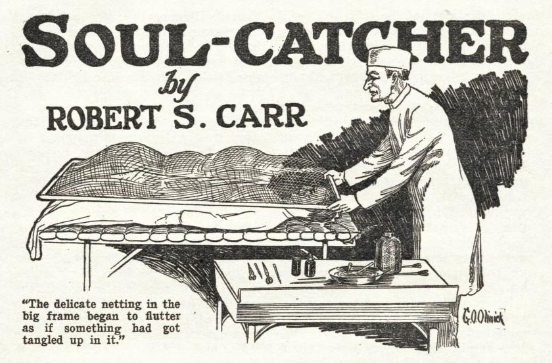

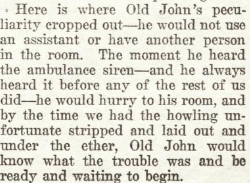

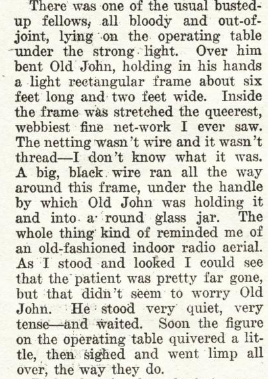

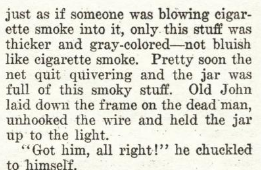


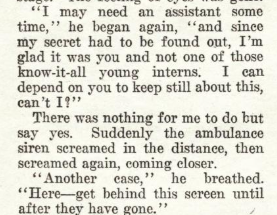


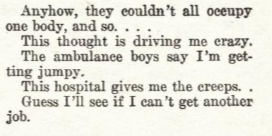
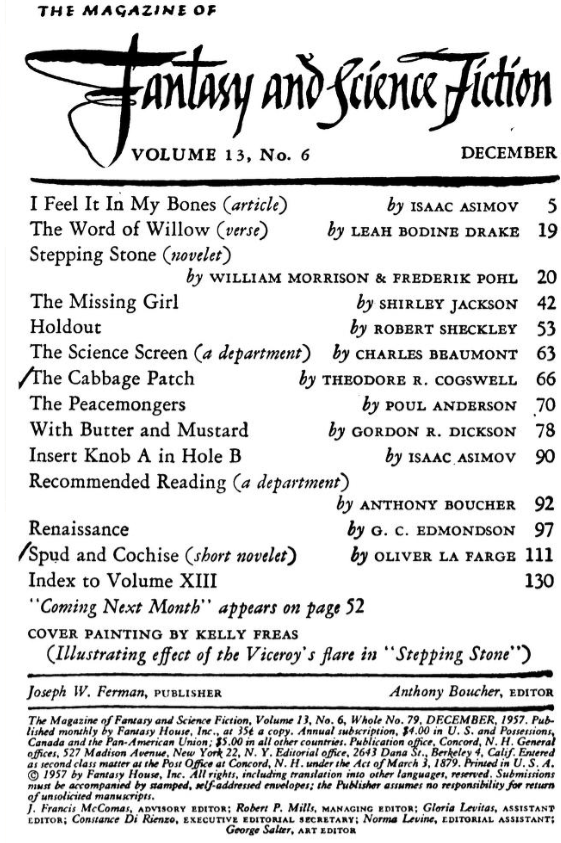


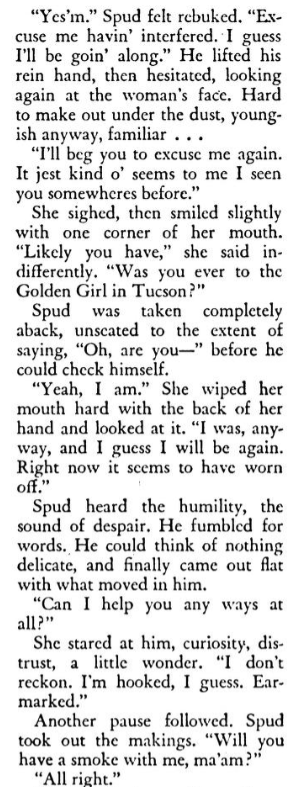


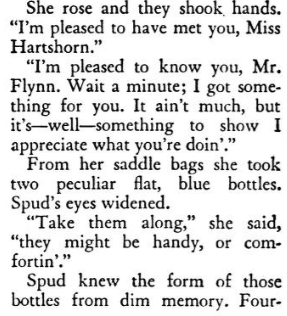
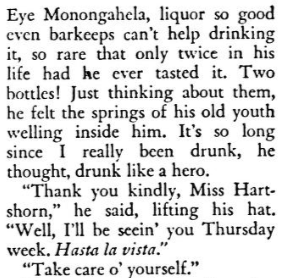
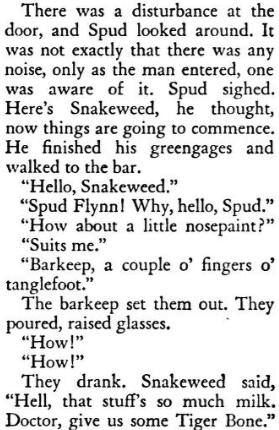





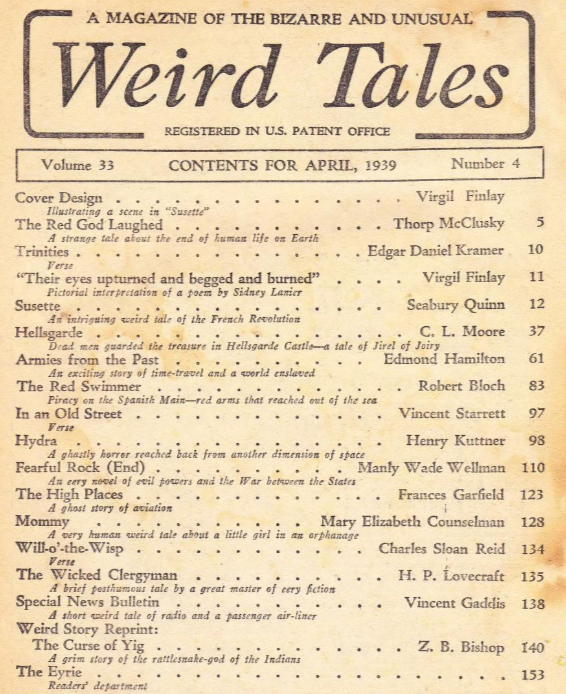
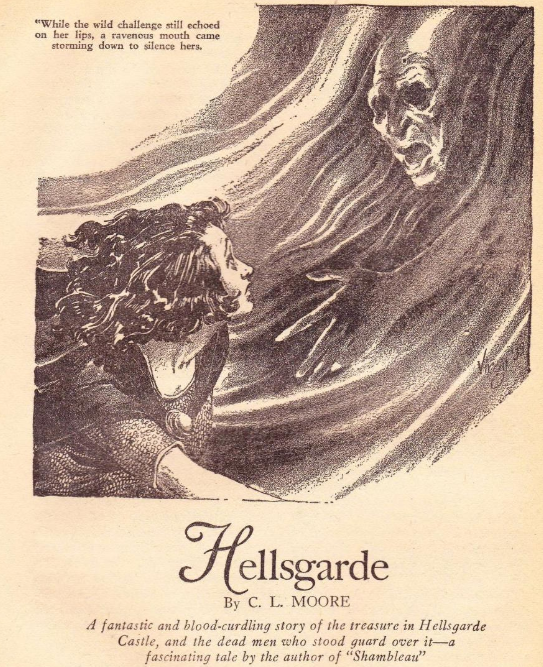
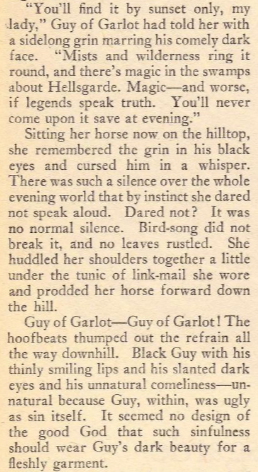


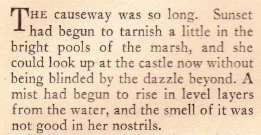






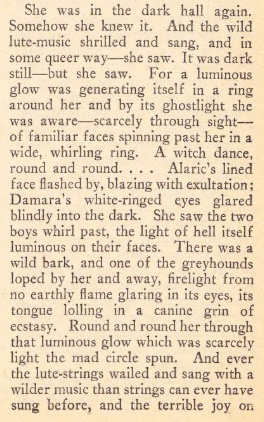


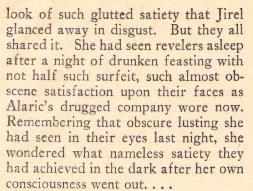

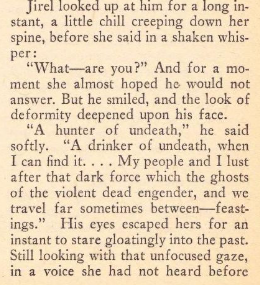


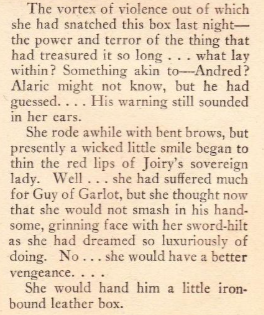









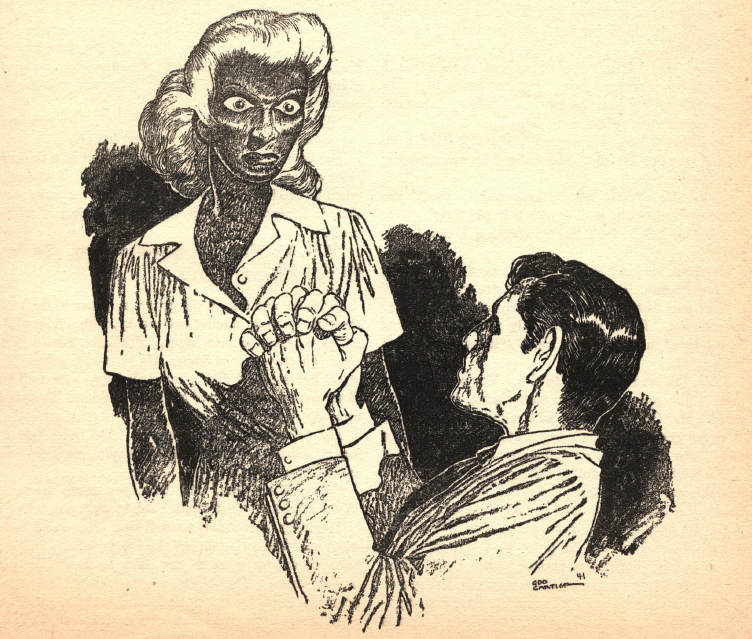















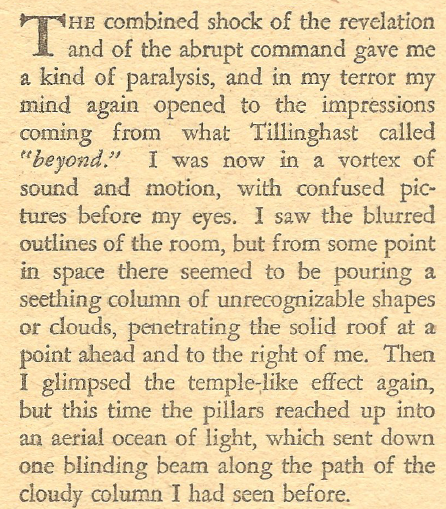


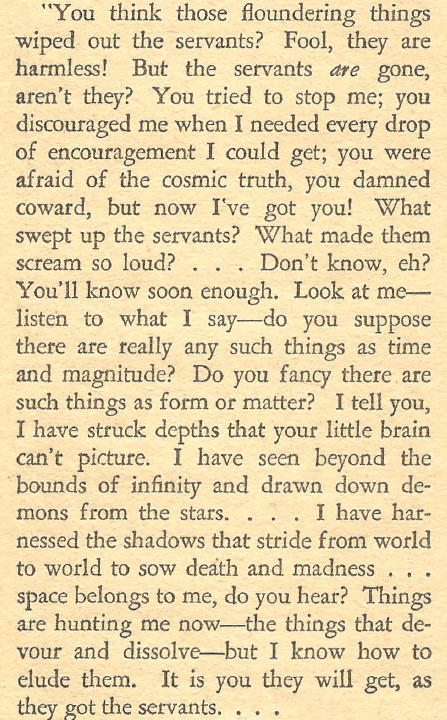

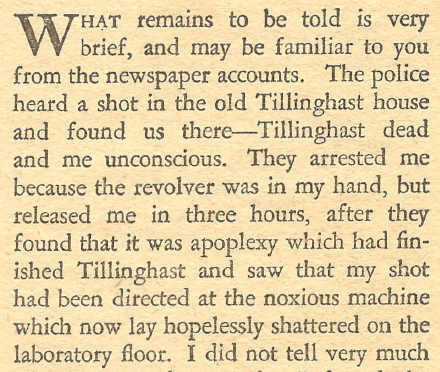


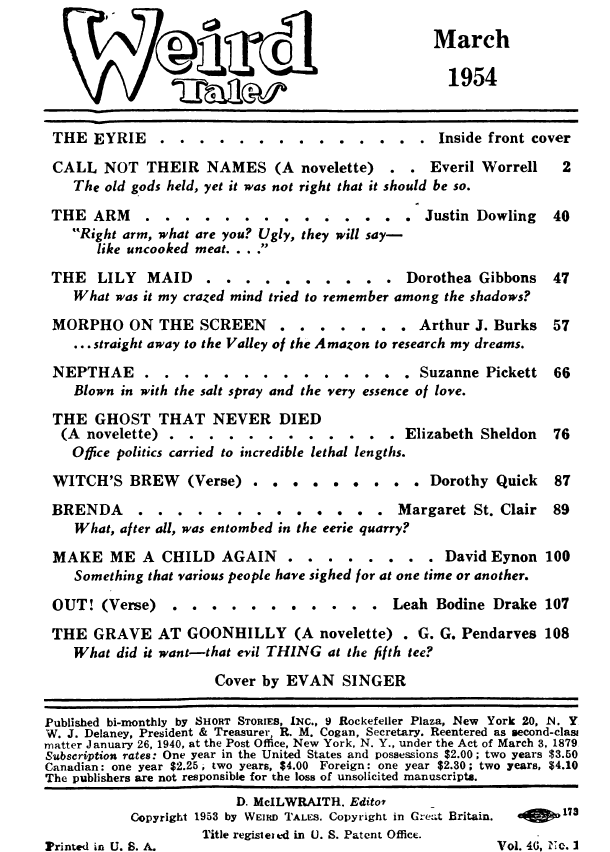










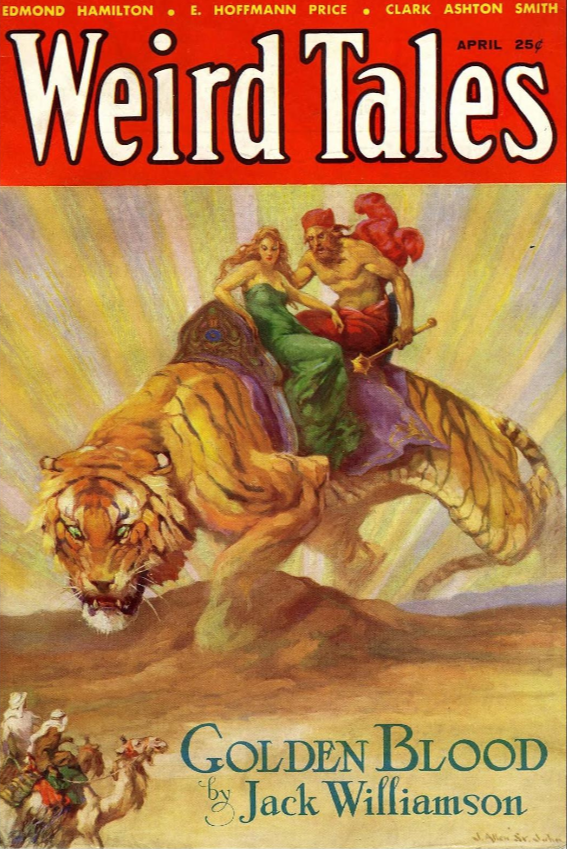






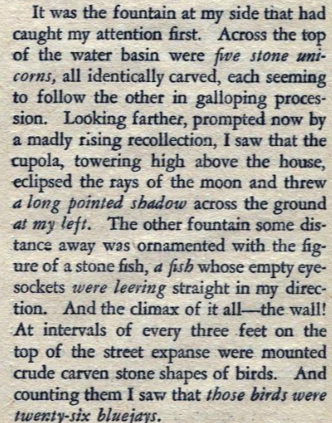




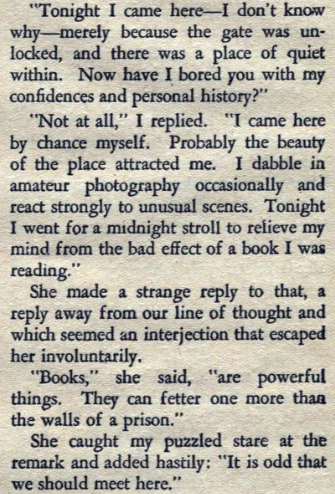
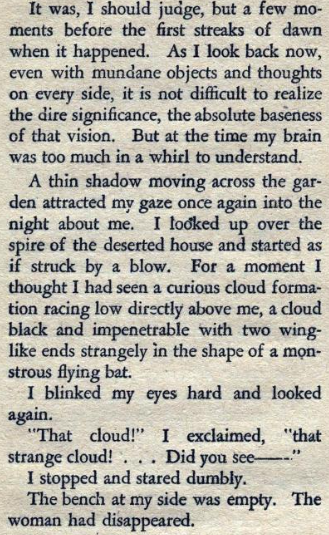

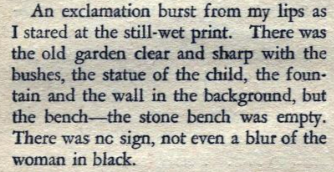
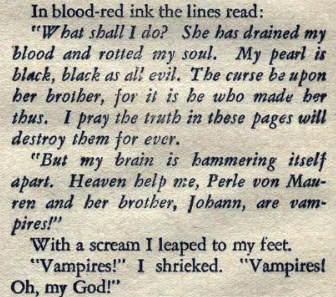


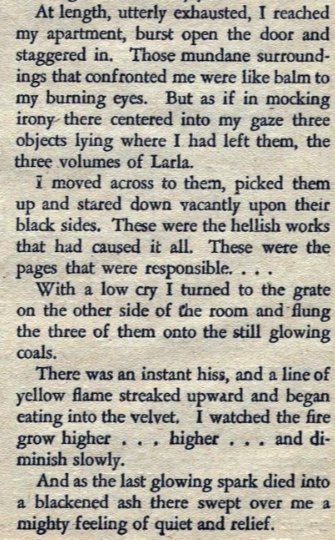
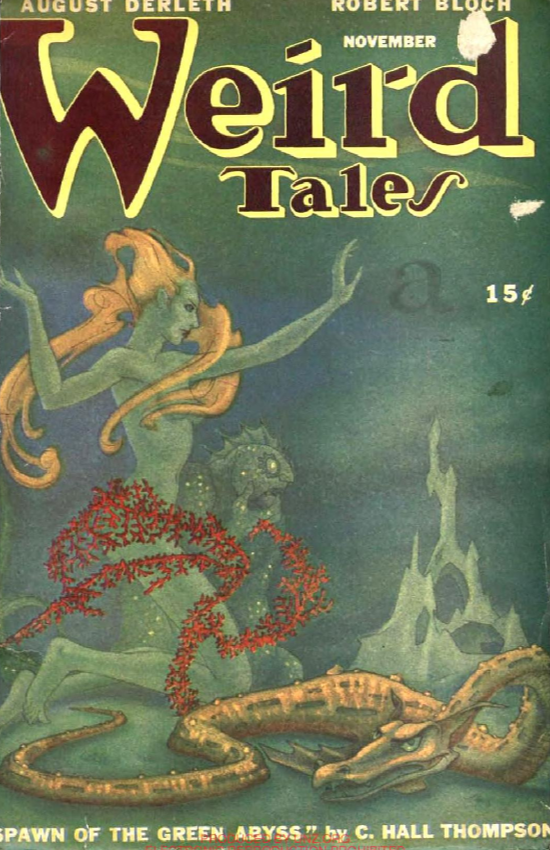


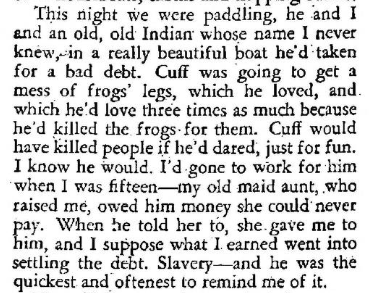








 Eric Williams