Blowin’ the dust off the ol’ blog to, hopefully, start to begin to approach maybe writin’ more on here. I was all primed for Sword & Sorcery posting last Xmas, but, as always, life and such took precedence. But, while things have been quiet on here, I have not been vegetating (as nice as that sounds); I’ve been using my scant spare time to put together another collection of weird short stories that, hopefully, will find a publisher and be available for people to read at some point. Also got a few stories published here and there (check out the Writing page for links). And, most recently, I took part in the Greater Austin Book Festival, a really fun event the library foundation does here in Austin. Had a great time, sold some books, met some folks, moderated a panel, got some free beer and lunch…all in all, a success!
This is the second year of the festival; you might recall that I did a write-up of the first year’s event too, wherein I was suitably impressed by the fact that everything ran as smoothly and went as well as it did! Well, I’m pleased to report that this year was no different; in fact the heroic library staff who put on the festival made it bigger and better than last years!
As someone with exceptionally poor organizational skills, it really is impressive to me to see people get something like a book fest, with so many moving parts, humming along with no hitches. Speaks really well to the skill and resilience of the Austin Public Library and its tireless workers and volunteers!
The night before the festival, the library hosted a reception with snacks and free beer/wine for all the participating authors, which was a lot of fun. Rain meant we couldn’t use the (really beautiful) rooftop garden, but even trapped indoors it was still a fun chance to get to meet other local writers (and drink free beer). It’s always interesting to meet other writers, because it’s a pretty wide-ranging and diverse field – everything from MFA types to hobbyists, and from traditionally published to self-published (although it feels like small, indie-press published books were in the majority).
It’s also interesting to encounter writers and learn why they write – I’d say a fair number of them entertain dreams of a particularly remunerative cast with regards to their writing, which is really an alien view to me. I mean, if I could pull down mid-five figures writing my dumb little stories, I’d love it, but that said the money a book pulls down isn’t ever a metric I’d want to reckon success by. And I’d certainly never want to write anything with that in mind – there were a few folks skirting dangerously close to marketeering talk there, which bums me out when I encounter it.
As I’m writing this I realize there might be some conflict in what I just said and my avowed love of the pulps – after all, some of my favorite writers approached their work with at least one foot in the “write for $$$” camp. But, when I look at it, I think what’s frustrating NOW versus back THEN is the scale of the problem, as well as the nature of the publishing world – I mean, back in the glory days of the short story, you could absolutely crank out some work explicitly for some quick cash, and use that to subsidize your more artistically-satisfying work. Also, the whole nature of pulp publishing was just this big ol’ bubbling mass, you know – lots of change, very dynamic, if one market didn’t work for you there were others, that sort of thing. You contrast that to today, and it feels very different, everyone seems to be chasing the exact same market-tested-and-approved thing, for one, with very little room for real experimentation or diversity. And, of course, the idea of someone being able to write potboilers for cash and then work for themselves just doesn’t really make sense today, not with the idea of a unified “brand identity” that publishers all seem to have bought into. Of course, in the indie world, none of that applies, but then that’s probably because nobody is making any money at all.
A bit of a discursion there, sorry! And really, the majority of the authors I met were doin’ it for the love of the game, which is always a refreshing thing to encounter out there. And it was something that several readers/browsers at the Festival said too – the fun thing about GABFest is it really *does* expose people to books that they might otherwise have had a hard time encountering, and people really do love it when that happens!
And there were a lot of really nice people who were genuinely excited to see my books. A huge thanks to Alan Good at Malarkey and Matthew Spencer at Paradise Editions once again for doing such great work on the covers – they grabbed folks’ eyeballs from a fair distance, that’s for sure, and there were a lot of excited exclamations of “Oh! Horror!” as they came up.
There were also, hilariously, a fair number of people who came over just to let me know they *didn’t* read horror, which is a bit odd. Like they felt like I needed to know that they had instituted a widespread ban in their own reading on spooky stuff. Do other genres get that? Like do people make an effort to physically come over and tell authors “ugh, memoir? not for me!” or “sorry, I don’t read sci-fi?” It’s a strange phenomenon; happened to me several times. And when I asked them why not, they really didn’t have much of an answer for me, though several people said the real world was scary enough, which is a weird one. Like, if my books were titled “The Fascist Who Became President” or “Night of the Tariffs” I could understand that position, but, like, my book has weird monsters in it. There’re haunted atomic mannequins, fungus mimics, an ancient roman liche! That’s pure escapism man!
That bit of goofiness aside, a productive horror discussion was had in the Horror Panel, which I got to moderate. Three authors (originally four, but one had to drop out at the last minute) and me, chattin’ up in a conference room on the fourth floor of the Central Library, a great time with a great crowd. I really enjoy panels, and honestly I think I’ll only ever do conventions if I’m on one – for one thing, they’re just fun, but on another practical level, they’re also the best way a nobody like me can convince someone to take a chance on the books.
I like a pretty loose and free-flowing sort of panel, more like a broadly directed conversation than anything else, so I opted to start with a Lovecraft quote: “The oldest and strongest emotion of mankind is fear…” and then asked the panelists (Brendon Vayo, Burke de Boer, and Julius Crow) how their work approached and engaged with fear. The resultant discussion was a lot of fun, and I think we got into some pretty neat areas, thinking about ways fear, as both a very idiosyncratic thing as well as a kind of universal experience, can be used both thematically and, frankly, mechanically in writing. The audience seemed to dig it too – we talked for about a half-an-hour or so, and then I opened it up to the audience for questions. There were a bunch of ’em, and one really heartening thing was that, when the inevitable question about AI and writing came up, the audience was 100% in agreement that AI sucked and they would never read anything that used it, let alone something produced explicitly by it. Great to hear!
All in all, it was a lot of fun, sold some books, met some folks, got to talk about books, free beer (and lunch), what more can anyone ask. It’s a neat thing that the library here does, and I’m really glad that it seems to be settling into an annual event – there were plenty of folks there walking around, taking advantage of the space and programming of a great little community institution, which is just a really nice thing to see. If you’re ever in Austin in the spring time, late April/early May, it’s a fun event and worth seeing!
I’ll just close out with the reminder that, yes Virginia, there *are* books left over from the Fest, and if you want to buy one, why not contact me?
Lookit ’em, cute little things in need of a good home…
CONTENT WARNING: the story we’re talking about today includes sexual assault.
A hyperborean wind howls from the north, locking my Texan kingdom in the icy grip of mid-40 degree temperatures, which can only mean one thing: Sword & Sorcery month is upon us again!
As I mentioned last year, I have long associated the Yule with fantasy in general and sword & sorcery in particular – something about the atmospherics and the holiday free time lends itself to curling up with some rollicking barbarians-and-wizards action, you know what I mean? Last Sword & Sorcery month, we talked about a lot of fun stories either leading up to the genre – the Solomon Kane story Rattle of Bones for instance, or my favorite S&S tale of all time, Worms of the Earth – or those firmly within its walls, like the classic Conan adventure The Tower of the Elephant, Fafhrd and the Gray Mouser’s first story Two Sought Adventure, or Black God’s Kiss, the very first Jirel of Joiry tale.
That last one on the list above is relevant, because it strongly influenced which story I wanted to do today. Again, as is tradition, we gave November over to C.L. Moore stories, and like last year I moved from Moorevember into Sword & Sorcery month with the very first Jirel story. So, with frightful symmetry, let’s start of our celebration of all things sword-and-sorcerous with the LAST Jirel story that C.L. Moore ever wrote, the absolutely killer Hellsgarde!
As is clear if you’ve been reading these long rambles of mine, Moore is one of my favorite writers, and Jirel is one of my favorite characters – she’s really a singular creation, a badass swordswoman in full command of herself and her destiny; she’s not some wandering mercenary or exotic barbarian, she’s a goddamn robber baron(ess), ruling a castle and with a band of rough-and-ready slayers under her command. Interestingly, it’s that singular independence that serves as the instigating factor for most of her adventures – in the first story, we meet Jirel after her defeat, with her castle occupied and herself a prisoner. The threat to her autonomy that this represents leads her to take a drastic and blasphemous path towards vengeance, with a grim and tragic result. Jirel’s saga is bookended by a similar constraint in “Hellsgarde;” here, Jirel has been forced into dire action by the treachery of a (strangely attractive) man, and she also ends up facing strange, alien, and altogether blasphemous magic, a source of pervasive corruption that, I think, really sets the tone for a lot of sword & sorcery later.
But, before we dive into the story, let’s look over this issue of Weird Tales!
The cover, by Virgil Finlay, is a little disappointing and bland, a shame given what we know Finlay is capable of. In fact, there’s actually some killer Finlay art in the magazine, so let’s take a minute to wash the dullness of the cover out of our eyes with some of that, shall we?
I mean, holy smokes, lookit that! Great, weird art for McClusky’s (middling) story “The Red God Laughed. And lookit this:
Late Wright-era Weird Tales would do these one page spreads where an artist would take inspiration from a short passage, often of poetry, to create these marvelous full illustrations. I mean, jumpin’ cats, what a piece, huh? Baffling that Finlay’s cover is so dull when he’s capable of masterpieces like this, isn’t it? But oh well!
The ToC is interesting:
At first blush, there’s not a lot to recommend this big ol’ issue, is there? A lot of second-stringers, in my opinion; Moore’s Jirel story is the stand-out, from our perspective today at least. Folks back then loved Quinn though, which is probably why his (perfectly fine but nothin-to-write-home-about) story got the cover. Bloch is still working to find his niche – there’s a bit of gratuitous violence and gore in this one, hints of things to come for ol’ Bob Bloch. Moore’s husband and writing partner, Henry Kuttner, has a story in here, and it’s 100% a Lovecraft story, with two weirdos doin’ occult experiments to contact things from Beyond and all that. There’s some funny drug stuff here too, with the occultists using weed as part of their mystic preparations. It’s actually not a bad piece of Lovecraft inspired fiction, even if it does come off a bit derivative and pat. He even excerpts the same passage from Machen that H.P. used in “The Horror at Red Hook!”
But speaking of the Old Gent, there’s two Lovecraft pieces in this issue, pretty good for a guy who’d been dead for two years. “The Wicked Clergyman” is unusual, in that it’s an excerpt of a letter that Lovecraft sent to a friend, Bernard Dwyer, in 1933, and the part that became this story is basically him recounting a weird dream he’d had. Following Lovecraft’s death, Wright took some effort to gather up any remaining bits an pieces of his work and publish (or republish, in the case of the amateur press stuff) things like this in the magazine. On the one hand, it’s nice this stuff got preserved, but on the other, you can’t help but feel like a note about this story would’ve been nice, at least for Lovecraft’s sake – this isn’t a “story” per say, and not knowing its provenance might give a reader a weird idea about Lovecraft’s work and style.
The other Lovecraft piece is a reprint of Zelia Bishop’s 1929 story “The Curse of Yig.” Bishop is a very interesting character who hired (and occasionally actually paid) Lovecraft to do some revisionary/ghost writing work, which she then sold (or offered) under her name. By far theirs in the most “impactful” collaborations in the mythos world; these stories introduce Yig the Father of Serpents into the pantheon. They’re also interesting stories for their western flavor – they’re set in Oklahoma and have a decided “frontier” aspect.
A long ramble, but the point is that Moore’s “Hellsgarde” is coming in at a strange and chaning time for the pulp world – the old masters of Weird Fiction are, for the most part, dead or in decline, and the powerful editor of the magazine, Farnsworth Wright, would soon follow them. Simultaneously there’s more competition, particularly in the sci-fi (and fantasy) realm out there, magazines that had bigger budgets and could pay better prices than The Unique Magazine. Every Jirel story that Moore wrote appeared in Weird Tales, but the landscape of magazine publishing was changing, and Moore (and Kuttner) would expand their markets, particularly as sci-fi grew in popularity.
But, anyway, enough! Let’s get to “Hellsgarde” already, yeesh!
Good illo by Finlay, of course, although I can’t help but wish he’d taken on the weird “nobles” that Jirel meets in Hellsgarde, with their subtle but definite “wrongness.” Oh well! Also interesting how Moore is still being connected with “Shambleau” all these years later! It’s an important story, and it definitely had a very strong impact on ol’ Farnsworth and the Weird Tales world!
We open the story with Jirel, mounted upon her mighty steed, staring out over a strange and empty swampland just as the sun is setting. There’s some great environmental writing here – I think sword & sorcery is a genre uniquely suited to this sort of thing, landscapes and “wilderness” I mean, given the deep resonance they have with themes of natural vs unnatural, civilization vs barbarism, and the contrast between the smallness of the protagonist and the hugeness of the forces arrayed against them. Moore, who is simply a great writer, does this stuff really well too – the glassy unnatural stillness of the swamp, the silence, the long dying sunlight, it’s fantastic stuff, top-notch writing.
And why has Jirel come to this ruined castle of Hellsgarde in the lonely vastness of this swamp? Why, ’cause of a dude, of course:
So first off, there’s more of that strange sexual tension that Moore is so interested in. Jirel is, once again, obviously experiencing some complicated emotions – Guy of Garlot is a scumbag and a villain, but he’s easy on the eyes, that’s for sure! It’s an interesting bit of characterization for Jirel too, since she’s obviously at least appreciative of his physical attractiveness, even if he’s “ugly as sin itself” on the inside. But how’d this hot asshole get Jirel to agree to go questing for Hellgarde Keep in a haunted swamp?
Guy has, somehow, captured 20 of her best bullyboys, and unless Jirel, fearless and mighty swordswoman that she is, retrieves the treasure of the Lord of Hellsgarde, then they die! Guy apparently desires Andred’s treasure above all things (scorning even Jirel’s rockin’ bod!), and will only exchange her men for it; but it’s a deadly dangerous quest, for all who have gone into the ruins has vanished. And what is this treasure? Hilariously, Guy doesn’t know – it’s something small and said to be stored in a box, that’s it. I guess he’s just jazzed about it because it’s so rare a prize and no one has been able to get it? Jirel, pissed off, is forced to agree the bargain; after all, regarding her men:
Great bit of characterization there, huh? Jirel understands honor and the obligations she has to her soldiers – if she must, she’ll go into this preternatural swamp with its haunted ruin and search for a cursed, mysterious treasure, all for the sake of her twenty dudes.
Jirel rides down towards the castle, and we get some more great descriptive writing:
What a vision, huh? As she goes, she has an expository reverie that lets us learn, quickly, a little bit about Andred. A big, violent, mean fucker in life, the rumor of his weird little treasure box was enough to draw his enemies to his lonely castle, where they besieged and captured it. His treasure hidden, Andred was subjected to the most terrible of tortures, but his raw vitality and stubborn strength meant that, after long sufferings, he died and took its secret with him. No one found the treasure, and eventually the castle was abandoned…
Standard issue vengeful ghost guarding its treasure, although take note of the fact that Andred’s ghost is said to be a direct result of the vitality and force that he had in life.
The mists continue to rise around Jirel as she rides towards the castle along the causeway, and she thinks they must be playing tricks on her eyes, because it almost looks like there’s some guys stationed in front of the gate of this abandoned castle. That can’t be though…can it?
It is a bunch of guys…dead guys! All stuck by their own spears! It’s a gruesome as hell scene, and very uncanny. Jirel, of course, is no stranger to death and brutality; hell, honestly its easy enough to envision her ordering the same thing done to some guys she’d killed…but out here, in the swamps, something is making sport of death, and it’s damn spooky! While she’s regarding these dead men, the door to the castle suddenly groans open…and a weird little guy greets her.
Now, first thing to point out and mull over is the somewhat uncomfortable way Jirel articulates the wrongness of this fellow. He’s described in frankly ableist terms, something that we find a little offputting these days – the idea of a villain’s disability being used in some literary way to reflect their twisted soul is not only offensive, it’s cliche, a very common trope from the past. Now, within the context of this story, I think you can approach it as the way Jirel, an indeterminately medieval person, would view the world around her. I mean, within the context of stories and literature from the broadly defined medieval Europe, that was a common and self-evident view, moral decay or sin stamped on the body or face. In detail, it’s important to recognize that Jirel is perceiving a kind of moral deformity in this guy – he’s not actually a hunchback, after all, and the clumsy and uncomfortably language we can choose to read as diegetic here, Jirel articulating a strange new concept to herself. It’s also of a piece with her reflections on Guy from earlier in the story – she several times brought up the apparent contrast between him being grade-A beefcake and a vile asshole. This discourse on form and (evil) function is an interesting one here, a key theme of the story.
This weird creep says he works for the lord of Hellsgarde, a guy by the name of Alaric, who holds court here. That’s news to Jirel – as far as she knew, this pile was a ruin and no one lived here. Alaric, however, appears to claim some distant ancestry with Andred, and as such has taken the castle as his inheritance. Jirel is troubled by this – doubtless anybody living in Hellsgarde would have searched it thoroughly for the treasure. Has this Alaric found it? And even if he hadn’t, as a descendant of Andred, he would, ostensibly, have more of a claim on the treasure than anyone else. Either way, her plan is somewhat complicated by this development. And so, Jirel tries subterfuge. She’s just travelling through the swamp, will this fellow’s master give her shelter for the evening?
Inside the courtyard of the castle, Jirel sees a gaggle of extremely rough dudes. They’re obviously evil thugs, but at least their particular evil is something human and understandable to Jirel, in contrast to the majordomo and, as we’ll soon see, Alaric and his household.
Horse stowed, Jirel is led into the main hall where, at the far end, there’s a huge fire in the hearth and a semi-circle of people around it. Immediately though, Jirel catches a hint of “wrongness” about the scene. The fire seems merry enough, but there’s something about the people sitting around it, their faces and postures, that seems odd and strange. A man, obviously Alaric, sits in a highbacked chair, and a strange lute player (someone actually with a hump, it turns out) seems to be looming over the back of the chair. On cushions or benches there’s a “handful” of women and girls, as well as two small preternatural boys as well as a pair of scarlet-eyed greyhounds. All eyes are on her as she strides across the hall towards them, and knowing this, Jirel struts as she approaches them:
Again, Jirel is such a fun character. She’s a badass warrior AND a stone-cold fox, and she not only knows it, she revels in it! Honestly, a lot of warrior women in fantasy stuff aren’t allowed to have this much fun – they’re either weirdly (and coquettishly) virginal or absolutely sexless. But Jirel, in addition to obviously being someone who fucks, is allowed to have fun with it too; her sexuality is another weapon in her formidable arsenal, one that she deploys against men and women alike (I don’t think we’re meant to take that last little aside in the paragraph above as sapphic in any way, though – I mean she’s perfectly willing to let those 5s know that she’s a 10.) (Although you can put whatever the hell you want into your fanfiction, of course.)
Up close, the weirdness of these people is even more evident – there’s the same kind of spiritual deformity that she recognized in the doorman in Alaric and his jester, a hint of something twisted and off behind their eyes. And the rest of the household is no less strange. The women are strange beings, tall and with shockingly large and staring eyes, a similar shadow of evil hanging on them. The dogs are hellish things with red eyes and a foul disposition, and the two young boys, while silent and watchful, have the faces of devils with cruel, lusterless eyes. Equally weird is that it’s never made very clear how all these people are related to one another, despite the clear affinity for evil shared between them.
Despite the weirdness and menace of these oddballs, Jirel has a mission to do. She asks to stay the night, and Alaric graciously offers her room and board. She settles in among the throng, although she keeps her sword handy and her reflexes primed – she does not like these people and senses something is wrong and very dangerous here. She and Alaric fence verbally, although every time she asks a question about them or their experience at Hellsgarde, a ripple of subtle amusement runs through the whole company, as if they’re all sharing a secret joke. The whole scene is great and very weird; Alaric et al are just flat out odd; they’re clearly watching her hungrily the whole time, but we’re right there with Jirel in not understanding what it is that they’re after. She (and us, the readers) have to be thinking that this, in some way, orbits the question of the treasure; perhaps Alaric has guessed her errand, and is laying a trap for Jirel? Who knows! But then, supper is served, and Jirel’s brief relief at the normalcy of a meal is soon replaced by further unease:
But, when the table is set and the meal begins, it turns out everything is a little…off:
Brave woman to bite into whatever unrecognizable beast had been roasted. But then again, everything tastes bad and foul and rotten. Jirel is the only one who seems troubled, though – everyone else is digging in with gusto. And then Alaric notices Jirel isn’t eating:
Grade A weirdness! I love it! It’s particularly fun to take this hyper-competent character, a cunning and clever warrior, and put her in a situation where that really doesn’t matter, where something totally alien and strange is happening, and she’s just kinda gotta ride it out. And the menace behind these weirdos is good and palpable too – this strange group with their furtive jokes and their staring eyes and their evil auras. Solid stuff!
Following the bad meal, Alaric offers to show Jirel the great hall full of armor and banners and whatnot. It’s all rotted and rusted of course, what with being an abandoned castle in the swamp and all, but while they’re promenading Alaric escorts her to a huge stained patch of stone floor – the very spot where Andred died, dismembered and broken by the long tortures he’d endured. And, while Jirel is regarding the spot:
A sudden furious storm seems to descend on her, right there in the hall. The lights go out, she’s seized in an oddly disembodied grip, and a mouth is suddenly thrust upon hers, bestowing a “savagely violent, wetly intimate kiss” unlike anything she’s ever experienced (gross!). At the same time, she’s being bodily dragged across the hall by some kind of implacable, unstoppable force. It’s very weird! And maybe very uncomfortable for the reader, since Moore makes sure that we know that Jirel is 100% experiencing this kiss as a violation. Her mouth is “ravaged,” she’s gripped by an “insolent” hand, she can only make inarticulate sounds since her mouth is sealed by the “storming violation” of the kiss; it’s very much a sexual assault, and the suddenness and overwhelmingness of it is very shocking to the reader.
Anyway, as this is happening, Jirel is also experiencing a sense of claustrophobic confinement, as if she’s being dragged out of the hall and into a small room or closet. It’s pretty frightening, obviously, but just as suddenly as it appeared it vanishes. Suddenly there’s light in the hall again; one of the weird women has tossed a bunch of brush onto the doused fire and suddenly there’s a blaze going. Jirel sees that she’s standing alone in the far end of the hall – the rest of the people are by the fireplace, and Alaric himself is standing over the stain, at the other end of the hallway. She has been dragged across the room, although she was never “confined,” and it’s clear that Alaric, who had been near her at the beginning of the attack, had not been the person to grab and assault her.
It suddenly becomes clear that Alaric and the others had expected something like this to happen. They’re speaking in a weird language Jirel doesn’t understand, but they’re all very excited and running around with a strange, hungry look in all their eyes. Alaric questions her about what happened, and they all get very excited when she muses about it being the ghost of Andred.
We learn that Alaric and his weird crew have been waiting here for the ghost of Andred to appear, but it hadn’t come out until Jirel shows up – Alaric speculates that Jirel has a kindred fierceness that Andred’s spirit finds irresistible. Similarly, they, being Andred’s descendants, have not been able to get him to appear (an obvious lie, as we’ll see soon). When Jirel asks why they want to see this horrible ghost, Alaric stammers a bit before saying that, why, only with the help of this ghost can his treasure be found (another obvious lie, and one Jirel catches right away). Anyway, now that Jirel is here, they can get on with it. If she’d be so good as to go stand in the spot again…?
Jirel, of course, tells him to go fuck himself, but then suddenly she’d gripped from behind. No ghost this time, it’s the damn lute player, whose snuck up and pinned her arms. She struggles, but there’s a bunch of them and they quickly grab hold of her. Her sword is taken away, and she’s dragged over the blood stain again. Then, the fire is doused, the hall plunged into perfect darkness, and the people holding her melt away to the far corners of the room. Spookily, it becomes clear that, even though it’s pitch black in the hall, Alaric and pals can see her just fine – they react to her moving around, and even carefully and precisely deliver a pillow to her when she complains of how sitting on the cold floor for hours is uncomfortable.
They wait there in the dark for a long time, until sometime after midnight when it becomes clear that no second appearance of Andred’s ghost is forthcoming. With everything perfectly dark still, Alaric and company grab her up and, without striking a light, carry her off into the castle somewhere, tossing her into a small, locked room. It’s clear that they’re going to keep her imprisoned to try again later.
Then, through the cracks in the door of her cell, she sees a light, and realizes that they’ve summoned one of the human thugs from the courtyard, who has brought a lantern. She waits awhile until, eventually, the guard leans his bulk against the door to take a nap, and she shivs him through the door with the dagger in her greaves. She grabs the lantern and considers her options; there’s a fun bit of meta-fictive playfulness from Moore:
Jirel needs the treasure, and however unpleasant it was, she knows she needs to brave the horrible ghost of Andred again if she wants to get that treasure! So, she sneaks down into the hall, finds the weird stain and, steeling herself, she blows out the lantern.
The challenge apparently works, because she’s suddenly in the center of the supernatural vortex again! She’s grabbed and dragged again across the hall, and all the time the horrible ghostly mouth pressed against hers. And then things get real weird!
Jirel again experiences the sensation of walls closing in, as if she’s being confined in a small room. As this sensation builds, so to does the fury of the vortex, as if they storm is also confined, and therefore all the more terrible. In her struggles, she reaches out and feels cold, slimy, stone walls – she is in fact in a small chamber, one full of bones, the remains of previous treasure hunters! Somehow, this ghostly vortex is magically dragging her into a different space, a pocket dimension or whatever. As she struggles, she is aware of flickering back and forth between the extradimensional prison and the great hall – it’s as if her soul is in one and her body in another. In the prison, she stumbles and picks up the box, and then she fights against the vortex and is back in the hall and her own body, still holding the box – she’s somehow carried it from one space to another. But she’s weakening, the terrible tireless force of Andred’s ghost is beating her down; she knows she will soon be dragged back to the little dimensional prison place, where her bones will mingle with those of the thieves who came before her. As she begins to lose consciousness, she hears a dog barking…and then lute music!
The vortex is still raging, but it seems to have forgotten her, spinning angrily around the hall. But it seems to have been trapped, as spinning around it in a wild Bacchic dance is Alaric and the others, wild and weird and very sinister.
Extremely weird! And what a great bit of writing too, the sense of motion and the wild frenzy of Alaric and the others, and the way that they, suddenly, are much more menacing and dangerous and deadly than Andred’s ghost! Fantastic weird fiction!
Jirel grips the small box to her chest, but she realizes that Alaric and his coven have no interest in it or her – they’re focused solely on Andred’s ghost. The music and the dance wind down, and with it the fury of Andred’s ghost ebbs too. Something is happening, clearly, but Jirel doesn’t see the end, as she finally just konks out.
She wakes to daylight streaming into the hall. She’s sore from all the buffeting that she took, but she’s alive, and she has the small, worm-eaten casket that she grabbed out of Andred’s ghostly oubliette. She looks around, and sees the whole of Alaric’s coven sprawled out across the hall.
A special kind of grimness to the morning-after, isn’t there? And the obscene satiety on all their faces is just a cherry on the top of all this weirdness, isn’t it? There’s a real sense of disgusting, licentious, gluttonous, excess in the aftermath of whatever the fuck happened last night, made worse by the fact that we (and Jirel) don’t really understand anything about what’s been going on! Great weird fiction! And it gets better when she runs into Alaric, the first of his group to come out of their stupor.
I mean c’mon, that’s just fun, isn’t it? You can imagine Alaric, bleary-eyed, needs a shower and a cup of coffee, all cotton-mouthed and stale from last night’s debauch, suddenly being reminded that, oh yeah, that’s right, Jirel is still here. “No worries, I’ll have your horse brought around. Take it easy, bye!” And then of course the capper is that he doesn’t give a shit about the box, help yourself lady! It’s so much fun, and like all great weird fiction, it hinges on us getting a glimpse of something with its own rules and purpose and meaning that we can never really understand.
But of course Jirel demands SOME kind of answer. Alaric explains that they used the lure of the treasure to get her to play the part of the bait for the ghost, since they couldn’t explain what they REALLY wanted from Andred’ shade. Her getting the treasure was incidental to their purpose, as was her survival – she just got lucky that one of the weird dogs had heard her and roused the rest when she was down in the hall on her own. Alaric and the others had swooped in at the last minute almost accidently!
Truly wild stuff, huh? Alaric and his coven (dogs, little boys, and all!) go around eating ghosts, basically – something sweet about the furious dark energies created by their violent deaths. But it’s tricky; he admits that Andred was, rightly, afraid of them, and without Jirel’s own energy to draw him out they might never have had a chance to slurp him up. As thanks, Alaric offers Jirel a bit of advice:
As Jirel rides off, trying to put the memories of the night and the weird horror of the Hunters of Undeath behind her, Jirel regards the box, and considers Alaric’s warning.
And that’s the end of “Hellsgarde,” and the final entry in the original run of C.L. Moore’s Jirel of Joiry stories!
First off, right away, I think it’s great. Jirel is such a wonderful character, her attitude and sharpness and command are fantastic and always a lot of fun to encounter. As weird fiction (the genre that birthed and nurtured sword & sorcery), I think it is again another example of Moore’s command of weirdness and the uncanny; much like the strange hell world that Jirel journeys to in “Black God’s Kiss”, there’s a real undercurrent of alien-ness to everything here. Hellsgarde and its swamp are spooky, but the discover of it being inhabited, and particularly by the strange critters that Alaric and his coven seem to be, just elevates everything. I mean, these hunters of undeath are very strange – are they humans who’ve been changed by their weird appetites, or are they something else? The dogs seem to suggest that there’s something horrible and corrupting about ghost-munchin’ but it’s never explained (thankfully), so you can just kind of savor the weirdness of it all. Great stuff!
As a sword & sorcery story, it’s great, although I can appreciate that some might find Jirel here a little disappointing – she’s often just along for the ride for much of the story, although the fierce joy she feels when she considers her hidden dagger, and the iron determination she expresses by sneaking down to the hall when she’s escaped the prison is absolute top tier s&s heroics, in my opinion. Also, I feel like the threat here is so otherworldly that anything more would break the spell of the story, you know? The ghost is already very scary and strange and obviously something that a strong sword arm isn’t going to be much use against, let alone the weird threat posed by undeath hunters (whatever they are). It would be very dissatisfying if Jirel had been able to, conan-like, brute force her way out of these situations. Much more satisfying is the weird glimpse into an alien world that she got, in my humblest of opinions. Also, she’s got her own agenda here – she needs the treasure to get her guys out of a dungeon, and she’s focused on that above all else, very much in keeping with a s&s protag’s pragmatism!
Of course, we do have to talk about the sexual assault aspect of these stories, particularly since they’re not one-offs by any stretch. I mean, three of the five (ish, I’m not counting “Quest of the Starstone”) Jirel stories are directly about Jirel being violated or threatened with violation. In particular, there’s a strange symmetry between the first story, “Black God’s Kiss,” and this one, isn’t there? The central image of the kiss as violation, for one thing; Guillaume forcibly kisses Jirel when she’s his prisoner, and the outrage of it spurs her on to seek the deadly kiss of the black god to get her revenge. Here, Andred’s kiss is somewhat more straightforward, a violent and unwanted kiss for sure, but one from a ghost many hundreds of years dead; it’s even kind of implied that Andred’s atavistic tendencies are a result of his ghostliness – he’s a thing of violence, almost elemental in death now.
Some people make the argument that Moore, bowing to the realities of pulp publishing, uses “kiss” euphemistically for out-and-out rape in these stories. I mean, I don’t think we’re meant to read these stories, see the word “kiss,” and immediately think that Moore is eliding or winking at what *really* happened. I also think it kinda sorta doesn’t matter, in terms of the story – Jirel experiences these kisses as violations, after all, and that’s enough, although I will say that Moore dwells on the ghostly kiss and its violence a LOT in this story, to an uncomfortable degree. It makes for an odd reading experience, although at least in “Hellgarde” we’re not confronted with as complex an ending – again, the ghost is elemental in its violence, and Jirel can’t have a relationship to it beyond being subjected to it’s innate and impersonal violence.
But, like in so much of Moore’s fiction, there’s a definite fascination with sex and relationships, and an appreciation that there’s positive and negative aspects to all of it. Jirel’s obvious fascination with Guy in this story does make me think of Guillaume in “Black God’s Kiss.” The ending of “Hellsgarde” is also kind of funny, again in a symmetrical way, when compared to “Black God’s Kiss.” Jirel, having slain Guillaume with the horrible and obviously evil magic of the Black God’s Kiss, feels remorse (both for the act, which is tainted by alien forces, as well as because she realizes she had kind of loved Guillaume). But if she learned a lesson from that, she’s obviously forgotten it here! Again she has an obviously evil magic weapon, and sure as hell she’s gonna use it to horribly kill another hot (and evil) guy she has a complex relationship with! It’s pretty interesting that, again, Moore is drawing from that same well for another Jirel story, isn’t it?
It speaks to the strength of Moore’s writing that the stories engender so much discussion; really, there’s no one writing at that time who does so much in such little space. All of her stories are these subtle, complex things, not necessarily puzzles to be solved so much as koans to be appreciated, I think. And they’re sophisticated, to; she’s always diving into heady territory, and using the conventions of the genre (even ones as young as S&S and weird fiction) to really explore and highlight conversations that you otherwise couldn’t have really had (in “straight” lit fic, I mean). Howard (and Smith) clearly influenced Moore’s approach to what would later be called sword & sorcery, but she did something really magical with it, I think, recognizing in it a way to talk about people, environments, relationships, all in new and interesting ways.
Anyway, it’s a great story, Moore is a great writer, and it’s a great way to start of Sword and Sorcery month, I think!
Moorevember is the cruelest month, at least this time around, so our posts have been a bit thin on the ground. Nonetheless, here we are on the eve of Thanksgiving to celebrate another great bit o’ pulp, this time a semi-silly story full about labor agitation, class struggle, and gnomes, by Henry Kuttner (and C.L. Moore – we’ll talk about the authorship below). It’s “A Gnome There Was” in the October 1941 issue of Unknown Worlds!
You might remember this issue, if you’ve been reading along – we’ve actually flipped through these very same pages when we talked about Fritz Leiber’s killer story “Smoke Ghost” last month. It’s an interesting pairing for a single issue of the magazine, given the subject matter; both stories are broadly concerned with industrial modernity and capitalist oppression, something on the minds of a lot of folks back in the late 30s-early 40s (twas ever thus…).
Anyway, since we’ve already been over the ToC and all that, let’s dive right in!
Great illustration on the title page by Edd Cartier, perfect little gnomish guys with great expressions and proportions. no notes! Cartier does some good illos in this one, and you really gotta appreciate Unknown Worlds art dept, just some top-notch talent all around.
First off, let’s talk authorship – right there on the title page, and on the ToC too, this story is attributed to Henry Kuttner solely and individually. The complication comes later, in 1950, when this story was included in a collection, “A Gnome There Was and Other Tales of Science Fiction and Fantasy” by Lewis Padgett.
The Padgett name, we know, was one of several noms de plume that Kuttner and Moore published under. Now, I’ve not read that collection – it’s entirely possible that Moore helped Kuttner revise the story in the intervening years, although that’s pure conjecture. More parsimoniously, I’ll just go with the idea that, given their incredibly close writing partnership and their self-admitted inability to tell who wrote what, this story was a Kuttner/Moore joint production that they just published under his name solely, for whatever reason.
Last time in discussing their collabs, I mentioned that I felt that, more often than not, you could spot the “Moore” parts and the “Kuttner” parts pretty easily; based on my gut-feelings-based-approach, I do think that there is a LOT of Kuttner in this one, particularly in the more slap-sticky bits. That being said, I think there’s plenty of (admittedly vibes-based) evidence for Moore in here too – the sense of menace, the alien-ness of the gnomic world, the oddly libidinal violence, and the sharper-edged social commentary are all just extremely Moore-esque, you know what I mean? But see for yourself and let me know what you think!
A scathing indictment right off the bat, of our main character specifically and a certain flavor of “activist” more generally, and damn if Kuttner and Moore don’t go for the throat right away! If you’ve ever spent any time inactivist spaces, you’ve definitely encountered someone like Tim Crockett – an entitled know-it-all bleeding heart with nothing but bottomless contempt for those they, ostensibly, are supposed to be helping. These sorts certainly know better than the workers what is needed and how to get it, and are bravely and selflessly willing to help these poor benighted souls out of the pit of their own oppression.
There’s a lot of very heavy-handed stuff in these first paragraphs, but there’s also a very nice, subtle dig in there too – the part where it’s mentioned that Crockett, a great giver of speeches and writer of articles, has chosen not to use his connections to get into law, a place where someone with real convictions and a drive could actually learn some stuff and do some good. It’s a good, sharp bit, and sets up Crockett right away a kind of feckless, spineless worm, more interested in the social capital gained from activism than from activism itself.
The mention of the “Kallikaks” deserves some explication, as it’s a fairly obscure but important bit of history. In the early 20th century, as the modern sciences of heredity and psychology were juuuuust starting to be teased out and explored, a fellow by the name of Henry Goddard published a seminal book titled The Kallikak Family: A Study in the Heredity of Feeble-Mindedness. Goddard was a eugenicist, like a great many educated people at the time, and ran a hospital for “feeble-minded” people. One of his “patients” there was a woman named Deborah Kallikak, and Goddard claimed to have discovered a clear-cut genealogy in her family basically proving the tenets of eugenics and hereditary hygiene. Basically, according to Goddard’s book, the Kallikak family could be divided into two halves, one “good” and “healthy” and the other cursed with disease and “feeble-mindedness,” traced back to a Revolutionary War era grandsire who had a “dalliance” with a bar maid while returning home one night. Thus, two branches of the Kallikak’s sprung from his loins, the upright and healthy side from his lawful marriage and a tainted lineage from his impure relations with a social and moral inferior. It’s all bullshit, of course, with copious amounts of lies and fabrications from Goddard (explored and explained in Gould’s great book The Mismeasure of Man, which everyone should read immediately). But at the time, and well in the 50s and 60s, Goddard was one of the titans of eugenics in America, and his “study” of the inheritance of the Kallikaks featured in all sorts of textbooks and papers and monographs.
Now, the use of “Kallikak” here is basically just saying that our character Crockett, a self-deluded meddler, probably believed that the workers he was “helping” were congenitally “lower class” and “feeble-minded” and, therefore, incapable of organizing themselves. Moore and Kuttner, of course, were interested in questions of heredity and the family; check out our discussion of their “When the Bough Breaks” from earlier in the year to read about all that. While I’m certainly not calling Moore and Kuttner eugenicists, I think sometimes we have a hard time recognizing just how ingrained into the mainstream those ideas were (and are still). The idea of genetic hygiene, of bloodlines mingling and diluting and passing on undesirable traits, was simply taken for granted – I mean, consider the whole of gothic literature and its preoccupation with congenital madness, for instance. The eugenic idea that, through careful and selective “hygiene” (i.e., choices of breeding) the human species could be “improved” was something that, likewise, was taken for granted at the time, and Moore and Kuttner were embedded in that milieu, same as everyone else.
A long digression, but that’s to be expected here, I reckon! Anyway, on with it!
We learn that Crockett has been jetting around, trying to infiltrate various industries to get the scoop on labor oppression, with a healthy dash of tragedy tourism in there too. He’s currently snuck into a coal mine in Pennsylvania where he’s disguised himself as a miner and descended deep into the earth. However, while he’s bumbling around and generally making a nuisance of himself, he accidently stumbles into a disused shaft that gets demolished, trapping him!
Waking after who-knows-how-long, Crockett slowly gets his bearings – he thinks he sees some kind of weird figure, but it vanishes and he decides that he must’ve been hallucinating. Then he starts to wonder how the hell he’s seeing anything anyway (radium, he decides, stupidly) and then begins to panic! Digging madly, he suddenly notices his hands:
Shocked, he continues the self-examination:
It would appear that Crockett has turned into a Weird Little Guy! His assumption, that his dying brain is causing him to hallucinate, would be a good one, if he weren’t in a pulp science fantasy story. Because, of course, the reality is that he’s been transformed into a Gnome, which he soon comes to realize when he hears a voice talking to him.
Crockett gets lifted up and hustled on his way, escorted by Gru Magru, who somewhat condescendingly explains to Crockett what’s happening:
It’s breezy and light, but a lot of fun – I like that kind of straight-forward fantasy stuff too, just enough exposition to get you situated and with some vague gestures towards a larger world to keep you interested, solid fantasy writing in my opinion.
Anyway, ol Gru Magru is hurrying Crockett along because he’s heard a fight has started, and he desperately wants to join it. This is a fun and weird bit of the story, because it turns out the fight is between gnomes, and it’s basically a form of recreation – we learn later that its the one unsanctioned non-work activity that they’re allowed, and they relish it. In fact, it’s almost a sensual experience for them, apparently – walloping and clobbering one another is a real, vital activity for the gnomes, and while it’s played for laughs there’s also a kind of deep strangeness going on here, where the gnomes, basically slaves to their emperor, can only connect with one another via violence. There’s a lot going on in there, I think!
In the brawl Crockett meets a girl gnome, Brockle Bhun, and learns about the important place the Brawl has in gnomish society. Then, the fight ended, Gru Magru grabs Crockett and drags him off to meet the Emperor, who likes to meet the new gnomes before they get put to work. In the throne room, they meet a gnomish servant of the emperor, who explains to Crockett (and us) that the emperor is basically a lazy indolent slug who luxuriates in mud baths all day – your standard senior managment, really, a characterization that is underscored when Crockett meets him. At first, he seems an easy-going sort, jovial even, getting Crockett oriented and admonishing him to work hard, but he finds a worm in his mud bath he becomes a roaring, bloviating, insulting bully. Basically, he’s a CEO.
Crockett is put on anthracite mining detail (and he’s told NOT to eat it, just mine it), where he again meets Brockle Bhun, a troublemaker who DOES like to eat the anthracite. More good art around this part, with a gnome hard at work:
While working, his new pal Brockle Bhun fills him in on life as a gnome – everybody works for the emperor, who rules through his powerful magic. That’s it. You work, you sleep, you work some more, there’s an official break after hour ten although you can fight as much as you want. A grim life of toil, although it’s taken as the simple, gospel truth. In other words, it is easier to imagine the end of the world than the end of mining, for a gnome.
Crockett, of course, finds the work difficult and exhausting, and so he begins to scheme a way out of it. If the emperor is a magician, perhaps he could transform Crockett back into a human and set him free? But how to convince him? The answer, of course, is a work strike.
Now, like a lot of this story, this solution is played for laughs, although I think it’s more than just a kind of shaggy-dog yuk-it-up sort of tale. Crockett was a labor organizer (of sorts…), so his mind turning in that direction is consistent with his character. Also keeping with his particular history is that he’s doing it solely to help himself. We know he’s actually kind of a snake and a parasite, unconcerned with the actual plight of the worker, so his plan for a strike that would force the emperor to negotiate is all in service of helping HIM, rather than the workers. Consistently satirical, a hallmark of Moore and Kuttner.
Anyway, that night there’s a secret planning committee meeting, where Crockett lays out the theoretical underpinnings of the labor strike and what they could get out of it. The other gnomes seem kind of half-hearted about it, until Crockett lies and says that the Emperor is planning on outlawing fighting; that makes them sit-up alright, since fighting is a cherished and beloved and, perhaps even vital, pastime for all gnomes. It’s that lie that convinces them to join in and agree to the strike. It’ll be dangerous, though:
The cockatrice eggs are the basis of the Emperor’s power – with them he can transform gnomes into all sorts of nasty things, including humans. Obviously, Crockett is very interested in the red human-transforming eggs. Everybody agrees to meet in the council chamber and declare a strike, and then the meeting devolves into a brawl.
Afterwards, and presumably in bed, Crockett engages in a bit of introspection:
An interesting bit of musing, on his part, and one that we, as readers, have to wrassle with. Is this alluding to the idea that, perhaps, there is a natural order to the universe, with some people being meant to be workers and others, naturally, bosses? Maybe Crockett’s dissatisfaction with his gnomish life is a left-over bit of his humanity that, given time, will be worn away? It seems possible:
Is Crockett simply struggling against being a worker, something that he secretly desires and, maybe, needs? There’re some complicating (and, honestly, reactionary) readings that could be made from this, although of course they are coming from Crockett, a character that we know is kinda dumb and untrustworthy. It’s a fun, complicated text, the sort of thing you expect from C.L. Moore (and Kuttner, when he’s working with her).
Anyway, after an exhausting day of work, Crockett and the rest of the gnomes assemble in the council chamber. The emperor barrels in, and Crockett declares the strike:
Crockett, laboring under the misapprehension that the cockatrice eggs are stored somewhere, tries to encourage his gnomish comrades to interpose themselves between the emperor and any doors that might lead to his stash. Gru Magru disabuses him of this notion – the emperor simply pulls the eggs out the ether, a kind of key tactical point that would’ve been nice to know about ahead of time.
The Mother of All Brawls erupts in the cavern, with all prole gnomes trying to wallop the emperor, who is just as scrappy as any of them, even without his magical weapons. Crockett tries to get everybody to sit down and negotiate, but the die has been cast and its a regular donnybrook in the council chamber. Finally, the emperor starts chuckin’ cockatrice eggs!
There’s some fun writing here – the image of this king hurling crystals into gnomes, and then the gnomes getting instantly turned into weird little critters by them, is a lot of fun. We get a good scene where some gnomes, caught on the edge of an explosion, are only partially transformed; one gets a mole head, another a worm’s lower half, and yet another gets turning into something unrecognizable, causing Crockett to realize that the cockatrice eggs aren’t restricted to the zoology he knows alone. It’s fun, and there’s a great illustration:
There’s also a fun bit where the emperor pulls out a red cockatrice egg; that, according to what Crockett has heard, turns gnomes into humans, as foul a fate as can be imagined. The emperor agrees apparently, because he thinks twice about throwing it and then, very carefully, sets it down behind him, rather than using it. Crockett, seeing his chance, darts forward and grabs it! Maybe he’s got his ticket back to humanity? Looking back on last time, Crockett sees a total bedlam in the council chamber:
Crockett wonders where it went wrong as he flees. Podrang should’ve negotiated, should’ve sat down and, recognizing that it was in his best interest, agreed to a compromise between himself and his workers. It’s an interesting bit of commentary, and you can read it how you like – maybe it’s a scathing indictment of Crockett and an organized labor movement that cannot see beyond its immediate needs and its relationship to management? Or maybe it’s saying that the bosses, and the system they serve, is not rational at all, that it would destroy itself and everything else rather than cede any power or control? At the very least, it’s clear that Crockett has misjudged the power of the gnomish proletariat and the determination of the gnomish emperor, because the latter has squashed the former and is now chasing after him! Crockett sprints through the earth, spots daylight, and runs hard, but he realizes that the emperor is RIGHT behind him – he won’t make it! So, he turns, and lifts the red egg over his head!
He wakes eventually, and is pleased to realize that he’s seeing the sunlight not as a dazzling and poisonous glare, but as a pleasant and healthful glow, like a human would. The emperor pulls himself out of the rubble, takes a look, and then flees back into the earth with a scream! Of course, Crockett remembers, gnomes are afraid of humans, that must be it. He’s free! He’s escaped!
And that’s the end of the IWW pamphlet “There was a Gnome” by Henry Kuttner (and C.L. Moore)!
There’re two ways you can read the ending, I guess. One is that he’s a weird mixed up monster, right? That the half-dozen or so spheres all interacted and left him some kind of chimera. The other interpretation, and the one that I prefer, is that the red one DID work first, but it’s just that red doesn’t make humans, but rather something else alien and horrible (like the thing he saw in the council chamber). Doesn’t really matter, of course – Crockett comes out, thinks he’s escaped, but he’s actually been transformed into something horrible and scary and weird.
It’s a fun and silly fantasy story, and even if that ISN’T your thing I think you can agree that it’s written well; the pace is brisk, there’s plenty of weirdness, and the gnome world and lifestyle is presented well and interestingly, without any superfluous nonsense and a lot of solid, good strangeness. The labor organizing aspect of it is interesting – it’s certainly making fun of that era of kinda dumb, feckless activists, people obviously more loyal to the aesthetics of organization than organization itself. There’s ambiguity there, of course – is Crockett meant to be a stand in for a particular kind of labor aristocrat organizer, or is he meant to indict the whole movement? Are the workers/gnomes actually happier in there “place,” or are they blinded by habituation to their own exploitation? It’s an interesting story because it doesn’t really come down on one side or the other, but I feel like the fact that it engages with these ideas and makes us think about them is, actually, a much better purpose for fiction (no one wants a didactic story, you know what I mean?)
It’s interesting that this issue of Unknown Worlds had “Smoke Ghost” and this story in it together – they both come off as pretty radical, honestly. “Smoke Ghost” of course is a bit harder edged; it explicitly evokes a decaying world prey to monsters as the direct result of capitalism and its handmaiden, fascism. But this one is clearly capturing a moment too. Obviously the depression had seen a lot of labor organizing, but with the build up to world war II (raging in europe at the time, though America wouldn’t join in until December of the year) there had been a substantial bit of tension in the country’s industrial base; there had been a huge steel worker strike earlier in the year, and the idea of social justice and unrest had been bubbling away. In that light, it’s interesting to see the ways pulp fiction reflected these ideas and concerns, and I think “There was a Gnome” makes for not only a fun story, but also an interesting historical document.
Anyway, that’s it for now! Hope ya’ll have a good holiday, if you’re in the states, or a good thursday if you’re not! Take ‘er easy, and see ya’ll next time!
After last time’s fairly straightforward Vampire Story, I promised something weirder, and I think I’m gonna deliver. This time around we’ve got a very enigmatical, very thoughtful, very weird short story from a writer famous for her enigmatical, thoughtful, weird writing…it’s Brenda, by the great Margaret St. Clair, from the very last year that Weird Tales saw print (in it’s original incarnation…the later revivals don’t count!).
Before we go any farther, you’ve probably noticed that the link to the story I’ve provided you doesn’t go to the Internet Archive. That’s because, as I’m writing this, some assholes have taken it down with a DDoS, so you’ll have to navigate your way through that pdf to the story on your own. When the Archive is back up I’ll come in an add a link directly to the story, but as always: go read it now! This is a great one!
Margaret St. Clair is one of my favorite writers, endlessly inventive, marvelously talented, and deeply incisive – everything she wrote is worth reading, and in a just world she’d be remembered right alongside Issac Asimov and PKD and Harlan Ellison as one of the great authors of fantasy and science fiction from that era. Like C.L. Moore, Joanna Russ, James Tiptree Jr., and Samuel R. Delany, she recognized that imaginative genre fiction provided a startlingly robust toolset with which a writer could break down and rebuild the world around them.
In addition to her skills as a writer, I ALSO love Margaret St. Clair because she was UNABASHADLY a pulp magazine writer. She began her career in the late 40s, at the tale end of the era, but she never had any ambitions for the “slicks” and, luckily, her interest in science fiction short stories coincided nicely with the growth in 50s and 60s sff mag culture. She wrote a LOT of short fiction, something like a 100+ stories easy over her life, as well as some novels (which are good, but, of course, I prefer her shorter work). She was also a card-carrying and practicing Wiccan (along w/ her husband), something that becomes a large influence on her later work, in particular. All in all, a fascinating woman and a great writer.
And her she is, the dawn of her writing life coinciding with the death of Weird Tales. Yes, we’re in 1946, that dolorous year when The Unique Magazine ceased to Be, and merely Had Been. It’d been a helluva run, of course – March 1923, v.1.n.1, through the Depression and WWII and the rise of Television, but The Reaper comes for us all in the end. The final issue of Weird Tales would be September of 1946, volume 46, number 4. Ask not for whom the bell tolls…
Generic ass cover, as was usual for the time. Gone are the heady days of Margaret Brundage! Nothing special here, sorry Evan Singer, whoever the hell you were.
The ToC is interesting though, not least for the fact that there’s an awful lotta women on it. For sure, there had always been women writing (and reading) Weird Tales, but you gotta think that Dorothy McIlwraith, editor of the mag and a lover of the genre, must’ve been interested in cultivating more gender equity in the pages of her magazine. Anyway, she’s got some heavy hitters here – Elizabeth Sheldon, Suzanne Pickett, and good ol’ G.G. Pendarves making a posthumous appearance. But we’re here for the star of this issue – Margaret St. Clair! So let’s get on with it already, yeesh!
An odd little title illo, especially since is has nothing to do with the story and, arguably, doesn’t even portray the eponymous Brenda, a tomboyish blonde. Oh well! It’s 1954, what the hell do you want!? It’s entirely possible that they weren’t even paying for specific art at this point, and were just running through the catalog.
Great job of character introduction here – Brenda, poor child, is on vacation on Moss Island with her parents who, if not cruel, are certainly not kind either. She’s an outsider, tall and gangly and without any friends among the children on the island, largely left to her own devices. Good standard protagonist kid for a genre story – a loner, misunderstood, left to themselves. And, since there’s not much to do on the island and no kids to play with, she spends a lot of time in the woods, like you do. But on that particular Monday, there’s something else in the woods with her:
I mean, that “Sometimes she liked to smell and look at rotten things” is a fantastic line, more of St. Clair’s genius, little knives she sticks in the reader to make sure they’re paying attention to the characters in the story. It’s such a great bit of characterization for Brenda too – there’s a sense of rebellion to it, but also a bit of secretiveness there, a sense that Brenda knows it’s something morbid about her that others might look down on.
Anyway, Brenda hound dogs her way through the woods, following the odd stink as best she can, until she finds “the man.”
I mean, what the fuck!? A weird blobby, greasy, disgusting muddy gray man-thing in the woods, holding a dead bird, all clotted up and sloppy? Brenda stops and stares, but then the gray man extends a blobby arm towards her and she fuckin’ books it.
At first, driven by panic, she’s running flat out, trying to escape. The grey man is following her, too – she can hear it and smell it pursuing her. But, when she chances a look backwards, she sees that he’s much farther back than she hoped he would be. In fact, while he IS chasing her, he’s doing it very clumsily and slowly. Implacable, sure, but she realizes she doesn’t have to run full tilt to get away from it. With that realization, comes a plan. Brenda, rather than running home, turns and goes through the woods, leading the stumbling, shambling grey man thing towards a deep, steep-walled quarry on the island.
She tricks the thing into the quarry where it stumbles around, searching, until finally it gives up. But, when it tries to escape, it can’t – the walls are too steep, and its weird blobby arms aren’t strong or dexterous enough for it to actually climb up, out of the pit. She’s trapped it there!
The flash of teeth is a great image, this weird blob man thing trapped in a quarry and grinning/snarling/??? up at her, very spooky and unsettling.
Brenda “hug[s] her secret to herself for the rest of the day,” another fun bit of characterization for this kid. She’s got a goo man trapped in a quarry, and that fact is HERS and HERS alone. But what fun is a secret if you can’t share it?
An interesting dynamic going on here, isn’t it? Ol’ Chuck is the closest thing to a friend that Brenda has on (and, possibly, off) the island, and it is to him that Brenda goes with this new, strange thing that has entered her life. Interestingly, it’s that touch though that convinces him not to go – something about the way she touches him is upsetting to Charles, and he tells her to, basically, fuck off.
She helps her dad with a barbecue pit out back, but the whole time she can only think about the gray man in the quarry. Unable to share her secret, she decides on a rather dramatic course of action; she’s going to set him free. She uses some planks to build a kind of ramp that lets the gray man clamber on up out of the quarry.
Great, chilling stuff – imagine being on an island with a Weird Thing that YOU released and YOU know is out there, but no one else does? Spooky and paranoiac, all while being a plausible action from a frustrated and probably petulant child. Nobody wants to see this thing that I captured? Fine, they can see it when it comes to THEM!
Brenda chooses not to head out to the woods the next day, a wise choice given that she overhears her parents discussing a rather disturbing event:
Brenda is sent to her room for eavesdropping, where she mulls over the gray man, trying to figure out what it could be, and where it could have come from, inventing some answers and writing them down, then deciding to tear them up and flush the pieces down the drain.
And then, before bed, she slips into her parents’ room and unlatches their windows. Yikes!
The blob man is in the house, and her parents are (quietly) trying to confront it. Her dad has it trapped in a beam of light from a flashlight, which is apparently enough to dazzle and confuse it while her mother, giggling nervously, is calling a neighbor to bring his gun over and shoot this thing. It’s pretty comical, par for the course for Margaret St. Clair, who often wrote about the absurdities of petit bourgeois suburbanites in her fiction.
The neighbor brings his gun over, but it really do much to the gray man – he’s made of goop, after all. Instead, the neighbor and Brenda’s father use a torch to drive it out of the house and, in a bit of synchronicity, through the woods and into the quarry where they trap and, eventually, bury the thing under a huge cairn of loose stone, which Brenda discovers when she is able to slip away the next afternoon.
And this signals a major change in Brenda’s life. For starters, no one on the island seems to want to talk about the thing under the cairn. Secondly, the children that had previously avoided her start showing up and following her around. Brenda becomes something of a leader to them, in fact, and they end up getting into all sorts of trouble.
Brenda eventually comes back to the island the next summer, having been left on the mainland after the school term by her exhausted and annoyed parents. She has continued to change, however, and it seems that, perhaps, she has finally started to grow into something more acceptable to her parents.
She waits until nearly the end of the summer before making a trip to the quarry and the cairn.
And that’s the end of “Brenda” by Margaret St. Clair!
Honestly, it’s kind of a masterpiece. It avoids the crude, stereotypical pitfalls of a “coming of age” story, instead relying on the weirdness of the gray man and Brenda’s relationship to it to arrive at something altogether stranger and more poignant. There’s obviously a puberty aspect to this tale – the interaction between Brenda and Charles is fraught, like all early adolescent encounters, but then there’s also the question of Brenda and her parents. Clearly there’s tension there, her parents obviously not understanding her in any way. The trapping of the gray man under the rocks by her father is ripe for a Freud Reaction meme, you know what I mean?
St. Clair, a student of Greek mythology, is also evoking the myth of Theseus here; the thing trapped under the rocks, which “one day” she’ll move to set it free, echoes Theseus having to wait until he comes of age and is strong enough to move the boulders that hide the symbols of his manhood (his sandals and sword). Both Brenda and Theseus know that their destinies lie under their respective rocks, and they know that they’ll have to wait to get strong enough to free them.
And, as weird fiction, I think it’s a blast too – the sense of the uncanny is strong all through this story, from Brenda’s own oddity, to the gray man (of course), and persisting in the weird mythic way Brenda changes after the gray man is trapped. It’s not a very long story, but there’s a lot of subtext and complexity at work here, but St. Clair is a good enough writer that she never lets either that OR the need for weirdness come into conflict; rather, they reinforce each other, like all great speculative fiction.
Anyway, Margaret St. Clair is a great writer, and there’re a few other works of hers that we’ll certainly be looking at in the future. There’s a pretty good collection of some of her short stories out there that you can get, easily and cheaply, from Dover Books, titled “The Hole in the Moon and Other Tales.” I’d highly recommend it!
We recently put in a stocktank water feature in the backyard, got a pump to circulate water and a bunch of pretty good rocks to make a little cascade, and we’ve got grand designs regarding water plants – there’s some good Texas native pond flora out there, including a native pitcher plant from east Texas, that I want – but the real hope is that we’ll have a good habitat for frogs and toads. When we first moved to the neighborhood in 2019, the warm summer nights were FULL of frogsong at every house with a water feature, and we’ve seen plenty of toads and such hanging out in our garden. Big fan of frogs, is what I’m saying here, so HOPEFULLY that will put me in good with the subject of today’s story, “Frogfather” from Weird Tales, November 1946, by the one and only Manly Wade Wellman.
Wellman is, if not obscure, then at least of specialist interest these days – if you’ve ever played Dungeons & Dragons, then you owe him more than you probably realize, since Gygax and Arneson pulled a number of monsters directly from his stories, as well as using his “John the Balladeer” character as the basis for the “Bard” class in the game. In his heyday, however, Wellman was a prolific pulp writer, and in the 40s and 50s was one of Weird Tales’ major talents. He’s an interesting guy with an interesting biography, although it *may* have been a little embellished and romanticized.
Briefly, Wellman was born in 1903 in a port city in what is now Angola. His father, Frederick Creighton Wellman, was stationed there as a medical officer for a British charity, and seems to have been quite a weird and colorful character himself. A specialist in tropical medicine, Wellman pere was famous in the international press for having “gone native” while in Africa, whatever that means. He helped build railroads and ran medical centers while there, and while he was doing missionary work he also apparently took the time to learn local languages and record local stories and beliefs. Old Man Wellman was one of those tropic-lovin’ anglos; he ended up working for United Fruit in central America, and became quite an authority of tropical diseases.
Stories about Manly Wade Wellman’s childhood in Africa are romantic (and suspect in my opinion); he supposedly spoke a native dialect before he learned English, and had been adopted by a “native chief” after his father had cured the potentate of his blindness; to me that sounds like the usual kind of nonsense expats like to brag about. What is true, though, is that his time as a child in Africa was very foundational to his outlook on life – a love of wilderness and a certain (though paternalistic) regard for people of different races, creeds, and backgrounds is evident in his work. He was also one of those people from Old South stock that liked to talk up their Native American ancestry, something that will have relevance in the story today, I think. He was an inveterate Confederate apologist, especially when around “Yankees,” apparently; you get the feeling that he was one of those romantic Lost Cause-ers who felt that there was, shall we say, a certain “order” to the world that those outside of the antebellum South could never truly appreciate or understand. His stories with black American characters clearly reflect this world-view; reminds me a little of Flannery O’Connor’s racism, honestly.
The Wellman family would move back to the U.S. when Manly was a kid; he did his schoolin’ here in the States, got a degree in Literature and Journalism, and went to work as a reporter in the 20s. It was during this time that he toyed around with fiction, selling a few stories to Farnsworth Wright at Weird Tales here and there, mostly based on childhood tales of Africa. He met and became friends with some of the early sci-fi and fantasy writers of that era, like Al Bester and Henry Kuttner, when he moved to New York. He also knew and travelled with the famous Ozark folklorist Vance Randolph, visiting Appalachia and getting a strong sense of the traditions and folklore of the area, something that would loom large over his career, as we’ll see in this story.
A hugely prolific writer, in the 30s and 40s he was also a major contributor to Weird Tales, producing a number of very popular “occult detective” style stories, as well as a lot of straight horror tales, usually set in either Africa or Appalachia. As mentioned above, later in his career, in the 60s, he’d invent his most famous character, “Silver John,” a wandering troubadour country boy who faced eldritch evil and dark magic in the hills and hollers of Appalachia with only his wits and his silver-stringed guitar. They’re good stories and worth hunting up – there was a recently republished collection from Valancourt, “John the Balladeer,” that I’d recommend, if that sort of thing sounds interesting to you.
One last little anecdote that I find hilarious – in 1946 Wellman won the Ellery Queen Mystery Award for a story of his (“A Star for a Warrior”), beating William Faulkner, who was apparently absolutely furious that he’d taken second place to a “mere science fiction” writer. Faulkner was apparently so pissed off that he wrote a long angry letter to the editors of the Ellery Queen Mystery Magazine, wherein he explained that he was, simply, the greatest living American Writer and they could all go to hell. Pretty funny!
Enough of these maunderings! Lets get down to business!
Lookit that cover, hot damn! Spectacular pic from Boris Dolgov, another one of those Maxfield Parrish influenced artists producing some of the best, most vivid work that ever appeared on the cover of a magazine. Dolgov, about whom almost nothing is known, did some spectacular work for Weird Tales in this era – I love the weightlessness of his figures, and the sharp, dangerous feyness that he invested in his otherworldly figures – that nereid or siren or whatever, the naked blue-green lady…she’s delicate and cute, sure, but there’s also a feral otherness to her that is just unbeatable. Spectacular stuff! Between Dolgov, Bok, and Coye, the 40s and 50s editions of The Unique Magazine are some of the best lookin’ ever made.
ToC’s pretty good this time around, too – Quinn is still out there, fightin’ the good fight, and you’ve got the enigmatical Allison V. Harding up there too, a mysterious woman about whom almost nothing is known (there’s some suggestion that she was, actually, Jean Milligan, the wife of Lamont Buchanan, the associate editor of the magazine). Bradbury, Derleth, Bloch, and Wellman – this is a relatively heavy-hitter of an issue for this late 40s era! Anyway, on to our story!
A.R. Tilburne again doin’ great work…guy in a coffin boat bein’ menaced by a Big Frog. Solid, fun piece.
Our story starts with the narrator explainin’ how he never liked frogs’ legs, but he sure as shit wouldn’t eat ’em now, not after what happened. A good, snappy little entry into the story, and one that preserves what I think is the key *tale* part of the genre of the weird tale. This is some guy tellin’ us a tale, and there’s an intimacy and immediacy to that kind of framing device that I think helps us step right into the proper frame of mind to enjoy what is sure to be a weird-ass story. Anyway, our narrator introduces us briefly to Ranson Cuff, a moneyed asshole who, through his financial clout, basically rules the Swamps.
Good, efficient characterization, with the unmistakable “backwoods” voice of Wellman here, setting up a petty tyrant asshole that nobody likes. But what’s Cuff got to do with frogs’ legs?
Not only is Cuff a bastard, he’s flat-out evil too! Cruel, sadistic, and he’s keeping our narrator as an indentured servant. We are quickly establishing the fact that Cuff is the guy who absolutely deserves to die, one of the most important aspects of a horror story. He’s an evil guy in a boat he’s repossessed out huntin’ for frog legs with his slave and an oppressed minority. The frog legs are a nice touch, too – they’re almost automatically a very special kind of prey, you know what I mean? Like they’re a symbol of explicit cruelty already, way more so than if this guy was out fishing or hunting ducks, right? The fact of their dismemberment is right there in the name, and Cuff enjoys that aspect maybe even more than the eating of them. Solid stuff, and again, very efficient.
Cuff and his unfortunate cronies are out paddling around the swamp, looking for frogs to gig and havin’ a hell of a time of it – there doesn’t seem to be any frogs along the banks. Cuff, angry and frustrated, orders his men to paddle him up to a secluded neck of the swamp that he’s never been in before, but where he can hear the frogs calling. Our narrator starts paddling, but his comrade pulls his paddle from the water and stops the boat.
And there he is, the titular Frogfather himself. This old, nameless, stereotyped Indian, who speaks better than either Cuff or the narrator, tries to stop Cuff from heading into that particular stretch of the Swamp, on account of it being home to, basically, a big ol’ Frog God. Wellman has given it a suitably “exotic” sounding name, one he made up whole clothe, and it’s basically the only real misstep in the story, in my opinion. “Frogfather” is, simply, way cooler and way more menacing a name than this fake Native American word that he’s invented. I mean, christ, I wanna start a speed metal band called “Frogfather” right now, don’t you? It’s a rad name!
Of course, Cuff can’t believe what he’s hearing – he don’t give a shit about Frogfathers, he wants some extra-cruelty supper, and he wants it now! He tells the nameless Indian to shut up and get paddling, which, of course, the nameless Indian refuses to do.
Wellman underlining once again what a fuckin’ piece of shit Cuff is for us. He makes the nameless Indian *swim* to shore! No question: Cuff is DEFINITLEY going to die now. One of the fun parts of weird fiction, for me, is the sense of the shape of the story coming along as you read it – we know that Cuff is in trouble, and Wellman WANTS us to know that, which is part of the pleasure – Cuff, that asshole, has no clue what’s about to happen to him!
Johnny, our narrator, paddles them to the distant neck, and they see a strange sight. The water here is phosphorescent, glowing faintly and eerily as they slip silently into this forbidden corner of the swamp. Cuff can’t be bothered with it though, since there’re frogs to kill!
Pretty brutal frog murder there, isn’t it? The gaping mouth, the smacking it alongside the boat to make it stop its squirming, grim stuff. Cuff’s bloodlust is up now – he sees another one and wants more! But, as they’re trying to maneuver towards it, the boat starts to wobble and tip. Cuff curses Johnny, and tells him to hold the boat steady. Johnny says he IS holding the boat steady, it’s Cuff in the prow that’s causing the imbalance, which, of course, Cuff denies. Must be a snag, Johnny figures; he takes the lantern and peers over the side of the boat, trying to spot whatever it is they’re caught up on.
Hell yeah, it’s the Frogfather!
The story wastes NO time – Cuff goes into The Forbidden Swamp, kills a frog, and BAM! Frogfather is on the scene! No lurking about or skulking or haunting – you piss of Frogdaddy, you get walloped.
I like the description of the Big Frog here – the line about the eyes being “every jewel-flashing color known to the vainest woman” is both fun and shows Wellman’s ear for backwoods eloquence. The neat thing, too, about the Frogfather is that it’s purely the size and bulk of the thing that’s alien; other than that it is, simply, a Big Frog, and honestly that’s something I appreciate. There’s no reason for this thing to be some kind of eldritch abomination, or even something “frog-like” akin to Clark Ashton Smith’s Tsathoggua – this thing, which has some mythic, folkloric, primal linkage to frogs and their lives, appears as a truly big frog, simple as. I think that makes the weirdness of its actions, in the section above and what we’ll see in a bit down below, all that much weirder, too. It heaves itself up onto the boat, casually snaps Cuff’s iron gig, and then tips the boat, grabbing Cuff by the head and neck – the monstrousness of the Frogfather is in the incongruity of its very deliberate, almost human-like, actions.
Johnny sees all this and just starts swimming. He’s in the water, which is all lit up from the phosphorescence in the water. This enables him to see something even stranger than just a Big Frog:
“…tucked like a stolen baby” is a a phenomenal line, isn’t it? The whole scene is really strange and evocative – the Frogfather has built a little house down there out of tree trunks, and the weird glow is coming from inside his lair. And, rather than simply gulping down Cuff, he’s swimming away with him into that glow, towards a fate that is implied to much weirder and worse than simple death. That’s great stuff, man, real weirdness here that you might not have expected from a simple Big Frog monster.
Johnny is swimming to safety when he hears a strange whistle, and something dark and swift suddenly bears down on him as he’s treading water…it’s the nameless old Indian, this time in a canoe. He helps Johnny into the boat and lets him gather his thoughts before they talk.
Another nice little glimpse of weirdness there: Frogfather would “have a way to deal with” a lot of people, if they were to go in there and try and do something about him, and buddy, you don’t wanna see what that would be! It’s another well-executed classic bit of weird fiction, where there’s a *hint* or something much stranger at work. Some dude comes in and starts killing frogs where he isn’t supposed to, well, that calls for the Frogfather just comin’ up and grabbing the guy. But a more complicated kind of incursion, with more people and boats and suchlike…well, that would mean the Frogfather would be forced to do something a bit more dire. Great, great stuff.
And that’s the end of Manly Wade Wellman’s “Frogfather!”
I love a good comeuppance story, and Wellman sets Cuff up as the perfect asshole – vindictive, cruel, sadistic, and totally uncaring. This is also a VERY short story, an efficient weirdness delivery system that sets up the scenario, executes its monster, and gets it done, all in a handful of pages.
It’s also interesting as a bit of eco-horror. Cuff is an exploiter of nature – he leads hunting and fishing trips for rich out-of-towners, explicitly the sorts of people who don’t need or appreciate the wilderness, but rather just use it for their own entertainment. Hand-in-hand with this is Cuff’s exploitation of his neighbors and fellow swamp folk – Johnny is an indentured servant, working to pay of his aunt’s debt to Cuff, and the nameless Indian is the definition of exploited labor, an oppressed minority barely scraping by on whatever pittance Cuff is paying him. All of this is in play when the Frogfather makes an accounting of Cuff’s many sins.
Now, speaking of the “nameless Indian,” I do think we have to unpack the racism going on here. This is 100% the kind of “mystical Indian in tune with the rhythms of nature” bullshit that is, unfortunately, still really common to see today. I mean, this guy doesn’t even get a name, he’s so primal and wise and mystical. He’s also just “an Indian,” a kind of undifferentiated and vague “other” that belongs to a different age. Combine that generic bullshit with the honestly very bad fake Indian name of the Frogfather, you end up with a sort of icky paternalism that just feels bad. I mean, at least he can use pronouns and doesn’t talk like Tonto, right? But even there, the fact that he’s better spoken than either of these (presumably) white characters is another part of that myth-making, part-and-parcel with his humble mien and deep-seated wisdom.
That said of course, the ending is great and fairly radical for the era – the idea that these stupid white people can’t handle themselves in the wilderness, even when told to their face what dangers there are out there, is satisfying, as is the explanation that they’ll have to come up with a lie that the white people will believe with regards to Cuff’s disappearance. This is a fairly common thread in a lot of Wellman’s fiction, the idea of indigenous or folkloric knowledge as fundamentally valid and valuable and deserving of respect.
I also like the setting – there’s plenty of backwoods, southern stories in Weird Tales, but the majority of them are honestly just using it as an “exotic” or (morally and geographically) remote locales, or, worse still, as a chance to indulge in some chicken-fried dialog. But Wellman, similar to REH and his Texas tales, has both experiences with the setting and a real affection for it, and that shows in his stories. Cuff isn’t just some dumb hick we’re supposed to laugh at; he’s an evil bastard, and it’s for that, his EVILNESS, that he’s punished.
Anyway, I like this story. Wellman, like I said, was a PROLIFIC writer and worth chasing down if you’re interested in this era of weird fiction and fantasy. He was an influential figure too, with a long shadow on the shadow, and he’s worth reading for that fact too. I’d stay away from the Africa stories; frankly, they’re a little rough, and while he DOES have an affection for the setting and history of the continent, he’s not equipped to really dig into it or approach it correctly. It’s his Appalachian stuff that’s most worth reading, both because he’s a better writer by the time he gets around to it AS WELL AS because he really DOES approach it in a way and with a style that you don’t see much of. Read the Silver John stories, at least; you won’t be disappointed!
(I jump right into my musing on the history of sci-fi mags in this one, so, just for ease, here’s the link to a pdf of the the issue that includes the story we’re talkin’ ’bout today!)
Leapfrogging out of the early 20th century (the GOLDEN age of the short story) and into the rusty iron-age of the almost-80s might *seem* like a mistake, but there’s still some fun to be had examining these late-era descendants of the pulps. Now, for sure, gone are the wild, heady days of a newsstand loaded with magazines of any and every genre imaginable (and a few you wouldn’t ever have dreamt up). The pulps’ decline began in the 40s when they were brutalized by WWII paper rationing, but the era really truly ended in the 50s when television rose to supplant reading as a primary popular leisure time activity. But a few mags held on somehow, and, much like their ancestors in the good ol’ days, they often record some interesting changes in the ol’ zeitgeist.
In particular, science fiction (which, antecedents aside, had been truly invented in the magazines) had developed a thriving enough fan culture that, here and there, a few prestige magazines had managed to survive and even thrive. These are, of course, Analog (formerly Astounding Science Fiction back in the good ol’ days) and The Magazine of Fantasy & Science Fiction (founded in the 50s, and hugely important to the history of sf), both of which you can get a rejection from today, if you wanted. These (along with Galaxy) had become in some ways *the* flagship publications of the genre, a kind of “professional journal” for the convention and fan societies that had evolved out of the original pulp magazine letter pages and fandom.
And that fandom had entered a new phase of growth, especially in the shadow of Star Trek. Following its cancelation in ’69, there was a real hunger for sci-fi out there – Trek conventions had exploded, and there was a general paperback renaissance in genre fiction going on. There was also a flowering of the sort of amateur press that had led people like Lovecraft and Ray Palmer into writing/editing careers, this time in the form of Zines. Simultaneously there was, in the 60s and 70s, *also* an explosion in Fantasy literature, largely ushered in by the unauthorized Ace paperbacks of The Lord of the Rings trilogy in ’65. A similar Sword & Sorcery revival followed, fed by publishers trolling the pulp catalogs for fantasy stories and rediscovering Robert E. Howard and his many imitators.
The point of all this is to say that, by the mid 70s, there was a major genre fiction revival going on, such that the publisher of Ellery Queen’s Mystery Magazine and Alfred Hitchcock’s Mystery Magazine (two other magazines you can ALSO get rejections from today!) felt that there was room for another sf mag out there. This publisher, Joel Davis, approached Isaac Asimov about possibly lending his name to the endeavor, which, after some wrangling, resulted in the creation of Asimov’s Science Fiction (which you can…etc, etc).
Now, like I said, simultaneous to the sci-fi revival of the 60s/70s, there was *also* a revival in interest in fantasy around the same time, lead by figures with feet in both camps, like Poul Anderson, Andre Norton, the evil Jerry Pournelle, and the truly vile Larry Niven – these folks wrote both science fiction as well as fantasy/S&S, and were important figures in the Society for Creative Anachronism and those scenes. And, of course, there’s the 800-lb Wookie in the room: Star Wars (1977), the foundational text of modern science fantasy adventure, had completely revolutionized science fiction and popular culture. What this meant was that there was both a readership for and people writing in a kind of two-fisted, adventurous style, often combining overt fantasy with science fictional elements (and vice versa). Recognizing that this was an underserved market niche, Davis went about creating a magazine to fill it, and thus in 1978 was born the extremely short-lived magazine, Asimov’s SF Adventure, a sister publication to the heady, somewhat New Wave-ish Asimov’s Science Fiction.
That ol’ Isaac himself was a little ambivalent about this turn of events seems evident from the introductory editorials he wrote for the magazine. In the first issue, he gives a broad history of the “adventure” story, tying it back to the Iliad and the Odyssey, before leaping into the pulps of the 30s and 40s, trying to make an argument that *actually* that kind of red-blooded storytelling is an important and deep-rooted part of fiction. Later, in this the second issue, he argues that SCIENCE itself is the greatest adventure of them all…it’s all very unconvincing, and you’re left feeling like ol’ Asimov is mostly trying to make a purse out of a sow’s ear, at least from his perspective. That said, they did at least give him a rad illustration for his pieces:
I mean, that does look cool
It’s possible (even probable) that Asimov might not have even known what stories were going to appear in the magazine when he wrote these pieces, so he can maybe be forgiven for his poorly disguised distaste of the “adventure” tale. After all, most of his career had been spent advocating for a very “hard” approach to sci-fi, and his more “adventure” style writing (like his Lucky Starr books) had been published under a pseudonym and clearly aimed at younger audiences, a kind of entry-level sf meant to introduce the genre, rather than typify it.
But, all things told, I think the stories in Asimov’s SF Adventure are pretty decent, some good even, all mostly done by good (and occasionally great) writers. If anything, I’d say some of the offerings are actually too conservative. Most are very conventional examples of science fiction – they’re often very staid in their mingling of adventure writing with sci fi, adding a drop of fantasy or derring-do here and there into what are for the most part extremely traditional science fiction plots. It feels like they kinda throw the baby out with the bathwater in their attempt to avoid become TOO space operatic, you know what I mean? But, like I said, there’re some fun ones in here, AND I also think they reflect a kind of interesting moment in the genre, and are worth examination for that reason too.
Anyway, yeesh, let’s get to it already: “Keepersmith” by Randall Garrett & Vicki Ann Heydron, from 1979! And look at this cover!
He-Man duel wielding a sword and blaster, some kinda fish guy warrior, a winsome lass, all in a chaotic wild landscape with rocks and ash/sparks flyin’, thrilling stuff huh? Honestly wouldn’t mind the full color cover poster that was, apparently, included with this mag. And the rad illustrations keep on coming in the story itself! Check out the two-page spread the title-page gets:
I like it – the stark black figures and landscape, with detail obscured, really conveys the power and brilliance of the explosion, and sword stuck in the ground while the obvious barbarian-type blasts away with some kinda superscience ray gun is a great dichotomy, really economical visual storytelling – the illos in this story are all by the great Karl Kofoed, perhaps most famous for his “Galactic Geographic” pages that appeared in Heavy Metal magazine, really wonderful work that you oughta hunt up if yer unfamiliar with it. He’s a great artist, and does some nice work here in this story!
The story starts with that odd, italicized entry, like something out of an encyclopedia, describing obvious sci-fi stuff and giving us a glimpse into a world of militarized space warfare between human space navies and spooky evil “Snal-things.” It’s interesting how, at first blush, this basically gives away the game with regards to the story’s plot, especially once you hop into the obvious fantasy-flavored stuff that follows – now we’ve got a weird-named guy with a big muscular body, the obvious product of physical hardship, all written with the kind of portentous tone reserved for fantasy adventures (particularly the capitalized “Man,” obviously meant as a species or racial designation). This is done very deliberately, of course, and I’ll have more to say about it later.
But lets move on! Keepersmith, our big Man, meets some people outside of his Keepershome where, presumably, he forges his Smithswords…stay with me, we get most of this Capital-Letter Noun Fantasy stuff out of the way early on here, I promise. Anyway, Keepersmith is goin’ on a trip, and not merely one of his usual jaunts – he “may be some time” as it were:
The three people Keepersmith has summoned are obviously troubled – this guy is clearly their leader, or at least in a position of authority, symbolized most strikingly by him being allowed to wield what is clearly a sci-fi ray gun, something that lets them “draw iron from stone,” an obviously useful trick in their otherwise barbaric world. They even ask him to leave Ironblaster behind – there’s just the one of it, after all, and without it they’d be unable to get more iron. But Keepersmith is adamant – he’ll need it on his journey. With his stern eyes slitted against the sun, he bids his friends farewell and begins his mysterious journey. It’s all very much the sort of barbarian heroics you’d expect from a sword & sorcery protagonist, isn’t it?
He travels all day and into the night, and we get some more world-building – there’re weird trees we’ve never heard of, and we’re told this place has a double moon, all background flavor that lets us know we’re on an alien world as well as getting us in the right mood for the story. Later, around midnight, he comes across a flickering fire, and sees the strange creature that kindled it:
Every good fantasy adventure needs a Weird Little Guy, and this is ours – Liss, who we quickly learn is a scaly semi-aquatic being called a “Razoi,” natives to this world who have a contentious relationship with the Men (meaning humans; again, we’re in Fantasy Adventure Mode, so you capitalize it for the whole species, like in Tolkien).
We’ll learn more about Liss and the Razoi later on – right now we’ve been shown that it was the humans who taught them the use of fire, and that Liss knows Keepersmith personally. It is, in fact, Liss who has caused Keepersmith to begin this adventure, because he’s found something truly portentous…
The thing that’s summoned Keepersmith southward is the discovery of another, though slightly different, ray gun, stamped (we learn) with “I.S.S. Hawk” on its butt. It was Liss who found this gun; we’ll soon learn he picked up from the body of an enemy Razoi from the south. Liss is excited about this because he absolutely knows what Ironblaster does, how it’s used, and the importance of it to the Men. Keepersmith is also nonplussed by the weapon, although his expertise lets him see that it is actually different, perhaps most strikingly in that this blaster has those two weapon settings on it.
It’s a fun, sci-fi reveal, and it leads into a long block of exposition as Keepersmith and Liss both discuss this new, second blaster, and what it means. But, more importantly, there’s a bit of exposition here that fills out the very important relationship between Liss and Keepersmith, something fairly atypical between the humans and the Rozoi.
This is the heart of the story, and we’ll be coming back to it later. As a boy, and with no inkling of his future, Keepersmith was approached by Liss, who made a semi-prophecy about them and then, basically, proceeds to suggest what amounts to a secret treaty of exchange for peace between the Rozoi and Men in the mountains. Liss wants to learn, and he knows that the secret knowledge kept by the Keepersmiths would vastly improve his people’s lives. And, aside from the political/diplomatic connection that Keepersmith enjoys by having a rapport with Liss, there’s something else deeper there too:
This friendship between Keepersmith and Liss is the heart of the story, and is what makes this an interesting piece. It also provides a prompt for a fun bit of art of the young Keepersmith and Liss:
This background of companionship and alliance explains why Liss 1) recognized the gun as important and 2) brought it to Keepersmith. And it provides a chance for Keepersmith to explain to Liss (and us) the history of Men on this world, and what the gun means.
We learn that the humans have a long and violent history with the Rozoi, first with the southern “dusteater” tribe, and then with Liss’s own northern tribes – there was, basically, a war, where the humans displaced the Razoi and forced them into new valleys up in the mountains – this much is remembered by the Razoi, who have an oral tradition of it, but Keepersmith proceeds to fill in the blanks.
Among the humans, there’re multiple traditions of what the “Hawk” is, but Keepersmith knows the truth – a long-ass time ago, and for mysterious reasons, the Hawk, a spaceship, landed on this world and left a bunch of humans behind, promising to return at an indeterminate time. There would be a signal from the ship when they were to return, and everybody had to be ready to go when it was received. Perhaps this gun is the signal?
Liss leads Keepersmith south, and while they travel for days and days and days, we get a little more exposition that fills in the history of humans and Razoi; we learn about the early trade networks that allowed the humans to survive, and the fact that Ironblaster has allowed them to not only defeat the southern Razoi but also dominate the northern ones. Here we learn a little bit more about what Ironblaster is: it’s a long-range weapon, too dangerous to use up close, that has been adapted by the humans for use in iron extraction. It is also the only remaining example of the Hawk‘s technology, which is (again) why Keepersmith is so interested in this new, second blaster.
We get some techno-exposition too, with Keepersmith secretly dismantling the guns to compare their inner workings, showing that the traditions of his barbarian people run pretty damn deep, actually. But his Sally Struthers’ Gun Repair course is interrupted by a scream!
There’s a fight, and the outcome in anything but certain for Keepersmith – this woman is tall, tough, and clearly skilled in swordplay, and he has a very hard time defeating her. She expects to be killed and meets her fate with defiance and bravery, but of course ol’ Keepersmith merely tells her to sit down and not move while he checks on his friend.
We learn that this woman, Marna, has suffered a recent tragedy. A band of southern Razoi attacked her homestead, killing her husband and little child while she was out; there’s a particularly tragic scene where her kid, six-years old, is found in the dead in the doorway, with his wooden practice sword in his hand. Grim stuff! And it’s why Marna went a little crazy, hoping to get some revenge by killing as many Razoi as she could. Liss is incensed that he was mistaken for a southern dusteater, his own peoples’ ancient enemy. Marna seems unsure of Liss, but her reverence for the Keepersmith, who speaks for the Hawk, leads her to promise to never to harm Liss.
She accepts some food from them and goes to bathe in the stream, and while that’s happening Liss is dismayed to see the “broken” blaster that Keepersmith has disassembled.
What follows is a pivotal scene, a key development that makes this story interesting and worthwhile, and which will be built on later. Briefly, Liss is finally fed-up enough to call Keepersmith on his bullshit. He wants to learn stuff, but the crumbs that his friend Keepersmith has been handing out aren’t enough – fire is nice, but goddammit they want pottery and steel and, even more fundamentally, Writing, which would let them pass down their knowledge in the same way as the humans have done. Keepersmith, who we’ve seen is aware of all this, feels bad and, truthfully, doesn’t have an answer to the accusation, because that is exactly what he’s been doing. Humans have been hording their knowledge as a means of maintaining their power on their home world. Now, confronted with the fundamental unfairness of this disparity, Keepersmith is forced to make a decision.
Importantly, Liss keeps pushing. What if the humans DON’T end up leaving – will Keepersmith STILL keep the knowledge Liss wants for his people secret? Keepersmith squirms a bit – he feels like he can’t make this decision for all humans, that the riddle of steel is one he must consult with the others about, but he vows to teach Liss the secret of Writing, at the very least.
Keepersmith and Liss are joined in their quest by Marna, and they trio continue southwards. While journeying, Marna has some character growth and realizes that Liss isn’t the monster she thought he was, seeing him for the first time as a person, like her (the dusteaters, of course, remain monsters to be slaughtered by both of them…baby steps, right?). Later, there’s a thrilling battle scene where the three of them are ambushed by a bunch of dusteaters; this one is likewise a close battle, with Keepersmith coming close to being killed, saved only at the last minutes by the intervention of Liss and Marna. When the dusteaters try to escape, Liss pursues them into the river, bringing back a captive, which, it turns out, was his plan all along:
Solid fantasy badassery from Liss here, for sure!
The three are led to a rocky series of cliffs and valleys by their prisoner (who is promptly killed by Liss), and the three realize they’ve come across a major village of the southern Razoi. There’re caves and ridges full of ’em, and Keepersmith reckons there’s hundreds of them living here. Some good art, too!
Some good, creepy cave-dweller shit in that illustration, huh? Really makes the Razoi look great and menacing, too. Anyway, Liss points up to a particular cave, high up on the ridge, and explains that, according to his information, there’s an entrance to an “iron room” where the smaller second blaster was found. I’m sure by now you’ve figured out where all this is going, but it’s still fun, nonetheless, and besides, we’re not given much time to think about it, because the trio have been discovered! Marna takes a sling bullet to the noggin and is knocked out! Keepersmith draws his sword and Ironblaster, and Liss carries Marna to safety. The scene is captured in some fun art too, although I wish Marna hadn’t been taken out of the fight so soon – as established, she’s a badass too, and it would’ve been fun to see her chops some heads with the boys, you know?
BUT, what we do get is Liss upgrading his weapon with Marna’s sword, and it IS pretty rad. He’s been studying the way of the blade on his own, it seems, in preparation for one day actually getting to hold a steel weapon.
As established, Ironblaster is no close-combat weapon – it’s too powerful, and at short range would be just as dangerous to the wielder as to the target. Keepersmith puts some distance between him and the southern Razoi, pops the goggles on, and then decides on a desperate and terrible action. Rather than blasting the fighters, he aims up towards where the iron room is, blasting away with the super weapon at the very walls of the valley itself. The terrible power of Ironblaster is on display, some kind of high energy atomic ray that, with blinding ferocity, destroys the cliffs and buries the southern Razoi beneath a zillion tons of exploded rock. The reveal of the blaster results in some good writing here too – the description of the “black sun” crawling up the surface of the rock is great, very evocative of unfathomable atomic power, you know?
And what (besides mass murder of the Razoi) is the result of this awesome display of super science power?
That’s right – exposed by the weapon is a huge metallic surface, the outer edge of some vast structure that was hidden beneath the rocks. Keepersmith knows that this was the mystery he had been sent to solve, and he proceeds alone up the cliff and into the metal thing, the door snapping shut behind him with terrible, grim finality. Liss and Marna know that they can only wait, and watch…
Three days later…
dun Dun DUN!!
I mean, it was pretty obvious, wasn’t it? Not that I mind, of course, especially since that’s not the point of the story at all. But we learn that, of course, this warship came to this world, some soldiers debauched, and while they were away on recon or whatever, a landslide buried the ship. The survivors of the expedition, those who had been on walkabout, just assumed that the ship had left and would, eventually, return, and so they passed down their knowledge and the story of the Hawk, in hopes that their ancestors would one day be saved.
And that’s the end of Keepersmith!
It’s a fun SF Adventure tale for sure, with all the fun super-science+barbarian stuff the genre promises, of course, and the characters a pretty good too – I like Liss, I like Marna, I even like the unflappable Keepersmith, honestly. And sure, the plot itself is telegraphed right from the get-go, but who cares? Because that’s not what the story is about!
I think Keepersmith is a really well-done narrative of decolonization that, importantly, moves beyond the very simple (and fairly common) “oppressor vs colonized” stories. Often, decolonization is portrayed as a simple and outright rejection of everything that the colonizer has brought. You often see this in “decolonize the sciences” movements, where nothing less than the total rejection of western scientific knowledge and practice is to be accepted; this, of course is stupid and destructive. Decolonization is not a return to something old. It is the creation of something NEW, a rejection of bias and oppression and unfairness in favor of partnership and alliance and cooperation, and that’s something very hard and much more necessary than a what a lot of these sorts of stories tend to portray (or people in the real world pursue, honestly).
Keepersmith’s journey to this understanding is really interesting and satisfying, I think – he begins with a sympathy and affection for Liss, after all, but he’s still not internalized the desperate desire of Liss to learn more, not does he understand *why* Liss needs to know more. When he’s later confronted with that (after the fight with Marna), his resolute and hide-bound beliefs begin to crack, and he realizes that there is a reciprocity that he needs to honor. But then, at the end, when he realizes the truth, that Man (as a species) is NOT leaving, that they are now going to LIVE on this planet and are a part of it, he comes to the much greater conclusion that the isolationism and hording that his people have been engaged in is not only wrong, but counter-productive. Liss and the Razoi (at least the northern ones…) have to come together to make the world a better place, as brothers (and sisters).
Now, of course, there’s plenty to be critical of here – certainly a bit of saviorship on display here, and similarly, you can ding the story for the fact that it is only the “right type” of Razoi that Keepersmith is extending the grip of comradeship to…but still, for a story from 1979, it’s a fairly sophisticated and nuanced approach to the subject, and one that rejects supremacy for equality, since it is EVERYONE who will have to learn new and difficult things. In particular, I’ve come across a lot of modern sci-fi where this kind of difficult, complicated conclusion would never be reached; for instance, how many “solarpunk” stories are just brutal eco-fascist fantasies of violent retribution? Here, Keepersmith realizes that Liss was right, that he and his people were wrong, and that CHANGE and equal partnership is the ONLY way forward. Pretty good stuff in my opinion!
Been a while since we strained some pulp, but hey, here we are, charging once more unto the breach of some classic short stories. And this week we’ve got a great, complex, conflicted, and all around wonderful piece of fiction from one of the greatest pulps of all time, Astounding Science Fiction. It’s “When the Bough Breaks” from November 1944, by “Lewis Padgett” which, of course, was actually the pen name of the husband-and-wife team of Henry Kuttner and C.L. Moore.
Now, it’s no secret: Moore is one of my favorite writers of all time, and we’ve spent a lot of time with her on the ol’ blog here. She’s a tremendously powerful writer and hugely important to the history of genre fiction, a towering figure indeed. We haven’t talked much about ol’ Hank Kuttner, her husband (met through the letter writin’ circle of H.P. Lovecraft, by the way), and we’ll definitely have to change that, at some point – he was himself an interesting writer, with fun Sword & Sorcery and Lovecraftian horror stories to his name, but for my money his greatest work was done in collaboration with Moore, a process so seamless that the two of them would claim that, at the end of it all, neither could really tell who had written what in a finished story. That might be the case, although I feel like you can get a sense for the themes and styles and approaches each one brought to the stories – Kuttner has a flair for goofy humor, while Moore’s subtly and grasp of the uncanny always shines through. Regardless, the two of them had some kind of strange alchemy, since none of their work ever reads like a mash-up between two writers, a pretty amazing result, all things considered.
But, before we get into the story, let’s take a look at and REALLY APPRECIATE the cover art of this issue of Astounding! It’s KILLDOZER, and it’s fuckin’ great. The artist is William Timmins, one of the main pulp cover painters of the day – he was all over, and his style really evokes that 40s – 50s era pulp aesthetic, to me. Very “painterly,” but dynamic and energetic. I also love that “Killdozer” got the cover – it’s a great novella by another one of the truly great writers of the era, Theodore Sturgeon (who was, fyi, the inspiration for Vonnegut’s Kilgore Trout). We’ll definitely have to do some stuff by Sturgeon at some point – hugely influential figure.
As always with Astounding, it’s a hell of a ToC this issue: Sturgeon, “Padgett,” Simak, van Vogt…titans all! Malcom Jameson and Wesley Long are less well known today, although at the time both were well-known luminaries in the sci-fi world. Jameson was famous for his navy-influenced space operas and left his imprint on military and ship-focused science fiction, while Long is one of the pseudonyms used by George O. Smith, famous for his hard sci-fi “Venus Equilateral” stories (a fun series about a communications station at the L4 Lagrange of the Sun-Venus system) AS WELL AS having his wife leave him for the editor of Astounding, John W. Campbell, Jr. Astounding at this time really was the preeminent science fiction magazine, a remarkable archive of the “Golden Age” of that genre.
But, anyway, on to the story!
Now, based on the art and summary, you might be inclined to skip this story. The art is good, don’t get me wrong; credited to “Williams” in the annoying surname-only style affected by Astounding, it’s almost certainly Arthur Williams, one of the stable of usual artists used by the magazine (and that’s almost all I know about him, too). It’s a fun, clean style, and here he gets to embrace a certain cartoony flair for the little weird goblin-men (that we’ll meet soon). But, goddammit, a baby konking a weird little dude in the eye just doesn’t seem to promise much, does it?
The summary is the culprit real here, though – “super-baby” is absolutely a red flag, a warning that you might be in store for one of those fuckin’ hyuck-hyuck cutesy cornball stories that are just so awful. If you, like me, listen to a lot of Old Time Radio, you know exactly what I’m talking about – the show Dimension X, which adapted stories from Astounding Science Fiction, was perversely fond of the “humorous” stories that appeared in its pages, often about exasperated everymen confronting the madness of the push-button era. They’re almost always often firmly entrenched in what Joanna Russ called the “Galactic Suburbia” too, a kind of broad assumption by a lot of writers of the era that the standard white, middle-american nuclear family was as inevitable and immutable as gravity. Execrable, teeth-grinding stuff.
Now, there’re two reasons why you should persevere here, despite the warning signs of the art and the summary we’ve just talked about. First off: this story is from 1944, and the really egregious examples of glib “Galactic Suburbia” shit don’t show up until the post-war boom really starts to take off, mostly in the 50s. Secondly, and more importantly, this is “Lewis Padgett” we’re talking about, and anything associated with C.L. Moore, a master of thoughtful subversion, is absolutely worth your time! So let’s dive in!
The first paragraphs of the story introduce to two young parents, Joe and Myra Calderon. Joe is a physicist at a nearby University, and Myra is his ever-lovin’ red-haired housewife. The two of them have, through extraordinary luck, been able to get an apartment in the city, despite the crushing housing crisis (that would, in real life, soon get worse after the war, leaving an indelible mark on the literature of that era). Their luck seems to arise from this particular apartment:
Weird figures have been showing up to “4-D” (a pun you’ll soon get) at all hours, apparently looking for someone. Odd! But, moving right along, we’re soon introduced to the third member of the Calderon family, Alexander:
A very normal baby, to all appearances, although we know better from the story summary above. Joe and Myra engage in some expository banter, well-written and with a warmth that, I think, speaks to the easiness that C.L. Moore and Henry Kuttner must’ve had with one another in their own life. They talk briefly about the need for a nurse or a maid, focusing our attention on the hard labor that goes into raising a kid. And then:
Four weird little dudes show up at the Calderon’s door, claiming to be the descendants of Alexander Calderon from the future. It’s an odd scene, to be sure, and comes with a funny lil illustration and everything:
The little guys scurry into the room, evading Joe’s attempts to stop them, and gather reverently around baby Alexander, using the strange and exotic verbiage of an unknown superscience to describe attributes of his development and skull shape and potential. Alarmed and confused, the parents demand an explanation from the apparent leader of the tiny gang, Bordent.
So, some 500+ years in the future, Alexander, then a fully mature superbeing, sends this four little guys back into the past in order to give himself a developmental boost via educational methods as a baby. These four little guys represent the future of humanity, a species now dominated genetically by their descent from these “homo superior” specimens.
So, that’s a pretty chilling statement there at the end, isn’t it. These little guys aren’t anything like the true Homo superior that Alexander is – if they were, the Calderon’s couldn’t “stand there and talk” to them, or even look at them. You could, at this point in the story, interpret that to mean some kind of transcendence on the part of future-Alexander and his super-ilk – like, they’re literally noncorporeal or something. What we’ll learn in the story is that it’s likely much more sinister, however. It’s also interesting to see that Alexander is, apparently, an “X Free type” or an “X Free super;” kind of neat to see both “homo superior” and “X” as a specific genetic aspect used here, isn’t it? Future influence on Marvel comic aside, there’s also a fascinating bit of history of science/history of medicine going on here, with Moore and Kuttner clearly aware of then current work being done on mutations and sex-linked inheritance of traits.
Of course, in the story, Joe and Myra tell this little goblins to fuck off – there’s no way you’d ever believe a story like that, even if a tiny huge-headed weirdo told it to you. In order to convince them, the little guys use their ultratech to paralyze the Calderons. One of the little guys then pries the baby free from Myra’s grasp and, promising that they’re not going to hurt him, they begin “instructing” him:
Following the lesson, the little guys leave, un-freezing the parents as they do. Aghast, the two parents try and cope with the obviously strange situation and their relative powerlessness.
The next day, in an attempt to evade the little weirdos, they take Alexander out to a movie. However, in the middle of the picture, Alexander simply vanishes. They search the aisle, hoping that they just dropped him, but they both know the score soon enough – they decide that he’s obviously been grabbed by the little guys, and that he’s probably back at their apartment. They hurry on over, and sure enough:
Bordent menaces them with paralyzation, but the Calderons promise to behave – it’s evident that they’re going to have to adapt to this new situation.
Again, there’s a *hint* of some darkness here, with the future Alexander apparently capable of instilling a healthy fear in his underlings. The Calderons watch Alexander going through his lessons, babbling happily while weird devices execute strange programs designed to enhance a superbaby’s development. There’s weird lights and sounds and technical jargon, but the little guys seem pleased enough with his progress. But, of course, Alexander is STILL a baby:
An interesting insight into just how much the genetic revolution and the Modern Synthesis in biology had permeated (albeit imperfectly) into pop culture of the time – exposure to the byproducts of modernity have influenced the Calderon’s genetics, resulting in the first of what will, inevitably, be more mutants born to the human race. Of similar impact is the revolution in psychology as well, because the story immediately begins to talk about the importance of childhood development:
It’s interesting to get this glimpse of two of the big changes in parenting that came about in the mid-20th century: a concern about environmental impacts on reproduction AND a technocratic interest in the “right” way to enrich a child (and, especially, a baby) for optimal results. Myra, the mother, wants to know what this means for their family:
A lot to unpack here in the long section quoted above. First off all, the idea that tolerating a baby, which are by nature extremely irritating entities, is an aspect of human evolution is a lot of fun. Babies ARE a pain, and there’s got to be a mechanism, social or biological or some combination of the two, that prevents parents from throttling the yowling, smelly little things. What Bordent is saying here is that the next step in human evolution had to wait around for this tolerance mechanism to develop sufficiently, because if regular babies are aggravating, superbabies are more so!
Secondly, there’s a VERY interesting thing going on in the last bit of the quoted section, where Bordent is explaining that Alexander is going to be, basically, a child, at least until he’s around twenty or so. We’ll come back to this point at the end, but keep it in mind – the question of what is developmentally “normal” (or, perhaps…”typical?”) for children is being raised here, and it’s a large part of the story. Like I said, we’ll talk about it later.
This discussion of Alexander’s future development is curtailed when Alexander starts acting like a baby again:
Luckily, Alexander is distracted by something, and Quat gets to keep his eyeball in his socket. The lessons done for the day, the Calderons spend the evening getting drunk and trying to wrestle with the world they’ve been introduced to.
I just wanna highlight the “Quiz Kid” reference there, because its an interesting glimpse into the prevalence of “kid geniuses” in the popular culture at the time. “Quiz Kids” was a radio (and later, TV) show that had a rotating panel of child “prodigies” who answered esoteric questions about various arcane subjects, a kind of genteel freak show/kids-say-the-darndest-thing/game show. It’s a really fascinating piece of popular culture, and was hugely influential at the time; you see references to it all the time if you’re reading magazines or books from the era. There’s also an absolutely amazing memoir/biography/personal history graphic novel by artist/writer/comics god Michael Kupperman about his father, Joel Kupperman, one of the more famous of the Quiz Kids from the era. It’s called “All the Answers” and it’s really an incredible book. Click that link and, seriously, get yourself a copy, it’s great.
The daily super-education lessons continue, and over the next week they start to bear fruit:
Joe is watching his son bustling around among the futuristic learning toys that have been left in their house, waiting for the arrival of the four little weirdos for their daily edification session. He’s nursing a highball and considering how strange his child has become, obviously contemplating how much farther he has to go.
Pausing here, let’s consider this exchange. On the face of it, it’s evident that this superbaby is, basically, becoming disdainful of his merely-mortal parents. But what struck me when reading this is the repeated “No,” which reminded me of Donald Triplett who in 1943 (a year before this story came out), was the very first person ever diagnosed as autistic. As a child, he would often only give “yes” or “no” answers, regardless of the question, and often used “no” as a means of shutting down a conversation or line of questioning. The doctor who worked with Triplett was Leo Kanner, considered one of the founders of modern child psychiatry whose work on childhood brains and development was of substantial interest in the wider popular culture of the time. There’s no direct proof, but it’s hard to imagine this story being written without Kanner’s work being part of the larger conversation around children at the time. In particular, Kanner’s identification of childhood autism and his description of its symptoms, seems to be a large part of the background of this story, as we’ll see.
In the meantime, Alexander becomes harder to deal with. He decides to test his digestive system by puking wildly all over the place, tersely demanding his mother clean it up once he’s done. He decides he wants to understand his lung capacity and vocal abilities more, so he institutes a regime of nonstop screaming all day and night. As his lessons continue his powers likewise expand, and with it, his demands.
On the one hand, these are generally just the demands of a baby, right? I mean, babies DO make a mess, shitting and puking all over the place, and a parent DOES have to clean up after them. Similarly, babies cry! Babies want things they can’t have! They have tantrums! What makes them troubling, though, is that Alexander is not merely an irrational baby – he’s a super baby, and his hungers and desires and rages are all expressed in English (and, of course, backed up with super powers). There’s certainly as aspect of weirdness-for-weirdness sake here, at work here, but it also stands in for concerns and uneasiness about parenting and children. And of course, it’s also very hard to NOT read this story in the light of our modern day, contemporary discussions of autism and neurodivergence and parenting.
Alexander’s lessons continue, and in the light of his past behaviors, Calderon raises the subject of discipline.
Bordent tries to assuage Joe and Myra’s concerns, explaining that, as a super being, Alexander requires very different kinds of discipline, and that they cannot provide it. They must simply be patient and tolerant of their super child. And then, there’s some foreshadowing:
I’m sure THAT’LL never come up again.
Moving on, Alexander’s powers continue to develop – he flaunts his intellectual superiority at ever turn, happily pumping his parents for information and then using his advanced brain to make complex, intuitive leaps that leave them in the dust. And that’s not all. One day he wants candy, and when his mother tells him she doesn’t have any he simply teleports her to the candy store. Later, for his own amusement, he electrically shocks his mother and father, just to see their dumb faces when they fall down. The Calderons try again to talk to the four little guys, but they’re just pleased that Alexander is advancing so quickly.
Bordent makes it very clear that the Calderons are not going to be allowed to discipline Alexander – they will protect him, at all costs, and if that means incapacitating his semi-divine parents, well, so be it.
Two months pass, and Alexander continues to develop his powers, and life continues to become less and less tolerable for his parents. The shocks, the random teleportation, the constant demands, and Alexander’s cruel sense of humor are making things very difficult for Joe and Myra. Joe is unable to do his work at the University, and Myra is clearly getting worn down from taking care of Alexander during the day.
Interesting to see the use of the word “autistic” there; like I said above, there’re clear finger prints of the complexification of peoples’ understanding of childhood development all over this story.
The Calderons are being pushed to the edge by their superbaby – both of the parents are wrecks, sleep-deprived and harried by the constant demands of their superbaby. And it’s about to get worse – Bordent informs them that a great milestone has been reached! Alexander will no longer need to sleep! Instead, he’ll be active 24 hours a day, advancing that much faster now that the biological weakness of fatigue has been surpassed. Dumb with horror, the parents can accept their fate as the caretakers of this little monster.
Alexander has a sudden tantrum, scattering his crystals, screaming in rage, using his mind powers to make the windows slam. The phone rings, and Joe is informed that, because of the constant noise and bother, they’re being evicted. By this point, however, both Myra and Joe are numb to the outside world; they’re prisoners of their superbaby, and they’re reaching a breaking point. They talk about how they’re supposed to do this, how anybody could do it, and they again wonder if anybody else ever has…HAS there been a superbaby before? There couldn’t have been, right? I mean, they’d have HEARD about it…right?
Alexander demands milk (warm, not hot this time, dammit!) and Joe rises to serve him. When he returns, he finds Myra deep in thought.
I mean, wow, right? Straight up veiled discussions of fuckin’ infanticide right there in the pages of Astounding Science Fiction from 1944. Wild stuff! But it gets at what this story is mostly about – the delicate, dangerous balancing act of “tolerance” needed to care for a baby.
Joe and Myra are distracted from their dark train of thought by a crash from the living room, followed by the sounds of splintering wood and Alexander’s cruel chuckling. And then:
The blue egg! Remember that? Who could’ve foreseen that it would come back again!? Still, I’ll just reproduce the whole final page, because it’s pretty amazing and, honestly, kind of moving.
From a writing stand point, that’s some remarkably economical prose, isn’t it? I mean, look how much Moore and Kuttner convey with just a few choice verbs and some dialog. Joe’s mention of the future gets Myra on the same page very quickly, and then their self-justification that, well, maybe we should let him burn himself, so he learns a lesson…it’s all so good, eliding the real conversation that they’re having. And then, of course, the fuckin’ super baby kills itself, which is WILD; it’s definitely NOT one of those cutesy “family” sci fi stories you might’ve been worried about, is it? It’s also followed by a genuinely conflicted (and very much a C.L. Moore-ean) scene of sadness and resignation at the very end, with Myra and Joe’s silent little interaction communicating a particular poignancy.
The time travel stuff is a little odd at the end – I mean, it’s a classic paradox, right? It doesn’t really matter, but I hope Joe and Myra don’t have to answer TOO many questions from the cops about where their baby got to…of course, it’s 1944 and they’ve just been evicted, so I’m sure they can just start over again somewhere else without Detective Joe Friday hounding them or anything.
More interestingly, from our perspective today it’s hard not to read “autism” onto this story, and that’s not entirely incorrect, I think – this story is about complex and difficult childhood development, and the strains parents face. The details of autism, and our understanding of it today, are of course different and much deeper, but even without that specific diagnostic modality there’s lots of evidence that Moore and Kuttner were interested in atypical childhood development in this work. And, importantly, there’s lots in the text showing that questions about childhood psychology, environmental effects on reproduction, the functioning of families under stress, are all at the topics of interest for American culture in the 40s. That makes it a VERY dark story, of course; overwhelmed by the task of parenting an “abnormal” baby, Joe and Myra basically murder Alexander, their son, through a very deliberate act of neglect. That’s grim shit!
I think it’s also trying to explore the particularly insidious societal expectations around parenting, too; like the assumption that OF COURSE you want your baby – the constant refrains from Bordent about how Joe and Myra are genetically predisposed towards “tolerance” of their child sounds very similar to the assumption that parents MUST (and of course WILL) love their children unconditionally. It’s all part of a very pervasive (and corrosive) assumption about life roles too, isn’t it? That the highest calling is parenting a precious baby that must, at all costs, become the center of the universe for you. I mentioned Russ’s “Galactic Suburbia” earlier – this story presciently seems to be right there with her, arguing against the oppressive, pervasive heteronormativity that Russ had identified as being foundational to a lot of the (bad) sci fi of the 50s and 60s.
More broadly, I think it’s also a part of Moore’s interrogation of love as a destructive force. In “Shambleau” and “Black God’s Kiss” we saw how interested she is in the idea of love as a dangerous and sometimes deadly impulse. Of course, as a collaboration between Moore and Kuttner, it’s not ALL just C.L. doin’ the writin’ and whatnot, but she’s definitely shown an interest in that line, more so than anything I’ve seen in Kuttner’s work.
All in all, I think it’s a provocative, interesting, and (most importantly) good piece of science fiction, one that shows how remarkable Moore and Kuttner’s partnership was!
This past weekend, on the 11th, I took part in the Greater Austin Book Fair, a brand new event held at the (pretty schmancy) Central Library here in Austin. I had a good time, sold/traded some books, got some free beer, met some folks. It was my first time attending anything like that, so I thought I’d just jot down some thoughts/reflections here, a kind of after-action report.
First off, the library system here in Austin is really incredible, and what a cool thing that they had the funds, space, and gumption to put something like this together. In particular, the whole thing was free for me – no tabling fee, no registration, free beer and appetizers for the writers the night before, free lunch/snacks/coffee the day off, hell they even validated parking, something almost unheard of in downtown Austin these days. Also, for it being the first time they’ve put this thing on, they did a really nice job – lots of volunteers, everything worked like it was supposed to. Good work all around!
The organizing principle of the whole shebang was to get writers from the “Greater Austin” area involved, which included Travis, Hays, and Williamson counties, and it seems like they held to it. About 80 or so authors were involved, and they were all central Texans, as far as I could tell. It’s a neat idea, and really speaks to our library’s commitment to the whole “community” thing. As an approach, I think it worked really well – people who wandered in seemed to really enjoy the fact that they were, by default, welcomed.
What that produced, in terms of the books on display, was a pretty eclectic floor. Graphic novels, children’s picture books (a surprisingly lot of these!), YA, all alongside the full sweep of adult fiction, literary, genre; it was all roughly spatially organized with similar stuff close together, but it did result in some kind of funny interactions. For instance, a lot of people would come off of the historical/speculative fiction folks next to me and then get spooked out by my books; I had several people say that the covers to both Toadstones and Night Fears were TOO scary, which just speaks to the skill and care that Malarkey Books and Paradise Editions lavished on them.
spookiness is a feature, not a bug
Made me realize, though, that there’s probably a pretty big difference between the Greater Austin Book Fair and a more focused, genre-specific event. Had to spend a lot of time orienting people within the genre itself, something that might be easier if everybody comes in with the idea of lookin’ at spooky books already. Then again, you might be just exchanging one set of explanations for another, in that in a genre-defined setting, I’d have to work to highlight why THESE books deserve attention among all the other spook-em-ups there. We’ll see, I’m planning on doing a very specifically horror-genre convention later this summer.
It was also interesting for me, because I’ve never been to a non-academic conference before – the biggest difference is in the way panels are done, which was kind of odd in that there was just sort of a broad topic, with a mediator asking a few questions and then the panelists kind of just going down the line and answering them. Maybe that’s atypical and just the way this one worked out, but I feel like it could be done better. Not necessarily people coming in to give presentations, but maybe something more structured like a conversation. I dunno, it’s tricky, and I have to admit that I’m also not ever *really* all that interested in hearing writers talk about writing, so maybe that was just on me.
I suppose I should get down to brass tacks, thought: how many books did I sell? Grand total of seven, or about 1/hr for the whole day. Three Toadstones and four Night Fears, and I swapped four (two of each) to folks for copies of their books. I brought twenty of each, which meant I hauled a lot back, but that’s okay… although if anybody out there wants a copy of either (or both) of them, I’d be happy to sell em for, lets say, $20 each? Feel free to shoot me an email at geoliminal [at] gmail [dot] com if that’s the case!
for real, help me out – i got cats to feed, man
What did I learn about conventioning? First off, HUGE thanks to Lauren Bolger (buy her book, Kill Radio!) who, as a veteran of many conventions, gave me so solid advice: in particular, getting some bookstands and printing out papers with book info and QR codes on ’em and such was extremely helpful. In the future, I think I’ll have some cards printed up too, mostly so I could hand over my contact info to other writers I met more easily.
But, all in all, I had a lot of fun, and I’d encourage people to attend these sorts of things, if they can – I don’t think they’re any kind of career-making event, but this one was fun and I’d definitely do it again.
Before it got eclipsed by the Oyler stuff, the nascent lit twitter discourse that threatened to get good and roiling was about whether novels were, inherently, a bourgeois form. I don’t care about that, and neither should you, but it did get me thinking about how novels ARE afforded too much deference, especially given that they’re decidedly the lesser form of prose literature, vastly inferior to the stately and transcendent Short Story. And then THAT got me thinking about the dumb novel list from last post and how you never (or rarely, at least) see a list of favorite SHORT STORIES out there.
So, anyway, I thought I’d take a swing, and make a list of my favorite Short Stories (in no particular order). Here’s 25, and maybe I’ll add some more in future posts as they come to me.
1 – Red Wind(Raymond Chandler, 1938) – This is the short story that immediately comes to mind for me when I start mullin’ over the form. There’s a tightness to this, and even though it’s a bit on the longish side it’s super efficient, packing in a huge amount of characterization and style and depth into something readable in a single sitting. It’s got some great Chandler flourishes too, both in the descriptions of the Santa Ana winds and in the dialog, AND it has one of the greatest endings in all of literature, genre or no. Just a really masterful example of the power of the short story!
2 – The Gutting of Couffignal(Dashiell Hammett, 1925) – while we’re on hard-boiled detectives, we might as well talk about the greatest writer of the genre, Hammett. Fer my money, this is his masterpiece, an inventive and exciting crime story that has another really fantastic ending that springs a sudden depth and humanity on the reader that, I think, a lot of people might not expect.
3 – Neighbors (Raymond Carver, 1971) – I dunno if this is one of the Lish-ed up stories or not, but it’s absolutely my favorite Carver work; nothing else of his even comes close, in my opinion. A real lived-experience kind of story, extremely perceptive and real, that captures something about our innate and sometimes obsessive curiosity about other people.
4 – The Killers (Ernest Hemingway, 1927) – I mean this one doesn’t need a lot of explication, I think; it’s great, a story about gangsters and crime and murder told via a strange interlude before all the more “traditional” action and violence and whatnot.
5 – The Lovely Leave (Dorothy Parker, 1943) – Parker is, of course, a master of the short story, and while there’s a bunch of her funnier ones that belong here, I think this rather serious and wistful story is probably my favorite. The tension and anxiety of expectation, and the way even in the midst of huge earth shattering events our little lives must go in…it’s just really fantastic.
6 – Boule de Suif (Guy de Maupassant, 1880) – THIS was a hard choice, probably the hardest that I’ll be forced to make on this list, because in my opinion Maupassant is the greatest short story writer who ever lived. An absolute MASTER of the form with, like, a hundred stories that belong on a list like this. This one, translated as “Ball of Fat,” is a profound meditation on hypocrisy, cowardice, and dignity, everything precise and perfect and wonderful. Being a monolingual dummy I’ve only ever read it in translation, of course, but given how many home runs ol’ Guy here hit in his tragic lifetime, I think it’s safe to say that his genius shines through in English too. Really, if you haven’t, read some Maupassant, this one and as many others as you can find!
7 – The Overcoat(Nikolai Gogol, 1842) – I mean, look, sometimes things are a classic for a reason, right? Gogol is the greatest Russian writer of all time, and this is his best story. What more can I say?
8 – The Crop(Flannery O’Connor, originally in her ’47 thesis, but not available until 1971) – In terms of American short story writers, O’Connor is definitely near the front of the pack, a genuinely innovative talent. And while she’s certainly famous for her big, apocalyptic, visionary works, I think this littler, quieter, and funnier story is her very best piece. There’s a real playfulness here, which is something that’s in a lot of her work but rarely as centrally placed as it is in “The Crop.” Plus, there’s a precision on display here, with everything humming along in service to story itself, that makes it a joy to just read.
9 – The Last Man Left in the Bar (C.M. Kornbluth, 1957) – Kornbluth is one of the major figures in mid-20th century science fiction, a member of the (vaguely socialistic) Futurians who, despite his small body of work, had an outsized influence on the genre. Anyway, this is a weird little bit of esoterica that I just love, an absolute gem that’s almost experimental in form, something really out of the ordinary for Kornbluth. It’s a lot of fun, kind of weird, and really captures a flavor of the otherwordliness that typifies some of the best of that era’s science ficiton.
10 – And the Moon Be Still as Bright (Ray Bradbury, 1948) – Bradbury’s greatest work was all in his short stories, and his collection “The Martian Chronicles” is absolutely essential reading. This story, which was originally published in the pulps before getting collected, is a a great and very satisfying take down of Western (and, especially, American) colonialist attitudes and behaviors. Bradbury always wore his heart on his sleeve, but here it serves him well, and the sadness and bitterness on display in this story elevates it into something special, in my opinion.
11 – Thanasphere (Kurt Vonnegut, 1950) – unlike Bradbury, Vonnegut’s short stories are generally not his strongest work. They’re often pretty one-note, in my opinion, and oftentimes that note is kind of unpleasant (i.e., Harrison Bergeron). But I do really like “Thanasphere,” which takes the time to really explore its weird conceit.
12 – Major Pugachov’s Last Battle (Varlam Shalamov, 1973) – Shalamov’ collection “Kolyma Tales” is essential reading, grim and humane and wonderful, and this is my favorite story from it, about an escape attempt from the prison colony of Kolyma. What’s so great about Shalamov is that his writing, intense and almost journalistic, is ALSO extremely stylized and vibrant, and the stories he tells are rich, deep, full of a kind of terrible majesty in their unflinching examination of humanity.
13 – The Night-Wire (H.F. Arnold, 1926) – I’ve written at length about this, one of my favorite pieces of weird fiction ever, so I’ll just once again state that the pulp era was THE golden age of the short story, with a huge number of venues publishing short fiction and a truly staggering number of people actually reading them! A wonderful bygone age!
14 – No Woman Born (C.L. Moore, 1944) – In fact, why not just get a few of these stories that I’ve already written about knocked out, eh? I wrote a bunch about this story, too, an example of some great early feminist sci-fi from one of the masters, C.L. Moore!
15 – Worms of the Earth – (Robert E. Howard, 1932) – One more from the blog; I make no apologies for my love of Sword & Sorcery, a unique, vital, and inventive literary genre born in the pages of Weird Tales magazine, and this is the single greatest story in that genre ever written, period.
16 – “Aye, and Gomorrah…” (Samuel R. Delany, 1967) – An unbelievable debut story (it was his FIRST story he ever sold…) from one of the truly great writers of the past 100 years. This appeared in Ellison’s “Dangerous Visions” volume, a seminal piece of literature, and even so it’s probably the best story among a bunch of really phenomenal pieces in there.
17 – Enoch Soames (Max Beerbohm, 1916) – One of the funniest stories ever written, and the weirdness and fantastical elements are really smoothly integrated into a piece that, really, is a send-up of artistic vanity and solipsism.
18 – Jeeves and the Old School Chum (P.G. Wodehouse, 1930) – Speaking of humor, any list of the best short stories absolutely must include Wodehouse, one of the greatest practitioners of The Art ever. In addition to offering, in each story, a master class on the art of plotting, characterization, and dialog, he is also a comedy genius. All of his stuff is remarkable, but this story made me collapse with laughter all alone out in the field in Wyoming once, confusing the hell out of a coyote pack that lived in the next wash over.
19 – The Bloody Chamber (Angela Carter, 1979) – Carter is great, and you should read everything she ever wrote, but this retelling of the Bluebeard legend is one of my favorites. The ending in particular is just a great, liberatory moment in feminist writing, really wonderful stuff!
20 – The Colour Out of Space(H.P. Lovecraft, 1927) – Certainly the greatest writer of weird fiction in the 20th century (and also enormously influential; his fingerprints are all over the past 70 years of pop culture, not just in horror, but in sci-fi, fantasy, comics, games, you name it!), and this is probably his best story (it was certainly HIS favorite).
21 – Gunslinger (Ed Gorman, 1988) – Gorman writes in a variety of genres, but his westerns are my favorite; he’s got both a strong sense of the genre traditions as well as the skill to tweak ’em just enough to make ’em interesting. Highly recommended!
22 – Another Story or A Fisherman of the Inland Sea (Ursula K. Le Guin, 1994) – A beautiful, meditative piece on life and the choices that go into making it, executed by a great artist at the height of her powers.
23 – The Drowned Giant (J.G. Ballard, 1964) – This is one of those stories thats faceted like a gem, with lots of different ways to approach and understand it. Ballard is always wonderful, grotesque and profound in equal (and complementary) ways, and this story basically condenses everything he ever wanted to write about down into one punchy little piece.
24 – Subsoil (Nicholson Baker, 1994) – You’ll never look at ‘taters the same way again!
25 – Second Variety (Phillip K. Dick, 1953) – My favorite Dick short story, one that neatly encapsulates all of his biological/ecological musings along side his (mostly dim) view of human nature.
Anyway, that’s probably enough for now. Go read some short fiction!
Frustratingly, I find myself thinking about the goofy 100+ entry list of “The Great American Novels” that The Atlantic put out last week (I’m not going to link to it…I’ll not give them that satisfaction, at least). It’s not the WORST one of those things I’ve ever seen, of course – I mean, at least it has some genre stuff on there. The inclusion of Shirley Jackson’s The Haunting of Hill House is a relief, and Djuna Barnes is good and correct (Nightwood is legitimately one of the great novels of the 20th c for sure), but there’s also a lot of dumbness on there. For one thing, the restriction of the list to the last 100 years is just plain ridiculous, even with the weakass “modernism!” excuse they offer. I recognize that I’ve definitely got some serious biases; I’m by nature and inclination a very historically-minded reader, but even if you’re not it still seems like a kind of pointless obfuscation of whatever the fuck “American” literature is to not have Jack London, Booth Tarkington, or James Branch Cabell, all of whom were enormously influential writers in America that had a major impact on 20th century literature.
Like I said above, it IS nice to see some genre stuff on the list, but I kind of feel like some of it is rather poorly thought out, a quick grab of some Big Names rather than any serious attempt at identifying any of the actually important or interesting books by some of these folks. I mean, they picked The Dispossessed over The Lathe of Heaven or The Left Hand of Darkness? That’s just dumb “ah but you see this must be SERIOUS sci-fi because it is about Something Else” bullshit. Ditto for PKD’s Do Androids Dream of Electric Sheep? which is, while a fine book, nowhere near his greatest or most quintessentially “American” novels (that’d be A Scanner Darkly, UBIK, or Dr. Bloodmoney). ALSO, with regards to “American lit” and genre: where the fuck are the westerns!? (Blood Meridian doesn’t count).
Anyway, to exorcise my annoyance, I figured I might list up a handful (or two) or some of the more egregious absences on the Atlantic List, with of course the caveat that I’m just a simple country geologist what likes to read.
Dhalgren(1975, Samuel R. Delany) – Right off the bat I text searched “Dhalgren” on the Atlantic List, and when I saw it wasn’t included I knew it was Amateur Night over there. This is the most important novel of the 20th century, period, AND one that is quintessentially about America; Bellona is every city facing deliberate policies of urban decay, and The Kidd is every American trying to navigate them. It’s complex, stylistic, enigmatic, and while it is certainly anchored in Delany’s experiences of 60s/70s America, it is also utterly timeless and mystical and just plain rad as hell.
The Stars My Destination (1957, Al Bester) – yeah yeah, I know, it was originally published in England in ’56 (as Tiger, Tiger!) which precludes it from the original list b/c of the dumb rules the Atlantic made for themselves, but I mean, c’mon…Bester IS an American and this book is a turning point in science fiction, a clear break from older technopositivist and space operatic-modes that had dominated the genre. It’s an early example of science fiction seriously examining cultural, economic, psychological, and social questions, all while reveling in (and taking seriously) the imaginative framework of the genre. It’s a masterpiece that fundamentally changed one of the 20th century’s most important genres!
Lord of Light(1967, Roger Zelazny) – Look, if the Atlantic is gonna put Lincoln in the Bardo (a dumb-as-hell book) on their dumb list, then I get to put Zelazny’s story of religion, rebellion, and neo-mystical culture jamming on MY list, dammit!
Ragtime (1975, E.L. Doctorow) – I mean, ostensibly this list of “Great American Novels” is supposed to be concerned with novels that are written “about” or somehow in conversation with a muzzy, muddled kind of “American-ness,” right? If that’s the case there’s no excuse for NOT including Ragtime on there, which in addition to being all about America, is also very good and interesting to boot. Leaving it off their list smacks of rank contrariness, and it shall not stand!
The Monkey Wrench Gang (1975, Edward Abbey) – Again, if you’re makin’ a list about American literature, not having Abbey on there seems to require some kind of explanation. This is a great novel, vibrant and fun and dynamic, AND it also is talking about some of the quintessential debates of the 20th century, namely wilderness, the history of the Western U.S., conservation, and again, rebellion. It’s weird that it’s NOT on their list!
The Circus of Dr. Lao (1935, Charles Finney) – a wild, weird fantasy book set in a 30s desert town? A meditation on exoticism, early 20th C consumer-culture, myths, religion, and carnies? Fairly obscure, not really read by a lot of people? It’s fuckin’ MADE for this list!
Cugel’s Saga (1983, Jack Vance) – I just like sword and sorcery, okay? No, fuck YOU!
The Vanishing American (1925, Zane Grey) – ANY list about the Great Novels of American Literature that DOESN’T have a real western on it (not just a deconstructionist one like Blood Meridian) is simply wrong. Grey didn’t create the modern genre, but he did perfect it, and this book (his best) shows both his technical prowess as an adventure writer AS WELL AS a keen observer of western history and exploitation. In addition to being an exemplar of a hugely important genre in American Literature, it’s ALSO a remarkable novel that recognizes and condemns the violence and acquisitiveness inherent in white settlers in America. It’s a book of its time, of course, and there’s some uncomfortable bits, but its a remarkable document nonetheless as well as a good novel.
Rum Punch (1992, Elmore Leonard) – speaking of books that incisively and sharply dissect “America,” Elmore Leonard’s absence from the Atlantic List is yet ANOTHER sign that the compilers weren’t taking seriously the “American” part of “The Great American Novel.” For my money, there’s no finer writer about America than Leonard, and while we might disagree which of his novels belongs on here, I think he certainly HAS to be included in the list. Rum Punch in particular is an excellent meditation of the American Dream, warts and all.
Dog Soldiers(1974, Robert Stone) – This one is so obvious that it feels like a provocation that it’s not on the original list. A novel about the way the American war machine chews up and spits out the poor suckers who do the fighting, the death of American optimism, the poisoning of the counter culture, this novel has it all!
Almanac of the Dead (1991, Leslie Marmon Silko) – A legit masterpiece that is also one of those big, sprawling novels that are so impressive to reviewers (Silko earns it here, though, in my opinion). It’s also one of the rare works that takes seriously the idea that “America” is not just the Estados Unidos sensu stricto. It’s weird that the Atlantic put Silko on the list with her earlier book The Ceremony, which is fine but, honestly, feels a little bit like they picked the “arsty” book over the “better” one. Almanac of the Dead is a great novel and should’ve been on the list.
Yo-Yo Boing! (1998, Giannina Braschi) – The only book to rival Joyce in terms of language, intensity, invention, and transcendence, in my opinion.
There you go, a dozen novels that 100% belong on any list of the “Great American Novel” (whatever the fuck that means). They’re all really good, and you should read them if you haven’t. Anyway, hopefully that has exorcised my annoyance with the Execrable List as Presented by The Atlantic.


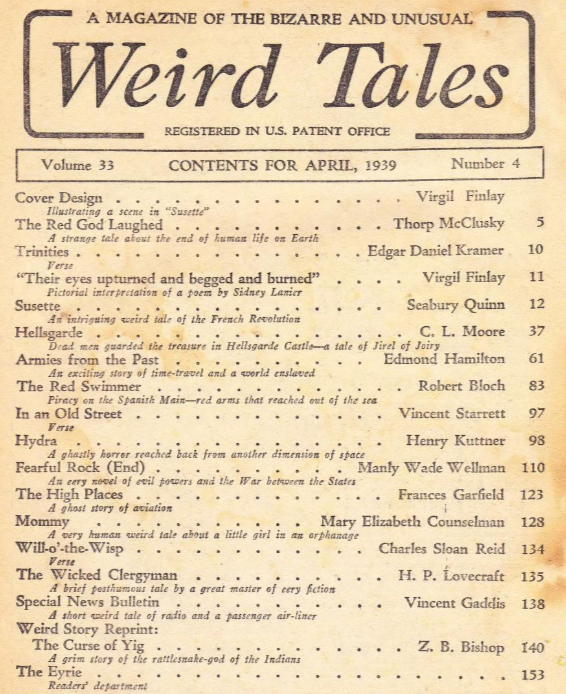
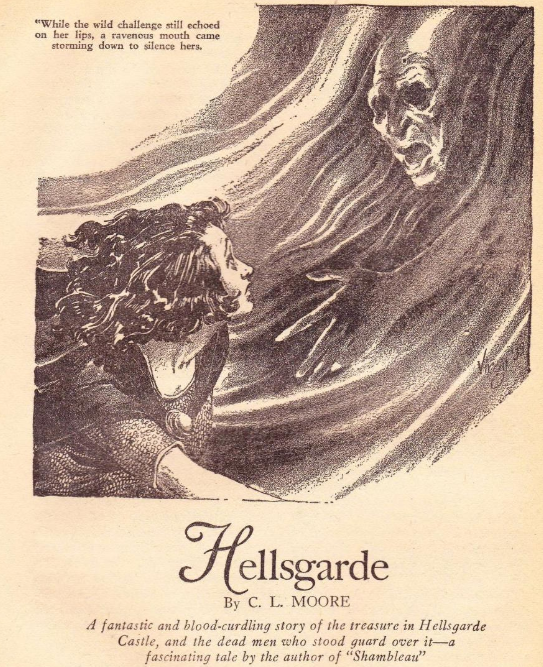
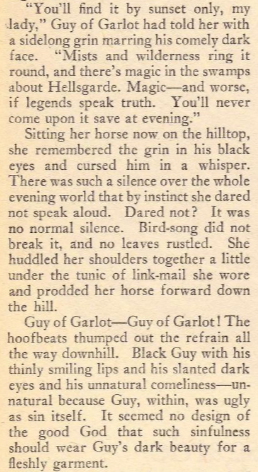


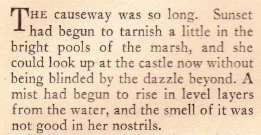

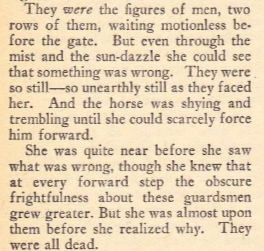



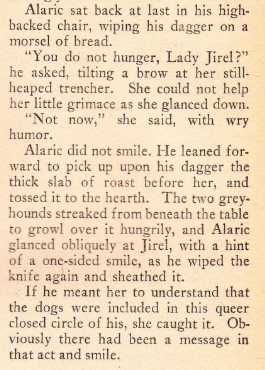
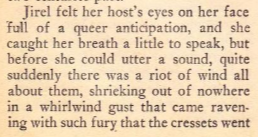










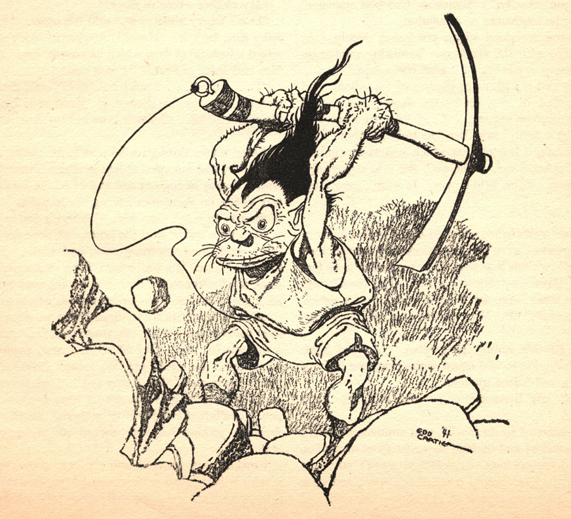

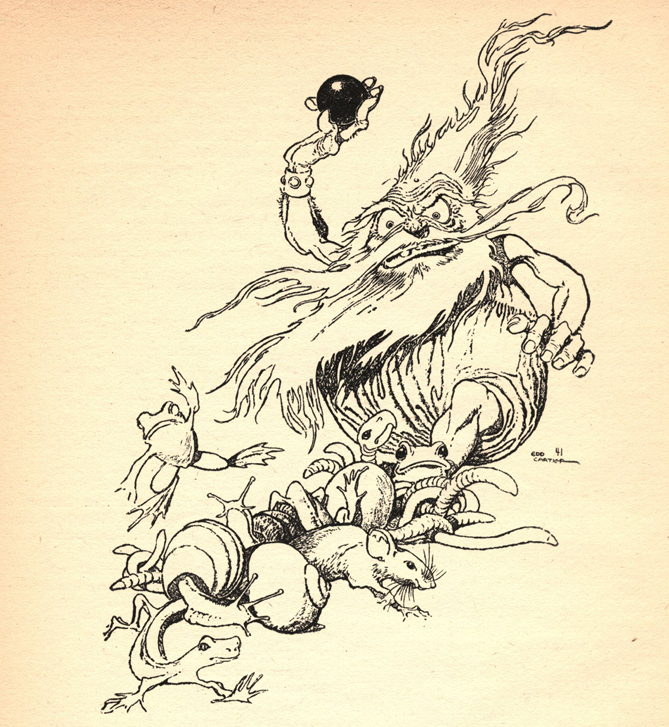
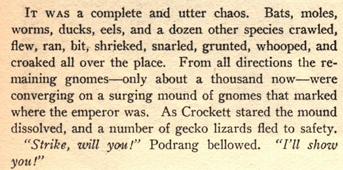

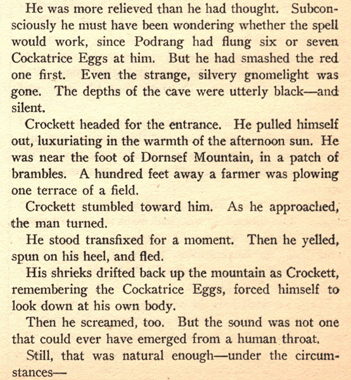

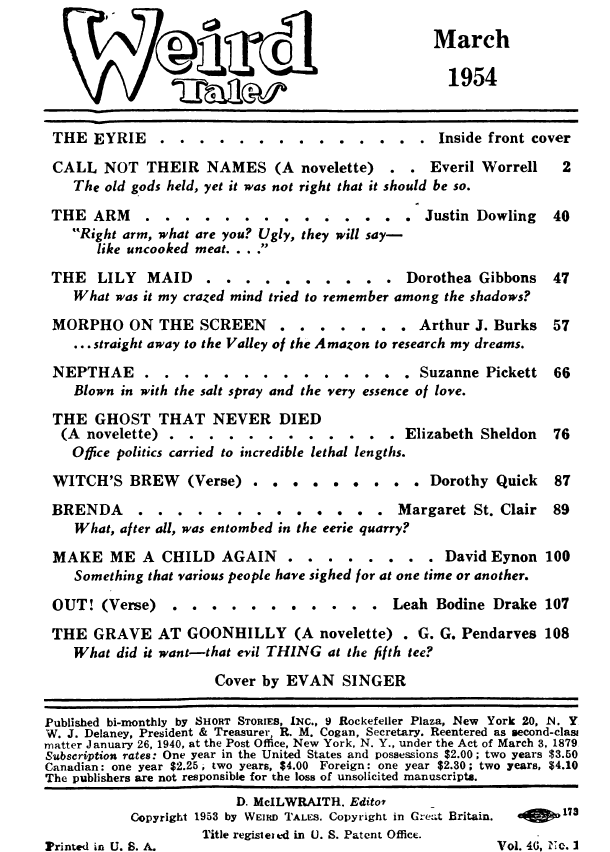
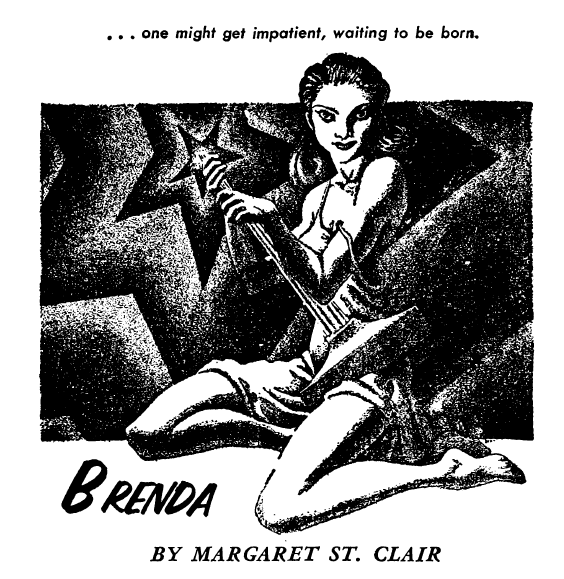


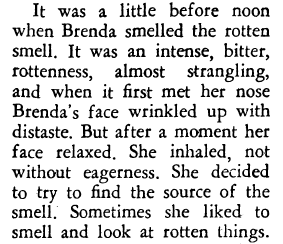

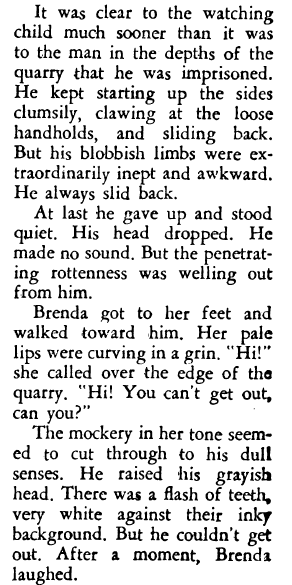


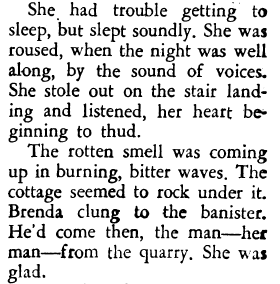


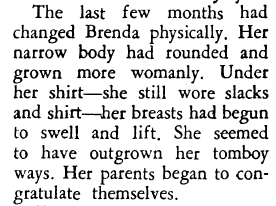


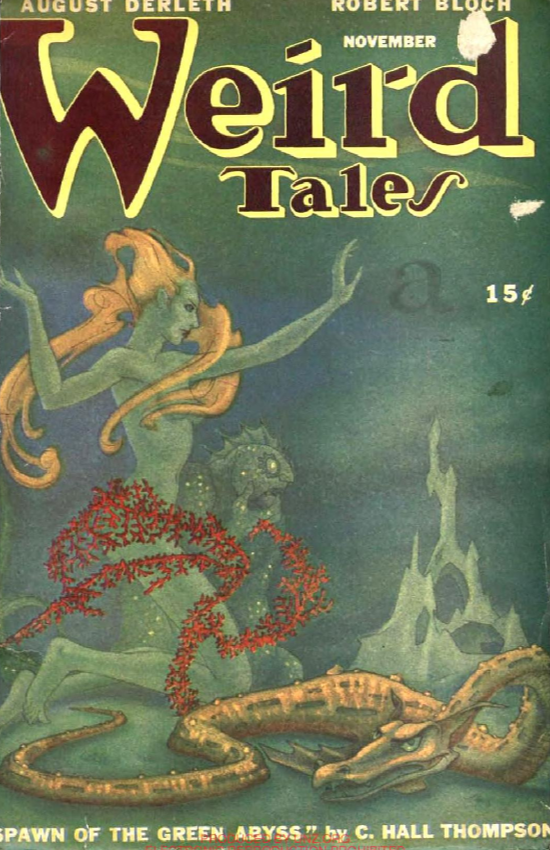






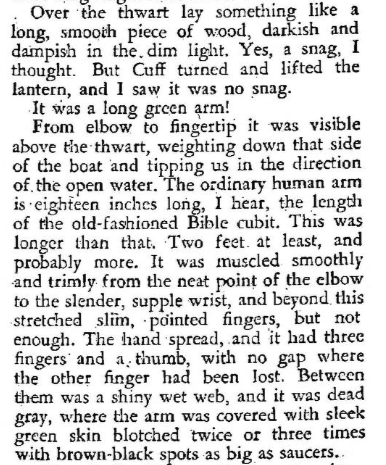



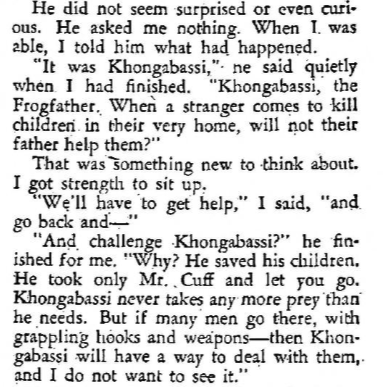
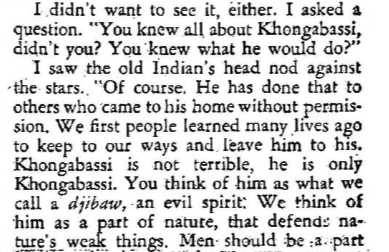


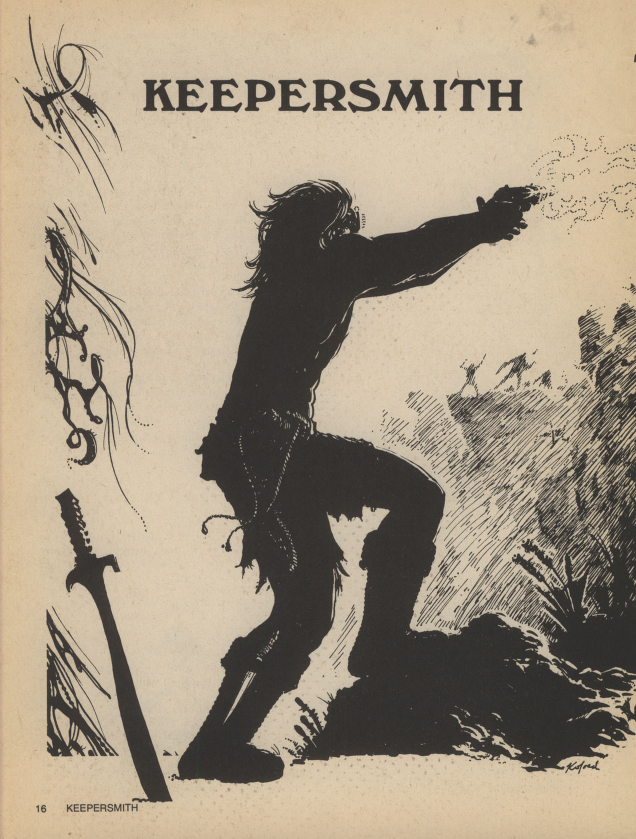









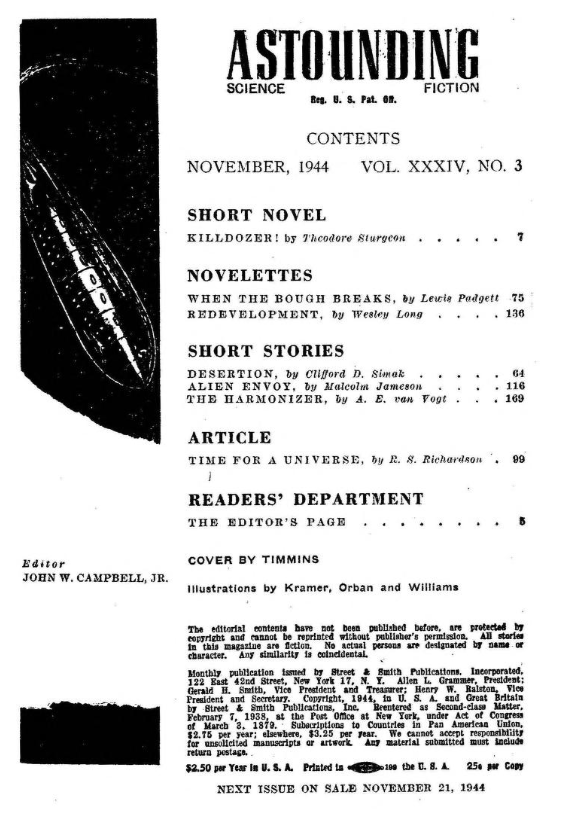
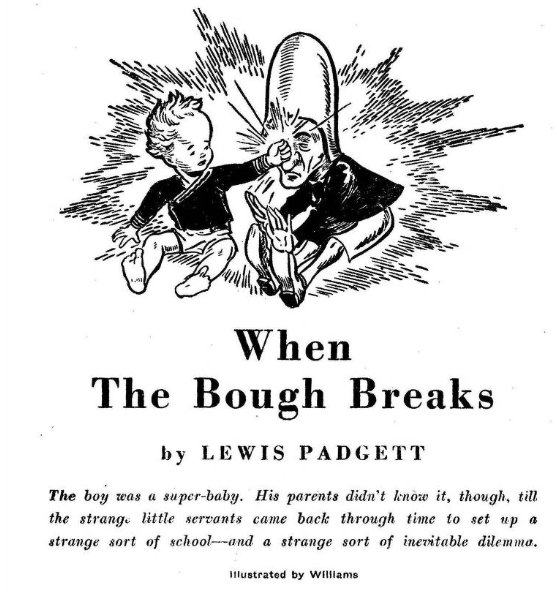
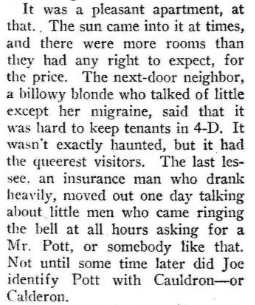

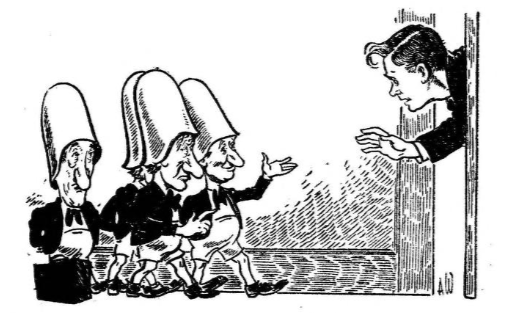

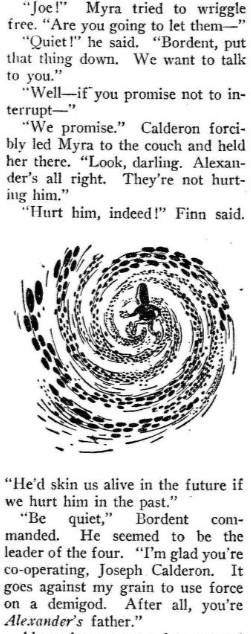





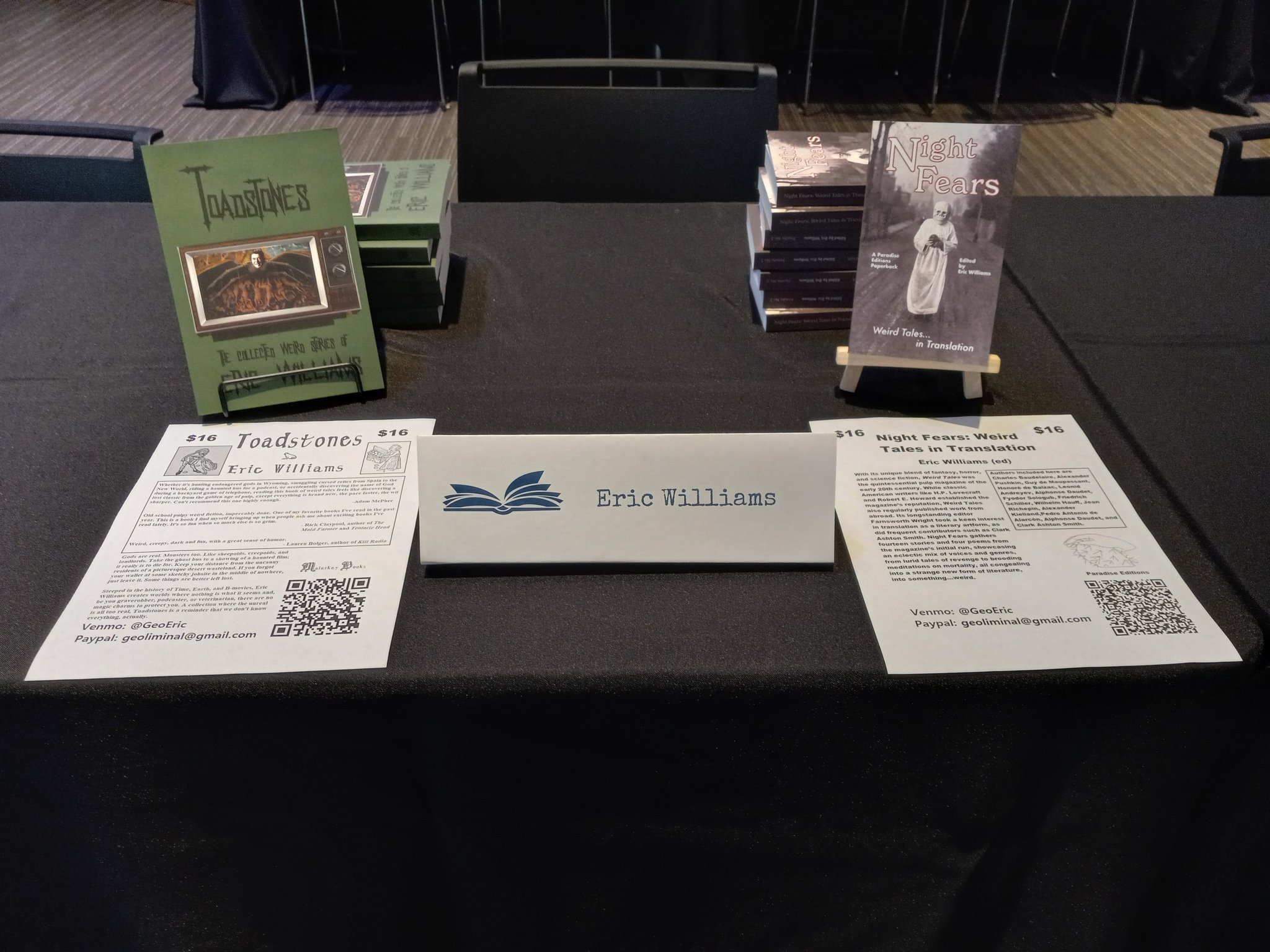
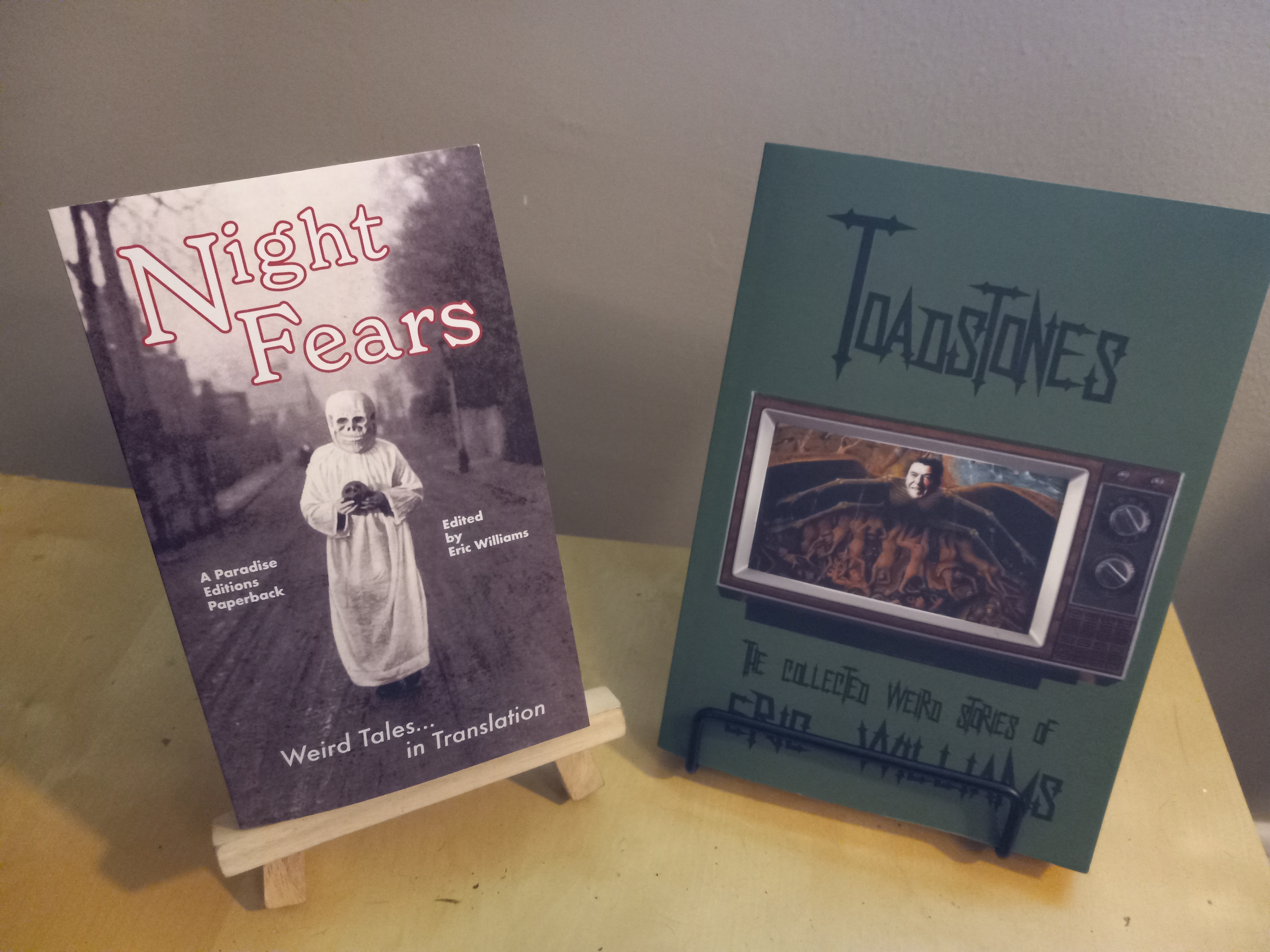
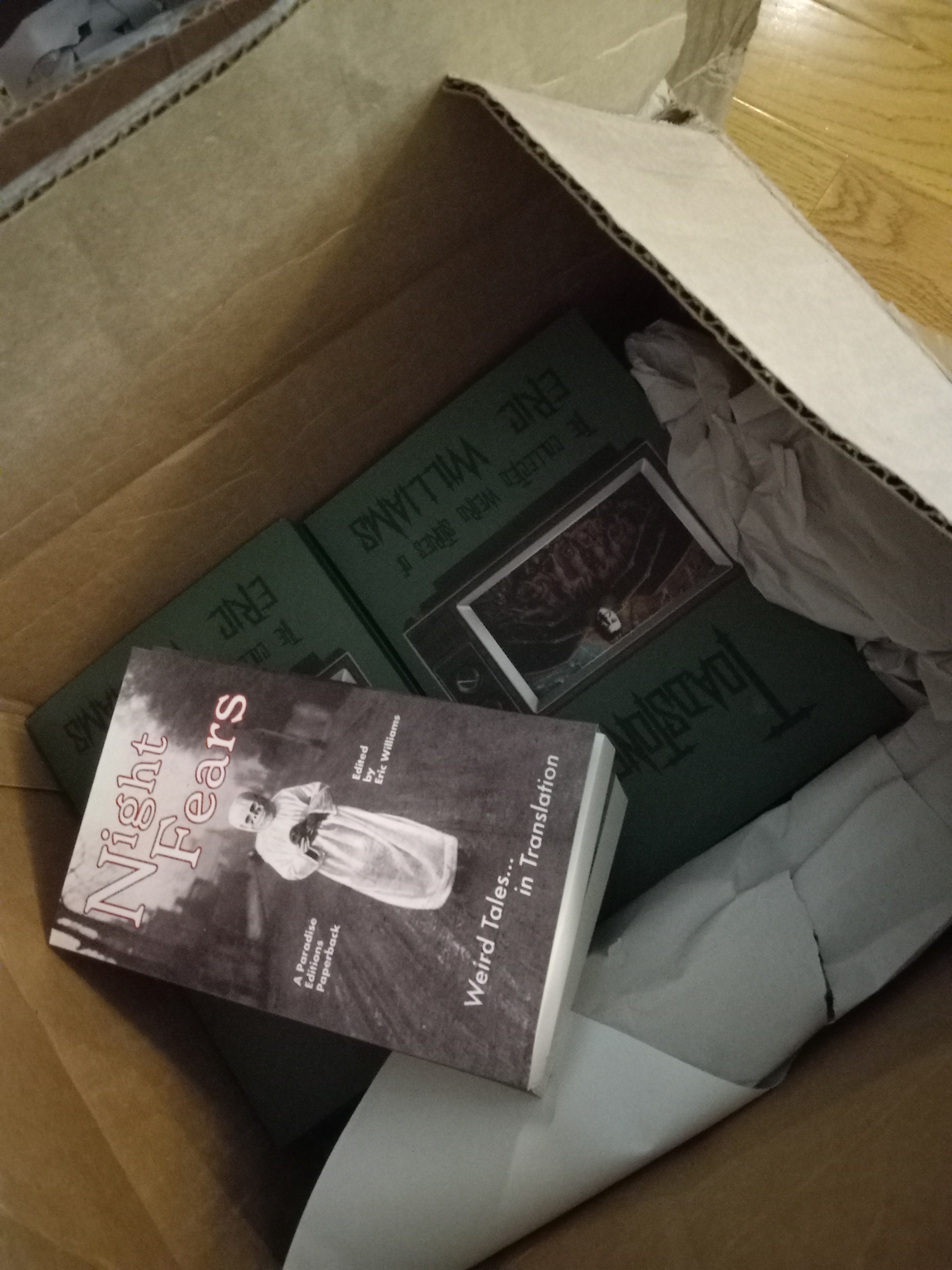
 Eric Williams