Spring has sprung, at least down here in Texas; in fact, there might not be much more of it, since we’re looking at some mid-90s later this week. Regardless, this is one of the lovelier times in these parts, with everything green and flowering, so I thought I’d take a break from work and write up a short, fun, outdoorsy and landscape-o-centric bit of Weird Fic from the March 1932 issue of Weird Tales. Our story today is “The Milk Carts” by Violet Methley!
Methley is an interesting if enigmatical figure. Not much in the way of biographical information on her out there, despite being a fairly prolific and apparently popular writer of children’s adventure novels. At least some of her output was what we’d now consider “weird” – in addition to a couple of short stories appearing in Weird Tales she also wrote a novel about a bunch of Australian schoolgirls hunting for Bunyips. But she must’ve been a fairly versatile writer with wide-ranging interests, because her first published book was a biography of the journalist, revolutionary, and friend-of-Robespierre Camille Desmoulins, which is kind of wild. She’s English, though, and was born in Kent in the late 1800s, a relevant bit of information for this story, I think.
As for this issue of Weird Tales:
Good ol’ C.C. Senf doing the cover, based on the Kirk Mashburn story “The Vengeance of Ixmal,” one of the countless Aztec/Mayan (they played fast and loose with the definition) stories that appeared during the great flowering of interest in Central and South American archeology/history in the 20s-50s. Good example of the lurid exoticism inherent in a lot of these stories, where well-meaning but stupid anglos end up getting menaced by swarthy religious zealots with a mania for liturgical heart extraction.
The ToC is kind of interesting this month:
Some CAS and Quinn on here, they’re what you’d call the Heavy Hitters, and some REH verse too. A solid if unspectacular offering, I’d say, perfectly middle-of-the-road. It’s always good to see the reprint series still going strong, though if you’ll indulge me a minute, I’d like to point out some kind of silly things about this version of Dumas’ werewolf novel. First off, check out this little footnote which has a remarkable density of incorrect things in it:
First off, Le Meneur de Loups was NOT written by Alexandre Dumas fils, but by Alexandre Dumas pere, he of Three Musketeers and Count of Monte Cristo fame (among others). Strange to see Weird Tales get that wrong, especially since the editor here is Farnsworth Wright, who spoke, read, and translated French fluently and was familiar with classic French literature. Another thing that’s wrong about it is the claim that this was the first English translation of the work – it was translated in the 1904 in England! In fact, despite some light editing by Wright himself (and the inclusion of the summaries), the version in Weird Tales IS that translation, by Alfred Allison, though of course the translator is never named or acknowledged! Makes me wonder if the errors aren’t some way to help elide the fact that Wright and Weird Tales almost certainly didn’t pay to publish this translation. Ah well, c’est le pulps!
Anyway, enough perfidy! On to “The Milk Carts!”
We’re well in the back of the magazine, without any illustrations or ornamentation for these (often shorter) stories. A decent summary too, without too much in the way of a spoiler or anything, so that’s good.
A nice, economical beginning – two guys in those baggy, classic golf pants are tromping around the great outdoors. One of them is Seton Croft, golf-course architect, and he’s busy writing notes and making measurements, all with an eye towards turning this stretch of green turf (owned by the bluff fellow who we’ll learn is named Scayles) into a premiere bit o’ golfing!
In particular, it seems like this spot, where these two have stopped and agreed to begin work, is ideal for what Croft is envisioning:
There’s a damn Roman encampment in the middle of these downs! I mentioned earlier that the author, Violet Methly, was born in Kent, and there’s clearly a bit o’ the Kentish countryside in this story, a place rich in Roman history; the initial Roman invasion of Britain started in Kent, and it was always one of the the strongest points of its far-flung colony. It’s a landscape with a deep history that is still visible today!
Anyway, Croft’s golf course musings are interrupted rudely!
I’m a sucker for landscape descriptions, and that’s a particularly nice bit of work about these wheel-track furrows, I think – “the soft skin of the turf” ripped down to “the flesh and bone of chalk and rock beneath” is really good. In particular, I think it really nicely captures Croft’s view of the situation – after all, it’s just some wheel-ruts in the downs, not exactly an open-pit mine or anything, you know? But for Croft, this landscape must be adhere to an ideal, a particularly managed and manicured vision of Golf, artificially and meticulously pristine, and this cart track has no part in it! It’s a fun bit of characterization, and really highlights the centrality of landscape AND land usage in this story.
Anyway, Scayles, the owner of the land, is likewise aghast at this brutalization of the grass, and vows to have it turfed and repaired immediately! After all, he wants this fairway done and opened for golfing by Easter, and Croft promises it will be done!
I really like the little sandbox he’s using to do a scale-model of the project, complete with teeny tiny little flags and everything. A fun glimpse of the way Croft is managing and shaping this land, I think.
But all is not well! Back at the 12th hole, those damned cart tracks have appeared…again!
Scayles vows to make enquiries among his neighbors, but all the various cart-owning locals deny having driven across the greens. After all, it’s not a short-cut to anywhere, so why would they? Still, SOMEONE is wrecking Croft’s beautiful fairway, because shortly after levelling and turfing the ruts…they’re back! Croft and his wife are out looking over the site, when they run across the ruts again!
How great is that, “they plaguey milk-carts” with all their cans a-jangling? Great bit of gnomic mutterings from a weird old guy, classic ghost story stuff. And the idea that the wheel-tracks will ALWAYS come back, that there’s nuthin’ to do about ’em, is a lot of fun. Croft, of course, is still trapped in the mundane world so beloved of golf architects – he and Scayles investigate if there’re any dairies near by, but no dice. So, Croft does the obvious thing – he’s going to stand guard out by the 12th hole and catch the mad cart drivers in the act!
Whisky and sandwiches in the moonlight it is!
Again, this is a very short story, but the writing is economically evocative, I think – love the squeaking critter and the feebly piping bird, really conveys the loneliness of the wide-open rough here. We get another gesture towards the hummock of the Roman earthworks, just to remind us that this landscape is not a primeval wilderness or anything – the Romans were here long before Croft, and they too had modified the landscape to fit their purposes.
Croft’s peaceful vigil is interrupted by a clanging and a clanking – the milk carts have arrived!
Croft is pissed! He hops up, intent on confronting these cart hooligans who keep running roughshod over his golf course!
Tweedy little golf architect Croft is ready to crack some skulls! He’s got a stick, and he yells at the figures, telling them to fuck off (not is so many words, of course)…but the off cart drivers don’t seem to be paying him ANY attention. Furious, Croft grabs at the bridle of the nearest horse…
Those aren’t milk carts at all! Why, they look like…
Roman ghost chariots! How rad is that? They’re still practicing, all these centuries later, in the same spot that they’d chosen for their recreation, the land they’d levelled and modified and built up, just the same as Croft was doing now! With this new realization, Croft heads home and meets his wife:
And that’s the end of “The Milk Carts!”
A short, placid little tale, and much more of a classic English ghost story than what I’d call a “weird tale,” but still, I like it – there’s a surprising amount of depth to it, I think, a kind of interesting meditation on landscapes and history that I really like. Plus, it’s extremely short, and that kind of efficient brevity is something worth studying too. And not everything needs to end in tentacular horror and madness either – I like Croft’s simple “they proved to me that they had a prior claim” and his later enigmatical justification for altering his design around the 12th hole. I like the way this story uses landscape and embedded history to good, spooky effect. And the idea of these spectral Roman charioteers circling their track night after night, especially in a spot that was being transformed into another location for sport and recreation, is a lot of fun!
January 19th, which was last Monday, was Edgar Allan Poe’s birthday, one of the high holy days for weird fiction! Poe, of course, is hugely important, not merely as an antecedent to what would coalesce into the genre of “Weird Fiction,” but also beyond it in the larger world of literature; for starters, just look at the huge impact his work had in other languages once it was translated – Baudelaire’s translations of (and essays on) Poe in the 1850s and 1860s were epochal in French (and Continental) literature, while Konstantin Balmont’s translation of Poe in 1895 ushered in the Russian Symbolist movement. Similarly, Arno Schmidt’s love of Poe, whom he (with Hans Wollschläger) translated and celebrated in his insanely fun (and insanely huge) novel Bottom’s Dream (which is, among other things, a novel about Poe), was an important part of mid-century German lit. There’s Edogawa Ranpo in Japan, Borges and Cortazar in 20th century Spanish lit (preceded by Landa and Alarcon who similarly revolutionized 19th century Spanish literature with Poe as a major factor), I mean, the list goes on and on! Poe was a big deal!
There’s even a fun bit of Poe-in-translation history in the story of Weird Tales – as a college student at the University of Nevada, Farnsworth Wright translated Poe’s “The Tell-Tale Heart” into Esperanto and published it in the Esperantist magazine La Simbolo in the ‘teens! Wright, who would go on to become the single most powerful editor in the history of the genre of Weird Fiction, would often cite Poe as a foundational figure for the genre. And, of course, there’s Lovecraft, for whom Poe was a god; point is, Poe is hugely important to literature, both highfalutin’ AND pulpy, so how about we spend some time reading and enjoying and thinking about a very fun story by Robert Bloch about ol’ Ed A. Poe? It’s “The Man Who Collected Poe” from Famous Fantastic Mysteries 1951!
We’ve talked out little Bobby Bloch before, specifically while looking at “Notebook Found in a Deserted House,” his great Lovecraftian story and one of the few non-HPL mythos stories that rises above homage and pastiche to be something interesting, spooky, and good in itself. Interestingly, that story is also from 1951; in both of those it sort of feels like Bloch is looking back on the great influences of his writing career one last time, waving goodbye to them fondly as he begins to really develop his own voice and style.
What we haven’t talked about, though, is the magazine that this story was published in: Famous Fantastic Mysteries was one of the great sci-fi-ish mags that came around as the genre really got going, a major competitor to Weird Tales. It was first published in ’39, when it was owned by the Munsey company, who had a great backlog of weird- and science fictional stories from it’s older mags, like Argosy, that it decided to exploit. For the first few years of its existence, into the 40s, FFM was mostly a reprint magazine, focusing on classics, but it later got bought by another company (I wanna say Popular, but I’m not 100% sure of that right now, and checking would run counter to the spirit of these off-the-cuff essays!) which promptly changed the policy and began publishing new fiction. Some good writers showed up in its pages, Moore, Kuttner, Arthur C. Clarke, some big names. The editor for its entire run was Mary Gnaedinger, who was a HUGE name in sci-fi back then, famous for her deep knowledge of the field.
Oh, hey, it was “Popular” who bought ’em from Muncey then; you can see that on the ToC, above. Margaret Irwin is an interesting character – she was an English writer most famous for her historical novels, mostly set in Elizabethan times, but she (like so many writers from the UK) also wrote “ghost” stories (a term the brits use to cover both traditional spooky tales as well as what we’d call weird fic, too). You can see, though, that FFM focused on longer work with their reprints – that big ol’ “Rebirth,” originally from ’34, is a hefty un! But, luckily, they filled the nooks and crannies with shorter work, and that’s what we’re looking at today!
I love these little writer’s statements up front of the stories in FFM, fun little glimpses into the processes and how the author views their work. It’s a little odd because, as we’ll see, I don’t think this story really does address the question Bloch raises there (goofy and ahistorical as it is) – it’s not about whether Poe would’ve sold his work today at all, so it’s a little strange to see that point raised here. But what IS fun is that Bloch tells you, up front, that he’s grabbed a LOT of text straight from Poe’s “The Fall of the House of Usher” and, by God, he’s right! Here’s the first two paragraphs of this story:
And for comparison, here’s the opening of Poe’s story:
I mean, that’s super fun, isn’t it? What I really like is the way Bloch hangs a lampshade on the whole thing in the story by suggesting that our nameless narrator seems to recognize the whole scene – which of course he would, since he’s a Poe expert who happens to be entering into a Poe(esque) story about all things Poe! It’s fun and playful, which is one of the hallmarks of Bloch’s writing (and why he’s such a good horror writer).
Anyway, we do get a name here, and it’s another deep cut from Poe’s story: Launcelot Canning, who is the fictional author of the fake book (The Mad Trist) that Roderick Usher reads aloud while his sister, Madeleine, is clawing her way to freedom in the tomb beneath the house. As an aside, that part of “Usher” is a lot of fun and is an interesting earlier example of what would become a hallmark of Lovecraft and his circle of weird writers – the inclusion of a fake book in among a some real ancient texts.
Again, Bloch was very sincere in saying he was mining “Usher” directly here – the allusions come thick n’ fast in this story! It makes for a fun read after reading “Usher” honestly, and I’d recommend you do that too! But, anyway, back to the story:
A good weird intro to the character – ol’ Lance Canning here is the world’s greatest collector of Poe-mobilia, something that, while interesting enough to the narrator, isn’t the real hook that reels him into Canning’s orbit. Rather, it is Canning himself, who is just a straight-up oddball seemingly right our of a Poe tale:
I really like that little joke at the expense of people with obsessive interests – the bit about wanting to figure out EXACTLY when Poe first grew a mustache is a funny line!
Anyway, our narrator accepts Canning’s invite out to the ol’ home place in Maryland (the state where Poe died and is buried, an important point to this story). The house is, of course, the Usher mansion, though without moat and tarn, and the rooms are straight outta the story too. Canning is languidly reclining on a couch, and our narrator feels like there’s something forced, or maybe manic, about his greeting, but our guy here just chalks it up to his weirdness. Moreover, he comes to realize that Canning is, literally, a BORN collector:
As a brief interlude, here are the graves themselves in Baltimore, which I visited during a conference in Baltimore a few years ago. This first one is the original monument:
And here’s the newer one, which was indeed commissioned by notable and literary members of Baltimore’s citizenry in 1875 and which necessitated an exhumation and reburial of Poe’s remains:
In particular, it’s this grandfather, Christopher Canning, the one who helped fund the new monument, that built the bulk of the Canning collection. Lance shows off some of the insanely rare and insanely valuable pieces:
This is some fun bibliomania, and the “commingled pride and cupidity” is a great line that really conveys the very specific affect of Canning here. It’s not merely greed or snobbery – it’s a kind of all-consuming obsession, something Poe wrote about often. It’s also fun to see the long list of Poe works here, especially the weird Conchologist’s First Book, which is a real fun deep cut in Poe’s oeuvre. And this obsessiveness seems to run in the family too:
Some fun metacommentary on the kind of mania that can develop around a subject of study, as well as an important part of the story – we learn that ol’ Grandpappy Canning was not above rank thievery to get what he wanted for his Poe collection! Our narrator tries to explain Canning’s grandfather’s truly all-consuming obsession with Poe by asking if there wasn’t some deeper reason behind it? Perhaps the old man thought he’d been related to Poe in someway?
Canning then goes on to talk of his father who followed in Grandpa’s footsteps and became a reclusive scholar and collector of all things Poe, in particular focusing on letters either from, to, or about ol’ Edgard Allan Poe. While Lance gathers these particular pieces, he pours them some amontillado (natch), and the two of them proceed to get increasingly toasted as they look over the collection.
Aside from the fact that the above passages are just good writing, I like the kind of mounting (or, perhaps “deepening” is more appropriate here) intensity here – Canning began with his Grandfather’s collection, a remarkable but still very MATERIAL kind of thing, full of rare and valuable books. But now we’ve moved beyond the man’s work to the man himself. Canning’s father was obsessed with the letters, little glimpses into Poe the person, and that kind of voyeuristic and intimate examination of a person’s life is a very intoxicating thing, you know, just as much as the wine they’re drinking. It ALSO nicely sets up a kind of generational escalation to this Poe obsession that afflicts the family Canning, right? Grandpa was all about the material of the man, his son was getting into the psychology and life of Poe…so what does that leave for the grandson, Launcelot Canning?
A fun little nod in the text there to Arthur Quinn who wrote, in 1941, the excellent and still definitive biography of Poe (you can read the 1960 edition over on archive.org here, btw).
Lance cracks open a chest and shows our narrator the intimate objects of Poe’s life, a helluva collection. And while he’s doing so, Lance seems to be afflicted with a mounting panic or dread, like he’s juuuuuuust barely tamping down some kinda freak-out.
His reserve almost cracks when our narrator asks about a small box in the chest.
So now we’re getting to the details of the hinted-at mysterious death of ol’ Grandpappy Canning. The two of them take a trip (with more wine) into the weird Poe-themed fun-house mansion that is Canning Manor, wandering down a dark hallway and dismal stairs into the bowels of the castle-like edifice before coming to a huge, copper-lined door:
I mean, that’s excellent stuff right there. Love the wildly Poe-flavored rantings of the madman, for one thing – it’s fun to see ’em purely as allusions, but within the text it’s interesting because we, as the readers, can’t be sure WHAT exactly is happening here – did ol’ Christopher’s Poe-obsessed brain break, and THAT’S why his rantings are all Poe-flavored…or is something else happening, something darker and much weirder? We don’t get an answer immediately, but we do get a nice reveal of Christopher Canning’s ghoulishness:
Just wonderful! It’s really fun to use the Real Life exhumation and movement of Poe’s body as the seed for a story of body theft, isn’t it? It also suggests the joke (or a joke, as we’ll see…) behind the title of this piece. Christopher Canning did, indeed quite literally, Collect Poe.
And what of the little box, which he was clutching when they found him mad and raving before the door of the secret tomb of Edgar Allan Poe?
If you’re a fan of Lovecraft (as Bloch was), you might have an inkling of where this story is heading, but if not, we’ll come back to it shortly.
Lance leads the narrator back to the study, where he continues his tale – his Father kept secret the fact that Poe’s corpse lay in the tomb beneath the house, and only told Lance about it as he lay dying. Even so, it was several years before Lance even found the key that would unlock the door to the secret, shameful tomb. And yet, with that key, somehow, Launcelot Canning is confident in stating that now HE, more than his grandfather or father, is in fact the Greatest Collector of Poe! Wait, what’s that now?
The storm builds in fury, and Lance takes up Poe’s childhood flute and begins to play madly on it, in a scene reminiscent of Roderick Usher’s guitar-playin’ while the storm (and his sister) creep upon the doomed house. Seems like a weird scene, but I guess the wine must be good because, rather than gettin’ the Hell out of Dodge, our narrator decides to peruse the bookshelves of his obviously mad host (as you do when you’re in a weird tale):
Oh hell yes. That’s right – this is Bloch before he’d shed himself entirely of his Lovecraftianisms, so of course there’re forbidden books of dark lore and evil magic here…and they’ve been well-thumbed too!
“…what can be summoned forth if one but hold the key.” hmm…
Anyway, THIS is apparently enough for the narrator, who refuses his ninth glass of wine and says he must, at last, be on his way. This panics poor ol Lance, who seems to desperately want to have someone there with him, particularly on this stormy night. Our narrator demands that Canning admit that all this stuff about the stolen body and the tomb and all is a hoax, but Canning says its all real. And, in fact, he can PROVE it:
A very fun reveal – secret Poe stories that no one has ever read! But how can this be?
Super fun, isn’t it? And if it weren’t for those magical Lovecraftian tomes mentioned earlier, you might think that the Narrator has hit on the solution here, right? That Lance Canning, a la Norman Bates (who hasn’t been written about yet) has monomaniacally BECOME the dead person who is the focus of their obsession. Maybe Canning has so steeped himself in Poe that he has, in some mad way, convinced himself that he IS Poe, right?
Well, surely that IS what has happened, right? New paper, one of the stories is dated 1949…clearly Canning is just nuts and thinks he Poe. MYSTERY SOLVED!
But Canning persists in his denial:
A boxful of dust, you say…what does that sound like…
That’s right – this IS a Lovecraftian mythos tale after all! Canning, like Charles Dexter Ward, has used the essential salts of the corpse to REANIMATE the dead!
It’s a pretty fun little twist, and one you might not have seen coming – after all, even knowing that Bloch began his writing life as a Lovecraft acolyte, you might assume that, by ’51, he’d transformed himself into the writer who was more interested in the twists and turns of a fucked-up mind than in weird gibbering cosmic entities from behind. And it’s fun to see him set that up here – the idea that this family, so obsessed with Poe, would eventually produce a deranged member that believed himself to actually BE Poe is a perfectly good bit of weird horror, you know what I mean? But in many ways this is not merely a story ABOUT Poe…rather, it’s a story about the influence of Poe, of the way an older writer can still impact people from beyond the grave. And, of course, Bloch is also thinking about how that influence was felt by Lovecraft, and how he was, in many ways, the grandson of Poe and the son of Lovecraft, at least from a writing perspective. It’s a neat, weird mediation on influence and writerly genealogies!
AND it’s got an undead Poe writing impossibly horrific stories from beyond the grave!
We’re rapidly approaching the end, so of course we start hearing the metallic pounding on the tomb door below echoing through the house!
A chilling image, and a great, horrific concept too: Poe’s new material is informed by concrete knowledge of what he could only have imagined in life. His old published work is merest preamble to the true horror of his undead writings! It’s all so huge and over the top that it really can’t be beat, it’s so much fun!
Of course, Poe has escaped the Tomb and has been making his way up the stairs and through the house towards the study. Our narrator pushes aside the panicking Canning (knocking over a flaming candelabra) and flings open the door!
And that’s the end of Robert Bloch’s “The Man Who Collected Poe!”
This story has some great art with it that sorta kinda gives away the plot, so I’ve saved it for last:
A wonderful piece by the great Lawrence Stevens showing the moment of the revivified Poe’s appearance. I really like the border there, full of little allusions to Poe’s works. A great piece all around!
Obviously, I love this story. It’s just a blast, and you can really see Bloch is having fun writing it, playing with the original text from “Usher,” really relishing the language and vivacity of Poe’s words. But beyond that, I think it’s a really interesting example of a writer very explicitly exploring both their genre in general and those in it who influenced them very specifically. And, not to be schmaltzy, but I think there’s a real affection and appreciation on display here, both for Poe and Lovecraft, writers who were very important to Bloch at one time but whose work he’s moved (and will continue to move) away from as he develops and grows and ages.
And, like I said above, it is interesting to see Bloch musing on his changing interests in his writing – there’s still the Lovecraftian weirdness here, of course, but there’s also a preoccupation with minds and psychology, highlighted both in his own writing as well as in the sections of “Usher” he chose to use. It’s also reflective of Bloch’s deeply Freudian impulse to look his progenitors square in the face and, if not reject them, at least put them to bed. Poe is the grandfather of all horror writers, and for Bloch Lovecraft was a sort of literary father – for Bloch to grow he has to step out of the shadows, otherwise he’d be in the shoes of Launcelot Canning, brooding over his collection, unable to live his own life and write his own work.
Poe is a writer who often suffers from peoples’ assumptions – the idea that he wrote only horrible, macabre, freaky shit is a common one, and tends to color most peoples’ views of his work. But a careful reading of Poe shows, I think, that he’s deeply interested in consolation after the horror, in looking for solace in the face of unimaginable terror and tragedy. And while he’s mostly just a Monster in this story, I think that there is a kind of catharsis here – Poe is, of course, freed at last, but so too is Canning. The conflagration that consumes him and his collection (and its centerpiece, Poe himself) is a cleansing fire, in more ways than one!
Since I broke the (cursed Lemurian) seal on it, why not continue to plumb the depths of Swordly & Sorcerous fiction that appeared in Weird Tales in the years immediately following Howard’s death? We talked Kuttner and Elak last time, focusing on the differences in character and approach between ol’ Hank and REH, so this time we’re going to look at an example of Post-Howard S&S that adheres a bit closer to the formula perfected by ol’ Two-Gun Bob. It’s Clifford Ball’s “The Thief of Forthe” from the July 1937 issue of Weird Tales!
Interestingly, Clifford Ball’s first appearance in the magazine wasn’t as a writer, but as a Weird Tales reader mourning the loss of Howard and the stories he’d never write. His letter appeared in “The Eyrie” letter section of the January 1937:
This is only one of many such letters sent in to the Unique Magazine following Howard’s death (as I’m writing this, I think I might devote the next entry here on the blog to those letters, so stay tuned!); what’s interesting about Ball’s is that it really seems like the End of Conan struck him so deeply that he decided to try and Do Something About It – namely, Clifford Ball went and wrote some Sword & Sorcery himself! What’s more (and much like Kuttner), Ball also appreciated that one of the Keys to the success of Howard (and Conan) was the establishment of a fun, living secondary world – for Ball, this is (for lack of a better term) Ygoth, which is either a city or a country (it’s not exactly clear), and which is mentioned in all three of Ball’s S&S stories, tying them all together into a loose, unrestricted canon, much like Howard’s Hyboria.
Ball’s first story, “Duar the Accursed” would appear in the May ’37 issue; it’s an odd little work, very Theosophical honestly, about an amnesiac mightily-thewed barbarian hero who had been a mercenary, become a king, lost his crown, and then become a wanderer. There’s some interesting weirdness in it – in addition to having no memories of his early life, Duar’s accursedness is manifested as terrifying rains of blood and an ominous, unearthly raven that heralded his army. We’re also introduced to a strange, shimmering, extra-dimensional spirit that follows Duar and provides him magical support (whether he wants it or not), and has some kind of relationship with him from the past. There’s suggestions that Duar is himself some sort of Ascended Being trapped in a fleshy prison. It’s all very cosmic and, like I said, Blavatsky-ian; there’s pretty heavy foreshadowing that Duar is a kind of recurring spirit reborn as a hero or champion throughout time. But it’s also very much in keeping with Howard’s idea of the Manly Ideal of a S&S Protagonist – confident, physically powerful, fearless, and not interested in the niceties of civilization. There’s some good Gygaxian D&D flavored stuff in it too – the MacGuffin is a jeweled rose that’s actually a demon, and there’s a weird “Force” at work that drives people to their deaths in the depths of a dungeon. If you’re a completist for this sort of thing, it’s worth a read, but Duar never shows up again.
Ball thankfully (and correctly) drops the hints of “Chosen One” bullshit from his later (and last) two S&S tales, the much better and more fun Rald the Thief stories, the first of which we’ll be looking at today. But you should definitely temper your expectations here – they’re perfectly fine C-level work, I’d say, pastiches of what Ball obviously loved about Howard (and weird adventure writing), the sort of stories you expect from someone early in their writing career and looking for their voice. Unfortunately, Ball never got that chance – he wrote three more stories, though these are more straight weird fic than S&S. The last of these, a werewolf tale, was published in ’41, and then it appears Clifford enlists in the Navy. He ends up dying in, apparently, an accidental drowning in ’47, never having written anything else. It’s sad, especially because I think he had at least a sincere love of S&S, as I think you’ll see in the story today.
So let’s get to it already, sheesh:
That’s right, Rald the Thief gets the Finlay cover treatment, quite remarkable and, much like the Elak covers, it speaks to the deep love that the new and as-yet-unnamed genre of Howardian-historico-fantastique-adventure tales had garnered. The iconography is interesting here, and gets to the heart of the appeal of these stories – a sword, a Man of Action, a damsel, and a mysterious threat. There’s not even a real background – the whole scene takes place in an indistinct void, really highlighting that the whole thing is a very literal psychodrama. Simple, but effective!
A good ToC, including a reprint of what’s probably Long’s most famous story, “The Hounds of Tindalos.” Also worth noting is CAS’s memorial poem to HPL, who had died in March of the year. It’s been a rough few years for Weird Tales fans, who’ve lost some giants in quick succession! Anyway, on to today’s tale!
A pretty straightforward summary here, and truthful too – this is a brisk tale indeed, rolling along at a decent clip with very little downtime. Case in point, our story opens in medias res, with a business meeting happening in a dank, drippy, disused dungeon. Two figures are conversing:
We’re introduced to a wizard with an apparently top-notch moisturization regime – their slender womanish hands a sure sign of sorcerous puissance and subtlety. This is in contrast to the other as-yet unnamed figure, who is immediately portrayed as a forceful, man’s-man kind of dude – he grumbles, he strikes the table with a meaty fist, and he’s suspicious of all this wizardly bandying of words about the King, named (oddly) Thrall. Yes, these two are surely quite different from one another, so much so that we get two more paragraphs describing them. First, our wizard:
Good, strange wizard physiognomy, I think, and the insanely hairy face is fun (and, obvious) foreshadowing of something. The “what’s under those robes!?” is a little thickly ladled on here, but honestly it’s not too bad, and it’s perfectly fine to hammer it home given where the story will end up. “Karlk” is a decent evil sorcerer name too, I think, short and sharp and menacingly strange. All in all, a top-tier evil magician, I think. And what’s the beefy fellow Karlk has been talking to like, you ask? Well:
No mincing words here, this is just Conan. Naked and muscular in a loincloth and sandals, obviously of a kind with the Cimmerian, strong, violent, and cunning (as evidenced by phrenology). What is interesting is that Ball calls out Rald’s scars, which is a detail I don’t think I’ve read about in Howard’s loving descriptions of Conan’s rough-and-rugged body. Ball wants to highlight the history of macho violence embedded in Rald’s body, because this, along with his near-nakedness, muscular bigness, and clean-shaven face, marks him as diametrically opposed to Karlk the Magician.
There’s some fun back-and-forth arguing between Rald and Karlk about King Thrall; Karlk seems to have it in for in him, but Rald points out the King has done alright by Karlk, covering up a mishap when one of Karlk’s “experiments” escaped. All in all, Rald seems disgusted by the wizard and their planned treachery. I’m no business guy, but it really seems like at this stage of the negotiations (along in a dripping dungeon), you’d want to have this kind of stuff ironed out. Karlk seems put out by Rald’s apparent lack-of-fear; he is a weird, menacing wizard, after all, and is used to a modicum of cringing respect. So Karlk decides to show Rald some of his power:
And how does Rald react to Kralk’s laser beam?
I mean, fair enough, right?
Regardless, Rald wants to get down to business…what IS it that Kralk wants to hire him to do, anyway?
Rald’s professional pride is fun, as is his discussion of what the possible targets of his thieving might be. I like the little “No women, mind you!” bit too, it’s all very material and earthy, a lived-in detail that captures Rald pretty well and gives him a bit of depth.
That is solid wizard shit there, you know what I mean? Kralk is steeped in black lore, and has moved beyond mere jewels and such. Kralk wants Rald to steal THE VERY KINGDOM ITSELF!!!! which is so bonkers, I love it. Rald’s reaction is fun too – how can you steal a whole kingdom, particularly one which is, in some way, divinely ordained. King Thrall is the King of Forthe, simple as? How would Kralk take over, even?
Very fun stuff; Rald is thinking about the Realpolitik of Kralk seizing the throne of Forthe, how impossible it would be to hold it given how everyone hates and fears him, but Karlk leapfrogs over that problem by the simple expediency of having RALD be the king, with Karlk a hands-off power behind the throne. Rald’s realization, and the temptation, are handled really well; Ball has constructed a convincing web for his Prince of Thieves to get enmeshed in!
I love the whole “wizard practicing the blackest of sciences” angle to these early S&S stories – it’s something Howard did himself, with a lot of his evil wizards relying on drugs and alchemy and hypnotism more than thunderous bolts of power. Similarly, Kuttner had his weird little wizard Zend behaving more like a scientist, using occult forces and magic-technology to keep Atlantis from sinking, for instance. Karlk’s claim that they are merely a scientist is a lot of fun, and something that I feel like you don’t see as much of in fantasy these days – wizards are a lot more mystical and esoteric, which is a very different characterization from experimental and technical approaches to even blasphemous sorcerous knowledge.
It’s also menacing as hell, isn’t it? We had that little story about the dog-man thing that had to be executed after it escaped, a very strange and unsettling story, and Karlk seems to be mostly interested in being allowed to expand his research program, something that would necessitate a friendly king willing to turn a blind eye to whatever horrors he’s planning. Of course Rald is disgusted…but…
It’s a solid Faustian bargain – Rald puts up a good front, but he’s quickly broken down by Karlk’s tempting him with not merely wealth and power, but immortality as a dynast! It’s fun and unique, making Rald a bit darker and more morally ambivalent (for now, at least) than his literary progenitor Conan. The story is a bit grimmer and grittier too; Conan had lots of adventures motivated purely by greed, but he never stooped so low as to ally himself with an obviously evil wizard! Credit where credit is due, Ball has come up with a fun and novel plot!
The next section opens on Rald beginning his infiltration of the Palace of Thrall. There’s some fun world building in here, among some admittedly clumsy and overwritten sentences. The walls of the palace, both inner and outer, are crumbling and in poor repair, and the patrols of the guards are fairly cursory and easily evaded. Similarly, the jagged bits of metal embedded at the top of the walls are rusty and easily pushed aside. But most importantly:
That’s a nice touch, and conveys a lot about this place and its history. They don’t need to maintain the walls or a tight guard – the sanctity of the palace is exactly that: sacrosanct, the product of cultural and religious scruple that sees the King and his power as a holy, divine thing, which NO ONE in their right mind would ever violate! Luckily, Rald is free of such scruples. This is more than just a nice bit of flavor, too – it will explain what exactly Karlk’s plan is, and how a whole kingdom can be stolen.
There’s a really nice bit of writing around Rald’s skulk through the garden here:
The statue he mistakes for a person, and the annoyance of the wet sandal are great, nice little bits of very realistic detail that lend Rald some interiority as well as highlighting his real physical experiences sneaking through the forbidden grounds. Equally fun is the fact that Rald knows the layout of the castle absolutely, due to the simple fact that everyone does, from servant’s gossip. The way Ball tells us that the simple peasants would be horrified at the use their gossip is being put to is fun writing. There’s a lot of nice details in this story, I think, and Ball is very much taking his time trying to develop the scene and evoke the setting, and it’s (largely) paying off, I think.
Rald makes in into the castle and encounters a drunk guard and, in a room beyond, a sleeping woman whom he takes to be a courtesan of some sort. Finally, he reaches a door that, via the clarity of narrative convenience, Rald realizes must be his goal:
Might be a real “Marge_Potato.jpg” moment here, but look: I just think this is neat. It’s extremely fun that Rald is an atheist in a magical world with gods, and that it’s this atheism that allows him to lift the magically warded lockbar without being struck down by the mighty curse woven into its very matter. That’s good stuff, and it works nicely with the whole thing going on in this story – the decrepit theocracy being vulnerable to One Atheist Thief!
Rald pushes through the door and enters some kind of sacred council chamber where the King and his sister hold court. More importantly, there’s the sacred necklace that is the goal of his quest hanging there!
So potent a symbol is this necklace that merely possessing it makes one, functionally and practically, the ruler of Forte. It might seem like a goofy system of gov’t, but who the hell am I, an Amerikkkan, to judge? More importantly, it’s in keeping with the whole tenor of this country/city-state, right? This religiosity that seems to rule here would absolutely imbue an object, and whoever happened to be holding it, with absolute political power; it makes sense! And it seems to have worked out just like Kralk imagined it would…or has it!? For, while Rald is admiring the sparkle of the diamonds that make up the necklace, he’s interrupted by a voice!
Do I wish Ball had given Rald a better swear than “faith?” Of course I do. Do I love this mysterious person telling Rald to knock it off with all the jumping around like some damn ape? Absolutely. It’s funny! The whole thing is very swashbuckly, and I love it.
The newcomer is the King’s sister, the Lady Thrine (apparently a real, if rare, Danish girl’s name, by the way), and she’s aghast at the temerity of Rald to not only break taboo by touching (and proposing to steal) the Sacred Necklace, but also by DARING to enter her bedchamber and peer at her sleeping. Yes, she was the “courtesan” from earlier, and its the whole shock of the boldness of Rald’s crimes that have lead her here, rather than, say, calling out all the guard. There’s some flirty banter, honestly not badly done, particularly since Ball is working on his own here in a Pre-Mouser world, but it’s cut short by the sudden arrival of Karlk!
Again, it’s a really great part here that Karlk, a magician and therefore intimately familiar with the reality of occultic forces, couldn’t move the magical bar with its potent spell, so he hired an atheist thief to do it. That’s good, a solid interesting premise for a S&S story, and also an interesting “mechanic” (if you’re excuse the vulgarism) for a S&S world, where magical potency is in some way related to belief. It’s fun, and something you don’t see much of these days!
Anyway, Kalrk prepares to zap Thrine, something the besotted Rald CANNOT ALLOW TO HAPPEN…but it’s all put on hold by the arrival of King Thrall, in full battle armor. There’s a funny bit where Rald, again in Mouser fashion, asks exasperatedly “doesn’t anybody SLEEP in this castle?” which is a funny, solid joke for a S&S story. There’s more banter, some guards show up, and the Kralk and Rald are bound up with ropes. They’re left, unguarded, in the council room (with the necklace) while Thrall, having sent his sister back to her room, orders a quick search of the gardens, in case there are more conspirators. Left alone, Rald and Kralk bicker a bit, with Karlk realizing that Rald has scruples he hadn’t imagined.
And then Karlk does something weird:
Khalk unties himself with an extra pair of small, white furred arms that emerge from his robes! I mean, that’s absolutely great! Equally fun in the kind of nonchalance with which Karlk assures Rald that there’s a LOT about him no one knows. It’s a great scene, and very weird.
Also fun is how Karlk, while having to leave Rald behind, still proposes to honor their partnership – he’ll kill the people Rald can’t, and then Rald can become King, with Karlk the power behind the throne. It’s very logical and straightforward and, honestly, makes Karlk out to be even more inhuman and mysterious. Afterall, while he’s disappointed Rald didn’t just kill the Princess, he can still use him. It’s fun, weird, stuff, and honestly between that and the extra arms, Karlk is up there with the evil wizards in S&S lit, in my opinion.
Rald doesn’t waste time, however. After Karlk has left, he painfully hoists himself up, knocks a torch from its sconce, and uses it to free himself. In the corridor he finds a guard, horribly magicked to death by Karlk. Grabbing the dead man’s sword, Rald rushes down the corridor, hearing a woman’s sobbing scream of terror from somewhere ahead. Rald comes upon a deadly, dangerous scene – Karlk, crouched horribly over the bound and terrified figure of Thrine, preparing to blast the unsuspecting King Thrall with evil magic. Rald leaps into action, slicing into the surprised Karlk with his sword:
Thrine tells the king that Rald saved him, indeed saved them all from Karlk’s deadly magic, which the King grants, though of course he DID plan on seizing the throne himself. With a modicum of contrition, Rald foreswears his earlier actions:
Rald agrees that an evil, murderous wizard can never be a man, but hilariously he has misunderstood Thrine. For, in fact…
Karlk was a GIRL all along!!!! The fake beard, the scrupulous flowing robes, all a trick! But that’s not her only secret…
How came she to have royal blood, you might ask, and King Thrall certainly does. Well, it’s a funny story:
Kind of grim, and with an unfortunate amount of “monstrous ape rape” (a surprisingly popular theme in early Weird Fiction). Also, you might not recognize it, but the “white apes of Sorjoon” are basically the multi-armed white apes of Barsoom, from Burrough’s John Carter of Mars stories; in the earlier Duar the Accursed story, Ball refers to them as the white apes of the “hills of barsoom,” even. Maybe it was an editorial decision to change them, or perhaps he thought in hindsight that that was a little too on the nose. Still, everybody reading Weird Tales would’ve immediately recognized the Great White Apes for what the were, horrific multi-armed ape monsters from a classic swashbuckling sword-and-planet tale. It’s interesting that Ball uses them here; speaks to the importance of Burroughs for the readers of these more action-oriented, thrilling adventure weird tales, I think, and is in keeping with Ball’s letter eulogizing Howard too; he mentions “a thousand international Tarzans” as being unable to make up for the thrill and power of Conan, suggesting the lens through which he was being read, by some at least.
Anyway! Karlk’s extra arms come from her White Ape parentage. There’s a bit of Howard’s Atla in Karlk here too, from “Worms of the Earth.” Both of them are outsiders, cursed by their lineages to belong to neither of their parents’ worlds. Cursing all of mankind, Karlk devoted herself to evil and the eventual overthrow of Forte. There’s some great, creepy writing as Karlk’s laments her poor experiment back in her hut, and then she dies.
The story wraps up with a nice little bow – the King roars that, for his great deeds this night, he’ll make Rald a baron, but the thief is gone. But don’t worry, says Thrine, he’ll be back…for her!
And that’s the end of “The Thief of Forte!”
From a Sword & Sorcery perspective, I think this story is pretty decent. There’s good world building, and Karlk is a fun and interesting character that, honestly, I would’ve liked to spend more time with. Rald is basically and blandly a species of Conan, though maybe just that much more avaricious than the original – like I said, working with an obviously evil wizard seems a bit too much for ol’ Conan, though Rald readily agrees (even if he does have second thoughts later).
It’s not some lost masterpiece of the genre by any stretch, but it’s at least as good as Kuttner’s Elak stories, I’d say. What is interesting is that both of them, Ball and Kuttner alike, offer different perspectives of the post-Conan and post-Howard genre. Ball’s is much more straightforwardly a pastiche, I’d say, with Rald simply being Conan, or at least much closer than Kuttner slim and amoral Elak. Ball also seems interested in the women in S&S stories, more so than Kuttner at least; perhaps he’s influenced by Moore’s Jirel stories there, probably the most important non-Conan S&S character to emerge in the 30s. Ball has a bunch of tough amazons in the second Rald story, and there’s a pretty tough queen in the Duar story, though of course all end up conforming to comfortable 30s heteronormative roles by the ends of their respective tales. By far the most interesting character in Ball’s slender oeuvre is Karlk, though, and I think the story is worth reading for them alone!
Maybe more to the point, I think it’s worthwhile to read these attempts at carrying the torch forward in the post-Howard days of Weird Tales, particularly because they’re wrestling with something that would dog the genre well into today, namely: where do homage, tradition, pastiche, and out-and-out cribbing fit in the genre, and how do we push at the boundaries and make something new? Obviously there’s a deep love of Howard and his work here, but how do you build on it without simply (and more weakly) recapitulating the same tired old themes and plots and characters. I don’t think there’re answers in these stories, but I do think it’s fruitful to read them and think about these questions!
Blowin’ the dust off the ol’ blog to, hopefully, start to begin to approach maybe writin’ more on here. I was all primed for Sword & Sorcery posting last Xmas, but, as always, life and such took precedence. But, while things have been quiet on here, I have not been vegetating (as nice as that sounds); I’ve been using my scant spare time to put together another collection of weird short stories that, hopefully, will find a publisher and be available for people to read at some point. Also got a few stories published here and there (check out the Writing page for links). And, most recently, I took part in the Greater Austin Book Festival, a really fun event the library foundation does here in Austin. Had a great time, sold some books, met some folks, moderated a panel, got some free beer and lunch…all in all, a success!
This is the second year of the festival; you might recall that I did a write-up of the first year’s event too, wherein I was suitably impressed by the fact that everything ran as smoothly and went as well as it did! Well, I’m pleased to report that this year was no different; in fact the heroic library staff who put on the festival made it bigger and better than last years!
As someone with exceptionally poor organizational skills, it really is impressive to me to see people get something like a book fest, with so many moving parts, humming along with no hitches. Speaks really well to the skill and resilience of the Austin Public Library and its tireless workers and volunteers!
The night before the festival, the library hosted a reception with snacks and free beer/wine for all the participating authors, which was a lot of fun. Rain meant we couldn’t use the (really beautiful) rooftop garden, but even trapped indoors it was still a fun chance to get to meet other local writers (and drink free beer). It’s always interesting to meet other writers, because it’s a pretty wide-ranging and diverse field – everything from MFA types to hobbyists, and from traditionally published to self-published (although it feels like small, indie-press published books were in the majority).
It’s also interesting to encounter writers and learn why they write – I’d say a fair number of them entertain dreams of a particularly remunerative cast with regards to their writing, which is really an alien view to me. I mean, if I could pull down mid-five figures writing my dumb little stories, I’d love it, but that said the money a book pulls down isn’t ever a metric I’d want to reckon success by. And I’d certainly never want to write anything with that in mind – there were a few folks skirting dangerously close to marketeering talk there, which bums me out when I encounter it.
As I’m writing this I realize there might be some conflict in what I just said and my avowed love of the pulps – after all, some of my favorite writers approached their work with at least one foot in the “write for $$$” camp. But, when I look at it, I think what’s frustrating NOW versus back THEN is the scale of the problem, as well as the nature of the publishing world – I mean, back in the glory days of the short story, you could absolutely crank out some work explicitly for some quick cash, and use that to subsidize your more artistically-satisfying work. Also, the whole nature of pulp publishing was just this big ol’ bubbling mass, you know – lots of change, very dynamic, if one market didn’t work for you there were others, that sort of thing. You contrast that to today, and it feels very different, everyone seems to be chasing the exact same market-tested-and-approved thing, for one, with very little room for real experimentation or diversity. And, of course, the idea of someone being able to write potboilers for cash and then work for themselves just doesn’t really make sense today, not with the idea of a unified “brand identity” that publishers all seem to have bought into. Of course, in the indie world, none of that applies, but then that’s probably because nobody is making any money at all.
A bit of a discursion there, sorry! And really, the majority of the authors I met were doin’ it for the love of the game, which is always a refreshing thing to encounter out there. And it was something that several readers/browsers at the Festival said too – the fun thing about GABFest is it really *does* expose people to books that they might otherwise have had a hard time encountering, and people really do love it when that happens!
And there were a lot of really nice people who were genuinely excited to see my books. A huge thanks to Alan Good at Malarkey and Matthew Spencer at Paradise Editions once again for doing such great work on the covers – they grabbed folks’ eyeballs from a fair distance, that’s for sure, and there were a lot of excited exclamations of “Oh! Horror!” as they came up.
There were also, hilariously, a fair number of people who came over just to let me know they *didn’t* read horror, which is a bit odd. Like they felt like I needed to know that they had instituted a widespread ban in their own reading on spooky stuff. Do other genres get that? Like do people make an effort to physically come over and tell authors “ugh, memoir? not for me!” or “sorry, I don’t read sci-fi?” It’s a strange phenomenon; happened to me several times. And when I asked them why not, they really didn’t have much of an answer for me, though several people said the real world was scary enough, which is a weird one. Like, if my books were titled “The Fascist Who Became President” or “Night of the Tariffs” I could understand that position, but, like, my book has weird monsters in it. There’re haunted atomic mannequins, fungus mimics, an ancient roman liche! That’s pure escapism man!
That bit of goofiness aside, a productive horror discussion was had in the Horror Panel, which I got to moderate. Three authors (originally four, but one had to drop out at the last minute) and me, chattin’ up in a conference room on the fourth floor of the Central Library, a great time with a great crowd. I really enjoy panels, and honestly I think I’ll only ever do conventions if I’m on one – for one thing, they’re just fun, but on another practical level, they’re also the best way a nobody like me can convince someone to take a chance on the books.
I like a pretty loose and free-flowing sort of panel, more like a broadly directed conversation than anything else, so I opted to start with a Lovecraft quote: “The oldest and strongest emotion of mankind is fear…” and then asked the panelists (Brendon Vayo, Burke de Boer, and Julius Crow) how their work approached and engaged with fear. The resultant discussion was a lot of fun, and I think we got into some pretty neat areas, thinking about ways fear, as both a very idiosyncratic thing as well as a kind of universal experience, can be used both thematically and, frankly, mechanically in writing. The audience seemed to dig it too – we talked for about a half-an-hour or so, and then I opened it up to the audience for questions. There were a bunch of ’em, and one really heartening thing was that, when the inevitable question about AI and writing came up, the audience was 100% in agreement that AI sucked and they would never read anything that used it, let alone something produced explicitly by it. Great to hear!
All in all, it was a lot of fun, sold some books, met some folks, got to talk about books, free beer (and lunch), what more can anyone ask. It’s a neat thing that the library here does, and I’m really glad that it seems to be settling into an annual event – there were plenty of folks there walking around, taking advantage of the space and programming of a great little community institution, which is just a really nice thing to see. If you’re ever in Austin in the spring time, late April/early May, it’s a fun event and worth seeing!
I’ll just close out with the reminder that, yes Virginia, there *are* books left over from the Fest, and if you want to buy one, why not contact me?
Lookit ’em, cute little things in need of a good home…
After last time’s fairly straightforward Vampire Story, I promised something weirder, and I think I’m gonna deliver. This time around we’ve got a very enigmatical, very thoughtful, very weird short story from a writer famous for her enigmatical, thoughtful, weird writing…it’s Brenda, by the great Margaret St. Clair, from the very last year that Weird Tales saw print (in it’s original incarnation…the later revivals don’t count!).
Before we go any farther, you’ve probably noticed that the link to the story I’ve provided you doesn’t go to the Internet Archive. That’s because, as I’m writing this, some assholes have taken it down with a DDoS, so you’ll have to navigate your way through that pdf to the story on your own. When the Archive is back up I’ll come in an add a link directly to the story, but as always: go read it now! This is a great one!
Margaret St. Clair is one of my favorite writers, endlessly inventive, marvelously talented, and deeply incisive – everything she wrote is worth reading, and in a just world she’d be remembered right alongside Issac Asimov and PKD and Harlan Ellison as one of the great authors of fantasy and science fiction from that era. Like C.L. Moore, Joanna Russ, James Tiptree Jr., and Samuel R. Delany, she recognized that imaginative genre fiction provided a startlingly robust toolset with which a writer could break down and rebuild the world around them.
In addition to her skills as a writer, I ALSO love Margaret St. Clair because she was UNABASHADLY a pulp magazine writer. She began her career in the late 40s, at the tale end of the era, but she never had any ambitions for the “slicks” and, luckily, her interest in science fiction short stories coincided nicely with the growth in 50s and 60s sff mag culture. She wrote a LOT of short fiction, something like a 100+ stories easy over her life, as well as some novels (which are good, but, of course, I prefer her shorter work). She was also a card-carrying and practicing Wiccan (along w/ her husband), something that becomes a large influence on her later work, in particular. All in all, a fascinating woman and a great writer.
And her she is, the dawn of her writing life coinciding with the death of Weird Tales. Yes, we’re in 1946, that dolorous year when The Unique Magazine ceased to Be, and merely Had Been. It’d been a helluva run, of course – March 1923, v.1.n.1, through the Depression and WWII and the rise of Television, but The Reaper comes for us all in the end. The final issue of Weird Tales would be September of 1946, volume 46, number 4. Ask not for whom the bell tolls…
Generic ass cover, as was usual for the time. Gone are the heady days of Margaret Brundage! Nothing special here, sorry Evan Singer, whoever the hell you were.
The ToC is interesting though, not least for the fact that there’s an awful lotta women on it. For sure, there had always been women writing (and reading) Weird Tales, but you gotta think that Dorothy McIlwraith, editor of the mag and a lover of the genre, must’ve been interested in cultivating more gender equity in the pages of her magazine. Anyway, she’s got some heavy hitters here – Elizabeth Sheldon, Suzanne Pickett, and good ol’ G.G. Pendarves making a posthumous appearance. But we’re here for the star of this issue – Margaret St. Clair! So let’s get on with it already, yeesh!
An odd little title illo, especially since is has nothing to do with the story and, arguably, doesn’t even portray the eponymous Brenda, a tomboyish blonde. Oh well! It’s 1954, what the hell do you want!? It’s entirely possible that they weren’t even paying for specific art at this point, and were just running through the catalog.
Great job of character introduction here – Brenda, poor child, is on vacation on Moss Island with her parents who, if not cruel, are certainly not kind either. She’s an outsider, tall and gangly and without any friends among the children on the island, largely left to her own devices. Good standard protagonist kid for a genre story – a loner, misunderstood, left to themselves. And, since there’s not much to do on the island and no kids to play with, she spends a lot of time in the woods, like you do. But on that particular Monday, there’s something else in the woods with her:
I mean, that “Sometimes she liked to smell and look at rotten things” is a fantastic line, more of St. Clair’s genius, little knives she sticks in the reader to make sure they’re paying attention to the characters in the story. It’s such a great bit of characterization for Brenda too – there’s a sense of rebellion to it, but also a bit of secretiveness there, a sense that Brenda knows it’s something morbid about her that others might look down on.
Anyway, Brenda hound dogs her way through the woods, following the odd stink as best she can, until she finds “the man.”
I mean, what the fuck!? A weird blobby, greasy, disgusting muddy gray man-thing in the woods, holding a dead bird, all clotted up and sloppy? Brenda stops and stares, but then the gray man extends a blobby arm towards her and she fuckin’ books it.
At first, driven by panic, she’s running flat out, trying to escape. The grey man is following her, too – she can hear it and smell it pursuing her. But, when she chances a look backwards, she sees that he’s much farther back than she hoped he would be. In fact, while he IS chasing her, he’s doing it very clumsily and slowly. Implacable, sure, but she realizes she doesn’t have to run full tilt to get away from it. With that realization, comes a plan. Brenda, rather than running home, turns and goes through the woods, leading the stumbling, shambling grey man thing towards a deep, steep-walled quarry on the island.
She tricks the thing into the quarry where it stumbles around, searching, until finally it gives up. But, when it tries to escape, it can’t – the walls are too steep, and its weird blobby arms aren’t strong or dexterous enough for it to actually climb up, out of the pit. She’s trapped it there!
The flash of teeth is a great image, this weird blob man thing trapped in a quarry and grinning/snarling/??? up at her, very spooky and unsettling.
Brenda “hug[s] her secret to herself for the rest of the day,” another fun bit of characterization for this kid. She’s got a goo man trapped in a quarry, and that fact is HERS and HERS alone. But what fun is a secret if you can’t share it?
An interesting dynamic going on here, isn’t it? Ol’ Chuck is the closest thing to a friend that Brenda has on (and, possibly, off) the island, and it is to him that Brenda goes with this new, strange thing that has entered her life. Interestingly, it’s that touch though that convinces him not to go – something about the way she touches him is upsetting to Charles, and he tells her to, basically, fuck off.
She helps her dad with a barbecue pit out back, but the whole time she can only think about the gray man in the quarry. Unable to share her secret, she decides on a rather dramatic course of action; she’s going to set him free. She uses some planks to build a kind of ramp that lets the gray man clamber on up out of the quarry.
Great, chilling stuff – imagine being on an island with a Weird Thing that YOU released and YOU know is out there, but no one else does? Spooky and paranoiac, all while being a plausible action from a frustrated and probably petulant child. Nobody wants to see this thing that I captured? Fine, they can see it when it comes to THEM!
Brenda chooses not to head out to the woods the next day, a wise choice given that she overhears her parents discussing a rather disturbing event:
Brenda is sent to her room for eavesdropping, where she mulls over the gray man, trying to figure out what it could be, and where it could have come from, inventing some answers and writing them down, then deciding to tear them up and flush the pieces down the drain.
And then, before bed, she slips into her parents’ room and unlatches their windows. Yikes!
The blob man is in the house, and her parents are (quietly) trying to confront it. Her dad has it trapped in a beam of light from a flashlight, which is apparently enough to dazzle and confuse it while her mother, giggling nervously, is calling a neighbor to bring his gun over and shoot this thing. It’s pretty comical, par for the course for Margaret St. Clair, who often wrote about the absurdities of petit bourgeois suburbanites in her fiction.
The neighbor brings his gun over, but it really do much to the gray man – he’s made of goop, after all. Instead, the neighbor and Brenda’s father use a torch to drive it out of the house and, in a bit of synchronicity, through the woods and into the quarry where they trap and, eventually, bury the thing under a huge cairn of loose stone, which Brenda discovers when she is able to slip away the next afternoon.
And this signals a major change in Brenda’s life. For starters, no one on the island seems to want to talk about the thing under the cairn. Secondly, the children that had previously avoided her start showing up and following her around. Brenda becomes something of a leader to them, in fact, and they end up getting into all sorts of trouble.
Brenda eventually comes back to the island the next summer, having been left on the mainland after the school term by her exhausted and annoyed parents. She has continued to change, however, and it seems that, perhaps, she has finally started to grow into something more acceptable to her parents.
She waits until nearly the end of the summer before making a trip to the quarry and the cairn.
And that’s the end of “Brenda” by Margaret St. Clair!
Honestly, it’s kind of a masterpiece. It avoids the crude, stereotypical pitfalls of a “coming of age” story, instead relying on the weirdness of the gray man and Brenda’s relationship to it to arrive at something altogether stranger and more poignant. There’s obviously a puberty aspect to this tale – the interaction between Brenda and Charles is fraught, like all early adolescent encounters, but then there’s also the question of Brenda and her parents. Clearly there’s tension there, her parents obviously not understanding her in any way. The trapping of the gray man under the rocks by her father is ripe for a Freud Reaction meme, you know what I mean?
St. Clair, a student of Greek mythology, is also evoking the myth of Theseus here; the thing trapped under the rocks, which “one day” she’ll move to set it free, echoes Theseus having to wait until he comes of age and is strong enough to move the boulders that hide the symbols of his manhood (his sandals and sword). Both Brenda and Theseus know that their destinies lie under their respective rocks, and they know that they’ll have to wait to get strong enough to free them.
And, as weird fiction, I think it’s a blast too – the sense of the uncanny is strong all through this story, from Brenda’s own oddity, to the gray man (of course), and persisting in the weird mythic way Brenda changes after the gray man is trapped. It’s not a very long story, but there’s a lot of subtext and complexity at work here, but St. Clair is a good enough writer that she never lets either that OR the need for weirdness come into conflict; rather, they reinforce each other, like all great speculative fiction.
Anyway, Margaret St. Clair is a great writer, and there’re a few other works of hers that we’ll certainly be looking at in the future. There’s a pretty good collection of some of her short stories out there that you can get, easily and cheaply, from Dover Books, titled “The Hole in the Moon and Other Tales.” I’d highly recommend it!
(I jump right into my musing on the history of sci-fi mags in this one, so, just for ease, here’s the link to a pdf of the the issue that includes the story we’re talkin’ ’bout today!)
Leapfrogging out of the early 20th century (the GOLDEN age of the short story) and into the rusty iron-age of the almost-80s might *seem* like a mistake, but there’s still some fun to be had examining these late-era descendants of the pulps. Now, for sure, gone are the wild, heady days of a newsstand loaded with magazines of any and every genre imaginable (and a few you wouldn’t ever have dreamt up). The pulps’ decline began in the 40s when they were brutalized by WWII paper rationing, but the era really truly ended in the 50s when television rose to supplant reading as a primary popular leisure time activity. But a few mags held on somehow, and, much like their ancestors in the good ol’ days, they often record some interesting changes in the ol’ zeitgeist.
In particular, science fiction (which, antecedents aside, had been truly invented in the magazines) had developed a thriving enough fan culture that, here and there, a few prestige magazines had managed to survive and even thrive. These are, of course, Analog (formerly Astounding Science Fiction back in the good ol’ days) and The Magazine of Fantasy & Science Fiction (founded in the 50s, and hugely important to the history of sf), both of which you can get a rejection from today, if you wanted. These (along with Galaxy) had become in some ways *the* flagship publications of the genre, a kind of “professional journal” for the convention and fan societies that had evolved out of the original pulp magazine letter pages and fandom.
And that fandom had entered a new phase of growth, especially in the shadow of Star Trek. Following its cancelation in ’69, there was a real hunger for sci-fi out there – Trek conventions had exploded, and there was a general paperback renaissance in genre fiction going on. There was also a flowering of the sort of amateur press that had led people like Lovecraft and Ray Palmer into writing/editing careers, this time in the form of Zines. Simultaneously there was, in the 60s and 70s, *also* an explosion in Fantasy literature, largely ushered in by the unauthorized Ace paperbacks of The Lord of the Rings trilogy in ’65. A similar Sword & Sorcery revival followed, fed by publishers trolling the pulp catalogs for fantasy stories and rediscovering Robert E. Howard and his many imitators.
The point of all this is to say that, by the mid 70s, there was a major genre fiction revival going on, such that the publisher of Ellery Queen’s Mystery Magazine and Alfred Hitchcock’s Mystery Magazine (two other magazines you can ALSO get rejections from today!) felt that there was room for another sf mag out there. This publisher, Joel Davis, approached Isaac Asimov about possibly lending his name to the endeavor, which, after some wrangling, resulted in the creation of Asimov’s Science Fiction (which you can…etc, etc).
Now, like I said, simultaneous to the sci-fi revival of the 60s/70s, there was *also* a revival in interest in fantasy around the same time, lead by figures with feet in both camps, like Poul Anderson, Andre Norton, the evil Jerry Pournelle, and the truly vile Larry Niven – these folks wrote both science fiction as well as fantasy/S&S, and were important figures in the Society for Creative Anachronism and those scenes. And, of course, there’s the 800-lb Wookie in the room: Star Wars (1977), the foundational text of modern science fantasy adventure, had completely revolutionized science fiction and popular culture. What this meant was that there was both a readership for and people writing in a kind of two-fisted, adventurous style, often combining overt fantasy with science fictional elements (and vice versa). Recognizing that this was an underserved market niche, Davis went about creating a magazine to fill it, and thus in 1978 was born the extremely short-lived magazine, Asimov’s SF Adventure, a sister publication to the heady, somewhat New Wave-ish Asimov’s Science Fiction.
That ol’ Isaac himself was a little ambivalent about this turn of events seems evident from the introductory editorials he wrote for the magazine. In the first issue, he gives a broad history of the “adventure” story, tying it back to the Iliad and the Odyssey, before leaping into the pulps of the 30s and 40s, trying to make an argument that *actually* that kind of red-blooded storytelling is an important and deep-rooted part of fiction. Later, in this the second issue, he argues that SCIENCE itself is the greatest adventure of them all…it’s all very unconvincing, and you’re left feeling like ol’ Asimov is mostly trying to make a purse out of a sow’s ear, at least from his perspective. That said, they did at least give him a rad illustration for his pieces:
I mean, that does look cool
It’s possible (even probable) that Asimov might not have even known what stories were going to appear in the magazine when he wrote these pieces, so he can maybe be forgiven for his poorly disguised distaste of the “adventure” tale. After all, most of his career had been spent advocating for a very “hard” approach to sci-fi, and his more “adventure” style writing (like his Lucky Starr books) had been published under a pseudonym and clearly aimed at younger audiences, a kind of entry-level sf meant to introduce the genre, rather than typify it.
But, all things told, I think the stories in Asimov’s SF Adventure are pretty decent, some good even, all mostly done by good (and occasionally great) writers. If anything, I’d say some of the offerings are actually too conservative. Most are very conventional examples of science fiction – they’re often very staid in their mingling of adventure writing with sci fi, adding a drop of fantasy or derring-do here and there into what are for the most part extremely traditional science fiction plots. It feels like they kinda throw the baby out with the bathwater in their attempt to avoid become TOO space operatic, you know what I mean? But, like I said, there’re some fun ones in here, AND I also think they reflect a kind of interesting moment in the genre, and are worth examination for that reason too.
Anyway, yeesh, let’s get to it already: “Keepersmith” by Randall Garrett & Vicki Ann Heydron, from 1979! And look at this cover!
He-Man duel wielding a sword and blaster, some kinda fish guy warrior, a winsome lass, all in a chaotic wild landscape with rocks and ash/sparks flyin’, thrilling stuff huh? Honestly wouldn’t mind the full color cover poster that was, apparently, included with this mag. And the rad illustrations keep on coming in the story itself! Check out the two-page spread the title-page gets:
I like it – the stark black figures and landscape, with detail obscured, really conveys the power and brilliance of the explosion, and sword stuck in the ground while the obvious barbarian-type blasts away with some kinda superscience ray gun is a great dichotomy, really economical visual storytelling – the illos in this story are all by the great Karl Kofoed, perhaps most famous for his “Galactic Geographic” pages that appeared in Heavy Metal magazine, really wonderful work that you oughta hunt up if yer unfamiliar with it. He’s a great artist, and does some nice work here in this story!
The story starts with that odd, italicized entry, like something out of an encyclopedia, describing obvious sci-fi stuff and giving us a glimpse into a world of militarized space warfare between human space navies and spooky evil “Snal-things.” It’s interesting how, at first blush, this basically gives away the game with regards to the story’s plot, especially once you hop into the obvious fantasy-flavored stuff that follows – now we’ve got a weird-named guy with a big muscular body, the obvious product of physical hardship, all written with the kind of portentous tone reserved for fantasy adventures (particularly the capitalized “Man,” obviously meant as a species or racial designation). This is done very deliberately, of course, and I’ll have more to say about it later.
But lets move on! Keepersmith, our big Man, meets some people outside of his Keepershome where, presumably, he forges his Smithswords…stay with me, we get most of this Capital-Letter Noun Fantasy stuff out of the way early on here, I promise. Anyway, Keepersmith is goin’ on a trip, and not merely one of his usual jaunts – he “may be some time” as it were:
The three people Keepersmith has summoned are obviously troubled – this guy is clearly their leader, or at least in a position of authority, symbolized most strikingly by him being allowed to wield what is clearly a sci-fi ray gun, something that lets them “draw iron from stone,” an obviously useful trick in their otherwise barbaric world. They even ask him to leave Ironblaster behind – there’s just the one of it, after all, and without it they’d be unable to get more iron. But Keepersmith is adamant – he’ll need it on his journey. With his stern eyes slitted against the sun, he bids his friends farewell and begins his mysterious journey. It’s all very much the sort of barbarian heroics you’d expect from a sword & sorcery protagonist, isn’t it?
He travels all day and into the night, and we get some more world-building – there’re weird trees we’ve never heard of, and we’re told this place has a double moon, all background flavor that lets us know we’re on an alien world as well as getting us in the right mood for the story. Later, around midnight, he comes across a flickering fire, and sees the strange creature that kindled it:
Every good fantasy adventure needs a Weird Little Guy, and this is ours – Liss, who we quickly learn is a scaly semi-aquatic being called a “Razoi,” natives to this world who have a contentious relationship with the Men (meaning humans; again, we’re in Fantasy Adventure Mode, so you capitalize it for the whole species, like in Tolkien).
We’ll learn more about Liss and the Razoi later on – right now we’ve been shown that it was the humans who taught them the use of fire, and that Liss knows Keepersmith personally. It is, in fact, Liss who has caused Keepersmith to begin this adventure, because he’s found something truly portentous…
The thing that’s summoned Keepersmith southward is the discovery of another, though slightly different, ray gun, stamped (we learn) with “I.S.S. Hawk” on its butt. It was Liss who found this gun; we’ll soon learn he picked up from the body of an enemy Razoi from the south. Liss is excited about this because he absolutely knows what Ironblaster does, how it’s used, and the importance of it to the Men. Keepersmith is also nonplussed by the weapon, although his expertise lets him see that it is actually different, perhaps most strikingly in that this blaster has those two weapon settings on it.
It’s a fun, sci-fi reveal, and it leads into a long block of exposition as Keepersmith and Liss both discuss this new, second blaster, and what it means. But, more importantly, there’s a bit of exposition here that fills out the very important relationship between Liss and Keepersmith, something fairly atypical between the humans and the Rozoi.
This is the heart of the story, and we’ll be coming back to it later. As a boy, and with no inkling of his future, Keepersmith was approached by Liss, who made a semi-prophecy about them and then, basically, proceeds to suggest what amounts to a secret treaty of exchange for peace between the Rozoi and Men in the mountains. Liss wants to learn, and he knows that the secret knowledge kept by the Keepersmiths would vastly improve his people’s lives. And, aside from the political/diplomatic connection that Keepersmith enjoys by having a rapport with Liss, there’s something else deeper there too:
This friendship between Keepersmith and Liss is the heart of the story, and is what makes this an interesting piece. It also provides a prompt for a fun bit of art of the young Keepersmith and Liss:
This background of companionship and alliance explains why Liss 1) recognized the gun as important and 2) brought it to Keepersmith. And it provides a chance for Keepersmith to explain to Liss (and us) the history of Men on this world, and what the gun means.
We learn that the humans have a long and violent history with the Rozoi, first with the southern “dusteater” tribe, and then with Liss’s own northern tribes – there was, basically, a war, where the humans displaced the Razoi and forced them into new valleys up in the mountains – this much is remembered by the Razoi, who have an oral tradition of it, but Keepersmith proceeds to fill in the blanks.
Among the humans, there’re multiple traditions of what the “Hawk” is, but Keepersmith knows the truth – a long-ass time ago, and for mysterious reasons, the Hawk, a spaceship, landed on this world and left a bunch of humans behind, promising to return at an indeterminate time. There would be a signal from the ship when they were to return, and everybody had to be ready to go when it was received. Perhaps this gun is the signal?
Liss leads Keepersmith south, and while they travel for days and days and days, we get a little more exposition that fills in the history of humans and Razoi; we learn about the early trade networks that allowed the humans to survive, and the fact that Ironblaster has allowed them to not only defeat the southern Razoi but also dominate the northern ones. Here we learn a little bit more about what Ironblaster is: it’s a long-range weapon, too dangerous to use up close, that has been adapted by the humans for use in iron extraction. It is also the only remaining example of the Hawk‘s technology, which is (again) why Keepersmith is so interested in this new, second blaster.
We get some techno-exposition too, with Keepersmith secretly dismantling the guns to compare their inner workings, showing that the traditions of his barbarian people run pretty damn deep, actually. But his Sally Struthers’ Gun Repair course is interrupted by a scream!
There’s a fight, and the outcome in anything but certain for Keepersmith – this woman is tall, tough, and clearly skilled in swordplay, and he has a very hard time defeating her. She expects to be killed and meets her fate with defiance and bravery, but of course ol’ Keepersmith merely tells her to sit down and not move while he checks on his friend.
We learn that this woman, Marna, has suffered a recent tragedy. A band of southern Razoi attacked her homestead, killing her husband and little child while she was out; there’s a particularly tragic scene where her kid, six-years old, is found in the dead in the doorway, with his wooden practice sword in his hand. Grim stuff! And it’s why Marna went a little crazy, hoping to get some revenge by killing as many Razoi as she could. Liss is incensed that he was mistaken for a southern dusteater, his own peoples’ ancient enemy. Marna seems unsure of Liss, but her reverence for the Keepersmith, who speaks for the Hawk, leads her to promise to never to harm Liss.
She accepts some food from them and goes to bathe in the stream, and while that’s happening Liss is dismayed to see the “broken” blaster that Keepersmith has disassembled.
What follows is a pivotal scene, a key development that makes this story interesting and worthwhile, and which will be built on later. Briefly, Liss is finally fed-up enough to call Keepersmith on his bullshit. He wants to learn stuff, but the crumbs that his friend Keepersmith has been handing out aren’t enough – fire is nice, but goddammit they want pottery and steel and, even more fundamentally, Writing, which would let them pass down their knowledge in the same way as the humans have done. Keepersmith, who we’ve seen is aware of all this, feels bad and, truthfully, doesn’t have an answer to the accusation, because that is exactly what he’s been doing. Humans have been hording their knowledge as a means of maintaining their power on their home world. Now, confronted with the fundamental unfairness of this disparity, Keepersmith is forced to make a decision.
Importantly, Liss keeps pushing. What if the humans DON’T end up leaving – will Keepersmith STILL keep the knowledge Liss wants for his people secret? Keepersmith squirms a bit – he feels like he can’t make this decision for all humans, that the riddle of steel is one he must consult with the others about, but he vows to teach Liss the secret of Writing, at the very least.
Keepersmith and Liss are joined in their quest by Marna, and they trio continue southwards. While journeying, Marna has some character growth and realizes that Liss isn’t the monster she thought he was, seeing him for the first time as a person, like her (the dusteaters, of course, remain monsters to be slaughtered by both of them…baby steps, right?). Later, there’s a thrilling battle scene where the three of them are ambushed by a bunch of dusteaters; this one is likewise a close battle, with Keepersmith coming close to being killed, saved only at the last minutes by the intervention of Liss and Marna. When the dusteaters try to escape, Liss pursues them into the river, bringing back a captive, which, it turns out, was his plan all along:
Solid fantasy badassery from Liss here, for sure!
The three are led to a rocky series of cliffs and valleys by their prisoner (who is promptly killed by Liss), and the three realize they’ve come across a major village of the southern Razoi. There’re caves and ridges full of ’em, and Keepersmith reckons there’s hundreds of them living here. Some good art, too!
Some good, creepy cave-dweller shit in that illustration, huh? Really makes the Razoi look great and menacing, too. Anyway, Liss points up to a particular cave, high up on the ridge, and explains that, according to his information, there’s an entrance to an “iron room” where the smaller second blaster was found. I’m sure by now you’ve figured out where all this is going, but it’s still fun, nonetheless, and besides, we’re not given much time to think about it, because the trio have been discovered! Marna takes a sling bullet to the noggin and is knocked out! Keepersmith draws his sword and Ironblaster, and Liss carries Marna to safety. The scene is captured in some fun art too, although I wish Marna hadn’t been taken out of the fight so soon – as established, she’s a badass too, and it would’ve been fun to see her chops some heads with the boys, you know?
BUT, what we do get is Liss upgrading his weapon with Marna’s sword, and it IS pretty rad. He’s been studying the way of the blade on his own, it seems, in preparation for one day actually getting to hold a steel weapon.
As established, Ironblaster is no close-combat weapon – it’s too powerful, and at short range would be just as dangerous to the wielder as to the target. Keepersmith puts some distance between him and the southern Razoi, pops the goggles on, and then decides on a desperate and terrible action. Rather than blasting the fighters, he aims up towards where the iron room is, blasting away with the super weapon at the very walls of the valley itself. The terrible power of Ironblaster is on display, some kind of high energy atomic ray that, with blinding ferocity, destroys the cliffs and buries the southern Razoi beneath a zillion tons of exploded rock. The reveal of the blaster results in some good writing here too – the description of the “black sun” crawling up the surface of the rock is great, very evocative of unfathomable atomic power, you know?
And what (besides mass murder of the Razoi) is the result of this awesome display of super science power?
That’s right – exposed by the weapon is a huge metallic surface, the outer edge of some vast structure that was hidden beneath the rocks. Keepersmith knows that this was the mystery he had been sent to solve, and he proceeds alone up the cliff and into the metal thing, the door snapping shut behind him with terrible, grim finality. Liss and Marna know that they can only wait, and watch…
Three days later…
dun Dun DUN!!
I mean, it was pretty obvious, wasn’t it? Not that I mind, of course, especially since that’s not the point of the story at all. But we learn that, of course, this warship came to this world, some soldiers debauched, and while they were away on recon or whatever, a landslide buried the ship. The survivors of the expedition, those who had been on walkabout, just assumed that the ship had left and would, eventually, return, and so they passed down their knowledge and the story of the Hawk, in hopes that their ancestors would one day be saved.
And that’s the end of Keepersmith!
It’s a fun SF Adventure tale for sure, with all the fun super-science+barbarian stuff the genre promises, of course, and the characters a pretty good too – I like Liss, I like Marna, I even like the unflappable Keepersmith, honestly. And sure, the plot itself is telegraphed right from the get-go, but who cares? Because that’s not what the story is about!
I think Keepersmith is a really well-done narrative of decolonization that, importantly, moves beyond the very simple (and fairly common) “oppressor vs colonized” stories. Often, decolonization is portrayed as a simple and outright rejection of everything that the colonizer has brought. You often see this in “decolonize the sciences” movements, where nothing less than the total rejection of western scientific knowledge and practice is to be accepted; this, of course is stupid and destructive. Decolonization is not a return to something old. It is the creation of something NEW, a rejection of bias and oppression and unfairness in favor of partnership and alliance and cooperation, and that’s something very hard and much more necessary than a what a lot of these sorts of stories tend to portray (or people in the real world pursue, honestly).
Keepersmith’s journey to this understanding is really interesting and satisfying, I think – he begins with a sympathy and affection for Liss, after all, but he’s still not internalized the desperate desire of Liss to learn more, not does he understand *why* Liss needs to know more. When he’s later confronted with that (after the fight with Marna), his resolute and hide-bound beliefs begin to crack, and he realizes that there is a reciprocity that he needs to honor. But then, at the end, when he realizes the truth, that Man (as a species) is NOT leaving, that they are now going to LIVE on this planet and are a part of it, he comes to the much greater conclusion that the isolationism and hording that his people have been engaged in is not only wrong, but counter-productive. Liss and the Razoi (at least the northern ones…) have to come together to make the world a better place, as brothers (and sisters).
Now, of course, there’s plenty to be critical of here – certainly a bit of saviorship on display here, and similarly, you can ding the story for the fact that it is only the “right type” of Razoi that Keepersmith is extending the grip of comradeship to…but still, for a story from 1979, it’s a fairly sophisticated and nuanced approach to the subject, and one that rejects supremacy for equality, since it is EVERYONE who will have to learn new and difficult things. In particular, I’ve come across a lot of modern sci-fi where this kind of difficult, complicated conclusion would never be reached; for instance, how many “solarpunk” stories are just brutal eco-fascist fantasies of violent retribution? Here, Keepersmith realizes that Liss was right, that he and his people were wrong, and that CHANGE and equal partnership is the ONLY way forward. Pretty good stuff in my opinion!
I was far from home, and the spell of the eastern sea was upon me. In the twilight I heard it pounding on the rocks, and I knew it lay just over the hill where the twisting willows writhed against the clearing sky and the first stars of evening. And because my fathers had called me to the old town beyond, I pushed on through the shallow, new-fallen snow along the road that soared lonely up to where Aldebaran twinkled among the trees; on toward the very ancient town I had never seen but often dreamed of.
                                                     -H.P. Lovecraft, "The Festival"
Much like Lovecraft’s narrator in “The Festival,” I too have recently sojourned to the haunted landscape of New England to partake in (un)hallowed rites kept by the mysterious adherent of a strange and ancient faith. But while Lovecraft’s narrator was celebrating a pagan Yule with ambulatory coffin-worms and subterranean evil, I was in Providence, R.I. for the biennial celebration of weird fiction that is NecronomiCon! Less flopping writhing hordes of unspeakable winged things, more Narragansett beer and (affectionately) nerds!
Official beer of the Lamellibranchs!
Now, I’m not much of convention-goer – been to lots of academic conferences, of course, mostly geology- or (these days) soil science-related affairs, extremely nerdy, sure, but not really what you’d call “fan” conventions. Never been to one of them, not even a sci-fi convention! As for my work as a writer, the first convention I experienced was this past spring’s Greater Austin Book Fair, a decidedly small and local effort (though very fun). So this one was really jumping into the deep end for me – I mean, this is a BIG conference, with 2000+ people!
In fact, it’s so outside my wheelhouse, I wouldn’t ever have thought to go if not for Rick Claypool, friend, comrade, writer; he contacted me out of the blue in the spring and suggested that I should A) attend and B) split a table with him. It was an awfully generous gesture, something that I would soon learn is the norm at NecronomiCon, which, not to spoil it, had probably the absolute best vibes, atmosphere, and programming imaginable. Anyway, huge thanks to Rick, and I am going to demand ya’ll head over to his site and use the links he’s provided to buy his books; if you like strange, goopy, heartfelt weird horror with a heavy dollop of absurdism and surreality, you’ll love his stuff.
Rick was also helpful in that he, being an old hand at NecronomiCons, understood the somewhat idiosyncratic (at least, to me) ways in which the convention was organized. The first and strangest hurdle for me was understanding how paneling works there. Now, like I said, I’m used to academic conferences; the way those work, there’s a host committee, see, and at some point you and some folks put together a panel suggestion, a topic or problem you want to talk about, say “Tectonics of the Delaware Basin” or “Soil Chelates and Contamination.” This gets approved by the committee, and then other workers (who you’ve mostly already alerted to the fact that there’ll be a relevant panel) submit papers to those panels, which are then evaluated and included or rejected. Well, and perhaps this shows my naivete with regard to fan cons, that ain’t the way things happen in Providence.
Instead, panel topics are decided by the organizers, and then everybody who has paneled before or expressed an interest in paneling gets a list, scans ’em, and says if they’d like to be involved in any. I guess it’s a little different because, unlike academic conferences, you’re not presenting a paper, you’re a panelist having a discussion – less prep, I suppose, and less formality, a bit freer-form. What’s interesting to me is that the moderators of the panel are likewise drawn from the population of people who say they’d be interested in paneling on the topic. So you could go in expecting that you’re going to just sit up there and wax moronic about some topic or another, but end up being forced to ride herd on a bunch of other people who you’ve likely never met or interacted with! A strange scene!
My only prior experience was the Greater Austin Book Festival, where I’d said I’d love to be on a panel…and didn’t get on one. This makes sense, it’s much smaller, there’s lots of horror and genre people, so of course I didn’t get on there. However, what that meant for me was this: I really wanted to be on a panel, so I put myself down for a LOT of panels, assuming that’d give me a chance to get on ONE of them. Similarly, this same form had a spot you could check if you wanted to do a reading. “Why the hell not?” I thought, and clicked the button.
Simultaneously, there IS also an academic track to NecronomiCon. It’s called “The Armitage Symposium,” and rather than discussion panels, it’s a more traditional 15-min presentations of a scholarly sort. I had written a lightly scholarly intro to Night Fears, about Farnsworth Wright and the fiction-in-translation that appeared in Weird Tales magazine in the 20s and 30s, so I figured I could write an abstract based on that and submit it. The whole plan was, with so many chances, surely I’d get something! I’m a nobody author who wanted to sell some books at this Con, and I figured getting on a panel or giving a talk or reading would be necessary for that to work out – otherwise I’d just be some guy at a table.
Well, ask and ye shall receive: I ended up being a moderator for a panel of Translations in Weird Fiction, a panelist on three others (one on Belgian weird writer Jean Ray, one on the letters of Robert E. Howard and H.P. Lovecraft, and one on The Hollow Earth in Weird Fiction)…and the abstract for my paper “Translating the Weird: Farnsworth Wright, World Literature, and the Creation of Weird Fiction” was accepted to the symposium…and I got reading slot. Six scheduled events for a three day conference! Yeesh!
Anyway, the 15th was mostly an open day – I hadn’t moved fast enough to get a walking tour ticket, so instead I used the very helpful map provided by the Con to do one on my own. Lovecraft is an important figure for me personally, so it was a lot of fun to wander around and see some of the important locales from his life and stories live and in person. The first thing I actually saw on the way from the train station, walking up College Hill to the bus stop that would take me to where I was staying in East Providence…it’s the famous Fleur de Lys building from Lovecraft’s “The Call of Cthulhu,” where the psychically sensitive artist Wilcox lived and dreamt of a great lumbering horror.
Fluer de Lys Building, Providence RI
Famously Lovecraft, a bit of a conservative architecture snob, thought this building was ugly as hell…and he might have a point. It is neat looking, in a gaudy, over-the-top kind of way. My understanding is that it’s owned by the Rhode Island School of Design, and they rent out studio space in it to artists, which is fun.
Anyway, I continued up the big ol’ hill to the intersection of Prospect and Angell streets, on the corner of which lil’ Howie Phillips Lovecraft was born in 1890. Now, it’s the “H.P. Lovecraft Memorial Square” which is kind of grandiose for an intersection, but still, nice sign!
Not exactly a picnic spot!
Continuing down Prospect street towards Brown University, I came across a nice little plaque-n-plinth put up near the John Hay Library (itself a Lovecraftian destination). The Hay Library is also where most of Lovecraft’s papers and original manuscripts are housed, something that would probably tickle the Old Gent to no end. It was put up in 1990 on the centennial of his birth, and honestly is remarkably restrained and tasteful!
Here’s the text a little clearer – it’s Sonnet XXX from his long poem cycle “The Fungi from Yuggoth” (which, in my opinion, is a clear response from Lovecraft to modernist poetry in general and T.S. Eliot in particular):
After some more trompin’ about gawkin’ at stuff, I made my way over to the First Baptist Church (literally, it’s the very First Baptist Church in the U.S., ever), where they held the opening ceremonies for the conference. It’s a wild building, huge and with these very strange, box-like pews, so the whole seating arrangement is this odd, chambered affair.
And, if you were wondering, yes, there were cultists there:
Now, like I said, by this point I’d had very little in the way of interactions with the convention or my fellow attendees; I’d registered and got my name tag and program, had gone in and set up my books at the vendors’ table, been to a beer thing out at Narragansett Brewing, all great and fun, but you know how it is…this was my first time there, I didn’t really know what was going on, per say. And with Lovecraft, a reactionary and truly vile racist, that’s kind of important – how was this convention positioning itself with regards to a guy who, basically, represented the aesthetic origins of modern weird fiction? Famously, Lovecraft scholar and one of the architects of the weird revival, S.T. Joshi, was kind of a prick about peoples’ attempts to wrestle with this legacy in any way (sincerely, fuck that guy). Would this conference be more of the same?
I’m happy and heartened to say that was not the case; NecronomiCon in fact very deliberately and proactively sets itself not merely in opposition to the racism, sexism, and homophobia of the Old Ways, but in confrontation with it. The head honcho in charge of organizing the whole Con (and also the head of the Lovecraft Arts and Sciences organization) Niels-Viggo Hobbs got up and, almost immediately, proceeded to articulate a vision of weird horror that specifically sought to correct the biases and prejudices of the past, centering individuals who were exactly the sort of people that Lovecraft would’ve been horrified to see given prominence in the community. Case in point: the poet laureate of the conference was Brandon O’Brien, a poet of the weird from Trinidad and Tobago who gave a great reading of a piece he’d written specifically for the convention, and who represents a new and vital evolution of the weird genre that was really exciting to see in action.
I want to be clear – we’ve all seen the sort of “here’s the land acknowledgement, now we’re done and everybody needs to shut up about it” approach to these problems. As a geologist, one of the whitest and malest of the sciences (seriously, it gives fucking PHYSICS a run for its money in that regard), I’m VERY familiar with this “we’ve tried NOTHING and we’re out of ideas!” approach to fixing this problem. But at the Con, there was constant confrontation with the past, reckoning with Lovecraft and his era at all levels of weird fiction. And it was very clear, from the panels, from the readings, from interactions with people in the hotels or in the big Vendors’ Hall, that this was something integral to the way everyone was thinking about weird fic.
Refreshingly, it went beyond the individualistic “I’m okay, you’re okay” sort of acceptance that dominates a lot of the broadly apolitical and politely centrist neoliberal public sphere – this was an explicitly political program, both among the organizers and among the attendees, who all recognized that the community of weird fiction people could not merely tolerate or accept difference, but rather had to foster it by publicly confronting the past while also encouraging new and underrepresented people to get into the field. More needs to be done, certainly – there are not enough black and brown people there, but nowhere have I seen such a proactive recognition of that fact.
Case in point, so many of the panels were devoted to expanding the canon of weirdness by introducing attendees to new and often non-anglophone writers. That’s remarkable! I moderated a fantastic panel on weird fiction in translation, with five panelists, translators or editors of weird fic in translation, who led a great discussion on the art and science of translation, on their own approaches to the problems, and on the underrepresented literatures of the world. It was really well attended (including by Matthew Spencer, the publisher behind Paradise Editions, who drove all the way up to Providence from PA to support our book, Night Fears) and there was a real excitement about both translations as well as translation as a practice. It was great! Similarly, the academic portion of the conference, the Armitage Symposium, had an entire panel devoted to Weird Fiction in Translation/National Literatures – I gave my talk on Farnsworth Wright and the translations in Weird Tales alongside scholars giving talks on Mariana Enriquez and the Bhagavad Gita. There’s a real hunger for new work out there, and a recognition that there’s more to literature than the traditional english-language stuff. It’s exciting times!
The same forward-thinking approach was applied to the other historical panels I encountered as well. I was on a panel about the “Belgian Poe” Jean Ray, and there were great discussions about his fiction and aesthetic, of course, but also a serious and productive exploration of his truly vile anti-Semitism, something the audience was clearly interested and happy to participate in. And during another panel I was on, about the letters of Robert E. Howard and H.P. Lovecraft, we also were able to integrate the discussion of these two artists’ bad politics and racism into their work, without giving short shrift to either. Same thing in the Hollow Earth panel, which had a lot to discuss regarding both modern conspiracism as well as the poisoned utopias of the older literature. I guess what I’m saying is that I was surprised at how mature and serious these panels were being taken by everybody involved, panelists and audiences alike. These were serious discussions of literature that were being informed by history and placed in context! Nothing at all like what I expected from a “fan” convention! It was remarkable.
I’ll just say I had similar conversations with people outside of the panels too. Folks would stop by the table or get talking in the hallways, and everyone was eager to have a real conversation about these things. Sometimes, particularly in nerd-heavy situations, you’ll encounter the “shut up and let me talk at you!” approach to the conversational arts, but goddammit I didn’t see or experience a single instance of that! Everyone wanted to talk WITH you about something, a rare occurrence these days. But it was definitely the norm at NecronomiCon. Everyone was also just so goddamn friendly and welcoming – really, it was an amazing experience! None of the aloofness or cliquishness you see at conferences, just everybody coming together in celebration of something they love. Honestly heartwarming to see.
I don’t think it’s rose-colored glasses, although maybe I’m in such a good mood because I sold out of all the books I brought (like 40 all together, twenty copies of each) and didn’t have to haul any back home with me on the plane.
All of these! Sold!
In hindsight, I think being on a million panels plus doing a reading and giving a symposium talk are definitely why I was able to sell these books – I’m just some schmuck nobody has ever heard of, but all of those gave people a chance to see me, hear me, get a sense of me and my writing that, otherwise, would be very heard to come across in the scrum of a vendors’ hall. At first I was thinking I’d want to not do half as much as I did in terms of panels, but honestly I think I’d happily take on a load like that again.
I’ve gone on really long, just trying to unpack my thoughts about this conference which surpassed everything I expected it to be. Really, sincerely, honestly: it was so much fun, everyone was so friendly and welcoming, the community is such a joyful and vibrant one, the programming is absolutely some of the best literary discussions you’ll ever see, and there’s also a pile of amazing shit to buy in the vendors’ hall. And Providence is a great little town! If you’re a weird fic fan (or a gaming fan – there’s like a parallel ttrpg convention that ran concurrently) then it’s absolutely a must. If you’re a weird fic author, I’d really strongly recommend you attend and get on as many panels as you can comfortably do. I had an absolute blast and will definitely be attended the next on in ’26.
Anyway, let’s end on a picture of the weird thing Providence does sometimes, when they set these braziers in the river on fire amid a carnivalesque scene of revelry and debauchery. Like I said, it’s a fun town!
For some reason, I’ve taken to collecting pictures of the graves of writers I admire; it started, somewhat accidently, during a conference in Baltimore when I happened to learn from a brochure in the hotel that Poe was buried in the city. Now I’m not particularly goth or anything, but I DO love a good graveyard. In a lot of American cities they’re often the best kept green spaces – there was a gorgeous one in Bozeman MT high up on a ridge overlooking the town with some very nice junipers and cedars, a very peaceful quiet place good for strolling around. So visiting them is often a lot of fun, but in this case it was particularly necessary, because of course I love Poe – he’s probably one of the top three most important American writers, I’d say, right up there with Melville and Twain in terms of artistry and influence. So of course I took some time to go hunt up ol’ Edgar, and found that he had TWO markers in Baltimore, one for his original burial site and a larger, more lavish monument a few yards away, put up in 1875 as his reputation grew posthumously.
The Original Burial SitePoe’s actual grave
As you can see, it’s not a particularly pretty graveyard. It’s cramped and not at all green, in a smallish churchyard surrounded by the rest of the city, but still, it was fun to see the final resting place of a writer whose work is so important to me.
Now, at the time, it was just kind of a one off – I didn’t have any plans to starts accumulating dead writers’ graves or anything. Just had happened to find Poe there, and that was plenty. But here in early June I went to Berlin, and as I was looking around for stuff to do, I discovered that there’re a lot of famous dead writers planted in the city. And some of them were, like Poe, enormously important to me and my reading! So I took some time to hunt ’em up and get some pictures, and I thought I’d share em here.
First stop on the list was the Dorotheenstadt Cemetery, a one-stop shop for dead famous writers, as well as other prominent Germans of a certain era. It’s a nice cemetery, very pretty with good trees, a lot of sculpture, and nice quiet little paths, right in the middle of the bustling Mitte neighborhood. It’s a storied cemetery that became, for a variety of reasons, the final resting place of a lot of intellectuals, so I spent a fair amount of time there, just strolling around and bathing in all the Germanic mono no aware of the place.
The grave I was most interested in seeing was Brecht’s, of course; Threepenny Opera, Life of Galileo, his Turandot…c’mon, ol’ Bert was one of the greatest playwrights of the 20th century. He’s also a tragic figure, fleeing the Nazis only to get HUAC’d in the states, and then returning to East Berlin only to face the crushing disillusionment of Stalinist purges and oppression. But at least his grave is a peaceful spot – I’d say it’s the best in the whole cemetery, a long green plot with beautiful rough granite markers for his wife Helene and himself.
Paying my respects to Bert, I strolled along the wall and was surprised to run into ol’ Heinrich Mann, brother of Thomas. I’ll always have a soft spot for Heinrich who, despite never receiving the accolades or wealth of his more famous nobel laureate brother, DID have better and more consistent politics. He was a staunch internationalist and anti-war socialist as well a helluva writer, and I’ve always loved his Small Town Tyrant (the novel Dietrich’s “The Blue Angel” was based on); it’s way better and more interesting than Thomas’s The Magic Mountain, in my humblest of opinions. Nice marker with a dignified bust:
Continuing my tour, I next found the austere marker of writer and Stasi informant Christa Wolf (and her husband). She’s an important East German writer who has recently sort of come back into vogue; if you’re unfamiliar with her work, I’d strongly recommend her novel Cassandra, about the Prophetess and the Trojan War, and the collection What Remainsand Other Stories.
Next up on the hit parade is Anna Seghers, author of one of my favorite novels of all time, Transit. She was one of the big names in German diasporic literature during Nazi times, and her work is intimately interested in how people survive under the cruel oppression of dictatorships. She was writing about Nazi concentration camps in the late 30s, one of the first to introduce the horrors of fascism to the wider public. She’s a great writer, and I had no idea she was here in Dorotheenstadt.
And just to wrap up Dorotheenstadt, ol’ Herbert Marcuse and Hegel are there too. Hegel’s grave was by far the most visited while I was there – a number of wan young nerds swanned in to take a picture of his marker while I was strolling around, and there were by far the most number of memorial pebbles left on his grave. A sign of our disordered times, no doubt.
In contrast, Marcuse’s grave was both smaller and tucked away in a crowded corner. It had better plants, though, and a few folks had left a pebble or two there. The weird cursive used for his name reminds me of divorcee wine bars (I swear I’ve seen a “It’s Wine o’clock Somewhere!” sign in the same font), but I do like the engraved “weitermachen” (“keep going”) on the upper part of his marker.
Thus ended the first day of my morbid picture-takin’ adventure. Later during the trip, I went down to the Wannsee, a cute little lakeside district full of weird German yachting clubs and rowing organizations, a center of internal tourism for the region. It’s a pretty spot!
Wannsee sunset
But, of course, I was there for one reason – Heinrich von Kleist.
Kleist is one of my favorite writers, broadly defined as a Romantic although, like all labels, that one fails to capture the wild, wide-ranging, and often truly weird sensibilities that you find his work. There’s a real furious imagination in his writing, underscored by a biting and hilarious absurdity; if you haven’t had a chance, you should really read him! Michael Kohlhaas and The Marquis of O are incredible and vital, and there’s an excellent recent edition of his shorter works translated by Matthew Spencer (published by Sublunary Press) that I highly recommend (buy it here immediately).
As is all too common, though, poor ol’ Kleist had a rough time of it – money and artistic woes dogged him through his life, and he came to a tragic end with a murder-suicide pact on the shore of the Wannsee in 1811, shooting his friend Henriette Vogel, a woman suffering from terminal cancer, before turning the gun on himself. Now there’s a nice little park with a lot of informational signage there, as well as a marker for the two of them, at the spot near where their bodies were found.
It’s a nice, peaceful little spot, lots of maples and oaks, but the (appropriately) funny/weird bit is that it’s right between these big rowing club buildings. When we were there, some kind of party was going on, with kids out rowing and rave music thumping, a very funny scene in which to contemplate Kleist and his life. Also got to watch a fox hunt some voles in the thickets nearby, so that was fun.
My third and final graveside pilgrimage was a big one. Travelling to the Kruezberg kiez in Berlin, I tromped around the Kirchhof Jerusalem und Neue Kirche III, a large and very attractive cemetery full of trees and extremely cute European squirrels (those red ones with the tufty ears) until I found the grave of E.T.A. Hoffmann (under his real name of E.T.W. Hoffmann – he changed his name from Wilhelm to Amadeus out of admiration for Mozart.
Hoffmann is a special writer for me, one of my own personal favorites whose work I absolutely and unabashedly love. Full of imagination and weirdness and hilarity, he’s one of the rare true geniuses of literature, in my opinion; he wrote in the late 18th and early 19th century, but like so many things from that (and earlier) eras of literature, there’s a shocking and striking “modernity” to his work. For instance, take The Life and Opinions of The Tomcat Murr, a hilarious and fantastic novel that purports to be the autobiography of a cat written on the backs of the pages of his owner’s own autobiography – that means that the way it’s printed, you cut from one narrative to the other, right in the middle of a sentence, moving from Murr’s hilarious musings to the soppy life of Hoffmann’s heightened alter-ego, the sentimental knucklehead Johannes Kreisler. It’s the sort of thing that, published now, would be heralded as a postmodern masterpiece of avant-garde experimental literature…but it was written in the early 1800s. Kinda puts things into perspective, you know?
His short stories are equally wonderful, and often verge into what we would today call Weird Fiction. You’ll find automata, gruesome murder, weird morbidity, and occultism in a lot of his stories, as well as some really insightful character studies and city descriptions (particularly of Berlin and Dresden and Nuremberg). He’s just a delightful writer, an absolutely essential artist in my opinion. It was a treat to visit his gravesite, though I wish I’d brought a beer with me to give him a proper salute.
Writing this up and enumerating the graves I’ve visited, I have to ask myself why I enjoy doing these things. I don’t feel any particularly strong emotions when I’m visiting these markers, even when the circumstances of their deaths, like in Kleist’s case, are objectively tragic. Nor do I experience any kind of numinous awe – that’s reserved for their work. Maybe that’s what I find interesting, the contrast between their work, which lives inside the reader, and the kind of underwhelming final punctuation mark of their physical graves? Getting to know someone through their writing, reading and rereading their work and learning about their lives, you already have a kind of memorial to them built up in yourself, so their grave’s don’t add anything “new” to that. But then, maybe it’s just kind of nice to see their graves and be reminded of their work, which gives so much pleasure still? Or maybe the impulse to visit their graves is no different from the impulse to put their books up on the shelf? A collector and completist’s natural inclination? I dunno.
Regardless, it’s certainly something I’ll probably keep doing. I’m going to Providence Rhode Island in August for a Lovecraft/weird fic convention, and you KNOW I’m going to visit the Old Gent’s grave. But who else would I like to see? Paris would yield a bumper crop – Wilde, Huysmans, Lautreamont, Maupassant, Hugo, Balzac. Prague for Kafka of course. Hard to envision it, but Lafcadio Hearn in Tokyo would be special. In the states there’s PKD, Ellison, Butler, Le Guin. When I went up to Cross Plains TX, I didn’t know that ol’ Robert E. Howard was actually buried in Brownwood, about 40 miles south, so that’s one I’ll have to collect one of these days.
Anyway, tempus fugit and all that. Life is short; read something fun!
This past weekend, on the 11th, I took part in the Greater Austin Book Fair, a brand new event held at the (pretty schmancy) Central Library here in Austin. I had a good time, sold/traded some books, got some free beer, met some folks. It was my first time attending anything like that, so I thought I’d just jot down some thoughts/reflections here, a kind of after-action report.
First off, the library system here in Austin is really incredible, and what a cool thing that they had the funds, space, and gumption to put something like this together. In particular, the whole thing was free for me – no tabling fee, no registration, free beer and appetizers for the writers the night before, free lunch/snacks/coffee the day off, hell they even validated parking, something almost unheard of in downtown Austin these days. Also, for it being the first time they’ve put this thing on, they did a really nice job – lots of volunteers, everything worked like it was supposed to. Good work all around!
The organizing principle of the whole shebang was to get writers from the “Greater Austin” area involved, which included Travis, Hays, and Williamson counties, and it seems like they held to it. About 80 or so authors were involved, and they were all central Texans, as far as I could tell. It’s a neat idea, and really speaks to our library’s commitment to the whole “community” thing. As an approach, I think it worked really well – people who wandered in seemed to really enjoy the fact that they were, by default, welcomed.
What that produced, in terms of the books on display, was a pretty eclectic floor. Graphic novels, children’s picture books (a surprisingly lot of these!), YA, all alongside the full sweep of adult fiction, literary, genre; it was all roughly spatially organized with similar stuff close together, but it did result in some kind of funny interactions. For instance, a lot of people would come off of the historical/speculative fiction folks next to me and then get spooked out by my books; I had several people say that the covers to both Toadstones and Night Fears were TOO scary, which just speaks to the skill and care that Malarkey Books and Paradise Editions lavished on them.
spookiness is a feature, not a bug
Made me realize, though, that there’s probably a pretty big difference between the Greater Austin Book Fair and a more focused, genre-specific event. Had to spend a lot of time orienting people within the genre itself, something that might be easier if everybody comes in with the idea of lookin’ at spooky books already. Then again, you might be just exchanging one set of explanations for another, in that in a genre-defined setting, I’d have to work to highlight why THESE books deserve attention among all the other spook-em-ups there. We’ll see, I’m planning on doing a very specifically horror-genre convention later this summer.
It was also interesting for me, because I’ve never been to a non-academic conference before – the biggest difference is in the way panels are done, which was kind of odd in that there was just sort of a broad topic, with a mediator asking a few questions and then the panelists kind of just going down the line and answering them. Maybe that’s atypical and just the way this one worked out, but I feel like it could be done better. Not necessarily people coming in to give presentations, but maybe something more structured like a conversation. I dunno, it’s tricky, and I have to admit that I’m also not ever *really* all that interested in hearing writers talk about writing, so maybe that was just on me.
I suppose I should get down to brass tacks, thought: how many books did I sell? Grand total of seven, or about 1/hr for the whole day. Three Toadstones and four Night Fears, and I swapped four (two of each) to folks for copies of their books. I brought twenty of each, which meant I hauled a lot back, but that’s okay… although if anybody out there wants a copy of either (or both) of them, I’d be happy to sell em for, lets say, $20 each? Feel free to shoot me an email at geoliminal [at] gmail [dot] com if that’s the case!
for real, help me out – i got cats to feed, man
What did I learn about conventioning? First off, HUGE thanks to Lauren Bolger (buy her book, Kill Radio!) who, as a veteran of many conventions, gave me so solid advice: in particular, getting some bookstands and printing out papers with book info and QR codes on ’em and such was extremely helpful. In the future, I think I’ll have some cards printed up too, mostly so I could hand over my contact info to other writers I met more easily.
But, all in all, I had a lot of fun, and I’d encourage people to attend these sorts of things, if they can – I don’t think they’re any kind of career-making event, but this one was fun and I’d definitely do it again.
Before it got eclipsed by the Oyler stuff, the nascent lit twitter discourse that threatened to get good and roiling was about whether novels were, inherently, a bourgeois form. I don’t care about that, and neither should you, but it did get me thinking about how novels ARE afforded too much deference, especially given that they’re decidedly the lesser form of prose literature, vastly inferior to the stately and transcendent Short Story. And then THAT got me thinking about the dumb novel list from last post and how you never (or rarely, at least) see a list of favorite SHORT STORIES out there.
So, anyway, I thought I’d take a swing, and make a list of my favorite Short Stories (in no particular order). Here’s 25, and maybe I’ll add some more in future posts as they come to me.
1 – Red Wind(Raymond Chandler, 1938) – This is the short story that immediately comes to mind for me when I start mullin’ over the form. There’s a tightness to this, and even though it’s a bit on the longish side it’s super efficient, packing in a huge amount of characterization and style and depth into something readable in a single sitting. It’s got some great Chandler flourishes too, both in the descriptions of the Santa Ana winds and in the dialog, AND it has one of the greatest endings in all of literature, genre or no. Just a really masterful example of the power of the short story!
2 – The Gutting of Couffignal(Dashiell Hammett, 1925) – while we’re on hard-boiled detectives, we might as well talk about the greatest writer of the genre, Hammett. Fer my money, this is his masterpiece, an inventive and exciting crime story that has another really fantastic ending that springs a sudden depth and humanity on the reader that, I think, a lot of people might not expect.
3 – Neighbors (Raymond Carver, 1971) – I dunno if this is one of the Lish-ed up stories or not, but it’s absolutely my favorite Carver work; nothing else of his even comes close, in my opinion. A real lived-experience kind of story, extremely perceptive and real, that captures something about our innate and sometimes obsessive curiosity about other people.
4 – The Killers (Ernest Hemingway, 1927) – I mean this one doesn’t need a lot of explication, I think; it’s great, a story about gangsters and crime and murder told via a strange interlude before all the more “traditional” action and violence and whatnot.
5 – The Lovely Leave (Dorothy Parker, 1943) – Parker is, of course, a master of the short story, and while there’s a bunch of her funnier ones that belong here, I think this rather serious and wistful story is probably my favorite. The tension and anxiety of expectation, and the way even in the midst of huge earth shattering events our little lives must go in…it’s just really fantastic.
6 – Boule de Suif (Guy de Maupassant, 1880) – THIS was a hard choice, probably the hardest that I’ll be forced to make on this list, because in my opinion Maupassant is the greatest short story writer who ever lived. An absolute MASTER of the form with, like, a hundred stories that belong on a list like this. This one, translated as “Ball of Fat,” is a profound meditation on hypocrisy, cowardice, and dignity, everything precise and perfect and wonderful. Being a monolingual dummy I’ve only ever read it in translation, of course, but given how many home runs ol’ Guy here hit in his tragic lifetime, I think it’s safe to say that his genius shines through in English too. Really, if you haven’t, read some Maupassant, this one and as many others as you can find!
7 – The Overcoat(Nikolai Gogol, 1842) – I mean, look, sometimes things are a classic for a reason, right? Gogol is the greatest Russian writer of all time, and this is his best story. What more can I say?
8 – The Crop(Flannery O’Connor, originally in her ’47 thesis, but not available until 1971) – In terms of American short story writers, O’Connor is definitely near the front of the pack, a genuinely innovative talent. And while she’s certainly famous for her big, apocalyptic, visionary works, I think this littler, quieter, and funnier story is her very best piece. There’s a real playfulness here, which is something that’s in a lot of her work but rarely as centrally placed as it is in “The Crop.” Plus, there’s a precision on display here, with everything humming along in service to story itself, that makes it a joy to just read.
9 – The Last Man Left in the Bar (C.M. Kornbluth, 1957) – Kornbluth is one of the major figures in mid-20th century science fiction, a member of the (vaguely socialistic) Futurians who, despite his small body of work, had an outsized influence on the genre. Anyway, this is a weird little bit of esoterica that I just love, an absolute gem that’s almost experimental in form, something really out of the ordinary for Kornbluth. It’s a lot of fun, kind of weird, and really captures a flavor of the otherwordliness that typifies some of the best of that era’s science ficiton.
10 – And the Moon Be Still as Bright (Ray Bradbury, 1948) – Bradbury’s greatest work was all in his short stories, and his collection “The Martian Chronicles” is absolutely essential reading. This story, which was originally published in the pulps before getting collected, is a a great and very satisfying take down of Western (and, especially, American) colonialist attitudes and behaviors. Bradbury always wore his heart on his sleeve, but here it serves him well, and the sadness and bitterness on display in this story elevates it into something special, in my opinion.
11 – Thanasphere (Kurt Vonnegut, 1950) – unlike Bradbury, Vonnegut’s short stories are generally not his strongest work. They’re often pretty one-note, in my opinion, and oftentimes that note is kind of unpleasant (i.e., Harrison Bergeron). But I do really like “Thanasphere,” which takes the time to really explore its weird conceit.
12 – Major Pugachov’s Last Battle (Varlam Shalamov, 1973) – Shalamov’ collection “Kolyma Tales” is essential reading, grim and humane and wonderful, and this is my favorite story from it, about an escape attempt from the prison colony of Kolyma. What’s so great about Shalamov is that his writing, intense and almost journalistic, is ALSO extremely stylized and vibrant, and the stories he tells are rich, deep, full of a kind of terrible majesty in their unflinching examination of humanity.
13 – The Night-Wire (H.F. Arnold, 1926) – I’ve written at length about this, one of my favorite pieces of weird fiction ever, so I’ll just once again state that the pulp era was THE golden age of the short story, with a huge number of venues publishing short fiction and a truly staggering number of people actually reading them! A wonderful bygone age!
14 – No Woman Born (C.L. Moore, 1944) – In fact, why not just get a few of these stories that I’ve already written about knocked out, eh? I wrote a bunch about this story, too, an example of some great early feminist sci-fi from one of the masters, C.L. Moore!
15 – Worms of the Earth – (Robert E. Howard, 1932) – One more from the blog; I make no apologies for my love of Sword & Sorcery, a unique, vital, and inventive literary genre born in the pages of Weird Tales magazine, and this is the single greatest story in that genre ever written, period.
16 – “Aye, and Gomorrah…” (Samuel R. Delany, 1967) – An unbelievable debut story (it was his FIRST story he ever sold…) from one of the truly great writers of the past 100 years. This appeared in Ellison’s “Dangerous Visions” volume, a seminal piece of literature, and even so it’s probably the best story among a bunch of really phenomenal pieces in there.
17 – Enoch Soames (Max Beerbohm, 1916) – One of the funniest stories ever written, and the weirdness and fantastical elements are really smoothly integrated into a piece that, really, is a send-up of artistic vanity and solipsism.
18 – Jeeves and the Old School Chum (P.G. Wodehouse, 1930) – Speaking of humor, any list of the best short stories absolutely must include Wodehouse, one of the greatest practitioners of The Art ever. In addition to offering, in each story, a master class on the art of plotting, characterization, and dialog, he is also a comedy genius. All of his stuff is remarkable, but this story made me collapse with laughter all alone out in the field in Wyoming once, confusing the hell out of a coyote pack that lived in the next wash over.
19 – The Bloody Chamber (Angela Carter, 1979) – Carter is great, and you should read everything she ever wrote, but this retelling of the Bluebeard legend is one of my favorites. The ending in particular is just a great, liberatory moment in feminist writing, really wonderful stuff!
20 – The Colour Out of Space(H.P. Lovecraft, 1927) – Certainly the greatest writer of weird fiction in the 20th century (and also enormously influential; his fingerprints are all over the past 70 years of pop culture, not just in horror, but in sci-fi, fantasy, comics, games, you name it!), and this is probably his best story (it was certainly HIS favorite).
21 – Gunslinger (Ed Gorman, 1988) – Gorman writes in a variety of genres, but his westerns are my favorite; he’s got both a strong sense of the genre traditions as well as the skill to tweak ’em just enough to make ’em interesting. Highly recommended!
22 – Another Story or A Fisherman of the Inland Sea (Ursula K. Le Guin, 1994) – A beautiful, meditative piece on life and the choices that go into making it, executed by a great artist at the height of her powers.
23 – The Drowned Giant (J.G. Ballard, 1964) – This is one of those stories thats faceted like a gem, with lots of different ways to approach and understand it. Ballard is always wonderful, grotesque and profound in equal (and complementary) ways, and this story basically condenses everything he ever wanted to write about down into one punchy little piece.
24 – Subsoil (Nicholson Baker, 1994) – You’ll never look at ‘taters the same way again!
25 – Second Variety (Phillip K. Dick, 1953) – My favorite Dick short story, one that neatly encapsulates all of his biological/ecological musings along side his (mostly dim) view of human nature.
Anyway, that’s probably enough for now. Go read some short fiction!


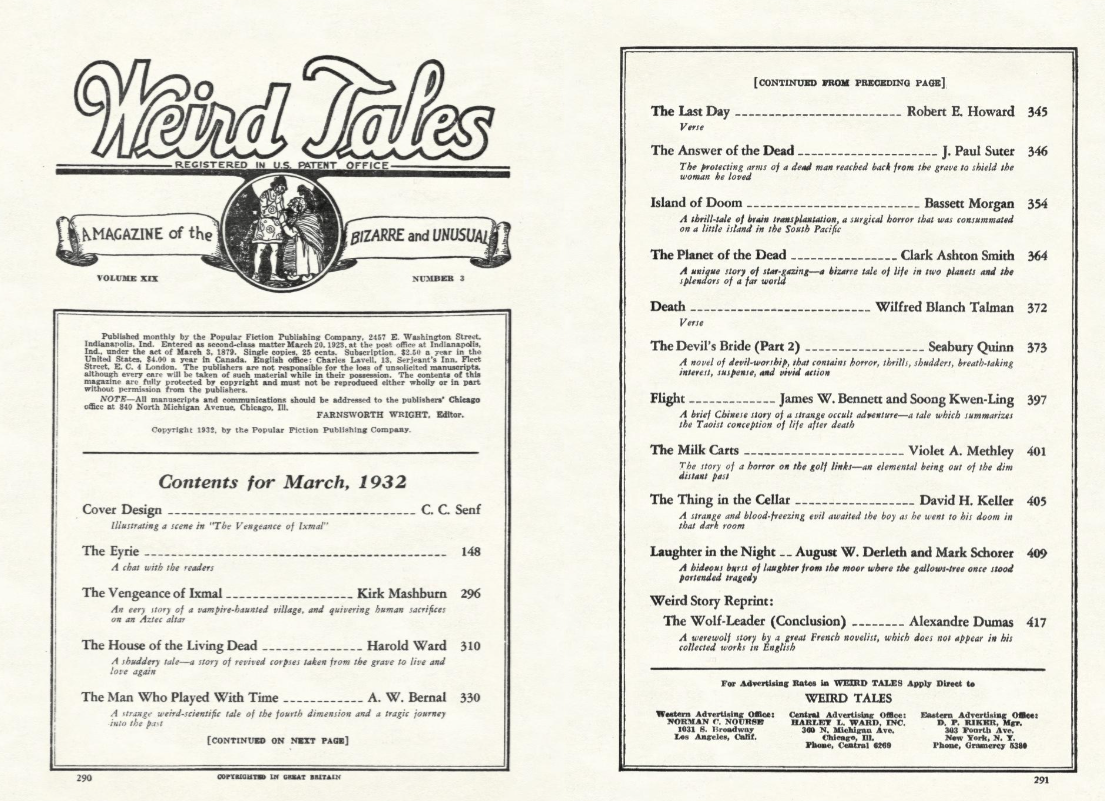
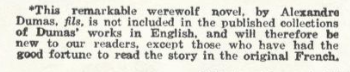
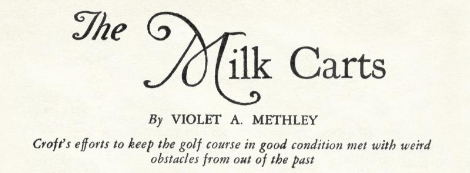
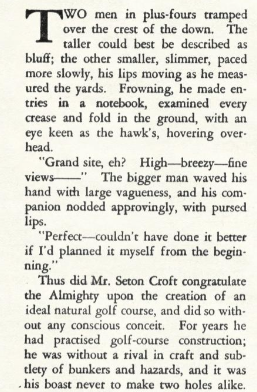

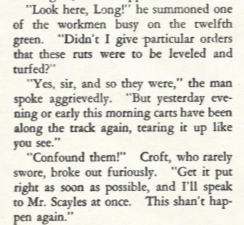
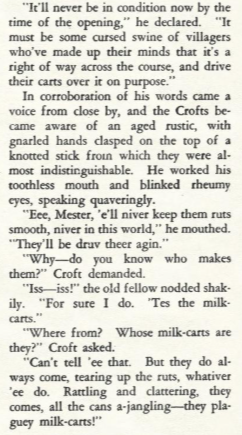

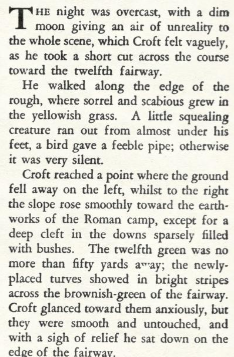
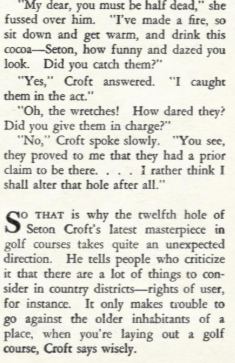
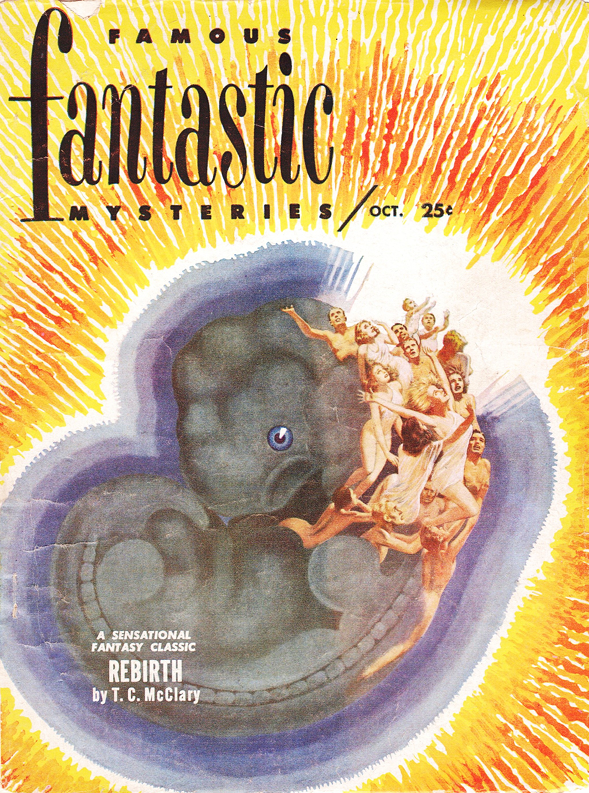
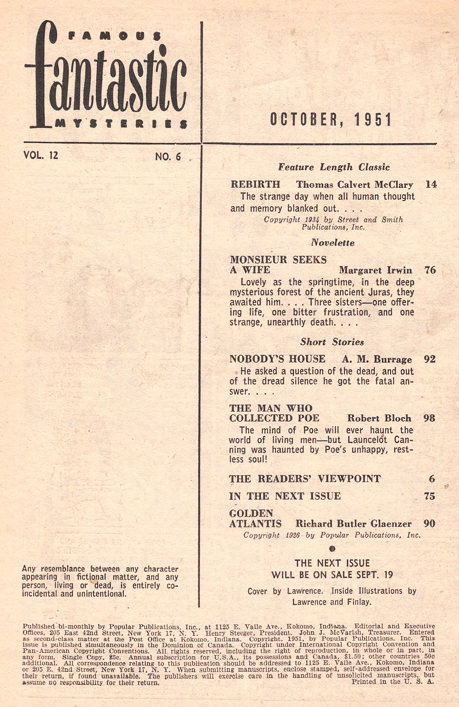
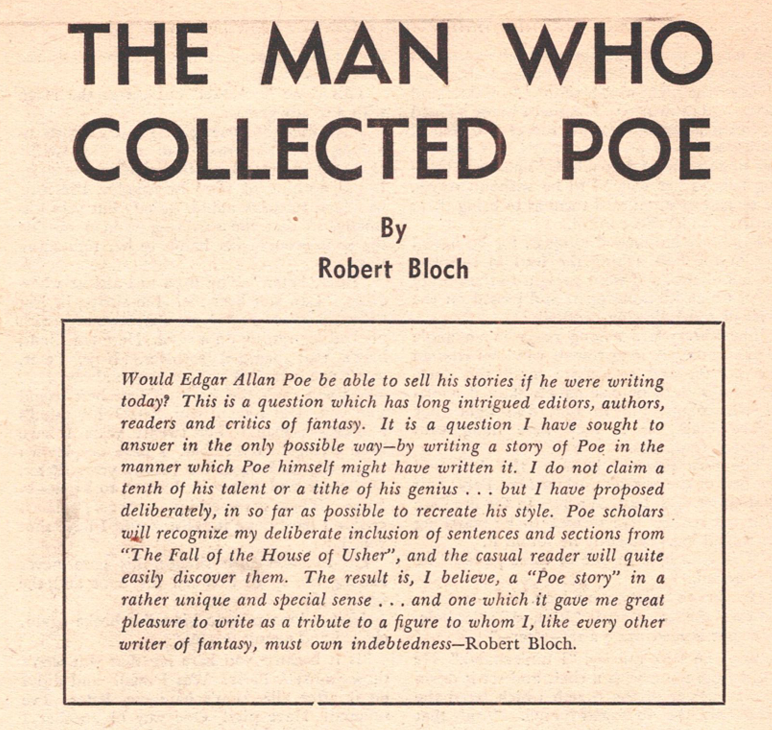
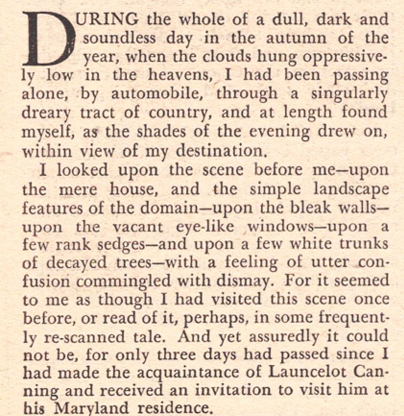
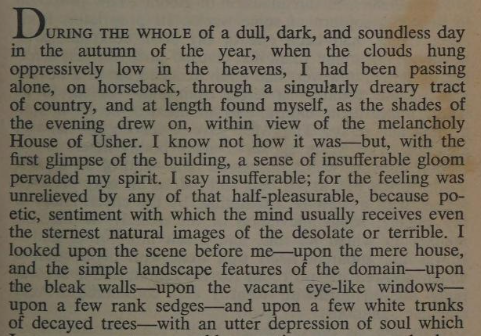

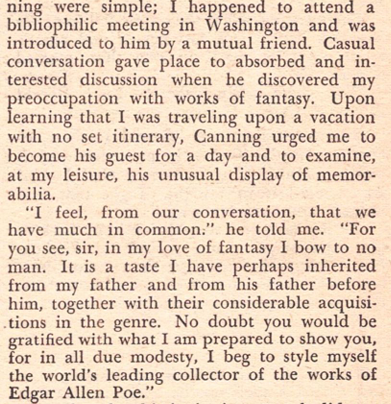
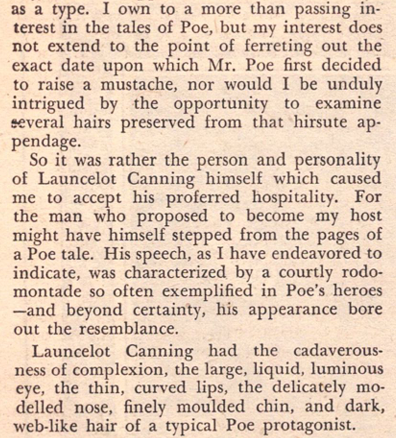
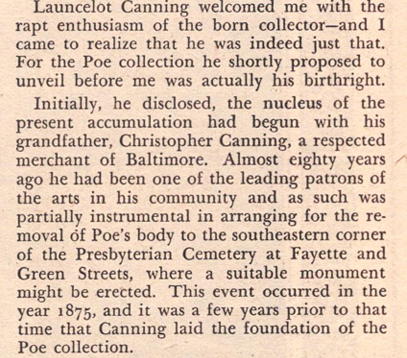
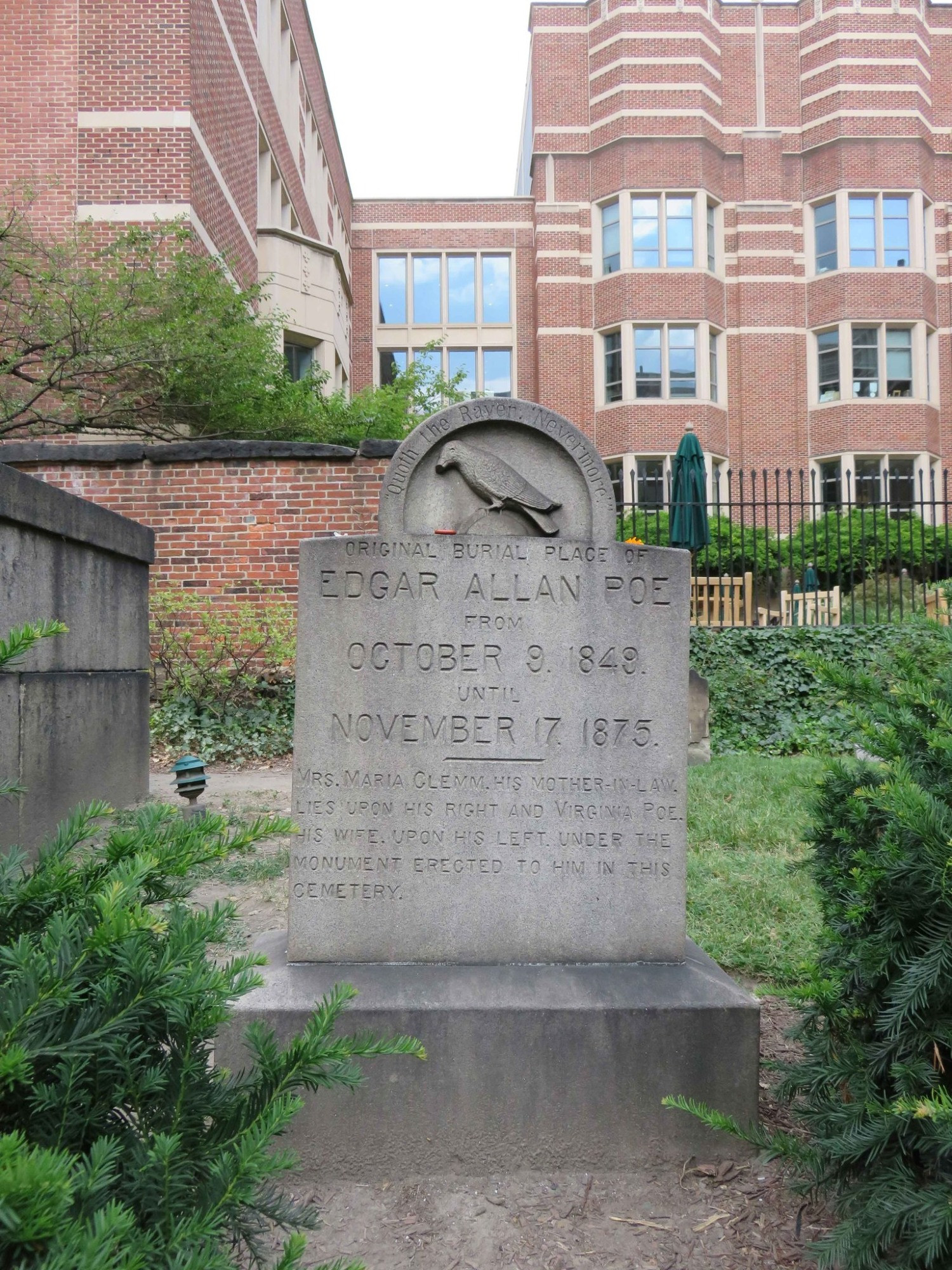
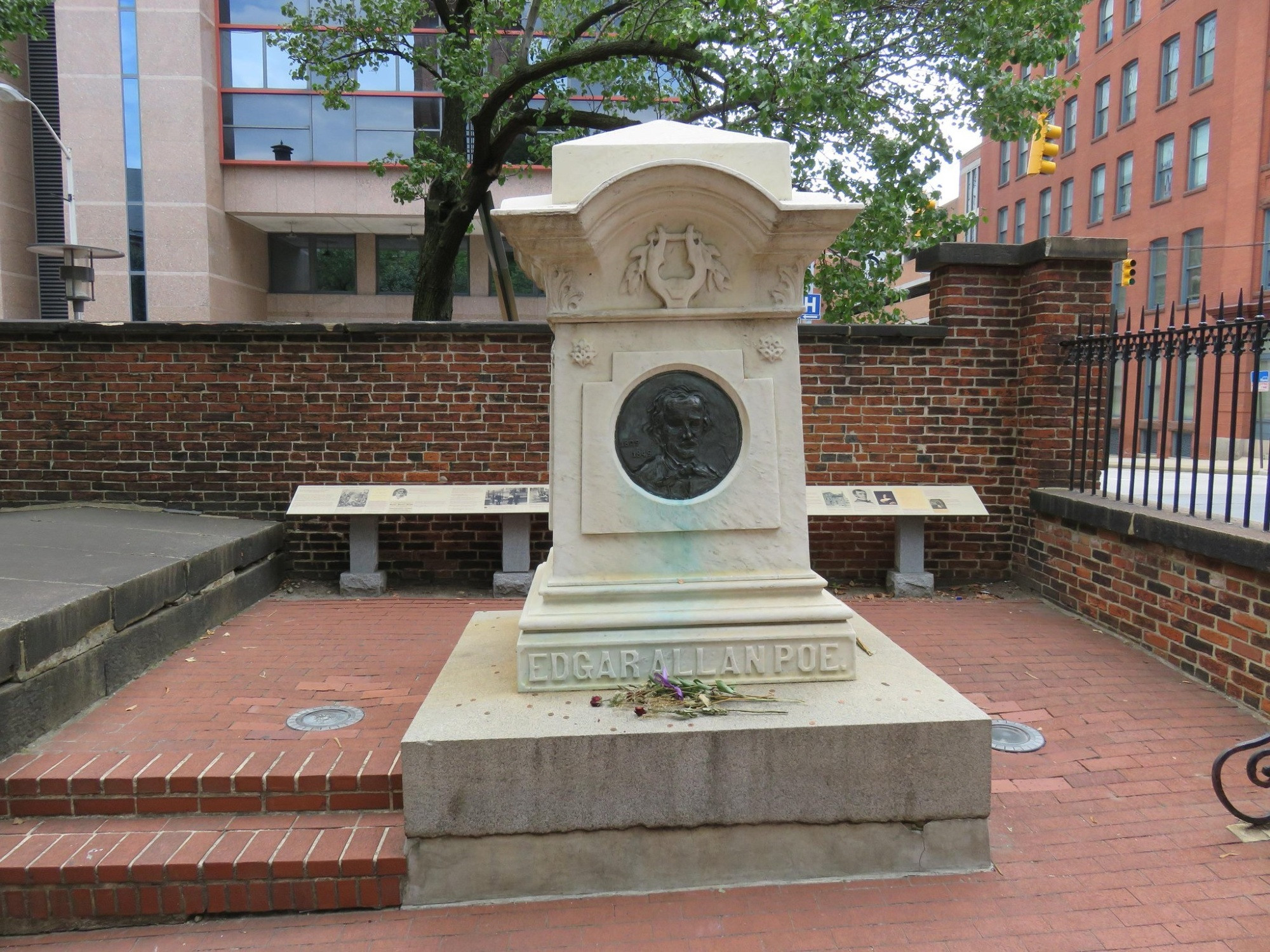
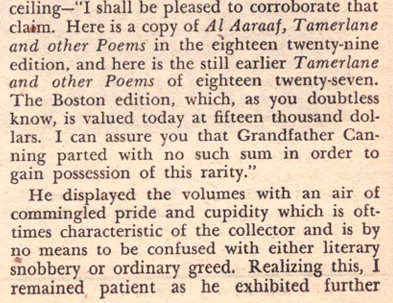
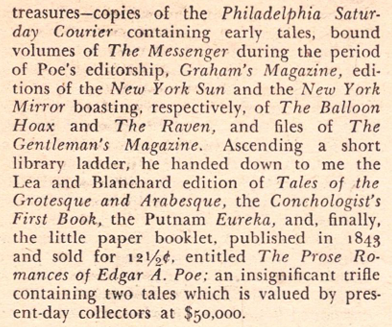
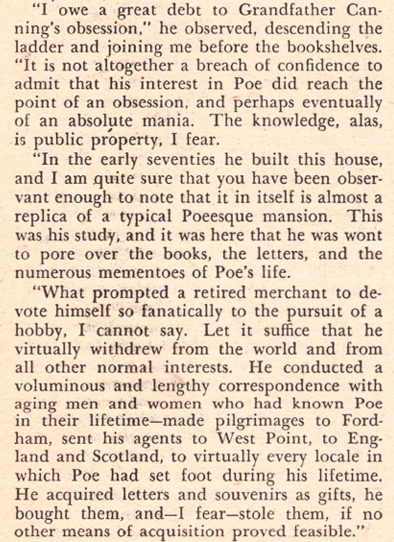
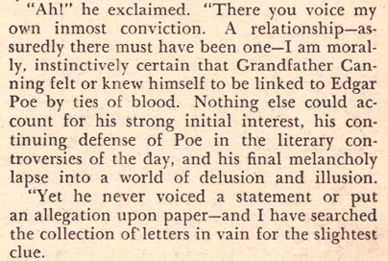
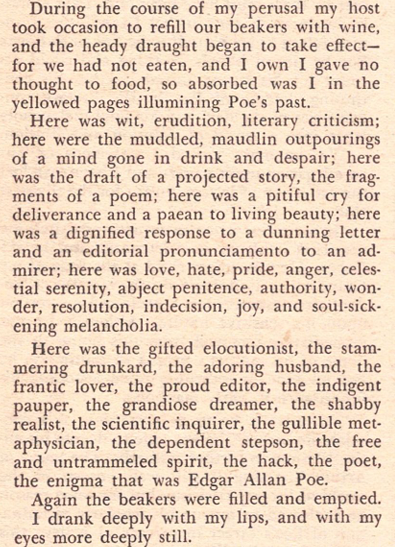
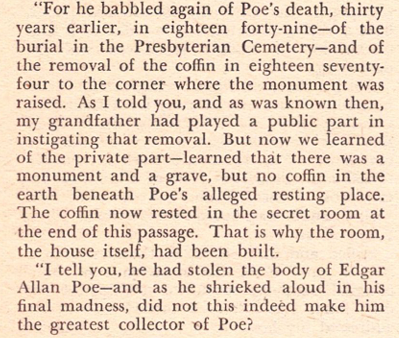
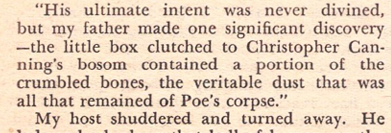
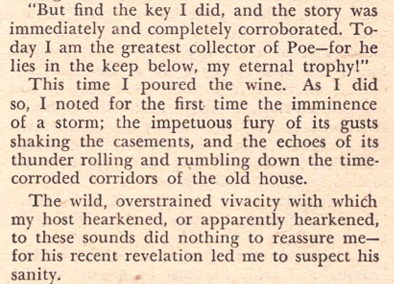
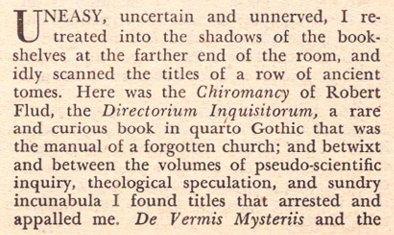
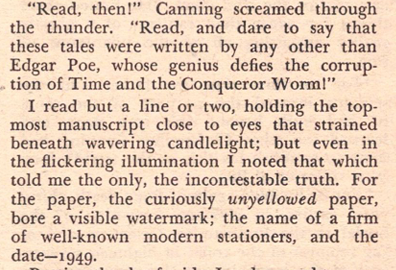
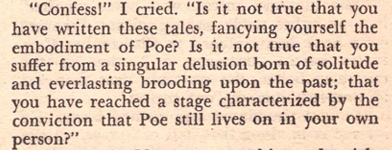
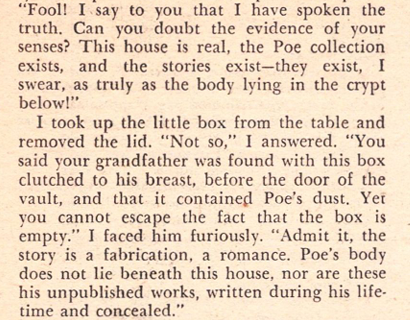
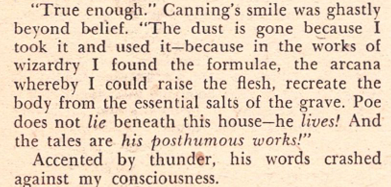
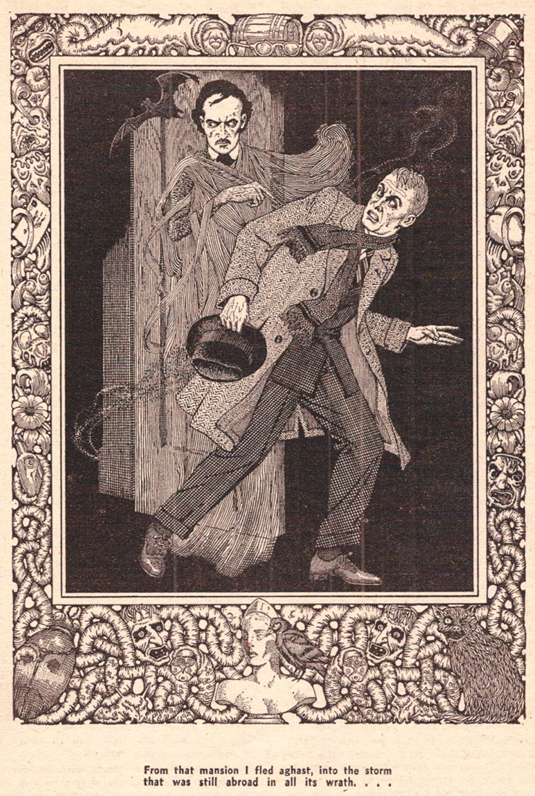

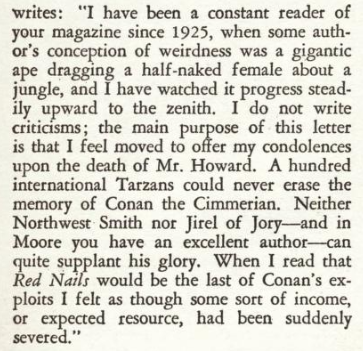

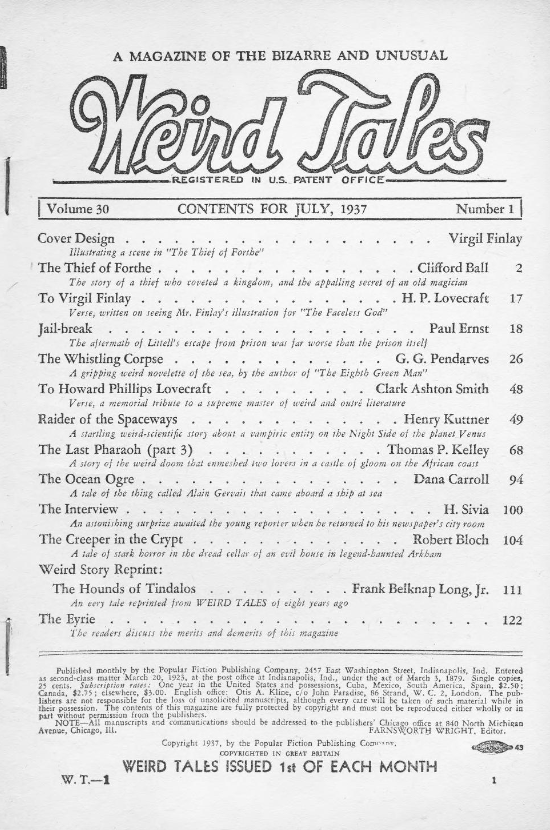

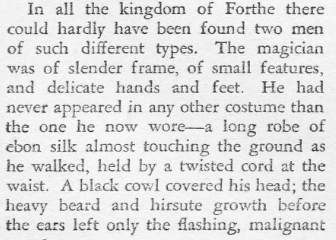
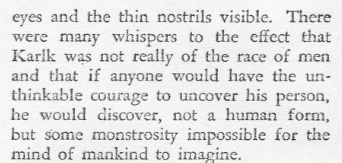
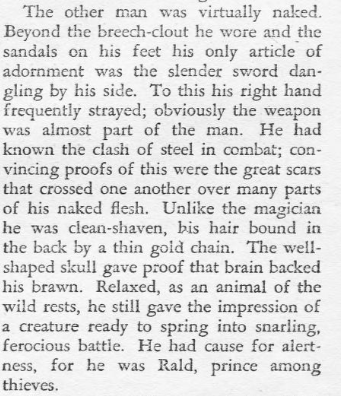


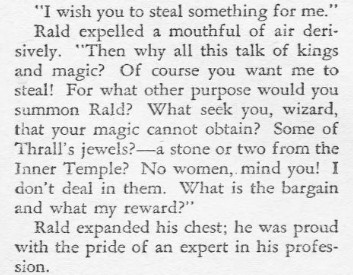





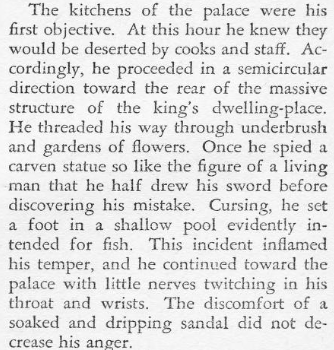


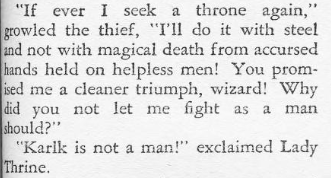


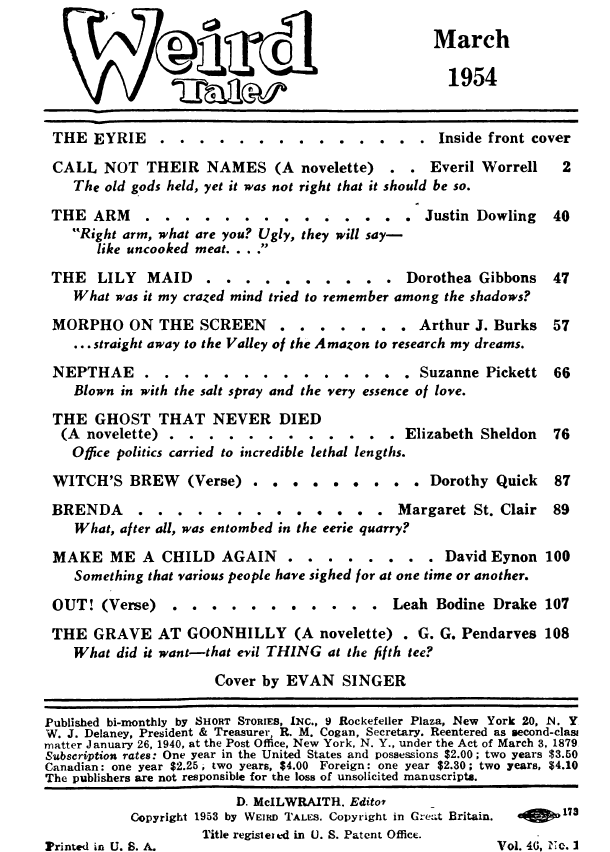
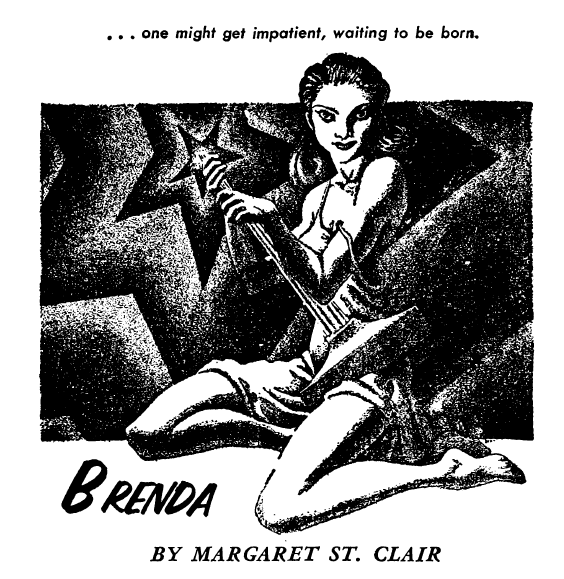









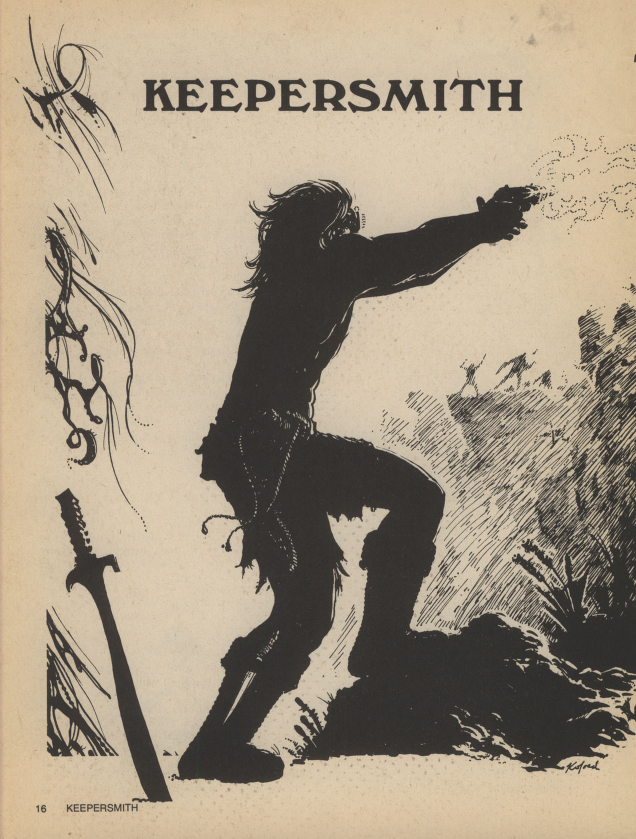






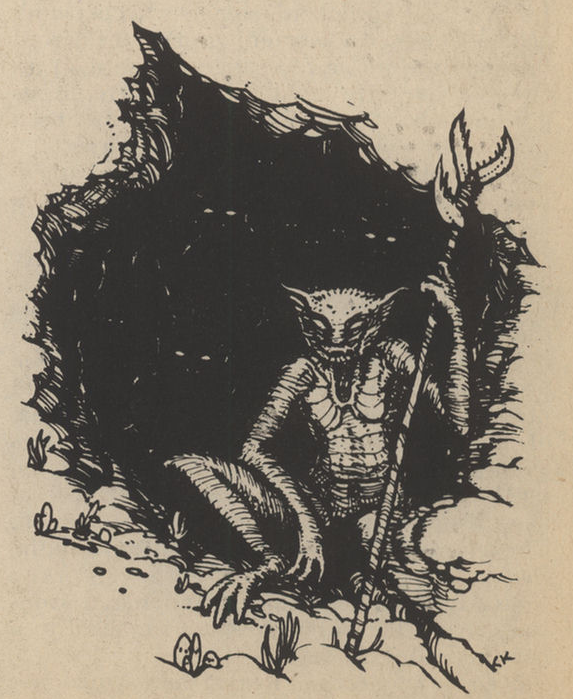


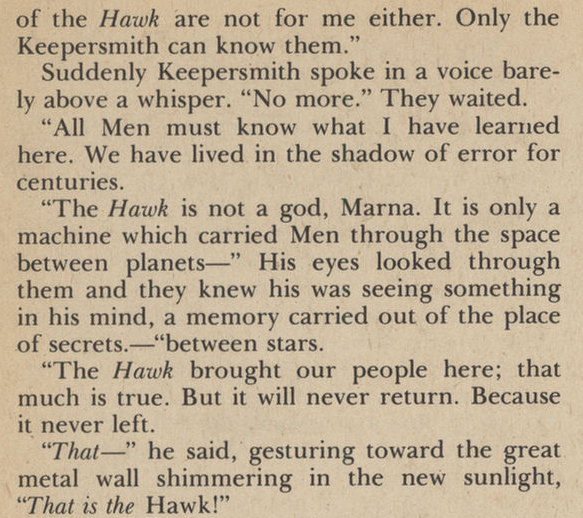
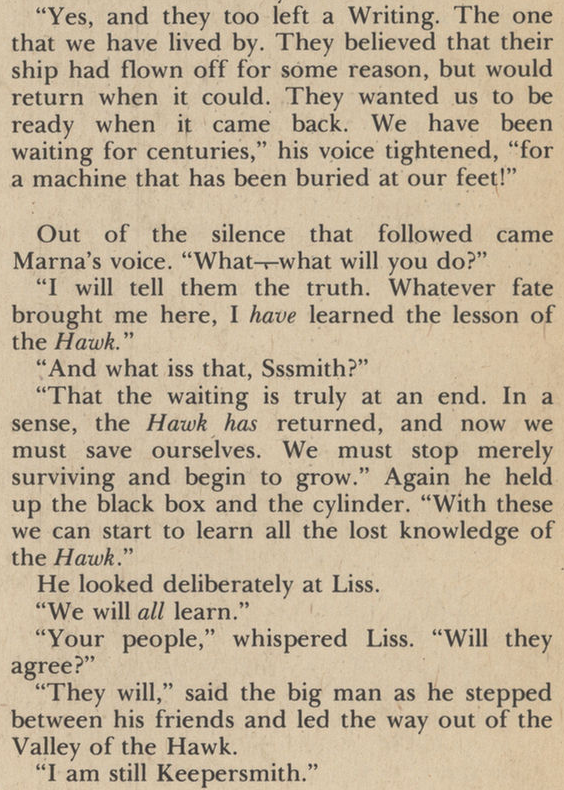
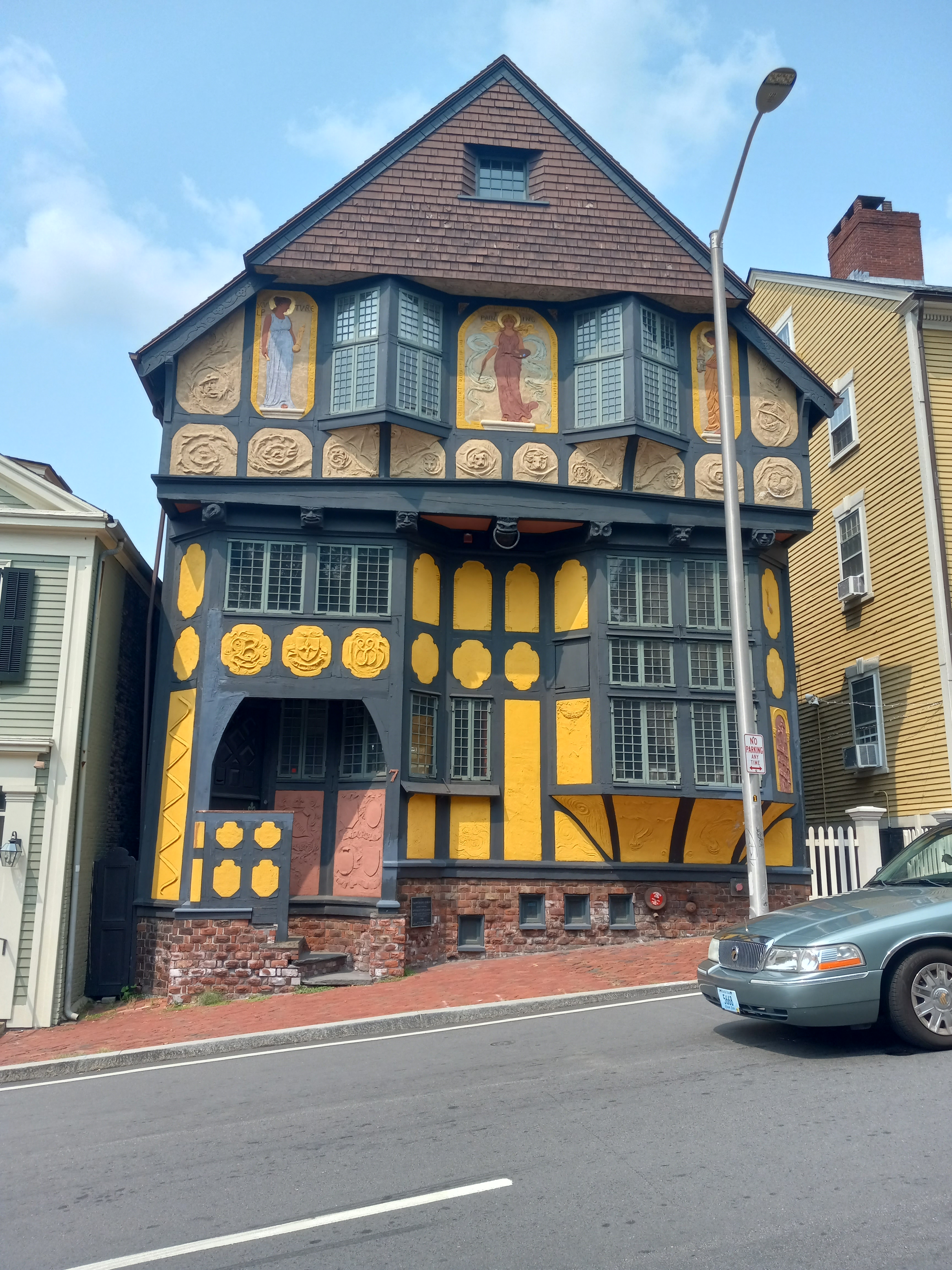
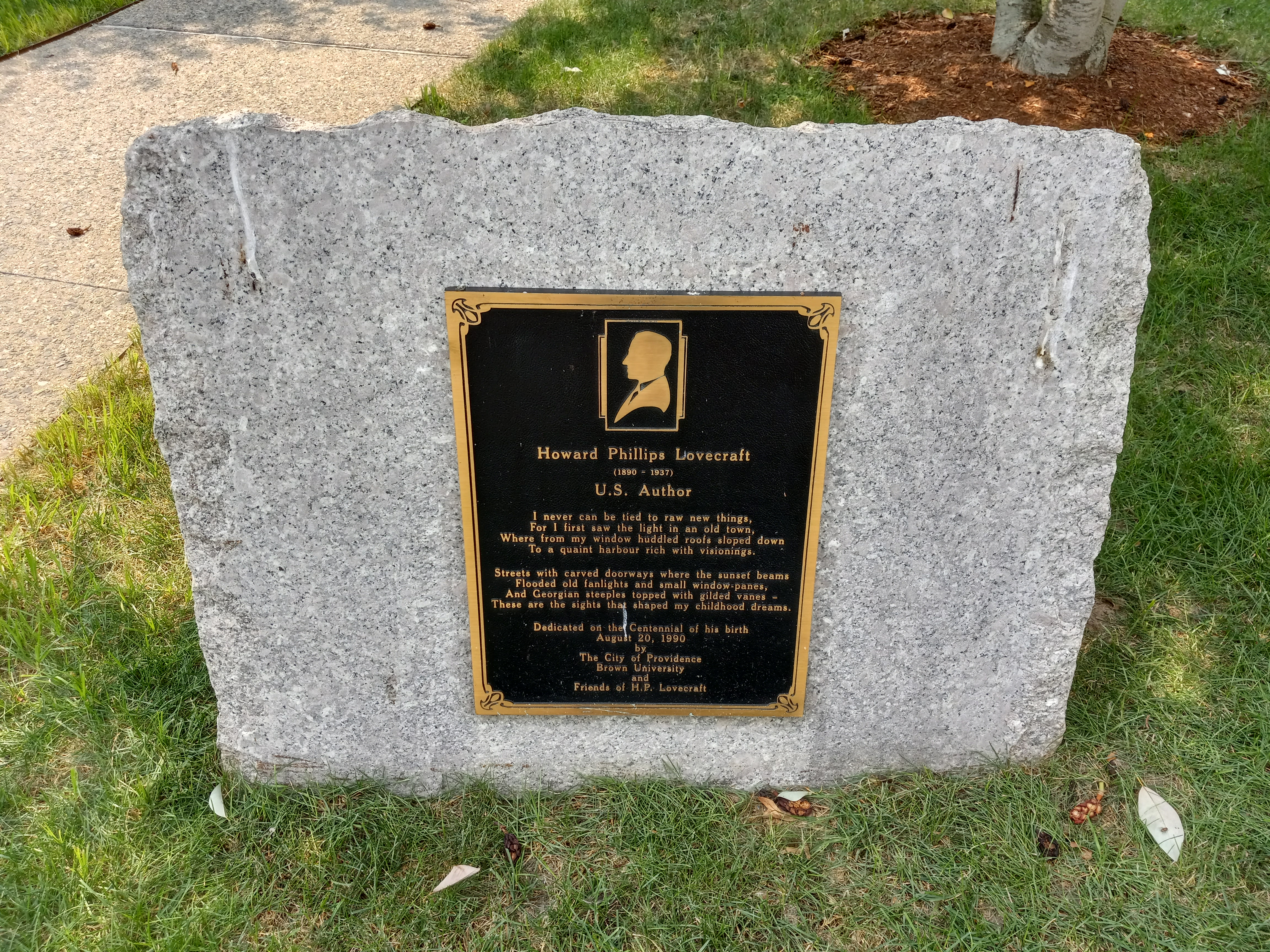
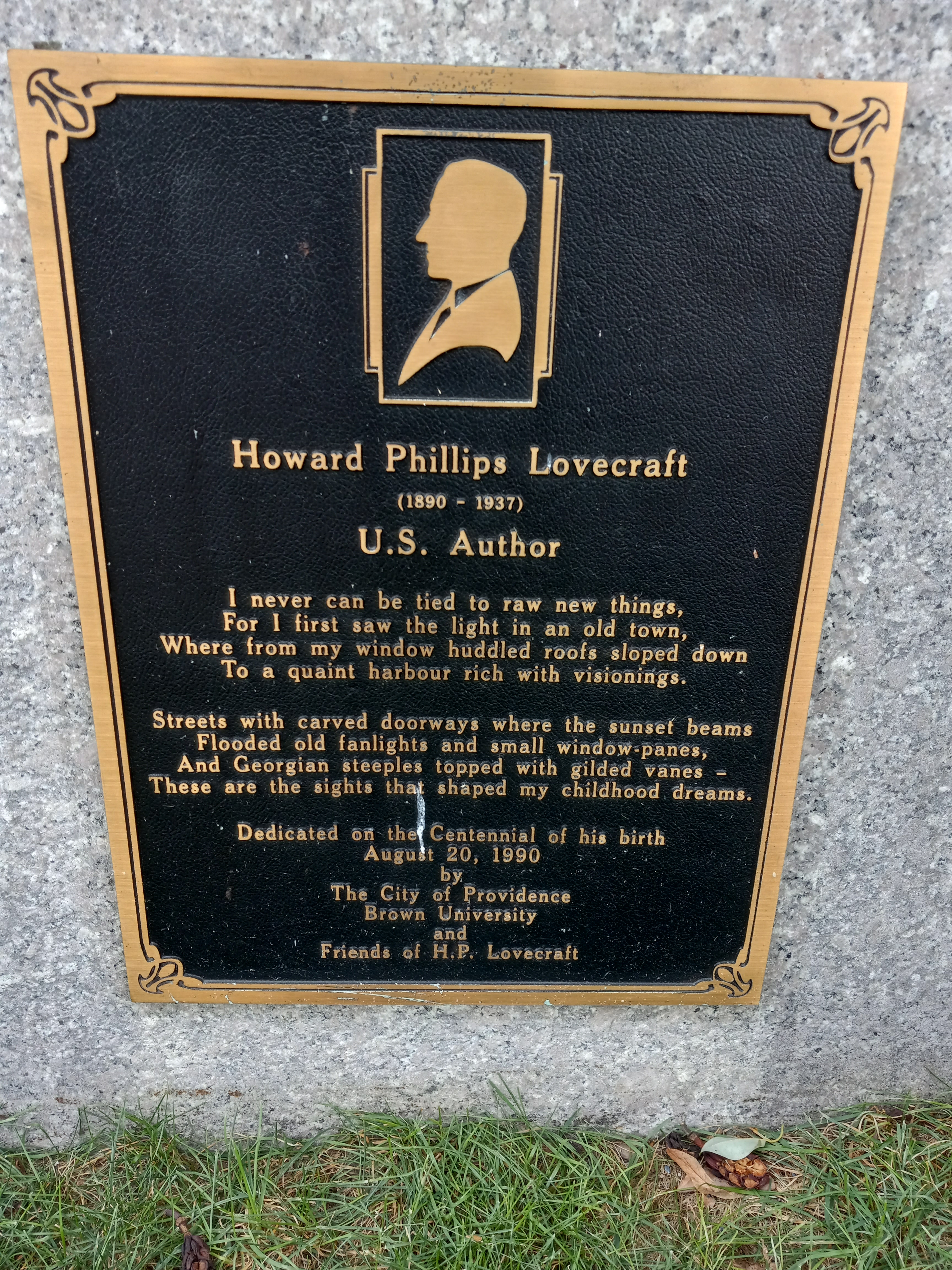

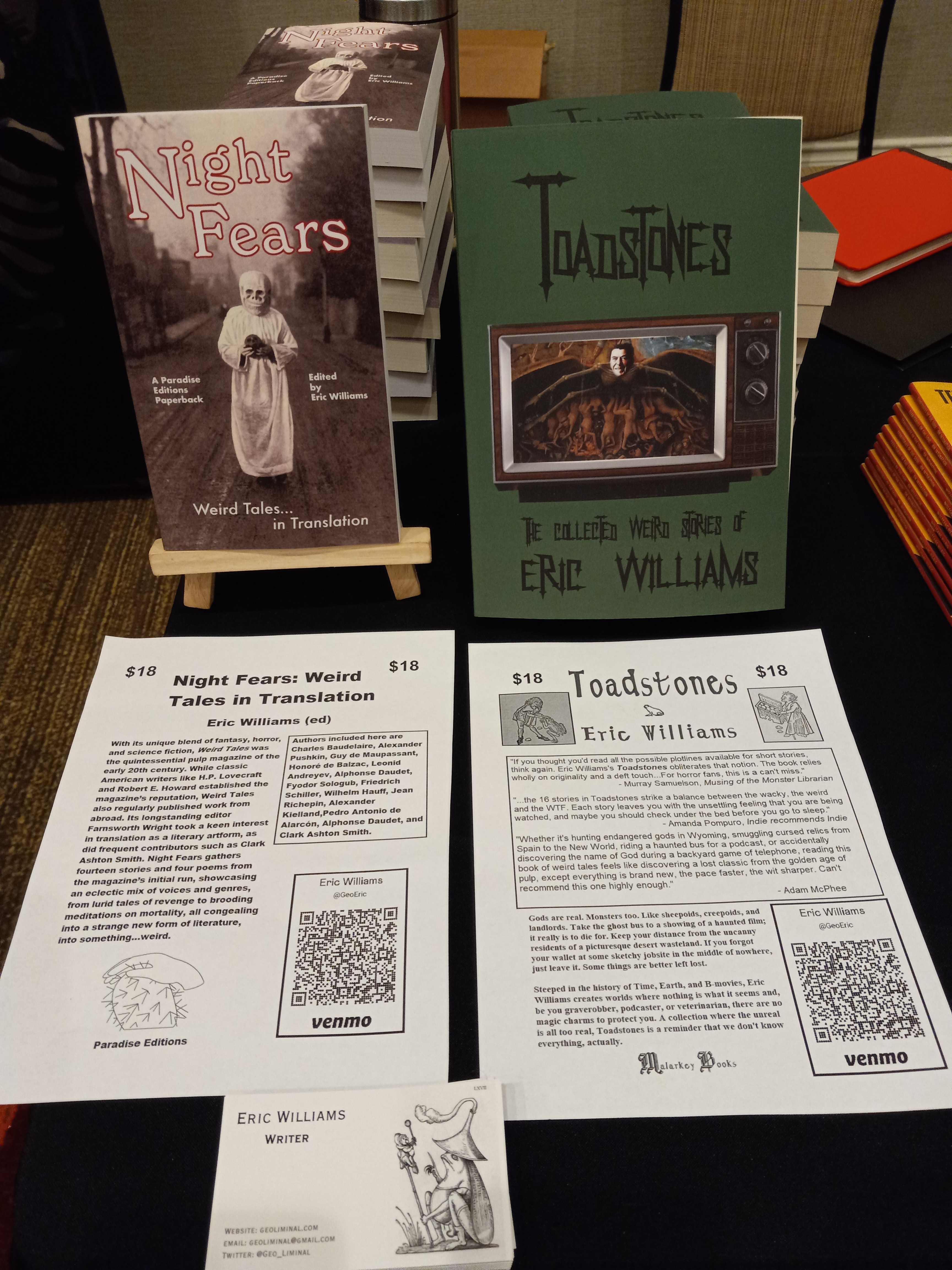


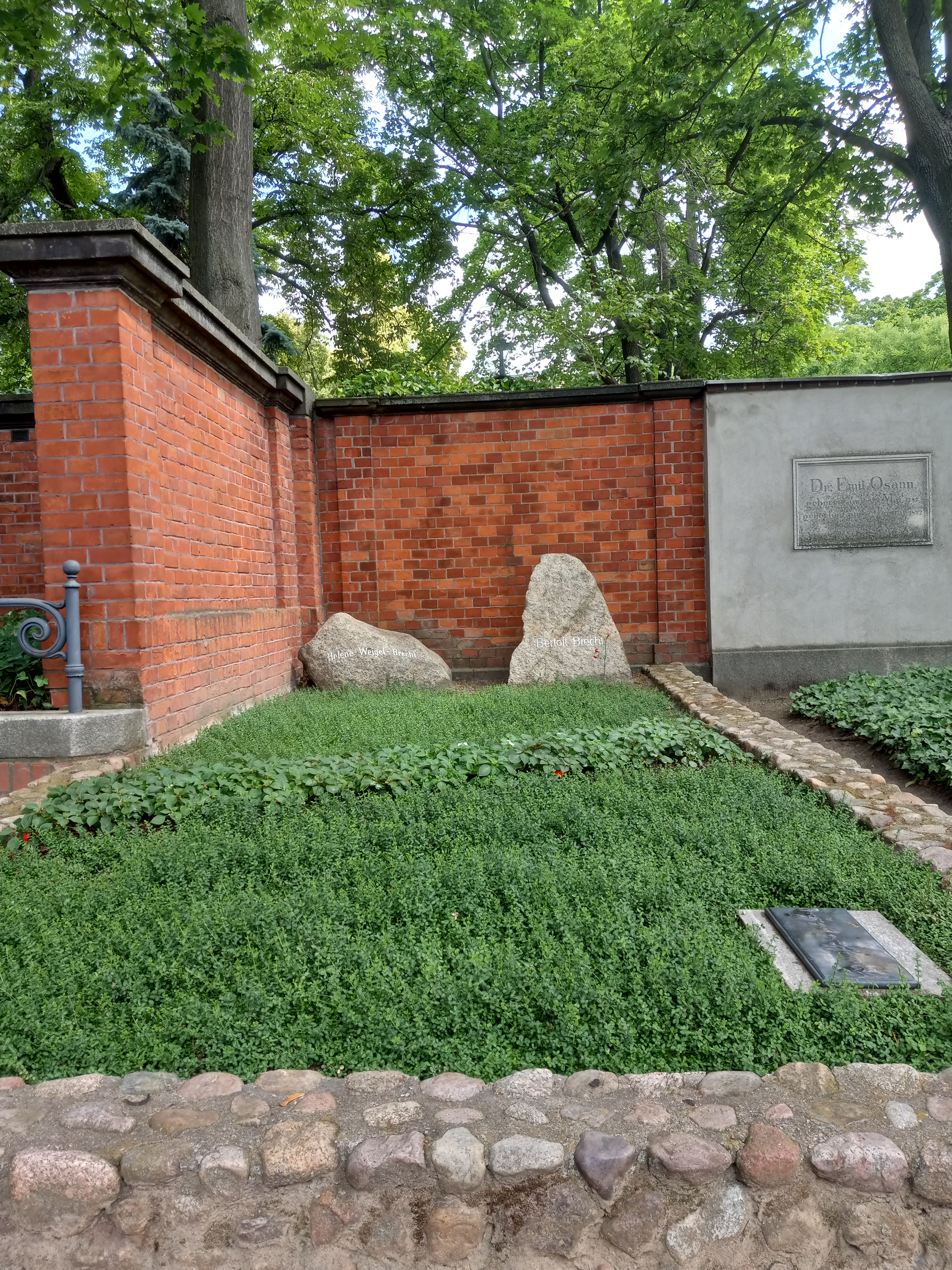





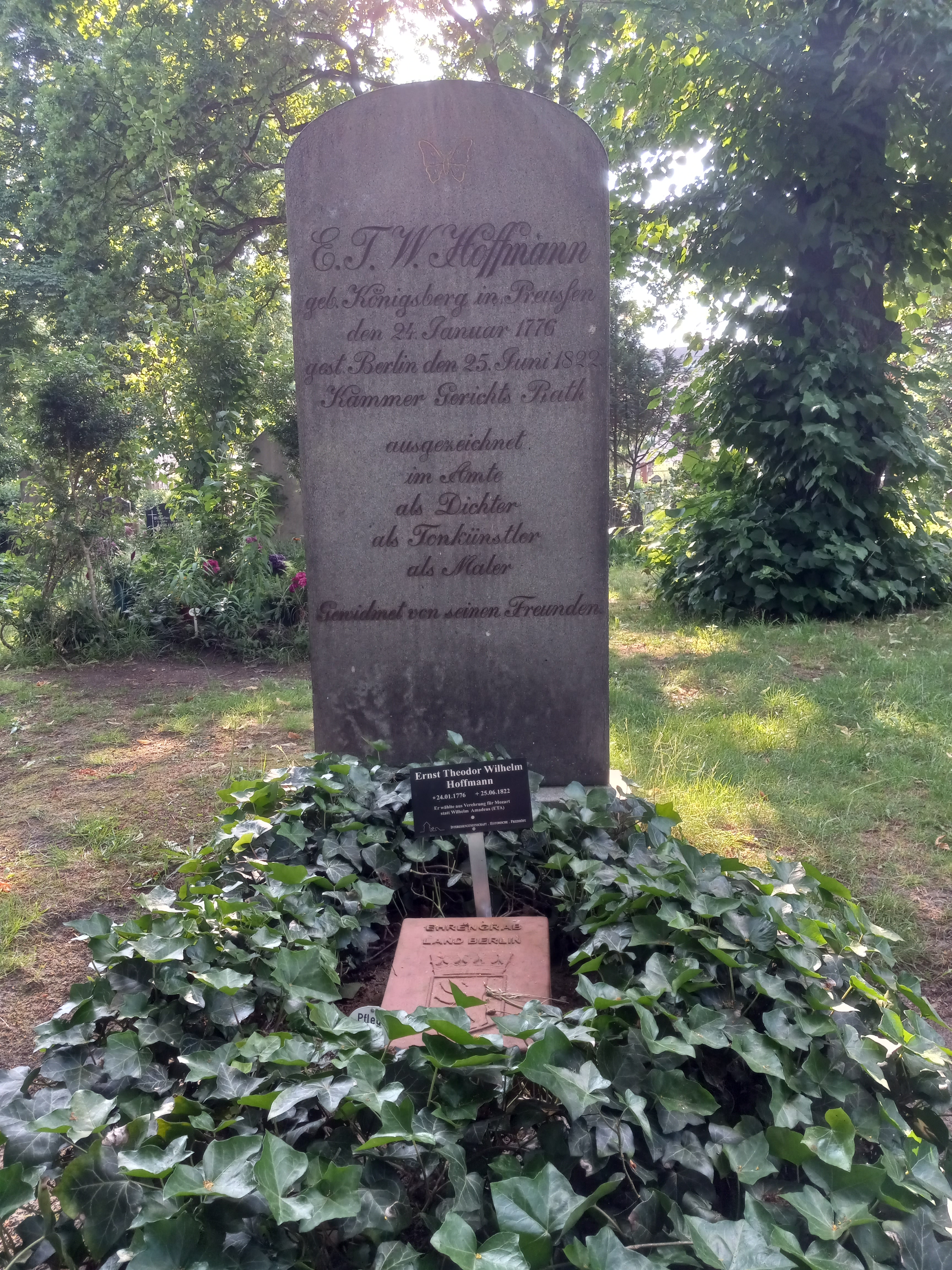
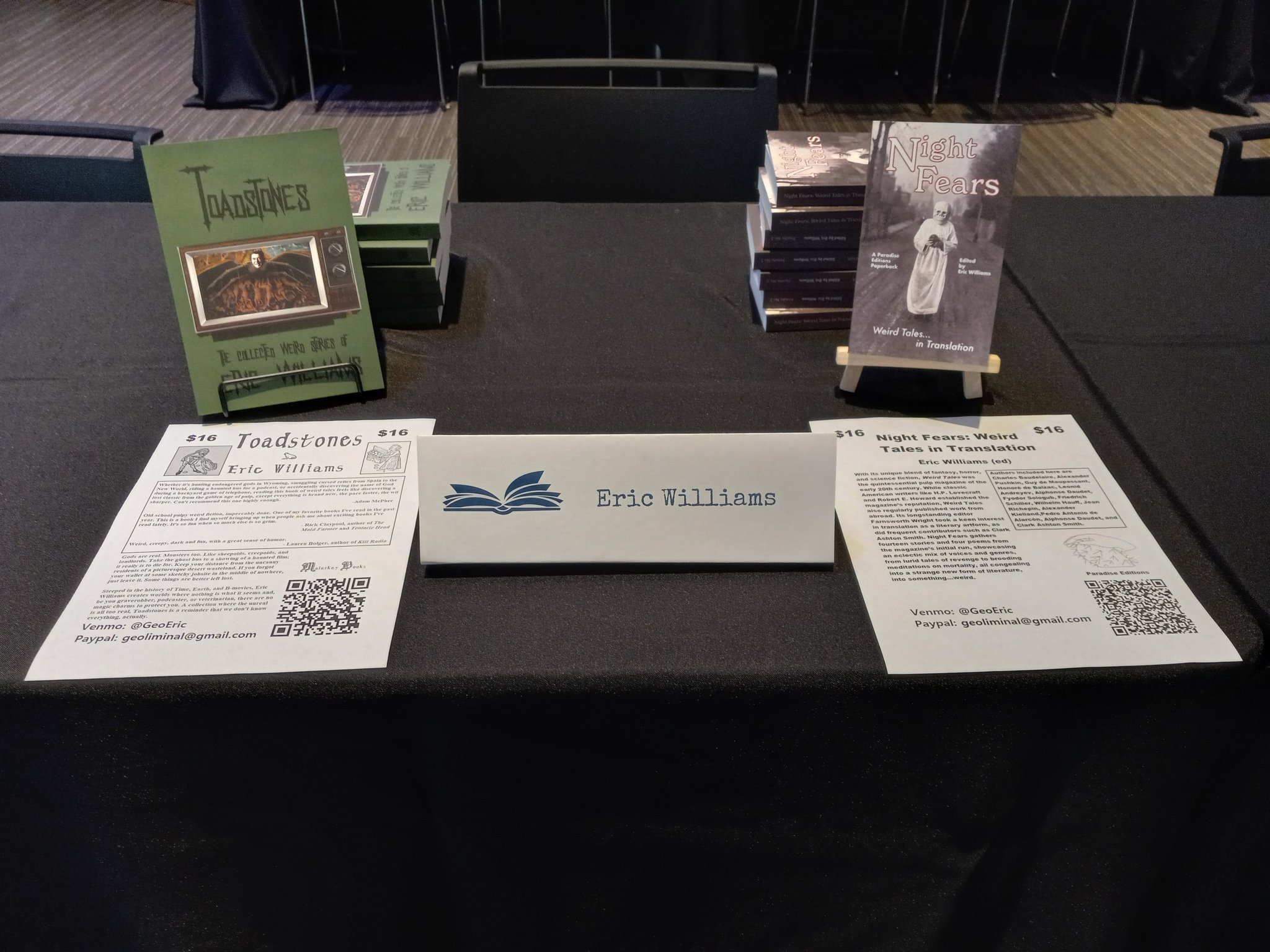
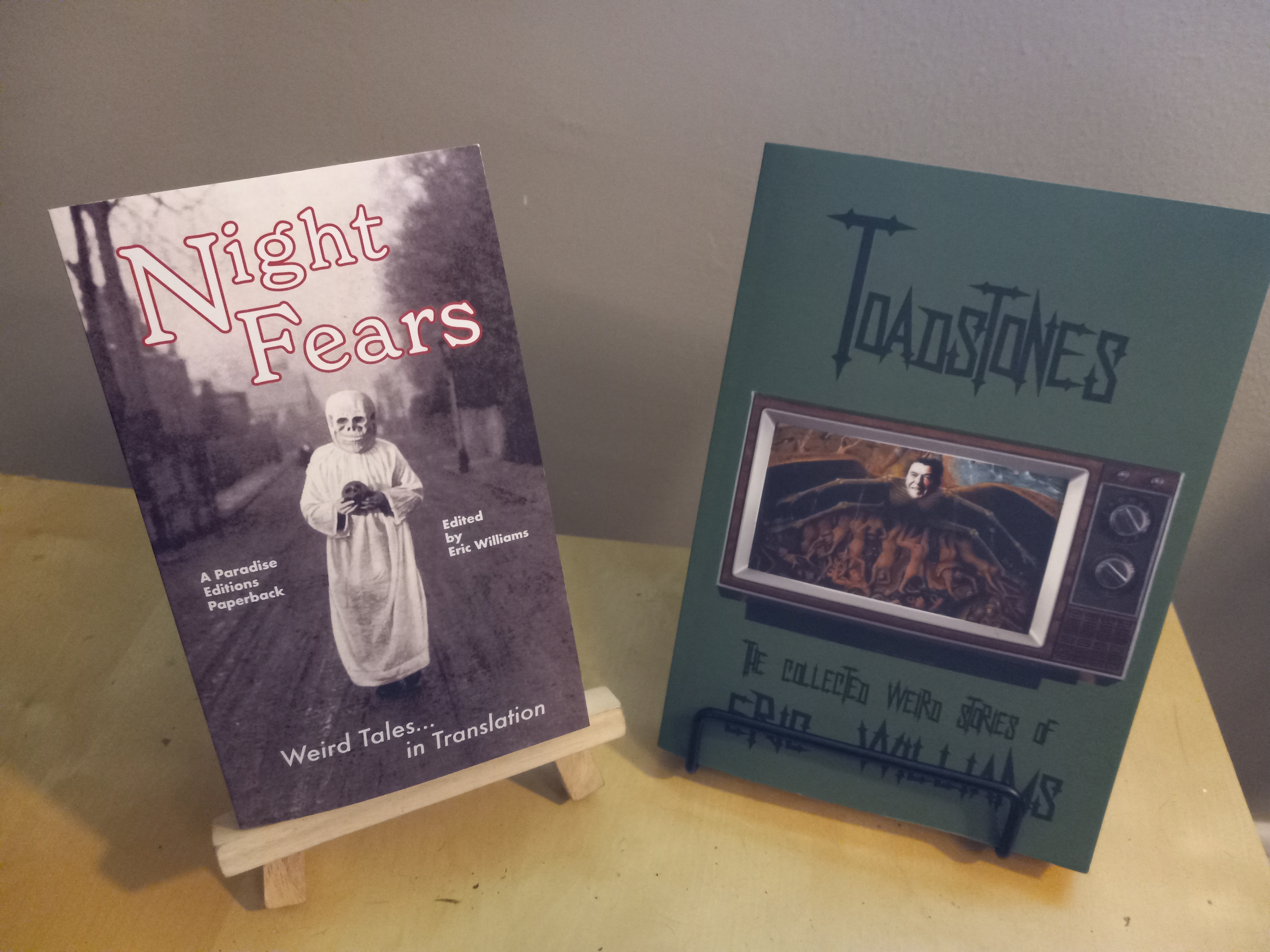
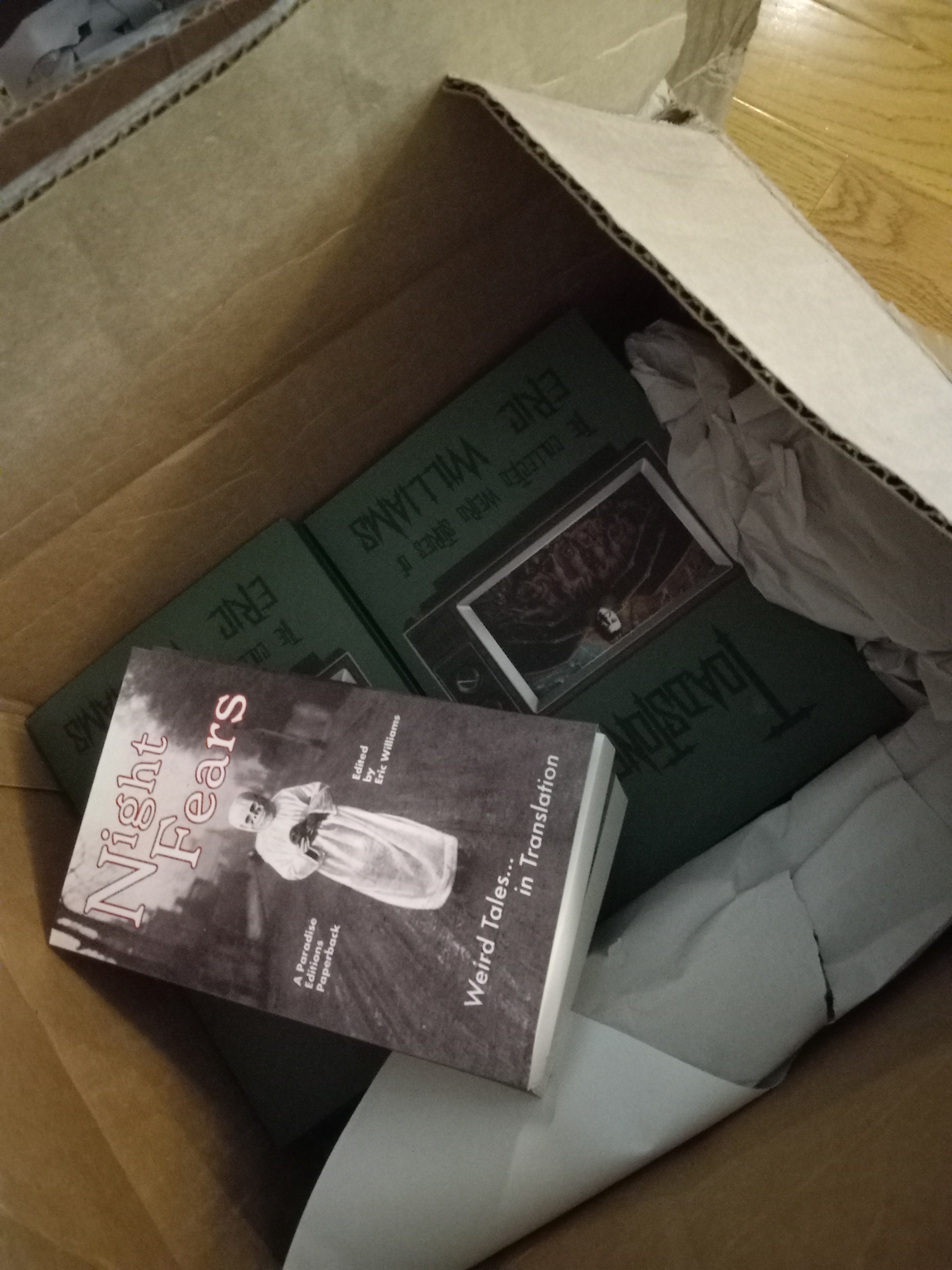
 Eric Williams