Given my love of classic, early-to-mid 20th Century pulp magazines, it probably comes as no surprise that I ALSO love early-to-mid 20th Century Old Time Radio! And, while I’ll always have a deep fondness for Our Miss Brooks, Burns and Allen, Gunsmoke, The Adventures of Sam Spade, X minus 1, and all them, the HORROR radio from that period holds a special place in my heart. So, since it’s Halloween Time, I thought I’d post up the VERY BEST of the OTR Spook-em-ups I’ve collected over the years. I’ll do a few at a time, so stay tuned, but they’re fun so give ’em a listen!
1 – The House in Cypress Canyon(Suspense, Dec 5 1946) – Let’s start with the absolute weirdest one on the list. Suspense was a great show and their whole catalog is worth listening to (when archive.org isn’t under attack) – they specialized in thrillers that, fairly often, would grade into weirdness, and they’re consistently well-acted and well-produced. This one is probably one of their scariest, strangest episodes; the set-up and the execution are top-notch, and there’s some great, spooky soundwork in here too. Listen to it!
2–The Thing on the Fourable Board (Quiet, Please, 1948) – This might be the scariest old time radio show ever produced, due to the A) super-cool monster and B) the SOUND of the super-cool monster. Seriously weird choice for the “voice” of the critter in this one. It’s also a great story with a fun and surprising twist at the end. Really worth turning down your lights and listening to this one in the dark.
3 –Specialty of the House (The Price of Fear, 1973) – In ’73 and ’74 the great Vincent Price did an absolutely amazing radio horror series where he played a fictionalized version of himself, and buddy, lemme tell you, there’s some good stuff in there. I mean, Price is fantastic of course; his voice, his affect, everything, and the writing on these is just phenomenal. This episode in particular is really great, everything is played very subtly and calmly, right up to the very end. A phenomenal one, truly!
4 – Three Skeleton Key (Escape, 1956) – Speaking of Vincent Price, here he is again in a great adaptation of the short story (by Georges-Gustave Toudouze) “Three Skeleton Key.” This one revolves around the crew of a remote lighthouse, a derelict ship, and what’s on board…really fun, really scary.
That’s enough for now – two hours of audio spook-em-ups for you, a pretty good block. But there’s more to come!
Roughly a quarter of the way through the Hallowe’en Season already, how the hell did that happen!? Ah, but let us forget the merciless march of time with some timeless Weird Fiction! And this time, we’re looking at Carl Jacobi’s “Revelations in Black” from the April 1933 issue of Weird Tales!
We’ve met Jacobi before, roughly around this same time last year, when we examined his weird forest/bug/hallucinations story “Mive,” another of ol’ Carl’s appearances in Weird Tales that I really liked. Today’s story is much more traditional and, frankly, staid in comparison to the out-and-out trippy action in “Mive,” but even so (and despite not having any geology or paleontology content) I think it IS a good example of Jacobi’s moody, atmospheric writing.
Jacobi had a VERY long writing career that stretched well into the 80s, and he had a longstanding relationship with August Derleth’s Arkham House that kept a lot of his work in circulation via collections. Interestingly, the Arkham House connection came about because of H.P. Lovecraft, who praised Jacobi’s “Mive” in a letter to ol’ Derleth as having the kind of real, vital weirdness that he (meaning Lovecraft) really dug. The feeling was obviously mutual, as Jacobi would often flit around the edge of the Lovecraft circle – he had been classmates in college with another of Lovecraft’s circle, Donald Wandrei, and as a fellow Midwesterner (Jacobi lived in Minneapolis his whole life) the two of them struck up quite the literary friendship.
With regards to the pulps, Jacobi was a pretty prominent figure – in addition to numerous appearances in Weird Tales, he also wrote detective fiction, adventure stories, and even a little sci-fi. He’s a good example of how a writer can be successful (artistically, at least – he was, like most pulpsters, crushingly poor for most of his life) and then kind of vanish from the scene. Honestly, for his weird fiction at least, I think he’s due for a revival.
Enough jibber-jabber! Onwards!
This month’s cover, by J. Allen St. John, isn’t particularly weird, unfortunately, although I like the snarl on that giant ass tiger’s face. Very orientalist, something that editor Farnsworth Wright (and the readership of Weird Tales) loved with a fierce undying passion, so it makes sense that Williamson’s “Arabian” style multi-part novel would be made the cover. Still, c’mon man – gimme a monster!
Still, some fun stuff in the ol’ ToC. I don’t remember the Price story, but I’d love a Perfect Strangers/Weird Tales bit of fanfiction about “The Return of Balki.” Hamilton, Smith, Kline, Counselman, all big names for the readers at the time, along with Jacobi of course. Solid issue, I feel like the reader is getting their twenty-five cents worth this month.
Now, on to “Revelations in Black!”
Classic “Jayem” Wilcox title illustration, down to the whole “we’re giving away most of the story to you right off the bat” aspect too. Yep, this here is a VAMPIRE story, specifically about a LADY VAMPIRE, one of the top tier kinds of Vampires out there. A nice, traditional approach to a Halloween staple, I think.
Our story opens with a narrator battling his seasonal affective disorder by going antiquing. What’s funny is that our dude exchanges a dreary rainy day for what is, apparently, an equally dreary shop – the description of the wine cabinet shrinking despondently into its corner is a good bit o’ writing that sets the tone for Larla’s shop, I think. Our guy’s not after anything in particular, of course, but Larla is COMMITTED to his pitch, and even after the narrator suggests he’d like to see some books, Larla makes him go through the whole shop, looking at furniture, paintings, a “muddle of yellowed statuettes,” all kinds of junk. But, eventually, they reach the Old Books in the back.
Carl lays it on a little thick here, I think – the whole “oh, if only I hadn’t done whatever, the horrors I could’ve avoided,” yadda yadda, it’s easily the weakest part of this story, although I DO think that it helps if you read this part (and the whole story) as something very FIRMALY within a certain stylistic tradition. Jacobi is writing a VAMPIRE STORY – he’s not interested in reinventing it or subverting anything, he’s just enjoying the languorous pleasure of playing in a very well-established sandbox, right? In that context, this kind of “ah, would that I hadn’t fucked up so badly back then” stuff is VERY MUCH a part of the genre. Take it for what it is, is what I’m telling you.
But anyway – our guy plucks an interesting book from a shelf, one that Larla the shop-owner says was placed there by mistake and isn’t for sale. In fact, the book was made (literally – we learn that he bound it himself) by his “poor” brother.
Am I a sucker for the “last ravings of lunatic” macguffin? Yes, and so is our narrator – when he learns it was written BY a guy IN an asylum, he wants it EVEN more badly. Larla explains the Sad Tale of his Brother, Alessandro:
We learn then that there are actually THREE volumes to the “Five Unicorns and a Pearl” series, books that Alessandro had filled with his mad scribblings in his time in the asylum. Now, his brother keeps them as a keepsake, trying to forget the tragedy of his death and remember happier times (something probably not helped by keeping the Black-bound and Skull-embossed Book of Horror he wrote while dying mysteriously, but then again the human mind is a labyrinth, right?).
Like I said, this sort of wild-ass story just makes our guy want these books even more. When he sees he can’t buy it, he ends up RENTING the book for a single night for TEN GODDAMN DOLLARS (that’s like $250 now). He has a single night, and he MUST return it the next day, in perfect condition. A crazy deal, huh?
So, having plunked down a pile of cash for a chance to examine the book, our hero settles in for the night in his apartment to do some readin’. First thing he notices is a weird inscription “in a feminine hand” on the inside of the front cover:
Shoulda signed it “XOXO – The Vampire” to make sure he got the point.
He reads on:
Our boy here is strangely moved by the kind of odd and obviously symbolism-rich language that poor Alessandro used when composing his last work. In fact, he’s so struck and, frankly, troubled by it that he decides to go for a midnight walk!
Indulging in this weird impulse, however, does little to alleviate his mania – in fact, if anything, it increases it. He feels like he’s looking for something, that he’s being drawn towards something, and there’s nothin’ fer it but to wander in search of whatever the hell it is.
Our guy pushes through the strangely unlocked gate and into the preternaturally alluring night garden.
Quelle horreur! Our guy suddenly, shockingly realizes that this garden is, IN FACT, what poor mad Alessandro was writing about in Volume One of his book “Five Unicorns and Pearl,” the very book HE HAD JUST BEEN READING (*thundercrash*)!!!!!1!
All kidding aside, I DO think that our guy’s entrance into the garden is an extremely well done bit of eerie writing – the scene perfectly captures, a dark, seemingly abandoned garden in the Fall, the plants dead or dormant, and full of odd architecture, ornamentation, and statuary. Gardens are strange places, after all, sites dedicated to specific ideas about aesthetics and nature, carefully curated and maintained, so seeing one at an “off” time (at night, in the autumn, and apparently not being “kept-up”) is automatically a disjointing and unsettling experience. I think Jacobi is one of the great landscape/scenery describers of the pulps, and this garden is a perfect example of his mastery.
While he’s musing about this place, and how perhaps Alessandro wasn’t the hopeless lunatic he’d been labeled as, a strange, pungent perfume assails his nostrils…it’s the scent of heliotrope, powerful and fulgent in the night air…and it’s comin’ from a goddamn LADY he hadn’t even noticed a minute again!
The way Jacobi describes this woman, all in black, veiled, and with only a pale white neck exposed, strikes me as very Arthur Rackham. I mean, everybody has probably guessed what’s happening here, right, but for me that doesn’t detract from the pleasure of the story – honestly, there’s a lot to be said for weird fic/horror that tips its hand early but keeps on heading steadily towards the already-spotted conclusion. You can’t get that kind of slow-burn consummation without letting the reader see the road ahead, and I think when it’s done well, like in Jacobi’s story here today, there’s a lot to appreciate.
Anyway, this crazy vulpine woman and her enormous dog don’t seem bothered by the fact that some guy has just busted into their garden. In fact, the lady asks him to stay; she’s lonely, and would like someone to talk to. With a curt “fort mit dir, Johann!” she sends her dog away and bids the interloper join her by the fountains. Then, she introduces herself:
I’ll just break in here to post this picture of Field Marshal August von Mackensen, a WWI Imperial German general, because his picture is wild as hell:
Germans, yeesh!
Perle von Mauren continues her tale of woe:
“…found him…no longer living” is one of those “I don’t drink…wine” statements that vampires just love – technically true but omitting certain key information. Fun stuff!
Fun bit of subtle weirdness here – she’s obviously the author of the “feminine hand” that our narrator spotted on the frontpiece of the book, but there’s an implication here that, somehow, the book and she are intimately and causally connected. It could just be dissembling on her part, of course, but it really seems like our guy reading the book has summoned both Him and Her to the garden, together, some kind of weird link being forged between them by the reading of the story. It’s good and interesting, and I don’t think I’ve ever seen anything like it with regards to vampires – the idea that they’re associated with some kind of cursed object like that is neat!
Anyway, our dude spends the whole night talking to this lady in the garden. He’s obviously enchanted by her, even if he has a mounting sense of unease the whole time…why won’t she remove her veil, for instance. Then, just as the night gives way to dawn, something weird (well, weirder) happens!
They call that a “Vampire’s Goodbye.”
The next day finds out guy increasingly preoccupied with Perle and the garden and the books of Larla. He describes himself as addicted to the mystery of the thing, and can’t help but go back to the shop where, despite not returning the first book, he procures the second volume at another ridiculous price. He rushes home, reads it, but the mystery merely deeps for him, and his weird craving to return to the garden grows stronger and stronger. He tries to resist it, to ignore it, but then, in a flash he has the sudden idea that the garden scene and her and all that moonlight would make one hell of a picture, something he could even submit to the International Camera Contest in Geneva next month! Is that a delusion on his part, or an excuse? Regardless, our shutterbug grabs his fancy camera with its newfangled flashbulb and hustles on out to the garden again.
She’s there, of course, and they chat for a long while – she seems weirdly reticent to talk about her brother, and yet simultaneously compelled to tell our narrator about him. There’s an interesting section of his time as a student in Vienna where, as is traditional, he’s considered a weird and potentially dangerous avant garde philosophy student with odd and offputting ideas. His experiences in the war, and in digging graves as a prisoner of war, seem to be a particular focus of her morbid interest. It feels like this is Jacobi gesturing towards an underutilized bit of Vampire Lore here, the idea that a vampire rises out of the grave of a sorcerer. Her brother’s background as a “weird philosophy” student matches that, and she also seems to be suggesting that his terrible experiences in the war somehow “tainted” his soul.
The sky clears and the moon comes out; a perfect time to take a picture. Our guy tells her not to move, hops up, and then snaps a pic.
Lady, I get it – I don’t like to have my picture taken either. But she’s REALLY pissed, because she vanishes into the house and sic’s her big ass dog on our guy! This huge hounds comes hurtling out at him and attacks! It’s only with the greatest difficulty and a bit of luck that our guy survives – he chokes the dog while it’s trying to kill him, then remembers the German Perle had used when ordering the dog to go in. “Fort mit dir, Johann!” he manages to croak out, and it’s enough to confuse the dog that he’s able to escape.
Our guys calls in sick to work the next day, and decides to develop the picture he took. I wonder how it turned out?
Get a clue dude!
Anyway, he’s so shaken by the experience of the picture that he goes to bed. He wakes hours later, seemingly out of some kind of a vague yet terrible nightmare, and he notices that the drapes are fluttering in the breeze from a window that he had thought he’d shut before going to bed. He grows weaker, and ends up staying there for THREE DAYS, worn out, weak, and sick. A doctor visits and tells him he needs to rest and recuperate and, oh, by the way, where’d those two marks on your neck come from?
But even this isn’t enough to curb his NEED to read the third book. He’s been through the first two, and as he lays there in bed a kind of feverish desire builds and builds until he is forced to head to the shop. He, of course, has not returned the first two volumes, and so Larla refuses to “rent” him the third. It’s like, dude, take them off the shelf if you don’t want to sell ’em, right? But our guy’s NEED for the book is too great and, when Larla’s back is turned, he steals it and runs.
He reads through the mad yet damningly suggestive text of Alessandro Larla’s FINAL book, troubled and unnerved, until he reaches THE FINAL PAGE:
Yeah no shit man, jesus christ. I do like that the dog is her brother though, that’s neat.
He realizes that Alessandro had been ensnared by these things in some way and, although unable himself to escape, had written these books in hope of exposing and destroying them. Then our guy remembers the odd frontpiece…didn’t it say something about “stakes” in there…
He won’t be a victim, not like Larla! He smashes the legs of his tripod to make two sharp stakes and takes a taxi IN THE DAYTIME over to the house. Inside, he finds a room with coffins and the cloying, masking odor of Heliotrope…and does what needs to be done.
And then there’s a classic Hammer Horror style reveal:
And then, a final coda:
And that’s the end! Hope ol’ Larla the shop keeper had some other stuff of his brother’s to remember him by, because this dude just burns those books.
This story, while very *classical* in format and execution, is still awfully evocative and atmospheric; Jacobi is great at scenes and environments, and I like the way in particular he describes the moonlit garden and the fountain. Apparently, this was a view shared by the editor of Weird Tales Farnsworth Wright – he originally and very firmly rejected this story, only to contact Jacobi a few weeks later to ask if he could publish it! Our narrator discovering the garden had stuck with ol’ Wright, so much so that he’d found himself thinking about that scene long after he’d rejected the story.
And, you know, for all the “seen it” stuff in here, I think there’s some interesting little glimmers of weirdness – the book aspect is inventive and cool, for instance, and I really like the way it seems to summon them ALL to the garden. And would they have returned if he *hadn’t* burned the books? And, of course, some things are a classic for a reason, you know, and damned if a straightforward Vampire Tale isn’t one of ’em! And I mean, c’mon, Jacobi does a GOOD job here with the genre.
Anyway, I hope ya’ll enjoyed a classic bit of Vampire fic fer Halloween. I know I did, but maybe next time around we’ll dig into some weirder stuff, eh? Until then!
We recently put in a stocktank water feature in the backyard, got a pump to circulate water and a bunch of pretty good rocks to make a little cascade, and we’ve got grand designs regarding water plants – there’s some good Texas native pond flora out there, including a native pitcher plant from east Texas, that I want – but the real hope is that we’ll have a good habitat for frogs and toads. When we first moved to the neighborhood in 2019, the warm summer nights were FULL of frogsong at every house with a water feature, and we’ve seen plenty of toads and such hanging out in our garden. Big fan of frogs, is what I’m saying here, so HOPEFULLY that will put me in good with the subject of today’s story, “Frogfather” from Weird Tales, November 1946, by the one and only Manly Wade Wellman.
Wellman is, if not obscure, then at least of specialist interest these days – if you’ve ever played Dungeons & Dragons, then you owe him more than you probably realize, since Gygax and Arneson pulled a number of monsters directly from his stories, as well as using his “John the Balladeer” character as the basis for the “Bard” class in the game. In his heyday, however, Wellman was a prolific pulp writer, and in the 40s and 50s was one of Weird Tales’ major talents. He’s an interesting guy with an interesting biography, although it *may* have been a little embellished and romanticized.
Briefly, Wellman was born in 1903 in a port city in what is now Angola. His father, Frederick Creighton Wellman, was stationed there as a medical officer for a British charity, and seems to have been quite a weird and colorful character himself. A specialist in tropical medicine, Wellman pere was famous in the international press for having “gone native” while in Africa, whatever that means. He helped build railroads and ran medical centers while there, and while he was doing missionary work he also apparently took the time to learn local languages and record local stories and beliefs. Old Man Wellman was one of those tropic-lovin’ anglos; he ended up working for United Fruit in central America, and became quite an authority of tropical diseases.
Stories about Manly Wade Wellman’s childhood in Africa are romantic (and suspect in my opinion); he supposedly spoke a native dialect before he learned English, and had been adopted by a “native chief” after his father had cured the potentate of his blindness; to me that sounds like the usual kind of nonsense expats like to brag about. What is true, though, is that his time as a child in Africa was very foundational to his outlook on life – a love of wilderness and a certain (though paternalistic) regard for people of different races, creeds, and backgrounds is evident in his work. He was also one of those people from Old South stock that liked to talk up their Native American ancestry, something that will have relevance in the story today, I think. He was an inveterate Confederate apologist, especially when around “Yankees,” apparently; you get the feeling that he was one of those romantic Lost Cause-ers who felt that there was, shall we say, a certain “order” to the world that those outside of the antebellum South could never truly appreciate or understand. His stories with black American characters clearly reflect this world-view; reminds me a little of Flannery O’Connor’s racism, honestly.
The Wellman family would move back to the U.S. when Manly was a kid; he did his schoolin’ here in the States, got a degree in Literature and Journalism, and went to work as a reporter in the 20s. It was during this time that he toyed around with fiction, selling a few stories to Farnsworth Wright at Weird Tales here and there, mostly based on childhood tales of Africa. He met and became friends with some of the early sci-fi and fantasy writers of that era, like Al Bester and Henry Kuttner, when he moved to New York. He also knew and travelled with the famous Ozark folklorist Vance Randolph, visiting Appalachia and getting a strong sense of the traditions and folklore of the area, something that would loom large over his career, as we’ll see in this story.
A hugely prolific writer, in the 30s and 40s he was also a major contributor to Weird Tales, producing a number of very popular “occult detective” style stories, as well as a lot of straight horror tales, usually set in either Africa or Appalachia. As mentioned above, later in his career, in the 60s, he’d invent his most famous character, “Silver John,” a wandering troubadour country boy who faced eldritch evil and dark magic in the hills and hollers of Appalachia with only his wits and his silver-stringed guitar. They’re good stories and worth hunting up – there was a recently republished collection from Valancourt, “John the Balladeer,” that I’d recommend, if that sort of thing sounds interesting to you.
One last little anecdote that I find hilarious – in 1946 Wellman won the Ellery Queen Mystery Award for a story of his (“A Star for a Warrior”), beating William Faulkner, who was apparently absolutely furious that he’d taken second place to a “mere science fiction” writer. Faulkner was apparently so pissed off that he wrote a long angry letter to the editors of the Ellery Queen Mystery Magazine, wherein he explained that he was, simply, the greatest living American Writer and they could all go to hell. Pretty funny!
Enough of these maunderings! Lets get down to business!
Lookit that cover, hot damn! Spectacular pic from Boris Dolgov, another one of those Maxfield Parrish influenced artists producing some of the best, most vivid work that ever appeared on the cover of a magazine. Dolgov, about whom almost nothing is known, did some spectacular work for Weird Tales in this era – I love the weightlessness of his figures, and the sharp, dangerous feyness that he invested in his otherworldly figures – that nereid or siren or whatever, the naked blue-green lady…she’s delicate and cute, sure, but there’s also a feral otherness to her that is just unbeatable. Spectacular stuff! Between Dolgov, Bok, and Coye, the 40s and 50s editions of The Unique Magazine are some of the best lookin’ ever made.
ToC’s pretty good this time around, too – Quinn is still out there, fightin’ the good fight, and you’ve got the enigmatical Allison V. Harding up there too, a mysterious woman about whom almost nothing is known (there’s some suggestion that she was, actually, Jean Milligan, the wife of Lamont Buchanan, the associate editor of the magazine). Bradbury, Derleth, Bloch, and Wellman – this is a relatively heavy-hitter of an issue for this late 40s era! Anyway, on to our story!
A.R. Tilburne again doin’ great work…guy in a coffin boat bein’ menaced by a Big Frog. Solid, fun piece.
Our story starts with the narrator explainin’ how he never liked frogs’ legs, but he sure as shit wouldn’t eat ’em now, not after what happened. A good, snappy little entry into the story, and one that preserves what I think is the key *tale* part of the genre of the weird tale. This is some guy tellin’ us a tale, and there’s an intimacy and immediacy to that kind of framing device that I think helps us step right into the proper frame of mind to enjoy what is sure to be a weird-ass story. Anyway, our narrator introduces us briefly to Ranson Cuff, a moneyed asshole who, through his financial clout, basically rules the Swamps.
Good, efficient characterization, with the unmistakable “backwoods” voice of Wellman here, setting up a petty tyrant asshole that nobody likes. But what’s Cuff got to do with frogs’ legs?
Not only is Cuff a bastard, he’s flat-out evil too! Cruel, sadistic, and he’s keeping our narrator as an indentured servant. We are quickly establishing the fact that Cuff is the guy who absolutely deserves to die, one of the most important aspects of a horror story. He’s an evil guy in a boat he’s repossessed out huntin’ for frog legs with his slave and an oppressed minority. The frog legs are a nice touch, too – they’re almost automatically a very special kind of prey, you know what I mean? Like they’re a symbol of explicit cruelty already, way more so than if this guy was out fishing or hunting ducks, right? The fact of their dismemberment is right there in the name, and Cuff enjoys that aspect maybe even more than the eating of them. Solid stuff, and again, very efficient.
Cuff and his unfortunate cronies are out paddling around the swamp, looking for frogs to gig and havin’ a hell of a time of it – there doesn’t seem to be any frogs along the banks. Cuff, angry and frustrated, orders his men to paddle him up to a secluded neck of the swamp that he’s never been in before, but where he can hear the frogs calling. Our narrator starts paddling, but his comrade pulls his paddle from the water and stops the boat.
And there he is, the titular Frogfather himself. This old, nameless, stereotyped Indian, who speaks better than either Cuff or the narrator, tries to stop Cuff from heading into that particular stretch of the Swamp, on account of it being home to, basically, a big ol’ Frog God. Wellman has given it a suitably “exotic” sounding name, one he made up whole clothe, and it’s basically the only real misstep in the story, in my opinion. “Frogfather” is, simply, way cooler and way more menacing a name than this fake Native American word that he’s invented. I mean, christ, I wanna start a speed metal band called “Frogfather” right now, don’t you? It’s a rad name!
Of course, Cuff can’t believe what he’s hearing – he don’t give a shit about Frogfathers, he wants some extra-cruelty supper, and he wants it now! He tells the nameless Indian to shut up and get paddling, which, of course, the nameless Indian refuses to do.
Wellman underlining once again what a fuckin’ piece of shit Cuff is for us. He makes the nameless Indian *swim* to shore! No question: Cuff is DEFINITLEY going to die now. One of the fun parts of weird fiction, for me, is the sense of the shape of the story coming along as you read it – we know that Cuff is in trouble, and Wellman WANTS us to know that, which is part of the pleasure – Cuff, that asshole, has no clue what’s about to happen to him!
Johnny, our narrator, paddles them to the distant neck, and they see a strange sight. The water here is phosphorescent, glowing faintly and eerily as they slip silently into this forbidden corner of the swamp. Cuff can’t be bothered with it though, since there’re frogs to kill!
Pretty brutal frog murder there, isn’t it? The gaping mouth, the smacking it alongside the boat to make it stop its squirming, grim stuff. Cuff’s bloodlust is up now – he sees another one and wants more! But, as they’re trying to maneuver towards it, the boat starts to wobble and tip. Cuff curses Johnny, and tells him to hold the boat steady. Johnny says he IS holding the boat steady, it’s Cuff in the prow that’s causing the imbalance, which, of course, Cuff denies. Must be a snag, Johnny figures; he takes the lantern and peers over the side of the boat, trying to spot whatever it is they’re caught up on.
Hell yeah, it’s the Frogfather!
The story wastes NO time – Cuff goes into The Forbidden Swamp, kills a frog, and BAM! Frogfather is on the scene! No lurking about or skulking or haunting – you piss of Frogdaddy, you get walloped.
I like the description of the Big Frog here – the line about the eyes being “every jewel-flashing color known to the vainest woman” is both fun and shows Wellman’s ear for backwoods eloquence. The neat thing, too, about the Frogfather is that it’s purely the size and bulk of the thing that’s alien; other than that it is, simply, a Big Frog, and honestly that’s something I appreciate. There’s no reason for this thing to be some kind of eldritch abomination, or even something “frog-like” akin to Clark Ashton Smith’s Tsathoggua – this thing, which has some mythic, folkloric, primal linkage to frogs and their lives, appears as a truly big frog, simple as. I think that makes the weirdness of its actions, in the section above and what we’ll see in a bit down below, all that much weirder, too. It heaves itself up onto the boat, casually snaps Cuff’s iron gig, and then tips the boat, grabbing Cuff by the head and neck – the monstrousness of the Frogfather is in the incongruity of its very deliberate, almost human-like, actions.
Johnny sees all this and just starts swimming. He’s in the water, which is all lit up from the phosphorescence in the water. This enables him to see something even stranger than just a Big Frog:
“…tucked like a stolen baby” is a a phenomenal line, isn’t it? The whole scene is really strange and evocative – the Frogfather has built a little house down there out of tree trunks, and the weird glow is coming from inside his lair. And, rather than simply gulping down Cuff, he’s swimming away with him into that glow, towards a fate that is implied to much weirder and worse than simple death. That’s great stuff, man, real weirdness here that you might not have expected from a simple Big Frog monster.
Johnny is swimming to safety when he hears a strange whistle, and something dark and swift suddenly bears down on him as he’s treading water…it’s the nameless old Indian, this time in a canoe. He helps Johnny into the boat and lets him gather his thoughts before they talk.
Another nice little glimpse of weirdness there: Frogfather would “have a way to deal with” a lot of people, if they were to go in there and try and do something about him, and buddy, you don’t wanna see what that would be! It’s another well-executed classic bit of weird fiction, where there’s a *hint* or something much stranger at work. Some dude comes in and starts killing frogs where he isn’t supposed to, well, that calls for the Frogfather just comin’ up and grabbing the guy. But a more complicated kind of incursion, with more people and boats and suchlike…well, that would mean the Frogfather would be forced to do something a bit more dire. Great, great stuff.
And that’s the end of Manly Wade Wellman’s “Frogfather!”
I love a good comeuppance story, and Wellman sets Cuff up as the perfect asshole – vindictive, cruel, sadistic, and totally uncaring. This is also a VERY short story, an efficient weirdness delivery system that sets up the scenario, executes its monster, and gets it done, all in a handful of pages.
It’s also interesting as a bit of eco-horror. Cuff is an exploiter of nature – he leads hunting and fishing trips for rich out-of-towners, explicitly the sorts of people who don’t need or appreciate the wilderness, but rather just use it for their own entertainment. Hand-in-hand with this is Cuff’s exploitation of his neighbors and fellow swamp folk – Johnny is an indentured servant, working to pay of his aunt’s debt to Cuff, and the nameless Indian is the definition of exploited labor, an oppressed minority barely scraping by on whatever pittance Cuff is paying him. All of this is in play when the Frogfather makes an accounting of Cuff’s many sins.
Now, speaking of the “nameless Indian,” I do think we have to unpack the racism going on here. This is 100% the kind of “mystical Indian in tune with the rhythms of nature” bullshit that is, unfortunately, still really common to see today. I mean, this guy doesn’t even get a name, he’s so primal and wise and mystical. He’s also just “an Indian,” a kind of undifferentiated and vague “other” that belongs to a different age. Combine that generic bullshit with the honestly very bad fake Indian name of the Frogfather, you end up with a sort of icky paternalism that just feels bad. I mean, at least he can use pronouns and doesn’t talk like Tonto, right? But even there, the fact that he’s better spoken than either of these (presumably) white characters is another part of that myth-making, part-and-parcel with his humble mien and deep-seated wisdom.
That said of course, the ending is great and fairly radical for the era – the idea that these stupid white people can’t handle themselves in the wilderness, even when told to their face what dangers there are out there, is satisfying, as is the explanation that they’ll have to come up with a lie that the white people will believe with regards to Cuff’s disappearance. This is a fairly common thread in a lot of Wellman’s fiction, the idea of indigenous or folkloric knowledge as fundamentally valid and valuable and deserving of respect.
I also like the setting – there’s plenty of backwoods, southern stories in Weird Tales, but the majority of them are honestly just using it as an “exotic” or (morally and geographically) remote locales, or, worse still, as a chance to indulge in some chicken-fried dialog. But Wellman, similar to REH and his Texas tales, has both experiences with the setting and a real affection for it, and that shows in his stories. Cuff isn’t just some dumb hick we’re supposed to laugh at; he’s an evil bastard, and it’s for that, his EVILNESS, that he’s punished.
Anyway, I like this story. Wellman, like I said, was a PROLIFIC writer and worth chasing down if you’re interested in this era of weird fiction and fantasy. He was an influential figure too, with a long shadow on the shadow, and he’s worth reading for that fact too. I’d stay away from the Africa stories; frankly, they’re a little rough, and while he DOES have an affection for the setting and history of the continent, he’s not equipped to really dig into it or approach it correctly. It’s his Appalachian stuff that’s most worth reading, both because he’s a better writer by the time he gets around to it AS WELL AS because he really DOES approach it in a way and with a style that you don’t see much of. Read the Silver John stories, at least; you won’t be disappointed!
Break out the pumpkins and skulls and eldritch horrors, it’s October, which means it’s fuckin’ spooky season again, baby! And, as is common ’round these parts (i.e., Austin Texas) it’s still in the goddamn mid 90s during the day time, temperatures that are not particularly conducive to the traditional Halloween spirit. So, as in years past, I’m gonna try and get into the spookemup mood by focusing on some particular favorite weird stories of mine, and we got a fun lil’ one this week: it’s “Cellmate” by the great Theodore Sturgeon, from the January 1947 issue of Weird Tales!
Now, we’ve talked about ol Ted Sturgeon just a few pulp strainers ago in the “The World Well Lost” post (number 21 in this series), so we don’t have to spend too much time on him here, biographically – he’s great, one of the absolute top-o-the-heap sci-fi writers of the 20th century, but much like Bradbury, he flit around stylistically (and financially), placing stories where he could. He appeared in the cross-genre pages of Weird Tales with eight of his stories, and this one, Cellmate, is his first appearance in the magazine. It’s also, I think, probably his absolute “weirdest” of the bunch – a lot of the other Weird Tales sturgeon work is very much more science fictional, but this one is basically a straight up weird monster story.
Before we dive in, though, we should take a moment to reflect on Weird Tales. This is a particularly unique iteration of the venerable ol’ mag, and one from much later than I usually sample from. We’re in 1947, a remarkable time in the history of the pulps (in general) and Weird Tales (in particular). The great (and enormously important) editor Farnsworth Wright was long gone, having handed the reins of editorship over to Dorothy McIlwraith in 1940 (and then promptly dying of complications from his Parkinson’s disease). Now, we’ve also talked a little bit about Dorothy McIllwraith before (most thoroughly in last years’ discussion of Fritz Lieber’s “The Automatic Pistol“), so we won’t spend too much time on her here, but, sufficed to say – Dorothy McIllwraith is a hugely important figure in the history of weird fic, someone who was able to navigate a pulp magazine through not only the paper shortages of WWII but ALSO the rise of television (for a while, at least). No mean feat!
How about that fuckin’ cover, huh? Great, wild stuff from A.R. Tilburne, one of the stand-outs from Weird Tales covers, in my humblest of opinions. This is a perfect example of real weirdness – some kinda weird sea monster? In a storm? Who the hell knows what’s going on, but the mastery of linework and style here is c’est magnifique, n’est-ce pas? I love it, 10/10, nice work A.R.!
A quick glance at the ToC shows us some things:
First off, this is a *much* slimmer Weird Tales than we’ve ever seen – we’re well into the sub-100 page issue era, something unheard of in the glory days before the war. It’s also worth noting that this is now a bi-monthly mag (by which I mean it’s only six issues a year), so you’re getting a lot less weirdness over the course of the year. I mean, it’s lean times in the magazine world, and only getting leaner. Of course, the magazine is also cheaper than it had ever been – fifteen cents in 1947, when it was a quarter a decade ago!
Now, there’ still some excellent and exciting writing going on here – you’ve got Sturgeon and Bradbury, and Hamilton is still slugging away, one of the last of the old generation still writing. Charles King there is an interesting figure, another sci-fi heavy guy who bled over into Weird Tales, and the story in this issue from him is likewise a good one. But it’s interesting to me that the big center piece story this issue is a reprint from William Hope Hodgson, maybe a cost saving measure but also, maybe, indicative that Weird Tales was definitely having a hard time competing against the flashier (and better paying) sci-fi mags out there. That’s also probably why they publish two chunks of Lovecraft’s longer poem “The Fungi from Yuggoth.” In fact, they’re tiny, so I’ll just give you a bonus and reproduce ’em here:
Like I said, these are two smaller sonnets from a larger work. Lovecraft always thought of himself as a poet first and foremost, and in these I think he does actually end up transcending that affectation. I think they’re good, and taken together in the whole singular piece (which is 36 sonnets long, in total) it’s a pretty phenomenal piece of weird poetry. I also think it’s Lovecraft directly responding to T.S. Eliot, but that’s a subject for another day!
But enough! On to…CELLMATE, by THEODORE STURGEON:
Lookit that title illo – that’s weird right there, yessir! On first past, you can’t really even tell what’s going on here, although by the end of the story this’ll make more sense. But for now, it’s a good bit o’ visual weirdness, and I also think it nicely captures the lonely grimness of prison too – the inky black walls, the high narrow-barred window, even the institutional-lookin’ bed frame thing in the foreground. Nicely executed work from the inimitable Lee Brown Coye!
The beginning of this (pretty short) story wastes no time:
We’re introduced to our narrator, a fairly run-of-the-mill hard boiled criminal who, we’ll learn, is a basic low-level thug, a violent guy who spends a lot of time in and out of jails for various offenses. He’s doing 60 days for some kinda crime (he tells us not to worry about it, which is a surefire way to make you worry about it, right?) when he gets saddled with a cellmate…Crawley.
How about that for a description, huh? It’s very strange. Average height sorta guy, but with spindly limbs, a long stringy neck, and a humongous chest. And the narrator makes it very clear that he’s not merely barrel-chested or anything – he’s abnormally, even freakishly proportioned, a “humpback with the hump in front.” A very strange figure, and with the personality to boot – weird voice, weird breathing, something off-putting and unnerving about him. Our narrator takes an immediate dislike to him.
Crawley ain’t been in this cell thirty minutes, and he’s already acting weird. Again, Sturgeon has a real pen for this kind of stuff, these extremely odd little details – the weird, echoey, resonating scratching, and the way he’s described as “burrowing his fingers into his chest” (emphasis mine) is very, very odd. But, anyway, our narrator has informed Crawley that he gets the top bunk (the worst), but Crawley just keeps standing there, lookin’ dumb and scratching, while everybody listens to a radio soap opera that one of the guards is playing loudly. As an aside, it’s those little touches that make Sturgeon so great – the section about these prisoners having nothing else to do but listen to some dumb shit on a radio, night after night, is good writin’ for sure, really captures the banality of jailhouse life.
The radio show ends, and it’ll be lights out soon enough. The narrator is wondering why Crawley hasn’t gotten into his bunk yet. He’ll get in trouble if he’s not in when the guards come by for the final check, not that HE cares. Hell, he doesn’t even like Crawley!
Strange! Maybe our narrator is just a big softy after all?
In the morning, our narrator hops down out of the top bunk, and immediately sees something weird:
Understandably put out by what he’s seen, our narrator decides he truly, sincerely, does not like his new cellmate. When the food cart comes around, he hatches a scheme that he’s going to take Crawley’s food as well, chortling about how he’ll starve him out until, eventually, the guards will be forced to take him away to the hospital and he’ll be left along. But while he’s chortling about this scheme to himself, he starts to feel some eyes on his back…like Crawley is staring and staring and staring…and then he get the idea that he feels TWO sets of eyes…four eyes, looking at him…but it’s only him and Crawley in the cell…!
His panic builds, as does his belief that he’s got two pairs of eyes on him, but his horrific reverie is broken by the food cart coming by. He gets his own food, then grabs Crawley’s, just like he’d planned…but he still feels the horror of the eyes, and the loathing that they elicit. He briefly contemplates beating Crawley to death, but then:
Aww…another nice thing! Rather than squashing his weird cellmate like a bug, or even stealing his food liked he’d been planning, he gives him some food, and even shows him how to improve its quality, lets him eat on the bunk, everything all nice and sweat and domestic!
Later that day, our narrator hits on another plan to get Crawley in trouble and out of his hair. The prisoners have to keep their cells and their messkit clean, see, but of course Crawley doesn’t know that and, even if he did, doesn’t seem capable of doing it anyway. So our narrator is going to scrub half the cell, and clean his own messkit – the guards, familiar with his habits, will recognize that Crawley isn’t cleaning, and keeping a dirty a messkit is a punishable offense, so he’ll get sent down to solitary. Yes, a sterling plan! So our narrator commences to clean, gets right up to the half-way point of the cell, and then…
AGAIN our violent criminal ends up doing something nice for Crawley, basically unbidden and, of course, unthanked. Weird how that keeps happening, huh? Especially since, after each incident, our narrator seems to be more and more convinced that he hates Crawley, that he wants nothing to do with him at all. And yet, he keeps on bending over backwards for him, helping him out at every turn.
This kind of wild, crazy level of helpfulness from out narrator towards Crawley continues later when, during an outdoor period, Crawley just straight up tells our narrator to buy him four candy bars (“two marshmallow, one coconut, and one fudge”). And that’s WITH our narrator’s carefully shepherded tobacco money too, mind you. At first our narrator laughs in his face; why the fuck would he do that, spend his own money on candy for a guy he absolutely hates…but he does. In fact, he goes out of his way to make sure he gets the candy. He also seems unable to talk about Crawley to anyone, either – he thinks he’ll get some good laughs telling his buddies in the yard about this freak he’s bunking with, but for some reason he just never can get around to talking about him.
Later that night, after helping Crawley with his blankets (effectively tucking him in), our narrator hops up into the top bunk and tells Crawley he shouldn’t talk to himself in his sleep, which results in a truly weird scene:
I mean, that’s weird, huh? A really strange and unearthly scene, this insane, grating, screaming laughter, and when he looks, Crawley’s mouth is shut, the laughter coming from somewhere deep inside his chest, an unearthly sound that doesn’t make any sense. Our narrator feels himself losing his grip, the laughter is driving him crazy, and it only stops when he, apparently, passes the fuck out.
He comes to sometime in the very early morning, three or four he thinks; he feels like he’s been slugged, groggy and strange, and he hears Crawley talking in his bunk.
And someone else answering!
You might have guessed where this is going, though I think it’s weird enough that it kept me guessing, right up until the reveal. It’s very weird, and honestly spooky, especially after the weird hollow laughing from earlier – imagine being this thuggish narrator, waking up from something and hearing two voices where you only expected one…spooky shit! Our narrator carefully, quietly tries to investigate…
Crawley’s weird clamshell chest is some kinda kangaroo pouch for his weird stunted conjoined twin brother! And whatta twin! It’s the size of baby, but with a shaggy head of hair and a long, lean face and a fanged mouth. It’s a legit monster. And, moreover, our narrator intuits what this thing is, and what it’s been doing:
It’s some kinda psychic dominator stunted twin, living inside of Crawley! If you go back to the picture at the beginning of the story, you’ll recognize the scene it’s depicting now, and see that it’s actually pretty faithful to the story. It’s pretty wild and, like all great reveals in weird fic, it makes you go back into the story and think about the strangeness you’ve read in a slightly different way – clearly this little monster twin has been controlling our narrator from the get-go, getting him to give up the bunk, give big Crawley the food, etc. It also seems to imply that our narrator has probably seen this thing before – it’s why he knew about the four eyes he felt, but he’d probably been ordered to forget it. So, why does little Crawley let him remember now?
Because it’s jail break time, baby!
Little Crawley has put our narrator into berserker mode – he kills two guards with his bare hands, uses a third as a human shield, and causes the death of at least one prisoner from a ricochet round. He’s a one man riot, impervious to pain and utterly fearless, doing everything he can to cause chaos and attract attention.
And that’s the end of “Cellmate” by Theodore Sturgeon!
First thing first: is this the earliest example of the “evil secret conjoined twin” trope in fiction? There’s the movie Basket Case from the 80s, a real goopy gory (and funny) monster movie about an evil conjoined twin that has been removed and is being cared for by his more normal brother, and then there’s that X-Files episode, or that recent movie Malignant. Are there earlier examples though? The interesting thing in all of those, of course, is that the tiny twin is almost all monstrous id, right, a kind of primal and murderous atavism that is either autonomous or takes control of its sibling to do evil, whereas here in this story, the twin and the larger brother have a working relationship, and in fact the littler evil twin is by far the smarter of the two.
Honestly, for me, Crawley’s creepiness come more from the weird hinged chest cavity than from the tiny guy living in it…I mean, yeesh, that’s just plain weird you know? Like big Crawley is a straight up mutant! Oh, there’s another example, Kuato from Total Recall, who is also an example of the little guy being the “boss” (although Kuato, of course, is a good guy).
In fact, in terms of “evil conjoined twin,” the only earlier example that I can think of is the apocryphal and almost certainly fictional story of Edward Mordake, who supposedly had an evil (and female) second face on the back of his head that whispered horrible suggestions to the otherwise morally upright Edward. It was originally published in The Boston Post in 1895 (you can see it here), and there’s lots of obviously made up stuff in the whole article, but it is a weird and interesting precursor to Crawley here.
But, aside from that, I think this is some great weird fiction – the prison setting is fun, spare and claustrophobic, but the narrator’s familiarity with it makes it all seem drab and kind of humdrum. Sturgeon, who is a master at getting into a character’s head and finding their voice, does a great job with the narrator – he’s a violent but somewhat jaded thug. He’s got his routine and he’s used to coming and going from jail all the time, so the imposition of weirdness in the form of Crawley on his “normal” life is really stark and unmooring.
And man, Crawley is just WEIRD right off the bat – the physical description is very strange, with his odd proportions, and then his behavior is just very odd and kind of alien. Like I said, it all makes sense in hindsight – why bother to even try to behave normally if you’ve got a psychic dominator twin living in your weird chest pouch, after all?
Now, you don’t wanna get all Freudian psychoanalytical about this stuff BUT as mentioned in the last Sturgeon write-up I did (here!), ol’ Ted DID spend a fair amount of his time interrogating queer relationships between men. As mentioned, he himself was what we’d call “bisexual” (he certainly would not have used that term, however), and had a number of sexual and romantic relationships with men (while being married with a family to a woman). In “The World Well Lost” we have a kind of interesting mirror-universe version of Crawley and our Narrator, although one not so freakish. Still, there’re some similarities between the two couples; there’re both confined together, there’s a disparity between their physical attributes, etc., and the themes of homosocial male relationships undergirded by “something else” are present in both. Why does the Narrator keep doing so many generous kindnesses for someone he also simultaneously feels repulsion for? You don’t want to read too much into these things; Sturgeon, a working writer, liked to eat hot meals indoors, and so he wrote stories that he could sell, and sometimes that means adhering to certain narrative conventions and such. But he was also an artist, and finding a topic or theme that interests you is a key to making good work, so the thread of his own experiences is certainly worth keeping in mind when reading his stories.
It is a fairly short story, and while I would say that the weirdness is on simmer for most of it, there length means that there’s not much of the slow, mounting dread that I normally like in a weird story. But it works here, particularly because the reveal really puts all the previous actions of the narrator in a different light, kind of retroactively imposing weirdness on them. Speaks to Sturgeon’s skill as a writer that it works so well, that he’s willing to let the scenes just play out fairly straight because he knows that what is coming will force you to look back at them and recognize what was going on.
And, while the slow burn isn’t really there, the creep factor IS high; I think this story is flat out scary, especially the weird laughter scene that builds to the climactic reveal of little Crawley in the chest cavity. The narrator’s murderous fugue is well done too, and the idea that Crawley has escaped and is back out there amongst us is good, classic Weird Tales stuff.
Anyway, I think it’s a good start to this Halloween season, an inventive, weird, and sometimes scary story that will, hopefully, get us all in an appropriately spooky mood!
(I jump right into my musing on the history of sci-fi mags in this one, so, just for ease, here’s the link to a pdf of the the issue that includes the story we’re talkin’ ’bout today!)
Leapfrogging out of the early 20th century (the GOLDEN age of the short story) and into the rusty iron-age of the almost-80s might *seem* like a mistake, but there’s still some fun to be had examining these late-era descendants of the pulps. Now, for sure, gone are the wild, heady days of a newsstand loaded with magazines of any and every genre imaginable (and a few you wouldn’t ever have dreamt up). The pulps’ decline began in the 40s when they were brutalized by WWII paper rationing, but the era really truly ended in the 50s when television rose to supplant reading as a primary popular leisure time activity. But a few mags held on somehow, and, much like their ancestors in the good ol’ days, they often record some interesting changes in the ol’ zeitgeist.
In particular, science fiction (which, antecedents aside, had been truly invented in the magazines) had developed a thriving enough fan culture that, here and there, a few prestige magazines had managed to survive and even thrive. These are, of course, Analog (formerly Astounding Science Fiction back in the good ol’ days) and The Magazine of Fantasy & Science Fiction (founded in the 50s, and hugely important to the history of sf), both of which you can get a rejection from today, if you wanted. These (along with Galaxy) had become in some ways *the* flagship publications of the genre, a kind of “professional journal” for the convention and fan societies that had evolved out of the original pulp magazine letter pages and fandom.
And that fandom had entered a new phase of growth, especially in the shadow of Star Trek. Following its cancelation in ’69, there was a real hunger for sci-fi out there – Trek conventions had exploded, and there was a general paperback renaissance in genre fiction going on. There was also a flowering of the sort of amateur press that had led people like Lovecraft and Ray Palmer into writing/editing careers, this time in the form of Zines. Simultaneously there was, in the 60s and 70s, *also* an explosion in Fantasy literature, largely ushered in by the unauthorized Ace paperbacks of The Lord of the Rings trilogy in ’65. A similar Sword & Sorcery revival followed, fed by publishers trolling the pulp catalogs for fantasy stories and rediscovering Robert E. Howard and his many imitators.
The point of all this is to say that, by the mid 70s, there was a major genre fiction revival going on, such that the publisher of Ellery Queen’s Mystery Magazine and Alfred Hitchcock’s Mystery Magazine (two other magazines you can ALSO get rejections from today!) felt that there was room for another sf mag out there. This publisher, Joel Davis, approached Isaac Asimov about possibly lending his name to the endeavor, which, after some wrangling, resulted in the creation of Asimov’s Science Fiction (which you can…etc, etc).
Now, like I said, simultaneous to the sci-fi revival of the 60s/70s, there was *also* a revival in interest in fantasy around the same time, lead by figures with feet in both camps, like Poul Anderson, Andre Norton, the evil Jerry Pournelle, and the truly vile Larry Niven – these folks wrote both science fiction as well as fantasy/S&S, and were important figures in the Society for Creative Anachronism and those scenes. And, of course, there’s the 800-lb Wookie in the room: Star Wars (1977), the foundational text of modern science fantasy adventure, had completely revolutionized science fiction and popular culture. What this meant was that there was both a readership for and people writing in a kind of two-fisted, adventurous style, often combining overt fantasy with science fictional elements (and vice versa). Recognizing that this was an underserved market niche, Davis went about creating a magazine to fill it, and thus in 1978 was born the extremely short-lived magazine, Asimov’s SF Adventure, a sister publication to the heady, somewhat New Wave-ish Asimov’s Science Fiction.
That ol’ Isaac himself was a little ambivalent about this turn of events seems evident from the introductory editorials he wrote for the magazine. In the first issue, he gives a broad history of the “adventure” story, tying it back to the Iliad and the Odyssey, before leaping into the pulps of the 30s and 40s, trying to make an argument that *actually* that kind of red-blooded storytelling is an important and deep-rooted part of fiction. Later, in this the second issue, he argues that SCIENCE itself is the greatest adventure of them all…it’s all very unconvincing, and you’re left feeling like ol’ Asimov is mostly trying to make a purse out of a sow’s ear, at least from his perspective. That said, they did at least give him a rad illustration for his pieces:
I mean, that does look cool
It’s possible (even probable) that Asimov might not have even known what stories were going to appear in the magazine when he wrote these pieces, so he can maybe be forgiven for his poorly disguised distaste of the “adventure” tale. After all, most of his career had been spent advocating for a very “hard” approach to sci-fi, and his more “adventure” style writing (like his Lucky Starr books) had been published under a pseudonym and clearly aimed at younger audiences, a kind of entry-level sf meant to introduce the genre, rather than typify it.
But, all things told, I think the stories in Asimov’s SF Adventure are pretty decent, some good even, all mostly done by good (and occasionally great) writers. If anything, I’d say some of the offerings are actually too conservative. Most are very conventional examples of science fiction – they’re often very staid in their mingling of adventure writing with sci fi, adding a drop of fantasy or derring-do here and there into what are for the most part extremely traditional science fiction plots. It feels like they kinda throw the baby out with the bathwater in their attempt to avoid become TOO space operatic, you know what I mean? But, like I said, there’re some fun ones in here, AND I also think they reflect a kind of interesting moment in the genre, and are worth examination for that reason too.
Anyway, yeesh, let’s get to it already: “Keepersmith” by Randall Garrett & Vicki Ann Heydron, from 1979! And look at this cover!
He-Man duel wielding a sword and blaster, some kinda fish guy warrior, a winsome lass, all in a chaotic wild landscape with rocks and ash/sparks flyin’, thrilling stuff huh? Honestly wouldn’t mind the full color cover poster that was, apparently, included with this mag. And the rad illustrations keep on coming in the story itself! Check out the two-page spread the title-page gets:
I like it – the stark black figures and landscape, with detail obscured, really conveys the power and brilliance of the explosion, and sword stuck in the ground while the obvious barbarian-type blasts away with some kinda superscience ray gun is a great dichotomy, really economical visual storytelling – the illos in this story are all by the great Karl Kofoed, perhaps most famous for his “Galactic Geographic” pages that appeared in Heavy Metal magazine, really wonderful work that you oughta hunt up if yer unfamiliar with it. He’s a great artist, and does some nice work here in this story!
The story starts with that odd, italicized entry, like something out of an encyclopedia, describing obvious sci-fi stuff and giving us a glimpse into a world of militarized space warfare between human space navies and spooky evil “Snal-things.” It’s interesting how, at first blush, this basically gives away the game with regards to the story’s plot, especially once you hop into the obvious fantasy-flavored stuff that follows – now we’ve got a weird-named guy with a big muscular body, the obvious product of physical hardship, all written with the kind of portentous tone reserved for fantasy adventures (particularly the capitalized “Man,” obviously meant as a species or racial designation). This is done very deliberately, of course, and I’ll have more to say about it later.
But lets move on! Keepersmith, our big Man, meets some people outside of his Keepershome where, presumably, he forges his Smithswords…stay with me, we get most of this Capital-Letter Noun Fantasy stuff out of the way early on here, I promise. Anyway, Keepersmith is goin’ on a trip, and not merely one of his usual jaunts – he “may be some time” as it were:
The three people Keepersmith has summoned are obviously troubled – this guy is clearly their leader, or at least in a position of authority, symbolized most strikingly by him being allowed to wield what is clearly a sci-fi ray gun, something that lets them “draw iron from stone,” an obviously useful trick in their otherwise barbaric world. They even ask him to leave Ironblaster behind – there’s just the one of it, after all, and without it they’d be unable to get more iron. But Keepersmith is adamant – he’ll need it on his journey. With his stern eyes slitted against the sun, he bids his friends farewell and begins his mysterious journey. It’s all very much the sort of barbarian heroics you’d expect from a sword & sorcery protagonist, isn’t it?
He travels all day and into the night, and we get some more world-building – there’re weird trees we’ve never heard of, and we’re told this place has a double moon, all background flavor that lets us know we’re on an alien world as well as getting us in the right mood for the story. Later, around midnight, he comes across a flickering fire, and sees the strange creature that kindled it:
Every good fantasy adventure needs a Weird Little Guy, and this is ours – Liss, who we quickly learn is a scaly semi-aquatic being called a “Razoi,” natives to this world who have a contentious relationship with the Men (meaning humans; again, we’re in Fantasy Adventure Mode, so you capitalize it for the whole species, like in Tolkien).
We’ll learn more about Liss and the Razoi later on – right now we’ve been shown that it was the humans who taught them the use of fire, and that Liss knows Keepersmith personally. It is, in fact, Liss who has caused Keepersmith to begin this adventure, because he’s found something truly portentous…
The thing that’s summoned Keepersmith southward is the discovery of another, though slightly different, ray gun, stamped (we learn) with “I.S.S. Hawk” on its butt. It was Liss who found this gun; we’ll soon learn he picked up from the body of an enemy Razoi from the south. Liss is excited about this because he absolutely knows what Ironblaster does, how it’s used, and the importance of it to the Men. Keepersmith is also nonplussed by the weapon, although his expertise lets him see that it is actually different, perhaps most strikingly in that this blaster has those two weapon settings on it.
It’s a fun, sci-fi reveal, and it leads into a long block of exposition as Keepersmith and Liss both discuss this new, second blaster, and what it means. But, more importantly, there’s a bit of exposition here that fills out the very important relationship between Liss and Keepersmith, something fairly atypical between the humans and the Rozoi.
This is the heart of the story, and we’ll be coming back to it later. As a boy, and with no inkling of his future, Keepersmith was approached by Liss, who made a semi-prophecy about them and then, basically, proceeds to suggest what amounts to a secret treaty of exchange for peace between the Rozoi and Men in the mountains. Liss wants to learn, and he knows that the secret knowledge kept by the Keepersmiths would vastly improve his people’s lives. And, aside from the political/diplomatic connection that Keepersmith enjoys by having a rapport with Liss, there’s something else deeper there too:
This friendship between Keepersmith and Liss is the heart of the story, and is what makes this an interesting piece. It also provides a prompt for a fun bit of art of the young Keepersmith and Liss:
This background of companionship and alliance explains why Liss 1) recognized the gun as important and 2) brought it to Keepersmith. And it provides a chance for Keepersmith to explain to Liss (and us) the history of Men on this world, and what the gun means.
We learn that the humans have a long and violent history with the Rozoi, first with the southern “dusteater” tribe, and then with Liss’s own northern tribes – there was, basically, a war, where the humans displaced the Razoi and forced them into new valleys up in the mountains – this much is remembered by the Razoi, who have an oral tradition of it, but Keepersmith proceeds to fill in the blanks.
Among the humans, there’re multiple traditions of what the “Hawk” is, but Keepersmith knows the truth – a long-ass time ago, and for mysterious reasons, the Hawk, a spaceship, landed on this world and left a bunch of humans behind, promising to return at an indeterminate time. There would be a signal from the ship when they were to return, and everybody had to be ready to go when it was received. Perhaps this gun is the signal?
Liss leads Keepersmith south, and while they travel for days and days and days, we get a little more exposition that fills in the history of humans and Razoi; we learn about the early trade networks that allowed the humans to survive, and the fact that Ironblaster has allowed them to not only defeat the southern Razoi but also dominate the northern ones. Here we learn a little bit more about what Ironblaster is: it’s a long-range weapon, too dangerous to use up close, that has been adapted by the humans for use in iron extraction. It is also the only remaining example of the Hawk‘s technology, which is (again) why Keepersmith is so interested in this new, second blaster.
We get some techno-exposition too, with Keepersmith secretly dismantling the guns to compare their inner workings, showing that the traditions of his barbarian people run pretty damn deep, actually. But his Sally Struthers’ Gun Repair course is interrupted by a scream!
There’s a fight, and the outcome in anything but certain for Keepersmith – this woman is tall, tough, and clearly skilled in swordplay, and he has a very hard time defeating her. She expects to be killed and meets her fate with defiance and bravery, but of course ol’ Keepersmith merely tells her to sit down and not move while he checks on his friend.
We learn that this woman, Marna, has suffered a recent tragedy. A band of southern Razoi attacked her homestead, killing her husband and little child while she was out; there’s a particularly tragic scene where her kid, six-years old, is found in the dead in the doorway, with his wooden practice sword in his hand. Grim stuff! And it’s why Marna went a little crazy, hoping to get some revenge by killing as many Razoi as she could. Liss is incensed that he was mistaken for a southern dusteater, his own peoples’ ancient enemy. Marna seems unsure of Liss, but her reverence for the Keepersmith, who speaks for the Hawk, leads her to promise to never to harm Liss.
She accepts some food from them and goes to bathe in the stream, and while that’s happening Liss is dismayed to see the “broken” blaster that Keepersmith has disassembled.
What follows is a pivotal scene, a key development that makes this story interesting and worthwhile, and which will be built on later. Briefly, Liss is finally fed-up enough to call Keepersmith on his bullshit. He wants to learn stuff, but the crumbs that his friend Keepersmith has been handing out aren’t enough – fire is nice, but goddammit they want pottery and steel and, even more fundamentally, Writing, which would let them pass down their knowledge in the same way as the humans have done. Keepersmith, who we’ve seen is aware of all this, feels bad and, truthfully, doesn’t have an answer to the accusation, because that is exactly what he’s been doing. Humans have been hording their knowledge as a means of maintaining their power on their home world. Now, confronted with the fundamental unfairness of this disparity, Keepersmith is forced to make a decision.
Importantly, Liss keeps pushing. What if the humans DON’T end up leaving – will Keepersmith STILL keep the knowledge Liss wants for his people secret? Keepersmith squirms a bit – he feels like he can’t make this decision for all humans, that the riddle of steel is one he must consult with the others about, but he vows to teach Liss the secret of Writing, at the very least.
Keepersmith and Liss are joined in their quest by Marna, and they trio continue southwards. While journeying, Marna has some character growth and realizes that Liss isn’t the monster she thought he was, seeing him for the first time as a person, like her (the dusteaters, of course, remain monsters to be slaughtered by both of them…baby steps, right?). Later, there’s a thrilling battle scene where the three of them are ambushed by a bunch of dusteaters; this one is likewise a close battle, with Keepersmith coming close to being killed, saved only at the last minutes by the intervention of Liss and Marna. When the dusteaters try to escape, Liss pursues them into the river, bringing back a captive, which, it turns out, was his plan all along:
Solid fantasy badassery from Liss here, for sure!
The three are led to a rocky series of cliffs and valleys by their prisoner (who is promptly killed by Liss), and the three realize they’ve come across a major village of the southern Razoi. There’re caves and ridges full of ’em, and Keepersmith reckons there’s hundreds of them living here. Some good art, too!
Some good, creepy cave-dweller shit in that illustration, huh? Really makes the Razoi look great and menacing, too. Anyway, Liss points up to a particular cave, high up on the ridge, and explains that, according to his information, there’s an entrance to an “iron room” where the smaller second blaster was found. I’m sure by now you’ve figured out where all this is going, but it’s still fun, nonetheless, and besides, we’re not given much time to think about it, because the trio have been discovered! Marna takes a sling bullet to the noggin and is knocked out! Keepersmith draws his sword and Ironblaster, and Liss carries Marna to safety. The scene is captured in some fun art too, although I wish Marna hadn’t been taken out of the fight so soon – as established, she’s a badass too, and it would’ve been fun to see her chops some heads with the boys, you know?
BUT, what we do get is Liss upgrading his weapon with Marna’s sword, and it IS pretty rad. He’s been studying the way of the blade on his own, it seems, in preparation for one day actually getting to hold a steel weapon.
As established, Ironblaster is no close-combat weapon – it’s too powerful, and at short range would be just as dangerous to the wielder as to the target. Keepersmith puts some distance between him and the southern Razoi, pops the goggles on, and then decides on a desperate and terrible action. Rather than blasting the fighters, he aims up towards where the iron room is, blasting away with the super weapon at the very walls of the valley itself. The terrible power of Ironblaster is on display, some kind of high energy atomic ray that, with blinding ferocity, destroys the cliffs and buries the southern Razoi beneath a zillion tons of exploded rock. The reveal of the blaster results in some good writing here too – the description of the “black sun” crawling up the surface of the rock is great, very evocative of unfathomable atomic power, you know?
And what (besides mass murder of the Razoi) is the result of this awesome display of super science power?
That’s right – exposed by the weapon is a huge metallic surface, the outer edge of some vast structure that was hidden beneath the rocks. Keepersmith knows that this was the mystery he had been sent to solve, and he proceeds alone up the cliff and into the metal thing, the door snapping shut behind him with terrible, grim finality. Liss and Marna know that they can only wait, and watch…
Three days later…
dun Dun DUN!!
I mean, it was pretty obvious, wasn’t it? Not that I mind, of course, especially since that’s not the point of the story at all. But we learn that, of course, this warship came to this world, some soldiers debauched, and while they were away on recon or whatever, a landslide buried the ship. The survivors of the expedition, those who had been on walkabout, just assumed that the ship had left and would, eventually, return, and so they passed down their knowledge and the story of the Hawk, in hopes that their ancestors would one day be saved.
And that’s the end of Keepersmith!
It’s a fun SF Adventure tale for sure, with all the fun super-science+barbarian stuff the genre promises, of course, and the characters a pretty good too – I like Liss, I like Marna, I even like the unflappable Keepersmith, honestly. And sure, the plot itself is telegraphed right from the get-go, but who cares? Because that’s not what the story is about!
I think Keepersmith is a really well-done narrative of decolonization that, importantly, moves beyond the very simple (and fairly common) “oppressor vs colonized” stories. Often, decolonization is portrayed as a simple and outright rejection of everything that the colonizer has brought. You often see this in “decolonize the sciences” movements, where nothing less than the total rejection of western scientific knowledge and practice is to be accepted; this, of course is stupid and destructive. Decolonization is not a return to something old. It is the creation of something NEW, a rejection of bias and oppression and unfairness in favor of partnership and alliance and cooperation, and that’s something very hard and much more necessary than a what a lot of these sorts of stories tend to portray (or people in the real world pursue, honestly).
Keepersmith’s journey to this understanding is really interesting and satisfying, I think – he begins with a sympathy and affection for Liss, after all, but he’s still not internalized the desperate desire of Liss to learn more, not does he understand *why* Liss needs to know more. When he’s later confronted with that (after the fight with Marna), his resolute and hide-bound beliefs begin to crack, and he realizes that there is a reciprocity that he needs to honor. But then, at the end, when he realizes the truth, that Man (as a species) is NOT leaving, that they are now going to LIVE on this planet and are a part of it, he comes to the much greater conclusion that the isolationism and hording that his people have been engaged in is not only wrong, but counter-productive. Liss and the Razoi (at least the northern ones…) have to come together to make the world a better place, as brothers (and sisters).
Now, of course, there’s plenty to be critical of here – certainly a bit of saviorship on display here, and similarly, you can ding the story for the fact that it is only the “right type” of Razoi that Keepersmith is extending the grip of comradeship to…but still, for a story from 1979, it’s a fairly sophisticated and nuanced approach to the subject, and one that rejects supremacy for equality, since it is EVERYONE who will have to learn new and difficult things. In particular, I’ve come across a lot of modern sci-fi where this kind of difficult, complicated conclusion would never be reached; for instance, how many “solarpunk” stories are just brutal eco-fascist fantasies of violent retribution? Here, Keepersmith realizes that Liss was right, that he and his people were wrong, and that CHANGE and equal partnership is the ONLY way forward. Pretty good stuff in my opinion!
Running down the clock here in August, and with those crisp mid-90-degree days starting to show up it’s feeling like we’ll be in spooky season soon enough; but before we return to weird horror, I want to dive into some some pulp sci-fi. So, for this, our twenty first edition of Straining the Pulp, let’s take a look at a true foundational classic from one of the genre’s greats: “The World Well Lost” by Theodore Sturgeon from the very first issue of Universe Science Fiction dated June, 1953.
Now, as is custom around here, I want everybody to take a minute, click on that link, and go read the story. It’s not too long and I think you’ll get a lot more out of it if you go into my meandering musings with it rattling around in your skull. It’s an important story in the history of sci-fi, so don’t deny yourself the pleasure of experiencing it as the readers of 1953 would have come across it! Okay?
I said above that Sturgeon was one of the genre’s “greats,” which you might find surprising if you’re not steeped in pulp literature – he was never a huge seller, never had much critical success or even outside recognition, and was published mostly in second-string magazines. But, among sci-fi writers of that and later eras, Sturgeon is one of those artistic darlings whose works were considered some of the most important and influential ever published. He’s similar to Al Bester or, later on, Gene Wolfe – powerful writers whose influence far outstripped their financial success. He was a huge influence of Samuel R. Delany and Harlan Ellison, for example, two writers who pushed the boundaries of science fiction in ways that are instantly recognizable as a part of Sturgeon’s legacy.
He’s also famous as the inspiration for Vonnegut’s character “Kilgore Trout,” a soulful if shabby genius whose writing was always trapped in porn mags or z-tier pulps. Sturgeon got to know Vonnegut when both were living in the same town in Massachusetts; this was before Vonnegut was “Vonnegut” mind you, and it’s quite telling that Sturgeon (and his circumstances) made such a strong impression on ol’ Kurt that he was immortalized as one of the great characters of 20th century literature.
Sturgeon was fairly prolific, although there were some long fallow periods where he suffered from apparently debilitating writer’s block. His most famous work is, probably, “Baby Is Three” from Galaxy in 1952, although you might also know him from “Killdozer!” a story a million times better than its premise has any right to be (something true for the later made-for-TV movie based on it, by the way). He wrote some famous Star Trek episodes, “Shore Leave” and “Amok Time,” the story where the emotionless and logical Mr. Spock gets so horny he loses his goddamn mind and attempts to kill Kirk.
Sex, gender, and their role in the way society is constructed and enforced are common topics in both Sturgeon’s writing and his life. You want to be careful with labels, because they can have political or social valences today that people in the past would never have subscribed to, but Sturgeon was a queer writer – he was married to a woman with whom he had numerous children, but he also liked to have sex with men. This fact is relevant to our story in particular today, since it’s often called the first “modern” gay sci-fi story.
A quick look at the cover of this magazine shows that everyone was well aware of the boundary-pushin’ nature of Sturgeon’s story, which they specifically call out as his “Most Daring Story” to date! Samuel R. Delany has, in a couple of interviews, brought up the fact that Sturgeon’s first attempt to get this story published resulted in the editor of that magazine not only rejecting it, but in calling around to OTHER editors to basically blacklist Sturgeon and keep him from publishing it ANYWHERE. This didn’t stop the editor of Universe Science Fiction, “George Bell” who was actually a name shared by Ray Palmer and Bea Mahaffey. Palmer is a hugely interesting and important figure, far to huge of a subject to get into now, but, sufficed to say, that the iconoclastic and publicity-loving Palmer accepted this story is not too surprising. (Bea Mahaffey is likewise a very interesting and important figure in the history of sci-fi…we’ll ALSO have to come back to her one of these days!)
But enough! Let’s dive in to the story already, yeesh!
A nice, bucolic scene, rolling hills a distant town’s battlements…nothing too surprising or interesting here on the first page…but…on the adjoining page, we come across something much more striking:
A striking image, and one that’s even more straightforwardly queer than the story, initially! These are the two “loverbirds” of course, but in this image there’s very little ambiguity, whereas the story plays a little coy with it, at least for a while.
The story starts with a discussion of the arrival of the “loverbirds” as something that’s done and overwith – it’s happened already, and their brief stay of nine days is already in the past. There’s some fun, classic Sturgeon world building going on – Earth is a both paradisiacal and shallow, a world dominated by “orgasmic tri-deo shows” and other such fantastic modes of consumption and experience. But still, there’s something wild and special about these two beings, the “loverbirds” who have arrived on Earth.
So, these two enigmatic beings arrive on Earth, dissolve their ship, and become this sensation across the whole world, largely because there’s a kind of magical intensity to them and their obviously profound love for one another. Like I said, in the story, there’s very little to indicate what these beings look like – the bird metaphors up front convey a kind of delicate beauty, but importantly there’s no explicit gendering of either of the aliens. There’s simply a “tall one” and, therefore, a short one. A reader in 1953 might simply assume a standard, heteronormative pair, a boy alien and a girl alien, although they might’ve wondered at the illustration.
Anyway, these intensely lovey-dovey aliens are a huge sensation on Earth, of course, which leads to the authorities becoming interested in them, as well as any uses or dangers they might present. So they feed all the relevant data about the loverbirds into a big ol’ supercomputer, and what do they get? The electronic brain spits out a single word: “Dirbanu.”
Dirbanu, we’re quickly informed, is an intensely enigmatic world, one of the few that Earth had been unable to have any contact with – whenever they try, they’re rebuffed, and the Dirbanuvian defenses are impenetrable and perfect. Earth realizes that these aliens must be mysterious travelers from Dirbanu! And, because of the sheer volume of Loverbird media being beamed out into space, Dirbanu becomes aware that these two have arrived on Earth…and they demand the return of these two fugitives!
Great, fun writing from Sturgeon again; I especially like the realpolitik that he’s explaining in the asides here. It’s also a great and cynical switcheroo – we started with this ideal couple who have captured the world’s imagination, symbols of beauty and wonder, profound in their love…and then these refugees get locked up and shipped out because there’s a political advantage to be had from returning them to the world they fled from. Grim stuff!
The story shifts to the hastily organized prison ship, the Starmire 439, and we’re introduced to its two-man crew: Rootes, a small, cocky little feller who is the Captain of the expedition, and the sole crewman, a hulking, meditative, and shockingly literary man who goes by the name of Grunty. A real odd couple, it turns out that these two only ever ship out with one another – indeed, neither could actually function with anyone else:
So, despite being extremely weird guys, these two work so well together that they’re basically the best spacemen in the business – no other crew can handle the difficulties of long distance space travel like Rootes and Grunty, who even seem to, in some strange way, thrive in each other’s company. So in synch are these two, in fact, that they always and predictably react the same way to the FTL super-science engine of the ship: Rootes konks out for 2 hours under the influence of superluminal travel, while Grunty is up after a scant thirty minutes.
I imagine most people would already at least have gotten an inkling of what’s going on here – the idea that these two are so smoothly in simpatico is one thing, but that of the two only bookish contemplative Grunty knows what the bond is between them (and that it CANNOT under ANY CIRCUMSTANCE be communicated to Rootes) kind of heavily underlines it. Still, it’s 2024 and maybe we’re all used to these sorts of things in a way that the readers of 1953 weren’t!
Anyway, Sturgeon gives us some great scenes aboard the ship, with Rootes wearyingly recounting his latest sexual conquest back in port to a resigned Grunty. Its fun, and we get further glimpses of Grunty’s interior life when he goes over to check on the two prisoners:
Yup, turns out these here aliens are PSYCHIC…and that’s a real problem for Grunty…
Very little room left for doubt about what Grunty’s secret is, but it’s still being left unsaid, a elision left for the reader to fill in. Regardless, we’re given a sense of Grunty’s animal panic at having his quiet, secure, secret inner self suddenly exposed. Grunty soon comes to hate the loverbirds, even neglecting to feed them until Rootes, recognizing something is wrong, harangues him into doing the bare minimum of upkeep for the prisoners. Grunty’s fear apparently is that the loverbirds, possessing his secret, would inevitably communicate it to others when they get to Dirbanu, and from there it would, doubtless, spread back to Earth. This is kind of a wild, crazy idea though, and it seems that Grunty’s secret is so profound, and its exposure so terrible, that he’s kind of lost his mind a bit here. There’s a great section, after Grunty gives Rootes an art book to ogle, where he’s mulling over the fact that there are still certain things considered taboo and forbidden, even on so free-wheeling a world as Earth, and how it took half-a-lifetime for Grunty to discover a way of life that afforded him some freedom (even if it is only for the brief moments of solitude afforded him by the superluminal blackouts). He cannot afford to even consider what the loss of this fragile freedom would mean for him, and so he comes to the conclusion that there’s only one way out for him: Grunty has to kill the Loverbirds.
The “How” of his murder puzzles him for a bit – he’s got to kill these aliens, but how to do it in a way that wouldn’t cause trouble for him and, particularly, Rootes. He can’t just smash their heads in, and there’s no way to poison them…but then Grunty, with his keen insight into human psychology, realizes that a sawed-off little popinjay like Rootes would have to have a gun somewhere. Sure enough, he’s got some kind of murderous death ray stashed in his stuff. And so Grunty gets it and, while Rootes is still under FTL coma, prepares to protect his secret by blasting the aliens.
But, just as he’s about to pull the trigger, the aliens show him some pictures that they’ve drawn. The first picture shows, with startling clarity and precision, Grunty and Rootes and a girl. The second picture is of the same three, but naked (Grunty wonders how they learned about human anatomy). Then a third picture shows the two loverbirds flanking a strange, round, little critter. And the fourth picture?
The scene closes, and we start up with Rootes, waking from his superluminal torpor to find Grunty standing solemnly over him. He soon learns that the loverbirds are gone, having taken the ship’s life boat and vanished into space. When he asks how it happened, Grunty admits to him that he let them go. At first Rootes is enraged, furious that he’s gotten them in such trouble. But, slowly, he learns that A) the two escapees have no intention of traveling to Dirbanu and B) Grunty is planning on simply lying to the Dirbanuvians that the two loverbirds died – it seems that they isolationists of Dirbanu don’t have any ships to check on the claim anyway. But why, asks Rootes? In answer, Grunty shows him the pictures the loverbirds drew.
Rootes comes to the conclusion that Grunty helped the loverbirds escape because he didn’t want Rootes to get in trouble for killing a pair of gay aliens, like any red-blooded human man certainly would, especially one so profoundly and deeply and sincerely heterosexual as Rootes. Yessir, he was just looking out for his buddy, good ol’ Grunty.
Rootes homophobia, presumably a typical expression of the status quo back on Earth (and a part of what Grunty had been fleeing from) is one-up’d by the Dirbanuvians who, when contacted, seem appreciative of the fact that the the humans did ’em a solid by killing the deviants. Of course, politically, nothing has changed – like Rootes said, the deep loathing for homosexuality that underpins Dirbanu culture is so strong that they can’t stand to even think about Earth, with its too-similar genders making them all uncomfortable as suchlike. Nothing to do but head home!
And that’s the end of “The World Well Lost” by Theodore Sturgeon.
I mean, it’s a hell of an ending for a hell of a story, isn’t it? Meditative, sad, but still a bit hopeful. The virulence of homophobia is really well portrayed – in Rootes’s outsized performative heterosexuality and in his insistent regurgitation of standard homophobic slurs and ideas, he comes across as a tragically repressed closet case, someone who thinks that if he’s to survive in the world, he has to bury himself completely in order to conform. And Grunty, facing a similar set of circumstances, has found a way of life barely any better – escaping the hateful Earth by living in space, unable to express himself to the man he loves except for in those brief moments of space-travel-induced blackouts. It’s tragic stuff, but I think its saved from rank maudlin-ness by the fact that Sturgeon is such a deft and controlled writer who, even when dealing with complex and difficult subjects, is still able to construct a plot and characters and story that moves you along irresistibly.
I think it’s a testament to the pulps that a story like this was (eventually) published in 1953. It’s very easy to dismiss these magazines as cheap and disposable entertainment (nevermind the fact that 35 cents in ’53 wasn’t exactly nothin’) but there’s more to them than trashy ray-gun stories. Because of their marginality, marginal writers could (and sometimes did) find homes for stories in them that otherwise might never have seen the light of day. And while it is true that there’s a lot of reactionary bullshit in them (and overt racism, sexism, etc) there’re also stories by authors whose identities would not have fit comfortably in the world at large back then (or now, sadly).
Also, frankly, there’re some real good writing in them too. Sturgeon is a great writer, and there’re some stirring and striking passages in this story, aren’t there? Real lyricism comes through here, I mean at the sentence level, without even considering the topic or themes. There’re some recent collections of Sturgeon’s work, multivolume affairs that publish his stories and novels, that’re worth hunting up. I think his position in the history of SF is important, too – like I said earlier, he’s the foundation of what would, eventually, become the vibrant New Wave sci-fi of the 60s and 70s, in large part because he tackled complex subjects with real style and insight.
Now, I wouldn’t blame you if you felt that there’s a whiff of the “tragic queer” about this story – it’s certainly true that this story is underpinned by the melancholy of oppression. But, to that point, this was written in the fuckin’ 50s man…and as bad as homophobia is now, I think it’s worth appreciating the position back then. Just tackling the topic in the first place, let alone with the tenderness and care that Sturgeon is taking here, is remarkable.
Finally, themes and such aside, I’ll just come back around and say that Sturgeon is a great writer, one of the best of his generation in the genre, certainly. He’s worth your time, is all I’ll say!
I was far from home, and the spell of the eastern sea was upon me. In the twilight I heard it pounding on the rocks, and I knew it lay just over the hill where the twisting willows writhed against the clearing sky and the first stars of evening. And because my fathers had called me to the old town beyond, I pushed on through the shallow, new-fallen snow along the road that soared lonely up to where Aldebaran twinkled among the trees; on toward the very ancient town I had never seen but often dreamed of.
                                                     -H.P. Lovecraft, "The Festival"
Much like Lovecraft’s narrator in “The Festival,” I too have recently sojourned to the haunted landscape of New England to partake in (un)hallowed rites kept by the mysterious adherent of a strange and ancient faith. But while Lovecraft’s narrator was celebrating a pagan Yule with ambulatory coffin-worms and subterranean evil, I was in Providence, R.I. for the biennial celebration of weird fiction that is NecronomiCon! Less flopping writhing hordes of unspeakable winged things, more Narragansett beer and (affectionately) nerds!
Official beer of the Lamellibranchs!
Now, I’m not much of convention-goer – been to lots of academic conferences, of course, mostly geology- or (these days) soil science-related affairs, extremely nerdy, sure, but not really what you’d call “fan” conventions. Never been to one of them, not even a sci-fi convention! As for my work as a writer, the first convention I experienced was this past spring’s Greater Austin Book Fair, a decidedly small and local effort (though very fun). So this one was really jumping into the deep end for me – I mean, this is a BIG conference, with 2000+ people!
In fact, it’s so outside my wheelhouse, I wouldn’t ever have thought to go if not for Rick Claypool, friend, comrade, writer; he contacted me out of the blue in the spring and suggested that I should A) attend and B) split a table with him. It was an awfully generous gesture, something that I would soon learn is the norm at NecronomiCon, which, not to spoil it, had probably the absolute best vibes, atmosphere, and programming imaginable. Anyway, huge thanks to Rick, and I am going to demand ya’ll head over to his site and use the links he’s provided to buy his books; if you like strange, goopy, heartfelt weird horror with a heavy dollop of absurdism and surreality, you’ll love his stuff.
Rick was also helpful in that he, being an old hand at NecronomiCons, understood the somewhat idiosyncratic (at least, to me) ways in which the convention was organized. The first and strangest hurdle for me was understanding how paneling works there. Now, like I said, I’m used to academic conferences; the way those work, there’s a host committee, see, and at some point you and some folks put together a panel suggestion, a topic or problem you want to talk about, say “Tectonics of the Delaware Basin” or “Soil Chelates and Contamination.” This gets approved by the committee, and then other workers (who you’ve mostly already alerted to the fact that there’ll be a relevant panel) submit papers to those panels, which are then evaluated and included or rejected. Well, and perhaps this shows my naivete with regard to fan cons, that ain’t the way things happen in Providence.
Instead, panel topics are decided by the organizers, and then everybody who has paneled before or expressed an interest in paneling gets a list, scans ’em, and says if they’d like to be involved in any. I guess it’s a little different because, unlike academic conferences, you’re not presenting a paper, you’re a panelist having a discussion – less prep, I suppose, and less formality, a bit freer-form. What’s interesting to me is that the moderators of the panel are likewise drawn from the population of people who say they’d be interested in paneling on the topic. So you could go in expecting that you’re going to just sit up there and wax moronic about some topic or another, but end up being forced to ride herd on a bunch of other people who you’ve likely never met or interacted with! A strange scene!
My only prior experience was the Greater Austin Book Festival, where I’d said I’d love to be on a panel…and didn’t get on one. This makes sense, it’s much smaller, there’s lots of horror and genre people, so of course I didn’t get on there. However, what that meant for me was this: I really wanted to be on a panel, so I put myself down for a LOT of panels, assuming that’d give me a chance to get on ONE of them. Similarly, this same form had a spot you could check if you wanted to do a reading. “Why the hell not?” I thought, and clicked the button.
Simultaneously, there IS also an academic track to NecronomiCon. It’s called “The Armitage Symposium,” and rather than discussion panels, it’s a more traditional 15-min presentations of a scholarly sort. I had written a lightly scholarly intro to Night Fears, about Farnsworth Wright and the fiction-in-translation that appeared in Weird Tales magazine in the 20s and 30s, so I figured I could write an abstract based on that and submit it. The whole plan was, with so many chances, surely I’d get something! I’m a nobody author who wanted to sell some books at this Con, and I figured getting on a panel or giving a talk or reading would be necessary for that to work out – otherwise I’d just be some guy at a table.
Well, ask and ye shall receive: I ended up being a moderator for a panel of Translations in Weird Fiction, a panelist on three others (one on Belgian weird writer Jean Ray, one on the letters of Robert E. Howard and H.P. Lovecraft, and one on The Hollow Earth in Weird Fiction)…and the abstract for my paper “Translating the Weird: Farnsworth Wright, World Literature, and the Creation of Weird Fiction” was accepted to the symposium…and I got reading slot. Six scheduled events for a three day conference! Yeesh!
Anyway, the 15th was mostly an open day – I hadn’t moved fast enough to get a walking tour ticket, so instead I used the very helpful map provided by the Con to do one on my own. Lovecraft is an important figure for me personally, so it was a lot of fun to wander around and see some of the important locales from his life and stories live and in person. The first thing I actually saw on the way from the train station, walking up College Hill to the bus stop that would take me to where I was staying in East Providence…it’s the famous Fleur de Lys building from Lovecraft’s “The Call of Cthulhu,” where the psychically sensitive artist Wilcox lived and dreamt of a great lumbering horror.
Fluer de Lys Building, Providence RI
Famously Lovecraft, a bit of a conservative architecture snob, thought this building was ugly as hell…and he might have a point. It is neat looking, in a gaudy, over-the-top kind of way. My understanding is that it’s owned by the Rhode Island School of Design, and they rent out studio space in it to artists, which is fun.
Anyway, I continued up the big ol’ hill to the intersection of Prospect and Angell streets, on the corner of which lil’ Howie Phillips Lovecraft was born in 1890. Now, it’s the “H.P. Lovecraft Memorial Square” which is kind of grandiose for an intersection, but still, nice sign!
Not exactly a picnic spot!
Continuing down Prospect street towards Brown University, I came across a nice little plaque-n-plinth put up near the John Hay Library (itself a Lovecraftian destination). The Hay Library is also where most of Lovecraft’s papers and original manuscripts are housed, something that would probably tickle the Old Gent to no end. It was put up in 1990 on the centennial of his birth, and honestly is remarkably restrained and tasteful!
Here’s the text a little clearer – it’s Sonnet XXX from his long poem cycle “The Fungi from Yuggoth” (which, in my opinion, is a clear response from Lovecraft to modernist poetry in general and T.S. Eliot in particular):
After some more trompin’ about gawkin’ at stuff, I made my way over to the First Baptist Church (literally, it’s the very First Baptist Church in the U.S., ever), where they held the opening ceremonies for the conference. It’s a wild building, huge and with these very strange, box-like pews, so the whole seating arrangement is this odd, chambered affair.
And, if you were wondering, yes, there were cultists there:
Now, like I said, by this point I’d had very little in the way of interactions with the convention or my fellow attendees; I’d registered and got my name tag and program, had gone in and set up my books at the vendors’ table, been to a beer thing out at Narragansett Brewing, all great and fun, but you know how it is…this was my first time there, I didn’t really know what was going on, per say. And with Lovecraft, a reactionary and truly vile racist, that’s kind of important – how was this convention positioning itself with regards to a guy who, basically, represented the aesthetic origins of modern weird fiction? Famously, Lovecraft scholar and one of the architects of the weird revival, S.T. Joshi, was kind of a prick about peoples’ attempts to wrestle with this legacy in any way (sincerely, fuck that guy). Would this conference be more of the same?
I’m happy and heartened to say that was not the case; NecronomiCon in fact very deliberately and proactively sets itself not merely in opposition to the racism, sexism, and homophobia of the Old Ways, but in confrontation with it. The head honcho in charge of organizing the whole Con (and also the head of the Lovecraft Arts and Sciences organization) Niels-Viggo Hobbs got up and, almost immediately, proceeded to articulate a vision of weird horror that specifically sought to correct the biases and prejudices of the past, centering individuals who were exactly the sort of people that Lovecraft would’ve been horrified to see given prominence in the community. Case in point: the poet laureate of the conference was Brandon O’Brien, a poet of the weird from Trinidad and Tobago who gave a great reading of a piece he’d written specifically for the convention, and who represents a new and vital evolution of the weird genre that was really exciting to see in action.
I want to be clear – we’ve all seen the sort of “here’s the land acknowledgement, now we’re done and everybody needs to shut up about it” approach to these problems. As a geologist, one of the whitest and malest of the sciences (seriously, it gives fucking PHYSICS a run for its money in that regard), I’m VERY familiar with this “we’ve tried NOTHING and we’re out of ideas!” approach to fixing this problem. But at the Con, there was constant confrontation with the past, reckoning with Lovecraft and his era at all levels of weird fiction. And it was very clear, from the panels, from the readings, from interactions with people in the hotels or in the big Vendors’ Hall, that this was something integral to the way everyone was thinking about weird fic.
Refreshingly, it went beyond the individualistic “I’m okay, you’re okay” sort of acceptance that dominates a lot of the broadly apolitical and politely centrist neoliberal public sphere – this was an explicitly political program, both among the organizers and among the attendees, who all recognized that the community of weird fiction people could not merely tolerate or accept difference, but rather had to foster it by publicly confronting the past while also encouraging new and underrepresented people to get into the field. More needs to be done, certainly – there are not enough black and brown people there, but nowhere have I seen such a proactive recognition of that fact.
Case in point, so many of the panels were devoted to expanding the canon of weirdness by introducing attendees to new and often non-anglophone writers. That’s remarkable! I moderated a fantastic panel on weird fiction in translation, with five panelists, translators or editors of weird fic in translation, who led a great discussion on the art and science of translation, on their own approaches to the problems, and on the underrepresented literatures of the world. It was really well attended (including by Matthew Spencer, the publisher behind Paradise Editions, who drove all the way up to Providence from PA to support our book, Night Fears) and there was a real excitement about both translations as well as translation as a practice. It was great! Similarly, the academic portion of the conference, the Armitage Symposium, had an entire panel devoted to Weird Fiction in Translation/National Literatures – I gave my talk on Farnsworth Wright and the translations in Weird Tales alongside scholars giving talks on Mariana Enriquez and the Bhagavad Gita. There’s a real hunger for new work out there, and a recognition that there’s more to literature than the traditional english-language stuff. It’s exciting times!
The same forward-thinking approach was applied to the other historical panels I encountered as well. I was on a panel about the “Belgian Poe” Jean Ray, and there were great discussions about his fiction and aesthetic, of course, but also a serious and productive exploration of his truly vile anti-Semitism, something the audience was clearly interested and happy to participate in. And during another panel I was on, about the letters of Robert E. Howard and H.P. Lovecraft, we also were able to integrate the discussion of these two artists’ bad politics and racism into their work, without giving short shrift to either. Same thing in the Hollow Earth panel, which had a lot to discuss regarding both modern conspiracism as well as the poisoned utopias of the older literature. I guess what I’m saying is that I was surprised at how mature and serious these panels were being taken by everybody involved, panelists and audiences alike. These were serious discussions of literature that were being informed by history and placed in context! Nothing at all like what I expected from a “fan” convention! It was remarkable.
I’ll just say I had similar conversations with people outside of the panels too. Folks would stop by the table or get talking in the hallways, and everyone was eager to have a real conversation about these things. Sometimes, particularly in nerd-heavy situations, you’ll encounter the “shut up and let me talk at you!” approach to the conversational arts, but goddammit I didn’t see or experience a single instance of that! Everyone wanted to talk WITH you about something, a rare occurrence these days. But it was definitely the norm at NecronomiCon. Everyone was also just so goddamn friendly and welcoming – really, it was an amazing experience! None of the aloofness or cliquishness you see at conferences, just everybody coming together in celebration of something they love. Honestly heartwarming to see.
I don’t think it’s rose-colored glasses, although maybe I’m in such a good mood because I sold out of all the books I brought (like 40 all together, twenty copies of each) and didn’t have to haul any back home with me on the plane.
All of these! Sold!
In hindsight, I think being on a million panels plus doing a reading and giving a symposium talk are definitely why I was able to sell these books – I’m just some schmuck nobody has ever heard of, but all of those gave people a chance to see me, hear me, get a sense of me and my writing that, otherwise, would be very heard to come across in the scrum of a vendors’ hall. At first I was thinking I’d want to not do half as much as I did in terms of panels, but honestly I think I’d happily take on a load like that again.
I’ve gone on really long, just trying to unpack my thoughts about this conference which surpassed everything I expected it to be. Really, sincerely, honestly: it was so much fun, everyone was so friendly and welcoming, the community is such a joyful and vibrant one, the programming is absolutely some of the best literary discussions you’ll ever see, and there’s also a pile of amazing shit to buy in the vendors’ hall. And Providence is a great little town! If you’re a weird fic fan (or a gaming fan – there’s like a parallel ttrpg convention that ran concurrently) then it’s absolutely a must. If you’re a weird fic author, I’d really strongly recommend you attend and get on as many panels as you can comfortably do. I had an absolute blast and will definitely be attended the next on in ’26.
Anyway, let’s end on a picture of the weird thing Providence does sometimes, when they set these braziers in the river on fire amid a carnivalesque scene of revelry and debauchery. Like I said, it’s a fun town!
For some reason, I’ve taken to collecting pictures of the graves of writers I admire; it started, somewhat accidently, during a conference in Baltimore when I happened to learn from a brochure in the hotel that Poe was buried in the city. Now I’m not particularly goth or anything, but I DO love a good graveyard. In a lot of American cities they’re often the best kept green spaces – there was a gorgeous one in Bozeman MT high up on a ridge overlooking the town with some very nice junipers and cedars, a very peaceful quiet place good for strolling around. So visiting them is often a lot of fun, but in this case it was particularly necessary, because of course I love Poe – he’s probably one of the top three most important American writers, I’d say, right up there with Melville and Twain in terms of artistry and influence. So of course I took some time to go hunt up ol’ Edgar, and found that he had TWO markers in Baltimore, one for his original burial site and a larger, more lavish monument a few yards away, put up in 1875 as his reputation grew posthumously.
The Original Burial SitePoe’s actual grave
As you can see, it’s not a particularly pretty graveyard. It’s cramped and not at all green, in a smallish churchyard surrounded by the rest of the city, but still, it was fun to see the final resting place of a writer whose work is so important to me.
Now, at the time, it was just kind of a one off – I didn’t have any plans to starts accumulating dead writers’ graves or anything. Just had happened to find Poe there, and that was plenty. But here in early June I went to Berlin, and as I was looking around for stuff to do, I discovered that there’re a lot of famous dead writers planted in the city. And some of them were, like Poe, enormously important to me and my reading! So I took some time to hunt ’em up and get some pictures, and I thought I’d share em here.
First stop on the list was the Dorotheenstadt Cemetery, a one-stop shop for dead famous writers, as well as other prominent Germans of a certain era. It’s a nice cemetery, very pretty with good trees, a lot of sculpture, and nice quiet little paths, right in the middle of the bustling Mitte neighborhood. It’s a storied cemetery that became, for a variety of reasons, the final resting place of a lot of intellectuals, so I spent a fair amount of time there, just strolling around and bathing in all the Germanic mono no aware of the place.
The grave I was most interested in seeing was Brecht’s, of course; Threepenny Opera, Life of Galileo, his Turandot…c’mon, ol’ Bert was one of the greatest playwrights of the 20th century. He’s also a tragic figure, fleeing the Nazis only to get HUAC’d in the states, and then returning to East Berlin only to face the crushing disillusionment of Stalinist purges and oppression. But at least his grave is a peaceful spot – I’d say it’s the best in the whole cemetery, a long green plot with beautiful rough granite markers for his wife Helene and himself.
Paying my respects to Bert, I strolled along the wall and was surprised to run into ol’ Heinrich Mann, brother of Thomas. I’ll always have a soft spot for Heinrich who, despite never receiving the accolades or wealth of his more famous nobel laureate brother, DID have better and more consistent politics. He was a staunch internationalist and anti-war socialist as well a helluva writer, and I’ve always loved his Small Town Tyrant (the novel Dietrich’s “The Blue Angel” was based on); it’s way better and more interesting than Thomas’s The Magic Mountain, in my humblest of opinions. Nice marker with a dignified bust:
Continuing my tour, I next found the austere marker of writer and Stasi informant Christa Wolf (and her husband). She’s an important East German writer who has recently sort of come back into vogue; if you’re unfamiliar with her work, I’d strongly recommend her novel Cassandra, about the Prophetess and the Trojan War, and the collection What Remainsand Other Stories.
Next up on the hit parade is Anna Seghers, author of one of my favorite novels of all time, Transit. She was one of the big names in German diasporic literature during Nazi times, and her work is intimately interested in how people survive under the cruel oppression of dictatorships. She was writing about Nazi concentration camps in the late 30s, one of the first to introduce the horrors of fascism to the wider public. She’s a great writer, and I had no idea she was here in Dorotheenstadt.
And just to wrap up Dorotheenstadt, ol’ Herbert Marcuse and Hegel are there too. Hegel’s grave was by far the most visited while I was there – a number of wan young nerds swanned in to take a picture of his marker while I was strolling around, and there were by far the most number of memorial pebbles left on his grave. A sign of our disordered times, no doubt.
In contrast, Marcuse’s grave was both smaller and tucked away in a crowded corner. It had better plants, though, and a few folks had left a pebble or two there. The weird cursive used for his name reminds me of divorcee wine bars (I swear I’ve seen a “It’s Wine o’clock Somewhere!” sign in the same font), but I do like the engraved “weitermachen” (“keep going”) on the upper part of his marker.
Thus ended the first day of my morbid picture-takin’ adventure. Later during the trip, I went down to the Wannsee, a cute little lakeside district full of weird German yachting clubs and rowing organizations, a center of internal tourism for the region. It’s a pretty spot!
Wannsee sunset
But, of course, I was there for one reason – Heinrich von Kleist.
Kleist is one of my favorite writers, broadly defined as a Romantic although, like all labels, that one fails to capture the wild, wide-ranging, and often truly weird sensibilities that you find his work. There’s a real furious imagination in his writing, underscored by a biting and hilarious absurdity; if you haven’t had a chance, you should really read him! Michael Kohlhaas and The Marquis of O are incredible and vital, and there’s an excellent recent edition of his shorter works translated by Matthew Spencer (published by Sublunary Press) that I highly recommend (buy it here immediately).
As is all too common, though, poor ol’ Kleist had a rough time of it – money and artistic woes dogged him through his life, and he came to a tragic end with a murder-suicide pact on the shore of the Wannsee in 1811, shooting his friend Henriette Vogel, a woman suffering from terminal cancer, before turning the gun on himself. Now there’s a nice little park with a lot of informational signage there, as well as a marker for the two of them, at the spot near where their bodies were found.
It’s a nice, peaceful little spot, lots of maples and oaks, but the (appropriately) funny/weird bit is that it’s right between these big rowing club buildings. When we were there, some kind of party was going on, with kids out rowing and rave music thumping, a very funny scene in which to contemplate Kleist and his life. Also got to watch a fox hunt some voles in the thickets nearby, so that was fun.
My third and final graveside pilgrimage was a big one. Travelling to the Kruezberg kiez in Berlin, I tromped around the Kirchhof Jerusalem und Neue Kirche III, a large and very attractive cemetery full of trees and extremely cute European squirrels (those red ones with the tufty ears) until I found the grave of E.T.A. Hoffmann (under his real name of E.T.W. Hoffmann – he changed his name from Wilhelm to Amadeus out of admiration for Mozart.
Hoffmann is a special writer for me, one of my own personal favorites whose work I absolutely and unabashedly love. Full of imagination and weirdness and hilarity, he’s one of the rare true geniuses of literature, in my opinion; he wrote in the late 18th and early 19th century, but like so many things from that (and earlier) eras of literature, there’s a shocking and striking “modernity” to his work. For instance, take The Life and Opinions of The Tomcat Murr, a hilarious and fantastic novel that purports to be the autobiography of a cat written on the backs of the pages of his owner’s own autobiography – that means that the way it’s printed, you cut from one narrative to the other, right in the middle of a sentence, moving from Murr’s hilarious musings to the soppy life of Hoffmann’s heightened alter-ego, the sentimental knucklehead Johannes Kreisler. It’s the sort of thing that, published now, would be heralded as a postmodern masterpiece of avant-garde experimental literature…but it was written in the early 1800s. Kinda puts things into perspective, you know?
His short stories are equally wonderful, and often verge into what we would today call Weird Fiction. You’ll find automata, gruesome murder, weird morbidity, and occultism in a lot of his stories, as well as some really insightful character studies and city descriptions (particularly of Berlin and Dresden and Nuremberg). He’s just a delightful writer, an absolutely essential artist in my opinion. It was a treat to visit his gravesite, though I wish I’d brought a beer with me to give him a proper salute.
Writing this up and enumerating the graves I’ve visited, I have to ask myself why I enjoy doing these things. I don’t feel any particularly strong emotions when I’m visiting these markers, even when the circumstances of their deaths, like in Kleist’s case, are objectively tragic. Nor do I experience any kind of numinous awe – that’s reserved for their work. Maybe that’s what I find interesting, the contrast between their work, which lives inside the reader, and the kind of underwhelming final punctuation mark of their physical graves? Getting to know someone through their writing, reading and rereading their work and learning about their lives, you already have a kind of memorial to them built up in yourself, so their grave’s don’t add anything “new” to that. But then, maybe it’s just kind of nice to see their graves and be reminded of their work, which gives so much pleasure still? Or maybe the impulse to visit their graves is no different from the impulse to put their books up on the shelf? A collector and completist’s natural inclination? I dunno.
Regardless, it’s certainly something I’ll probably keep doing. I’m going to Providence Rhode Island in August for a Lovecraft/weird fic convention, and you KNOW I’m going to visit the Old Gent’s grave. But who else would I like to see? Paris would yield a bumper crop – Wilde, Huysmans, Lautreamont, Maupassant, Hugo, Balzac. Prague for Kafka of course. Hard to envision it, but Lafcadio Hearn in Tokyo would be special. In the states there’s PKD, Ellison, Butler, Le Guin. When I went up to Cross Plains TX, I didn’t know that ol’ Robert E. Howard was actually buried in Brownwood, about 40 miles south, so that’s one I’ll have to collect one of these days.
Anyway, tempus fugit and all that. Life is short; read something fun!
Been a while since we strained some pulp, but hey, here we are, charging once more unto the breach of some classic short stories. And this week we’ve got a great, complex, conflicted, and all around wonderful piece of fiction from one of the greatest pulps of all time, Astounding Science Fiction. It’s “When the Bough Breaks” from November 1944, by “Lewis Padgett” which, of course, was actually the pen name of the husband-and-wife team of Henry Kuttner and C.L. Moore.
Now, it’s no secret: Moore is one of my favorite writers of all time, and we’ve spent a lot of time with her on the ol’ blog here. She’s a tremendously powerful writer and hugely important to the history of genre fiction, a towering figure indeed. We haven’t talked much about ol’ Hank Kuttner, her husband (met through the letter writin’ circle of H.P. Lovecraft, by the way), and we’ll definitely have to change that, at some point – he was himself an interesting writer, with fun Sword & Sorcery and Lovecraftian horror stories to his name, but for my money his greatest work was done in collaboration with Moore, a process so seamless that the two of them would claim that, at the end of it all, neither could really tell who had written what in a finished story. That might be the case, although I feel like you can get a sense for the themes and styles and approaches each one brought to the stories – Kuttner has a flair for goofy humor, while Moore’s subtly and grasp of the uncanny always shines through. Regardless, the two of them had some kind of strange alchemy, since none of their work ever reads like a mash-up between two writers, a pretty amazing result, all things considered.
But, before we get into the story, let’s take a look at and REALLY APPRECIATE the cover art of this issue of Astounding! It’s KILLDOZER, and it’s fuckin’ great. The artist is William Timmins, one of the main pulp cover painters of the day – he was all over, and his style really evokes that 40s – 50s era pulp aesthetic, to me. Very “painterly,” but dynamic and energetic. I also love that “Killdozer” got the cover – it’s a great novella by another one of the truly great writers of the era, Theodore Sturgeon (who was, fyi, the inspiration for Vonnegut’s Kilgore Trout). We’ll definitely have to do some stuff by Sturgeon at some point – hugely influential figure.
As always with Astounding, it’s a hell of a ToC this issue: Sturgeon, “Padgett,” Simak, van Vogt…titans all! Malcom Jameson and Wesley Long are less well known today, although at the time both were well-known luminaries in the sci-fi world. Jameson was famous for his navy-influenced space operas and left his imprint on military and ship-focused science fiction, while Long is one of the pseudonyms used by George O. Smith, famous for his hard sci-fi “Venus Equilateral” stories (a fun series about a communications station at the L4 Lagrange of the Sun-Venus system) AS WELL AS having his wife leave him for the editor of Astounding, John W. Campbell, Jr. Astounding at this time really was the preeminent science fiction magazine, a remarkable archive of the “Golden Age” of that genre.
But, anyway, on to the story!
Now, based on the art and summary, you might be inclined to skip this story. The art is good, don’t get me wrong; credited to “Williams” in the annoying surname-only style affected by Astounding, it’s almost certainly Arthur Williams, one of the stable of usual artists used by the magazine (and that’s almost all I know about him, too). It’s a fun, clean style, and here he gets to embrace a certain cartoony flair for the little weird goblin-men (that we’ll meet soon). But, goddammit, a baby konking a weird little dude in the eye just doesn’t seem to promise much, does it?
The summary is the culprit real here, though – “super-baby” is absolutely a red flag, a warning that you might be in store for one of those fuckin’ hyuck-hyuck cutesy cornball stories that are just so awful. If you, like me, listen to a lot of Old Time Radio, you know exactly what I’m talking about – the show Dimension X, which adapted stories from Astounding Science Fiction, was perversely fond of the “humorous” stories that appeared in its pages, often about exasperated everymen confronting the madness of the push-button era. They’re almost always often firmly entrenched in what Joanna Russ called the “Galactic Suburbia” too, a kind of broad assumption by a lot of writers of the era that the standard white, middle-american nuclear family was as inevitable and immutable as gravity. Execrable, teeth-grinding stuff.
Now, there’re two reasons why you should persevere here, despite the warning signs of the art and the summary we’ve just talked about. First off: this story is from 1944, and the really egregious examples of glib “Galactic Suburbia” shit don’t show up until the post-war boom really starts to take off, mostly in the 50s. Secondly, and more importantly, this is “Lewis Padgett” we’re talking about, and anything associated with C.L. Moore, a master of thoughtful subversion, is absolutely worth your time! So let’s dive in!
The first paragraphs of the story introduce to two young parents, Joe and Myra Calderon. Joe is a physicist at a nearby University, and Myra is his ever-lovin’ red-haired housewife. The two of them have, through extraordinary luck, been able to get an apartment in the city, despite the crushing housing crisis (that would, in real life, soon get worse after the war, leaving an indelible mark on the literature of that era). Their luck seems to arise from this particular apartment:
Weird figures have been showing up to “4-D” (a pun you’ll soon get) at all hours, apparently looking for someone. Odd! But, moving right along, we’re soon introduced to the third member of the Calderon family, Alexander:
A very normal baby, to all appearances, although we know better from the story summary above. Joe and Myra engage in some expository banter, well-written and with a warmth that, I think, speaks to the easiness that C.L. Moore and Henry Kuttner must’ve had with one another in their own life. They talk briefly about the need for a nurse or a maid, focusing our attention on the hard labor that goes into raising a kid. And then:
Four weird little dudes show up at the Calderon’s door, claiming to be the descendants of Alexander Calderon from the future. It’s an odd scene, to be sure, and comes with a funny lil illustration and everything:
The little guys scurry into the room, evading Joe’s attempts to stop them, and gather reverently around baby Alexander, using the strange and exotic verbiage of an unknown superscience to describe attributes of his development and skull shape and potential. Alarmed and confused, the parents demand an explanation from the apparent leader of the tiny gang, Bordent.
So, some 500+ years in the future, Alexander, then a fully mature superbeing, sends this four little guys back into the past in order to give himself a developmental boost via educational methods as a baby. These four little guys represent the future of humanity, a species now dominated genetically by their descent from these “homo superior” specimens.
So, that’s a pretty chilling statement there at the end, isn’t it. These little guys aren’t anything like the true Homo superior that Alexander is – if they were, the Calderon’s couldn’t “stand there and talk” to them, or even look at them. You could, at this point in the story, interpret that to mean some kind of transcendence on the part of future-Alexander and his super-ilk – like, they’re literally noncorporeal or something. What we’ll learn in the story is that it’s likely much more sinister, however. It’s also interesting to see that Alexander is, apparently, an “X Free type” or an “X Free super;” kind of neat to see both “homo superior” and “X” as a specific genetic aspect used here, isn’t it? Future influence on Marvel comic aside, there’s also a fascinating bit of history of science/history of medicine going on here, with Moore and Kuttner clearly aware of then current work being done on mutations and sex-linked inheritance of traits.
Of course, in the story, Joe and Myra tell this little goblins to fuck off – there’s no way you’d ever believe a story like that, even if a tiny huge-headed weirdo told it to you. In order to convince them, the little guys use their ultratech to paralyze the Calderons. One of the little guys then pries the baby free from Myra’s grasp and, promising that they’re not going to hurt him, they begin “instructing” him:
Following the lesson, the little guys leave, un-freezing the parents as they do. Aghast, the two parents try and cope with the obviously strange situation and their relative powerlessness.
The next day, in an attempt to evade the little weirdos, they take Alexander out to a movie. However, in the middle of the picture, Alexander simply vanishes. They search the aisle, hoping that they just dropped him, but they both know the score soon enough – they decide that he’s obviously been grabbed by the little guys, and that he’s probably back at their apartment. They hurry on over, and sure enough:
Bordent menaces them with paralyzation, but the Calderons promise to behave – it’s evident that they’re going to have to adapt to this new situation.
Again, there’s a *hint* of some darkness here, with the future Alexander apparently capable of instilling a healthy fear in his underlings. The Calderons watch Alexander going through his lessons, babbling happily while weird devices execute strange programs designed to enhance a superbaby’s development. There’s weird lights and sounds and technical jargon, but the little guys seem pleased enough with his progress. But, of course, Alexander is STILL a baby:
An interesting insight into just how much the genetic revolution and the Modern Synthesis in biology had permeated (albeit imperfectly) into pop culture of the time – exposure to the byproducts of modernity have influenced the Calderon’s genetics, resulting in the first of what will, inevitably, be more mutants born to the human race. Of similar impact is the revolution in psychology as well, because the story immediately begins to talk about the importance of childhood development:
It’s interesting to get this glimpse of two of the big changes in parenting that came about in the mid-20th century: a concern about environmental impacts on reproduction AND a technocratic interest in the “right” way to enrich a child (and, especially, a baby) for optimal results. Myra, the mother, wants to know what this means for their family:
A lot to unpack here in the long section quoted above. First off all, the idea that tolerating a baby, which are by nature extremely irritating entities, is an aspect of human evolution is a lot of fun. Babies ARE a pain, and there’s got to be a mechanism, social or biological or some combination of the two, that prevents parents from throttling the yowling, smelly little things. What Bordent is saying here is that the next step in human evolution had to wait around for this tolerance mechanism to develop sufficiently, because if regular babies are aggravating, superbabies are more so!
Secondly, there’s a VERY interesting thing going on in the last bit of the quoted section, where Bordent is explaining that Alexander is going to be, basically, a child, at least until he’s around twenty or so. We’ll come back to this point at the end, but keep it in mind – the question of what is developmentally “normal” (or, perhaps…”typical?”) for children is being raised here, and it’s a large part of the story. Like I said, we’ll talk about it later.
This discussion of Alexander’s future development is curtailed when Alexander starts acting like a baby again:
Luckily, Alexander is distracted by something, and Quat gets to keep his eyeball in his socket. The lessons done for the day, the Calderons spend the evening getting drunk and trying to wrestle with the world they’ve been introduced to.
I just wanna highlight the “Quiz Kid” reference there, because its an interesting glimpse into the prevalence of “kid geniuses” in the popular culture at the time. “Quiz Kids” was a radio (and later, TV) show that had a rotating panel of child “prodigies” who answered esoteric questions about various arcane subjects, a kind of genteel freak show/kids-say-the-darndest-thing/game show. It’s a really fascinating piece of popular culture, and was hugely influential at the time; you see references to it all the time if you’re reading magazines or books from the era. There’s also an absolutely amazing memoir/biography/personal history graphic novel by artist/writer/comics god Michael Kupperman about his father, Joel Kupperman, one of the more famous of the Quiz Kids from the era. It’s called “All the Answers” and it’s really an incredible book. Click that link and, seriously, get yourself a copy, it’s great.
The daily super-education lessons continue, and over the next week they start to bear fruit:
Joe is watching his son bustling around among the futuristic learning toys that have been left in their house, waiting for the arrival of the four little weirdos for their daily edification session. He’s nursing a highball and considering how strange his child has become, obviously contemplating how much farther he has to go.
Pausing here, let’s consider this exchange. On the face of it, it’s evident that this superbaby is, basically, becoming disdainful of his merely-mortal parents. But what struck me when reading this is the repeated “No,” which reminded me of Donald Triplett who in 1943 (a year before this story came out), was the very first person ever diagnosed as autistic. As a child, he would often only give “yes” or “no” answers, regardless of the question, and often used “no” as a means of shutting down a conversation or line of questioning. The doctor who worked with Triplett was Leo Kanner, considered one of the founders of modern child psychiatry whose work on childhood brains and development was of substantial interest in the wider popular culture of the time. There’s no direct proof, but it’s hard to imagine this story being written without Kanner’s work being part of the larger conversation around children at the time. In particular, Kanner’s identification of childhood autism and his description of its symptoms, seems to be a large part of the background of this story, as we’ll see.
In the meantime, Alexander becomes harder to deal with. He decides to test his digestive system by puking wildly all over the place, tersely demanding his mother clean it up once he’s done. He decides he wants to understand his lung capacity and vocal abilities more, so he institutes a regime of nonstop screaming all day and night. As his lessons continue his powers likewise expand, and with it, his demands.
On the one hand, these are generally just the demands of a baby, right? I mean, babies DO make a mess, shitting and puking all over the place, and a parent DOES have to clean up after them. Similarly, babies cry! Babies want things they can’t have! They have tantrums! What makes them troubling, though, is that Alexander is not merely an irrational baby – he’s a super baby, and his hungers and desires and rages are all expressed in English (and, of course, backed up with super powers). There’s certainly as aspect of weirdness-for-weirdness sake here, at work here, but it also stands in for concerns and uneasiness about parenting and children. And of course, it’s also very hard to NOT read this story in the light of our modern day, contemporary discussions of autism and neurodivergence and parenting.
Alexander’s lessons continue, and in the light of his past behaviors, Calderon raises the subject of discipline.
Bordent tries to assuage Joe and Myra’s concerns, explaining that, as a super being, Alexander requires very different kinds of discipline, and that they cannot provide it. They must simply be patient and tolerant of their super child. And then, there’s some foreshadowing:
I’m sure THAT’LL never come up again.
Moving on, Alexander’s powers continue to develop – he flaunts his intellectual superiority at ever turn, happily pumping his parents for information and then using his advanced brain to make complex, intuitive leaps that leave them in the dust. And that’s not all. One day he wants candy, and when his mother tells him she doesn’t have any he simply teleports her to the candy store. Later, for his own amusement, he electrically shocks his mother and father, just to see their dumb faces when they fall down. The Calderons try again to talk to the four little guys, but they’re just pleased that Alexander is advancing so quickly.
Bordent makes it very clear that the Calderons are not going to be allowed to discipline Alexander – they will protect him, at all costs, and if that means incapacitating his semi-divine parents, well, so be it.
Two months pass, and Alexander continues to develop his powers, and life continues to become less and less tolerable for his parents. The shocks, the random teleportation, the constant demands, and Alexander’s cruel sense of humor are making things very difficult for Joe and Myra. Joe is unable to do his work at the University, and Myra is clearly getting worn down from taking care of Alexander during the day.
Interesting to see the use of the word “autistic” there; like I said above, there’re clear finger prints of the complexification of peoples’ understanding of childhood development all over this story.
The Calderons are being pushed to the edge by their superbaby – both of the parents are wrecks, sleep-deprived and harried by the constant demands of their superbaby. And it’s about to get worse – Bordent informs them that a great milestone has been reached! Alexander will no longer need to sleep! Instead, he’ll be active 24 hours a day, advancing that much faster now that the biological weakness of fatigue has been surpassed. Dumb with horror, the parents can accept their fate as the caretakers of this little monster.
Alexander has a sudden tantrum, scattering his crystals, screaming in rage, using his mind powers to make the windows slam. The phone rings, and Joe is informed that, because of the constant noise and bother, they’re being evicted. By this point, however, both Myra and Joe are numb to the outside world; they’re prisoners of their superbaby, and they’re reaching a breaking point. They talk about how they’re supposed to do this, how anybody could do it, and they again wonder if anybody else ever has…HAS there been a superbaby before? There couldn’t have been, right? I mean, they’d have HEARD about it…right?
Alexander demands milk (warm, not hot this time, dammit!) and Joe rises to serve him. When he returns, he finds Myra deep in thought.
I mean, wow, right? Straight up veiled discussions of fuckin’ infanticide right there in the pages of Astounding Science Fiction from 1944. Wild stuff! But it gets at what this story is mostly about – the delicate, dangerous balancing act of “tolerance” needed to care for a baby.
Joe and Myra are distracted from their dark train of thought by a crash from the living room, followed by the sounds of splintering wood and Alexander’s cruel chuckling. And then:
The blue egg! Remember that? Who could’ve foreseen that it would come back again!? Still, I’ll just reproduce the whole final page, because it’s pretty amazing and, honestly, kind of moving.
From a writing stand point, that’s some remarkably economical prose, isn’t it? I mean, look how much Moore and Kuttner convey with just a few choice verbs and some dialog. Joe’s mention of the future gets Myra on the same page very quickly, and then their self-justification that, well, maybe we should let him burn himself, so he learns a lesson…it’s all so good, eliding the real conversation that they’re having. And then, of course, the fuckin’ super baby kills itself, which is WILD; it’s definitely NOT one of those cutesy “family” sci fi stories you might’ve been worried about, is it? It’s also followed by a genuinely conflicted (and very much a C.L. Moore-ean) scene of sadness and resignation at the very end, with Myra and Joe’s silent little interaction communicating a particular poignancy.
The time travel stuff is a little odd at the end – I mean, it’s a classic paradox, right? It doesn’t really matter, but I hope Joe and Myra don’t have to answer TOO many questions from the cops about where their baby got to…of course, it’s 1944 and they’ve just been evicted, so I’m sure they can just start over again somewhere else without Detective Joe Friday hounding them or anything.
More interestingly, from our perspective today it’s hard not to read “autism” onto this story, and that’s not entirely incorrect, I think – this story is about complex and difficult childhood development, and the strains parents face. The details of autism, and our understanding of it today, are of course different and much deeper, but even without that specific diagnostic modality there’s lots of evidence that Moore and Kuttner were interested in atypical childhood development in this work. And, importantly, there’s lots in the text showing that questions about childhood psychology, environmental effects on reproduction, the functioning of families under stress, are all at the topics of interest for American culture in the 40s. That makes it a VERY dark story, of course; overwhelmed by the task of parenting an “abnormal” baby, Joe and Myra basically murder Alexander, their son, through a very deliberate act of neglect. That’s grim shit!
I think it’s also trying to explore the particularly insidious societal expectations around parenting, too; like the assumption that OF COURSE you want your baby – the constant refrains from Bordent about how Joe and Myra are genetically predisposed towards “tolerance” of their child sounds very similar to the assumption that parents MUST (and of course WILL) love their children unconditionally. It’s all part of a very pervasive (and corrosive) assumption about life roles too, isn’t it? That the highest calling is parenting a precious baby that must, at all costs, become the center of the universe for you. I mentioned Russ’s “Galactic Suburbia” earlier – this story presciently seems to be right there with her, arguing against the oppressive, pervasive heteronormativity that Russ had identified as being foundational to a lot of the (bad) sci fi of the 50s and 60s.
More broadly, I think it’s also a part of Moore’s interrogation of love as a destructive force. In “Shambleau” and “Black God’s Kiss” we saw how interested she is in the idea of love as a dangerous and sometimes deadly impulse. Of course, as a collaboration between Moore and Kuttner, it’s not ALL just C.L. doin’ the writin’ and whatnot, but she’s definitely shown an interest in that line, more so than anything I’ve seen in Kuttner’s work.
All in all, I think it’s a provocative, interesting, and (most importantly) good piece of science fiction, one that shows how remarkable Moore and Kuttner’s partnership was!
This past weekend, on the 11th, I took part in the Greater Austin Book Fair, a brand new event held at the (pretty schmancy) Central Library here in Austin. I had a good time, sold/traded some books, got some free beer, met some folks. It was my first time attending anything like that, so I thought I’d just jot down some thoughts/reflections here, a kind of after-action report.
First off, the library system here in Austin is really incredible, and what a cool thing that they had the funds, space, and gumption to put something like this together. In particular, the whole thing was free for me – no tabling fee, no registration, free beer and appetizers for the writers the night before, free lunch/snacks/coffee the day off, hell they even validated parking, something almost unheard of in downtown Austin these days. Also, for it being the first time they’ve put this thing on, they did a really nice job – lots of volunteers, everything worked like it was supposed to. Good work all around!
The organizing principle of the whole shebang was to get writers from the “Greater Austin” area involved, which included Travis, Hays, and Williamson counties, and it seems like they held to it. About 80 or so authors were involved, and they were all central Texans, as far as I could tell. It’s a neat idea, and really speaks to our library’s commitment to the whole “community” thing. As an approach, I think it worked really well – people who wandered in seemed to really enjoy the fact that they were, by default, welcomed.
What that produced, in terms of the books on display, was a pretty eclectic floor. Graphic novels, children’s picture books (a surprisingly lot of these!), YA, all alongside the full sweep of adult fiction, literary, genre; it was all roughly spatially organized with similar stuff close together, but it did result in some kind of funny interactions. For instance, a lot of people would come off of the historical/speculative fiction folks next to me and then get spooked out by my books; I had several people say that the covers to both Toadstones and Night Fears were TOO scary, which just speaks to the skill and care that Malarkey Books and Paradise Editions lavished on them.
spookiness is a feature, not a bug
Made me realize, though, that there’s probably a pretty big difference between the Greater Austin Book Fair and a more focused, genre-specific event. Had to spend a lot of time orienting people within the genre itself, something that might be easier if everybody comes in with the idea of lookin’ at spooky books already. Then again, you might be just exchanging one set of explanations for another, in that in a genre-defined setting, I’d have to work to highlight why THESE books deserve attention among all the other spook-em-ups there. We’ll see, I’m planning on doing a very specifically horror-genre convention later this summer.
It was also interesting for me, because I’ve never been to a non-academic conference before – the biggest difference is in the way panels are done, which was kind of odd in that there was just sort of a broad topic, with a mediator asking a few questions and then the panelists kind of just going down the line and answering them. Maybe that’s atypical and just the way this one worked out, but I feel like it could be done better. Not necessarily people coming in to give presentations, but maybe something more structured like a conversation. I dunno, it’s tricky, and I have to admit that I’m also not ever *really* all that interested in hearing writers talk about writing, so maybe that was just on me.
I suppose I should get down to brass tacks, thought: how many books did I sell? Grand total of seven, or about 1/hr for the whole day. Three Toadstones and four Night Fears, and I swapped four (two of each) to folks for copies of their books. I brought twenty of each, which meant I hauled a lot back, but that’s okay… although if anybody out there wants a copy of either (or both) of them, I’d be happy to sell em for, lets say, $20 each? Feel free to shoot me an email at geoliminal [at] gmail [dot] com if that’s the case!
for real, help me out – i got cats to feed, man
What did I learn about conventioning? First off, HUGE thanks to Lauren Bolger (buy her book, Kill Radio!) who, as a veteran of many conventions, gave me so solid advice: in particular, getting some bookstands and printing out papers with book info and QR codes on ’em and such was extremely helpful. In the future, I think I’ll have some cards printed up too, mostly so I could hand over my contact info to other writers I met more easily.
But, all in all, I had a lot of fun, and I’d encourage people to attend these sorts of things, if they can – I don’t think they’re any kind of career-making event, but this one was fun and I’d definitely do it again.

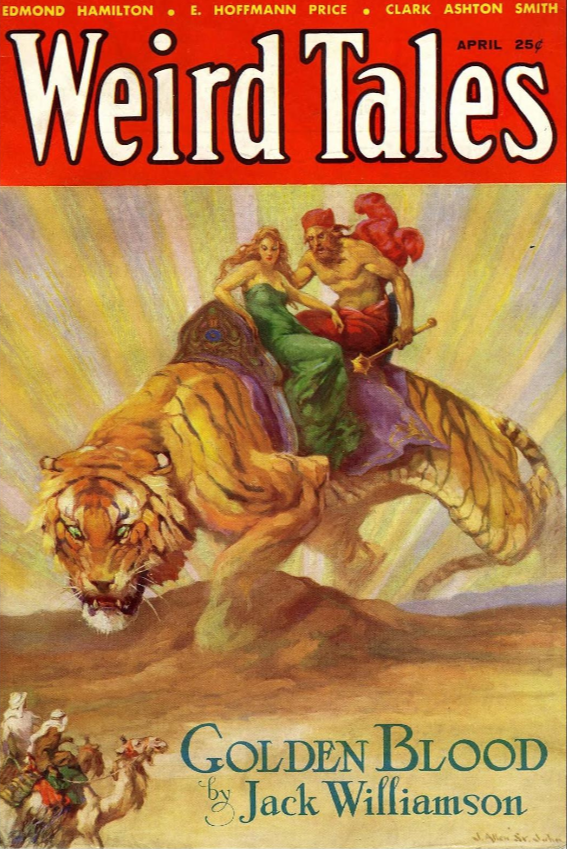


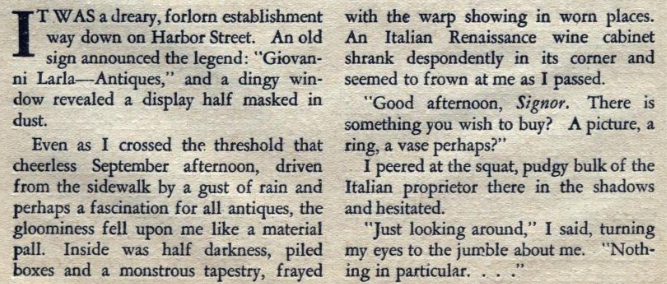


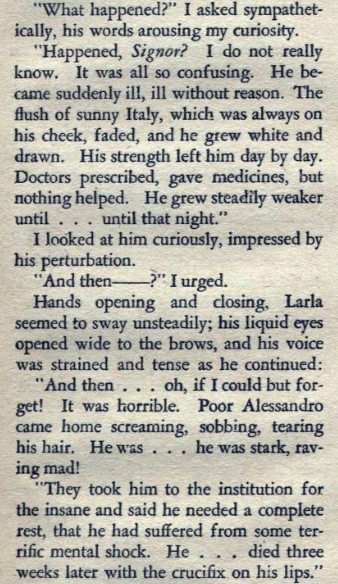


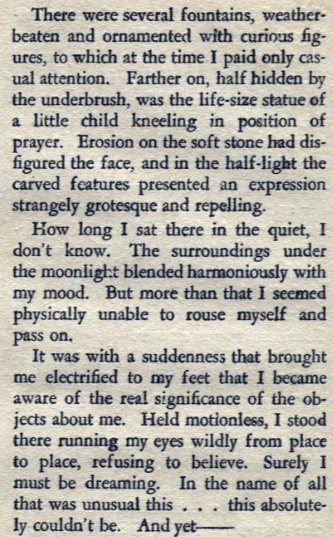
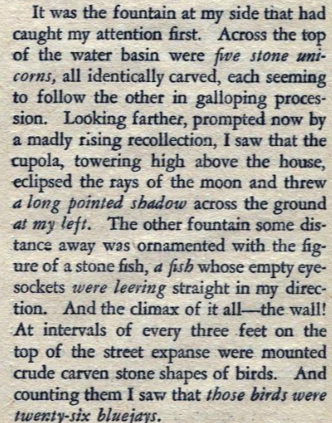

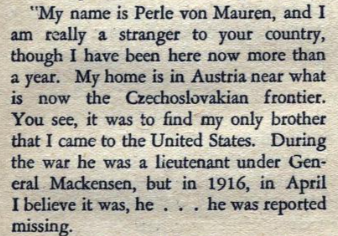


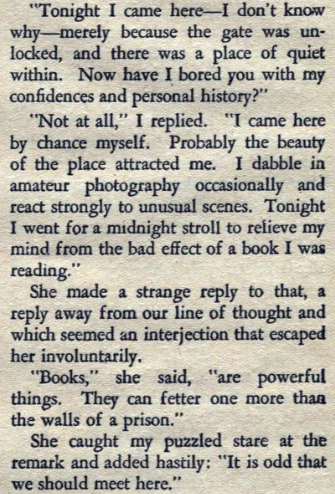
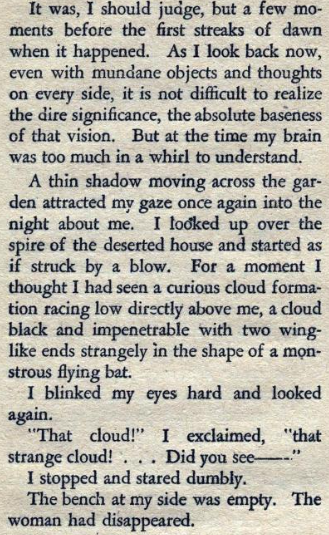

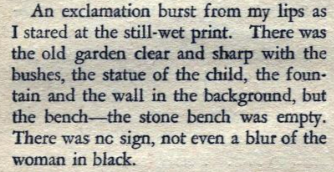
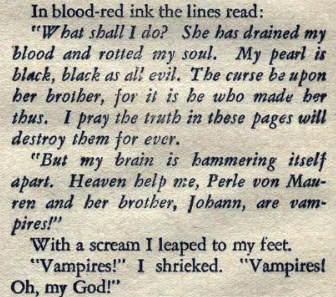


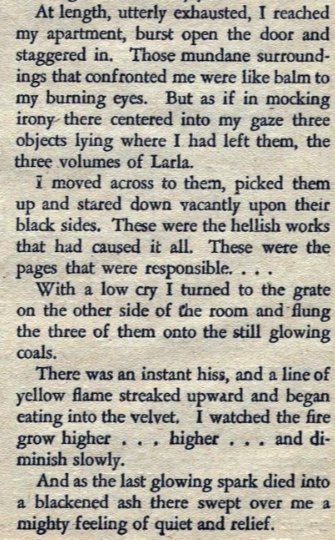
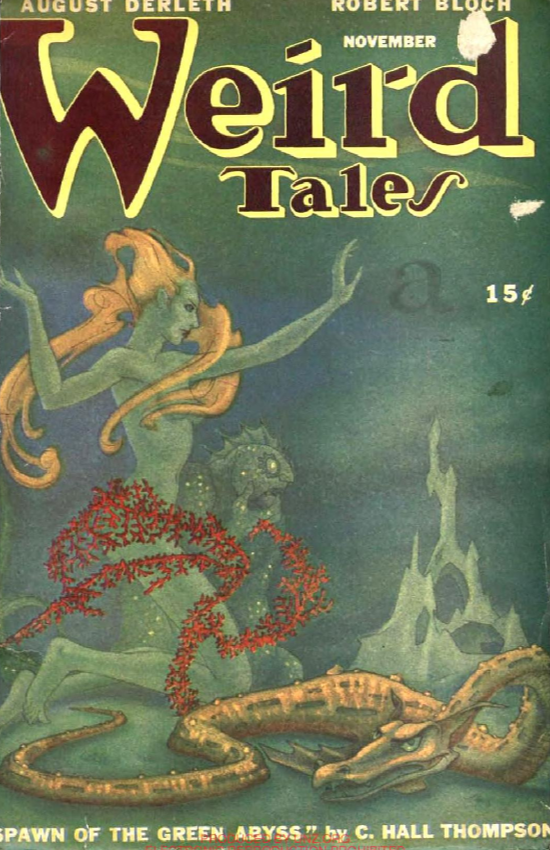









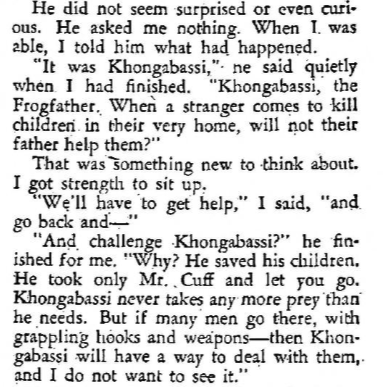
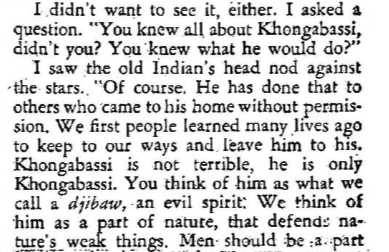

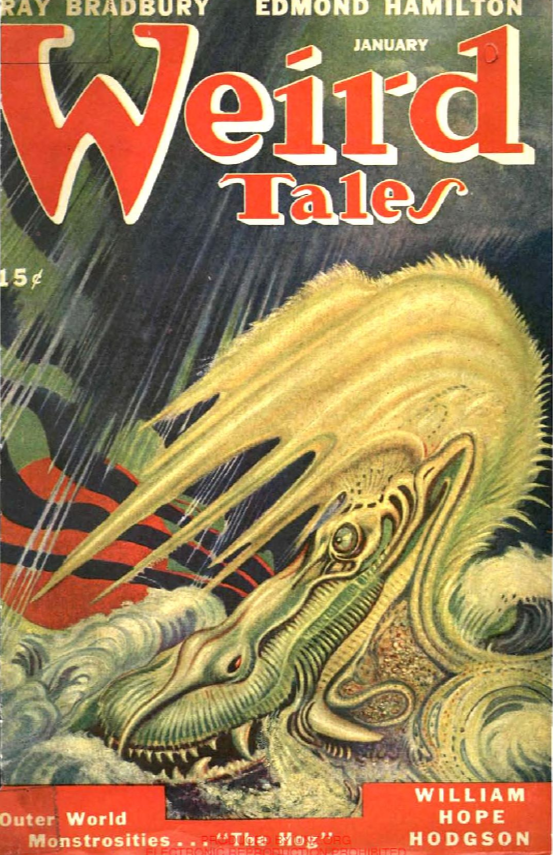
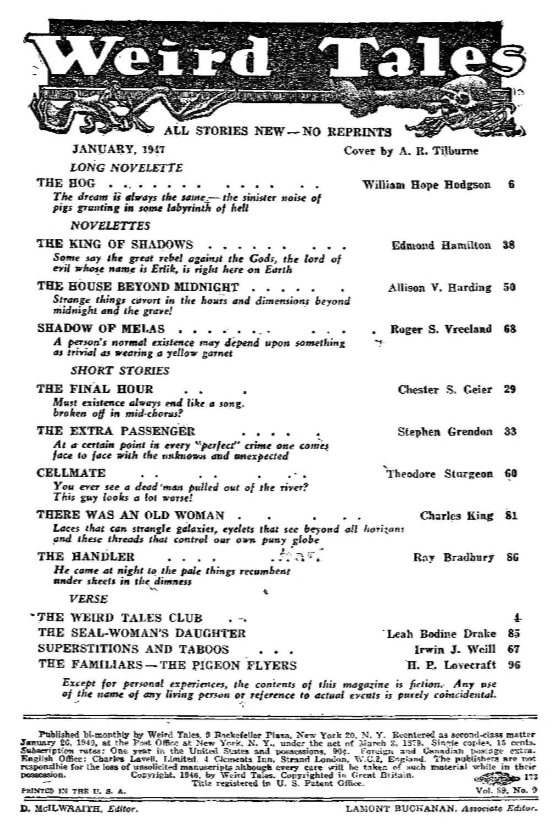
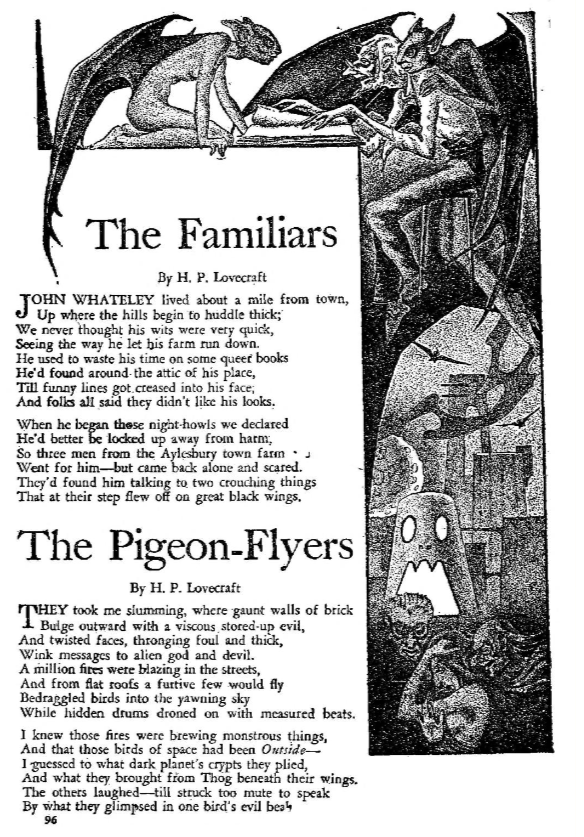


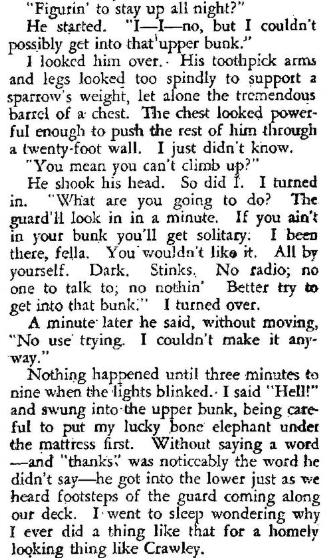

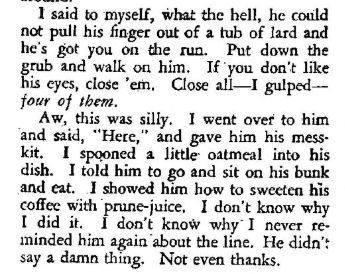


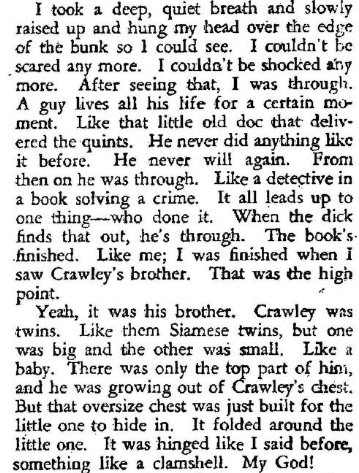


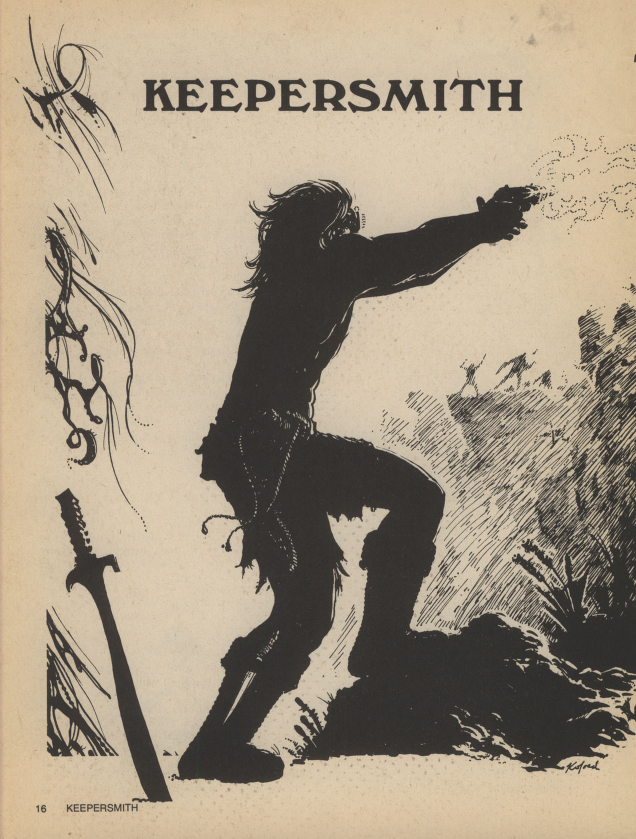



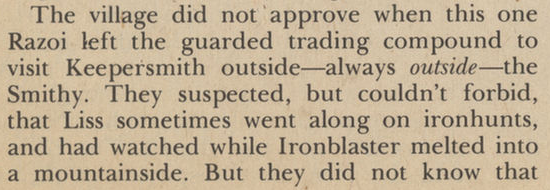
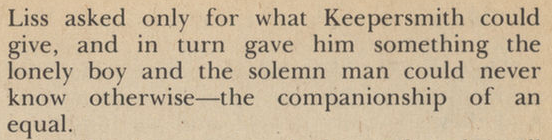


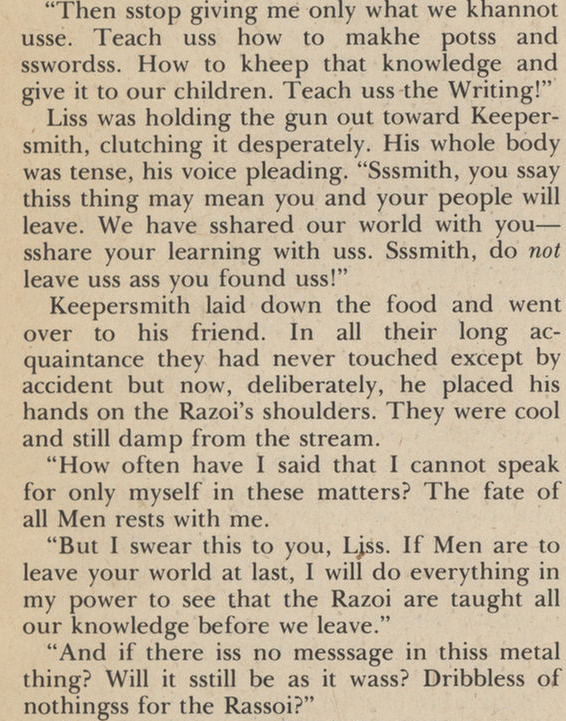

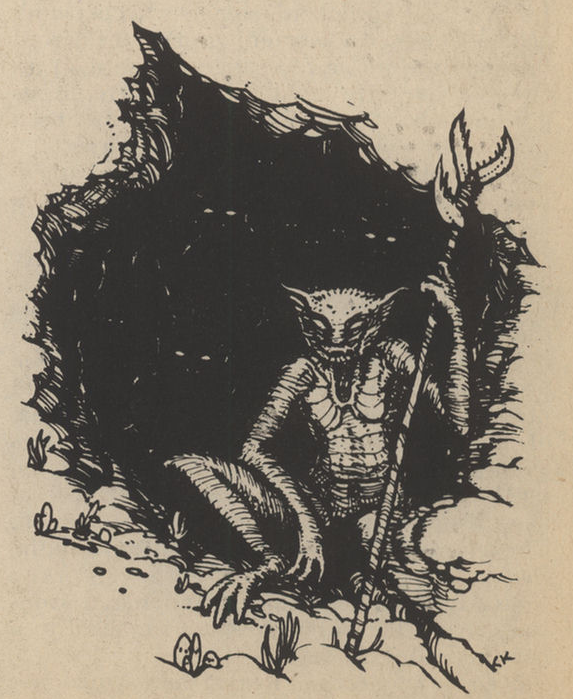


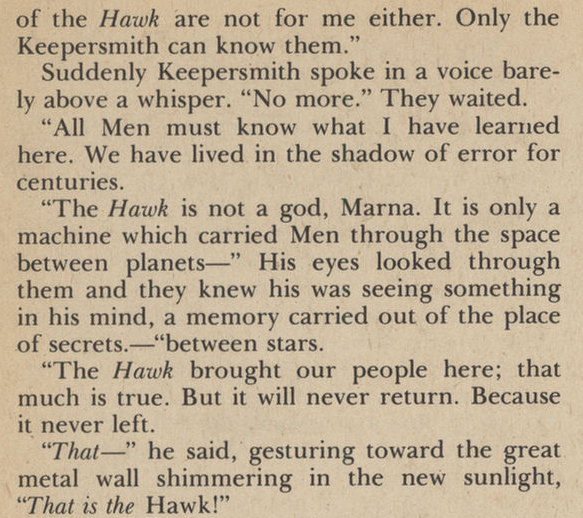
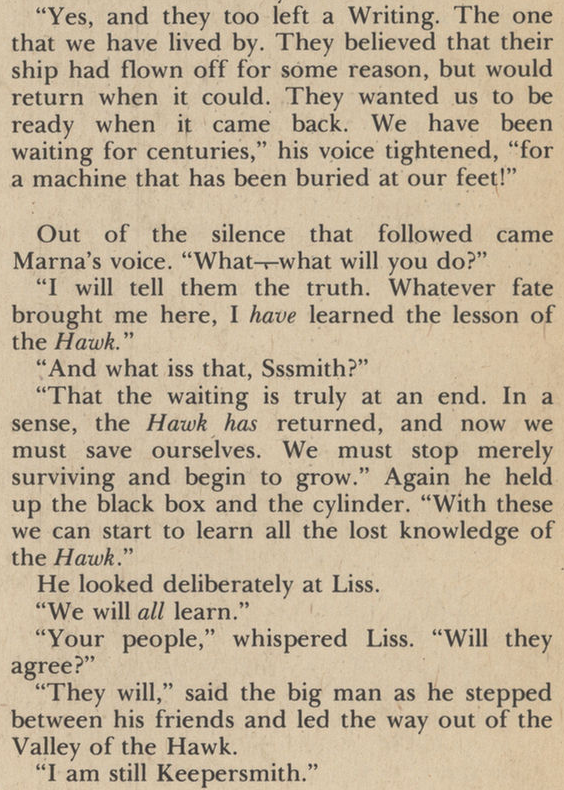

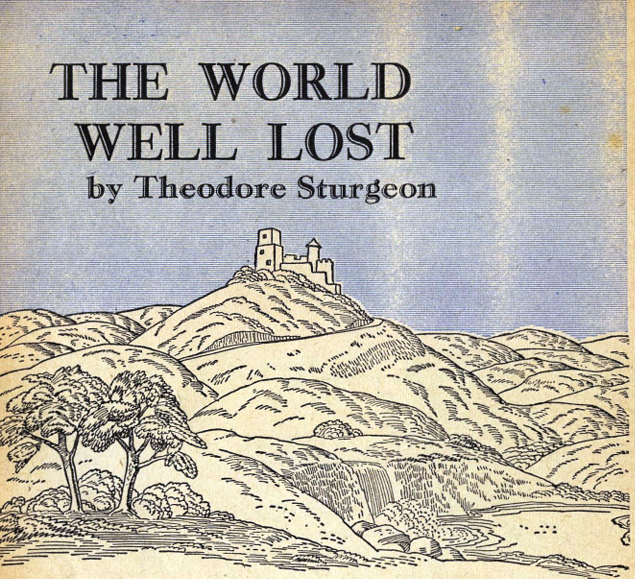
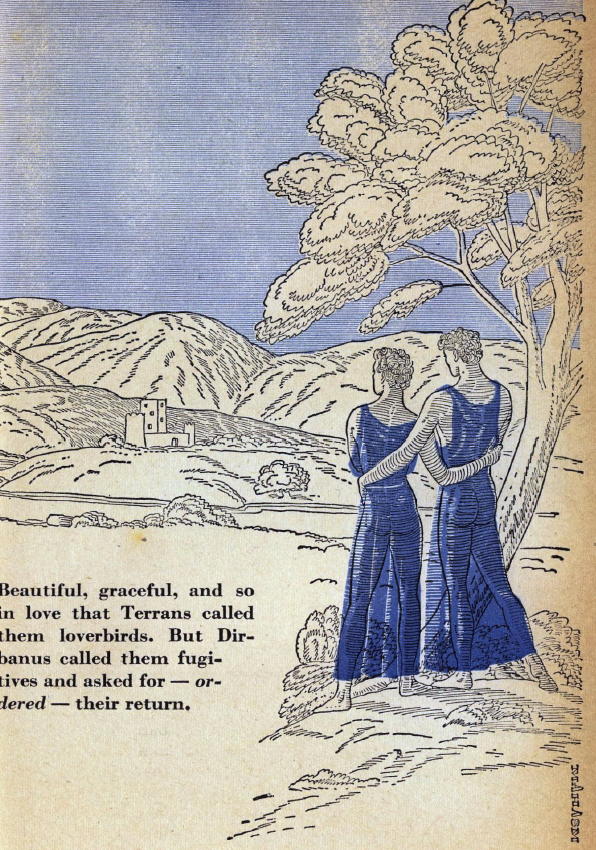


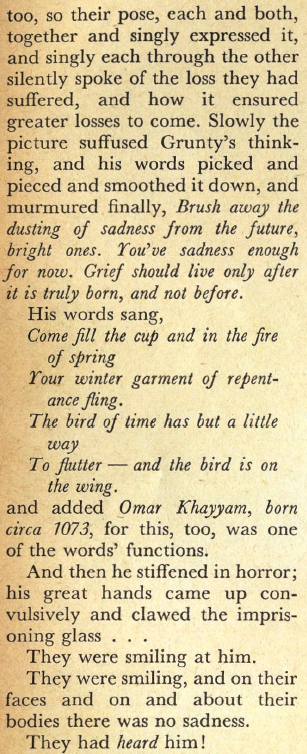
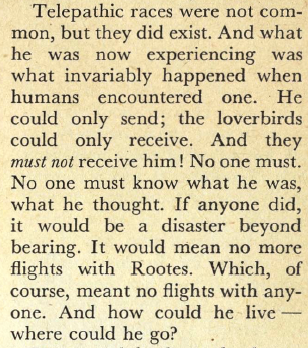




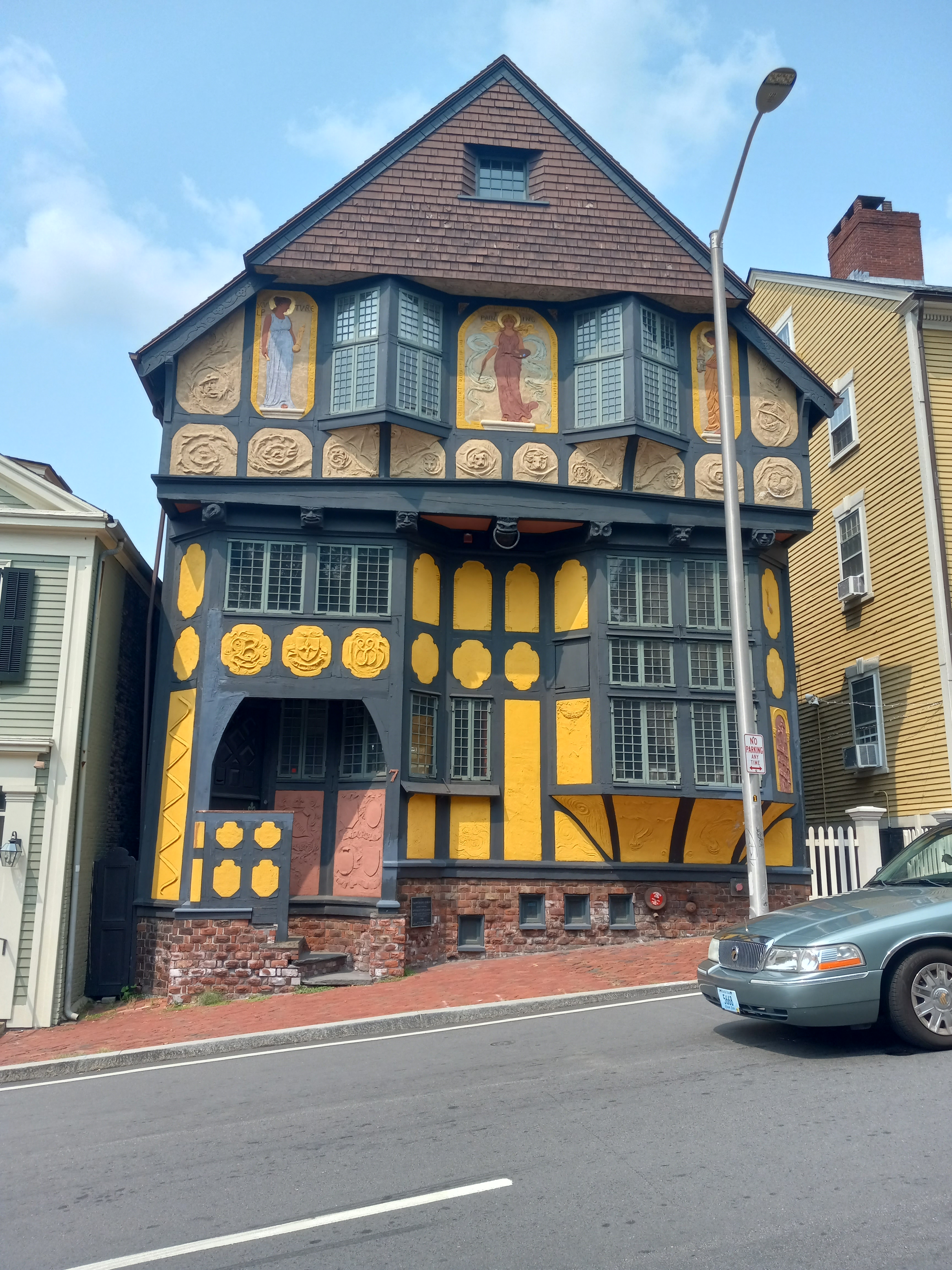
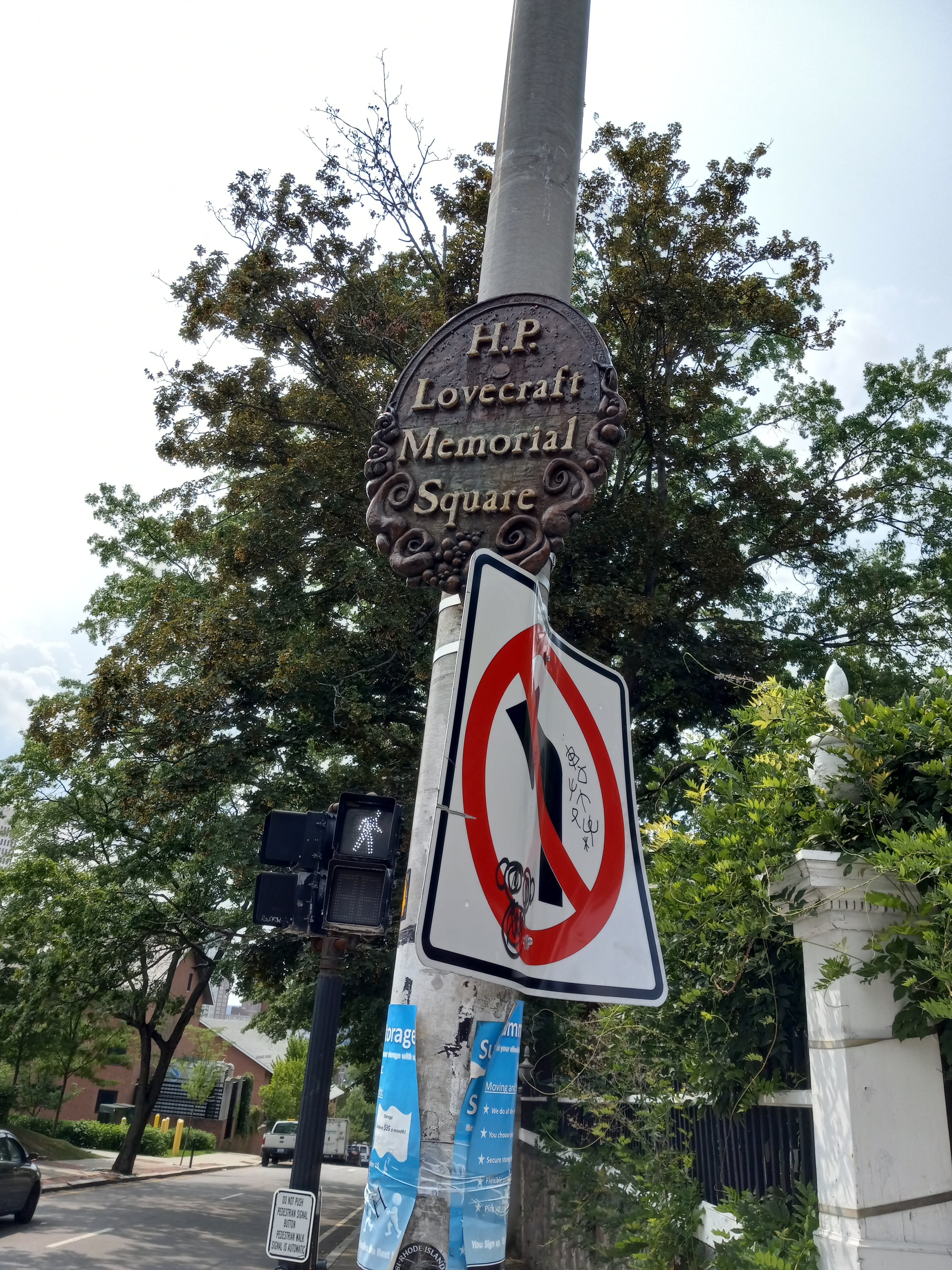
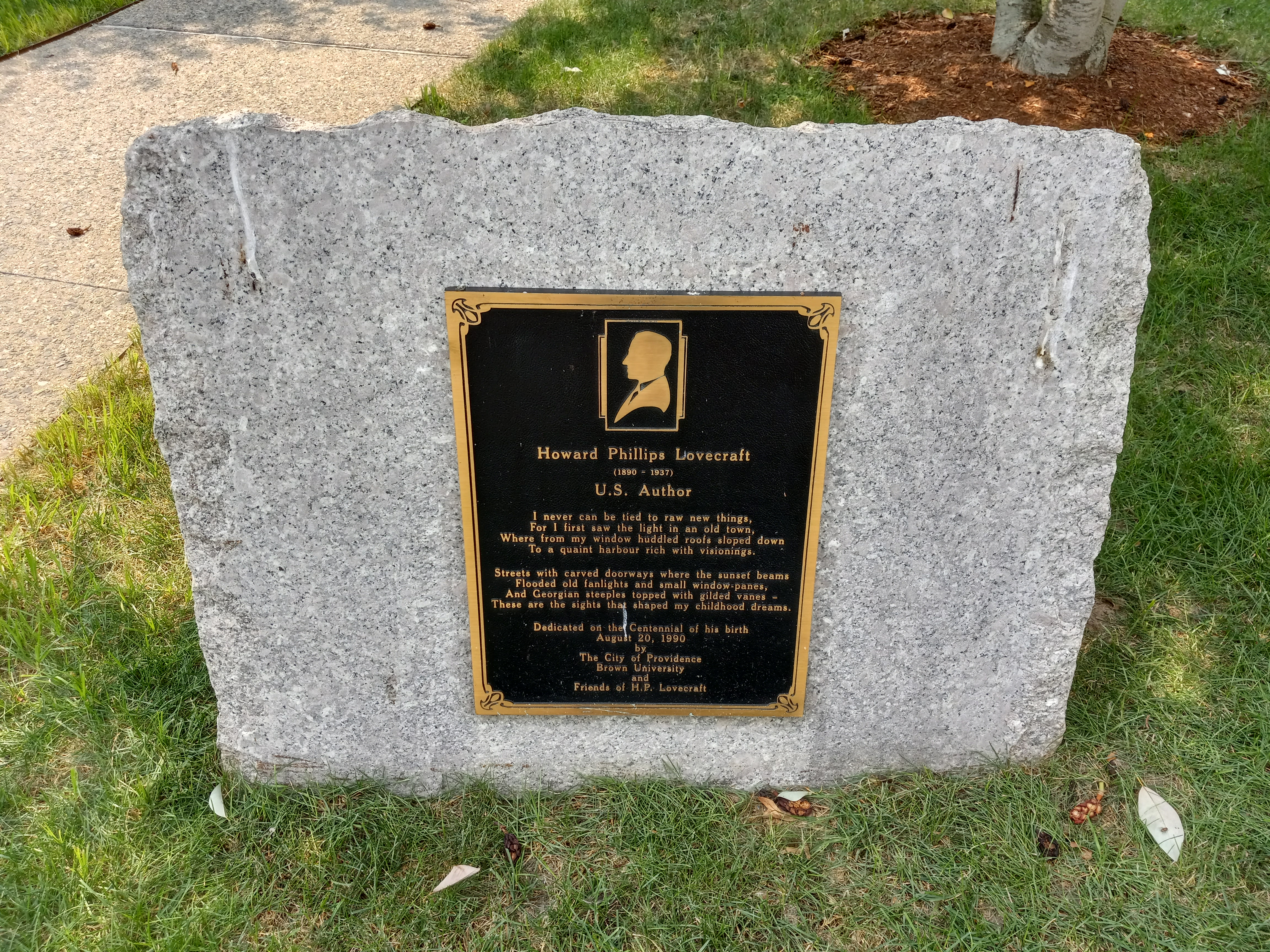
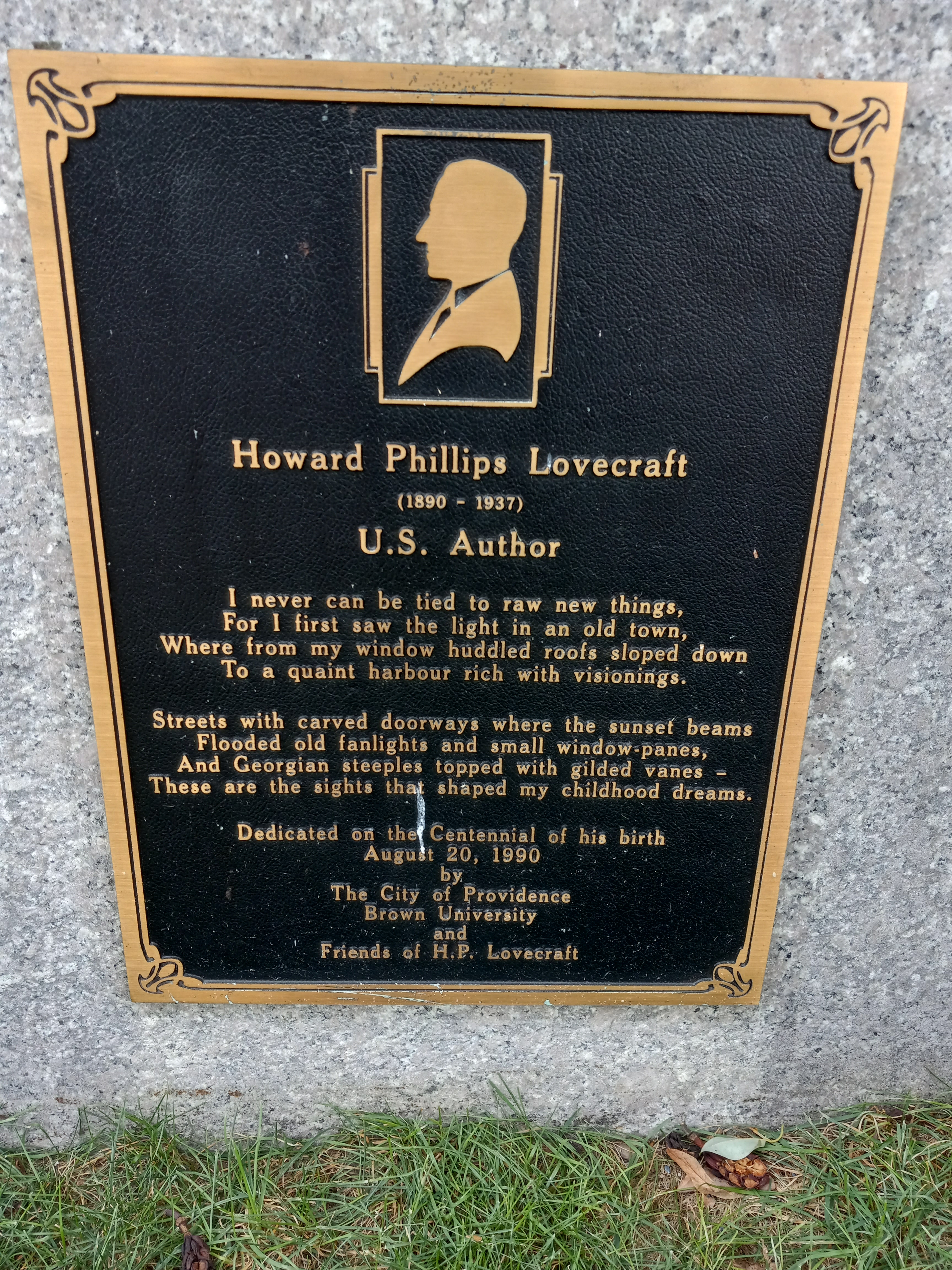

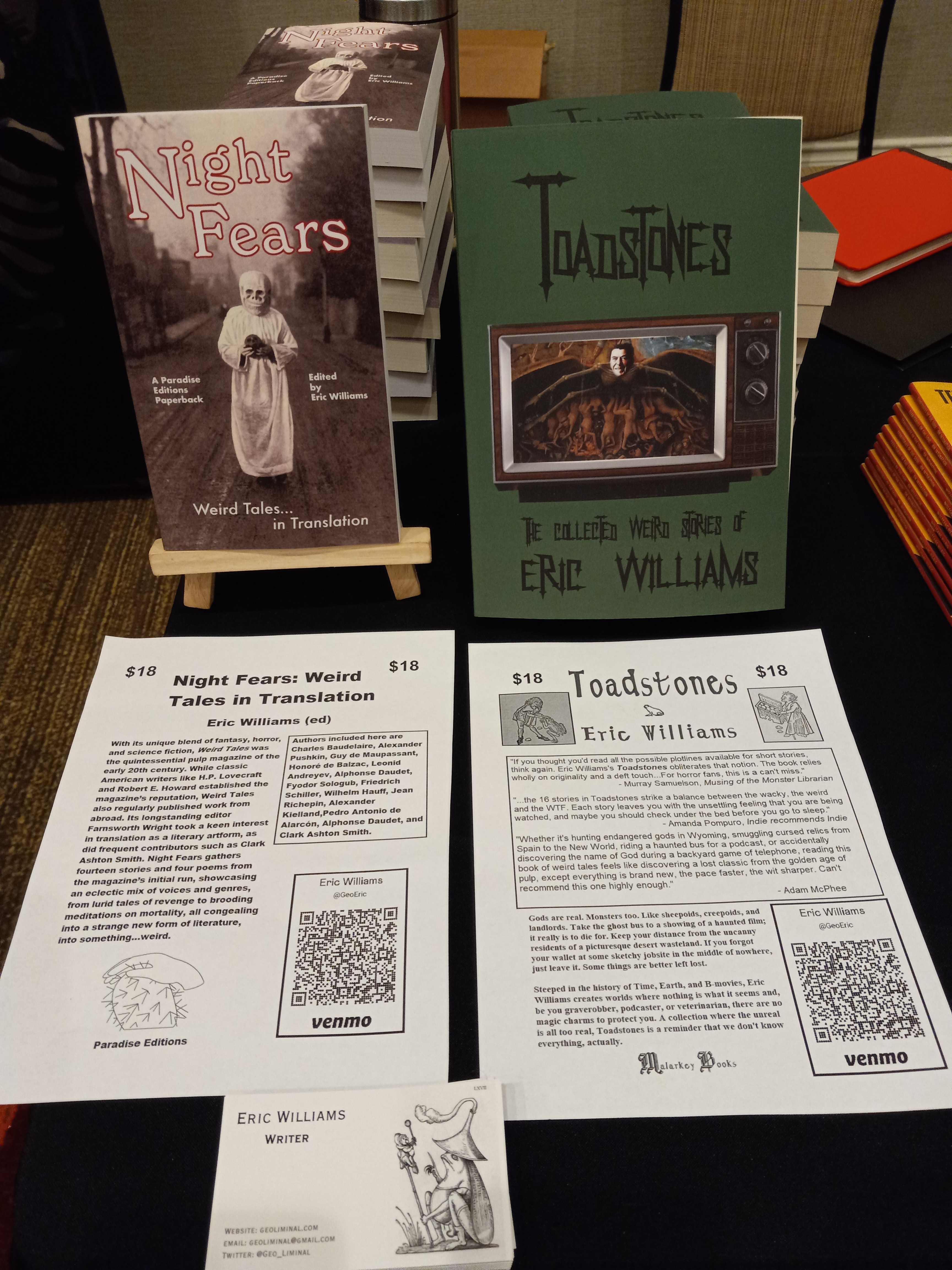












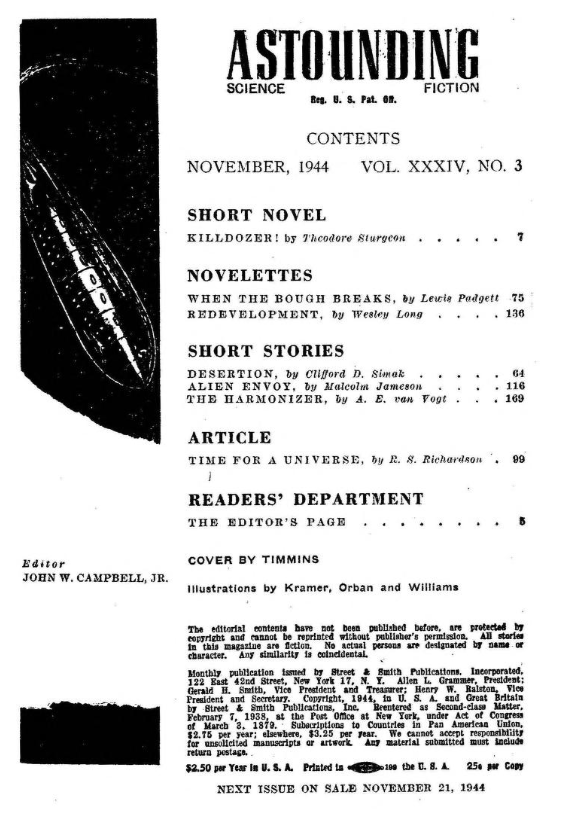

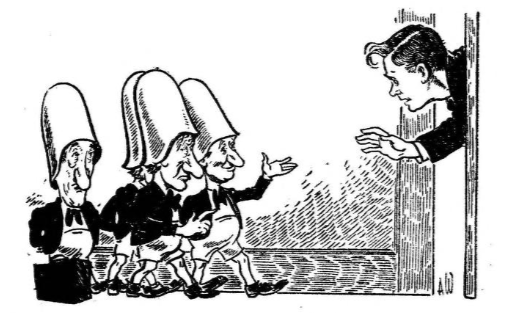
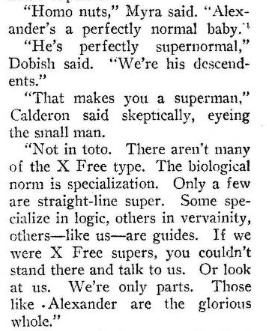
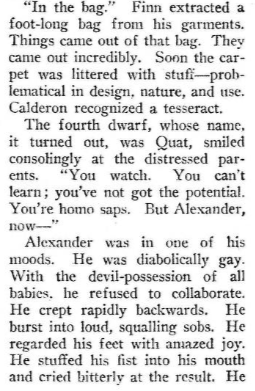

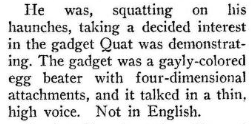
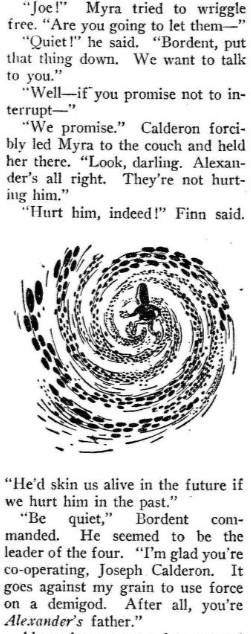

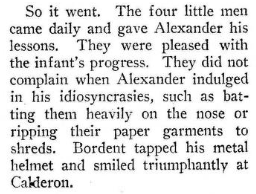


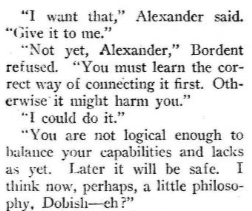
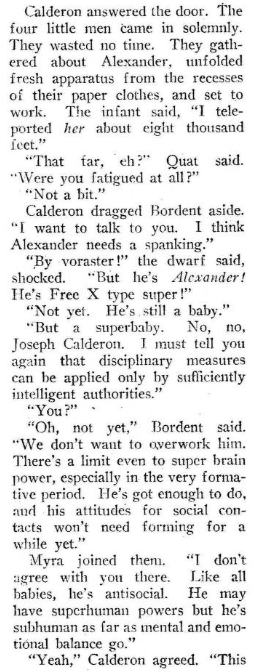
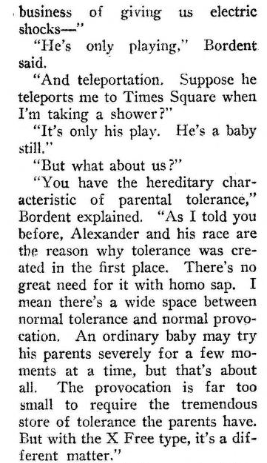

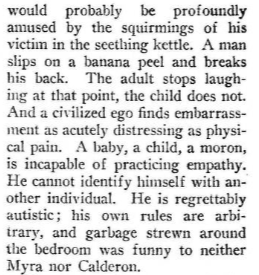
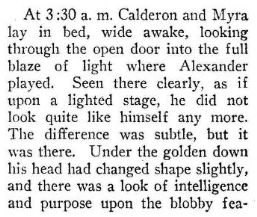

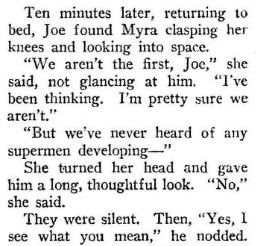
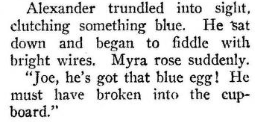
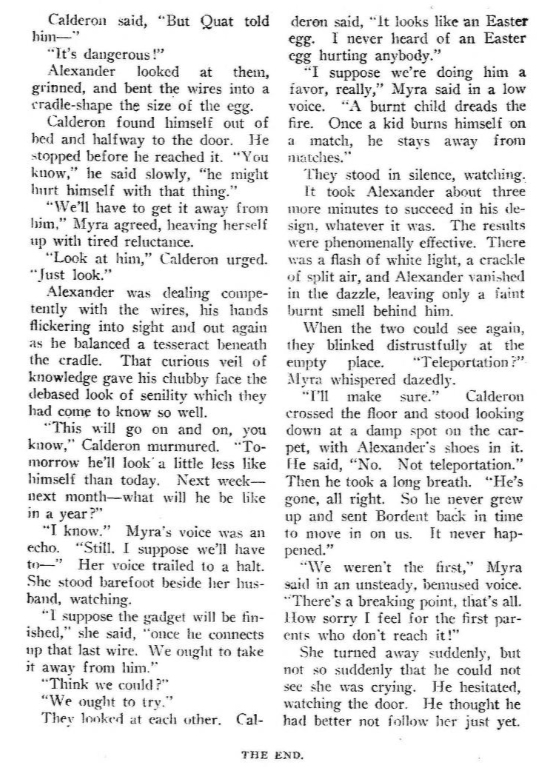
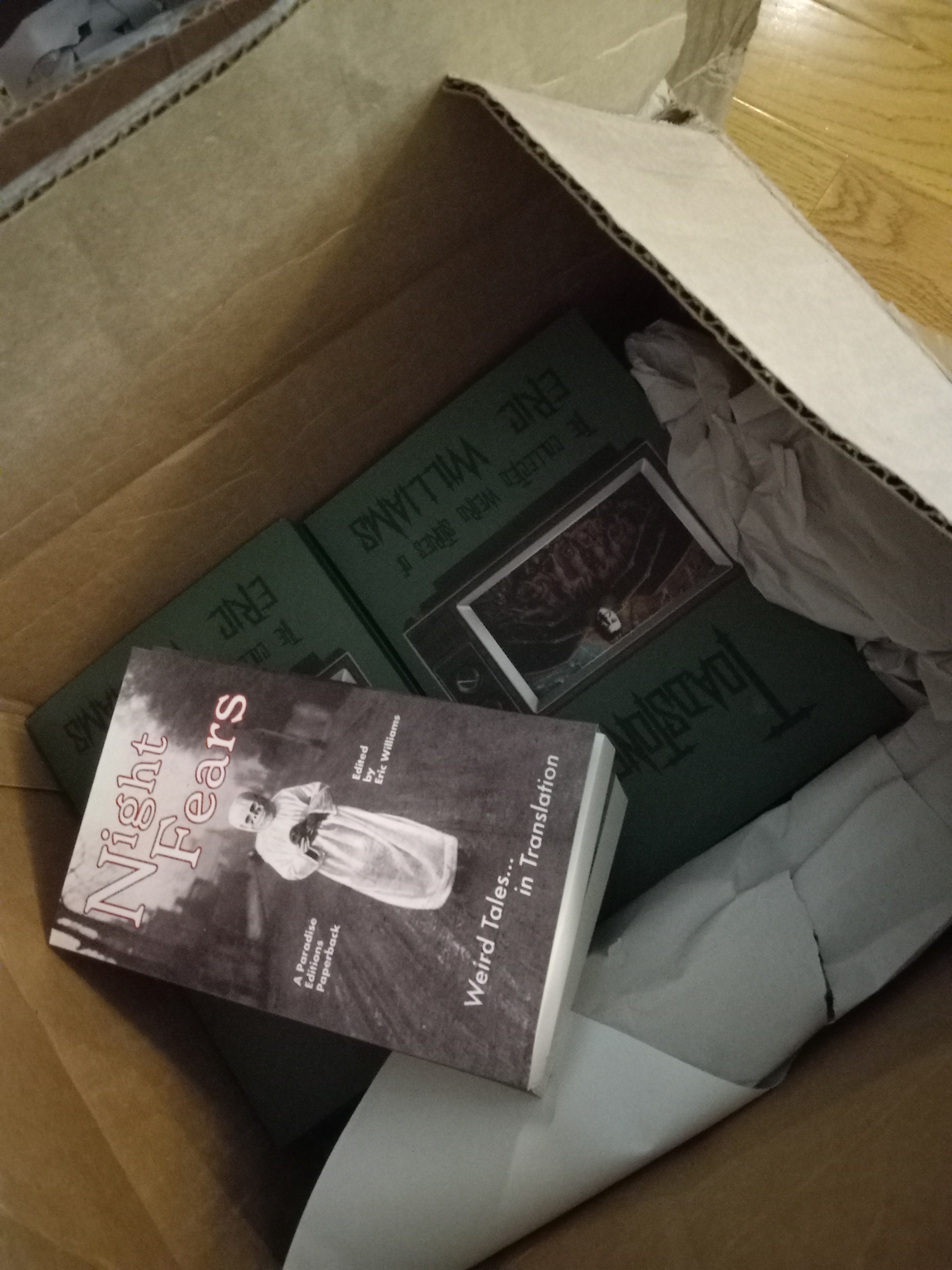
 Eric Williams