We’re in the home stretch for Hallowe’en now, so lets try and get some good chilling pulp fiction discussions going on, shall we? It’s nice here in Austin now, too – we finally got some rain, our first in like forty days, and in addition to filling up the rain tanks (we’ve got about 950 gallons of water storage now, which we put in right as the drought started, so it’s nice to finally have it full!) it has also gotten almost seasonable – low 70s as I write this, with overnight temps promising to hit crisp 60s and 50s. Not really what most people think of when we start talkin’ October country and all, but by Satan, I’ll take it!
The sudden shift to Fall(ish) weather and thoughts of The Season inspired the choice of stories today: it’s from the Mayor of October Country himself, Ray Bradbury, and his fun, mythopoetical story “The Scythe” from the July 1943 issue of Weird Tales!
Bradbury, of course, needs no introduction – a truly major figure in sci-fi, and he’s one of the rare genre guys it’s ok for your Very Serious Literary Types to praise, fer chrissake, someone who gets a pass for writing imaginative fiction because it’s got such heart and verve and style. And it’s all very justified; Bradbury is one of the greats (though Fahrenheit 451 sucks), and he’d be rightly numbered among the Titans for The MartianChronicles, easily one of the greatest short story collections in history, a true masterpiece. And, while he’s often remembered mostly as a sci-fi guy, he’s also got some serious Weird Fic chops too (I’d argue that’s why his sci-fi was so successful, actually; there’s a vital strain of weirdness, and all that implies, when he’s writing about Martians, for instance)!
In fact, Bradbury got his start in the pages of Weird Tales, writing something like 20 or 25 stories between 1942 and 1948, if I remember correctly. This is all post-Wright, of course, and I think Bradbury benefited from Dorothy McIllwraith’s tenure as Editor; his weird fic seems to fit nicely into her vision of the genre, I think, a slightly sentimental (though rarely sappy) atmosphere shot through with real glimmers of coal-black darkness. And, of course, Bradbury’s first collection, Dark Carnival, was published by August Derleth’s Arkham House in 1947. That’s what you call a serious Weird pedigree!
(As an aside, if you’re interested in a great and extremely granular biography of ol’ Ray, I’d highly recommend John Eller’s THREE VOLUME biography from University of Illinois Press, Becoming Ray Bradbury, Ray Bradbury Unbound, and Bradbury Beyond Apollo. They’re great, very interesting and with considerable attention to the details of his papers, correspondence, and archives, as well as putting his work and life in important historical contexts. I will say, though, that you should be prepared for Bradbury’s extremely bad politics, particularly later in life – he was a Reagan fan and was extremely anti-affirmative action, basically your bog standard boot-straps-and-elbow-grease small gov’t libertarian, not as ugly or as bad as, say Niven, but still dumb as hell! It’s shocking, until you start thinking about his deep nostalgia for midwestern childhood. Oh well!)
Anyway, let’s look at this issues cover and ToC:
A quiet, contemplative cover for this July 1943 issue, particularly interesting given the date that this issue came out. The cover is for the Bedford-Jones story, “His Last Appearance,” and it posits an old soldier returning to the Pacific theater after the end of World War II. Of course, in 1943, WWII was still raging, with the siege of Stalingrad finally coming to an end, the beginning of the long brutal retreat of the Nazis westward, and the start of Allied plans for the invasion of Europe at the Casablanca conference. For Americans, WWII didn’t start until the Japanese bombing of Pearl Harbor in Dec 1941, and the war in the Pacific had been a long and brutal one in ’42, with the Fall of Manila and rapid Japanese advances in a number of places, including the Aleutians. But here we are, in 1943, with a story that is already imagining the war over!
It’s interesting to see the way the war was being interrogated in the public sphere and within the pages of the speculative fiction magazines at the time, imagining an end to the war and return to a more “normal” status quo in the near future. What’s missing from all these stories, of course, are the horrific specificities of future history, death camps and the Holocaust, V2 rockets and the Atomic Bomb, and the global detente of the Cold War. It makes for fascinating reading, glimpses into how people are grappling with such dramatic and profound events and changes. The Pulps give you a chance to really see the world and the people at very specific times, and they’re just fascinating!
As for the ToC:
The big story here is Bloch’s “Yours Truly – Jack the Ripper,” probably one of his best and most famous stories. Bloch by this point in his career has basically exorcised Lovecraft from his work, having found his own style, tone, and topics of interest outside of the shadow of the Old Gent. Bloch’s “Ripperverse” work is an important part in his career, both because it laid the groundwork for his intensely psychological interest in murderers/serial killers, but also because it would lead his to write “A Toy for Juliette” in Harlan Ellison’s epochal anthology Dangerous Visions; so taken with the story was Ellison that he would write a sequel, “The Prowler in the City at the Edge of the World,” which he put in right after Bloch’s story in the collection. Anyway, it’s fun to see the beginnings of all that right here in Weird Tales!
Enough jibber-jabber, on to our story today, “The Scythe” by Ray Bradbury!
Look, the art in WT at this time…it ain’t what it used to be, okay? This is a perfectly evocative image, a little rough maybe, but it gets the job done I suppose. Still, makes you dream of the days of Finlay, don’t it? Also, I’ll just point out, that this is yet another example of the art giving too much away from the story; combined with the little blurb thing at the top of the pic, you definitely start this story with far too much information, in my opinion. Oh well! We’re used to it by now, but it’s still annoying as hell!
There’s no denying it – Bradbury knows what he’s doing. Great sudden in medias res opening here, and the short, percussive first sentence (“Quite suddenly there was no more road.”) is nigh on a perfect way to start the story, evocative and sharp and perfect, and a great lonely image. A road winding on through farmland, leading past trees and the stones and then a farmhouse and a wheatfield and then, as if it’s job were done, the road dies. Great, great stuff!
We’re introduced to some characters who might’ve escaped from the “Grapes of Wrath,” or maybe they’re just off-broad versions. “Tom Joerg” seems awfully close to “Tom Joad,” doesn’t it? And, like their Oakie comrades in Steinbeck’s book, they’re having a rough time of it, having followed this road that goes nowhere and running out of gas. A long-suffering wife and some hungry kids – that’s what you call prairie pathos, man.
What’s also interesting is that section there in the middle, where Tom starts looking at his hands. The writing is great of course (“farm blown out from under them” is a gem), but it also very specifically evokes the image of the dust bowl, doesn’t it? Now, while the droughts and soil loss and economic collapses continued into the 40s, it was even then very strongly associated with the 30s. Bradbury is priming us for the fact that, while this story was published in ’43, it probably took place earlier. The timeline is very important to this story, indeed is one of it’s major points, so we’re being prepped here. A neat bit of mechanical work, is my point, that Bradbury is doing here.
Starved, lost, and without anything else to do, Molly suggests to Tom that he head on up to the little farmhouse and see if they couldn’t spare a bite for the travelers. Tom swallows his pride and stumps on up to the house:
The knocking three times has some kind of mystical resonances, doesn’t it? There’s the trifold symmetry of time, Past-Present-Future, there, but there’s also a sense of “asking three times” being the amount that signifies contractual obligation in magical relationships. Anyway, Tom enters the house and his spidey-senses start tingling immediately. Sure enough, he finds a dead body, an old man clutching a single blade of ripe wheat and a scythe leaning against the wall. Weird as that is, Tom finds that the old man apparently anticipated his death, and left behind what amounts to a will:
A lot here! First, and of most immediate importance, is the fact that the Joerg’s are now landowners – the old man has bequeathed the house and land to whoever has found him. What would give me pause, of course, is the next bit, which comes off as a little weird: take the farm AND THE TASK ORDAINED THERETO, and take ’em freely and unquestioningly. That’s a magical compact right there, a binding of Joerg to the land and some unspecified job that has to be done.
Also, we get a date here – April 1939. Note it!
Tom seems a bit spooked, but he and Molly quickly accept this lucky twist of fate. They take the farm as offered, and plan to start living the good life there in the middle of nowhere.
Not quite sure what the economic benefit of growing a fast-dying/fast-sprouting variety of wheat is! Also, it’s planted on a vast scale, and it seems to ripen in weird, localized clusters or zones. But he seems driven to cut it!
It’s strange, and it makes me wonder how exactly the farm is supporting this family, but after a while Tom decides that this preternatural wheat can go fuck itself, and he decides to stop cutting it. How’s that work out for him, you ask? Well:
He took the farm, and with it the APPOINTED TASK which, apparently, is to cut the weird wheat, day in and day out, unceasingly. Or else! The details of the task elude him, save for the necessity of it, the necessity of cutting the grain down when and where it is ripe in this strange stretch of field, not harvesting, not tilling, not planting, just cutting it down as it comes up, over and over again, letting it sprout and grow where and when it does. Extremely strange and mythic, isn’t it? And then, when he’s harvesting, he suddenly has a very strange, very mysterious reveleation:
Great writing, the sudden vertiginous sense of disorder and confusion that Tom feels is very ably conveyed to the reader – what is going on? Why’s he freaking out now? Tom runs into the house, half-panicked, but eventually he can get the words out to Molly:
Pretty spectacularly weird isn’t it – he’s literally a grim reaper, ending a thousand lives every time he cuts a single stalk of wheat in that uncanny field. It seems like maybe his exposure to the work has, slowly, given him insight into its nature, or maybe the fact that he had some relationship to one of the lives he just cut down has triggered his illumination, but it doesn’t matter – Molly thinks he’s nuts, and Tom knows he’s not. Molly tells him to shut up, that they’ve got a good thing going with this farm (I guess there must be other food crops, and a cow or two, so that’s how they’re eating?). And she reads the Bible at him all week, I guess trying to get him to settling down, until of course a telegram arrives letting Tom know his Mom DID die, on the very day that he had his wheat-based freak out.
Tom wants to leave, but Molly is made of sterner stuff. She shoots his California plan down and tells him that by God they’re staying right there, where they’ve got a home and food and future! And, realistically, what can Tom do – we (and he) must know that he’s made the deal, he’s accepted the job, and the job HAS to be done.
With a certain mid-western pragmatism, Tom begins to accept the inevitability of his task. He communes with the grave of his predecessor and contemplates the long-line of harvesters that must’ve come before him, down to prehistory. (As and aside, the idea of the Cro-Magnon harvester is funny and strange – so like, before agriculture there were cavemen forced to chop down the Magic Sheaves of Life and Death? It’s an odd, incongruous image, but one we’ll just have to forgive Bradbury for).
Now we’re getting into the real interesting part of the story – there’s a little musing here about what Tom’s relation to the Work is. He’s not KILLING the people, not maliciously – he’s just doing a job, taking care of his family. An interesting bit of ethics to consider, maybe, though Tom abandons it when he has the brain flash that, if he could find his and his family’s wheat stalks, why, could they live forever? I’m sure this magical wheat never considered that loophole before!
No sooner thought than answered – Molly and his kids’ time HAS come, he HAS to cut them down…and he can’t! He decides to fight fate!
Over supper Molly asks some questions about the wheat, even suggesting that Tom oughta call in the Extension boys from the local Ag Dept to have a look – what the hell good is this weird wheat that rots immediately, anyway? Tom is horrified – what might the GOV’T do with the Grain of Life and Death, after all? It’s a neat little part of the story, another of those little asides that Bradbury raises and which run a chill up and down the ol’ spine as you regard them in the story. It’s fun! Of course Tom is having no part of it. Molly doesn’t think the Wheat of Fate is real, but Tom KNOWS it is.
Grim stuff, and Tom again tries to abandon the work, locking up the Scythe and choosing to ignore the wheat…but then Molly begins to suffer from a strange kind of lassitude, and his kids seem to whither and fade a bit too, afflicted with a kind of odd malaise. He doesn’t know what will happen to them, or to the countless thousands he has refused to reap, but he’s going to wait and see…
…and of course he wakes in the middle of the night out in the field, with the scythe in his hand, being driven by a mad compulsion to DO THE JOB. He fights it, struggles mightily…
…and then the house fuckin’ blows up!
Horribly, Molly and Susie and Tom Junior AREN’T dead…they’re trapped behind horrible walls of flame a smoke between life and death, unresponsive, unaware, undying. It’s a horrible scene, and there’s some very fine writing here as Tom is forced to confront the implacable nature of Life and Death. He brings his family out onto the lawn, cold and sleeping beyond death, and realizes that he cannot abandon the task, that he cannot have a life anymore – he is the grim reaper.
Pretty horrible scene, isn’t it, the image of his family just out of sight screaming and dying as Tom, chained to the merciless scythe, cuts through the wheat in the night. Grim as hell!
There’s the significance of the date of the story coming around: 1939, and the beginning of the Second World War.
Is Tom *causing* it, do you think? Is he heedlessly cutting, maybe cutting more than he should, causing a horrible war and its aftermath out of his grief? Or is he simply, heedlessly, heeding the wheat, cutting madly because that is what has been Fated? It’s not clear, and that ambiguity is troubling and, of course, probably the point.
And as for Tom?
And that’s the end of “The Scythe” by Ray Bradbury!
Tom keeps on cutting – again, is he causing the accelerating deaths, the horror of modern warfare and conflict and imperialism and transnational capitalism, or is he merely the instrument of it, his feverish monomania and ceaseless toil a product of OUR horrible times?
It’s a nice little story, I think, and it really captures a very pure strain of myth that Bradbury often mined in his work. It’s also an interesting time capsule, a writer watching the world around him ending and reflecting on it, what it meant to him and society. A good reminder of the power and possibility of pulp literature!
A quick note: I made a page where I’ll be able to chronologically list the pulp story dissection/free writing exercises I like to do, because it was getting impossible to either find or, in some case, even remember what stories I’d already done! So, anyway, you can see it here, with links to all the posts, or navigate to it in the menu bar over head! Neat, huh? Like livin’ in the future.
Trying to do these little free writing essay/dissections a bit more frequently because a) it is Hallowe’en season, after all, and b) it seems like we’re in another round of “social media death throes.” This time it’s over on Bluesky where the CEO appears to be following the Elon Musk playbook of going insane to protect the rights of fascists and TERF scum. It’s not like anyone reads blogs either (I know, I’ve got the stats for this little project right here), but we shan’t let that discourage us! So, with our hearts blazing and our eyes open, let us once again enter the mysterious, pathless wilderness that is the Pulps! And for today we have a fun (and interesting!) story: Robert Barbour Johnson’s homage to Lovecraft, “Far Below” from the 1939 June-July megaissue of Weird Tales!
Ol’ Bob Barbour Johnson seems to have been a bit of an odd duck. While a fairly prolific writer, particularly of circus tales later in life, his footprint in Weird Tales is small but deep, if that makes sense; I mean he didn’t actually write a lot for the magazine, publishing I think only six stories between ’35 – ’41, with a couple more weird stories published in other magazines later. But, despite that, readers apparently thought fairly highly of his writing, particularly of today’s story, “Far Below.” Depending on where you’re getting your info, it was either voted by the readers as the single best story published in Weird Tales OR editor Dorothy McIllwraith said it was the best story the magazine ever published.
Both statements are incorrect, although this is a good and fairly interesting story. But that kind of odd indeterminacy around Johnson seems to be fairly typical. For instance, he’s clearly a fan of Lovecraft (as we’ll see when we dive into the story today) but, with great grandiosity, Johnson says that Lovecraft wrote HIM a fan letter after reading Johnson’s 1935 story “Lead Soldiers.” It’s possible that this is true; Lovecraft was both a voluminous letter writer and the sort of person who would certainly praise work he thought good and interesting…but it just doesn’t feel correct, particularly because the story this “fan letter” is supposedly about doesn’t seem like the sort of thing Lovecraft would’ve liked! “Lead Soldiers” is about a tinpot fascist dictator whose delusions of grandeur are leading the world towards another World War, but he ends up getting killed by a bunch of toy soldiers. It’s VERY timely (then and now, sadly), EXTREMELY didactic, and BLUDGEONINGLY allegorical – not really the sort of work Lovecraft generally praised! It seems like this claim of a fan letter from Lovecraft comes out of some memoir/reminiscences type essays Johnson wrote later in life, and while I haven’t chased them down to read them in full, I gather that there’s a general Derlethian tone to them with respect to Johnson’s view of himself.
(As an aside, it appears there was a Joshi-edited-and-introduced collection of Johnson’s work that, in addition to the weird fiction, also included a few of these biographical essays. It was titled Far Below and Other Weird Stories and was published in 2021 by Weird House Press, though it’s out of print and seems like it must’ve been an extremely small run, since I can’t find a copy for sale anywhere. If you know about it or have one, hit me up!)
What is certainly true, however, is that Johnson thought a great deal of Lovecraft, and the story we’re going to be looking at today is, basically, an homage to the Old Gent and a spiritual sequel to his (great) story “Pickman’s Model,” as well as maybe the earliest example of the metafictional appearance of Lovecraft as a Lovecraftian character! But, before we can get to all that, let’s check out the cover and ToC of this big ass issue of Weird Tales!
An incredible cover by the inimitable Virgil Finlay, representing a cavalier of some sort exploring a mysterious and ghoul-ridden cavern. Absolute perfection, just a blast all around. No idea what story it’s supposed to be illustrative of, and it’s entirely possible Finlay only had the broadest of scenic outlines provided to him. But who cares! Let Finlay paint up whatever weird shit he wants, he’s one of the best to ever have graced the covers of the pulps with his talents!
ToC-wise, it’s a heavy-hitter, lots of Lovecraft and Howard on here, some CAS. We’re VERY late in the Farnsworth Wright run here, and the magazine is facing some challenges, but you can see they’re still putting up the good fight here, and there’s some fun weirdness in this big ol’ issue. Also, it’s always worthy pointing out the magazine’s commitment to poetry – it’s such a huge part of weird fiction’s history and lineage, and it’s nice that the premier magazine (that, I would argue, actually created the genre by doing the necessary boundary definition work) both recognized and encouraged poetical weirdness within its pages!
Now, on to the story!
Absolutely incredible art from the great Harold DeLay here – those old school NYPD uniforms, on a weird little rail cart, emptying a machine gun into a horde of hellish C.H.U.D.s…truly a classic! Excellent little atmospheric touches here too; the smoke, the beam of light, the expressions, and the way the horrible ghoulish horde recedes into the background of the tunnel. Just incredible, action-packed stuff, immediately eye-catching and exactly the sort of thing that gets people to actually sit down and read the story! DeLay was a great artist, and it shows. He did some excellent Conan illustrations for Weird Tales, including some for “Red Nails,” and would go on to a career in comics, something he’s obviously well suited for, given the compact and propulsive nature of his artwork.
The little italicized summary under the title is evocative and tells you everything you know, nice and succinct without giving anything away from the story. That, and the spoiler-free art, is a nice surprise!
A great, powerful start to the story; the reader is immediately drawn into whatever the hell is happening, and the quick transition from the “roar and the howl” into the revelation that the “thing” is a subway train is really nicely executed. Johnson is a good writer, and there’s some real craft in this story!
It is also, of course, a story of its time, which is why the next part has some eye-rolling White Nonsense™ in it:
Johnson wants to highlight the big, heterogeneous nature of New York with a tableau of society, specifically calling out the presence of the minorities in the subway car to give us a kind of population sample that is (unknowingly) under threat in this story. It’s cringe-worthy language, of course, and the description of the two black people as “grinning” is particularly unpleasant, an image straight out of minstrel show. It’s something you have to confront in these older stories, but I think a modern reader, acknowledging the racism, can then focus on the narrative function of the scene like we just discussed: the way Johnson is giving us a thumbnail sketch of the civilian population of NYC, dull businessmen, smoochin’ folks, and a substantial proportion of non-WASPs. Very urban and very modern subway commuters!
The medias res beginning opens up and we realize we’re in some kind of little room, where our narrator is hanging out with someone who, apparently, knows the subway system in detail. We learn that the room is actually some kind of command center, with state-of-the-art ultra-modern technology that lets them monitor the passage of the subway cars:
The Mayor Walker here is a real person, good ol’ Jimmy Walker, the mayor of New York City from 1926 to his resignation in disgrace (and at the behest of FDR) in ’36. He had been a Tammany Hall boy, and become a sort of poster child for bribery and corruption at the time; Weird Tales readers, even those not from NYC, would absolutely have recognized the name, as well as the context of his getting this super expensive and super complex monitoring system installed in the subway as he was resigning. It’s an interesting historical, but it functions in the story to really GROUND us in a very specific time and place – this is no Lovecraft country invented landscape, or even a quasi-mythic NYC. This is New York City, 1939, exactly as you know it; it’s an important part of the power of the story, this very precise, very real grounding.
It also offers a convenient date for the Subway Expert to use to explode the ridiculous conception of just how long whatever it is they’re talking about has been going on:
So we get a sense that there’s something old and frightful going on, and that there’s a concerted, directed conspiracy to keep it under wraps because the truth is so terrible, so horrible, that it would destroy civilization (or at least NYC) to know what was happening. The evocation of Chateau-Thierry and Verdun, famously bloody battlefields in WWI, is interesting; this story is a sequel of sorts to Lovecraft’s own “Pickman’s Model,” and in it the narrator mentions how he’d seen some rough stuff in France, but even that hadn’t been enough to prepare him for the horror he encountered (in the story). Here’s Johnson making sure to hit that exact same point – the horrors of modern, mechanized warfare are nothing to the horror down in these tunnels, AND it’s something with a long, deep history.
An interesting meditation from the Subway Expert on what it means to be in contact with Horror, day in and day out, and the ways the mind shifts and adapts to survive.
The story shifts into a multiple-page long monolog from the Subway Expert, another stylistic choice in imitation (or homage) of Lovecraft’s “Pickman’s Model,” which is entirely told as the first person dialog of a character. It’s a very effective narrative trick because in addition to letting the writer give a LOT of exposition very naturally, it also anchors the reader in the very personal, very visceral experiences of the view point character, something that can only help a horror story.
We learn that the Horrible Things that our Subway Expert has been tasked with fighting are seemingly restricted to a very small segment of the subway system, for reasons unknown. This is lucky, because its evident that successful containment of this threat is costly and complicated – there’re a bunch of militarized police stationed down here, with multiple command-and-control centers spaced along the line, and lots of careful, attentive monitoring for signs of “Them!” And it takes it’s toll on these members of the NYPD’s “Special Detail:”
Grim stuff indeed, both from the perspective of people in danger of being transformed by the work of combatting these horrors, as well as from the obvious extrajudiciality of the whole apparatus! We learn that these subway-patrollin’ Special Detail Boys are paid handsomely for their work, and that why they are *technically* part of the NYPD, and wear the uniform, they are outside of the hierarchy, free from usual discipline, and apparently answerable only to themselves. Wild, fascist shit! We also get a little bit more about out interlocuter here:
So our guy used to be a Professor who worked at the AMNH, a specialist in gorillas. He mentions that he’d been on Carl Akeley’s first African expedition when he was recruited for this subway hell job. Incidentally, although the “Akeley” name would seem to be another example of Lovecraftian hat-tipping (Henry Akeley was the rural hermit menaced by the Mi-Go in “The Whisperer in Darkness”), Carl Akeley was a real guy, a hugely important figure in museum display technology and taxidermy, perfecting and advocating a method of “life-like” presentation of specimens for museums; the Hall of African Mammals at the AMNH is named after him. Akeley’s first professional visit to Africa was in 1896, but since the NYC subway didn’t open until 1904, I reckon Craig here is referring to Akeley’s first expedition for the AMNH, which would be around 1921 or so. Incidentally, that trip was a turning point for Akeley, who had undertaken it as part of an attempt to learn more about LIVING gorillas and determine whether it was “okay” to kill and stuff them for museums back home – he came to the conclusion that it was not, and was instrumental in starting one of the first Gorilla preserves in Africa.
ANYWAY our guy Craig gets recruited by Delta Green the NYPD Special Detail because he’s an expert in comparative anatomy. He dissects a specimen of the Things (losing 1d10 SAN, presumably), and submits a report detailing the mad truth of the thing:
It turns out that much of what he’d discovered was already known, or at least suspected, by the shadowy cabal of the NYC Transit Authority or whoever it is; they had extensive reports about the subway accident, showing that it was a deliberate, planned attack by horrible anthropophagus mole-men…which sounds familiar, doesn’t it?
That’s from Lovecraft’s “Pickman’s Model” from 1927, and yeah, sure, it’s a subway PLATFORM in Boston, but it’s very clearly the inspiring image for this story!
The “accident” as described by Craig is pretty gruesome – men, women, children, all getting munched on in the dark. It’s some grisly shit! Seems like something that’d be difficult to cover up, doesn’t it?
More brutal authoritarian actions by the Special Detail of the NYPD! It’s wild stuff!
Craig goes into the history of their anti-ghoul actions, and how hard the work was at first, before all the modern technology and approaches had been figured out. There’s some great, spooky writing in this section; Craig remembrances of hunting the Things through the dark tunnels, of glinting eyes in the dark, half-seen white forms flitting into the shadows, tittering mirthless laughter…it’s phenomenal, really atmospheric and legitimately unsettling.
Then we get a long section about the historical and geographical distribution of the ghouls – they’ve been here for a long time, there’s evidence that the Indians knew about them and had taken steps to nullify their danger, and there’s even a kind of funny (if tasteless) retconning of the reason for the cheap price the Dutch got for Manhattan. It’s honestly some very good Lovecraftian history, suggestive fictions woven through history and folklore and things like references to darker meanings behind certain passages in the real book “History of the City of New York” by Mary Booth; it’s not easy to do, and you’ll often run across clumsy attempts in the pastiches of Lovecraft, but here it’s pretty adroitly handled, I’d say! And then we get to a real fun bit:
I mean, c’mon – that’s just good plain fun, isn’t it? Lovecraft, presumably while living in the city, took Craig’s Grand Tour of NYC’s Subway from Hell, and much like Pickman’s practice of painting from life, those experiences are what gave Lovecraft’s story a certain hellish “authenticity.” A delightful bit of metafiction, I think!
Craig goes into the details of their work a bit; the Things seem restricted to a certain stretch of the subway, perhaps for some underlying geological reason, he muses. They also seem to restrict their activity to night-time, even though it’s always dark under the earth, which seems to make the NYPD’s Special Detail’s job a whole lot easier, at least. Craig even seems to let slip a hint of bloodlust here:
“We run them down howling with terror” is a bit grim, isn’t it, and then of course there’s Craig admission that they sometimes CAPTURE the things, imprisoning them in some kind of insane Hell Zoo. These specimens are used to illustrate the seriousness of the horrors and the need for a ruthless extrajudicial police force to recalcitrate officials, but of course they are stored in Craig’s laboratory…what’s he doin’ in there, you have to wonder. There’s a very unpleasant suggestion of experimentation, vivisections and such like. And, of course, they can’t keep any individual Thing around for very long – they’re too horrible, too alien, so they end up exterminating them eventually. It’s dark stuff:
Craig’s discourse on the Things is interrupted by a buzzing from The Big Board – there’s activity in the tunnels, movement and sounds picked up by the vast subterranean panopticon that they’ve built up down in the subway tunnel. Our narrator sees something whirr by the window, and Craig proudly explains that it’s a souped-up electric hand cart, chock full o’ cops w/ heavy artillery, dispatched to take care of the Things in the tunnel. Another one is also coming from the opposite direction; they’ll pin the Things between ’em and gun ’em down.
Because there’re microphones all over the tunnels, Craig and the narrator can hear everything that’s happening:
And then we get to the real meat of the story – in a brilliant bit of writing, Johnson has the characters (and us) overhear the action, narrated by Craig, which builds great tension and forces us to confront what, exactly, Craig has become, down here in the dark, hunting monsters:
Just in case you don’t get it, Johnson spells it out in the next section:
Craig is becoming a ghoul; in fact, all the NYPD Special Detail officers are becoming ghoulish, to a greater or lesser extent, but it’s worse and more pronounced for Craig because he’s been down here the longest. And it’s not just a physical transformation, either!
Even in the midst of his horrible decline, Craig can’t help but be scientifically intrigued by the transformation, however. He muses that perhaps the transformation is the explanation for the origins of the Things, and also why they’ll never be able to exterminate Them fully. He suggests that, while there’s some suggestion of cosmic horror chicanery going on, the transformation is simply atavistic retrogradation, something about being driven underground, being made abject in the dark.
We’re nearing the end of the story; Johnson recapitulates his opening line, the “roar and a howl” bit, as another commuter subway train comes roaring by:
And that’s the end of “Far Below” by Robert Barbour Johnson!
It’s not a long story, and it’s pretty simple structurally, built around a long expository monologue and relying on the neat trick of a character’s second-hand exposure to horror and weirdness. But there’s a lot to unpack, I think!
First off, in our current times (Oct ’25, as of this writing) it’s hard not to read this story as having something to say about both the long history of policing and prisons as well as our very current fascist U.S. government’s use of a militarized, extrajudicial police force to terrorize those it has deemed undesirable. The NYPD Special Detail’s powers are unchecked, their funding unlimited, their remit unrestricted; they are heavily armed, are capable of apparently ignoring any and all oversight, and consider themselves absolutely essential to the continuity of human civilization. And, more importantly, they are completely dehumanized by their task, transforming into literal monsters because of the work they do. It’s pretty on the nose!
Of course, that reading is a little undercut by the fact that, within the text, the Things are ontogenically capital-E Evil, right? They sabotage a subway train and devour the survivors alive, fer chrissake. That complicates the Nietzschean “Beware lest ye become monsters” reading, because these are of course literal monsters; in this way, the horrible degradation Craig and his brave Mole Cops are facing is actually heroically tragic, a sad but necessary sacrifice that must be made for the good of all.
I kind of suspect that, for Johnson, it’s the second one, about brave men sacrificing body and souls, that he wanted us to take away from it. Of course, Johnson was politically-minded; his story “Lead Soldiers,” for all it being a Moral Fable, shows that he was aware of current events and Had Opinions about them, so it is possible that he was thinking about, say, WWI era interment camps or even the crisis in protests and violent police actions post-WWI, and wanted to talk about that. But the way this story is written, and the climax that it’s building to, suggests that he wants us mostly to focus on the horror these cops are facing, and not trying to get us to think about how dehumanizing the Other dehumanizes Us, you know what I mean? That doesn’t mean we have to adhere to that reading, of course; death of the author and all that (literally, in this case; Johnson died in ’87).
As a piece of weird fiction, I think it’s awfully successful. It’s probably in my mind one of the most successful “inspired by Lovecraft” stories I’ve ever written, right up there with Bloch’s “Notebook Found in a Deserted House” or anything by Michael Shea, for example. Obviously based on that little bit of “Pickman’s Model” I excerpted above (which is super evocative, very brief but very striking in the original story), and I think Johnson does it justice, captures the fun and weirdness and horror of a subway being attacked by monsters.
It’s also neat to see Johnson really taking the conspiracy-ball and running with it. Lovecraft creates what is probably the first “widespread gov’t paranormal conspiracy” in his story “The Shadow over Innsmouth” (written in ’31 and published in ’36) – there, the u.s. gov’t comes in (off screen) and raids the town, blows up devil’s reef, sends a submarine against the Deep One’s city, and then sets up concertation camps for the fish-human hybrid survivors. There’s even a mention that the gov’t brings in “liberal activists” and shows them the horrors they’ve imprisoned, which makes the various civil rights organizations shut up about the camps, something echoed in this story by Johnson. It’s a very striking part of Innsmouth, and Johnson does it honor here, establishing a plausible and powerful conspiracy built around directly combatting the mythos menaces out there! Has anybody ever done anything with the story in the Delta Green (a cthulhu ttrpg) setting, I wonder? Craig is even a Call of Cthulhu character, in the way he had an expertise that got him plugged into the darker mythos world (and that he’s going insane and will inevitably die horribly).
Anyway, it’s a fun and interesting story, two things that you can’t always say about work with such clear (and acknowledged) connection to Lovecraft. It’s probably the best thing Johnson ever wrote, at least for Weird Tales, and I think it deserves to be read and remembered for more than just “the sequel to Pickman” that it sometimes seems to be cast as. It’s an inventive story with some good, scary imagery, it uses its source material well, and it’s a fascinating glimpse into the immediate post-HPL world of weird fiction!
October dawns, and by Satan and all his Devils, we’re going to get into the goddamn MOOD, you hear me!? I don’t care that it’s 96 degrees outside and the dumbest fascists in history are in the ascendancy here! Fuck ’em! It’s Halloween! Time to get spooky as hell, and the best way to do that is to read weird fiction! And we’ve got a fun-as-hell one today, a two-fisted and bullet-riddled tale of vampiric horror: “The Vyrkolakas” by the enigmatical Robert C. Sandison!
But first, as is our custom in these parts: the cover!
*BONK*
Good ol’ caveman action by C.C. Senf on the cover of this issue of Weird Tales, meant to represent the thrilling ice age action you’ll get in Nictzin Dyalhis’s past-life/recovered memory tale “The Red Witch!” Dyalhis is one of those absolute world class oddballs who always reminds me of that Hunter S. Thompson quote: “One of God’s own prototypes. A high-powered mutant of some kind never even considered for mass production. Too weird to live, and too rare to die.” He wrote some of the flat-out most idiosyncratic stuff to appear in The Unique Magazine, a lot of it what you’d call Space Opera, though always with a hint of crankery/crackpottery in it (alongside some unusual language/grammar choices too). A very weird person who, nonetheless, was a huge (if sometimes divisive) figure in the early Weird Tales era. Not really my cup of tea, but might be worth a look, one o’ these days. Anyway, onto the TOC:
Probably the best thing on here is Smith’s “The Gorgon,” some typically dreamy CAS work that’s purple and ridiculous and an absolute blast. Got some Kline, some Whitehead, some Hamilton, all decent enough tales, if a little creaky, but the lowlight here is Lovecraft’s “In the Vault,” a very middling bit of work that shows the Old Gent at his most dully conventional. There’s almost nothing interesting in the story at all, beyond the obvious fact that Lovecraft tried to write something a bit more grounded and folksy. It was, apparently, inspired by a suggestion from his ol’ amateur press pal “Tryout” Smith, and it’s really only worth the effort if you’re a Lovecraft completist.
But we’re here to talk about Robert C. Sandison! Who is Robert C. Sandison? Well, I don’t know. As far as I can tell, as an author he only appeared in Weird Tales three times; twice in 1930 with the stories “River of Lost Souls” and “Burnt Things” and again in 1932, with today’s story, “The Vyrkolakas.” There’s some interesting connections between these stories in terms of similar themes, suggesting that ol’ Sandison was interested in some very specific aspects of weird fic, but beyond that, there’s nothing more I can tell you about him! One of those mysterious figures who flit into the literature briefly and, other than their stories, left no trace.
Anyway, onto the story!
Gangsters and Vampires! Two great tastes that go great together!
I love these kinds of genre mashups, taking weirdness and applying it to some other class of popular fiction, something you see a fair bit in Weird Tales. Ol’ Robert E. Howard was probably it’s greatest practitioner, welding weirdness onto westerns to create the “weird western” and then, much more famously, forging the mighty genre of Sword & Sorcery by combining orientalist adventure stories with weird fic. With regards to weird crime, there’s a fair amount out there; we looked at a great example by Fritz Leiber a couple Halloweens ago in his story “The Automatic Pistol“. Probably the most famous example is Lovecraft’s “The Horror at Red Hook,” which he originally wrote hoping to break into the crime pulps. It’s one of those infamous stories that prominently displays the author’s racism (though by no means is it the worst example) and which a lot of people seem to hate (though, frankly, I actually like it and think it largely succeeds in developing some interesting weirdness).
But, anyway! Our thrilling tale of gangsters opens with a yellow taxi pulling up to the corner on a quiet city street. Inside it are three hard cases: a driver (with the racist nickname of “Spick,” a jittery, pale fellow called “Dink,” and an icy, murderous cat known as “Jinx.” These three are introduced in classic hard-boiled fashioned by their actions – they’ve pulled up in the taxi and are keeping themselves out of view, obviously waiting for something. But, while they’re hanging out, with the taxi curtains drawn, one of the men, Dink, spots someone else who also appears to be waiting for something…
This odd, spooky figure causes Dink (who is a bit high-strung) some consternation.
Coke-snortin’ in the pages of Weird Tales! Won’t somebody think of the children! But yeah, these three in the taxi are definitely gangsters – they got crazy nicknames, they talk in slang, and they’ve got a serious arsenal! And they’re about to use it!
Grim stuff afoot, obviously, and since this is definitely a grim-n-gritty tale of gangsters…well, ol’ Sandison delivers:
First thing to note: this is a Greek Orthodox church, overseen by a Greek Orthodox priest, and these folks are, with a name like “Kyrie,” these are all obviously Greek immigrants. As an aside, there’s no real textual evidence, but I wonder if we’re in San Francisco, partly because in this era it’s a classic crime and gangster town, and partly because of the history of Greek immigration to the city, which was fairly substantial following the 1906 Earthquake and fire.
But, anyway, that staccato rattle rains on the wedding party something dire:
I mean wowzers, that is some SERIOUS melodramatics, huh? “Is I hurted bad, Papa?” Holy smokes, hard not to laugh honestly it’s SO over the top. But Jinx and Dink have killed at least three people: the groom, the bride, and a little girl. Bad dudes all around, obviously? But remember that weird goth who Dink saw standing and waiting on the street corner? Well, apparently he tried to blast him too…and it didn’t go so well.
The taxi revs its engine and prepares to pull out, but the black clad figure is, insanely, already in pursuit! And nothin’ they throw at him has any effect!
He’s on the running board, taking full blasts of gunfire to the chest with no ill effect, ripping doors open, tearing throats…he’s one bad hombre, for sure!
That’s some pulse-pounding action, huh? And after the kind of over-the-top murder of the little lisping flower girl, it kind of comes of as pretty intense. The detail of the drum-like noise Dink’s gun makes as he hammers against the thing’s taut, hard, dry skin is absolutely great, and something we’ll talk about again when we get a name for this thing. The sense descriptions are really great here, aren’t they? The musty smell, that drumming, and then the crash, which is conveyed almost entirely by sounds. And, of course, the end of this section is quite chilling – the icy, evil Jinx reduced to a babbling mess. It’s fun!
The next section opens up that most useful of exposition characters, The Plucky Reporter. Kip Hollister, of the Clarion, is interviewing the Priest and a blonde young Greek guy named Angelos Spiridon, but he’s particularly interested in the strange black-clad figure that attacked the car and caused the wreck, especially because…the black-clad man…has vanished!!!! In fact, in the course of the exposition interview, we learn that ol Jinx Santell has ALSO vanished, leaving just Spick, the driver, with a broken neck and Dink, the coked-up gunman, with an unpleasantly chewed up throat…
Wise old men with beards start looking pensively out windows, you KNOW something serious is about to be dropped on you. Boy reported Kip enthuses about the importance of shutting down all the racketeering going on, which causes the Priest to tell him that, if he wants to find the black-clad man, he should watch Angelos here. Why?
Bitter reflections on racism from the Priest, Papa Metro here. But, the Priest believes that this black-clad avenger had been hunting Jinx, and in someway knew that he would be there to kill Kyrie. So, it stands to reason that Spiridon, as the obvious next target of the apparently still alive Jinx, will probably also be used as bait by the blad-clad thing.
But who IS the black-clad man, anyway?
That’s right…a dead man, killed by Santell, and now stalking his murderers from beyond the grave! Is there some quaint, ethnic sobriquet by which such a thing may be known?
Fun little throwaway acknowledgement of the then recent (it only came out in 1931) hit movie Dracula, isn’t it? But Papa Metro is quick to disabuse poor dumb Kip of his movie derived knowledge. For this is not make-believe…it is the horror of the vrykolakes! And it’s here that we see that ol Sandison has done some kind of research into the subject. First, there’s the Priest’s rundown of the Greek Vampire’s powers and weaknesses, and then a bit more of their folklore.
Sandison makes some clear distinctions between Bela Lugosi and the monster he’s put in his story – they don’t fear daylight, they’re the product of an evil will persisting in the corpse of a dead man, they’re strong as hell and only killable with fire, and, rather than drinking blood, they chow down on the flesh of their victims, a particularly gruesome difference from the suave and dainty nip-n-slurp of your standard vamp, I think. What’s also neat, and Sandison doesn’t explicitly call it out, is that these vrykolakes are, in Greek folklore, said to be characterized by their taut, drum-like skin, even to the point of them making drum-like sounds when they move or are struck. It’s a fun little bit of folklore worked into the story, and shows that Sandison has done some research on these very specific topics.
From a plot perspective, it’s fun to have this undead horror, a former bootlegger/criminal/gangster himself, returning from the grave for revenge against his murderers, and using the knowledge of gangland activities that he (it?) knew in life so well as the means to track his wily prey. Taking that horror logic and weaving it into a bit of crime fic is a lot of fun, a very aesthetically pleasing approach to the story, I think.
Anyway, with some background exposition out of the way and our horror threat ID’d, the story cuts back to Jinx and the aftermath of the car crash/vrykolakes attack.
It’s very fun to have this icy villainous gangboss reduced to quivering jelly, isn’t it? The “fingers plucked aimlessly at his lips” bit is particularly good, a nice bit of visual business that really underscores the way ol’ Jinx here has been completely undone by the experience. I also love the “overcoat” being revealed as a black burial shroud – the iconography of death is such an important part of these sorts of monsters, and it’s always so pleasing to have it highlighted. It also speaks to the single-mindedness of this vamp, doesn’t it? It’s clawed its way out of the tomb and is just hanging around on street corners in its mouldering shroud with grave clay dropping off of it. I always love a monster that just does not give a fuck about social conventions or propriety like that, you know what I mean?
Also, that bit about chewing and gnawing is gruesome as hell! A truly monstrous monster!
Anyway, Jink is stumbling around, dazed and scared and lost in the city. But the fresh air does him some good, apparently, because his comes out of his funk and realizes he’s near one of his speakeasies, where he can find some of his well-armed and very dangerous boys. He hurries upstairs and finds a gaggle of his goons hangin’ out, and we get a little intro into the red-in-tooth-and-claw nature of gang life.
The knife’s edge chance of violence that seems to rule Jinx’s fate is interesting, particularly in respect to the undead horror’s actions in the story. Bouboli, our Greek-style Vampire (Nosferatu w/ Tzatziki sauce?) is, in many ways, merely fulfilling the code that ruled his life – meting out brutal violence on anyone and everyone that crossed him. Santell is under threat not only from Bouboli, but his own men too; any “goofiness” and he knows he’ll get a knife in his back. It’s an interesting aspect of “vampirism” you don’t see as much discussed these days, their existential relationship to violence.
This need to reassert control, both for his own mental wellbeing as well as his physical safety amongst all these killers, explains why Jinx shifts back into mob boss mode. He may have seen an undead horror that has totally upended everything he thought he knew about how the world works, but he’s on the clock, dammit, and it’s time to get to work!
He hatches a scheme to kidnap Spiridon’s wife and use here as a threat to get him to cave to their demands, a nefarious scheme that his murderous underlings both understand and heartily approve of. Then, because this story is so steeped in the crime fiction genre, we’re introduced to another great gangster character, Ritzy.
It’s a throwaway line, but the characteristic of Ritzy as this dapper if not down-right pretty murderer is a lot of fun, the sort of thing that absolutely makes hardboiled crime pulps so great.
Spiridon has told Ritzy to tell Jinx to go fuck himself, so the kidnapping caper is on. Jinx brings killer fop Ritzy and some guy named Mick with him, though before they leave there’s some business with Jinx trying to buy a crucifix off a little girl, as a bit of foreshadowing. The three gangsters make their way to Spiridon’s house; he’s at his restaurant and his wife is home alone, so Jinx, relieved that the hellish man-in-black isn’t around, sends Ritzy to grab her. But, as Ritzy is dragging the woman down the stairs…
First off: the bit with the black-clas man’s “stiff-kneed” stride is great. He’s dead, a corpse animated by evil and hate, so he’s got a bit of rigor mortis in his joints; it makes for a very evocative scene, with a touch of weirdness coming from that odd gait that really makes it vivid.
Jinx freaks out; he hurls the woman from the car, perhaps hoping that that will placate the hell-spawned avenger. Of course it doesn’t; we shift to Kip the Reporter’s perspective briefly who, lurking around and hoping to catch a story, witnesses the black-clad man’s attack on the car:
Action vampire, leaping like a bird of prey after the car! It’s fun, and the way Sandison kind of elides the specifics of the monster’s movement while conveying the impression of its velocity and aggression is worthy of emulating, I think. Ritzy tries to shoot the black-clad man, but Jinx knocks his gun arm down, screaming about how it can’t be killed. This is enough for Ritzy, who decides that Jinx is no longer capable of fulfilling his duties as Gang Boss.
Lotta staff turnover in the underworld, I guess; Jinx ices Ritzy, plugs Mick, and leaps into the front seat of the car, peeling out. But the black-clad man follows him, pursuing with preternatural speed. Kip follows too, in a commandeered car, eager for a news story (“Vampire Naruto Runs After Gangster”).
Undead Boubolis is keeping up with the speeding car, however, in fact seems poised to leap onto it, when Jinx has a pulp-inspired brainwave:
It’s an interesting moment. Vampires, in a lot of ways, are the most folkloric monsters (though werewolves are close too, I reckon); they’ve got all these complicated rules and tricks and work-arounds and (un)life hacks associated with them, and often times the defeat of the vampire in a given work hinges on a character knowing or exploiting the vampire’s wiki entry. As we saw above, Sandison has certainly plumbed the depths of Vampire Lore for this story, so it’s fun to see him put a character who tries to use some half-remembered popular fiction knowledge to defeat this monster. Jinx tosses the corpse of Mick out, and briefly it seems like maybe it worked – the monster stops to sniff the body, even takes a bite…but it refuses the easy meal and resumes its pursuit of Jinx.
Jinx crashes the car and darts into an old warehouse, slamming and locking a heavy door behind him, hoping that it’ll be enough to keep the SUPERNATURAL UNDEAD HORROR from killing him.
Reader, it isn’t.
I fuckin’ LOVE when a vampire just kinda steps through a barrier mysteriously, like in Dracula when Lucy slips through, like, a tiny crack in the door of her tomb. It’s really a fun part of their whole deal, this hyperspatial ability to ignore the constraints of physical space, easily their weirdest ability.
Bouboli advances of Santell, intent on killing him, and Jinx shrinks back, pushing himself against the wall, raising his arms…and…
That’s fun! His outstretched arms, pushed back against the wall, has turned his own body into the cross, and it’s stopped the horror dead in its tracks! It’s fun, and I don’t think I’ve ever seen anything quite like it. Lots of guys scrambling around for two sticks of wood, sure, but never just like “hey, lookit me, I’M the cross!” It’s a fun bit, particularly because it has the inherent drama of “how long can I hold this pose.”
Related, there is some art for this story, way back on the second page, that illustrates this scene. I saved it for now, though, because it’s such a bummer to see where the story is going before you get there. Also, the little caption text has a bit that about to come up, so it kind of double spoils the story, in my opinion. But, anyway, here’s the pic:
It’s good art; I like the translucent vampire there, and the stark shadow of Santell is nice and gothic too.
Anyway, like I said, the cross-pose that Santell is striking has, inherently, a weakness: how long can he keep it up?
Confronted with implacable death, Santell is forced to confront his own history as a killer of men. How the worm turns, eh Jinx? His revere is broken by the faint sound of voices…the car that had been following him has arrived! Shouting for help, Santell begs them to break the door down and rescue him. He hears them yelling, sees the door rattle as they try it, but the bolt is too strong. The voices recede, presumably to get help, but is there enough time? Santell’s arms are weakening already, beginning to sag, and once the cross is broken, the thing’ll be on him in no time.
More movie-derived knowledge bubbles up in Santell’s head, and we know (based on the Priest’s words earlier in the story) that he’s on the right track – FIRE is indeed the one weakness that can threaten this horror from the grave. His hand darts to his pocket – he gets the lighter out – flicks the flame on – the horror shrinks back from the fire – and –
Santell burns his hand and drops the lighter!
We cut to Kip’s perspective:
And that’s the end of “The Vyrkolakas” by Robert C. Sandison!
It’s a fun, action-packed vampire story, but there’s some interesting depth in there too, particularly about the lore and folk knowledge about the monster. It’s particularly interesting to see Jinks drawing on the NEW folk knowledge, derived from pulp fiction or the movies, as he confronts a horror from The Old World. It’s interesting to see a story from 1932 confronting popular culture (from within!) with questions about older knowledge, and doing it in such a fun way.
I also am just a sucker for such broad, striking characters as all the gangsters in here. I mean, it’s such a short story that you don’t get any chance to get to know anybody, not really, so it’s just delightful to have “coked-up gunman” and “effete killer” thrown at you. It’s painting with big bold strokes in bright colors, but it works here, and shows the way genre conventions can be strengths, I think. And the big, violent conventions of crime fiction become even more fun when a coating of weirdness is painted over them, I think.
Sandison, the author, is obviously interested in all this. I mentioned that he’d previously published a couple of stories in Weird Tales. One of them, “The River of Lost Souls” from 1930 is also a vampire story and, in many ways is a direct response to Dracula (the book, obviously, since the movie hadn’t come out yet). In this one, Sandison is also deeply interested in the ways vampires are presented as a having these long lists of rules they must follows. It’s also a western story, set in gold rush times. His other story, “Burnt Things” while not a vampire story IS a story of supernatural revenge, something we saw here in the story today.
It’s fun to see how, even in the early days of the genre, weird fiction writers were interested in tweaking and playing with the conventions and traditions of the raw material that they were drawing from. A good start to Halloween Month, I think!
The shittiest, dumbest fascists in all of history may be crowing (for now) about their reactionary censorship, but we shan’t let their weepy, whining bullshit deter us – fuck them and fuck all fascists forever! And so, pushing them out of our minds and into the dustbins of history, we shall instead turn our attention to fun, useful, and interesting topics; namely, WEIRD FICTION.
Been a good couple of months since the last of these posts, but we always come back to the topic of classic weird fiction here at the ol’ blog. And, as the most Hallowed of all Eves looms in our future (a scant month-and-a-half away!) it’s time to get down to brass tacks and dive back into the pages of the Unique Magazine, Weird Tales. And this story today is an interesting one, though not without some problematic content, of course. It’s Arthur Burks’ “Chinese Processional” from the 1933!
Burks is an interesting guy, one of the absolute machines of the pulp era who came to be known as a “million-words-a-year” guy for his insane productivity. He wrote something like 800 short stories in his long career, and was famous for his methodical approach to his fiction. That being said, I think there’s actually some fairly nice writing in some of his work (today’s story included), a vibrancy and thoughtfulness to the descriptions and mood he’s trying to invoke.
Doubtless, this is because ol’ Burks actually lived in China. Most of the biographies of Burks focus on his time stationed in the Dominican Republic during the brutal occupation there, a period of his life that inspired him to write some (often shockingly racist) “voodoo” stories that were immensely popular with pulp readers of the day. However, in 1927 he resigned his commission while in China and ended up living there for a while, a period of his life that was an equally strong influence on his writing; I think it gave him a bit more depth and insight into the period and place at least, which we’ll talk about below. His deep connection to China, and specifically to the Manchu dynasts who oversaw the collapse of the Empire in the face of European Imperialism, is evident in the fact that he wrote the preface for a memoir by one of the Dowager Empress’s Ladies-in-Waiting (“Old Buddha” by Princess Der Ling).
But, before we dive in, let’s take a look at the cover and the ToC!
A nice painterly action scene curtesy of ol’ J. Allen St. John. It’s a nice one; I like the shocked look of the goon getting shanked there, and the Venusian beast has a nice sense of motion and heft to it. The only problem with it is that it’s an illustration of one of ol’ Kline’s pretty cash-grabby and pastiche-y “Venus” stories. As far as sword-n-planet fiction, it’s not *bad* per se; you’ll just be unable to shake the feeling that you’ve read basically all this same stuff about another guy, Carter was it? And didn’t it take place of Mars? Oh well; c’est les pulps, after all!
The ToC has some fun stuff here – a work-a-day Leinster story with some Big Ass Bugs, which is always fun, as well as what’s probably my favorite Conan-the-King story, “The Scarlet Citadel.” Also neat to see them reprinting “The Night Wire” again! That’s absolutely one of my favorite weird stories of all time; we talked about it a couple of years ago, if you remember.
But enough of this! On to the story: “Chinese Processional” by Arthur J. Burks!
A pretty brutal title illustration by ol’ “Jay Em” Wilcox here! Also notable in that it’s not *particularly* racist, although of course it is definitely grounded in the pulp orientalism of the day, trading in the brutish menace and cruel savagery of a racialized other. Interestingly, I don’t think you can say the same about the story, and even the tone of the violence, which in this illustration seems to be of a particularly barbaric nature, is different in Burks’ writing. But we’ll get to that!
Our story opens with our narrator musing upon his subtle, innate psychic abilities, something that it seems like Burks also thought – his later life, in the 50s and 60s, included a fair bit of writing about psychic phenomena and supernaturalism. But, our narrator is quick to assure us, even his psychic gifts cannot FULLY explain what we’re about to read!
Right of the bat, we’re introduced to some history about the Summer Palace outside of Peking, a royal retreat where the Dowager Empress Tzu Hsi (known more commonly as Cixi today) went into retirement. Cixi is, of course, a real person, a powerful and fascinating figure who, through a combination of political acumen, ruthless realpolitik, and versatile diplomacy, ruled China for fifty something years, pitting European powers against one another while brutally suppressing reform and dissent. Here’s a picture of her, btw, from 1904:
Burks’ familiarity with the history of the Manchu court is on display in this short but sweet first section; it provides a nice sense of the power of the Chinese Empire and the monumental weightiness of the Summer Palace, I think, particularly where Burks’ points out to us the artificial, engineered nature of the landscape – the hill is human made, as is the vast Kun Ming Lake, speaking to the power of the Emperors who can reorder the surface of the Earth to fit their whims:
It also introduces a major theme that will run through this story: tourism, and in particular the way a we interact with the past when visiting these places. The little aside about a guide showing you where the (much reviled) “Emperor” Piyu was locked away in the Summer Palace, for instance, orients us within a framework of tourism and exploitation.
There’s a real sensuous delight that our narrator is taking from the Summer Palace; indeed it seems like he’s really just fascinated by Imperial China, and particularly of the grand palatial complexes that represented both the temporal power AND spiritual centrality of the Emperors. This yearning to steep himself in this history is such that our dude here wants to spend the night in the Summer Palace, just like he did in the Forbidden City, a very intimate connection to history, don’t you think? Our revere is interrupted, however, by the reminder that he (and us, by extension) are tourists here, and can’t just wander about and do as we please.
Our guy, unable to duck off and hide away in the Palace during the day, sneaks back in after hours and ends up swimming through the lake towards the boathouse he visited earlier. I think there’s some nice writing here, the way the lake is made into this mysterious, mythical place that our “hero” must cross:
We get great sensory writing here, the moonlight like glaring eyes, the fish and the lotus roots, a real “spell of the past” sort of thing…that is AGAIN broken by the reminder that there’s a thriving tourist industry here, that our guy first encountered these stories and images as a tourist being told these things. It’s a great little writerly trick, a very conscious and effective stylistic flourish that produces a marvelous mood; as weird fiction readers, we’re quite familiar with ruins and decay and the hoary tales of the past, but then to have them all contextualized as part of a modern tourist complex transforms the “mythic” landscape in a remarkable way – there’s even an explicit mention of the crass commodification of these cultural/historical/mythic tales, with anyone who can afford to being able to engage in what had previously been the sole privledge of royalty! It’s good stuff!
Our guy makes his way across the lake and up a canal towards the boathouse:
Good spectral writing in this section as our narrator investigates the forbidden boathouse. Invisible pigeons cooing overhead, the ancient boats (one half-sunk in the water), the sense of age and the weight of memory…it’s good environmental writing, real pleasurable. Burks, as mentioned above, was famous for his prolific output, but I do think you can tell when a writer is *into* what they’re writing, and this is such a clearly envisioned scene with such sharp emotional resonance that it’s impossible for me to think he was ONLY adding words up for money here. It’s honestly good stuff!
Anyway, our guy hangs out in the boathouse, musing upon history and the Emperors of China deeply and profoundly and, possibly, a little psychically? He feels like that, if he just puts his mind to it, he can summon up, in some misty, numinous way, a shadow of that glorious age…
Who could’ve foreseen such a weird turn of events!
Yes, our guy seems gripped by some vision…but is it an internal expression of his desire to imagine the past, or is it something more, something external to him? Regardless, and luckily blessed with the ability to understand Mandarin, he slips into one of the barges (the one still afloat) and watches a strange scene unfold before him!
First, and very nicely described in the prose, there wrecked barge rising from the water, mended and restored to its original glory. Then, a marvelous procession of people enter the boathouse:
A lot to unpack here – first off, the spectral figures are a stately procession of an Imperial Chinese household led, we can safely assume, by the shade of the powerful Empress Dowager Cixi herself. Alongside her is a powerfully built man armed with a beheading knife, an example of Chekov’s Executioner. But even MORE interesting is the way the narrators attempts to justify this scene transforms into a commentary of Ugly American Tourists. Perhaps these are but actors, hired by crass Americans to enact some kind of historical play for their delight and amusement.
It’s incredible how bitter this idea is expressed here, isn’t it? Our guy expects these Americans to appear any minute now “to pay their money, and watch, and laugh over” the show they paid for. “Tourists had no sentiment” is a remarkably condemning statement, and one apparently very strongly felt by the narrator. “The aura of heart-ache which shrouded this old place,” all the old “sorrows and tears” would mean nothing to a bunch of loud, rowdy Americans come to gawk and consume and generally disrespect history and the dead.
Our narrator is, presumably, also an American; only an American can have such sharply specific contempt for their countrymen, after all. It is interesting though that our guy here, of course, is also acting somewhat disrespectfully though, isn’t it? He swam the lake and broke into the boathouse after all – is the fact that he has reverence for the history (or so he claims) enough to absolve of, basically, doing exactly the same thing he’s cursing the hypothetical American tourists for doing?
It is a somewhat moot point however, because of course no tourists come in – this is not a reenactment at all. The Imperial entourage continues to pack into the boathouse, with the Empress and her favorites taking their place in the restored boat, while the rest of the crew piles into the boat in which our narrator is hiding (though they take no notice of him at all…). Then, in a very ghostly fashion, the chains slip from the boathouse doors, the gate opens, and the Imperial Barges sail once again the surface of Kun Ming lake.
There’s some very dreamlike writing here as they glide across the lake, whispers of mysterious conversation, the dilapidated ruins of the Summer Palace restored to their former glory, lights in windows and so forth. Our guy has clearly entered into another time, a spectral memory of China at its Imperial height, but even so he persists in thinking “any moment those crass American tourists will show up.” It’s a little funny, but perhaps the resilience of belief in the face of the mysterious is stronger than we can imagine.
Anyway, something happens which brings all this to a head for our narrator:
A man has been found within the grounds of the Summer Palace, and he’s in some serious trouble. The Empress, regal and terrible, steps from the barge to the shore, and confronts the man, who trembles before her. He’s beaten with bamboo rods, his blood mingling with the earth and staining the grass, and then, having confessed to his crime, the Empress orders him executed.
Now, before we go on, let’s take a moment to interrogate the usage of the offensive slur “coolie.” It’s a definitely racialized (and class-based) term, used to refer to laborers, particularly “unskilled” manual laborers, from south east Asia (generally India or China). The origins of the term go as far back as the 16th century, a Europeanized spelling of a Tamil word “kūli” which means “wages” or “hire.” It came into prominence and achieved its deeply racist connotation with the abolition of slavery by the British in the 1800s; needing a replacement for the vast labor needed to prop up the Empire and their colonial holdings, they took to hiring huge amounts of cheap workers and shipping them across the world from China or India to places like the Caribbean. These were, ostensibly, free people (mostly men) who had been contracted for their work, though in practice they were often little more than indentured servants, having signed contracts that basically enslaved them for a period of time. The labor trade was a major commercial enterprise of the era, both for the British and China, and is a hugely important part of the brutal exploitation of the age. It also carried over into the English language, and became a catch all term meant to convey a particular racial and class-based identity for the people being referred to. Interestingly, there is some relatively recent reclamation of the term, with working class heroes proudly proclaiming their identity as such in more recent movies and books. One of those things you have to be aware of and confront when reading old literature.
Anyway, our guy is troubled by what he sees – a brutal beating is one thing, but is seems clear that they’re going to kill this guy. He runs around trying to get them to stop, but he can’t actually interact with anybody – just like on the boat, they don’t seem able to see him, and when he tries to grab the Empress’s sleeve he simply can’t; it’s as if she’s incorporeal.
A grisly scene indeed!
Everybody, including our narrator, clambers back into the boats and continues their sailing around the lake, though it has become a decidedly weird experience for our guy.
The barges wheel about and make for the boathouse…and as they travel, everything seems to subtly begin to change:
Everything is returning to its ruined, dark, abandoned state as they travel the lake – whatever spell had restored the Summer Palace to its previous glory has vanished, apparently. There’s a wonderful line about the lights on the shore extinguishing as the boats sail by, a great and very spooky image, and when they arrive at the dock of the boat house there’s a shadow waiting for them, a kind of presence that seems to swallow up one by one the figures of the night’s haunting. When the shadow touches our guy, he feels a terrible coldness…and suddenly everything was as it was before in the boathouse; a barge sunk, everything dirty and dusty and abandoned.
He doesn’t swim back; he runs.
The coda to the story is a newspaper story that he comes across later:
And that’s THE END of “Chinese Processional” by Arthur Burks!
Now, as weird fiction, the ending is, admittedly, a little lackluster – the Empress returned to punish the guy who had tried to loot her tomb in the Summer Palace, simple supernatural vengeance story, pretty standard ghost fare. And the scene of the beheading is fine, though I wish it had been a bit more nightmarish, given the dreamlike quality of the prose that characterized the scenes on the lake.
But, all things considered, I like it. There’s good writing in here, like I said, and the fact that it’s a story set in China by a white guy and it’s not MORE racist or MORE “exotic” is actually pretty remarkable – Weird Tales, readers, writers, and editors alike, all LOVED a good ol’ “Mysterious Inscrutable Orient!” story, which can be quite rough going these days. But the tone that the author takes here is, shockingly, respectful, at least of the Imperial past of China. And the way he attacks tourism, and AMERICAN tourists at that, is very interesting and, honestly, fairly atypical for the era. Just goes to show you that there’s often SOMETHING interesting in the stories that showed up in these magazines!
Adam’s Notes is a really fun thing too, and you should subscribe (for free!) to it, too – Adam is a great writer with interests in some wide-ranging and really fun topics. He does a regular series in the Notes on the letters of Samuel Pepys, a real highlight, but he’s also interested in the Chansons de Geste and related writing. He’s also a great reviewer and interviewer, things he does both in the Notes as well as other places. It’s great, I highly recommend ya’ll sign up for it!
Generally, when I pick a story to muse about here, I go for one that I really love, a story that I feel like has really got something going on or does something interesting or provocative. Alternatively, I sometimes pick stories that I think are historically interesting, or that represent a facet of the genre, beyond just the fiction in itself. But sometimes I just like to indulge in a little bit of gawking, pointing out something odd or strange or interesting (at least to me), and that’s what today’s (hopefully short – I free write these things stream of consciousness style, so who the hell knows!?) lil’ essay thing is. The story in question is “Soul-Catcher” by Robert S. Carr, from the March 1927 issue of Weird Tales!
Now, I actually DO like this story; it’s got some fun weirdness, and I’m a sucker for a first person narrative with a good voice, and it’s also very short and to-the-point. It’s an example of perfectly fine weird fiction from the 20s, not anything VITAL to your understanding of the genre or anything, and I’d never argue it should be anthologized or anything; it’s a decent little bit of weird writing. But what struck me when I found it, during a recent re-perusal of The Unique Magazine’s ToCs, was the author, Robert S. Carr.
It’s a deep cut, but if you’re interested in creaky old UFO lore, particularly the history of it as a social phenomenon, you might recognize that name. You see, in the 70s, long after his Weird Tales days, lil’ Bobby Carr got into the Saucer Scene in a big way, as evidenced by this little newspaper story in the Tampa Tribune, Wed Jan 16, 1974:
I think this is the first mention of Hangar 18, a place that, along with Area 51 and Roswell, would have to be one of those geographical locales that basically underpins all of modern UFO mythology. And Weird Fiction author Robert S. Carr created it! He’s the one who turned a secret hangar at Wright Patterson Air Force Base into one of the shadowy foundations of modern saucer conspiracism!!! And that’s not all! Here’s Carr again, this time from the Nov 1, 1974 issue of the Ann Arbor Sun:
That’s right, not only did Carr create Hangar 18, but he also appears to have created the modern Alien Autopsy plot that would, in the 90s, explode among UFOlogy! It’s also interesting to see that Carr, saucerizing in the 70s before Roswell had become a thing, leans into the Aztec New Mexico crash as the origin of the Saucer and its crewsicles. It’s a unique moment in paranoid outre american history.
Carr isn’t unique in that regard, of course. You might notice, in the first news clipping above there, the name of Donald Keyhoe. Even a dilletante of Saucerology would recognize that name – he, and his book “The Flying Saucers are Real” are one of the biggest reasons for the explosion in Saucer interest in 1947, tying together a new Nuts-n-Bolts approach (which treated the saucers as machines from alien worlds, in contrast to the more spiritualist Contactee movement that had dominated saucer fandom to that point) with grim suggestions of a conspiracy of silence from the u.s. gov’t about them. But what’s interesting is that, like Carr, Keyhoe was ALSO a Weird Tales writer! He’d had four stories published in the magazine in the 20s, before moving on to specialize in air adventure stories. Eventually he’d transition into a fairly lucrative article writing and “journalism” career, focusing especially on pilots and aeronautics, which is how he ended up connecting with Kenneth Arnold and the early Saucer community. Funny to see two major legs of the many-legged hydra(?) that is modern UFOlogy coming out of Weird Tales, isn’t it?
Just to wrap up the Saucer portion of the show, here’s a link to a Skeptical Inquirer article written about Carr by his son, giving some very important context to his dad, who sounds like a complex, conflicted individual. It’s kind of sad reading, but it sounds like Carr pere was, basically, one of those weird pathological liars who had a hard time distinguishing reality from his lies. Perhaps unsurprisingly, he found a home in UFO circles. Anyway, a fascinating guy, and a very weird connection!
But what about his fiction, you ask? Ah, let us dive in!
A nice little title illustration from an artist I don’t immediately recognize, “G.O.Olimick” maybe? Anyway, it’s good, competently done…but doesn’t that profile look familiar? I swear it’s copied from a Renaissance portrait of some some venetian doge or evil cardinal, a Medici or Borgia or someone like that. Doesn’t it look familiar? If you have any ideas, let me know, I can see the portrait in profile in my mind very clearly, but I can’t find it! (EDIT: I reached out to Adam McPhee, all around Renaissance Man and a Writer of Note, and asked him if, in his extensive studies of Renaissance Italy, he’d seen this visage before, and he thinks it IS Cosimo de Medici! As thanks, I now insist everybody subscribe to Adam’s substack, Adam’s Notes!)
A quick, efficient intro – it’s a hospital story, and right away we’re introduced to ol’ Doc Dorsey, a quiet fellow who seems to specialize in emergency work. We learn that he’s a diligent enough doctor, trying hard to help these case even though, of course, it’s not always possible. Yet there are a couple of oddities about his practice. First off, he works alone, ALWAYS.
So there you go, Doc Dorsey would leap into action with every new case, but he never had an assistant and did all his doctorin’ behind closed doors. The narrator lets us know that that’s not too strange, when you think about it – I mean, these emergency cases are either straight forward or the person dies, not a lot of room for consultation or consideration or discussion. So of course the doctor likes to work alone, it’s just the efficient choice. But it kind of strange; for instance, sometimes they bring in a case that’s obviously hopeless, the person is 100% dead or dying with no hope for any other outcome, and still Dorsey has ’em brought in, shoos everybody out, and then spends time behind closed doors with them. And what’s even odder is that, while the interns and orderlies standing outside his room will hear him bustling around and working, they’ll sometimes see that, when he comes out, its obvious that he wasn’t doing any sort of examination or whatever – no gloves, no mess. So, what the hell was he doin’ in there?
Ah, who cares, says our narrator:
Dorsey does his best, after all, so a bit of eccentricity is to be excused!
Anyway, one day, our narrator, who is an orderly, is asked by Doc Dorsey to head down to supply and get him some surgical gloves, which he does. But while he’s doing this, a car wreck victim is brought in and Dorsey goes to work. Our narrator doesn’t know this, however, and without thinking, enters into Dorsey’s operating room, apparently the first person ever to do so while he’s with a patient. And what does he see?
I mean, that’s pretty good, isn’t it? For one thing, Dorsey has, apparently, decided that this guy is a goner – he ain’t doin’ shit for him at all. Instead, he’s got some kind of weird device, a web-filled frame with what sounds like a grounding wire running into a big glass jar. That’s an evocative scene, isn’t it? And then it gets better!
Good weird shit, in my opinion, and I love the little self-satisfied “got ’em!” from Dorsey there. But it’s all too much for our narrator, who must’ve moaned or made some sort of noise.
It’s good tension here, I think – the narrator (and we) don’t know what the hell is happening here, but it’s obviously something weird and occult. I mean, he’s got a weird net that funnels smokey essence from corpses into jars…that’s a helluva thing to just walk in on. And the look in Dorsey’s eyes when he realizes he’s been caught is concerning, to say the least! But then it all settles down, and Dorsey explains:
Dude’s been jarring souls for a while, apparently – he’s got a big ol’ cabinet full of smoky jars. And he explains that, if he can’t help ’em survive whatever accident or trouble their body is in, he at least tries to save their souls. Literally. In jars.
There’s some good writing on Carr’s part here, where our narrator explains that, upon seeing the jars, he gets a very strange, very distinct sensation of being observed, like what he used to experience when he worked backstage at a theater and would, sometimes, have to step out in front of an audience to do something. It conveys the creepiness of the situation well, I think, and also really captures the weird way our brains work when they’re confronted with something odd – we grope around in our memories for some kind of analogous situation to make sense of what we’re experiencing, and the results are often equal parts illuminating and confounding. Anyway, it’s good.
Dorsey doesn’t seem troubled by his soul collection, however. He accepts that he’s been found out, and even seems to come around to the idea that it’s a good thing; it was bound to happen eventually, and Dorsey is glad that it wasn’t a prissy, smug internist, at least. In fact, Dorsey seems to come to the decision that he might need some help after all, and he asks our narrator if he’s interested in the job.
No time for discussion or thought – an ambulance is bringing in a new victim right away! Talk about on the job training!
Another hint that something not all together copacetic is going on here – that glimmer in Dorsey’s eyes is, to put it simply, menacing. But our narrator can’t do anything about it, barely has time to reflect, as Dorsey calls him over to help with the weird net thing. They catch another soul, and the narrator notices that, briefly, the body weight of the corpse decrees by a few ounces when they snag the smoke. Dorsey explains that there is a physical aspect to the smoke; it weighs about four ounces or so, and the weight discrepancy is compensated for by air filling in the soul vacuum left behind in the corpse. It’s weird and I love it.
The next day, the narrator comes across Dorsey seemingly in a kind of weird trance in his rooms. Eventually he wakes up and explains to the narrator that he was “astralizing,” basically projecting his own consciousness out of his body? Where to, and to what ends, we’re never told…just more weirdness from Doc Dorsey!
And then, sometimes later…Dorsey is found dead:
A mechanical fault in the elevators had made the hospital shake, and as a result all those jars had fallen and shattered and, presumably, all those souls had…gotten out. Our narrator goes over to the body and pulls the cloth off the face, and gets a bit of fright…
I mean, damn…that’s gruesome! His head, and especially his face, had ruptured, as if it had sudden been full of some very argumentative critters.
Well, our orderly puts it together, same way as we did:
And that’s the end of “Soul-Catcher” by Robert S. Carr!
Freaky shit, huh? Dorsey had left his body behind, and when those souls got out, they poured into his vacant corpus, filled it up, maybe fought for control, and it was too much, physically, for the body to withstand. After all, there is some kind of weight and substance to the souls…four ounces of soul stuff, and how many souls had Dorsey been jarring up over the years. Just straight up Scanners-ed his head! And what happened to Dorsey’s astralized soul, anyway?
The key to weird fiction is the unanswered question, you know what I mean? The way a story creates a framework where the characters can, plausibly, come to conclusions based on hints within their own story, a kind of semi-certainty about the events that they’ve experienced; meanwhile, we, the reader, have to have just a little bit MORE certainty, shared with us by the author, that yeah, for sure, 100% some weird stuff had been going down. But what makes it all work is the unanswered parts of the story. What was Dorsey doing here? He’d been collecting a bunch of souls, but why? Was he doing it out of some twisted altruism, the idea that he was preserving something of these people that would’ve vanished otherwise? Or did he have sinister motives afterall? His “astralizing” seems to suggest an occult knowledge and interest that could imply that there’s more to Dorsey’s work, that those flashes of mad, manic glee at the chance to get a soul were about more than we realize. Was he doing something with these souls? And was his death an accident, a sudden influx of souls looking for a new body, or was it a deliberate thing, an act of revenge on their jailor?
Who knows? That’s the sort of stuff that makes great weird fiction! I also really love that last line…the OTHER key to weird fiction is the imposition of these weird events and unanswered question on the otherwise banal, everyday life of a normal person. This poor orderly has had a brief glimpse behind the curtain, and they don’t know what the hell it all means beyond the very real fact that it is unsettling and upsetting. So they’ll just have to start looking at the want ads again. Great stuff!
Anyway, fairly quick little story, and even my long-winded thoughts got put down fairly quick. A fun little tale, I think, with a bonus interest factor brought about by the weird connections the author would have much later in life to the big, unanswered questions about UFOs.
Howdy Pardners! Been a dog’s age, ain’t it? Lotta shit happening, so I ain’t had the time to scratch out as much writin’ and musin’ as I’d like to for this here blog, but still! Catch as catch can, so here we are again, and it’s a rip-snorter this time, a wonderful little story that one could very easily classify as an early example of the “Weird Western” genre originally from 1936: it’s “Spud and Cochise” by Oliver La Farge, originally published in The Forum but republished nearly 20 yrs later in good ol’ Fantasy & Science Fiction!
First thing to touch on – is this, truly, really, actually, pulp? Well, frankly…no. The magazine it was published in originally, back in ’36, was a slick called The Forum, a long-lived magazine first published in the late 1800s and running well into the middle of the 20th century. It’s early iteration took its name very seriously, hosting dueling essays on the major news topics of the day – it famously had a whole issue devoted to American Imperialism and whether it was Good or Bad following the 1898 expansion of U.S. holdings into the Caribbean and the Pacific, for instance. Beginning sometime in the teens, though, The Forum began to publish more fiction, although it never truly abandoned its “Ripped from the Headlines” essays and articles.
I called it a “slick,” by which I mean it was published on higher quality paper, had pretentions of greater literary/intellectual/social merit, and also had a lot more advertising. In fact, during some of its run, particularly in the 30s and 40s, it might’ve actually graded into the storied heights of the “glossies,” since it had circulation and distribution comparable to Harper’s and The Atlantic at the time, with whom they also shared a number of authors. With regards to the fiction it published, it also never focused on a specific genre, which is something else it had in common with the glossies and fancier slicks. In general, the fiction in The Forum was of a more serious, literary bent, though of course you’ll see that today’s story was republished in Fantasy & Science Fiction Magazine in ’57, and it is very definitely a work of fantasy.
Of course, F&SF isn’t exactly a pulp either; it was first published in ’49, a period that, really, can’t be said to be truly of the pulp era, at least not classically. The post-war publishing boom had changed that landscape irreparably (along with changes in printing and mail distribution), resulting in very different magazine business and newsstand culture. Similarly, radio and teevee totally changed the nature of popular entertainment. Gone were the heady days of dozens of magazines battling it out for a vast audience of readers hungry for more short stories. Now, genres were firmly cemented, and only those with sturdy, reliable fandoms could survive in the hardscrabble world of magazine publishing.
In fact, F&SF was clearly meant to be seen as a break from the pulpy past. It had no interior illustrations, for one thing, focusing instead on the stories, something that immediately stands out in contrast to, say, Astounding or Weird Tales. It was also created by and associated with a very specific group of editors and writers, people who had basically split with what I call the “Ray Palmer” school of sci-fi. There’s a whole story there, a fascinating (but also, sadly, a constantly recapitulating) one too, but to make it short, there had been an aesthetic and philosophic break with classic “gee whiz ray-guns-and-bug-eyed-monsters” sci fi, starting in the 30s and accelerated by WWII; guys like Pohl, Asimov, etc had pushed sci-fi into headier, more literary territory, ushering in a classic era of thoughtful, introspective, and frankly modern (sometimes to a fault!) stories that defined the genre. F&SF was a publication by and for those sorts of stories, as evidenced by its authors and editors; for instance, Anthony Boucher, the editor of this issue, was one of the first English-language translators of Borges. These serious literary chops are evident from a glance at the ToC:
It’s just ringer after ringer, both in terms of straight sci-fi (Asimov, Pohl, Anderson, Dickson) as well as the fuckin’ Master herself, Shirley Jackson. I mean, this is a scorching table of contents, some great stories by some great writers, including the reprint we’re interested in today, “Spud and Cochise” by Oliver La Farge!
But, before we get stuck in, let’s briefly introduce our author, since it’s A) extremely possible that you’ve never heard of him and B) his biography is relevant to this story. La Farge, born in 1901, was originally an anthropologist, doing important work on Olmec sites in Mexico before shifting his focus to the desert southwest and, specifically, the Navajo. He learned to speak Navajo, and wrote several scholarly works on both Navajo lifeways and their language. It was this experience, particularly in living in the southwest with the Navajo, that informed the majority of his writing. He’s probably most famous for a novel, Laughing Boy, which is set on a Navajo reservation and represents an important record of Navajo life and culture from the time; it won the Pulitzer in ’29 and set La Farge off on his career as a novelist. He also wrote a fair number of short stories, publishing a couple of collection in his lifetime and one volume posthumously. I’ve not read any of his novels, nor his autobiographical memoir “Behind the Mountain,” but after I found this story (in an old 60s paperback “best of” collection of F&SF) I chased his stuff down. He’s a good writer, interesting and with a lot of keen descriptions of people and places in the southwest, worth reading! But, I will say, today’s story is easily my favorite thing he’s done, a real masterpiece. I’ll link it again here just in case, and strongly urge you to read it before I go and spoil everything. It’s really honestly great!
Anyway, we’re burning daylight, so let’s mount up and get into the story!
Incredible western writing…you can smell the desert air, taste the dust, feel the sun, it’s great stuff. The tone is wonderful too; that little bit at the end, about the dead horse being a godsend for the ants, just a perfect encapsulation of the desolate and alien nature of the desert, you know? Balzac wrote that “In the desert you see there is everything and nothing – it is God without mankind” and La Farge gets it, you know what I mean?
Our dusty, weary feller, identified simply as Spud, rides up a ridge and sees a cloud of dust moving towards him. What’s the western equivalent of hard-boiled? Raw-hide? Whatever it is, that’s what we get, the sort of spare, efficient prose that lets you know Spud is an old hand at western living, wary of the dust, knowing it could be dangerous, particularly when it vanishes.
It’s interesting the way the medium in which we read things mediates our experience, isn’t it? I mean, think about someone reading this in The Forum in ’36 – you’d hit these first few scenes, these first few paragraphs, and think “okay, we’ve got some kind of cowboy story here.” But us, reading it in a science fiction magazine, we know there’s more than just a cow opera in the offing here, so we’re primed and waiting for the weirdness, reading between the lines…why did that dust cloud vanish?
Spud rides on, and eventually comes across the source, a weary, dusty woman who he greets with all the tact and graciousness of a true Gentleman of the Range.
Great stuff, perfect tone, perfect edge to everything. This woman is, very definitively, heading away from the town of Spareribs; there’s obviously something there, some reason that this exhausted woman has lit out of town in such a hurry, and Spud simply must know what’s going on. It turns out that, beneath the dirt and dust and grimness, he recognizes this woman!
Man, but “came out flat with what moved in him” is a perfect line, isn’t it? The western genre is the perfect, natural home of the valiant Paladin, particularly if you like your chivalric hero a little dusty and trail weary, and in this section La Farge is presenting us with an all time Cowboy Knight Errant in Spud. Just a really wonderful bit of character work here.
And then it turns out that this woman, a prostitute, actually recognizes Spud!
Plotwise, there it is: this woman, hoping to start a new life, bought up a mine and figured on settling in Spareribs, only to end up getting menaced by someone names Snakeweed. Stylistically, I think this is great stuff – very western, very gritty, but then the way these two know each other, the way they share a geography, it’s very mythic, you know what I mean, like a greek myth, or from the chansons. And they way she just has to ask “Do you know Snakeweed?” and he only has to answer “I do” well, I mean, c’mon, that’s fantastic. We’re immediately transported into a world, although we don’t know yet what kind of world it is, exactly. But damn if I don’t love it! Also, just as an aside, I love her statement “I tried to get out o’ the corral, but I guess it’s too high for me.” What a great line, full of despair at her inability to escape her past. Wonderful stuff!
Seeing and hearing her despair, Spud tells her not to worry – he’s been around the block a bit and seen many a woman like her find happiness. Then, moved by the weird that dominates his life as a heroic wanderer, Spud tells her to hold off going all the way to Tucson. Instead, she should take another trail, head to a place where she can hole up for a while and give him a chance to take care of Snakeweed.
Flawless stuff, in my opinion. The woman worries Spud will get killed, what with him being a wiry little feller and Snakeweed a great big bear of a man, but Spud tells her not to worry, telling what we think in the moment is a Pecos Bill style tall tale about himself. Anyway, there’s something in his bearing and words that convinces her that she oughta let him try, at least. They make an agreement to meet at an appointed time, and then she gives him a gift.
Two whole bottles of Four-Eye Monongahela! Now, at this point in the story, this is just some fancy liquor (Monongahela, by the way, is a valley in Pennsylvania, were the tradition of making whiskey with a mash of 80% rye and 20% barley originated), though you’ll want to just tuck these two blue bottles away for now in the back of your mind.
Spud rides off, there’s more wonderful desert description, and then he reaches Spareribs, a rough patch in the middle of nowhere. He’s been here before, as evidenced by the fact that the corral boss knows him and hands him a key. There some fantastic western writing here, a clearly painted picture of a dusty mining town in the middle of the desert, complete with saloon and fancy faro table. Spud gets a drink, eats a steak, and gets the feel of the place.
And then: enter, Snakeweed.
What’s Tiger Bone, you ask? Well,
So already, we’ve got some stuff going on, right? The whiskey earlier, a kind of heavenly drink, and now we’re introduced to its opposite, Tiger Bone, a Left Handed liquor, if you will. And it has effects!
Just gonna come clean – I love this, it’s perfect. “You know me. I’m Snakeweed; that’s what they call me and they better like it.” War talk indeed! And Spud has the sense (perhaps influenced by the preternatural Tiger Bone he’s been drinking) that he too has become a part of this myth cycle, back when he made his own war talk and Named himself in the same way. We’ve stepped out of the West, per say, and into some real Wizard shit now. And it just gets better!
Spud recognizes the truth of the thing – there’s magic in this world, Spud and Snakeweed both partake of it and use it and understand it. Without that bullet, Spud knows he can’t kill Snakeweed. He briefly contemplates trying to drink him under the table, but he calculates that it’d take a lot, more by far than he could handle himself. Similarly, there’s the sense that the Four Eye booze, powerful as it is, wouldn’t help him here either – there’s a great line about how the Tiger Bone didn’t make Spud mean, and in the same way the Four Eye wouldn’t make Snakeweed kind. This is my favorite kind of magic, a sort of Taoist point-counterpoint, forces-in-balance sort of thing.
Spud retires for the night, turning over the problem in his head. Spareribs is too small for both Spud and Snakeweed, but so long as Snakeweed has that bullet, there’s no way to get rid of him. Spud mulls it over, letting the Tiger Bone roil in his veins, and then he comes on a memory of a time when, once, he’d had a horse stolen out from under him by an Apache, a man who clearly could steal anything. And so, in the morning, Spud heads off in search of the great leader of the Apache resisting the Americans and the Mexicans both, Cochise.
Spud does some magic to learn where he has to go and then, after the manner of a hero, travels through the borders of the known world and into the unknown. La Farge spent a lot of time in the desert, and it shows again in the way he writes about the landscape and pure magic of it. Eventually Spud reaches his goal, confronts the Apache, and meets Cochise.
And then begins what is, in my estimation, the finest wizard’s duel ever written.
The thing about magic is that it’s hard to write, you know what I mean? What does it represent it? How is it expressed? You look at the classics of fantasy literature, your Conan or your Lord of The Rings, and you’ll find a paucity of magic, at least of the flashy, spectacular, D&D style spell-flinging; Gandalf lights a stick on fire in the blizzard magically, and that’s about it. Now, he does some other stuff too, but its all about will power and determination, a kind of intrinsic magic, hidden from mortal eyes. Similarly, in Howard’s S&S, the magic is either hypnotism and suggestion and alchemy, fancy psychological trickery, or it’s demon-powered and inhuman; either way, it’s rarely the focus of the story, since Howard knew if you dwelled on it too much it tended to strain the verisimilitude.
As for having two wizards go at it, well, forget about it. I mean, honestly, two old bearded dudes hurling fireballs at each other is boring as hell. That’s why people either subvert it, like Jack Vance and his ridiculous (and very limited) ultra-scholastic magic, or they go back to a real old-school kind of mythic “duel” like Le Guin in her great “The Rule of Names,” or White in The Once and Future King. Here the wizards are trying to one-up each other in a kind of escalating game, to see who can be trapped. That’s fun, for sure, and in both Le Guin and White’s work it is presented really effectively, but in all honesty: once you’ve seen two wizards trying to out rock-paper-scissors each other, there’s nothing really more to add, you know?
Which is why La Farge’s work here is so exciting – this is a fantastic wizards’ duel, with rules that are evident but obscure, and it feels both old and mythic while also being new and totally unprecedented. I’ll not paste any of it here, because otherwise I’d just end up putting pages of the story here, but I really hope you’ve already gone through and read this story; I really can’t say it enough – this is a great story, and this part in particular is fantastic.
Their duel starts with Cochise stopping the sun and sending it back along its track, a horrible thing (as no one can live in the past) and an awe inspiring display of power. Spud counters with a stream of mystic cursing in a range of languages, transforming his words into pure power that sends warriors fleeing and makes a buzzard drop, scorched to death, from the air. Cochise’s magic was flashy, but Spud’s demonstrated his power to actually affect things in the world permanently. Cochise responds by literally cutting a hole in the sky, and Spud nearly loses himself in the otherworldly emptiness exposed, and only with difficulty does he shake it off. Spud ties a knot in a string, a powerful spell that binds and traps Cochise. Both are left wearied.
The two wizards, Cochise and Spud, have some more magical fun – the contest is over, and by their exertions they have bound each other in friendship. There’s more mythic goodness from the buzzard, who threatens the two if they won’t share their booze, and then they get down to brass tacks – Spud came here to find a great thief to steal Snakeweed’s magic bullet. Cochise knows just the man. The thief is eager for the challenge, and agrees to help Spud. Cochise and Spud discuss deep, mystic matters long into the night, finishing off the Four Eye, and they part as friends and comrades, brother wizards both.
Spud and the Thief return to Spareribs, and he gets to work:
Again, the portrayal of magic in here is just so goddamned perfect, matter-of-fact but never banal, and the implication of it is always one of long study, serious dedication, and deep skill. It’s some of the best examples of magic I’ve ever read in any fantasy anywhere. It’s really great!
The thief returns with the bullet, and Spud, in thanks, says he can loot the town of its horses, which the thief cheerfully does. Meanwhile, Spud takes the malachite bullet, fixes it so it’ll work as a center-fire round, and then goes and loses some money at faro (in some obscure, mystical way, this is a magical act too, and its that easy ambiguity that La Farge captures that makes his magical writing so good, I think). And then he goes to kill Snakeweed:
And that’s the end of the story!
Look, obviously, I fuckin’ love this story. It’s great; Spud Flynn is a goddamn trail-worn paladin, easily my favorite kind of character, and La Farge has given him a vital voice that works perfectly in this kind of story. I love the way the world is just absolutely steeped in magic, too; like I said, this is the best wizards’ duel I’ve ever read, and the weirdness of Snakeweed and Spud’s own wizard duel in the saloon is fun too. There’s a real rugged realness to this world’s magic that I love too; it feels organically like a part of the story, you know? I reckon that’s because La Farge, a writer who loved the Southwest, was intimately familiar with the folklore and tall tales of that place, as well as the legends and folklore of the Native Americans of the region.
His familiarity and first-hand knowledge of the land and the people of that region is evident, particularly in the way he writes Cochise, I think, and it’s a goddamn relief to read something that treats the Indians as real people and not mere props; it’s sadly rare NOW, let alone from something in 1936!
As an example of a “Weird Western,” I think it’s really great – there’s a real tendency, especially know, to lean heavily into “cowboy vs monster” and, don’t get me wrong, that’s great too, but man I love the fable-like quality on display here, and the emphasis on magic and the conflict between two Cunning Men (in the sense of them being wizards) on display here; it’s a much rare kind of weird western, I think, and that’s always refreshing.
Reckon I’ve jabbered on enough about it; it’s a good story, and I hope to see ya’ll somewhere down the trail. Adios!
Blowin’ the dust off the ol’ blog to, hopefully, start to begin to approach maybe writin’ more on here. I was all primed for Sword & Sorcery posting last Xmas, but, as always, life and such took precedence. But, while things have been quiet on here, I have not been vegetating (as nice as that sounds); I’ve been using my scant spare time to put together another collection of weird short stories that, hopefully, will find a publisher and be available for people to read at some point. Also got a few stories published here and there (check out the Writing page for links). And, most recently, I took part in the Greater Austin Book Festival, a really fun event the library foundation does here in Austin. Had a great time, sold some books, met some folks, moderated a panel, got some free beer and lunch…all in all, a success!
This is the second year of the festival; you might recall that I did a write-up of the first year’s event too, wherein I was suitably impressed by the fact that everything ran as smoothly and went as well as it did! Well, I’m pleased to report that this year was no different; in fact the heroic library staff who put on the festival made it bigger and better than last years!
As someone with exceptionally poor organizational skills, it really is impressive to me to see people get something like a book fest, with so many moving parts, humming along with no hitches. Speaks really well to the skill and resilience of the Austin Public Library and its tireless workers and volunteers!
The night before the festival, the library hosted a reception with snacks and free beer/wine for all the participating authors, which was a lot of fun. Rain meant we couldn’t use the (really beautiful) rooftop garden, but even trapped indoors it was still a fun chance to get to meet other local writers (and drink free beer). It’s always interesting to meet other writers, because it’s a pretty wide-ranging and diverse field – everything from MFA types to hobbyists, and from traditionally published to self-published (although it feels like small, indie-press published books were in the majority).
It’s also interesting to encounter writers and learn why they write – I’d say a fair number of them entertain dreams of a particularly remunerative cast with regards to their writing, which is really an alien view to me. I mean, if I could pull down mid-five figures writing my dumb little stories, I’d love it, but that said the money a book pulls down isn’t ever a metric I’d want to reckon success by. And I’d certainly never want to write anything with that in mind – there were a few folks skirting dangerously close to marketeering talk there, which bums me out when I encounter it.
As I’m writing this I realize there might be some conflict in what I just said and my avowed love of the pulps – after all, some of my favorite writers approached their work with at least one foot in the “write for $$$” camp. But, when I look at it, I think what’s frustrating NOW versus back THEN is the scale of the problem, as well as the nature of the publishing world – I mean, back in the glory days of the short story, you could absolutely crank out some work explicitly for some quick cash, and use that to subsidize your more artistically-satisfying work. Also, the whole nature of pulp publishing was just this big ol’ bubbling mass, you know – lots of change, very dynamic, if one market didn’t work for you there were others, that sort of thing. You contrast that to today, and it feels very different, everyone seems to be chasing the exact same market-tested-and-approved thing, for one, with very little room for real experimentation or diversity. And, of course, the idea of someone being able to write potboilers for cash and then work for themselves just doesn’t really make sense today, not with the idea of a unified “brand identity” that publishers all seem to have bought into. Of course, in the indie world, none of that applies, but then that’s probably because nobody is making any money at all.
A bit of a discursion there, sorry! And really, the majority of the authors I met were doin’ it for the love of the game, which is always a refreshing thing to encounter out there. And it was something that several readers/browsers at the Festival said too – the fun thing about GABFest is it really *does* expose people to books that they might otherwise have had a hard time encountering, and people really do love it when that happens!
And there were a lot of really nice people who were genuinely excited to see my books. A huge thanks to Alan Good at Malarkey and Matthew Spencer at Paradise Editions once again for doing such great work on the covers – they grabbed folks’ eyeballs from a fair distance, that’s for sure, and there were a lot of excited exclamations of “Oh! Horror!” as they came up.
There were also, hilariously, a fair number of people who came over just to let me know they *didn’t* read horror, which is a bit odd. Like they felt like I needed to know that they had instituted a widespread ban in their own reading on spooky stuff. Do other genres get that? Like do people make an effort to physically come over and tell authors “ugh, memoir? not for me!” or “sorry, I don’t read sci-fi?” It’s a strange phenomenon; happened to me several times. And when I asked them why not, they really didn’t have much of an answer for me, though several people said the real world was scary enough, which is a weird one. Like, if my books were titled “The Fascist Who Became President” or “Night of the Tariffs” I could understand that position, but, like, my book has weird monsters in it. There’re haunted atomic mannequins, fungus mimics, an ancient roman liche! That’s pure escapism man!
That bit of goofiness aside, a productive horror discussion was had in the Horror Panel, which I got to moderate. Three authors (originally four, but one had to drop out at the last minute) and me, chattin’ up in a conference room on the fourth floor of the Central Library, a great time with a great crowd. I really enjoy panels, and honestly I think I’ll only ever do conventions if I’m on one – for one thing, they’re just fun, but on another practical level, they’re also the best way a nobody like me can convince someone to take a chance on the books.
I like a pretty loose and free-flowing sort of panel, more like a broadly directed conversation than anything else, so I opted to start with a Lovecraft quote: “The oldest and strongest emotion of mankind is fear…” and then asked the panelists (Brendon Vayo, Burke de Boer, and Julius Crow) how their work approached and engaged with fear. The resultant discussion was a lot of fun, and I think we got into some pretty neat areas, thinking about ways fear, as both a very idiosyncratic thing as well as a kind of universal experience, can be used both thematically and, frankly, mechanically in writing. The audience seemed to dig it too – we talked for about a half-an-hour or so, and then I opened it up to the audience for questions. There were a bunch of ’em, and one really heartening thing was that, when the inevitable question about AI and writing came up, the audience was 100% in agreement that AI sucked and they would never read anything that used it, let alone something produced explicitly by it. Great to hear!
All in all, it was a lot of fun, sold some books, met some folks, got to talk about books, free beer (and lunch), what more can anyone ask. It’s a neat thing that the library here does, and I’m really glad that it seems to be settling into an annual event – there were plenty of folks there walking around, taking advantage of the space and programming of a great little community institution, which is just a really nice thing to see. If you’re ever in Austin in the spring time, late April/early May, it’s a fun event and worth seeing!
I’ll just close out with the reminder that, yes Virginia, there *are* books left over from the Fest, and if you want to buy one, why not contact me?
Lookit ’em, cute little things in need of a good home…
CONTENT WARNING: the story we’re talking about today includes sexual assault.
A hyperborean wind howls from the north, locking my Texan kingdom in the icy grip of mid-40 degree temperatures, which can only mean one thing: Sword & Sorcery month is upon us again!
As I mentioned last year, I have long associated the Yule with fantasy in general and sword & sorcery in particular – something about the atmospherics and the holiday free time lends itself to curling up with some rollicking barbarians-and-wizards action, you know what I mean? Last Sword & Sorcery month, we talked about a lot of fun stories either leading up to the genre – the Solomon Kane story Rattle of Bones for instance, or my favorite S&S tale of all time, Worms of the Earth – or those firmly within its walls, like the classic Conan adventure The Tower of the Elephant, Fafhrd and the Gray Mouser’s first story Two Sought Adventure, or Black God’s Kiss, the very first Jirel of Joiry tale.
That last one on the list above is relevant, because it strongly influenced which story I wanted to do today. Again, as is tradition, we gave November over to C.L. Moore stories, and like last year I moved from Moorevember into Sword & Sorcery month with the very first Jirel story. So, with frightful symmetry, let’s start of our celebration of all things sword-and-sorcerous with the LAST Jirel story that C.L. Moore ever wrote, the absolutely killer Hellsgarde!
As is clear if you’ve been reading these long rambles of mine, Moore is one of my favorite writers, and Jirel is one of my favorite characters – she’s really a singular creation, a badass swordswoman in full command of herself and her destiny; she’s not some wandering mercenary or exotic barbarian, she’s a goddamn robber baron(ess), ruling a castle and with a band of rough-and-ready slayers under her command. Interestingly, it’s that singular independence that serves as the instigating factor for most of her adventures – in the first story, we meet Jirel after her defeat, with her castle occupied and herself a prisoner. The threat to her autonomy that this represents leads her to take a drastic and blasphemous path towards vengeance, with a grim and tragic result. Jirel’s saga is bookended by a similar constraint in “Hellsgarde;” here, Jirel has been forced into dire action by the treachery of a (strangely attractive) man, and she also ends up facing strange, alien, and altogether blasphemous magic, a source of pervasive corruption that, I think, really sets the tone for a lot of sword & sorcery later.
But, before we dive into the story, let’s look over this issue of Weird Tales!
The cover, by Virgil Finlay, is a little disappointing and bland, a shame given what we know Finlay is capable of. In fact, there’s actually some killer Finlay art in the magazine, so let’s take a minute to wash the dullness of the cover out of our eyes with some of that, shall we?
I mean, holy smokes, lookit that! Great, weird art for McClusky’s (middling) story “The Red God Laughed. And lookit this:
Late Wright-era Weird Tales would do these one page spreads where an artist would take inspiration from a short passage, often of poetry, to create these marvelous full illustrations. I mean, jumpin’ cats, what a piece, huh? Baffling that Finlay’s cover is so dull when he’s capable of masterpieces like this, isn’t it? But oh well!
The ToC is interesting:
At first blush, there’s not a lot to recommend this big ol’ issue, is there? A lot of second-stringers, in my opinion; Moore’s Jirel story is the stand-out, from our perspective today at least. Folks back then loved Quinn though, which is probably why his (perfectly fine but nothin-to-write-home-about) story got the cover. Bloch is still working to find his niche – there’s a bit of gratuitous violence and gore in this one, hints of things to come for ol’ Bob Bloch. Moore’s husband and writing partner, Henry Kuttner, has a story in here, and it’s 100% a Lovecraft story, with two weirdos doin’ occult experiments to contact things from Beyond and all that. There’s some funny drug stuff here too, with the occultists using weed as part of their mystic preparations. It’s actually not a bad piece of Lovecraft inspired fiction, even if it does come off a bit derivative and pat. He even excerpts the same passage from Machen that H.P. used in “The Horror at Red Hook!”
But speaking of the Old Gent, there’s two Lovecraft pieces in this issue, pretty good for a guy who’d been dead for two years. “The Wicked Clergyman” is unusual, in that it’s an excerpt of a letter that Lovecraft sent to a friend, Bernard Dwyer, in 1933, and the part that became this story is basically him recounting a weird dream he’d had. Following Lovecraft’s death, Wright took some effort to gather up any remaining bits an pieces of his work and publish (or republish, in the case of the amateur press stuff) things like this in the magazine. On the one hand, it’s nice this stuff got preserved, but on the other, you can’t help but feel like a note about this story would’ve been nice, at least for Lovecraft’s sake – this isn’t a “story” per say, and not knowing its provenance might give a reader a weird idea about Lovecraft’s work and style.
The other Lovecraft piece is a reprint of Zelia Bishop’s 1929 story “The Curse of Yig.” Bishop is a very interesting character who hired (and occasionally actually paid) Lovecraft to do some revisionary/ghost writing work, which she then sold (or offered) under her name. By far theirs in the most “impactful” collaborations in the mythos world; these stories introduce Yig the Father of Serpents into the pantheon. They’re also interesting stories for their western flavor – they’re set in Oklahoma and have a decided “frontier” aspect.
A long ramble, but the point is that Moore’s “Hellsgarde” is coming in at a strange and chaning time for the pulp world – the old masters of Weird Fiction are, for the most part, dead or in decline, and the powerful editor of the magazine, Farnsworth Wright, would soon follow them. Simultaneously there’s more competition, particularly in the sci-fi (and fantasy) realm out there, magazines that had bigger budgets and could pay better prices than The Unique Magazine. Every Jirel story that Moore wrote appeared in Weird Tales, but the landscape of magazine publishing was changing, and Moore (and Kuttner) would expand their markets, particularly as sci-fi grew in popularity.
But, anyway, enough! Let’s get to “Hellsgarde” already, yeesh!
Good illo by Finlay, of course, although I can’t help but wish he’d taken on the weird “nobles” that Jirel meets in Hellsgarde, with their subtle but definite “wrongness.” Oh well! Also interesting how Moore is still being connected with “Shambleau” all these years later! It’s an important story, and it definitely had a very strong impact on ol’ Farnsworth and the Weird Tales world!
We open the story with Jirel, mounted upon her mighty steed, staring out over a strange and empty swampland just as the sun is setting. There’s some great environmental writing here – I think sword & sorcery is a genre uniquely suited to this sort of thing, landscapes and “wilderness” I mean, given the deep resonance they have with themes of natural vs unnatural, civilization vs barbarism, and the contrast between the smallness of the protagonist and the hugeness of the forces arrayed against them. Moore, who is simply a great writer, does this stuff really well too – the glassy unnatural stillness of the swamp, the silence, the long dying sunlight, it’s fantastic stuff, top-notch writing.
And why has Jirel come to this ruined castle of Hellsgarde in the lonely vastness of this swamp? Why, ’cause of a dude, of course:
So first off, there’s more of that strange sexual tension that Moore is so interested in. Jirel is, once again, obviously experiencing some complicated emotions – Guy of Garlot is a scumbag and a villain, but he’s easy on the eyes, that’s for sure! It’s an interesting bit of characterization for Jirel too, since she’s obviously at least appreciative of his physical attractiveness, even if he’s “ugly as sin itself” on the inside. But how’d this hot asshole get Jirel to agree to go questing for Hellgarde Keep in a haunted swamp?
Guy has, somehow, captured 20 of her best bullyboys, and unless Jirel, fearless and mighty swordswoman that she is, retrieves the treasure of the Lord of Hellsgarde, then they die! Guy apparently desires Andred’s treasure above all things (scorning even Jirel’s rockin’ bod!), and will only exchange her men for it; but it’s a deadly dangerous quest, for all who have gone into the ruins has vanished. And what is this treasure? Hilariously, Guy doesn’t know – it’s something small and said to be stored in a box, that’s it. I guess he’s just jazzed about it because it’s so rare a prize and no one has been able to get it? Jirel, pissed off, is forced to agree the bargain; after all, regarding her men:
Great bit of characterization there, huh? Jirel understands honor and the obligations she has to her soldiers – if she must, she’ll go into this preternatural swamp with its haunted ruin and search for a cursed, mysterious treasure, all for the sake of her twenty dudes.
Jirel rides down towards the castle, and we get some more great descriptive writing:
What a vision, huh? As she goes, she has an expository reverie that lets us learn, quickly, a little bit about Andred. A big, violent, mean fucker in life, the rumor of his weird little treasure box was enough to draw his enemies to his lonely castle, where they besieged and captured it. His treasure hidden, Andred was subjected to the most terrible of tortures, but his raw vitality and stubborn strength meant that, after long sufferings, he died and took its secret with him. No one found the treasure, and eventually the castle was abandoned…
Standard issue vengeful ghost guarding its treasure, although take note of the fact that Andred’s ghost is said to be a direct result of the vitality and force that he had in life.
The mists continue to rise around Jirel as she rides towards the castle along the causeway, and she thinks they must be playing tricks on her eyes, because it almost looks like there’s some guys stationed in front of the gate of this abandoned castle. That can’t be though…can it?
It is a bunch of guys…dead guys! All stuck by their own spears! It’s a gruesome as hell scene, and very uncanny. Jirel, of course, is no stranger to death and brutality; hell, honestly its easy enough to envision her ordering the same thing done to some guys she’d killed…but out here, in the swamps, something is making sport of death, and it’s damn spooky! While she’s regarding these dead men, the door to the castle suddenly groans open…and a weird little guy greets her.
Now, first thing to point out and mull over is the somewhat uncomfortable way Jirel articulates the wrongness of this fellow. He’s described in frankly ableist terms, something that we find a little offputting these days – the idea of a villain’s disability being used in some literary way to reflect their twisted soul is not only offensive, it’s cliche, a very common trope from the past. Now, within the context of this story, I think you can approach it as the way Jirel, an indeterminately medieval person, would view the world around her. I mean, within the context of stories and literature from the broadly defined medieval Europe, that was a common and self-evident view, moral decay or sin stamped on the body or face. In detail, it’s important to recognize that Jirel is perceiving a kind of moral deformity in this guy – he’s not actually a hunchback, after all, and the clumsy and uncomfortably language we can choose to read as diegetic here, Jirel articulating a strange new concept to herself. It’s also of a piece with her reflections on Guy from earlier in the story – she several times brought up the apparent contrast between him being grade-A beefcake and a vile asshole. This discourse on form and (evil) function is an interesting one here, a key theme of the story.
This weird creep says he works for the lord of Hellsgarde, a guy by the name of Alaric, who holds court here. That’s news to Jirel – as far as she knew, this pile was a ruin and no one lived here. Alaric, however, appears to claim some distant ancestry with Andred, and as such has taken the castle as his inheritance. Jirel is troubled by this – doubtless anybody living in Hellsgarde would have searched it thoroughly for the treasure. Has this Alaric found it? And even if he hadn’t, as a descendant of Andred, he would, ostensibly, have more of a claim on the treasure than anyone else. Either way, her plan is somewhat complicated by this development. And so, Jirel tries subterfuge. She’s just travelling through the swamp, will this fellow’s master give her shelter for the evening?
Inside the courtyard of the castle, Jirel sees a gaggle of extremely rough dudes. They’re obviously evil thugs, but at least their particular evil is something human and understandable to Jirel, in contrast to the majordomo and, as we’ll soon see, Alaric and his household.
Horse stowed, Jirel is led into the main hall where, at the far end, there’s a huge fire in the hearth and a semi-circle of people around it. Immediately though, Jirel catches a hint of “wrongness” about the scene. The fire seems merry enough, but there’s something about the people sitting around it, their faces and postures, that seems odd and strange. A man, obviously Alaric, sits in a highbacked chair, and a strange lute player (someone actually with a hump, it turns out) seems to be looming over the back of the chair. On cushions or benches there’s a “handful” of women and girls, as well as two small preternatural boys as well as a pair of scarlet-eyed greyhounds. All eyes are on her as she strides across the hall towards them, and knowing this, Jirel struts as she approaches them:
Again, Jirel is such a fun character. She’s a badass warrior AND a stone-cold fox, and she not only knows it, she revels in it! Honestly, a lot of warrior women in fantasy stuff aren’t allowed to have this much fun – they’re either weirdly (and coquettishly) virginal or absolutely sexless. But Jirel, in addition to obviously being someone who fucks, is allowed to have fun with it too; her sexuality is another weapon in her formidable arsenal, one that she deploys against men and women alike (I don’t think we’re meant to take that last little aside in the paragraph above as sapphic in any way, though – I mean she’s perfectly willing to let those 5s know that she’s a 10.) (Although you can put whatever the hell you want into your fanfiction, of course.)
Up close, the weirdness of these people is even more evident – there’s the same kind of spiritual deformity that she recognized in the doorman in Alaric and his jester, a hint of something twisted and off behind their eyes. And the rest of the household is no less strange. The women are strange beings, tall and with shockingly large and staring eyes, a similar shadow of evil hanging on them. The dogs are hellish things with red eyes and a foul disposition, and the two young boys, while silent and watchful, have the faces of devils with cruel, lusterless eyes. Equally weird is that it’s never made very clear how all these people are related to one another, despite the clear affinity for evil shared between them.
Despite the weirdness and menace of these oddballs, Jirel has a mission to do. She asks to stay the night, and Alaric graciously offers her room and board. She settles in among the throng, although she keeps her sword handy and her reflexes primed – she does not like these people and senses something is wrong and very dangerous here. She and Alaric fence verbally, although every time she asks a question about them or their experience at Hellsgarde, a ripple of subtle amusement runs through the whole company, as if they’re all sharing a secret joke. The whole scene is great and very weird; Alaric et al are just flat out odd; they’re clearly watching her hungrily the whole time, but we’re right there with Jirel in not understanding what it is that they’re after. She (and us, the readers) have to be thinking that this, in some way, orbits the question of the treasure; perhaps Alaric has guessed her errand, and is laying a trap for Jirel? Who knows! But then, supper is served, and Jirel’s brief relief at the normalcy of a meal is soon replaced by further unease:
But, when the table is set and the meal begins, it turns out everything is a little…off:
Brave woman to bite into whatever unrecognizable beast had been roasted. But then again, everything tastes bad and foul and rotten. Jirel is the only one who seems troubled, though – everyone else is digging in with gusto. And then Alaric notices Jirel isn’t eating:
Grade A weirdness! I love it! It’s particularly fun to take this hyper-competent character, a cunning and clever warrior, and put her in a situation where that really doesn’t matter, where something totally alien and strange is happening, and she’s just kinda gotta ride it out. And the menace behind these weirdos is good and palpable too – this strange group with their furtive jokes and their staring eyes and their evil auras. Solid stuff!
Following the bad meal, Alaric offers to show Jirel the great hall full of armor and banners and whatnot. It’s all rotted and rusted of course, what with being an abandoned castle in the swamp and all, but while they’re promenading Alaric escorts her to a huge stained patch of stone floor – the very spot where Andred died, dismembered and broken by the long tortures he’d endured. And, while Jirel is regarding the spot:
A sudden furious storm seems to descend on her, right there in the hall. The lights go out, she’s seized in an oddly disembodied grip, and a mouth is suddenly thrust upon hers, bestowing a “savagely violent, wetly intimate kiss” unlike anything she’s ever experienced (gross!). At the same time, she’s being bodily dragged across the hall by some kind of implacable, unstoppable force. It’s very weird! And maybe very uncomfortable for the reader, since Moore makes sure that we know that Jirel is 100% experiencing this kiss as a violation. Her mouth is “ravaged,” she’s gripped by an “insolent” hand, she can only make inarticulate sounds since her mouth is sealed by the “storming violation” of the kiss; it’s very much a sexual assault, and the suddenness and overwhelmingness of it is very shocking to the reader.
Anyway, as this is happening, Jirel is also experiencing a sense of claustrophobic confinement, as if she’s being dragged out of the hall and into a small room or closet. It’s pretty frightening, obviously, but just as suddenly as it appeared it vanishes. Suddenly there’s light in the hall again; one of the weird women has tossed a bunch of brush onto the doused fire and suddenly there’s a blaze going. Jirel sees that she’s standing alone in the far end of the hall – the rest of the people are by the fireplace, and Alaric himself is standing over the stain, at the other end of the hallway. She has been dragged across the room, although she was never “confined,” and it’s clear that Alaric, who had been near her at the beginning of the attack, had not been the person to grab and assault her.
It suddenly becomes clear that Alaric and the others had expected something like this to happen. They’re speaking in a weird language Jirel doesn’t understand, but they’re all very excited and running around with a strange, hungry look in all their eyes. Alaric questions her about what happened, and they all get very excited when she muses about it being the ghost of Andred.
We learn that Alaric and his weird crew have been waiting here for the ghost of Andred to appear, but it hadn’t come out until Jirel shows up – Alaric speculates that Jirel has a kindred fierceness that Andred’s spirit finds irresistible. Similarly, they, being Andred’s descendants, have not been able to get him to appear (an obvious lie, as we’ll see soon). When Jirel asks why they want to see this horrible ghost, Alaric stammers a bit before saying that, why, only with the help of this ghost can his treasure be found (another obvious lie, and one Jirel catches right away). Anyway, now that Jirel is here, they can get on with it. If she’d be so good as to go stand in the spot again…?
Jirel, of course, tells him to go fuck himself, but then suddenly she’d gripped from behind. No ghost this time, it’s the damn lute player, whose snuck up and pinned her arms. She struggles, but there’s a bunch of them and they quickly grab hold of her. Her sword is taken away, and she’s dragged over the blood stain again. Then, the fire is doused, the hall plunged into perfect darkness, and the people holding her melt away to the far corners of the room. Spookily, it becomes clear that, even though it’s pitch black in the hall, Alaric and pals can see her just fine – they react to her moving around, and even carefully and precisely deliver a pillow to her when she complains of how sitting on the cold floor for hours is uncomfortable.
They wait there in the dark for a long time, until sometime after midnight when it becomes clear that no second appearance of Andred’s ghost is forthcoming. With everything perfectly dark still, Alaric and company grab her up and, without striking a light, carry her off into the castle somewhere, tossing her into a small, locked room. It’s clear that they’re going to keep her imprisoned to try again later.
Then, through the cracks in the door of her cell, she sees a light, and realizes that they’ve summoned one of the human thugs from the courtyard, who has brought a lantern. She waits awhile until, eventually, the guard leans his bulk against the door to take a nap, and she shivs him through the door with the dagger in her greaves. She grabs the lantern and considers her options; there’s a fun bit of meta-fictive playfulness from Moore:
Jirel needs the treasure, and however unpleasant it was, she knows she needs to brave the horrible ghost of Andred again if she wants to get that treasure! So, she sneaks down into the hall, finds the weird stain and, steeling herself, she blows out the lantern.
The challenge apparently works, because she’s suddenly in the center of the supernatural vortex again! She’s grabbed and dragged again across the hall, and all the time the horrible ghostly mouth pressed against hers. And then things get real weird!
Jirel again experiences the sensation of walls closing in, as if she’s being confined in a small room. As this sensation builds, so to does the fury of the vortex, as if they storm is also confined, and therefore all the more terrible. In her struggles, she reaches out and feels cold, slimy, stone walls – she is in fact in a small chamber, one full of bones, the remains of previous treasure hunters! Somehow, this ghostly vortex is magically dragging her into a different space, a pocket dimension or whatever. As she struggles, she is aware of flickering back and forth between the extradimensional prison and the great hall – it’s as if her soul is in one and her body in another. In the prison, she stumbles and picks up the box, and then she fights against the vortex and is back in the hall and her own body, still holding the box – she’s somehow carried it from one space to another. But she’s weakening, the terrible tireless force of Andred’s ghost is beating her down; she knows she will soon be dragged back to the little dimensional prison place, where her bones will mingle with those of the thieves who came before her. As she begins to lose consciousness, she hears a dog barking…and then lute music!
The vortex is still raging, but it seems to have forgotten her, spinning angrily around the hall. But it seems to have been trapped, as spinning around it in a wild Bacchic dance is Alaric and the others, wild and weird and very sinister.
Extremely weird! And what a great bit of writing too, the sense of motion and the wild frenzy of Alaric and the others, and the way that they, suddenly, are much more menacing and dangerous and deadly than Andred’s ghost! Fantastic weird fiction!
Jirel grips the small box to her chest, but she realizes that Alaric and his coven have no interest in it or her – they’re focused solely on Andred’s ghost. The music and the dance wind down, and with it the fury of Andred’s ghost ebbs too. Something is happening, clearly, but Jirel doesn’t see the end, as she finally just konks out.
She wakes to daylight streaming into the hall. She’s sore from all the buffeting that she took, but she’s alive, and she has the small, worm-eaten casket that she grabbed out of Andred’s ghostly oubliette. She looks around, and sees the whole of Alaric’s coven sprawled out across the hall.
A special kind of grimness to the morning-after, isn’t there? And the obscene satiety on all their faces is just a cherry on the top of all this weirdness, isn’t it? There’s a real sense of disgusting, licentious, gluttonous, excess in the aftermath of whatever the fuck happened last night, made worse by the fact that we (and Jirel) don’t really understand anything about what’s been going on! Great weird fiction! And it gets better when she runs into Alaric, the first of his group to come out of their stupor.
I mean c’mon, that’s just fun, isn’t it? You can imagine Alaric, bleary-eyed, needs a shower and a cup of coffee, all cotton-mouthed and stale from last night’s debauch, suddenly being reminded that, oh yeah, that’s right, Jirel is still here. “No worries, I’ll have your horse brought around. Take it easy, bye!” And then of course the capper is that he doesn’t give a shit about the box, help yourself lady! It’s so much fun, and like all great weird fiction, it hinges on us getting a glimpse of something with its own rules and purpose and meaning that we can never really understand.
But of course Jirel demands SOME kind of answer. Alaric explains that they used the lure of the treasure to get her to play the part of the bait for the ghost, since they couldn’t explain what they REALLY wanted from Andred’ shade. Her getting the treasure was incidental to their purpose, as was her survival – she just got lucky that one of the weird dogs had heard her and roused the rest when she was down in the hall on her own. Alaric and the others had swooped in at the last minute almost accidently!
Truly wild stuff, huh? Alaric and his coven (dogs, little boys, and all!) go around eating ghosts, basically – something sweet about the furious dark energies created by their violent deaths. But it’s tricky; he admits that Andred was, rightly, afraid of them, and without Jirel’s own energy to draw him out they might never have had a chance to slurp him up. As thanks, Alaric offers Jirel a bit of advice:
As Jirel rides off, trying to put the memories of the night and the weird horror of the Hunters of Undeath behind her, Jirel regards the box, and considers Alaric’s warning.
And that’s the end of “Hellsgarde,” and the final entry in the original run of C.L. Moore’s Jirel of Joiry stories!
First off, right away, I think it’s great. Jirel is such a wonderful character, her attitude and sharpness and command are fantastic and always a lot of fun to encounter. As weird fiction (the genre that birthed and nurtured sword & sorcery), I think it is again another example of Moore’s command of weirdness and the uncanny; much like the strange hell world that Jirel journeys to in “Black God’s Kiss”, there’s a real undercurrent of alien-ness to everything here. Hellsgarde and its swamp are spooky, but the discover of it being inhabited, and particularly by the strange critters that Alaric and his coven seem to be, just elevates everything. I mean, these hunters of undeath are very strange – are they humans who’ve been changed by their weird appetites, or are they something else? The dogs seem to suggest that there’s something horrible and corrupting about ghost-munchin’ but it’s never explained (thankfully), so you can just kind of savor the weirdness of it all. Great stuff!
As a sword & sorcery story, it’s great, although I can appreciate that some might find Jirel here a little disappointing – she’s often just along for the ride for much of the story, although the fierce joy she feels when she considers her hidden dagger, and the iron determination she expresses by sneaking down to the hall when she’s escaped the prison is absolute top tier s&s heroics, in my opinion. Also, I feel like the threat here is so otherworldly that anything more would break the spell of the story, you know? The ghost is already very scary and strange and obviously something that a strong sword arm isn’t going to be much use against, let alone the weird threat posed by undeath hunters (whatever they are). It would be very dissatisfying if Jirel had been able to, conan-like, brute force her way out of these situations. Much more satisfying is the weird glimpse into an alien world that she got, in my humblest of opinions. Also, she’s got her own agenda here – she needs the treasure to get her guys out of a dungeon, and she’s focused on that above all else, very much in keeping with a s&s protag’s pragmatism!
Of course, we do have to talk about the sexual assault aspect of these stories, particularly since they’re not one-offs by any stretch. I mean, three of the five (ish, I’m not counting “Quest of the Starstone”) Jirel stories are directly about Jirel being violated or threatened with violation. In particular, there’s a strange symmetry between the first story, “Black God’s Kiss,” and this one, isn’t there? The central image of the kiss as violation, for one thing; Guillaume forcibly kisses Jirel when she’s his prisoner, and the outrage of it spurs her on to seek the deadly kiss of the black god to get her revenge. Here, Andred’s kiss is somewhat more straightforward, a violent and unwanted kiss for sure, but one from a ghost many hundreds of years dead; it’s even kind of implied that Andred’s atavistic tendencies are a result of his ghostliness – he’s a thing of violence, almost elemental in death now.
Some people make the argument that Moore, bowing to the realities of pulp publishing, uses “kiss” euphemistically for out-and-out rape in these stories. I mean, I don’t think we’re meant to read these stories, see the word “kiss,” and immediately think that Moore is eliding or winking at what *really* happened. I also think it kinda sorta doesn’t matter, in terms of the story – Jirel experiences these kisses as violations, after all, and that’s enough, although I will say that Moore dwells on the ghostly kiss and its violence a LOT in this story, to an uncomfortable degree. It makes for an odd reading experience, although at least in “Hellgarde” we’re not confronted with as complex an ending – again, the ghost is elemental in its violence, and Jirel can’t have a relationship to it beyond being subjected to it’s innate and impersonal violence.
But, like in so much of Moore’s fiction, there’s a definite fascination with sex and relationships, and an appreciation that there’s positive and negative aspects to all of it. Jirel’s obvious fascination with Guy in this story does make me think of Guillaume in “Black God’s Kiss.” The ending of “Hellsgarde” is also kind of funny, again in a symmetrical way, when compared to “Black God’s Kiss.” Jirel, having slain Guillaume with the horrible and obviously evil magic of the Black God’s Kiss, feels remorse (both for the act, which is tainted by alien forces, as well as because she realizes she had kind of loved Guillaume). But if she learned a lesson from that, she’s obviously forgotten it here! Again she has an obviously evil magic weapon, and sure as hell she’s gonna use it to horribly kill another hot (and evil) guy she has a complex relationship with! It’s pretty interesting that, again, Moore is drawing from that same well for another Jirel story, isn’t it?
It speaks to the strength of Moore’s writing that the stories engender so much discussion; really, there’s no one writing at that time who does so much in such little space. All of her stories are these subtle, complex things, not necessarily puzzles to be solved so much as koans to be appreciated, I think. And they’re sophisticated, to; she’s always diving into heady territory, and using the conventions of the genre (even ones as young as S&S and weird fiction) to really explore and highlight conversations that you otherwise couldn’t have really had (in “straight” lit fic, I mean). Howard (and Smith) clearly influenced Moore’s approach to what would later be called sword & sorcery, but she did something really magical with it, I think, recognizing in it a way to talk about people, environments, relationships, all in new and interesting ways.
Anyway, it’s a great story, Moore is a great writer, and it’s a great way to start of Sword and Sorcery month, I think!


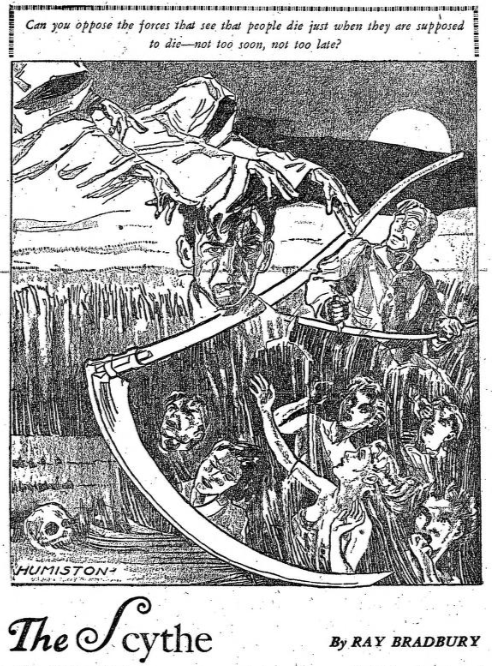










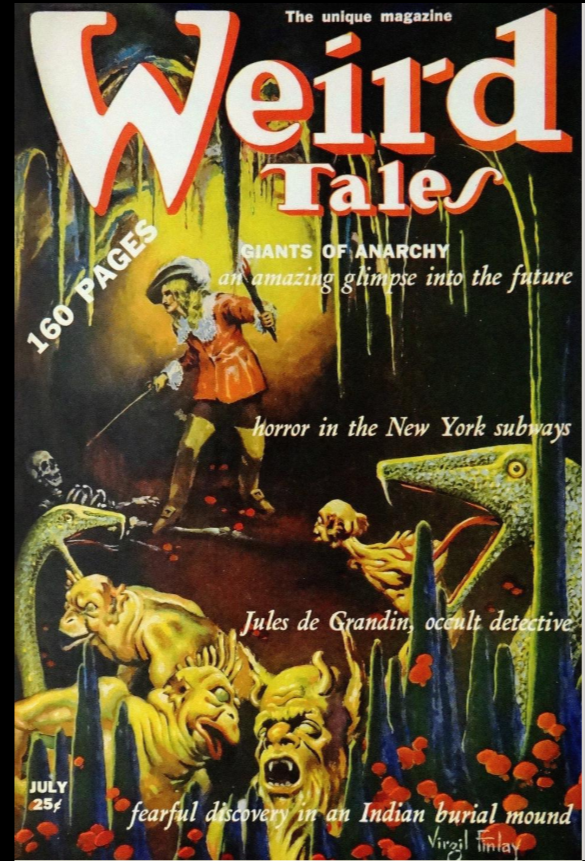


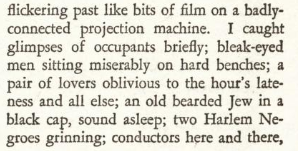
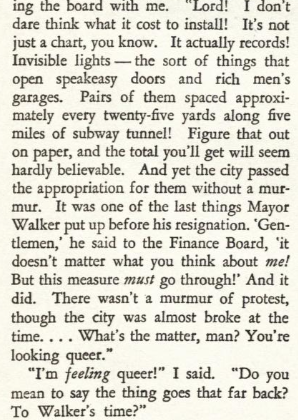







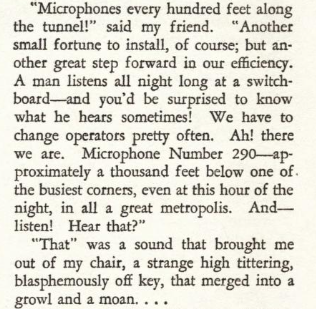
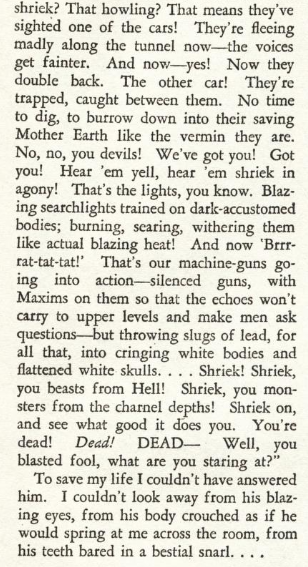


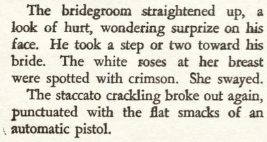


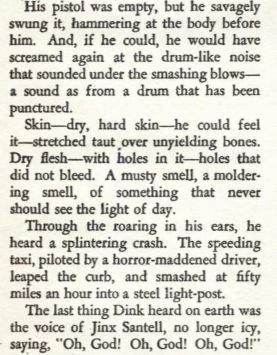









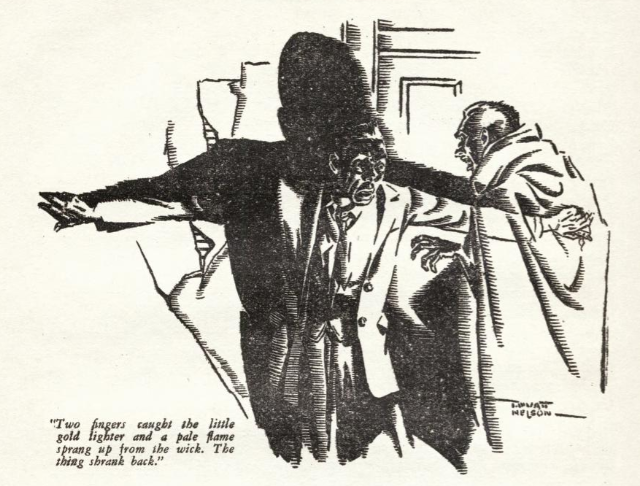














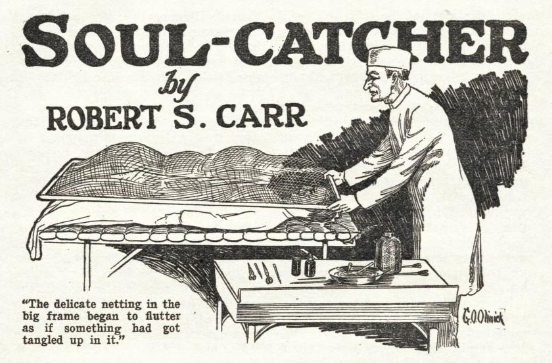







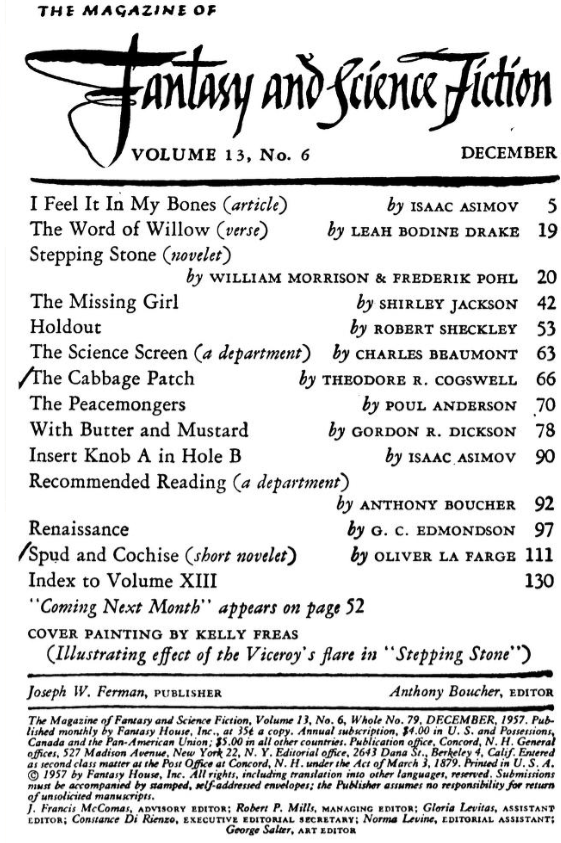





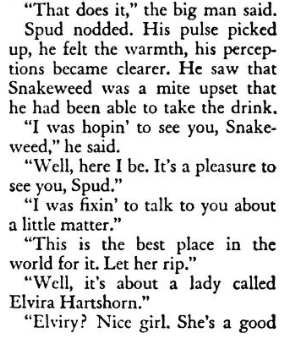


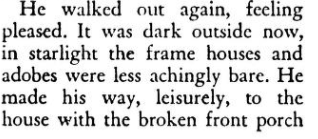
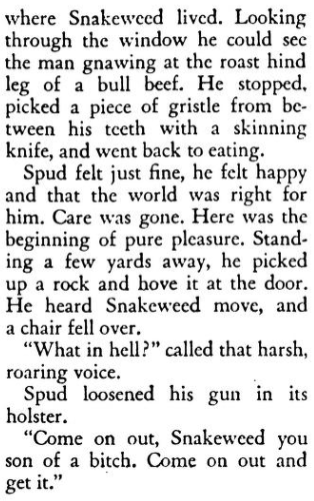


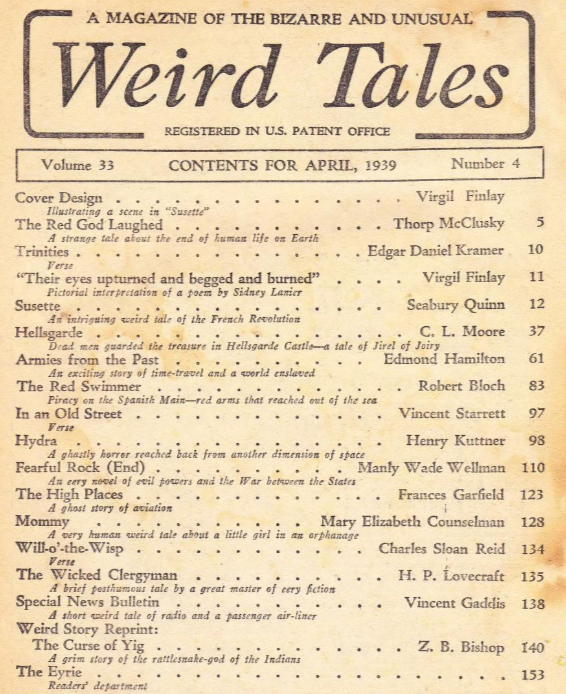
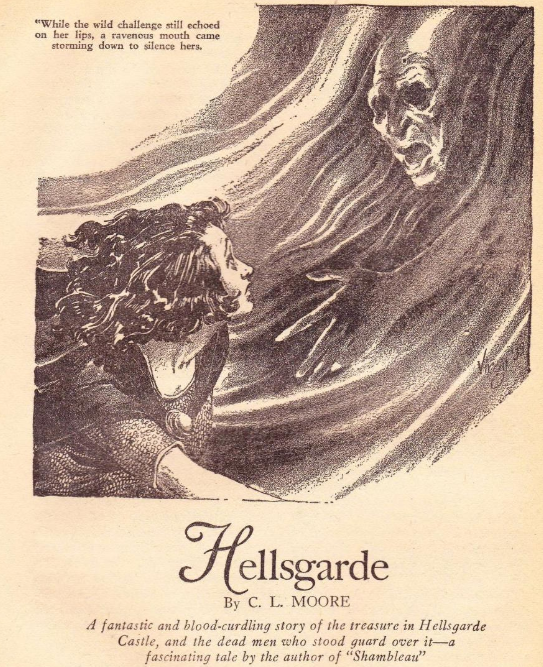













 Eric Williams