Category Archives: writing

Straining the Folk Horror Pulp #39: “The Wishing-Well” by E.F. Benson, Weird Tales v14, n.1, 1929

Hallowe’en eve, so why not take a break from building your wicker men or hanging thorny wreaths from the old Druid Oak to read some more pulp weird fic! And it’s a fun, haunting one today: “The Wishing-Well” by E.F. Benson, from the July 1929 issue of Weird Tales!

Looking back at the previous Hallowe’en flavored Pulp Strainers this time around, it kind of seems like I’ve been on a Classic Monsters kick, for the most part. Ghosts and Vampires and scary Subway Ghouls; it’s been a regular mash, or perhaps bash, around here. And who am I to buck against the momentum we’ve been building up? So, having reflected on the previous stories, I decided I wanted to do a witchy one today, and after careful consideration (’cause there’s a LOT of ’em out there!) I landed on this story by E.F. Benson, a particular favorite story from a particularly good writer.

Now, I’m a weird fiction guy – I love it strange, I love it confusing, I love the peek through the crack in reality that the genre strives for. So what the heck are we doin’ focusing on TradMonsters like ghosts and witches, you may be asking? I mean, didn’t Lovecraft chuck all the tired old cliches out the window? After all, as the Old Gent said, Weird fiction is “more than secret murder, bloody bones, or a sheeted form clanking chains according to rule.” So where do these matinee monsters fit in?

Well, Lovecraft actually kind of answers that in the very next sentence in his “Supernatural Horror in Literature” essay: successful weird fiction is characterized by a “certain atmosphere of breathless and unexplainable dread of outer, unknown forces.” In other words, the problem isn’t yer wolfmans and draculas per se…it’s the hackneyed and trite conventions around them that turn a horror story into a dull, rote recitation of banal familiarity. Even the most overused horror mook has SOME kind of vein of weirdness that can be mined – take Lovecraft’s own “The Dreams in the Witch House,” complete with a cackling crone and satanic pacts and sabbaths, and you’ll see that it is possible to take a stock Halloween character and turn them into something interesting and strange and truly weird. And I think that’s the case in today’s story too, which takes a very thoughtful and modern approach to witchcraft.

Which is par for the course for our author today. E.F. Benson was a writer not only of spook-em-ups, but of “society” literature, essays, and biographies as well – he was extremely prolific, with hundreds of short stories to this name. He was also gay, a fact that is relevant when reading his work, which often have either subtextual gay relationships in them or, more broadly, deal with themes of romantic and social alienation. There’re a lot of outsiders in his stories, particularly in his ghost/horror/weird stories, as we’ll see shortly.

While he’s fairly well represented in anthologies, particularly those published in England, he’s probably most well known today among weird fictioneers because Lovecraft singled him out for specific praise in his essay “Supernatural Horror in Literature:”

That’s high praise, and well deserved, I think; Benson could, when he wanted to, get pretty weird, occasionally producing some truly otherworldly and alien monsters. The weird Hell Slug in “Negotium Perambulans” would be a worthy addition to the mythos, I’ve always said (and it seems like it was a huge influence on Brian Lumley, who had a darkness generating extradimensional slug in some of his Titus Crow stories).
But, even when ol’ Benson WASN’T going all cosmic, I think he still had a streak of the Outside about him, you know? Even in his most conventional ghost story, there’s always a hint that there were deep shadows both within people and outside in the wider world, and I think that’s what I like about the story we’re going to talk about today.
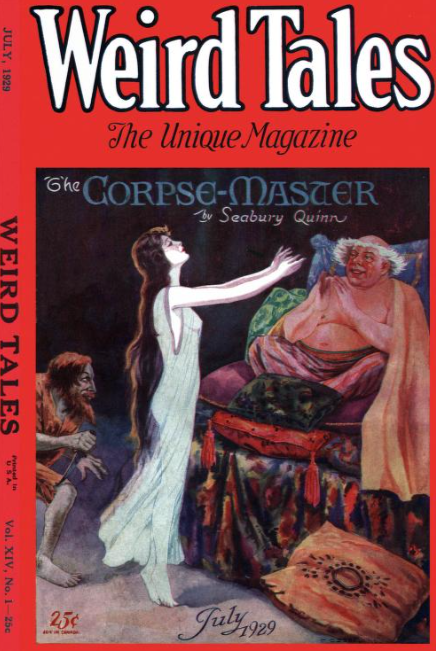
But first, lets take a peep at the cover and the ToC!

An excellent Senf this time, very weird and menacing. Love the corpse-white lady contrasted with the riot of colors, and the sneaky lil’ feller on the left, leering and with dagger drawn, is fun – it’s all very lurid and decadent, a perfect Weird Tales cover in my opinion. As for the ToC:

Quinn and Whitehead are probably the Big Names on here if you were a fan in ’29 reading the magazine – both of them were popular, though they can be tough reading these days (Whitehead because of the uncomfortable paternalism and exoticism of his “voodoo tales,” Quinn because the Jules de Grandin stories are just not that good). There are some interesting oddities in here, though! Hamilton writing a “planet story,” the sort of thing that would eventually get shifted over to the science fiction pulps once they get a little more firmly established. There’s the poems, including some vintage REH, but there’s also a very strange little story by Lt. Edgar Gardiner, “The Cruise of the Vega,” which is an enjoyable little bit of metafictive fun, ostensibly an essay written by Gardiner about his hugely lucrative and wildly popular novel “The Cruise of the Vega” (which isn’t real, of course) and the REAL story of how he came by the tale. It’s fun, and speaks both the inventiveness of writers at the time and the fact that the genre has always been playful about itself and the writing profession.

But enough! On to the story!!

A great title illustration by the inimitable Hugh “Doak” Rankin! It’s a great, atmospheric piece, beautiful shadows and light, and the slightly translucent specter getting smooched, coupled with the creepy line from the story, is basically perfect. Points also for not giving anything away in the story! Rankin was one of the big interior illustrators, and did important work on Lovecraft and Howard stories, among others, so it’s fun to see him here too!

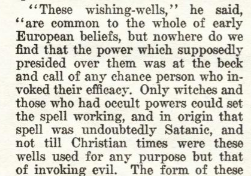
Our story opens with a very Dunwich-ian geographic summary, situating us on the Cornish Moors and in the tiny, out-of-the-way, remote little village of St. Gervase. People don’t come to the town, and those in the town seldom leave it. It’s mostly cut off from the world, and the people of St. Gervase like it that way:

Yes indeed, it seems there was, and perhaps still are, followers of The Old Ways in town here, hedge witches and wise women, part of a long matrilineal tradition of secret knowledge. Of course, every light casts its shadow, and for all the healing and wisdom, there’s also a darker cast to these powers, a tradition of affliction and evil that is, apparently spoken of only in one house in St. Gervase. And what house is that?

That’s right, St. Gervase has a very M.R. Jamesean vicar, a bookish and independently wealthy scholar who, in between some light preaching and bake sales, has become an academic authority on magic and folklore and witchcraft.

What’s fun about this character is that, while he’s this vaunted authority on witches who lives in a town with a vibrant and apparently thriving witch scene, he’s curiously removed from the living tradition in St. Gervase. He knows of the history of the town, and even apparently has some reports from locals on older traditions, but (as we’ll see) he is one of those academically informed types who can’t seem to see the forest for the trees. His patriarchal (and paternalistic) view of the world has cut him off from the cultural underground that is, quite literally, all around him.

But you know who IS making use of all of the Good Reverend’s research? His spinster daughter (she’s 40, and unmarried) and unpaid research assistant, Judith!

There’s some fun writing, just above this except, where Benson is taking pains to really situate Judith in the Cornish landscape of St. Gervase. He’s also interested in taking pains to explicate her complicated relationship to the town and the people and her own life – she has been isolated “from her own class” and, therefore, never had any serious prospects for marriage or a life outside of her Father’s home, and while that has (and does) engender some bitterness in her, for all that she IS in love with the town and the land and the strange undercurrents of older, matriarchal traditions and knowledge (as we’ll see).

The bitterness in Judith might be stronger than even she realizes, however – without putting too fine a point on it, Benson takes some pains to really show how Judith is absolutely fascinated by the darker, more retributive side of the magical lore that her old dad is researching. And now, down through the months and months, she was taking dictation from him on his researches about wishing-wells, and in particular, the famous Well of St. Gervase!

Rev. Euster’s helpfully expository declamations tell us that the best and most famous of these strange, satanic wells is in St. Gervase and that its power is still respected, though of course no one in town actually uses it these days. With regards to this, however, Judith knows better:

The shift from the landscape to the Reverend and then, finally, to his daughter Judith as the main character of the story is a neat little trick, a very fun way to sink the reader deeper and deeper into the story, as well as providing a sense of nice, comfortable disorientation, which of course is one of the pleasurable aspects of weird fiction. The uncertainty of the direction of the story, even as we begin to get little glimmers of familiar witchy-ness here and there, is an extremely masterful touch, part of Benson’s strength as a writer.

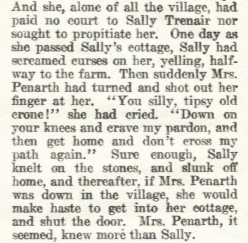
Judith, her head full of her father’s research of wishing-wells, heads on out into the countryside to visit a particular acquaintance, a Mrs. Penarth, who we quickly learn is something of a wise woman, indeed may have been The Wise Woman in St. Gervase, because in addition to her fame as a healer, also seems to have been the only person in town not afraid of Old Sally Trenair, the spooky witch we were introduced to earlier. In fact:

We also learn that Mrs. Penarth has a strapping son named Steven who has just returned from overseas. Judith remembers him as a boy, and is interested to see the kind of man he’s become, though the main reason for her visit is to pick the brain of Mrs. Penarth about the scholarly materials she’s been learning about at her father’s side.

On her walk there, Benson gives us some good description of Judith who, for lack of a better word, sounds hot as hell:

I call out this particular bit of description for a couple of reasons. First, it’s interesting to see Benson making sure we’re not thinking of Judith as mousy or shabby or a shrinking violet – she’s tall, she’s robust, she’s vital and active and sharp. That’s important to the story because otherwise, if she were this drab little thing, the tale becomes rather conventional and uninteresting. Instead, there’s a real sense of Judith as a forceful personality with an, if not imposing, then at least vibrant presence. Also interesting is the bit about the eyes – the slight inward turning as both a physical AND mental aspect, and not as a disfigurement, but rather as simply a part of who Judith is, warts and all.

The second reason I bring it up is because, as a writer myself, I generally eschew descriptions of characters (except for my villains, who are almost uniformly towheaded aryans) because as a reader I usually find them boring and pointless. Here’s a good example of a description used well, though – Benson is DOING something in the story with Judith’s physical description, in the same way as he was DOING something with the shift from the landscape of St. Gervase to the Reverend to, finally, Judith. It’s a very neat writerly trick, and speaks to Benson’s mastery.

Anyway, Judith arrives at the Penarth’s and find Mrs. Penarth knitting (a perfectly witchy activity, putting together the threads of fate and all) on her front steps.

Good bit of Cornish cadence, I reckon, and an immediate sense that Mrs. Penarth is as wily and cunning as we’ve been lead to believe – the bit about being hatless and making friends of the sun and wind is just perfect. And then, to really hammer home Judith’s somewhat protean nature (and her need to belong), we get the next bit:

It’s already been mentioned that Judith is of a different class than the native St. Gervasers; it’s why she never married, after all, and you can bet that the Ol’ Rev never slips into a Cornish accent around the house.

Judith’s mentioning of the death of Old Sally Trenair brings up a sly remark from Mrs. Penarth:

Perfect, perfect, perfect; just such a smooth and unobtrusive way to paint Mrs. Penarth as knowing certain things and secrets, and seeing in Judith a similar yearning. It’s really great. And, of course, it also efficiently serves the interests of the story, for we get another bit of exposition about the Well, though unlike the removed and scholarly musing of her father, Mrs. Penarth knows of which she speaks:

Mrs. Penarth’s quick-n-dirty user’s guide to wishing-wells is interrupted by the arrival of Steven, and goddamn if he didn’t grow up hunky as hell. Judith is immediately smitten with this big blonde slab of corned beef. Between her learning some pretty startling things about the Wishing-Well in town and meeting Steven Penarth, her brain is all a-bubblin’ like a witch’s cauldron.

After an evening of dictation, she takes a nighttime walk through the village, the air sultry and the sky overcast. She gets a little thrill when she catches sight of Steven walking into town. When he’s out of sight, she turns into the churchyard where the wishing-well yawns in the dark. Beyond it, she catches sight of Sally Trenair’s freshly filled grave:

The spirit of the old witch IS there, “friendly and sisterly and altogether evil.” I mean, how is that for a turn of phrase, huh? Helluva writer, ol E.F. Benson, and the way he’s building this atmosphere of mystery and deep, earthy magic, it’s just really incredible, isn’t it? Judith drinks from the occult well, and is granted a glimpse of the ghost of Sally:

Judith’s fear seems to banish the ghost, and the horror of her vision of the dead haunts her for a few days – she seems to be both annoyed that she, perhaps, squandered her chance to commune with something powerful, and also a bit trepidatious about her glimpse beyond the veil.

She throws herself into the banalities of day to day life in order to find some respite, and in particular begins to make subtle efforts to come into contact with Steven Penarth, making sure she’s out gardening when he delivers milk, for instance. As music director of her father’s church choir she starts singling out Steven for praise, and also seems to have taken a jealous dislike to a pretty young villager by the name of Nance. Judith takes to calling on the Penarth farm more and more, no more merely seeking Mrs. Penarth’s witchy wisdom but also hoping to catch Steven at home. It’s clear that Judith thinks she’s being very clever and discrete, but Benson makes sure we get the hint with a phrase rich with double meaning: “In a hundred infinitesimal ways she betrayed herself.” Because not only is she being insanely obvious with her infatuation, but she is also, step by step, moving towards Doing Something about it:

Judith makes her way to the churchyard and the Well, but just as she arrives she comes across something Fateful:

Oof, right? Sad stuff, and embarrassing as hell too, to find out that all your clever dissembling was seen through immediately. The part about Mrs. Penarth laughing at her is particularly bitter, isn’t it? And then, to hear Steven propose marriage to Nance after all that? Well, it’s a grim moment for poor ol’ Judith.

Grim and spooky stuff! Judith takes the slip of paper to the churchyard and the wishing-well, and feels the tide of her power rising:

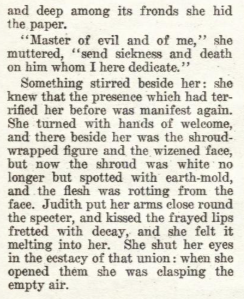
I mean, what a great bit of writing, murky and grim and just freighted with occult power, isn’t it? The ghost that appears before her now is a rotting, decayed thing, appropriate for the use to which Judith plans to put its power. And how about that smooch that seals the deal? Honestly an incredible image!

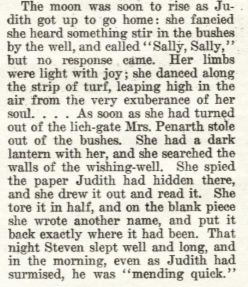
Say what you will about the dark powers of the earth, but they fuckin’ deliver, man! Right away, next morning, it’s not Steven who delivers the fresh produce to the vicarage, but his mother, Mrs. Penarth. Seems poor lil Stevey is feeling a bit under the weather, real shame that, what with his marriage to Nance coming up and all.

Judith had leaned into her Evil Sorceress phase, but we the reader see the fatal flaw in her plan – as we learned, there were Two witches in town, and the stronger of them is not only still around, but also the mother of Judith’s victim. Oh, and also, SHE WAS THE ONE WHO TAUGHT YOU ABOUT THE POWER OF THE WELL!!! So, of course, as a canny and wise witch, Mrs. Penarth lies in wait in the churchyard, to see if someone hasn’t been screwing around with forces they can’t comprehend.

Steven is almost immediately better, while Judith, with similar alacrity, starts wasting away. She feels the dark power that had filled her being drained away too, taking her life with it. Even the ghost of Old Sally is taken from her, leaving her weak and alone and dying. Steven is back to delivering the milk, and asking after Judith’s health on behalf of his mother. Judith doesn’t understand what’s happening – has she missed some important step in the spell, or failed to fulfil some expected action, and that is why she is now being afflicted by the curse she had laid on Steven. Only one thing for it – gotta check on the well, and the slip of paper she had put there. Stumblingly, she makes her way to well, and when she gets there, she finds Mrs. Penarth!

And that’s the end of “The Wishing-Well” by E.F. Benson!

Potent stuff, huh? Mrs. Penarth’s vengeance is swift and terrible, something poor ol’ Judith might’ve expected given the well known history between her and Ol’ Sally. And while sure, she DID try to kill someone through dark sorcery, you can’t help but feel a little bad about Judith’s end, you know? The solitude and longing and shame of her life – Benson makes us see all that, makes it a deep part of Judith’s being, and there’s a real pitiful quality to it. Particularly so, now that I think about it, because as was established at the beginning of the story, witchcraft was a passed down mother to daughter, a tradition of secret knowledge held by women; Mrs. Penarth had a son, though, so to whom was she expecting to pass on the wisdom and power of the strongest witch in St. Gervase? Sure does seem like she was maybe sounding out poor Judith for the role, doesn’t it, the way she was quick to spot something intriguing in her questioning and the way her mind worked, as well as her willingness to share the lore and traditions with her. It kind of explains her obvious anger at Judith – not only has she attacked her son, but she also has betrayed her, trying to use the little knowledge she had been given in such an irresponsible and dangerous way.

The view of witchcraft in fiction today is almost uniformly a feminist one, and there’s a strong thread of that in this story from 1929: witchcraft as a tradition of women of course, but also in the way Judith, though seemingly content, has been denied a full life by the patriarchal class-based rigidity of society. Furthermore, the breakdown of the relationship between Judith and Mrs. Penarth, one that would have had full consummation in the sharing of witchy tradition, is brought about by the advent of a conventional marriage, with Judith trying to corrupt it and Mrs. Penarth trying to preserve it.

This feminist reading of witchcraft is one taken up by a lot of modern “folk horror” (a term I’m not enamored with, but oh well), which makes for an interesting tension because, of course, the other major axis in folk horror is almost always something along the line of Deep Tradition. That kind of battle between empowerment and traditional gender roles makes for some unique frisson in works of that sort, and I think that’s something at work here – Judith’s desire for liberation undone by her rage at the most conventional expression of heteronormativity.

Benson’s interest in women and their role in society is well documented; his novel “Dodo” (and its sequels) is all about an Edwardian proto-flapper spitfire and the ways one can twist and wiggle through society’s hoops to get what one wants. There is some biographical aspect to this, I reckon; as mentioned above, Benson was gay, but ALSO of a social and economic class that, while not necessarily allowing him to live openly, did give him a certain freedom to quietly and politely live his life without being arrested. In other words, he wasn’t exactly closeted – it was more of a don’t ask, don’t tell kind of gentlemen’s agreement where everybody (within that stratum of society) knew he was gay but had the good taste not to mention it, and he reciprocated by not wearing it on his sleeve.

This kind of fluidity and ambiguity is something that Benson explores in a lot of his fiction, and it makes this particular story an interesting one – he’s really captured something in Judith’s lonely outsider status, a woman seemingly resigned to her life rather than liberated by it. There’s also a simple parable about the destructive nature of both sexual inexperience and infatuation here – in a lot of ways, Judith is an incel, isn’t she? She’s been forced (by society) into spinsterhood, and then when her affection isn’t reciprocated, she fuckin’ tries to kill the guy with evil magic!

The sheer amount of off-the-cuff musing going on here just speaks to how great of a writer Benson is, I think – his stories are always full of interesting little threads and diversions, stuff you can mull over and pick at and think about long after you’ve finished reading, the sign of great fiction. And on a mechanical level, he’s worthy of emulation too, I think – the deftness of his characterizations, the structure of his plotting, the way he sets a scene and efficiently cuts through to the heart of the matter with a short, sharp line, all of it is just spot on. Too, his ability to construct legitimate bit of witchcraftiness without getting bogged down in detail is admirable. He’s one of my favorite writers, and I think this witchy little tale is a great bit of weird fiction, and a good way to celebrate Hallowe’en!

Dead Writers

For some reason, I’ve taken to collecting pictures of the graves of writers I admire; it started, somewhat accidently, during a conference in Baltimore when I happened to learn from a brochure in the hotel that Poe was buried in the city. Now I’m not particularly goth or anything, but I DO love a good graveyard. In a lot of American cities they’re often the best kept green spaces – there was a gorgeous one in Bozeman MT high up on a ridge overlooking the town with some very nice junipers and cedars, a very peaceful quiet place good for strolling around. So visiting them is often a lot of fun, but in this case it was particularly necessary, because of course I love Poe – he’s probably one of the top three most important American writers, I’d say, right up there with Melville and Twain in terms of artistry and influence. So of course I took some time to go hunt up ol’ Edgar, and found that he had TWO markers in Baltimore, one for his original burial site and a larger, more lavish monument a few yards away, put up in 1875 as his reputation grew posthumously.

The Original Burial Site
Poe’s actual grave

As you can see, it’s not a particularly pretty graveyard. It’s cramped and not at all green, in a smallish churchyard surrounded by the rest of the city, but still, it was fun to see the final resting place of a writer whose work is so important to me.

Now, at the time, it was just kind of a one off – I didn’t have any plans to starts accumulating dead writers’ graves or anything. Just had happened to find Poe there, and that was plenty. But here in early June I went to Berlin, and as I was looking around for stuff to do, I discovered that there’re a lot of famous dead writers planted in the city. And some of them were, like Poe, enormously important to me and my reading! So I took some time to hunt ’em up and get some pictures, and I thought I’d share em here.

First stop on the list was the Dorotheenstadt Cemetery, a one-stop shop for dead famous writers, as well as other prominent Germans of a certain era. It’s a nice cemetery, very pretty with good trees, a lot of sculpture, and nice quiet little paths, right in the middle of the bustling Mitte neighborhood. It’s a storied cemetery that became, for a variety of reasons, the final resting place of a lot of intellectuals, so I spent a fair amount of time there, just strolling around and bathing in all the Germanic mono no aware of the place.

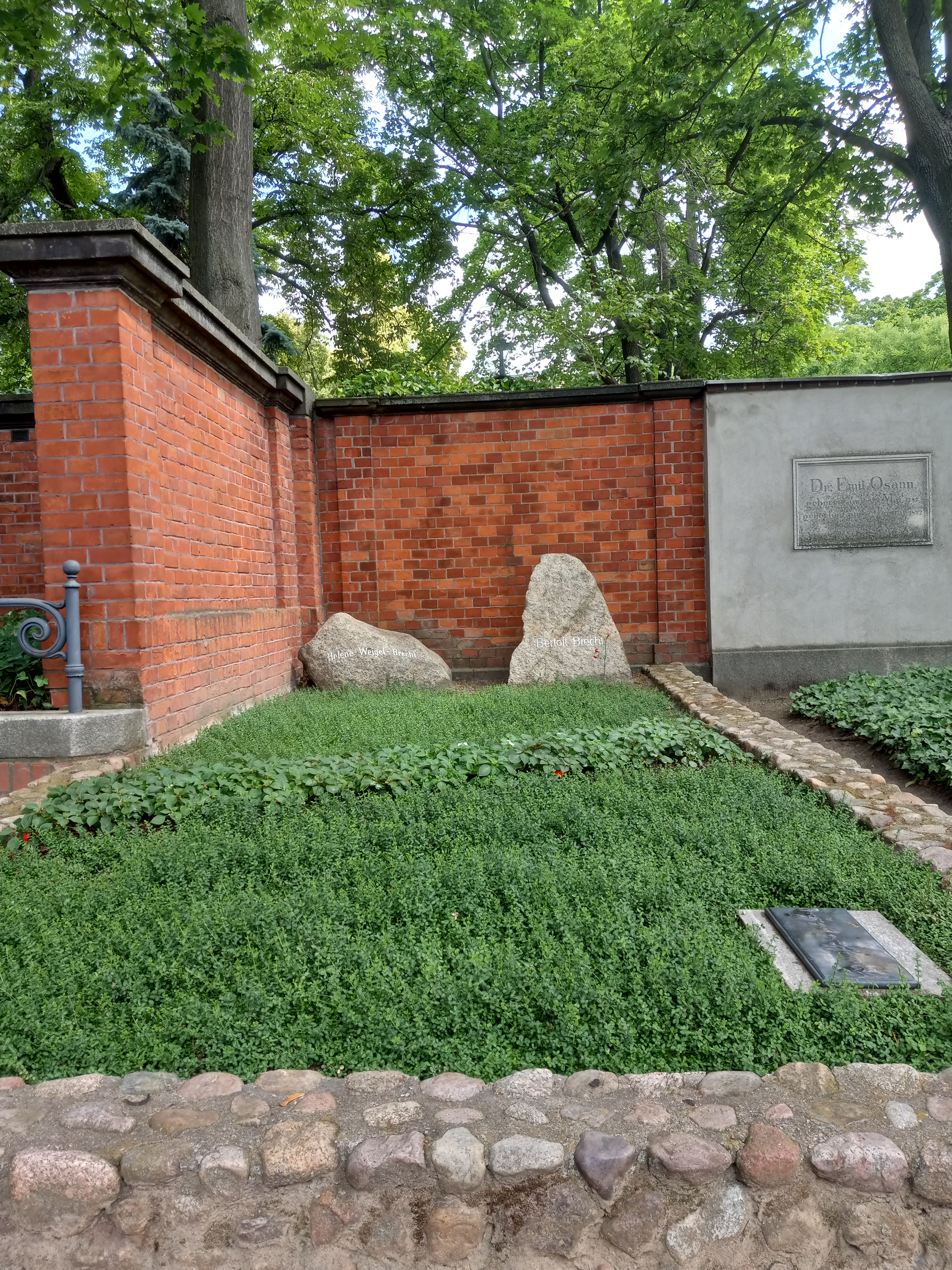
The grave I was most interested in seeing was Brecht’s, of course; Threepenny Opera, Life of Galileo, his Turandot…c’mon, ol’ Bert was one of the greatest playwrights of the 20th century. He’s also a tragic figure, fleeing the Nazis only to get HUAC’d in the states, and then returning to East Berlin only to face the crushing disillusionment of Stalinist purges and oppression. But at least his grave is a peaceful spot – I’d say it’s the best in the whole cemetery, a long green plot with beautiful rough granite markers for his wife Helene and himself.

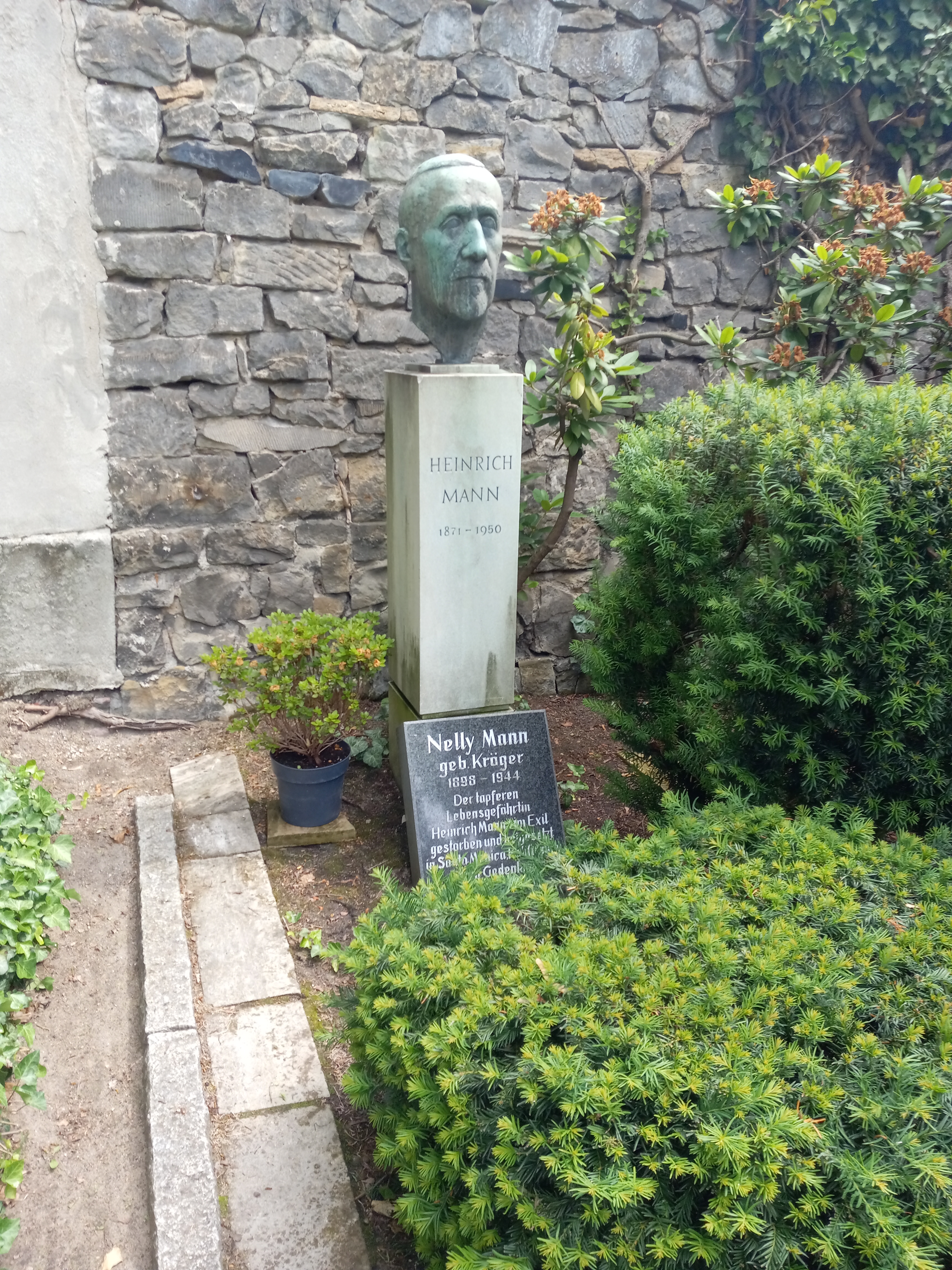
Paying my respects to Bert, I strolled along the wall and was surprised to run into ol’ Heinrich Mann, brother of Thomas. I’ll always have a soft spot for Heinrich who, despite never receiving the accolades or wealth of his more famous nobel laureate brother, DID have better and more consistent politics. He was a staunch internationalist and anti-war socialist as well a helluva writer, and I’ve always loved his Small Town Tyrant (the novel Dietrich’s “The Blue Angel” was based on); it’s way better and more interesting than Thomas’s The Magic Mountain, in my humblest of opinions. Nice marker with a dignified bust:

Continuing my tour, I next found the austere marker of writer and Stasi informant Christa Wolf (and her husband). She’s an important East German writer who has recently sort of come back into vogue; if you’re unfamiliar with her work, I’d strongly recommend her novel Cassandra, about the Prophetess and the Trojan War, and the collection What Remains and Other Stories.

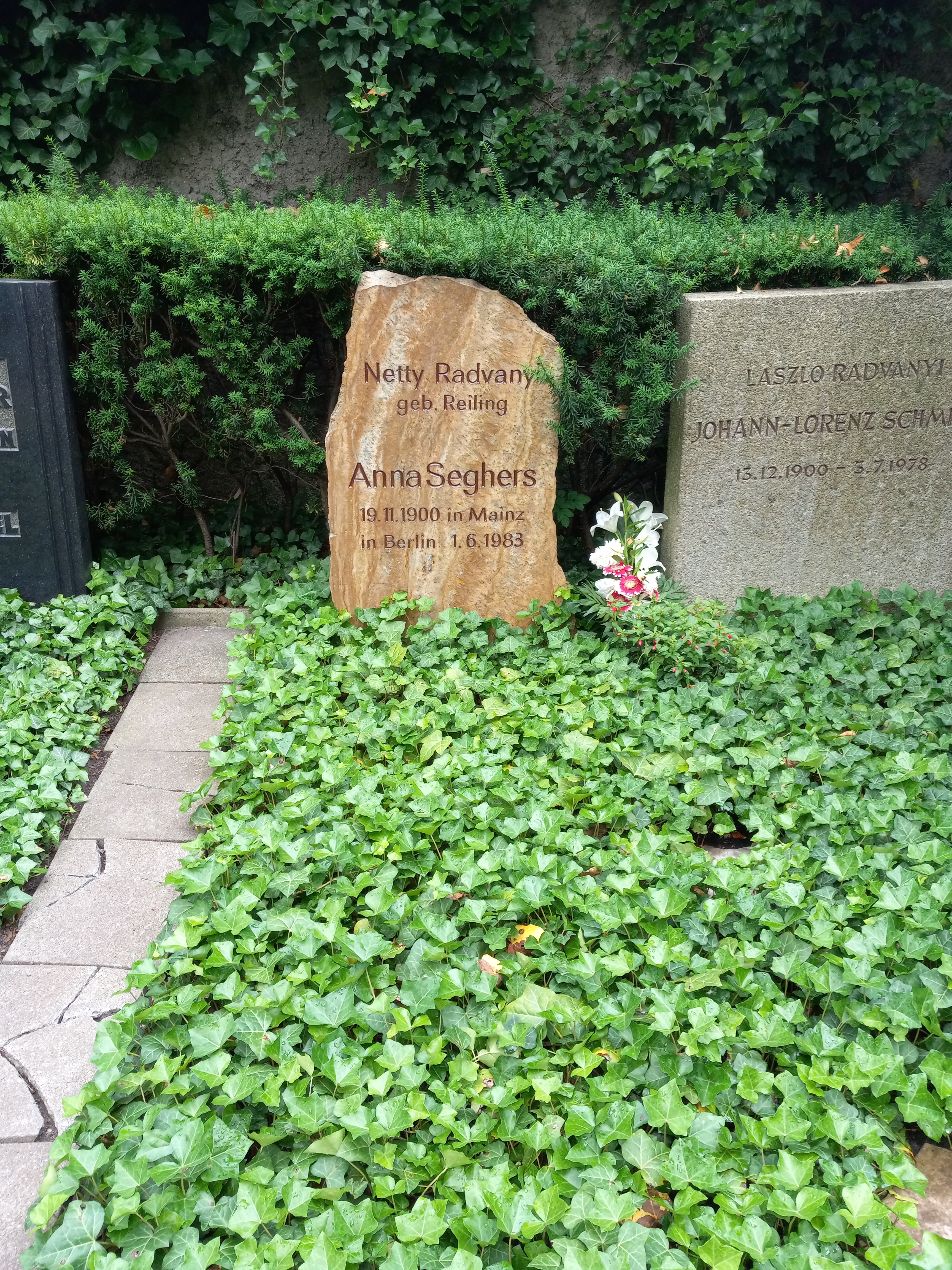
Next up on the hit parade is Anna Seghers, author of one of my favorite novels of all time, Transit. She was one of the big names in German diasporic literature during Nazi times, and her work is intimately interested in how people survive under the cruel oppression of dictatorships. She was writing about Nazi concentration camps in the late 30s, one of the first to introduce the horrors of fascism to the wider public. She’s a great writer, and I had no idea she was here in Dorotheenstadt.

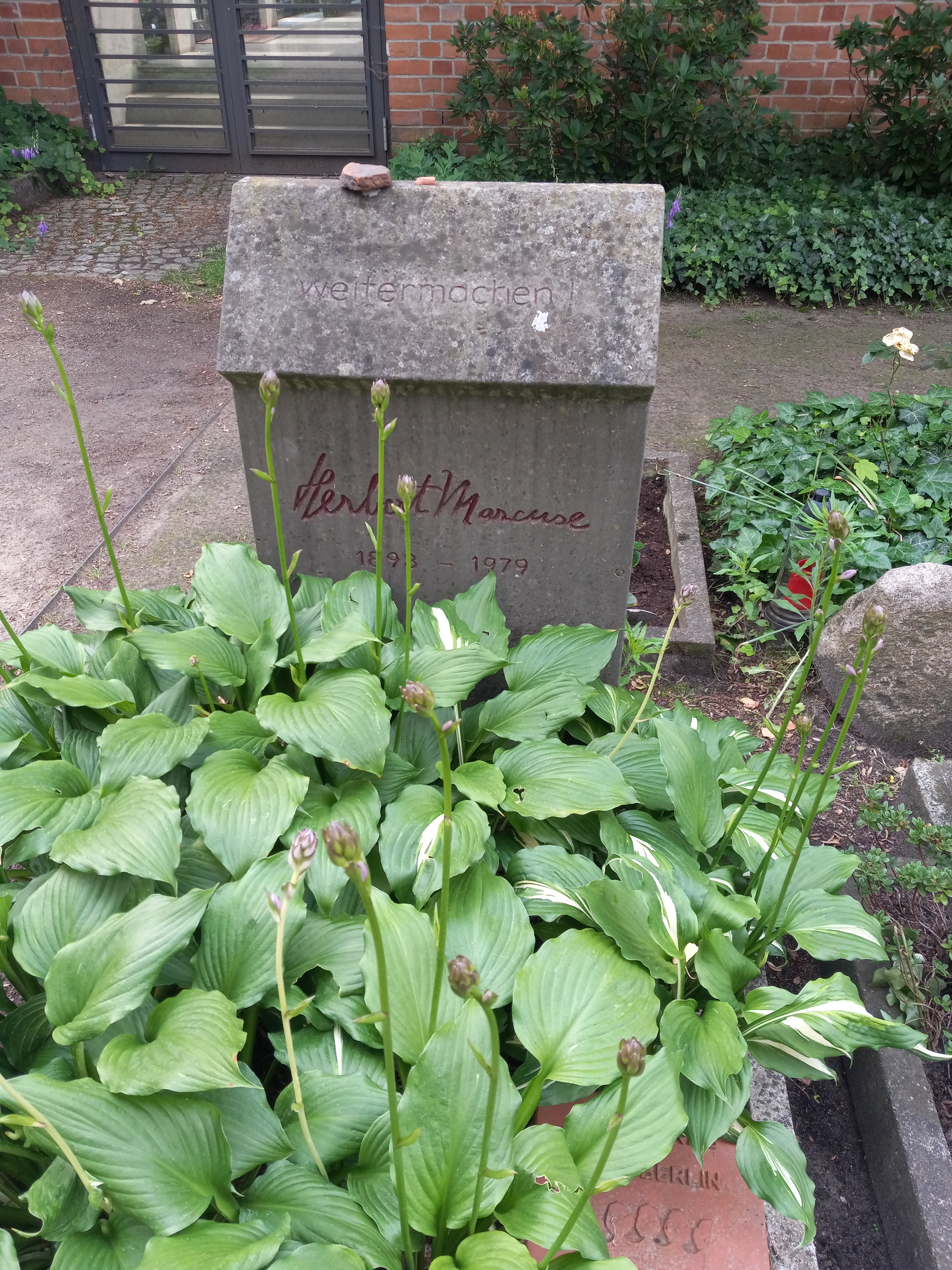
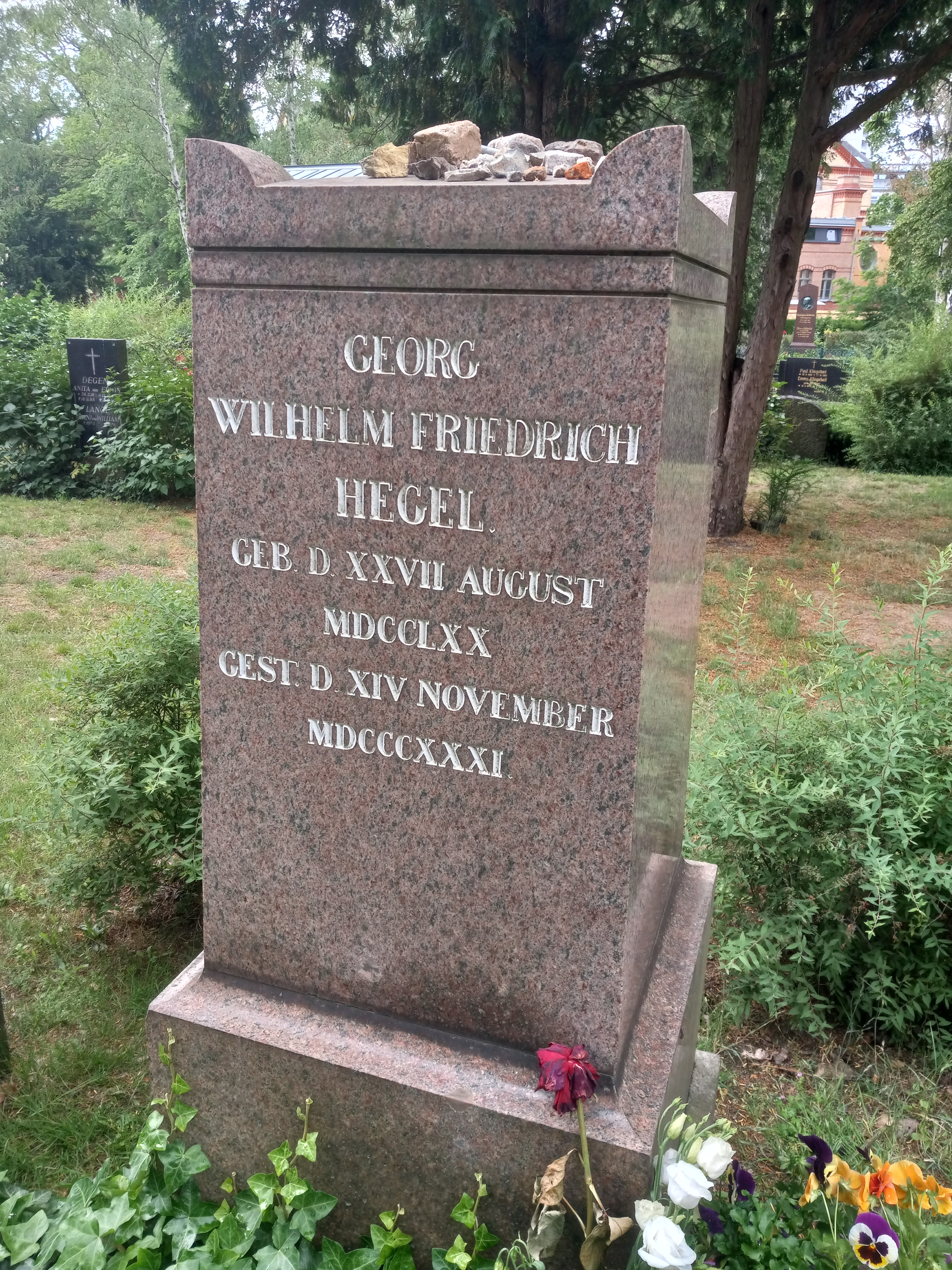
And just to wrap up Dorotheenstadt, ol’ Herbert Marcuse and Hegel are there too. Hegel’s grave was by far the most visited while I was there – a number of wan young nerds swanned in to take a picture of his marker while I was strolling around, and there were by far the most number of memorial pebbles left on his grave. A sign of our disordered times, no doubt.

In contrast, Marcuse’s grave was both smaller and tucked away in a crowded corner. It had better plants, though, and a few folks had left a pebble or two there. The weird cursive used for his name reminds me of divorcee wine bars (I swear I’ve seen a “It’s Wine o’clock Somewhere!” sign in the same font), but I do like the engraved “weitermachen” (“keep going”) on the upper part of his marker.

Thus ended the first day of my morbid picture-takin’ adventure. Later during the trip, I went down to the Wannsee, a cute little lakeside district full of weird German yachting clubs and rowing organizations, a center of internal tourism for the region. It’s a pretty spot!

Wannsee sunset

But, of course, I was there for one reason – Heinrich von Kleist.

Kleist is one of my favorite writers, broadly defined as a Romantic although, like all labels, that one fails to capture the wild, wide-ranging, and often truly weird sensibilities that you find his work. There’s a real furious imagination in his writing, underscored by a biting and hilarious absurdity; if you haven’t had a chance, you should really read him! Michael Kohlhaas and The Marquis of O are incredible and vital, and there’s an excellent recent edition of his shorter works translated by Matthew Spencer (published by Sublunary Press) that I highly recommend (buy it here immediately).

As is all too common, though, poor ol’ Kleist had a rough time of it – money and artistic woes dogged him through his life, and he came to a tragic end with a murder-suicide pact on the shore of the Wannsee in 1811, shooting his friend Henriette Vogel, a woman suffering from terminal cancer, before turning the gun on himself. Now there’s a nice little park with a lot of informational signage there, as well as a marker for the two of them, at the spot near where their bodies were found.

It’s a nice, peaceful little spot, lots of maples and oaks, but the (appropriately) funny/weird bit is that it’s right between these big rowing club buildings. When we were there, some kind of party was going on, with kids out rowing and rave music thumping, a very funny scene in which to contemplate Kleist and his life. Also got to watch a fox hunt some voles in the thickets nearby, so that was fun.

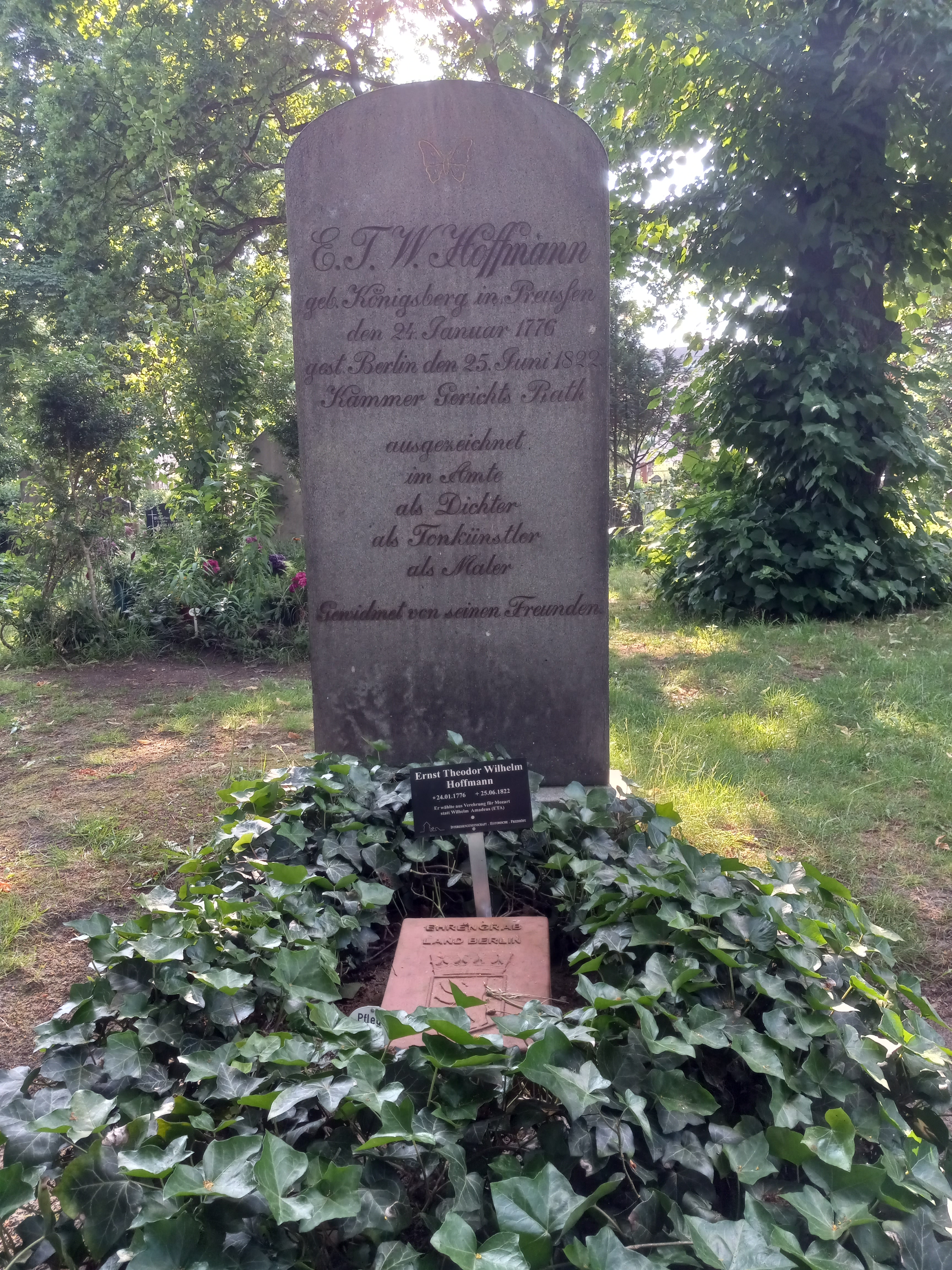
My third and final graveside pilgrimage was a big one. Travelling to the Kruezberg kiez in Berlin, I tromped around the Kirchhof Jerusalem und Neue Kirche III, a large and very attractive cemetery full of trees and extremely cute European squirrels (those red ones with the tufty ears) until I found the grave of E.T.A. Hoffmann (under his real name of E.T.W. Hoffmann – he changed his name from Wilhelm to Amadeus out of admiration for Mozart.

Hoffmann is a special writer for me, one of my own personal favorites whose work I absolutely and unabashedly love. Full of imagination and weirdness and hilarity, he’s one of the rare true geniuses of literature, in my opinion; he wrote in the late 18th and early 19th century, but like so many things from that (and earlier) eras of literature, there’s a shocking and striking “modernity” to his work. For instance, take The Life and Opinions of The Tomcat Murr, a hilarious and fantastic novel that purports to be the autobiography of a cat written on the backs of the pages of his owner’s own autobiography – that means that the way it’s printed, you cut from one narrative to the other, right in the middle of a sentence, moving from Murr’s hilarious musings to the soppy life of Hoffmann’s heightened alter-ego, the sentimental knucklehead Johannes Kreisler. It’s the sort of thing that, published now, would be heralded as a postmodern masterpiece of avant-garde experimental literature…but it was written in the early 1800s. Kinda puts things into perspective, you know?

His short stories are equally wonderful, and often verge into what we would today call Weird Fiction. You’ll find automata, gruesome murder, weird morbidity, and occultism in a lot of his stories, as well as some really insightful character studies and city descriptions (particularly of Berlin and Dresden and Nuremberg). He’s just a delightful writer, an absolutely essential artist in my opinion. It was a treat to visit his gravesite, though I wish I’d brought a beer with me to give him a proper salute.

Writing this up and enumerating the graves I’ve visited, I have to ask myself why I enjoy doing these things. I don’t feel any particularly strong emotions when I’m visiting these markers, even when the circumstances of their deaths, like in Kleist’s case, are objectively tragic. Nor do I experience any kind of numinous awe – that’s reserved for their work. Maybe that’s what I find interesting, the contrast between their work, which lives inside the reader, and the kind of underwhelming final punctuation mark of their physical graves? Getting to know someone through their writing, reading and rereading their work and learning about their lives, you already have a kind of memorial to them built up in yourself, so their grave’s don’t add anything “new” to that. But then, maybe it’s just kind of nice to see their graves and be reminded of their work, which gives so much pleasure still? Or maybe the impulse to visit their graves is no different from the impulse to put their books up on the shelf? A collector and completist’s natural inclination? I dunno.

Regardless, it’s certainly something I’ll probably keep doing. I’m going to Providence Rhode Island in August for a Lovecraft/weird fic convention, and you KNOW I’m going to visit the Old Gent’s grave. But who else would I like to see? Paris would yield a bumper crop – Wilde, Huysmans, Lautreamont, Maupassant, Hugo, Balzac. Prague for Kafka of course. Hard to envision it, but Lafcadio Hearn in Tokyo would be special. In the states there’s PKD, Ellison, Butler, Le Guin. When I went up to Cross Plains TX, I didn’t know that ol’ Robert E. Howard was actually buried in Brownwood, about 40 miles south, so that’s one I’ll have to collect one of these days.

Anyway, tempus fugit and all that. Life is short; read something fun!

Greater Austin Book Fair Recap

This past weekend, on the 11th, I took part in the Greater Austin Book Fair, a brand new event held at the (pretty schmancy) Central Library here in Austin. I had a good time, sold/traded some books, got some free beer, met some folks. It was my first time attending anything like that, so I thought I’d just jot down some thoughts/reflections here, a kind of after-action report.

First off, the library system here in Austin is really incredible, and what a cool thing that they had the funds, space, and gumption to put something like this together. In particular, the whole thing was free for me – no tabling fee, no registration, free beer and appetizers for the writers the night before, free lunch/snacks/coffee the day off, hell they even validated parking, something almost unheard of in downtown Austin these days. Also, for it being the first time they’ve put this thing on, they did a really nice job – lots of volunteers, everything worked like it was supposed to. Good work all around!

The organizing principle of the whole shebang was to get writers from the “Greater Austin” area involved, which included Travis, Hays, and Williamson counties, and it seems like they held to it. About 80 or so authors were involved, and they were all central Texans, as far as I could tell. It’s a neat idea, and really speaks to our library’s commitment to the whole “community” thing. As an approach, I think it worked really well – people who wandered in seemed to really enjoy the fact that they were, by default, welcomed.

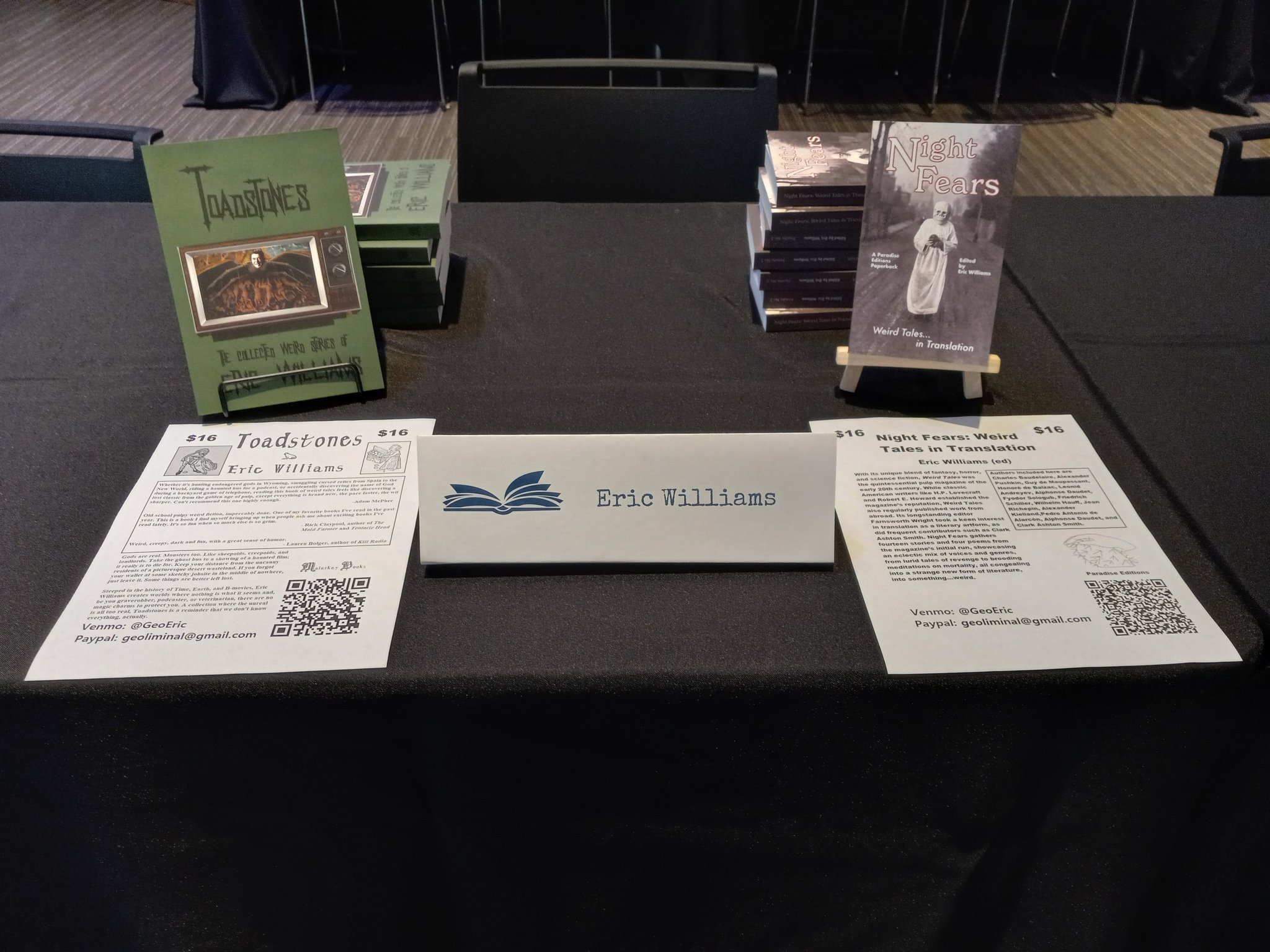
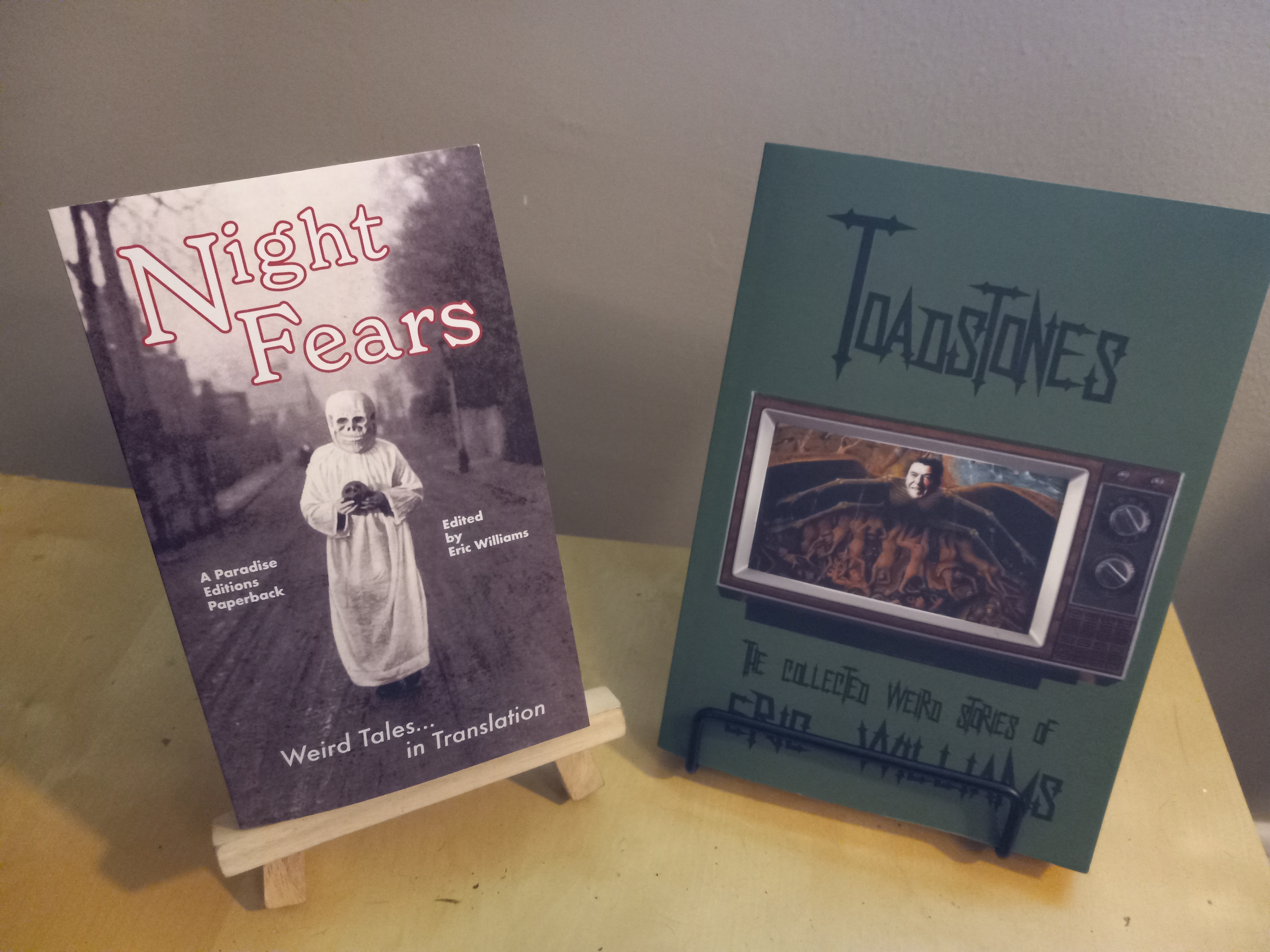
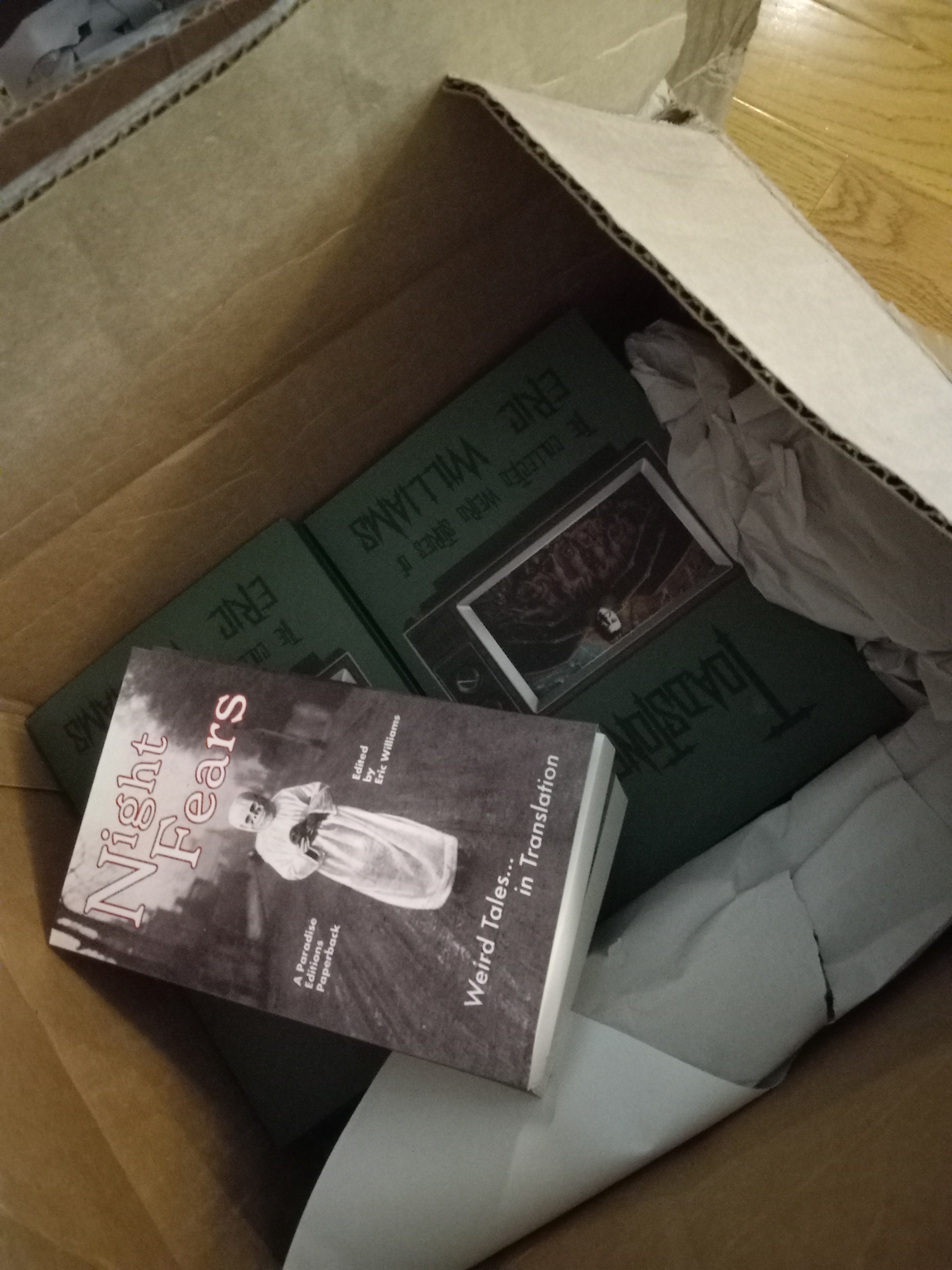
What that produced, in terms of the books on display, was a pretty eclectic floor. Graphic novels, children’s picture books (a surprisingly lot of these!), YA, all alongside the full sweep of adult fiction, literary, genre; it was all roughly spatially organized with similar stuff close together, but it did result in some kind of funny interactions. For instance, a lot of people would come off of the historical/speculative fiction folks next to me and then get spooked out by my books; I had several people say that the covers to both Toadstones and Night Fears were TOO scary, which just speaks to the skill and care that Malarkey Books and Paradise Editions lavished on them.

spookiness is a feature, not a bug

Made me realize, though, that there’s probably a pretty big difference between the Greater Austin Book Fair and a more focused, genre-specific event. Had to spend a lot of time orienting people within the genre itself, something that might be easier if everybody comes in with the idea of lookin’ at spooky books already. Then again, you might be just exchanging one set of explanations for another, in that in a genre-defined setting, I’d have to work to highlight why THESE books deserve attention among all the other spook-em-ups there. We’ll see, I’m planning on doing a very specifically horror-genre convention later this summer.

It was also interesting for me, because I’ve never been to a non-academic conference before – the biggest difference is in the way panels are done, which was kind of odd in that there was just sort of a broad topic, with a mediator asking a few questions and then the panelists kind of just going down the line and answering them. Maybe that’s atypical and just the way this one worked out, but I feel like it could be done better. Not necessarily people coming in to give presentations, but maybe something more structured like a conversation. I dunno, it’s tricky, and I have to admit that I’m also not ever *really* all that interested in hearing writers talk about writing, so maybe that was just on me.

I suppose I should get down to brass tacks, thought: how many books did I sell? Grand total of seven, or about 1/hr for the whole day. Three Toadstones and four Night Fears, and I swapped four (two of each) to folks for copies of their books. I brought twenty of each, which meant I hauled a lot back, but that’s okay… although if anybody out there wants a copy of either (or both) of them, I’d be happy to sell em for, lets say, $20 each? Feel free to shoot me an email at geoliminal [at] gmail [dot] com if that’s the case!

for real, help me out – i got cats to feed, man

What did I learn about conventioning? First off, HUGE thanks to Lauren Bolger (buy her book, Kill Radio!) who, as a veteran of many conventions, gave me so solid advice: in particular, getting some bookstands and printing out papers with book info and QR codes on ’em and such was extremely helpful. In the future, I think I’ll have some cards printed up too, mostly so I could hand over my contact info to other writers I met more easily.

But, all in all, I had a lot of fun, and I’d encourage people to attend these sorts of things, if they can – I don’t think they’re any kind of career-making event, but this one was fun and I’d definitely do it again.